
Science Vs, the science podcast, recently interviewed me as part of their episode looking int whether the electrical substation beside the 49ers' facility is behind the team's run of soft-tissue injuries. Their episode was released this morning. I wrote this article before hearing it, and wasn't given a preview, so this isn't a response to the episode; a detailed response will follow. Instead, this about something my experience working with Science Vs surfaced: how we decide what counts as knowledge, and how we determine what to do with it.
On July 28th, Rose Rimler told me that Wendy Zukerman wanted her to let me know that Science Vs did not think there was enough evidence for my theory.
Rose is a senior producer at Science Vs, the award-winning science podcast on Spotify. Wendy Zukerman started the podcast and has hosted it for a decade. In preparing for our episode I enjoyed listening to her explain raw milk, seed oils, and the ketogenic diet through some truly punishing jokes. It’s a fun podcast. In collaboration with Pablo Torre Finds Out, they had spent much of the summer digging into my claim that chronic exposure to the magnetic fields from an electrical substation adjacent to the 49ers’ training facilities contributes to the teams statistically improbable run of injuries since moving to Levi’s Stadium. I was interviewed twice. I sent them studies and outlined my theory in detail, complete with citations. I connected them with scientists who specialize in EMF, exidative stress and environmental causes if disease and I worked with Rose to pore over the publicly available records documenting Silicon Valley Power’s construction and expansion of the Northern Receiving Station as Levi’s Stadium went up.
I asked Rose for more detail about their verdict. She said they thought my theory lacked evidence because there isn’t a study that shows EMF causing tendon damage in humans.
That sentence was unsettlingly familiar. I had written as much to her myself only weeks earlier.
Not those exact words, but close enough that it felt like my words were being echoed back to me. On July 6th, in response to an email asking for studies, I had written: “As far as I am aware there is not a single study showing EMF-driven oxidative stress degrading collagen in a human, in vivo, or in human tendon in a lab.”
It is the last section of the document I sent her, and I put it there unprompted. I wrote out the most common objection to my own theory, and then spent the rest of the section explaining why the lack of such a study does not mean that my theory is unfounded.
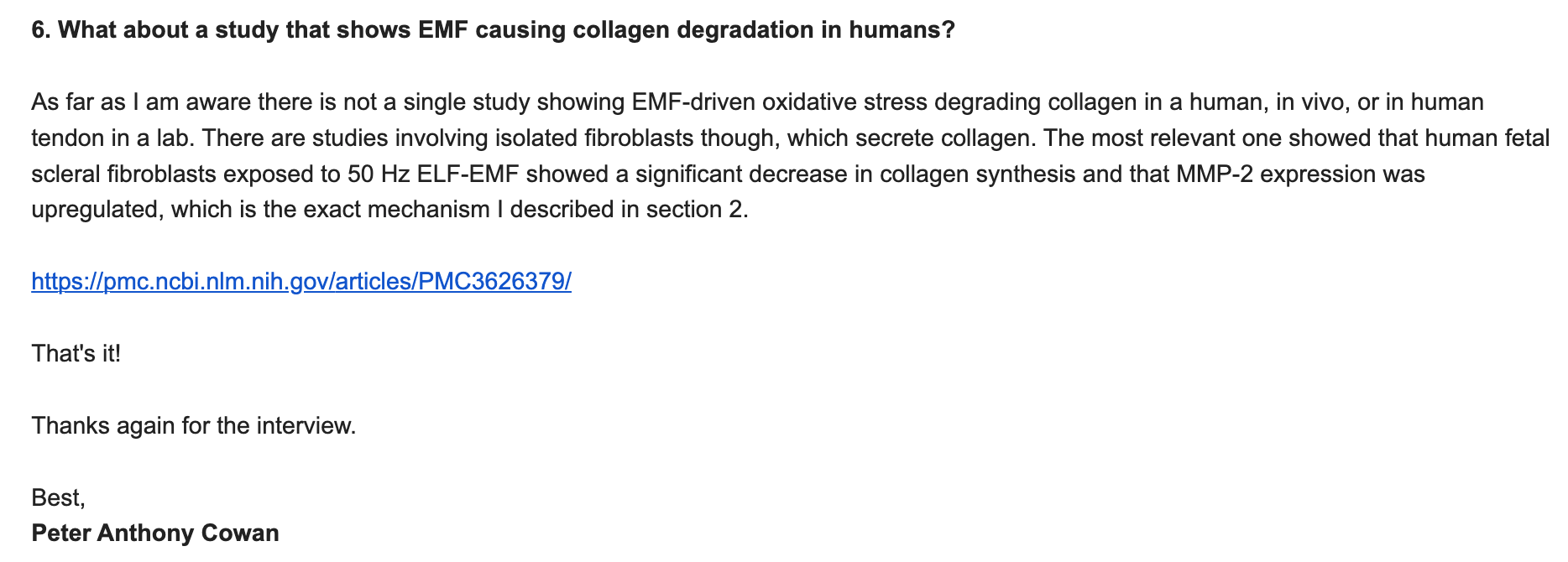
Reading it stated back to me as their verdict was deflating in that moment. Not because they disagreed, though; I had assumed from the first email that they would disagree. It was because it felt like the process had gone in a circle. Through two interviews, the detailed layout of my theory, all the records we pulled together on the substation buildout, and their final word was the sentence I had handed them myself in early July. We had arrived at exactly where we started, only without the reasoning I had attached to it. If they were never going to accept a mechanism-based explanation, then what was the point?
The episode will be released today, and I haven’t heard it yet, so this is not a response to the episode. This is a meditation on that one sentence, because hidden beneath the surface is an entire philosophy of what counts as evidence. Their philosophy has a history, but it is not the only one. There is a competing philosophy, and over the past decade, institutions have been slowly adopting it.
The philosophy behind their verdict deserves a fair explanation, so here is mine:
Let’s call it the verdict standard: a claim becomes fact when a peer-reviewed study directly demonstrates it, end to end. Until the verdict arrives, the claim is not supportable as a fact.
My philosophy is different. Let’s call it the pathway standard: when every link in a chain of biological mechanisms is independently established, the chain itself is evidence, even without any single study demonstrating it. Evidence, not proof. Grounds to investigate, to measure, and to act with caution proportionate to the stakes.
Magnetic fields lead to oxidative stress: established.
Magnetic fields alter collagen synthesis in human fibroblasts: established.
Oxidative stress degrades collagen: established.
The verdict standard looks at that chain and sees only speculation. The pathway standard sees a mechanism with documented links ending in damaged tissue.
Both standards have formal systems associated with them.
Theirs is best represented by GRADE, a rating system assembled in the early 2000s and since adopted by Cochrane, the WHO, and many other organizations. It is based on an evidence hierarchy, with randomized trials at the top and mechanistic reasoning at the bottom. GRADE was built to answer a specific question: does a treatment work in patients? Its rulebook rates evidence down for “indirectness”. Chained evidence is indirect by definition. If you feed a documented chain of mechanisms into GRADE, it will return “low certainty” by design. “Low certainty” gets translated to the public as “no evidence”.
Mine is best represented by the adverse outcome pathway (AOP) model. AOP was introduced in 2010 in a seminal paper titled “Adverse outcome pathways: a conceptual framework to support ecotoxicology research and risk assessment,” published by Dr. Gerald Ankley and colleagues at the US Environmental Protection Agency (EPA). AOP created a framework for predictive toxicology, and was later formalized globally.
The verdict standard also has a popular form: the fact-check that ends “no study shows X causes Y,” and is most recognizable as a Snopes-style debunking of uncorroborated claims that spread on the internet.
The debunking reflex exists for a reason. The internet is full of people who circulate any tantalizing claim that comes their way. The verdict standard treats them all the same, whether it is the comical notion that “birds aren’t real”, or a legitimate chain of mechanisms that is simply missing one direct study. A tool so blunt that it handles those two scenarios identically may help protect the public from the former, but it also protects whoever benefits from the latter staying unstudied.
The notion that direct proof is necessary before any legal or regulatory decision can be made was the explicit strategy of the manufactured-doubt campaigns perfected by the tobacco industry. The Advancement of Sound Science Coalition was launched in 1993 by a PR firm on behalf of Philip Morris after the EPA classified secondhand smoke as a known human carcinogen. The internal memo that launched the campaign states their mission to be raising awareness of “unsound science” in public policy, and their founding documents describe linking tobacco to “more ‘politically correct’ products” (such as food additives and automobile emissions) so that regulating any of them would look like the same “unsound science”.
(To be clear, Science Vs doesn’t belong to that lineage. They showed real curiosity during our interview, asked real questions, engaged with the proposed mechanisms in good faith, and took the theory more seriously than almost any other mainstream outlet)
This is not science versus a “conspiracy theory”, and neither is it mainstream versus fringe. It is two different processes, built for two different questions. And which questions, exactly, is the crux of everything below.
Let me explain the case for their side first, because it was developed in response to real failures.
After a heart attack, scarred heart muscle triggers extra, out-of-rhythm beats. Cardiologists had long observed that survivors with more of these extra beats were more likely to die suddenly. Drugs existed that reliably suppressed the extra beats. Extra beats tend to precede sudden death, so drugs that eliminate those extra beats should prevent deaths. The reasoning looked airtight, and countless prescriptions were written based on that logic. Then in 1987 the Cardiac Arrhythmia Suppression Trial (CAST) was designed to confirm it, but it had to be stopped early, because patients on those drugs were dying at more than twice the rate of those on placebo. The drugs did exactly what they were designed to do, and still killed more people anyway.
Beta-carotene supplementation to prevent cancer followed the same pattern. Beta-carotene is an antioxidant; oxidative damage drives cancer; people who consume more beta-carotene in their diet get less lung cancer. So the Beta-Carotene and Retinol Efficacy Trial (CARET) gave high doses to smokers and asbestos workers. It stopped early in 1996 when the group taking the supplements started developing more lung cancer, not less.
Look at those dates, though. The canonical failures of mechanism-first medicine predate the tools that let us reliably study those mechanisms in the necessary detail. Over the following two decades the tools arrived: sensors now exist that can monitor oxidative stress as it moves through a living cell in real time. Gene editing can be used to delete one link in a proposed chain to see whether the downstream effects still happen. More importantly for our purposes, the cryo-electron microscope reached near-atomic resolution, and by the mid-2010s scientists had resolved the mitochondria’s electron transport chain and the cell’s voltage-gated ion channels: the exact molecular structures both proposed EMF mechanisms run on. In 1989, a “mechanism” was a hand-drawn arrow between two boxes, and the deepest measurement available was a marker in blood. Demanding the end-to-end trial made more sense then, because the links themselves were conjectures. It is a different calculus when every link can be watched, modified, and, most importantly: graded.
Go back to the antioxidant failure. CARET failed because, in 1996, nobody understood that reactive oxygen species, the precursors to oxidative stress, also function as important signaling molecules. You cannot carpet-bomb a signaling network with a megadose of antioxidants and expect only its bad outputs to stop. The field that grew up explaining that failure is redox biology: the science of how cells deal with oxidizing agents. So the most famous case against mechanism-first reasoning has, as its autopsy report, the exact science my theory is built on.
GRADE was built for the clinic — for questions where you can randomize participants, and set specific doses. You cannot randomize children to grow up beside power lines of varying currents, while controlling all other factors. Even if it were possible, no ethics board would approve that trial. No one will ever run it, so the top of the evidence pyramid stays empty.
What we do with the evidence is different too, though. Look back at the wreckage that led to the GRADE system: every one of those failures was an intervention administered to someone — a drug, a supplement, a therapy, handed to patients on mechanistic confidence. The high bar of GRADE exists to protect people from being given treatments that might hurt them, and for that purpose it should be high. Environmental precaution runs in the opposite direction. The exposure is already being administered to everyone within range, without their consent, and the question on the table is whether to remove it. If you demand trial-grade proof before acting, the exposure continues by default: the bar that protects patients in the clinic protects the exposure in the field. It protects the toxin, and the entity responsible for it. The failure modes are not the same either. If you wrongly subtract a benign exposure, the only cost is financial. If you wrongly keep a harmful exposure, the cost compounds across everyone exposed for as long as it takes to deliver the direct proof. There is a name for this: inductive risk. The evidence you demand should be proportional to the cost of being wrong in each direction. It is why the bar for removing an environmental exposure is, and ought to be, much lower than the bar for prescribing a pill.
Science Vs applied the right standard to the wrong question: a clinical-trial protocol applied to an environmental-exposure problem.
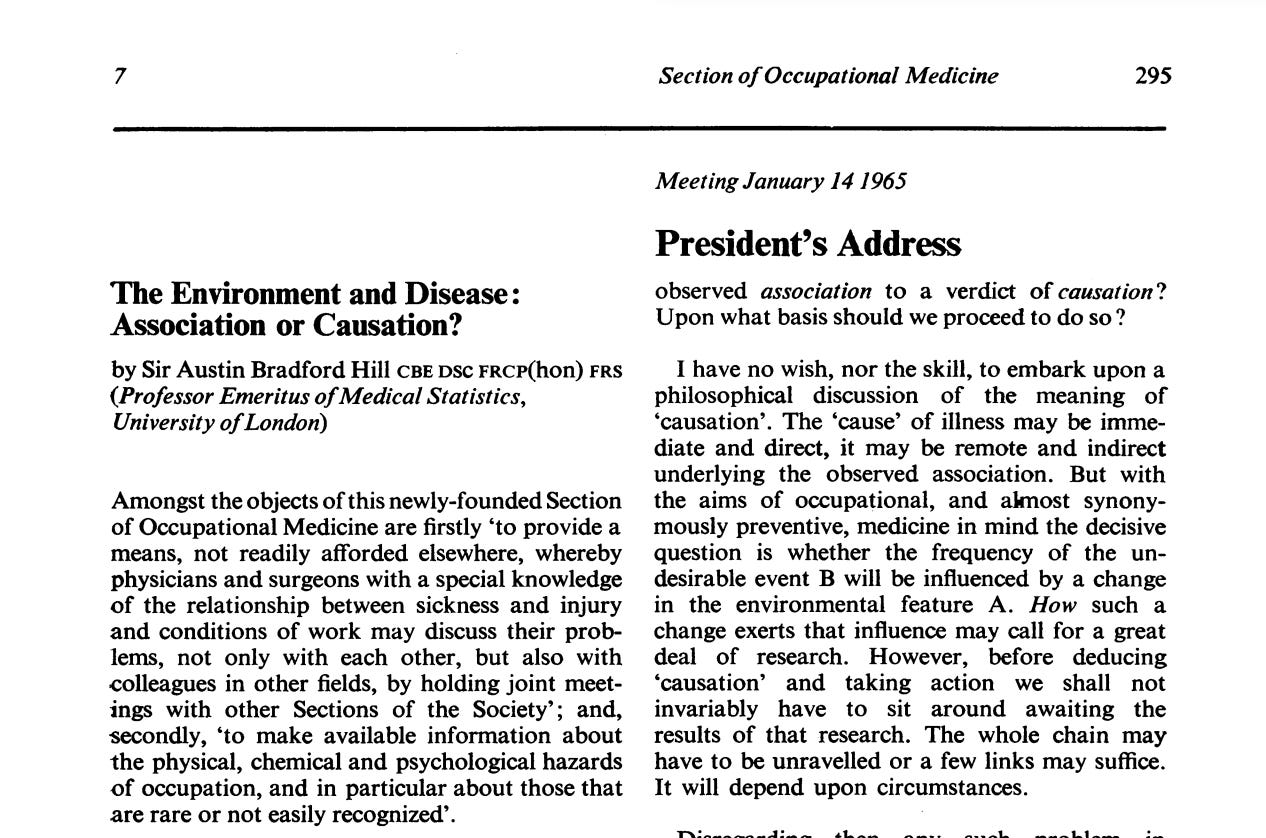
In 1965, Austin Bradford Hill, the statistician who helped design the modern randomized trial and helped prove smoking can cause lung cancer, delivered one of the most famous lectures in epidemiology: “The Environment and Disease: Association or Causation?” Hill offered nine viewpoints for judging causation — strength, consistency, plausibility, and coherence among them — and then refused to turn them into a checklist. None of the nine, he insisted, could be demanded as a precondition. They were aids to judgment.
Sixty years later, regulators wrote Hill’s judgment into the rules themselves. Written into consumer test guidelines that decide what can be sold, and the criteria that decide what gets classified as a carcinogen.
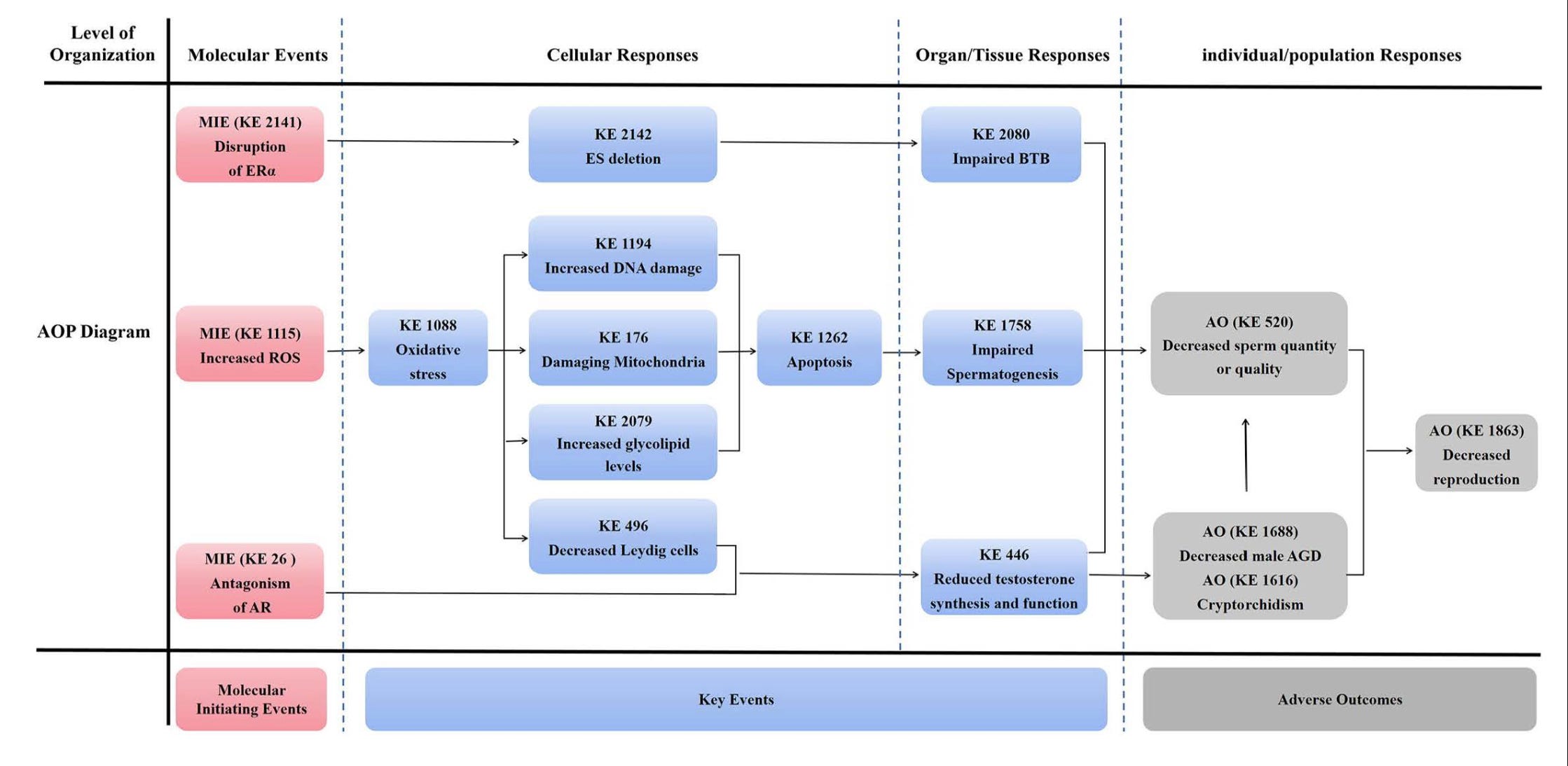
In 2012, the Organisation for Economic Co-operation and Development (OECD) adopted the adverse outcome pathway framework. An AOP is a documented causal chain: it starts with an initiating event, proceeds through a sequence of downstream events, and leads to an adverse outcome. Each link carries its own evidence base, and each link is graded using criteria adapted from Hill’s 1965 address: biological plausibility, empirical support, and the one that matters most here: essentiality. Essentiality asks this question: if you block the intermediate step, does the downstream effect fade? The AOP-Wiki, built jointly by the US EPA and the European Commission’s Joint Research Centre, is a public repository of these pathways at every stage of evaluation.
The essentiality experiment for the middle of my chain has already been run, in humans, in the relevant population, by researchers who had never heard of the 49ers.
An occupational-health team in Iran first documented that power plant workers carry elevated oxidative-stress markers compared with office controls, and that the markers rise with field exposure. They then ran a follow-up study to test if they could block the effect. Power plant workers were given vitamin C, vitamin E, both, or placebo for ninety days, with the exposure continuing normally for the entire period. Antioxidant enzymes rose and lipid peroxidation fell in the vitamin-treated groups.
This is an essentiality experiment: an intervention on an intermediate key event that moved the downstream marker in the predicted direction. And note what it is not — megadose beta-carotene in smokers. Ninety days of vitamins C and E in workers whose antioxidant reserves are being continuously drained is simply refilling the well.
Later they ran the same intervention against a different endpoint. This time the measurement was DNA, measuring markers for DNA damage and cell death. The vitamins reduced the damage. The authors concluded that vitamins E and C prevent the effects of the fields on DNA by scavenging the reactive oxygen species those fields produce.
Two trials, two endpoints, one intermediate step. Replenish the antioxidant reserves and the downstream damage recedes, regardless of the endpoint. That is what essentiality looks like.
A chain like this has already replaced an entire class of safety testing. For decades, the way we found out whether a cosmetic ingredient would give people an allergic rash was to shave a patch of skin on a guinea pig, apply the chemical, and wait to see what happened. Testing ran like this into the 1990s, when the European Union decided that was no longer acceptable. By March 2013 it was illegal to sell a cosmetic in Europe that had been tested on animals. That left the industry with a problem: the product still had to be proven safe, and the test that proved it was now banned.
What replaced it was a chain of mechanisms. An allergic skin reaction develops in a known sequence. The chemical binds to proteins in the outer layer of the skin. The damaged cells raise an alarm. The alarm activates the immune cells that monitor the tissue. Those cells train the immune system to recognize that chemical and attack it on contact. Each step in that sequence had been studied on its own, by researchers whose specialty is that specific pathway. Assembled, they became one of the first adverse outcome pathways the OECD formally adopted, validated as replacements for the animal tests.
Companies can now bring products to market based solely on chained evidence, with no end-to-end study in a human or animal. The pathway standard is not an animal-rights activist’s daydream, and it is not a “conspiracy theorist’s” loophole. It is a commercial reality.
The WHO has also moved in the same direction. In January 2019, the International Agency for Research on Cancer, the agency that classifies carcinogens, adopted a revised preamble: the rulebook its expert panels use to weigh evidence. The revision elevated mechanistic evidence to one of three parallel streams, alongside human cancer data and animal cancer data, organized around ten “key characteristics” that known carcinogens share. Strong mechanistic evidence can now raise a classification even when the direct human evidence is incomplete or missing.
Number five on the list of ten is oxidative stress.
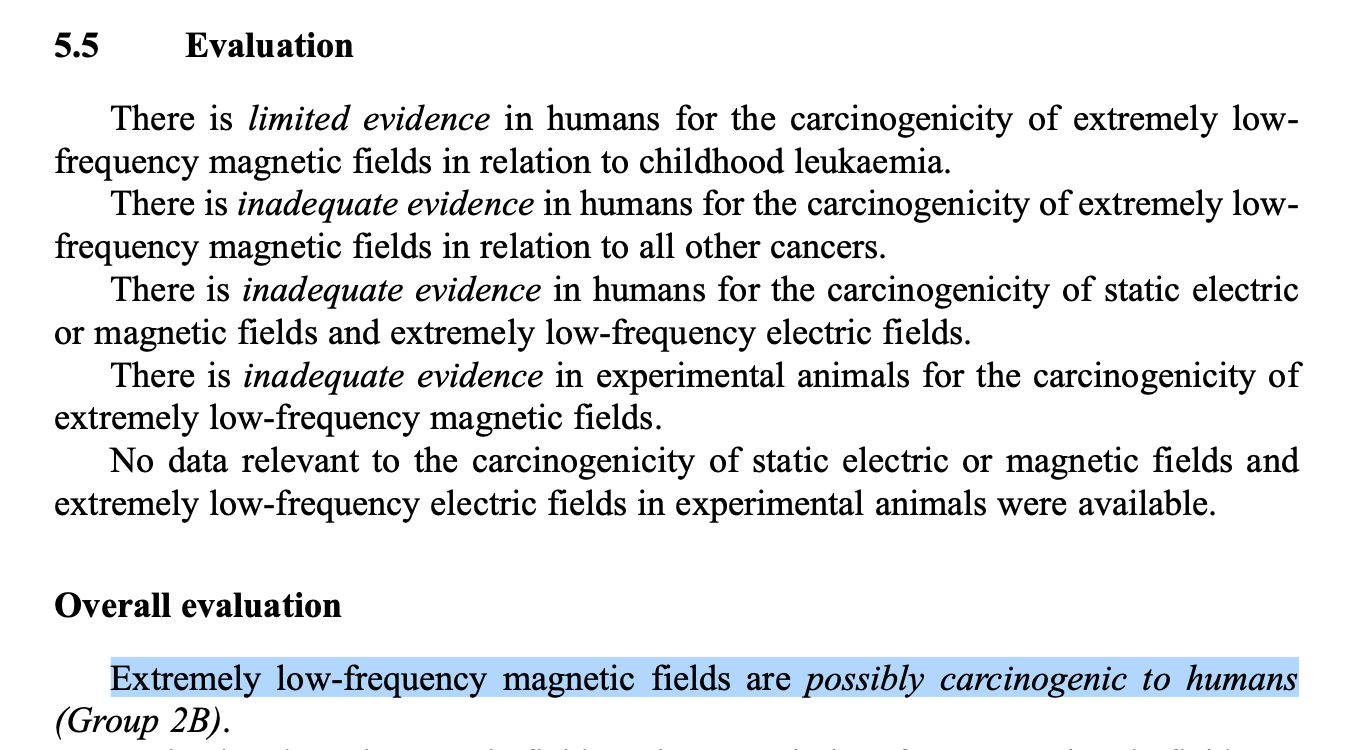
Which brings us to the part of this story that somehow never makes it into the news coverage: these AC magnetic fields emanating from power lines and substations are already on IARC’s ledger. Classified as Group 2B, possibly carcinogenic to humans, since 2002, on the strength of the childhood leukemia epidemiology. Pooled analyses found roughly a doubling of risk in children above about 3 to 4 milligauss, a level hundreds of times below the exposure limits set by the standards bodies. And the leading mechanism proposed for how a magnetic field could produce leukemia is oxidative stress due to the excess production of reactive oxygen species leading to damaged DNA.
I am not proposing that these fields have an effect that nobody has ever documented. I am proposing that the thing they are shown to be doing has consequences beyond DNA damage. Collagen is a protein. Proteins oxidize. The matrix metalloproteinase enzymes that dismantle collagen are switched on by oxidative stress.
IARC’s classification methodology applies only to cancer. It will never classify a tendon rupture, but it shows the same principle at work. If that principle can be used to prevent cancer, it can be used to document an adverse outcome pathway that leads to tendon damage.
Here is my theory, restated in the vocabulary used by regulators to describe a proposed adverse outcome pathway:
The Initiating Event: An external magnetic field influences the cell’s structures. Two published biophysical mechanisms describe how — one through the distortion of the mitochondria’s own electromagnetic field, one through the opening of voltage-gated ion channels flooding the cell with calcium.
The Key Events: Reactive oxygen species production rises; antioxidant reserves draw down; oxidative stress sets in. Documented in exposed workers, reversed by intervention in the trial above.
Downstream: Collagen-cleaving enzymes switch on and collagen synthesis is suppressed. That link is uncontested connective-tissue biology, demonstrated in human cells, regardless of the source of oxidative stress.
The Adverse Outcome: Degradation of collagen, resulting in tendinitis, and when a tissue is loaded like the Achilles tendon of a 250 pound NFL player on turf, complete rupture.
Four steps, each with an evidence base, assembled in the form the OECD wrote the AOP handbook for. This is what the entries in the AOP-Wiki look like: proposed pathways at every stage of assessment, from first submission through endorsement, each one a chain of documented links waiting to be graded. The repository does not yet contain a pathway for AC magnetic fields and connective tissue, but that is not a verdict on this chain. It is a vacancy, and this article is an invitation to consider it.
One substation, two theories of knowledge. Under the verdict standard, the case is closed until a direct study gets funded. Under the pathway standard, the case is open once a documented chain of mechanisms links the exposure to the injury.
Open is the entire claim. I am not asking anyone to take my conclusion on faith. I am asking for the chain to be graded, link by link, in the framework regulators built for exactly this job, and for the direct study to be funded.
Skepticism toward a novel theory is a reasonable posture, but skepticism is not neutral about outcomes. Applied at the point of exposure to a hazardous emission, it answers in favor of whoever is responsible for those emissions. Every year the direct study goes unfunded is another year the exposure goes on unchecked. Skepticism that reads as responsible on a podcast plays out as permission at a substation.
The choice between these two standards is not a choice between science and speculation. The OECD wrote the pathway standard into its test guidelines. The EPA built its repository. The European Union licenses products under it. The WHO’s cancer agency rewrote its rulebook around it. When Science Vs told me there wasn’t enough evidence, they were applying a standard the standard-setters themselves have been moving beyond.
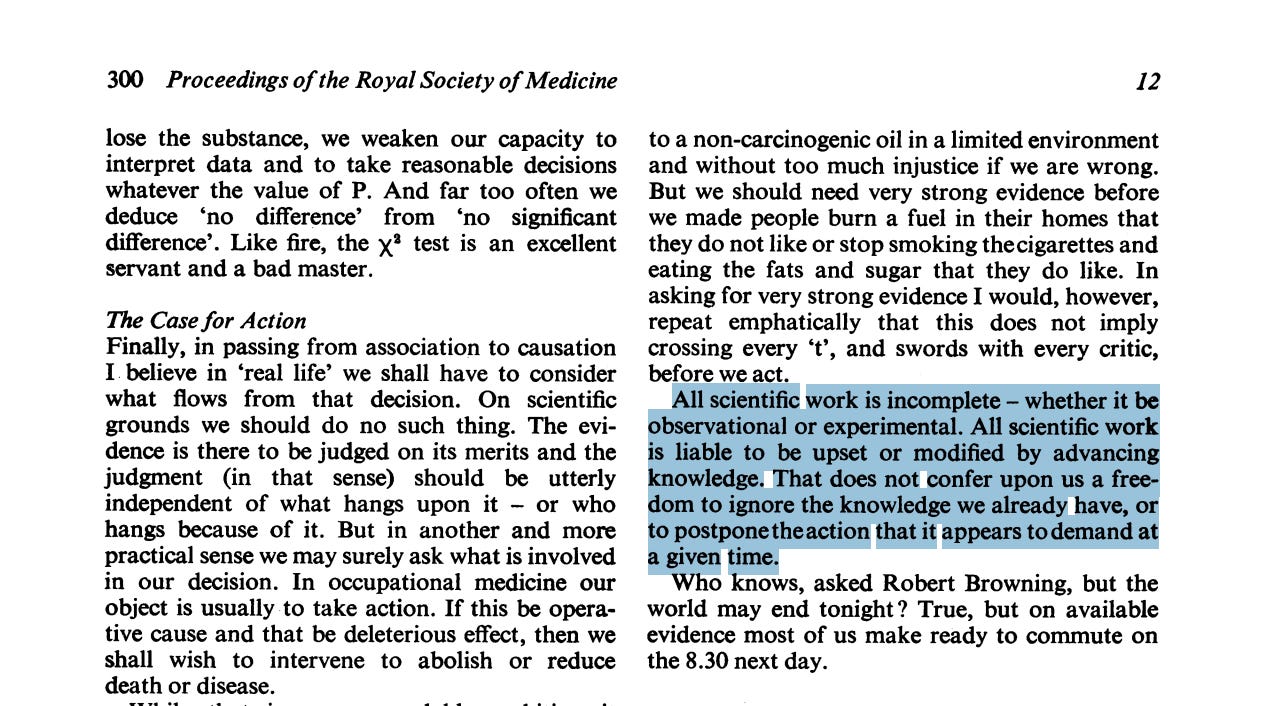
Hill saw it coming in 1965.
“All scientific work is incomplete — whether it be observational or experimental. All scientific work is liable to be upset or modified by advancing knowledge. That does not confer upon us a freedom to ignore the knowledge we already have, or to postpone the action that it appears to demand at a given time.”
The knowledge we already have is a chain, and I have shown you every link. Grade them.
No posts
Comments
Nothing yet. Say the first thing.
Sign in to join the conversation.