
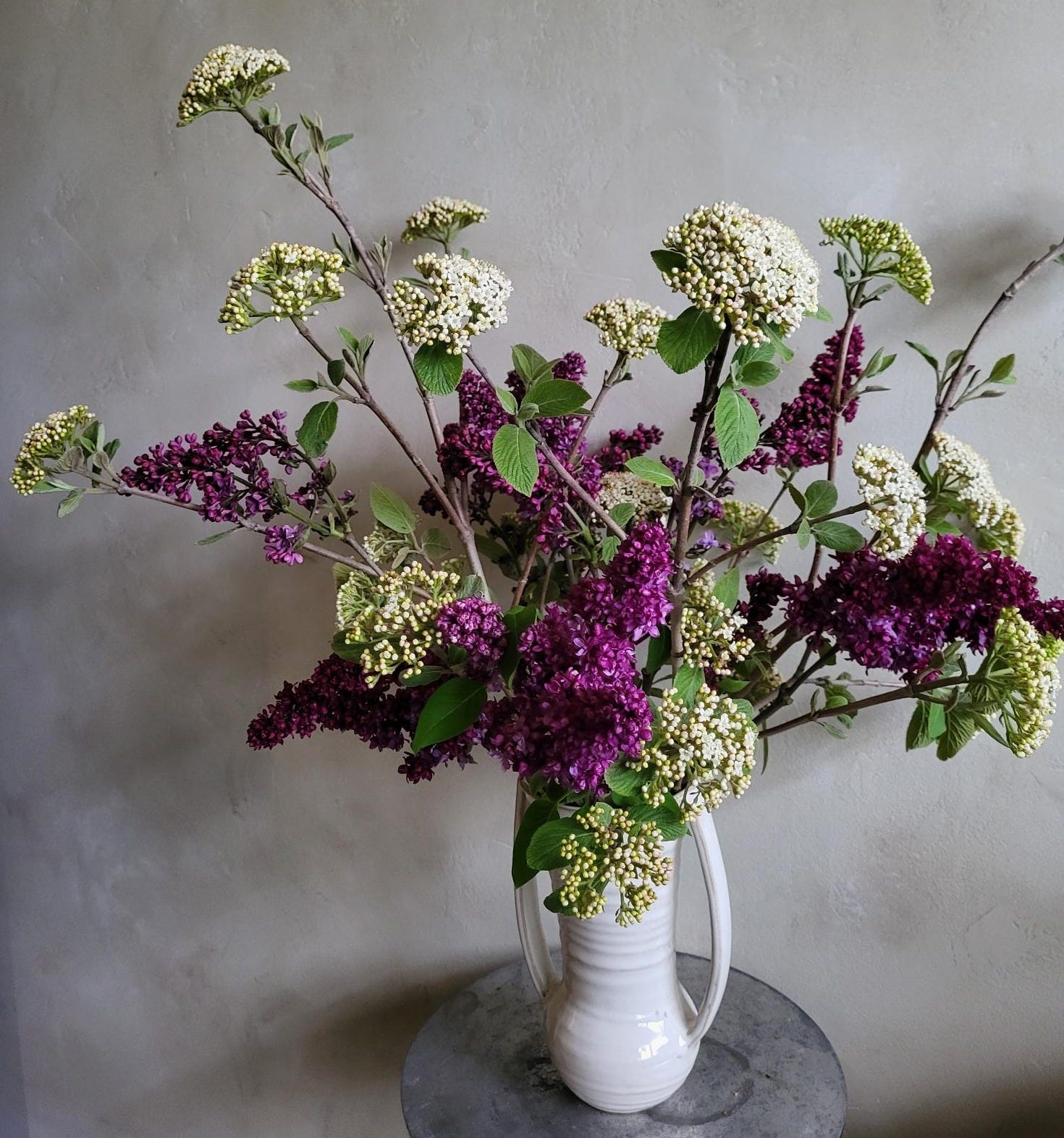
There is a particular kind of grief that comes with lilacs.
Not a heavy grief — more like the feeling of a Sunday afternoon slipping away. You notice the blooms are open, fully and extravagantly open, and somewhere in the back of your mind you already know: this won’t last. A week, maybe two if you’re lucky and the weather cooperates. Then they’re gone for another year, and no amount of wishing will bring them back sooner.
That brevity is the whole point.
If lilacs bloomed all summer, we’d stop seeing them. We’d walk past them the way we walk past things that are always there — politely, without really looking. Instead, their short season turns every bunch into a small event. You notice them. You make time for them. You bring them inside.
And if you’re going to do that, it’s worth doing properly.
When to Go
Timing your harvest matters more than most people realise. I aim for before 8 a.m. or after 7 p.m. — once the heat of the day has passed or before it builds. When stems are cut in full afternoon sun, the plant is already under stress. The water pressure in the tissue drops, and no matter how perfectly you condition those stems at home, you’re starting from behind.
Early morning is my favourite. The light is different, the garden is quiet, and the blooms are at their most hydrated after the cool of the night.
What to Bring
One thing: a bucket of warm water.
Not cold. Warm. This often surprises people, but woody stems take up warm water more readily than cold. Have it ready and waiting before you make a single cut. Every second a stem sits exposed to air, an air bubble is working its way up toward the bloom — and air is the enemy of vase life.
How to Cut
Remove most of the foliage before you even bring the stems inside. Leaves left on the stem compete with the bloom for water. They also foul the water faster, which shortens everything.
Then make two cuts on each stem: one straight across at an angle, and one vertical slit up the centre of the woody base — perhaps two to three centimetres. Lilac is a shrub, and those stems are tough. The dual cut dramatically increases the surface area available to drink.
Into the warm water immediately. Don’t linger.
Let Them Rest
This is the step most people skip, and it costs them days of vase life.
After processing, leave your lilacs to condition for several hours — or ideally, overnight. A cool room is best. Let the stems drink deeply before you ask them to perform in an arrangement. I think of it as letting them settle after the shock of being cut.
The Vessel
Lilacs want a generous container. Something with weight and presence. I love them in a vintage crock, or a large ceramic vase with a wide mouth — the kind that doesn’t try to organise the blooms too neatly. Lilacs are abundant and a little wild by nature, and the best arrangements honour that rather than fight it.
Fill the vessel, step back, and let them do what they do.
If You Want to Go Deeper
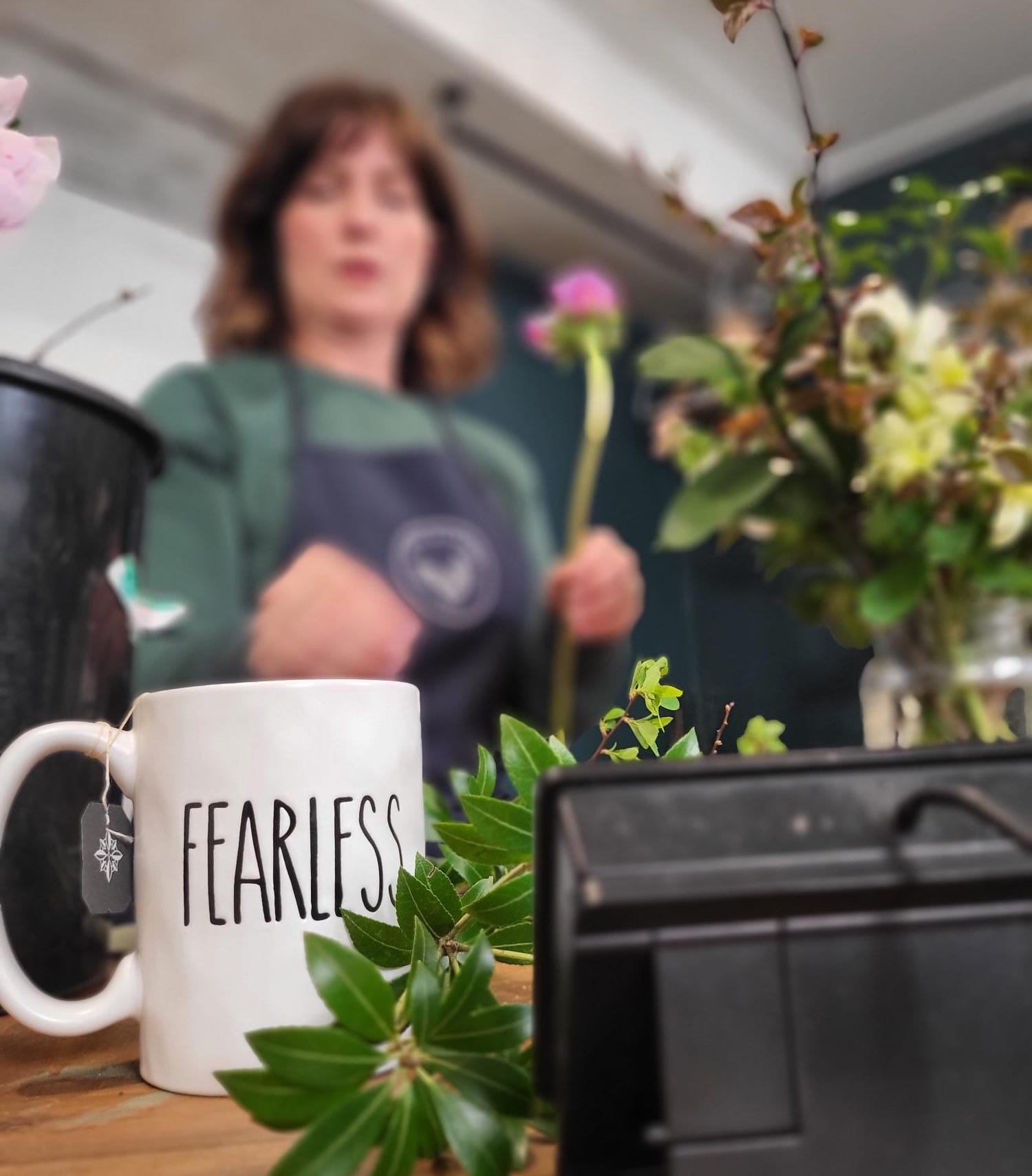
There is a lot more to know about working with spring flowering branches — from lilac and forsythia to cherry, quince, and beyond. Processing technique, design principles, how to force early bloom, how to make branches last in a warm room.
I’ve put everything I know into a 25-minute on-demand video, packed with the same practices I use and the tips I’ve picked up from florists along the way. It’s yours to keep for $20.
Spring is short. The lilac window is shorter. Make the most of it.
& live life in full bloom
xo Dar
No posts
Comments
Nothing yet. Say the first thing.
Sign in to join the conversation.