
Editor’s note: There is a great long read ahead about unusual and transgressive subject matter. In case the choice of inquiry makes you wonder - are you crazy? - I offer a few introductory thoughts to encourage you to invest the time (half an hour) to read it.
Perspectiva has always been about offering permission to reimagine the world. We believe a good way to do that is to see the world as a relationship between systems, souls, and society that changes as our perception of that relationship changes; taking responsibility for that relationship clarifies the generative agency entailed in the act of reimagining the world. But how far does this license to reimagine extend? Is it even ok to talk about, say, elves and fairies? Will it break Perspectiva’s woo budget for the next decade? Does exploring elves and fairies go, y’know, just a little too far beyond rational respectability?
Maybe, but much of what is mocked is poorly understood, and life is short, while any effort to keep enchantment alive is surely time well spent. I’m reminded of the expression: “I’d rather be naive than cynical”, and not just because we should not conflate ontological and epistemological conservatism with intelligence, but precisely because I don’t see this kind of work as naive. I see it as essential and courageous to fight for features of the world that may have been forgotten, forsaken or rendered inaccessible because of how our modes of attending and perceiving have changed.
Moreover, so much of the ‘more than human world’ perspective that is gaining ground as an intellectual alternative to the relatively techno-optimistic ‘posthumanism’ and ‘transhumanism’ is grounded in indigenous thought of various kinds. And when you look into that, and walk the talk of taking indigenous thought seriously, their cosmovisions often depend on honouring beings that we no longer have language for, but which often sound a lot like what we might previously have called elves or fairies. For instance, Patricia Gualinga from Ecuador speaks about her indigenous understanding of other beings that live within nature and protect it. She is clear that this is largely pan-indigenous and not unique to her Sarayuku people. One of her lines (translated from Spanish) was “They are in places where humans are not.”
And it’s really not so crazy! There is the literary provenance for a start: Tolkien, Shakespeare, Yeats, and Arthur Conan Doyle all took these beings seriously in a range of ways. There are theological commentaries, too, for instance Robert Kirk’s 17th-century classic on “the secret commonwealth” of elves, fawns and fairies. And I see a morphological parallel in entities at the subatomic level in physics that we posit to make sense of otherwise sound mathematics, like wavefunctions and virtual particles, but which are never directly observable and only ever somewhere between hypothetical and real. If that kind of malarkey works for the causal order, perhaps elves and fairies have a similar role for our experience of meaning through the acausal connecting principle that Jung and Pauli believed to co-arise with causality (though I accept there is no equivalent falsification process). On similar lines, perhaps those who can’t directly perceive elves and fairies might nonetheless infer them into existence through forms of experience and patterns of meaning, which is not to say they may not also exist entirely on their own terms. A parallel here is the NHS paying for acupuncture because it can be an effective treatment without recognising the reality of chakras or meridians. The point is that we can often accept something is true pragmatically while having a range of beliefs over why it is true, or in what manner it is true. I am also reminded of Professor Alastair McIntosh speaking about the search for fairies in his garden with a delighted glee, and to this day I’m not sure if he was serious, or if perhaps seriousness has nothing to do with it, but it’s no less real for that.
Anyway, I’m delighted people are giving this matter further thought in a grounded way that carries intellectual conviction, and happy to support their efforts.
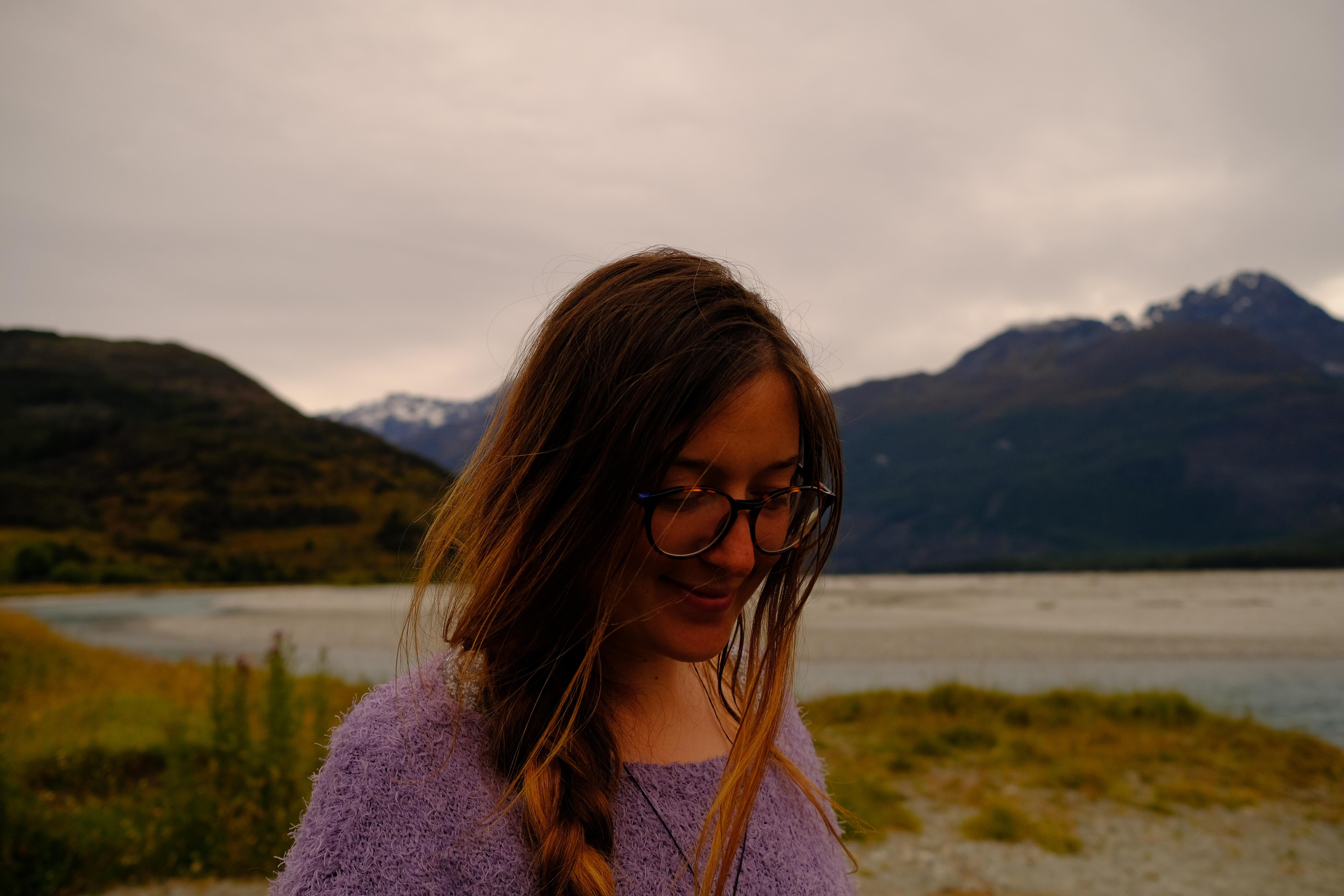
Sadie Rittman is a writer, researcher, and one of 2025-2026’s Realisation Fellows. Sadie’s Substack is A Wider World, and you can read more about her here, where she writes:
When I was 20 years old, I flew to Iceland with a grant to study beliefs in elves. I came back convinced that our crises call for re-enchantment. Why? Because a monocultural myopia has wreaked havoc on the planet. Because ecological, cultural, and ontological diversity are intertwined. Because our current understanding of reality is entangled with capitalism’s. Because changing the world can start with widening our own.
Sadie recently wrote and presented the academic paper (below) at the MOTH conference in London. After reading it, I was impressed by the scope and relevance of the research, and the acuity of the analysis and asked if we could publish it here, which Sadie kindly agreed to. The paper is not just about fairy stories, but can be appreicated as a new genre of ‘academic fairy story’. I read it as an ambitious and sophisticated philosophical claim about the ontology-epistemology relationship and how the nature of that relationship forecloses what we are able to conceive of, and perhaps also what we are capable of perceiving. There is a historical dimension to this, almost like the world has been too densely packed, and as it starts to crack, the hidden beings that have been squashed out of existence begin to fall out - yet of course they were always there for those who choose not to inhabit such a densely packed world without betweenees. If you read the paper closely, hidden beings like elves and fairies become prismatic of the wider challenge of grasping how our ways of knowing delimit our sense of what there is, and what there could be. I encourage you to suspend your disbelief and follow the careful argument where it leads.
Jonathan Rowson, Perspectiva CEO.
By Sadie Rittman
“Do elves exist?”
Belaboured breath. Hesitation. An inability to say “no.”
The wind howled, and we clutched our coffee cups in the empty seaside cafe. Out the window, a misted bog ran with sulphuric streams out towards the black and beating ocean. Sigríður, a retired school teacher, told us about his mother’s elf friend — a huldukona, hidden woman — who’d visit her in dreams to warn her about the future. “They grew up together; my mother on the farm, and the huldukona in the stone,” Sigríður chuckled, before he closed his eyes, leaned back, and hummed a winding tune.
I was in Iceland to research beliefs in elves. I’d read about elves blocking road construction in Iceland — how road development was paused, obstructed, and made deferential to elves inhabiting stones and lava fields on build sites. These elves were able to communicate with the Icelandic Road and Coastal Administration through psychics and seers, to make their needs and wishes known. Sometimes roads could be redirected; sometimes construction could merely be delayed, allowing the elves time to move. From my perch at college in Philadelphia, where I was an undergraduate, I needed to know how this could happen. How could magic set limits on, and negotiate with, human development? How could seers be granted their voice? How could a modern European country believe in elves?
Armed with a grant, I set off to find out. As though belief was mine to wrangle.
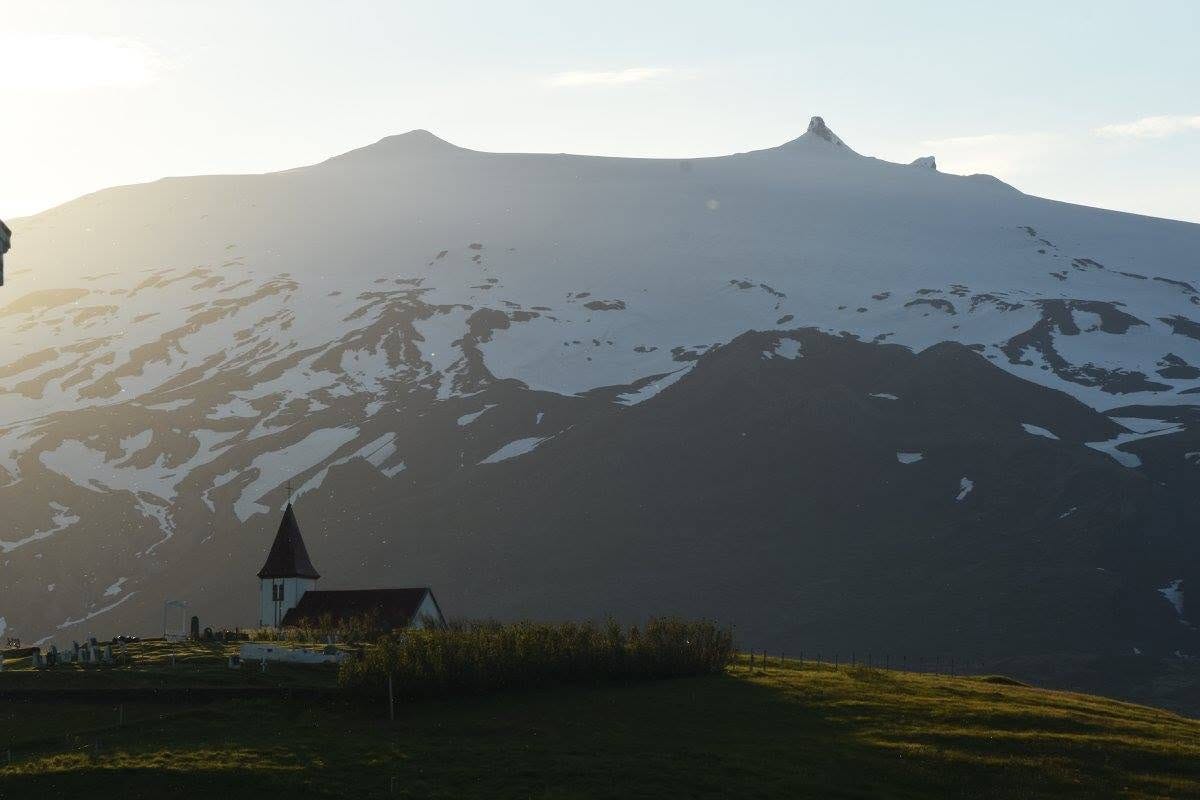
Belief was not mine to wrangle. According to a wayward statistic — taken from a folklorist who rues the day he let it slip out of academia, last seen making the rounds on PLAY Airlines shopping carts as a sales tactic — fifty-four per cent of Icelanders believe in elves. The truth is, of course, far less cartoonish, more nuanced, and more important than what a statistic can say. As I hitchhiked around the country conducting research, interviewing everyone from the head of the paranormal society to the curator of a major Reykjavík museum to the man I met taking a drag on the street, I was often told, with a glowing smile, “Oh no, I don’t believe in elves.” Minutes later, though, the same person would tell me, “But, well, my brother sees elves, and I believe him. He’s not crazy or anything.”
It was a “cosmopolitical” attitude before I’d ever come across the term. One did not have to believe to hold space for the unknown. The result was a world into which many could fit; a country that could make space for elves.
“Cosmopolitics,” as formulated by philosopher Isabelle Stengers, names an orientation towards “slowing down reasoning” to make space for “multiple, divergent worlds.”[1] Extended by anthropologist Marisol de la Cadena into Indigenous and ethnographic contexts, it refers to a “negotiation between worlds that alters the ontology of modern politics,”[2] heeding the Zapatista call for a pluriversal principle, a world into which many can fit. One does not have to believe to hold space; “heterogeneous worldings”[3] can exist within “sites of equivocation.”[4] De la Cadena applies this to an Andean mountain, such that beings like sacred mountains can be “more than one but less than two” entities, sites of multiple worlds.[5] Ragna, a seer in Iceland, applied the same principle to a stone in her local Helisgerði Park. Pointing to the large boulder in the suburban, grassy glade, she indicated that it was like an “apartment” of multiple, overlapping worlds. “The beings can’t see each other,” she said — occupying, as they do, multiple dimensions, or worlds, within the same stone — “but they know they’re there.”
“Hidden beings” — like elves, fairies, huldufólk, and their international counterparts across cultures — are liminal figures within relational worlds. Inhabiting thresholds, they serve an inherently cosmopolitical function. In their stories and traditions, from folklore to fairy tales to memorates, past and present, they contextualize our world amongst others, beyond what we can see and understand. They negotiate the human and more-than, and the bounds of our understanding, drawing us into relationship with a wider world beyond what we can claim to “know.”
Now, as the problem of human exceptionalism — an overzealousness in human “knowing” that’s tried to dominate the planet — meets with its results in climate crisis, and we are, as Anna Tsing and her collaborators write, swept “back into the waves of the more-than-human sea,”[6] we need to relearn how to swim. Out in these waters beyond what we can know, “hidden beings” might help; fairy tales might work like a life raft.
Hidden beings, and the fairy tale traditions that carry them, are an epistemological technology. They are cross-cultural tools for holding many worlds, cultivating relational responsibilities, and contextualising us beyond the bounds of our comprehension. They work within the register of story, transcending the need for shared beliefs or proof as they navigate the unknown, liminal worlds between worlds, where multiple possibilities lie within reach, dimensions overlapping as in Ragna’s Helisgerði stone. Belonging to betweenness, their cosmopolitical function may even make them a keystone species of sorts. Just as a forest requires biodiversity to thrive, so too may our planet require ontological diversity: a world of many worlds, rather than a monoculture that strangles the planet. If the metacrisis — a term denoting the interconnected causes of existential global crises in our ways of seeing, knowing, and organising — may be rooted in such a monoculture, hidden beings, as cosmopolitical technologies, may prove critical.
Entanglement Beyond Ourselves
All around the world, stories tell of “hidden beings” that mystically mediate between the human and more-than-human, in an interconnected and enchanted world of many worlds. Across cultures, they are relational figures that emerge within entanglement, where boundaries between human and more-than-human life are negotiated and participatory rather than fixed. From the huldufólk of Icelandic lava fields to the sídhe of Ireland, the patupaiarehe of Aotearoa/New Zealand’s misty forests, the menehune hidden in Hawaiian valleys, the maruxinhos under Portuguese hills, Cree mannegishi between rapids and rocks, Japanese kami where wonder is felt in nature, and shape-shifting Arabic jinn, these liminal “hidden beings” mediate relations beyond what we can understand in the more-than-human world.
They draw us into reciprocal relationships within nature and hold us accountable for ecological transgressions by forces that exceed our comprehension. Stories, folkloric and contemporary, make this clear. Icelandic builders who move the wrong stone are punished by the huldufólk; Irish farmers who cut the wrong tree face the wrath of aos sí; a Hawaiian chief who kills birds just for fun is violently reprimanded by the menehune. Anthropologist Conrad Arensberg found that amongst Irish agricultural workers in the 1930s, the aos sí were said to punish those who dumped waste into streams.[7] Folklorist Peter Narvaez, studying fairy lore in North America, argues that fairy legends are invoked to enforce morality, punishing behaviour that violates community standards and threatens community resources.[8] Scandinavian folklore scholars Tommy Kuusala[9] and Ann Skjelbred[10] similarly each argue that Nordic “hidden folk” protect nature from human despoilment. Commonly, “hidden beings” act as “agents of environmental justice.”[11]
In a world shared with hidden beings, humans are forbidden from acting unchecked upon the landscape. Instead, they are drawn into relationships of reciprocity, respect, and mutual obligation that exceed human bounds. This resembles Robin Wall Kimmerer’s characterisation of Indigenous relationalities of reciprocal obligation within the more-than-human world. Whether a Sicilian mother leaves gifts of milk and honey out for the fata, or Sigríður’s mother respects the grass around her huldukona friend’s home, just as she’d expect respect for her own, relationships are entered into and upheld. We are not alone in an endlessly extractable and inert world, bendable to our will, but instead are humbled by more-than-human ecologies, with consequences we can’t control. “Hidden beings” thus play a relationally regulatory role, entangling us beyond ourselves. Their world of many is far from one of endlessly plunderable “natural resources.” Their world of many helps hold ours in place.
We are not alone in an endlessly extractable and inert world, bendable to our will, but instead are humbled by more-than-human ecologies, with consequences we can’t control. “Hidden beings” thus play a relationally regulatory role, entangling us beyond ourselves. Their world of many is far from one of endlessly plunderable “natural resources.” Their world of many helps hold ours in place.
Out of Bounds
Today, though, hidden beings and the relationality they enact aren’t real. We can’t see them, touch them, or offer evidence of them. While children may play with them, they “vanish instantly at the sound of an adult voice.”[12] And who are the “adults” of modernity, arbitrating existence such that fairies don’t exist?
Anthropologist Frédérique Apffel-Marglin argues that the world as we “know” it “is not the world as it really is, but rather the world as it was invented and enacted for certain purposes and not for others.”[13] She explores how, with “the first conceptualization of the market economy in the seventeenth century (…) the disentanglement of the individual from a web of community and spiritual obligations gave rise to the individual subject acting on the basis of his perceived self-interest,” producing concomitantly “the individual subject” and land as “economic resource.”[14] A world, to be sure, without fairies. This separation could in turn only be enabled by the Cartesian split between “the thinking mind, which had a soul, from mechanistic soulless matter.”[15]
These separations maintain and have been maintained by the knowledge paradigm of modernity, wherein, as anthropologist Eduardo Viveiros de Castro writes, “to know is to objectify by distinguishing between what is intrinsic to the object and what instead belongs to the knowing subject.” In a Cartesian order, “the subject constitutes or recognises itself in the object it produces, and knows itself objectively when it succeeds in seeing itself ‘from the outside.’”[16] In this way, “our epistemological game,” “is objectification: what has not been objectified simply remains abstract or unreal.”[17] To “know,” or to become “real,” requires separation; hidden beings certainly aren’t “real” here.
What might be thought of as an objectivist paradigm renders the world “knowable,” tameable to human bounds for comprehension, and objectifiable rather than animate. It is a world in which “science,” as Isabelle Stengers explores, can be “a general conquest bent on translating everything that exists into objective, rational knowledge.”[18] A world in which “an exhaustive scientific explanation of the world” could be “capable of reducing every object to a chain of causal events.”[19] Where, as Egil Asprem writes in his reading of Max Weber, “any phenomenon is in principle intelligible. That is, even though we may not know how our computers work or what goes on in the intricate global economic system, we believe that it is possible to find out if we just put our minds to it.”[20] A disenchanted world, inanimate, where almost by definition, “hidden beings” cannot be real.
Such a “world” spread to smother all others with global colonialism and capitalism. Colonialism relied on the idea of “terra nullius,” “rendering empty the places it occupies and making absent the worlds that make those places.”[21] Early anthropologists worked from within this project, understanding other cultural worlds as “intelligible” and tameable within their own. This defined how they explored “hidden worlds.” In the mid-19th century, archetypal “armchair anthropologist” EB Tylor “posited a developmental hierarchy of world cultures from the ‘savage’ or ‘primitive’ to the ‘barbarian,’ and finally to ‘civilisation,’ the apotheosis of which resembled Victorian England.”[22] Animism and science occupied opposite ends of this spectrum, with animism belonging to the “primitive” and science to its matured, adult form: “civilisation.” In this “developmental hierarchy,” “hidden beings” belong to children, “primitives,” and our own distant pasts, not to modernity’s “adults.”
Though anthropologists would come to condemn such hierarchies, they would nevertheless uphold them. As Bruno Latour writes, with “the power of science on their side,” social scientists could “replace” such phenomena as “religion, popular culture, mythical cosmologies, markets, corporations” — and indeed, elves and fairies — with “the harder stuff of some hidden social aggregates as well as their powers, structures and inertia.”[23] Nothing could escape such rationalisation, least of all the fairies. If even unitary experience — the ecstatic experience of oneness reported across religions — could be demysticized by brain scans, seeing elves, as Sigríður’s mother did in Iceland, could be a product of “social aggregates.”[24] Such analysis has served the colonial and neocolonial project well, as “in order for colonialism to operationalize itself, it must attempt to make Indigenous peoples stand in disbelief of themselves.”[25] It must cover the world with its own.
This replacement process has left us alone, in many senses. Inhabitants of “the Anthropocene,” we live in and enact perceived separation from the more-than-human world. Anthropologist Eduardo Kohn sees the Anthropocene as an “actualisation” of the bounded symbolic systems that separate the “human” and impose it over “nature,”[26] separating us from more-than-human worlds and allowing us to enact the kind of exploitation that “hidden beings” would guard against. As David Abram writes, “Today we participate almost exclusively with other humans and our own human-made technologies.”[27] We’re stuck in our own world, where others don’t “exist” like ours. That doesn’t mean other worlds aren’t still possible, though. Reality gets redefined in relationship.
Reclaiming the Relational, Releasing the Real
“Hidden beings” belong to realms of connection that modernity erases. Liminal border dwellers, they exist only within betweenness, within the spaces that the objectivist paradigm cannot render “real,” requiring, as it does, objectification and separation to “know.” Anthropologist Nurit Bird-David reclaims this betweenness, retrieving “animism” from its Tylorian banishment to “infantile,” “primitive” and “not real” to re-examine it in terms of relational epistemologies. Drawing from “environmental theory (insisting that the environment does not necessarily consist dichotomously of a physical world and humans) and… personhood theory (asserting that personhood does not necessarily consist dualistically of body and spirit),”[28] theories that challenge modernist separations, she explores animism as resulting from relational conceptualizations of personhood. For the South Indian Nayaka with whom she works, she identifies devaru spirit beings as manifestations of “sharing relationships between Nayaka and other beings. A hill devaru, say, objectifies Nayaka relationships with the hill; it makes known the relationships between Nayaka and the hill.” [29]
In this way, spirits like devaru could not exist if the “objectivist paradigm” determines existence, as they occur within an opposing modality. As Bird-David delineates, within the “objectivist paradigm,” “learning” involves “acquiring knowledge of things through the separation of knower and known and often, furthermore, by breaking” the thing “down into its parts in order to know it.”[30] To “know” a tree within the objectivist paradigm, therefore, would be to cut it into parts; to “know” a forest would be to “cut down a strip of trees with machetes, sort out (separate and classify).”[31] If “cutting a tree into parts” epitomises the modernist epistemology, “talking with trees” epitomises relational epistemology.[32] Only through relational epistemology, “talking with,” can the devaru become real.
As such, anthropologist Philippe Descola sets animism in opposition to the modernist ontology, writing that the two are “antithetical.”[33] In a move that allows other worlds to become possible, he takes the modernist world not as the world itself, but as an ontology amongst others, and names it “naturalism.” In a naturalist ontology, upheld by the “objectivist paradigm,” humans and nonhumans share materiality but differ in interiority. Mind is not matter. Humans are alone.
In other ontologies, this separation does not hold, and knowledge is pursued relationally rather than objectively. Eduardo Viveiros de Castro proffers such an alternative in “perspectivism,” which he claims to derive from Amerindian thought, as a multi-naturalist ontology of similar interiors but differing exteriors. It is “composed of a multiplicity of points of view” wherein “every existent is a centre of intentionality apprehending other existents according to their respective characteristics and powers.”[34] In this world of multiplicity, “to know” is not to “objectify” but, conversely, to “personify.” As he explains, “if a subject is an insufficiently analysed object in the modern naturalist world, the Amerindian epistemological convention follows the inverse principle, which is that an object is an insufficiently interpreted subject. One must know how to personify, because one must personify in order to know.”[35] To return to Bird-David’s language, it’s a world derived from talking with, rather than “cutting up.” Within such a world, the Nayaka may not “know” the hill without its devaru.
If objectivist knowledge is pursued through science, perspectivist knowledge, Viveiros de Castro describes, is pursued through shamanism. The shaman travels into a relational space where they may “cross the corporeal barriers between species, adopt an exospecific subjective perspective, and administer the relations between those species and humans.”[36] The role of myth, for the shaman and their way of knowing, is integral, as “a geometrical locus where the difference between points of view is at once annulled and exacerbated.”[37] Or, perhaps, as the place where worlds meet. Viveiros de Castro writes that within perspectivism, myth is the “absolute discourse” in which “each kind of being appears to other beings as it appears to itself.” Serving as “the universal point of flight for perspectivism,” it is “a state of being where bodies and names, souls and actions, egos and others are interpenetrated, immersed in one and the same presubjective and preobjective milieu.”[38] We may say that, within a world between worlds, perhaps best held together by “myth,” is a liminal reality modernity can’t access.
We may say that, within a world between worlds, perhaps best held together by “myth,” is a liminal reality modernity can’t access.
But we too are inheritors of myths, of multiple worlds, of betweennesses we may not have learned how to seriously inhabit. Arguably, we don’t have to become shamans to re-encounter this multiplicity and its liminality. We still have our fairy tales, and they can take us somewhere different.
Liminality: Where Worlds Meet
Just because we have inherited a world of separation and objectification doesn’t mean it’s the only world we have. Anthropologist Victor Turner identifies two human states: structure, by which society is ordered and governed, and anti-structure, wherein boundaries dissolve in “communitas” and the sacred occurs. Like a wheel and its empty centre, Turner argues that the human condition requires both states.[39] As we have seen, in Western modernity, “knowledge” and “certainty” have been privileged within the structured space; in order to “know,” we separate, distance, distinguish, order, and represent. And everything must be “known.” Whatever cannot submit to the scientific method cannot be verified as real; “hidden beings” are for “primitives” and children. That doesn’t mean that the anti-structure, a boundlessness, isn’t still available to us and needed.
Anthropologist Susan Greenwood explores the relationality that the modernist knowledge paradigm cannot hold as deriving from a form of consciousness accessible across cultures. Drawing from the work of Lucien Lévy-Bruhl and Stanley J Tambiah, she suggests that all humans can access two “modes of consciousness”: “causality” and “participation.” Resonant with Turner’s “structure” and “anti-structure,” “causality” consists of “logical thinking that is abstract, separated and focused,” while “participation” is “an orientation to the world which places that person in the world fully as a totality,” often expressed through myth and ritual.[40] Access to the world of myth, therefore, would be incipient within all of our consciousness.
This dualism occurs in other registers. Neuroscientist Iain McGilchrist attributes these two modes of consciousness to the two hemispheres of the brain. “The right hemisphere sees things whole, and in their context,” relational, he writes, “where the left hemisphere sees things abstracted from context, and broken into parts.”[41] For both Greenwood and McGilchrist, imbalance emerges when one mode, one hemisphere, is overprivileged to the detriment of the other. For Greenwood, the modernist elevation of causality over participation has “systematically undermined and undervalued” the “mythopoetic, expanded aspect of awareness that can potentially be experienced by everyone,”[42] while McGilchrist frames the dominance of the left hemisphere as a civilizational overreach of abstraction, rendering the world inert and foreclosing other worlds. Their work would suggest that we don’t need to become perspectivists to interpenetrate with other worlds. Rather, we need to rebalance our modes of consciousness.
As has been gestured, the consequences could be world-making or world-destroying. Leaving objectivist principles behind, it may be that our worlds are co-created in relationship. Indigenous scholar Vanessa Watts points out that epistemology and ontology, as derived from a Cartesian order, assume “one’s perception of the world as being distinct from what is in the world, or what constitutes it.”[43] She offers an alternative in “place-thought,” as “the non-distinctive space where place and thought were never separated because they never could or can be separated. Place-thought is based upon the premise that land is alive and thinking and that humans and non-humans derive agency through the extensions of these thoughts.”[44] Within such a framework, relationality takes on constitutive weight.
Not too dissimilarly, Frédérique Apffel-Marglin draws from feminist physicist Karen Barad’s theory of “agential realism” to explore how realities are enacted through participation. Agential realism holds that reality is inherently relational, a “function of the agencies of observation rather than preexisting the measurements these agencies produce,” such that “matter (materiality/physicality) and human discursive practices are always entangled, thereby making the classical representationalist act impossible.”[45] For Apffel-Marglin, rituals then become sites of “intra-actions that enact different agential cuts and thus different realities.”[46] In ritual, humans, non-humans, and other-than-humans “synchronise,” “enabling them to weave each other into a continuous world, a regenerated world,”[47] where “land becomes land and people become people,” with the “earth goddess or spirit” “manifesting” at these intra-spaces of relation and creation. On a metaphysical level, these worlds are co-created in relationship.
This is where we find our hidden beings. They are in the spaces where separation breaks down: the intra of intra-actions, the antistructure beyond boundaries, the mythopoetic register of participatory consciousness, the space where thought is inextricable from land - the genius loci of myths where worlds meet.
Essentially, “hidden beings” are always and only liminal. As anthropologist Katrin Sontag found in her own journey to Iceland to study huldufólk — wherein, unlike me, she actually saw one — they’re characterised by “transgression, movement, interaction and change.”[48] They smudge rather than reinforce borders, connecting as they separate. Humanoid but not, they both domesticate and otherise, marking and embodying the betweenness of human and more-than-human worlds.
Liminality is a key trait in stories of hidden beings. Motifs of borders, transgressions, and transitions are particularly prevalent in folklore. Huldufólk often appear at crossroads or on New Year’s Eve, when one year crosses into the next. Such thresholds mark points where worlds touch. Anthropologist Mary Douglas pays attention to the religious significance of borders and transgression, arguing that practices of ordering and negotiating boundaries maintain cultural worlds, offering safety in relation to what might otherwise overwhelm.[49] Hidden beings inhabit the porousness of such boundaries. They are where borders are crossed or loosened, our pathways beyond ourselves.
The poet Gary Snyder explores such transgression in his treatment of The Woman Who Marries a Bear, a story derived from Indigenous Tlingit and Tagish traditions. In the story, Snyder writes of a sacred past in which humans and other beings shared a communicative world, attending “meetings” together[50] — a world of many worlds. As humans gradually withdrew into separation, “spending all our time” amongst ourselves and learning “a lot of little stuff,” the shared world of many worlds, sacred and mythopoetic, continued to exist, but in a “world behind the world we see that is the same world but more open, more transparent, without blocks,” where, “like inside a big mind, the animals and humans can all talk.”[51]
In The Woman Who Married a Bear, two liminally-oriented figures, a girl who “somehow felt drawn to the wild place” and a bear representative of “the closest of all animals to humans,”[52] are drawn towards each other. Together, they enter a dangerous and sacred between-space, where distinctions blur, and “rain might look like fire, and fire might be rain.”[53] In this liminal space, the bear and the woman become shamans. The woman is forced back into separation though, drawn back by her brothers who come to kill the bear, to reinforce the boundaries. The story is one of liminality, of the possibilities and dangers of worlds between worlds.
Not bear and not human, “hidden beings” across traditions may be doorways into such spaces. Border-dwellers of the more-than-human, they connect as they separate, drawing us into right relationship and inviting transgression at the membranes between worlds. Rewarding humility and punishing overreach, they negotiate the safety, dangers, and ethics of our relationships beyond ourselves, in betweenness. They help us navigate thresholds.
Re-enchantment for the Metacrisis
The metacrisis shows us the consequences of cordoning ourselves off, alone in a human world. Aboriginal scholar Tyson Yunkaporta depicts a sort of narcissism as the root cause of our crises; a world that can’t hold others. He writes about how, in Dreaming stories, the character “Emu” is often “a narcissist who damages social relationships. These stories teach us about the protocols for living sustainably and warn us about unsustainable behaviours. The basic protocols of Aboriginal society, like most societies, include respecting and hearing all points of view.” Narcissists like the emu, however, “refuse to allow other points of view,” thus destroying “basic social contracts,” “shattering” “frameworks of harmony,” breaking down “systems of give and take,” and isolating us, leaving us “lost in a Darwinian struggle for power and dwindling resources that destroys everything.” Yunkaporta invites us to “feel free to extrapolate this pattern globally and historically.”[54]
Doing so, we can see the effects of this “emu mentality” in the metacrisis. We separate ourselves from the more-than-human world and participate, as David Abram writes, “almost exclusively with other humans,” “a precarious situation, given our age-old reciprocity with the many-voiced landscape.”[55] Diagnosing the problem, Yunkaporta suggests that “perhaps further work needs to be done on what constitutes consciousness and what constitutes life. If the definitions of these things could include rocks as sentient beings, it would go a long way towards stemming the emu-like behaviours that are running rampant across the earth and cyberspace right now.”[56] As we have traced, “hidden beings” could be this “further work.” They are pathways beyond ourselves, a technology for holding other worlds, guiding us towards the rock’s. They may be a cosmopolitical “keystone” for a world of many, a world in which we humble our own amidst others.
The climate crisis draws us back into such a world of many worlds, whether we like it or not. As the world constructed by our separations and objectifications collapses, it no longer splays itself inert. As Bruno Latour writes, with climate crisis, “the earth has now taken back all the characteristics of a full-fledged actor,”[57] carrying with it, as anthropologist Nils Bubandt adds, “a metaphysics that has lost the ability to distinguish the bios from the geos.”[58] We can no longer disentangle ourselves, and are thus “swept” from the ladder of modernist thought, “back into the waves of the more-than-human sea.”[59] Unsurprisingly, this “seems to bring spirits, once thought to have been killed by secular thought, back to life.”[60] As we have seen, this may be because these “spirits” live in relationalities that were stifled by modernist “separations” in the pursuit of certainty. As these separations dissolve in the “more-than-human sea,” these relationalities, and the beings that inhabit them, re-emerge.
Re-enchantment could be how we relearn to swim. Re-enchantment, as this paper holds it, refers to the slow and wondrous work of walking back our presumption that the world is fully ours to know, that the limits of reality are defined by us, and that the worlds we hold are the only ones. It is a cultivation of openness to other worlds, allowing for relational, ethical and imaginative engagement with phenomena that exceed our frameworks. It is a stance that restores our participatory engagement with a world that is alive, relationally animated, and interconnected. It is a world of many worlds, and the hidden beings lead us into it.
The scholar of mysticism William James coined the term “wider world” to describe this, asking, “why, after all, may not the world be so complex as to consist of many interpenetrating spheres of reality, which we can approach in alternation by using different conceptions and assuming different attitudes…?”[61] Engaging “hidden beings” and their fairy tales, across imagination, spirituality and theory, can be our pathway towards such a wider world. This may have always been their keystone, ecological role. We don’t need to “know” them; we only need to let them in, to widen our world.
I never conquered “belief” in that first research trip to Iceland; the elves worked upon me rather than the other way around. My interlocutors seemed to anticipate this. “Just open up,” they kept on urging, and now I understand better what they meant, what that “openness” entails.
“Just open up,” a grandmother urged me, for whom “sometimes the veil lifts.” After I interviewed her, her grandson drove me to an intersection, telling me how he saw “luminous beings” when he was young, until his father died and he needed to take the reins at home. “I think you can’t see them if you’re too focused on something,” he said.
Towards the end of that trip, I walked out into a lava field. I softened my gaze. I felt elves everywhere. It could have been my imagination. Or it could have been my creaking openness to worlds I hadn’t yet learned to hold. I was no longer the arbiter of reality, alone in a human world. I was released to the landscape. I became a world amidst worlds.
It’s a move we need to make if we are to return from the bounded-human, a monocultural wasteland, a world of one world, to the “many-voiced landscape”[62] where we have always belonged. We don’t need to believe in fairies; we need to recover the capacity for not-knowing, for relationality and entanglement, that lets them in, and connects us to worlds beyond our own.
Sadie Rittman is a cultural ecologist exploring re-enchantment. She began researching beliefs in elves as an undergraduate studying religion at Swarthmore College, and holds an MA in sociocultural anthropology from the University of British Columbia. Her work has appeared in Orion Magazine, Edge Effects, The Journal for the Study of Religion, Nature and Culture, and elsewhere. She was born in New York, raised in Singapore, and has lived across many worlds. She's on Substack:
NOTES
[1] Isabelle Stengers, “The Cosmopolitical Proposal,” in Making Things Public: Atmospheres of Democracy, ed. Bruno Latour and Peter Weibel (MIT Press, 2005), 995
[2] Yoko Taguchi and Marisol de la Cadena, “An Interview with Marisol de la Cadena,” NatureCulture 6 (2017)
[3] Marisol De La Cadena and Mario Blaser, “Pluriverse: a Proposal for a World of Many Worlds,” in A World of Many Worlds, ed. Marisol de la Cadena and Mario Blaser (Duke University Press, 2018), 4
[4] Marisol De La Cadena, “Indigenous Cosmopolitics in the Andes: Conceptual Reflections beyond ‘Politics,’” Cultural Anthropology 25, no. 2 (2010), 351
[5] De La Cadena, “Indigenous Cosmopolitics in the Andes,” 351
[6] Elaine Gan, Anna Tsing, Heather Swanson and Nils Bubandt, “Introduction: Haunted Landscapes of the Anthropocene,” in Arts of Living on a Damaged Planet, ed. Anna Tsing, Heather Swanson, Elaine Gan and Nils Bubandt, (University of Minnesota Press, 2017), 9
[7] Conrad Arensberg, The Irish Countryman: An Anthropological Study (Waveland Press, 1988 [1937])
[8] Narvaez, Peter, The Good People: New Fairylore Essays (University Press of Kentucky, 1991).
[9] Tommy Kuusala, “Spirited Away by Female Forest Spirits,” Folklore 131.2, 2020
[10] Ann Skjelbred, “Rites of Passage as a Meeting Place: Christianity and Fairylore in Connection with the Unclean Woman and Unchristened Child,” in The Good People: New Fairylore Essays (University Press of Kentucky,1991)
[11] Sabina Magliocco and Sadie Rittman, “Fairies, Environmental Justice, and Re-enchantment in Modern Pagan Narratives,” Journal for the Study of Religion, Nature and Culture 17, no. 4 (2023), 424
[12] Sabina Magliocco, “The Taming of the Fae: Literary and Folkloric Fairies in Modern Paganisms,” in Magic and Witchery in the Modern West: Palgrave Historical Studies in Witchcraft and Magic, Eds. Feraro, S., Doyle White, E. (Palgrave Macmillan, 2019), 115
[13] Frédérique Apffel-Marglin, Subversive Spiritualities: How Rituals Enact the Earth (Oxford University Press, 2012), 65
[14] Apffel-Marglin, Subversive Spiritualities, 36
[15] Susan Greenwood, The Anthropology of Magic (Routledge, 2020 [2009]), 136
[16] Eduardo Viveiros de Castro, Cannibal Metaphysics for a Post-Structural Anthropology, trans. Peter Skafish (Univoval, 2014 [2009]), 60
[17] Viveiros de Castro, Cannibal Metaphysics, 60
[18] Isabelle Stengers, “Reclaiming Animism,” E-Flux 36, 2012
[19] Viveiros de Castro, Cannibal Metaphysics, 62
[20] Egil Asprem, The Problem of Disenchantment: Scientific Naturalism and Esoteric Discourse (EJ Brill, 2014), 31
[21] De la Cadena and Blaser, “Pluriverse: a Proposal for a World of Many Worlds,” 3
[22] Magliocco, “The Taming of the Fae”
[23] Bruno Latour, Reassembling the Social: An Introduction to Actor-Network-Theory (Oxford University Press, 2005), 97
[24] Latour, Reassembling the Social, 97
[25] Vanessa Watts, “Indigenous Place-Thought & Agency Amongst Humans and Non-Humans (First Woman and Sky Woman go on a European World Tour!)” Decolonization: Indigeneity, Education & Society 2(1), 2013, 32
[26] Eduardo Kohn, “Anthropology as Cosmic Diplomacy: Toward an Ecological Ethics for Time,” in Living Earth Community: Multiple Ways of Being and Knowing, ed. Sam Mickey, Mary Evelyn Tucker, and John Grim (Open Book Publishers, 2020), 60
[27] David Abram, The Spell of the Sensuous: Perception and Language in a More-Than-Human World (Vintage Books, 2017), ix
[28] Nurit Bird-David, “‘Animism’ Revisited: Personhood, Environment and Relational Epistemology,” Current Anthropology. 40(S1), 1999, 68
[29] Bird-David, “‘Animism’ Revisited,” 73
[30] Bird-David, “‘Animism’ Revisited,” 77
[31] Bird-David, “‘Animism’ Revisited,” 77
[32] Bird-David, “‘Animism’ Revisited,” 77
[33] Philippe Descola, Beyond Nature and Culture, trans. Janet Lloyd (University of Chicago Press, 2013 [2005]), 392
[34] Viveiros de Castro, Cannibal Metaphysics, 55
[35] Viveiros de Castro, Cannibal Metaphysics, 62
[36] Viveiros de Castro, Cannibal Metaphysics, 60
[37] Viveiros de Castro, Cannibal Metaphysics, 68
[38] Viveiros de Castro, Cannibal Metaphysics, 68
[39] Victor Turner, The Ritual Process: Structure and Anti-Structure (Cornell University Press, 1969)
[40] Greenwood, The Anthropology of Magic, 41
[41] Iain McGilchrist, The Master and His Emissary: The Divided Brain and the Making of the Western World (Yale University Press, 2009), 27
[42] Greenwood, The Anthropology of Magic, 4
[43] Watts, “Indigenous Place-Thought,” 24
[44] Watts, “Indigenous Place-Thought,” 21
[45] Apffel-Marglin, Subversive Spiritualities, 56
[46] Apffel-Marglin, Subversive Spiritualities, 63
[47] Apffel-Marglin, Subversive Spiritualities, 164
[48] Katrin Sontag, “Parallel Worlds: Fieldwork with Elves, Icelanders and Academics” (University of Iceland, 2007), 90
[49] Mary Douglas, Purity and Danger: An Analysis of Concepts of Pollution and Taboo (Routledge, 2005 [1966]), 158
[50] Gary Snyder, The Practice of the Wild (Shoemaker & Hoard, 2004), 174
[51] Gary Snyder, The Practice of the Wild, 176
[52] Gary Snyder, The Practice of the Wild, 175
[53] Gary Snyder, The Practice of the Wild, 177
[54] Tyson Yunkaporta, Sand Talk: How Indigenous Thinking Can Save the World (HarperCollins Australia, 2019), 146
[55] Abram, Spell of the Sensuous, ix
[56] Yunkaporta, Sand Talk, 41
[57] Bruno Latour, “Agency at the Time of the Anthropocene,” New Literary History 45(1), 2014, 3
[58] Nils Bubandt, “Ghosts and Monsters of the Anthropocene,” in Arts of Living on a Damaged Planet: Ghosts and Monsters of the Anthropocene, ed. Anna Tsing, Heather Swanson, Elaine Gan and Nils Bubandt (University of Minnesota Press, 2017), 125
[59] Gan, Tsing, Swanson, Bubandt, Arts of Living on a Damaged Planet, 9
[60] Bubandt, “Ghosts and Monsters of the Anthropocene,” 125
[61] William James, Varieties of Religious Experience (Penguin, 1982 [1902]), 123
[62] Abram, Spell of the Sensuous, ix
Bibliography
Abram, David. The Spell of the Sensuous: Perception and Language in a More-Than-Human World. New York: Vintage Books. 2017.
Apffel-Marglin, Frédérique. Subversive Spiritualities: How Rituals Enact the Earth. Oxford: Oxford University Press. 2012.
Arensberg, Conrad. The Irish Countryman: An Anthropological Study. Long Grove, IL: Waveland Press. 1988 [1937].
Asprem, Egil. The Problem of Disenchantment: Scientific Naturalism and Esoteric Discourse, 1900-1939. Leiden: E.J. Brill. 2014.
Bird-David, Nurit. “‘Animism’ Revisited: Personhood, Environment, and Relational Epistemology.” Current Anthropology. 40(S1): 67-91. 1999.
Bubandt, Nils. “Ghosts and Monsters of the Anthropocene.” In Arts of Living on a Damaged Planet: Ghosts and Monsters of the Anthropocene, edited by Anna Lowenhaupt Tsing, Heather Swanson, Elaine Gan, and Nils Bubandt, 115–34. Minneapolis: University of Minnesota Press, 2017.
De la Cadena, Marisol. “Indigenous Cosmopolitics in the Andes: Conceptual Reflections beyond ‘Politics.’” Cultural Anthropology 25, no. 2 (2010): 334–70.
De la Cadena, Marisol and Mario Blaser. “Pluriverse: Proposals for a World of Many Worlds.” In A World of Many Worlds, edited by Marisol de la Cadena and Mario Blaser. Durham, NC: Duke University Press. 2018.
Descola, Philippe. Beyond Nature and Culture. Translated by Janet Lloyd. Chicago: University of Chicago Press. 2013 [2005].
Douglas, Mary. Purity and Danger: An Analysis of Concept of Pollution and Taboo. London: Routledge. 2005.
Gan, Elaine, Anna Tsing, Heather Swanson, and Nils Bubandt. “Introduction: Haunted Landscapes of the Anthropocene.” In Arts of Living on a Damaged Planet, edited by Anna Tsing, Heather Swanson, Elaine Gan, and Nils Bubandt, 1–18. Minneapolis: University of Minnesota Press. 2017.
Greenwood, Susan. The Anthropology of Magic. New York: Routledge. 2020 [2009].
Gunnell, Terry. “Modern Legends in Iceland.” 15th Congress of the International Society of Folk Narrative Research: Narratives Across Space and Time: Transmissions and Adaptions. 2009.
James, William. Varieties of Religious Experience. London: Penguin Books. 1982 [1902].
Kimmerer, Robin Wall. Braiding Sweetgrass: Indigenous Wisdom, Scientific Knowledge, and the Teachings of Plants. Minneapolis: Milkweed Editions. 2015.
Kohn, Eduardo. “Anthropology as Cosmic Diplomacy: Toward an Ecological Ethics for Times of Environmental Fragmentation.” In Living Earth Community: Multiple Ways of Being and Knowing, edited by Sam Mickey, Mary Evelyn Tucker, and John Grim, 55–66. Cambridge: Open Book Publishers. 2020.
Kuusala, Tommy. “Spirited Away by Female Forest Spirits.”Folklore 131.2: 159–79. 2020.
Latour, Bruno. Reassembling the Social: An Introduction to Actor-Network-Theory. Oxford: Oxford University Press. 2005.
Latour, Bruno. “Agency at the Time of the Anthropocene.” New Literary History. 45(1): 1-18. 2014.
McGilchrist, Iain. The Master and His Emissary: The Divided Brain and the Making of the Western World. New Haven: Yale University Press. 2009.
Magliocco, Sabina. “The Taming of the Fae: Literary and Folkloric Fairies in Modern Paganisms.” In Magic and Witchery in the Modern West: Palgrave Historical Studies in Witchcraft and Magic. Eds. Feraro, S., Doyle White, E. London: Palgrave Macmillan. 2019.
Magliocco, Sabina and Sadie Rittman. “Fairies, Environmental Justice, and Re‑Enchantment in Modern Pagan Narratives.” Journal for the Study of Religion, Nature and Culture 17, no. 4 (2023): 414–433.
Narvaez, Peter. The Good People: New Fairylore Essays. Lexington: University Press of Kentucky. 1991.
Rittman, Sadie. “Believing in Elves.” In Orion Magazine. 2025.
Skjelbred, Ann. “Rites of Passage as Meeting Place: Christianity and Fairylore in Connection with the Unclean Woman and Unchristened Child.” In The Good People: New Fairylore Essays, edited by Peter Narvaez. Lexington: University Press of Kentucky. 1991
Snyder, Gary. The Practice of the Wild. Washington D.C.: Shoemaker & Hoard. 2004.
Sontag, Katrin. “Parallel Worlds: Fieldwork with Elves, Icelanders and Academics.” Diss. University of Iceland. 2007.
Stengers, Isabelle. “The Cosmopolitical Proposal.” In Making Things Public: Atmospheres of Democracy, edited by Bruno Latour and Peter Weibel, 994–1003. Cambridge, Mass.: MIT Press. 2005.
Stengers, Isabelle. “Reclaiming Animism.” E-Flux 36. 2012.
Taguchi, Yoko and Marisol de la Cadena. “An Interview with Marisol de la Cadena.” NatureCulture 6. 2017.
Turner, Victor. The Ritual Process: Structure and Anti-Structure. Ithaca: Cornell University Press. 1969.
Tylor, E. B. Primitive Culture: Researches into the Development of Mythology, Philosophy, Religion, Art, and Custom. 2 vols. London: John Murray. 1871.
Viveiros de Castro, Eduardo. Cannibal Metaphysics for a Post-Structural Anthropology. Trans. Peter Skafish. Minneapolis: Univoval. 2014 [2009].
Watts, Vanessa. “Indigenous Place-Thought & Agency Amongst Humans and Non-Humans (First Woman and Sky Woman go on a European World Tour!)” Decolonization: Indigeneity, Education & Society. 2(1): 20-34. 2013.
Weber, Max. The Protestant Ethic and the Spirit of Capitalism. Trans. Talcott Parsons. New York: Charles Scribner’s Sons. 1930.
Yunkaporta, Tyson. Sand Talk: How Indigenous Thinking Can Save the World. Sydney: HarperCollins Australia. 2019.
No posts
Comments
Nothing yet. Say the first thing.
Sign in to join the conversation.