
Three things in today’s letter: an award you can nominate someone for right now, a piece of science I can’t stop thinking about, and a reminder about the free directory connecting women with perimenopause-trained professionals.
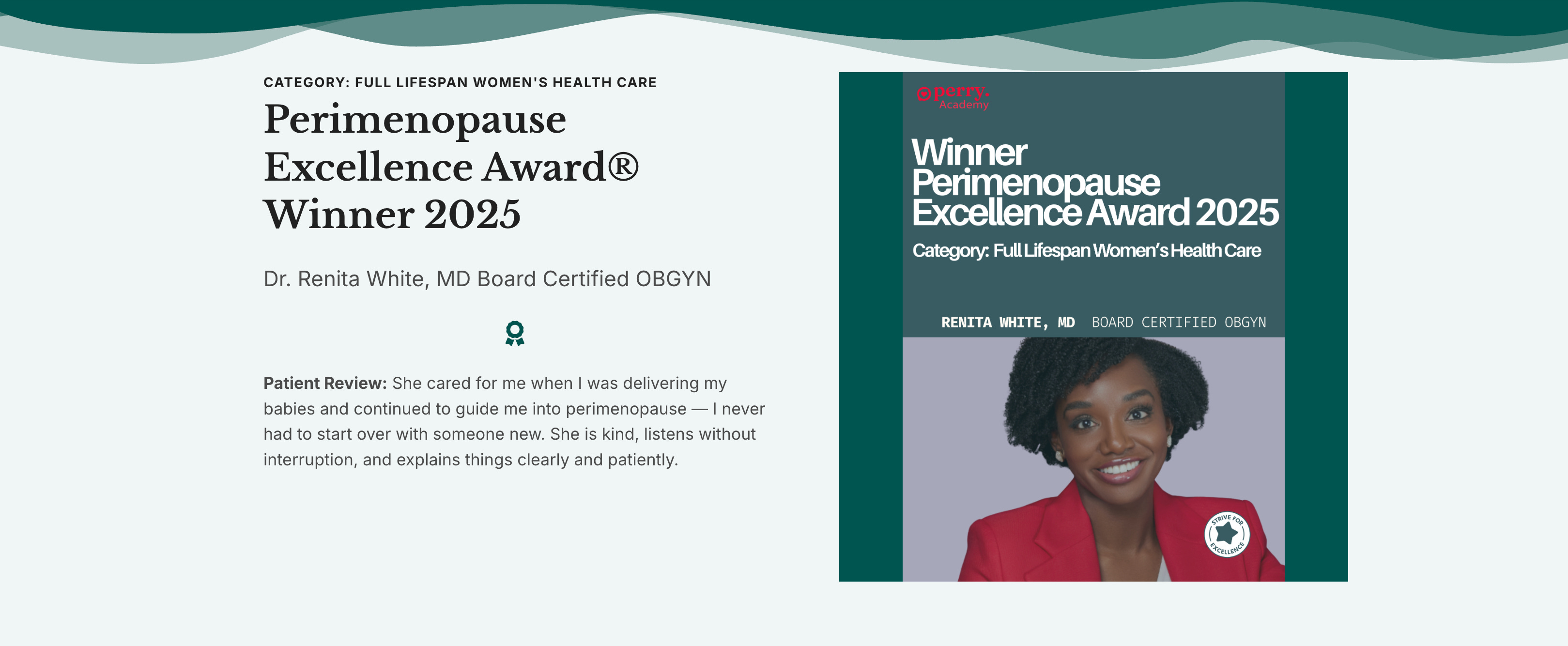
Last year, we launched the Perimenopause Excellence Awards® — the first award of its kind honoring healthcare professionals who go above and beyond for women in perimenopause. And unlike traditional industry awards, these are crowd-sourced: patients, peers, and colleagues do the nominating.
Reading last year’s nominations was one of the most moving things we did all year. Again and again, the same words came up: “She listened.” “She believed me.” “I didn’t have to start over.” Our 2025 winners — Dr. Renita White (OBGYN) and Dr. Katherine Klos (Urology & Sexual Medicine) — were nominated by patients whose lives they changed.
Now it’s your turn again. Nominations for the next Perimenopause Excellence Awards are officially open.
If a doctor, nurse, therapist, dietitian, physical therapist, or coach has made a real difference in your perimenopause journey — or if you’re a professional who has watched a colleague quietly do this work brilliantly — take two minutes and put their name forward. Winners receive a year of free access to Perry Academy, speaking opportunities, a feature in the Perry-Certified Directory, and a custom Excellence Award plaque.
This month at Perry Academy, we’ve been focused on a topic that rarely gets discussed in the same breath as perimenopause — but should: intimate partner violence and psychological abuse in midlife.
In a new training, trauma specialist Laura Anderson, PhD, LMFT, walks through what the research shows — and it’s striking:
Psychological abuse produces many of the same effects as other traumatic experiences. Emotional abuse and coercive control are associated with anxiety and panic, depression, PTSD symptoms, dissociation, trouble concentrating, sleep disturbances, chronic hypervigilance, physical symptoms, and ongoing stress activation — even when there is no physical violence at all.
The body reads chronic abuse as chronic threat. When someone lives with constant unpredictability, fear, humiliation, and emotional volatility, the nervous system stays stuck in a prolonged state of threat anticipation. The stress response systems — the autonomic nervous system and the HPA axis — remain persistently switched on.
And this is why it so often hides in plain sight in healthcare. Women experiencing psychological abuse frequently show up in clinics with insomnia, chronic anxiety, GI issues, panic attacks, fatigue, and cognitive fog — long before abuse is ever disclosed.
Now read that symptom list again: insomnia, anxiety, fatigue, brain fog.
Sound familiar? These are also the most common symptoms of perimenopause. Which means midlife is exactly the moment where trauma symptoms and hormonal symptoms can blur into each other — and where a provider who knows what to look for can change (or even save) a life, while one who doesn’t may unintentionally miss what’s really going on.
If any of this resonates with your own life: you are not alone, and support exists. In the US, the National Domestic Violence Hotline is available 24/7 at 1-800-799-7233 or thehotline.org.
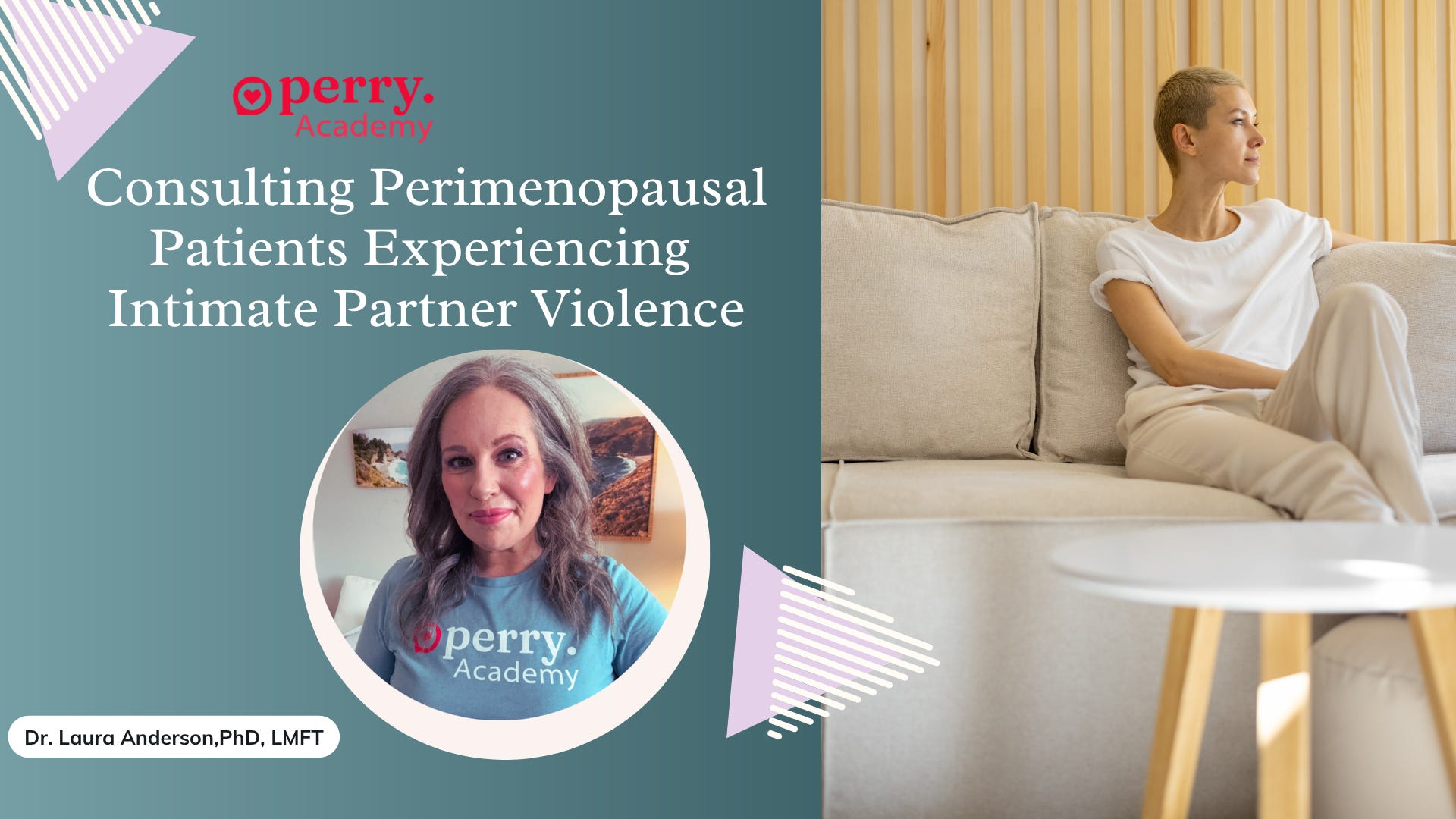
This is precisely why we built our newest CME/CE course:
Consulting Perimenopausal Patients Experiencing Intimate Partner Violence: A Trauma-Informed Approach
Taught by Laura Anderson, PhD, LMFT — Licensed Marriage and Family Therapist, Certified Somatic Experiencing Practitioner, and founder of The Center for Trauma Resolution and Recovery — the course covers how to recognize the clinical red flags of coercive control, screen sensitively, assess safety, document appropriately, and refer well, all while protecting patient autonomy. It includes a 94-slide presentation you can keep and a patient talk sheet you can use in your very next consultation.
It’s part of the Perry Academy membership, and every plan comes with a 7-day free trial.

Finally — because “how do I actually find one of these providers?” is the question we hear most — a reminder that the Perimenopause Directory exists for exactly this.
It’s a free resource connecting women with healthcare professionals who have been trained in perimenopause care — doctors, therapists, dietitians, physical therapists, coaches, and more. Every Perry-certified provider can be listed, so when you search, you know the person you find has actually studied this life stage.
If you’re looking for support: browse the directory. If you’re a professional: completing the Perimenopause Certificate® gets you listed — and puts you in front of the women searching for you.
We’re building something important here, and every nomination, every trained provider, and every woman who finds the right care brings us closer. Thank you for being part of it.
With you in this, The Perry Academy Team
P.S. Know a provider who deserves recognition? Nominations are open now — it takes two minutes and means the world to them.
No posts
Comments
Nothing yet. Say the first thing.
Sign in to join the conversation.