
Welcome to Our New Newsletter!
“Not another newsletter!”
I know.
How many of us sift through our inboxes every morning separating the wheat from the chaff? That dread is a big part of the reason PVI never produced a newsletter. Until now.
So why launch a newsletter now?
Because the industries we work between (media, international development, academic institutions, philanthropy) are all in flux and we hope to be a useful and interesting voice in the field.
Here’s what we promise:
We’ll keep it brief. Your time is money and we’re not here to pick your pocket. You can read it in five minutes or less.
We’ll keep it interesting. In the field of Entertainment-Education we always say that the entertainment comes first. What’s true with our TV shows and will be with our newsletter too.
We’ll keep it salient. We’ll share links and info that you can use. About philanthropy, entertainment-education, international development, technology and more.
We will keep the shameless self-promotion to a minimum. We’ve got to tell you what we are up to. But we’ll do it in poetry, not prose. Or maybe just bullet points.
We won’t do it too often. Once a month at the most. Plus we’ll include a few surprises in every issue.
So without further ado, please enjoy PVI’s Edutainment Zine Issue #1!
-David Snyder, PVI Board Treasurer & Paul Falzone, PVI Executive Director

PVI’s newest show “BB’s Book Bus” will premier in late 2026 thanks to Founder’s Pledge. We’re now inviting partners to help build this scalable literacy media platform for African children. Filming starts in Kenya this week.
Village Video - our motorcycle-mounted, solar-powered microcinema (which has promoted financial literacy in refugee camps in Tanzania, maternal health in Sierra Leone, and improved farming practices in Uganda) was just added to the permanent collection of the Museum of the Moving Image in New York City.
Our Emmy-nominated teen dramedy Prefects has been syndicated to more than 60 broadcasters and platforms around the world and just launched in North America on Tubi.
PVI staff will be in Oxford during the Skoll World Forum, Marmalade Festival, and The Sidebar. Want to talk about potential collaboration, pressure test new ideas, or chat about what we think AI is going to do to our industries? Reach out to connect!
Television at 100: From Stooky Bill to AI News Anchors
This year marks 100 years since John Logie Baird gave the first public demonstration of a working television system in London.
An eccentric inventor whose earlier experiments included inflatable shoes and once blowing out Glasgow’s electricity supply, Baird built his first television apparatus from a tea chest, a biscuit tin, and cardboard discs. During its demonstration in an upscale department store, discs reportedly flew off mid-broadcast, and the lighting was so intense that no human could tolerate it. To solve this problem, Baird used a ventriloquist’s dummy he named “Stooky Bill.”

Image: Baird and “Stooky Bill” Source: Wikipedia
It was improvised, imperfect, and experimental. But it worked.
The word “broadcast” originally referred to scattering seeds widely across a field. Television has been doing exactly that for a century - shaping aspirations, influencing fashion, shifting political discourse, and selling almost anything.
But this powerful medium has not always lived up to its positive potential. In a report to the Carnegie Corporation in 1966, Joan Ganz Cooney wrote that “it is an irony of television that, for all its potential to educate, it also provides endless distractions from pursuits of the mind.” The show that resulted from that report - Sesame Street - would change the way we think about television’s ability to be a force for good.
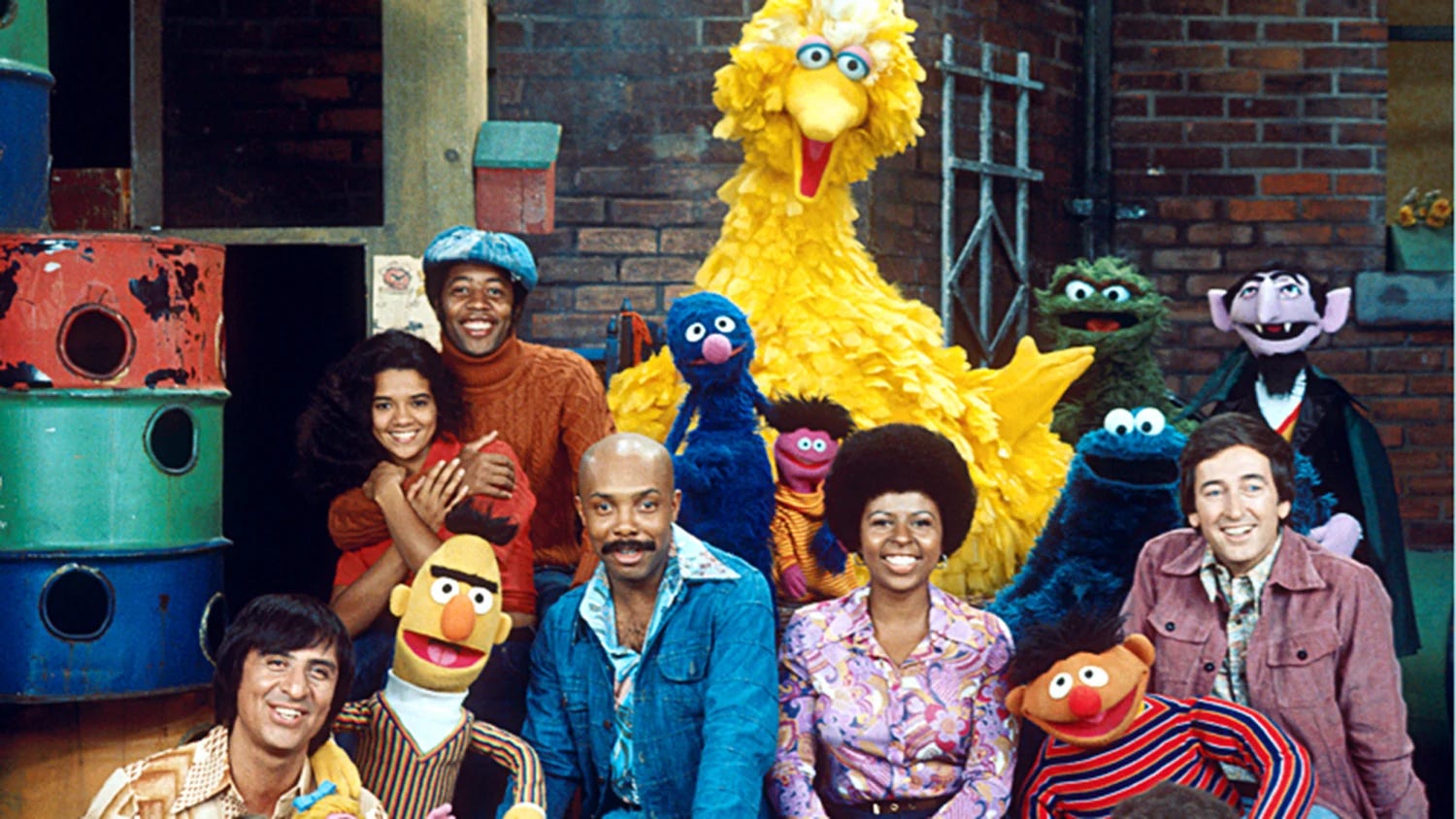
Image: Sesame Street Source: Today
Few understood the power of television better than entertainment-education pioneer Miguel Sabido. In 1970s and 80s Mexico, Sabido developed a methodology that embedded pro-social messages into compelling soap operas. By carefully designing characters audiences could identify with, he influenced real-world outcomes such as increased adult literacy enrollment and greater uptake of family planning services. His approach would inspire similar work around the world.
Today, the fastest-growing television market in the world is in Sub-Saharan Africa as households gain access to electricity for the first time. With a median age of just 19, it is also the youngest population in the world. Audiences are turning to television for stories that reflect their lived realities, but constrained production budgets and structural barriers mean local broadcasters often rely heavily on imported content. Young Africans are often missing from their own media.
Organizations like Peripheral Vision International, MTV Staying Alive Foundation, RAES, Impact(Ed), Ubongo, and others have taken advantage of that opportunity; producing and distributing entertainment-education programming to television stations across Sub-Saharan Africa. The opportunity is clear: invest in locally produced content that resonates culturally, while delivering social impact at scale.
As television turns 100, it now finds itself colliding with another transformative technology: artificial intelligence. AI is increasingly used across the content pipeline from concept development and scriptwriting to visual effects, translation, dubbing, and music composition. In October 2025, the UK broadcaster Channel 4 introduced an AI-generated presenter, signaling just how quickly production norms are shifting.
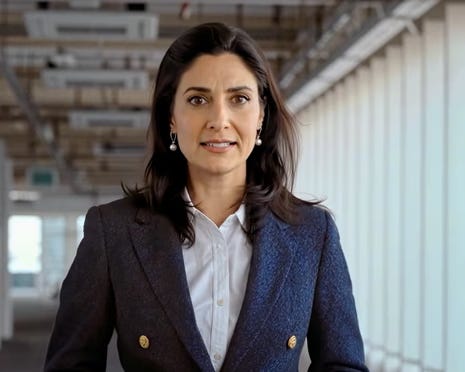
Image: Channel 4’s AI presenter Source: The Guardian
In theory, AI could democratize television production by reducing costs, expanding accessibility through multilingual dubbing, and opening the door for under-resourced creators to tell stories that might otherwise never be made.
But the risks are equally real. Questions around intellectual property and creative labor displacement, as well as concerns around bias, hallucination, and misinformation cannot be ignored. There are also environmental costs, and ethical concerns about authorship and authenticity.
Over the last century, myriad changes have shaped the medium of television. It has evolved through analogue, satellite, and digital revolutions. Streaming video and social platforms now blur the boundaries of what television even is.
One hundred years after Baird’s first flickering images, one thing remains constant: stories at scale shape the world. The next century of television will be defined not just by what we can create, but by what we choose to create it for.
Kevin L. Brown’s Fundable and Findable newsletter is full of great communication tips
Black Fox Global offers an ongoing brief full of useful things and excellent open source resources, including a 2026 update of their fundraising handbook.
Impact Funding provides a useful round up of the latest funding opportunities across the development sector
Read about America’s top 25 philanthropists in this Forbes article (spoiler: the two richest people in the world didn’t make the list)
Paul: In these dark political times, environmental activist and writer Bill McKibbon’s latest book provides a rare bright spot detailing very positive trends in renewable energy.
Gosia: Spring is just around the corner, bring it to your table tonight with this recipe!
Josie: My Father’s Shadow, a BAFTA award-winning film about family life and relationships amidst the backdrop of political and economical tensions in 1993 Nigeria.
Thank you for reading!
In solidarity, PVI
Comments
Nothing yet. Say the first thing.
Sign in to join the conversation.