
Slava Ukraini! In early 2022 I began a Telegram channel aggregating news from a number of sources daily on the war in Ukraine. In June 2023 I began providing a daily draft for the Ukraine War Brief Podcast collecting news from over 70 sources daily, which formed the basis of the script. While the Podcast no longer exists I have continued to make this Brief available for my subscribers here on Substack and anyone who wishes to keep up with the news from the war.
If you find the Brief informative I would appreciate it if you shared it with others.
For: Aug 19, 2026
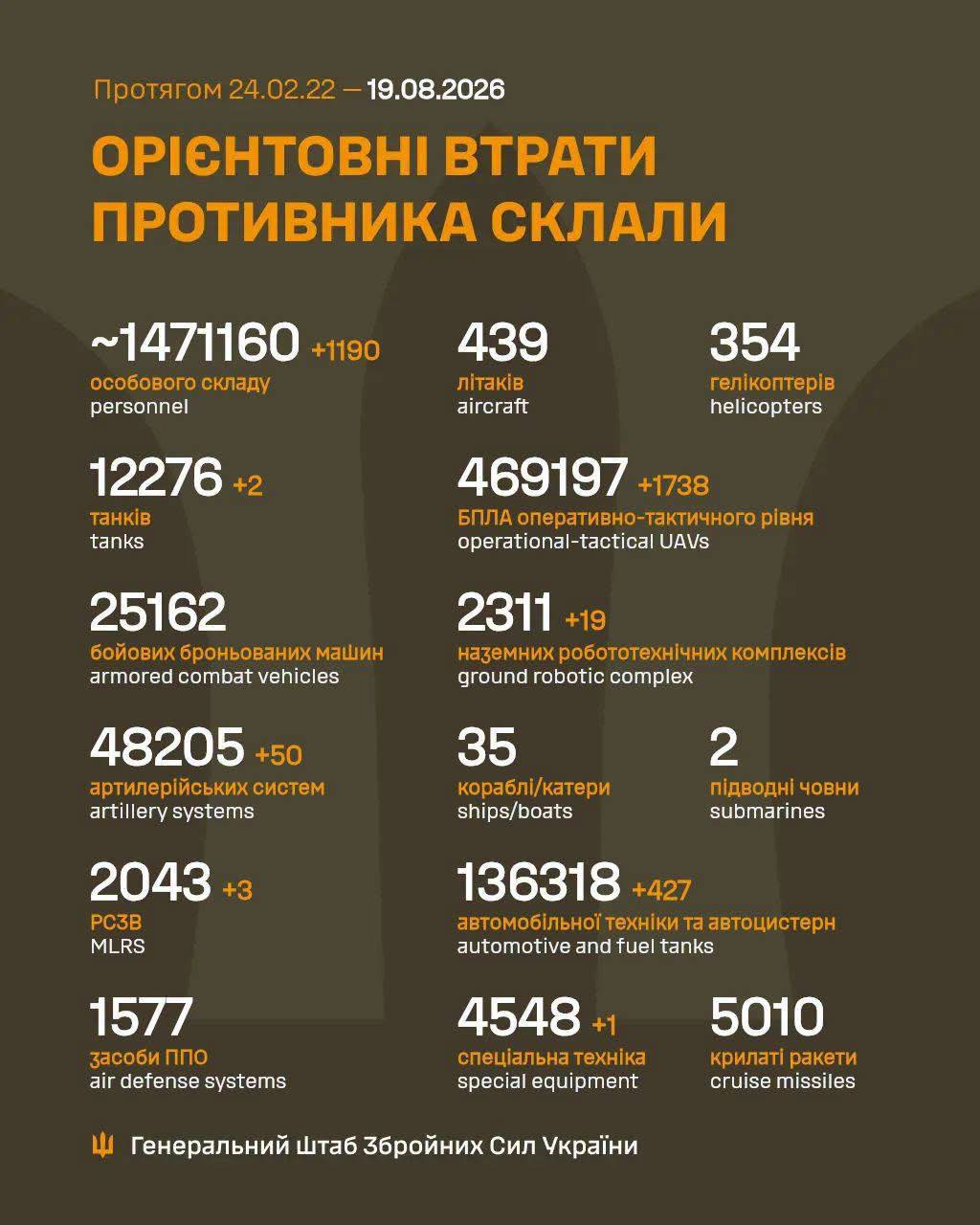
The General Staff of the Armed Forces of Ukraine in its Operational Information update at 08:00 on Aug 19 stated that day 1638 of the full-scale invasion of the Russian Federation against Ukraine had begun.
Ukrainian defenders continue to actively conduct the systematic destruction of the enemy and offer effective resistance in all areas of the front, causing them significant losses in personnel, equipment and technology. The AFU are exhausting the enemy along the entire front line and disrupting their plans to advance deeper into the territory of Ukraine.
Over the past 24 hours, 239 combat engagements took place.
During the past day, aviation, missile troops and artillery of the Defense Forces of Ukraine have hit nine enemy manpower concentration areas, two artillery systems and one unmanned aerial vehicle launch site.
Over the past 24 hours, the enemy carried out 1 missile strike, 87 air strikes, used 11,130 attack drones and carried out approximately 3,070 attacks on populated areas and the positions of Ukrainian forces.
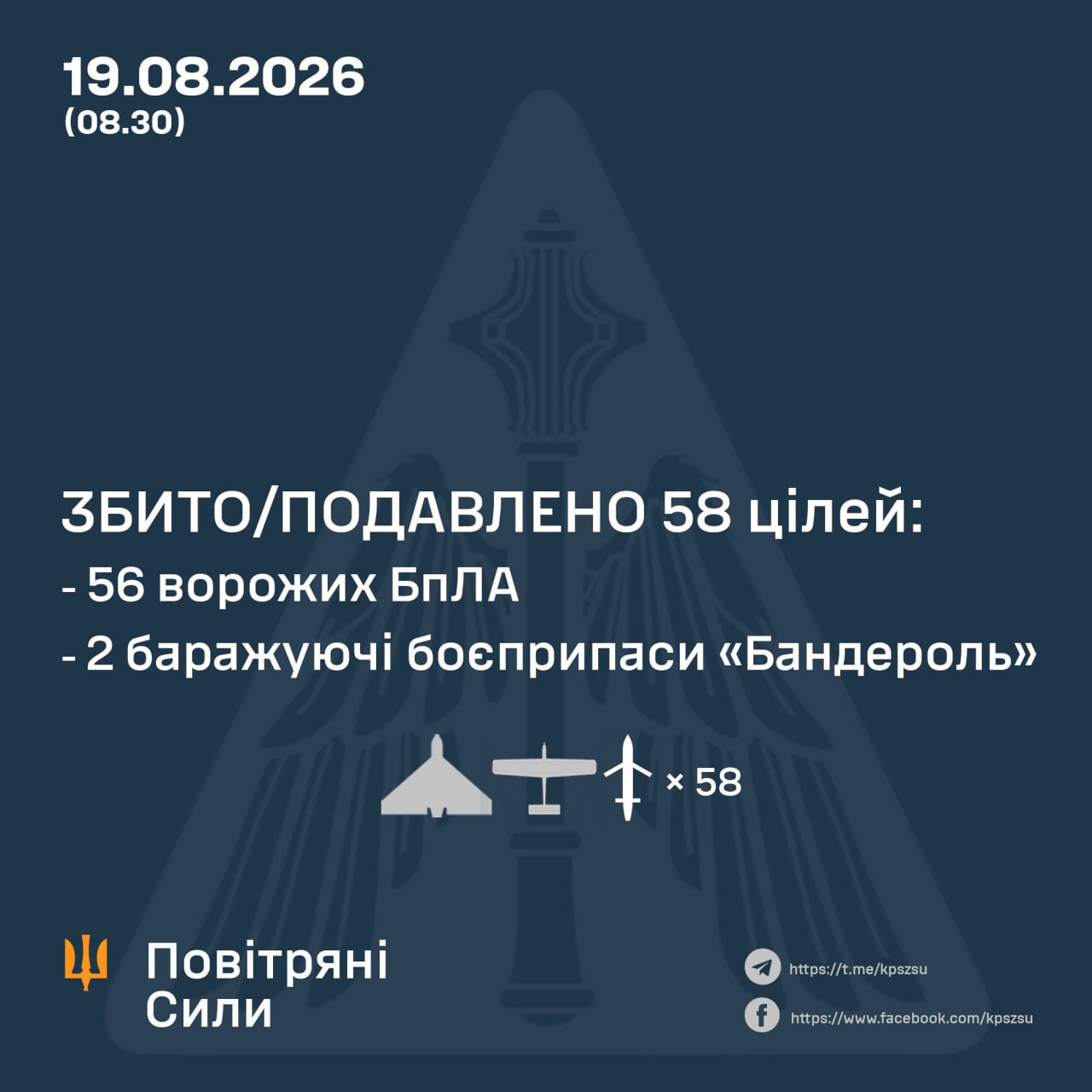
58 ENEMY TARGETS SHOT DOWN/SUPPRESSED
➖➖➖➖➖➖➖➖➖
During the night of Aug 19 (from 18:00 on Aug 18), the enemy attacked with two Iskander-M ballistic missiles, 65 Shahed-type attack drones (including jet-powered ones), “Gerber” drones, loitering munitions called “Bandera,” and imitation drones of the “Parody” type, launched from the directions of: Kursk, Orel, Donetsk region (occupied territory), and Guardske – Crimea (occupied territory).
The air attack was repelled by aviation, anti-aircraft missile forces, electronic warfare units, and unmanned systems, as well as mobile fire groups of the Ukrainian Defense Forces.
According to preliminary data, as of 08:30, the air defense forces destroyed/neutralized 56 enemy Shahed-type drones, “Gerber” drones, and drones of other types, as well as two “Bandera” loitering munitions in the north, south, and east of the country.
Hits by enemy air attack assets were recorded at 10 locations, and debris from downed objects fell at 3 locations.
This section of the Brief is compiled from information taken from the Institute for the Study of War (ISW), a US based think tank, in their daily Russian Offensive Campaign Assessment.
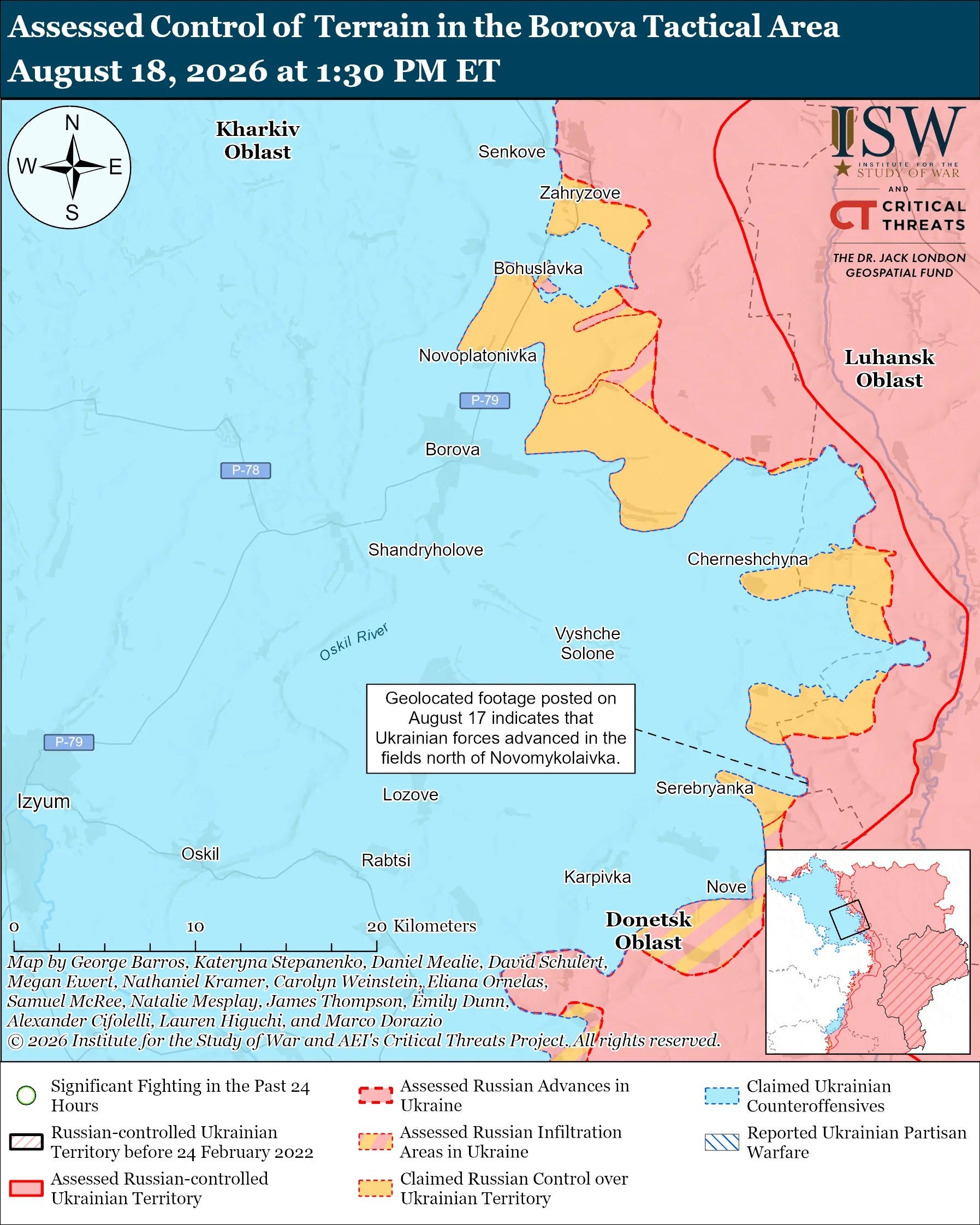
Borova Sector: Ukrainian forces recently advanced in the Borova direction.
Geolocated footage published on Aug 15 shows Russian forces striking a Ukrainian position north of Novomykhailivka (southeast of Borova) indicating that Ukrainian forces recently advanced in the area.
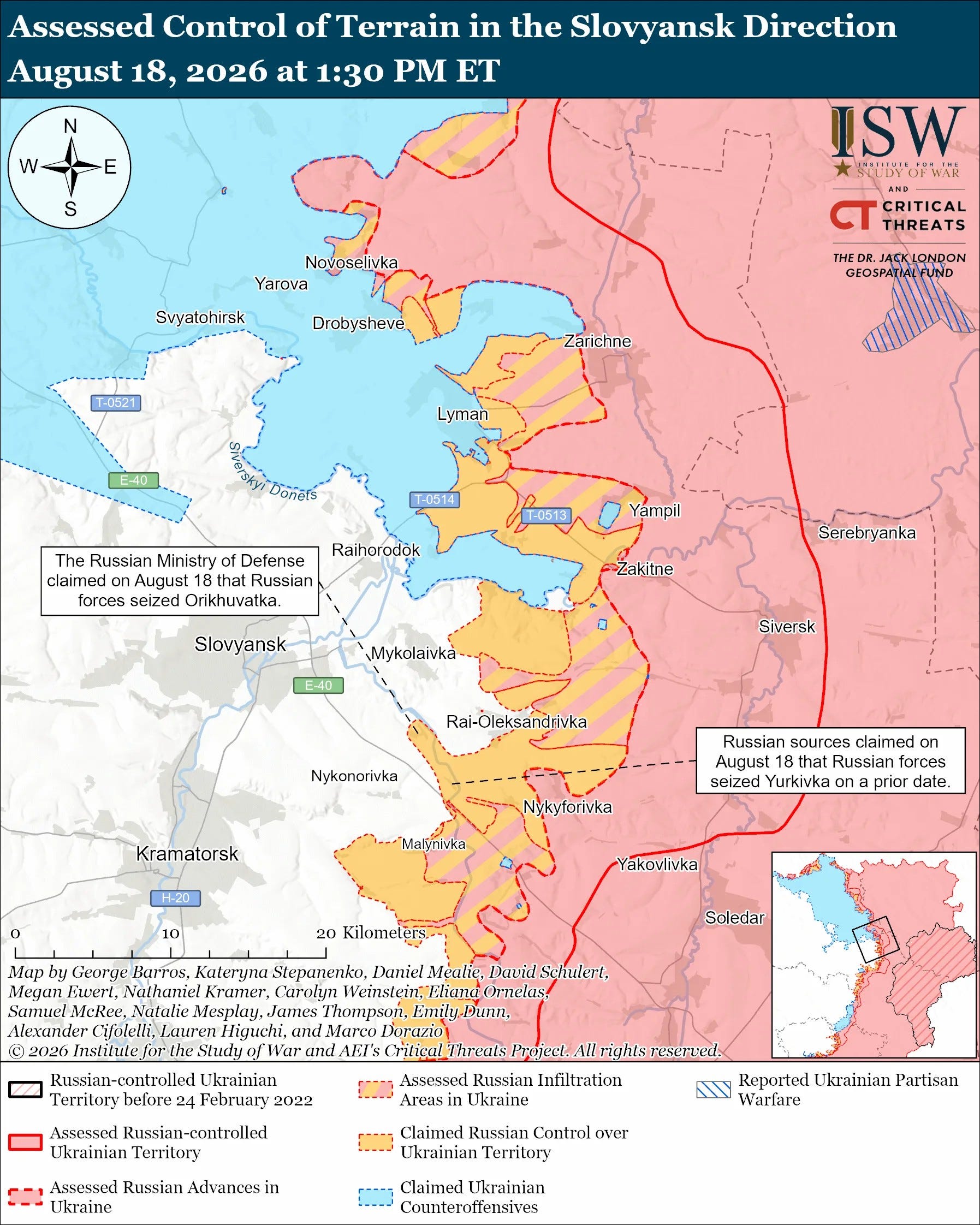
Slovyansk - Lyman Sector: Ukrainian forces reportedly recently cleared Russian infiltrators from Lyman.
A source reporting on the Russian Western Grouping of Forces acknowledged on Aug 18 that Russian forces had infiltrated northeastern and southeastern Lyman over the past few months but that they now remain only in the southeastern area, indicating that Ukrainian forces likely cleared northern and central Lyman.
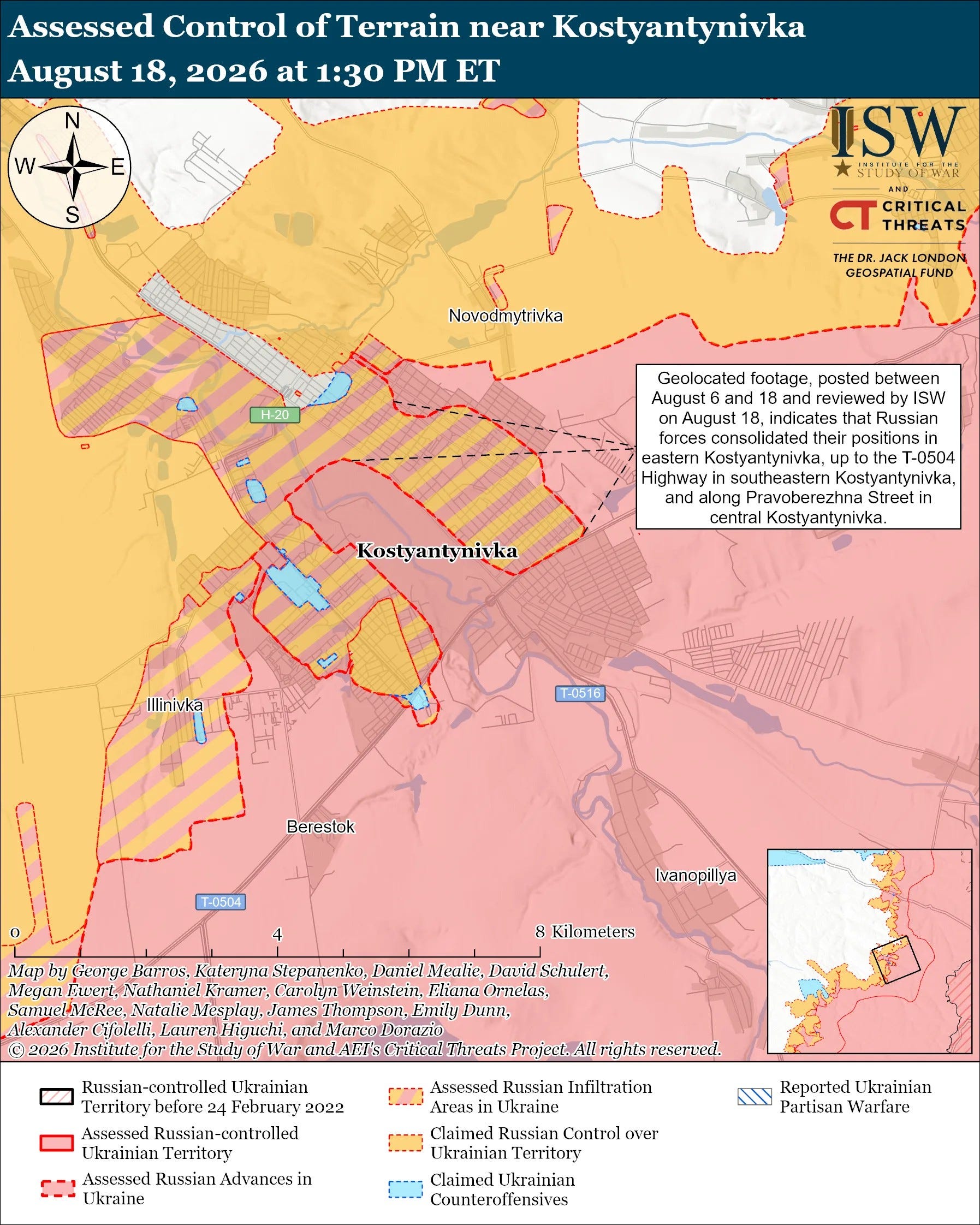
Kostyantynivka Sector: Russian forces likely consolidated some positions in Kostyantynivka which they had previously infiltrated.
Geolocated footage published between Aug 6 and 18 indicates that Russian forces have expanded the forward edge of the battle area (FEBA) in eastern and central Kostyantynivka.
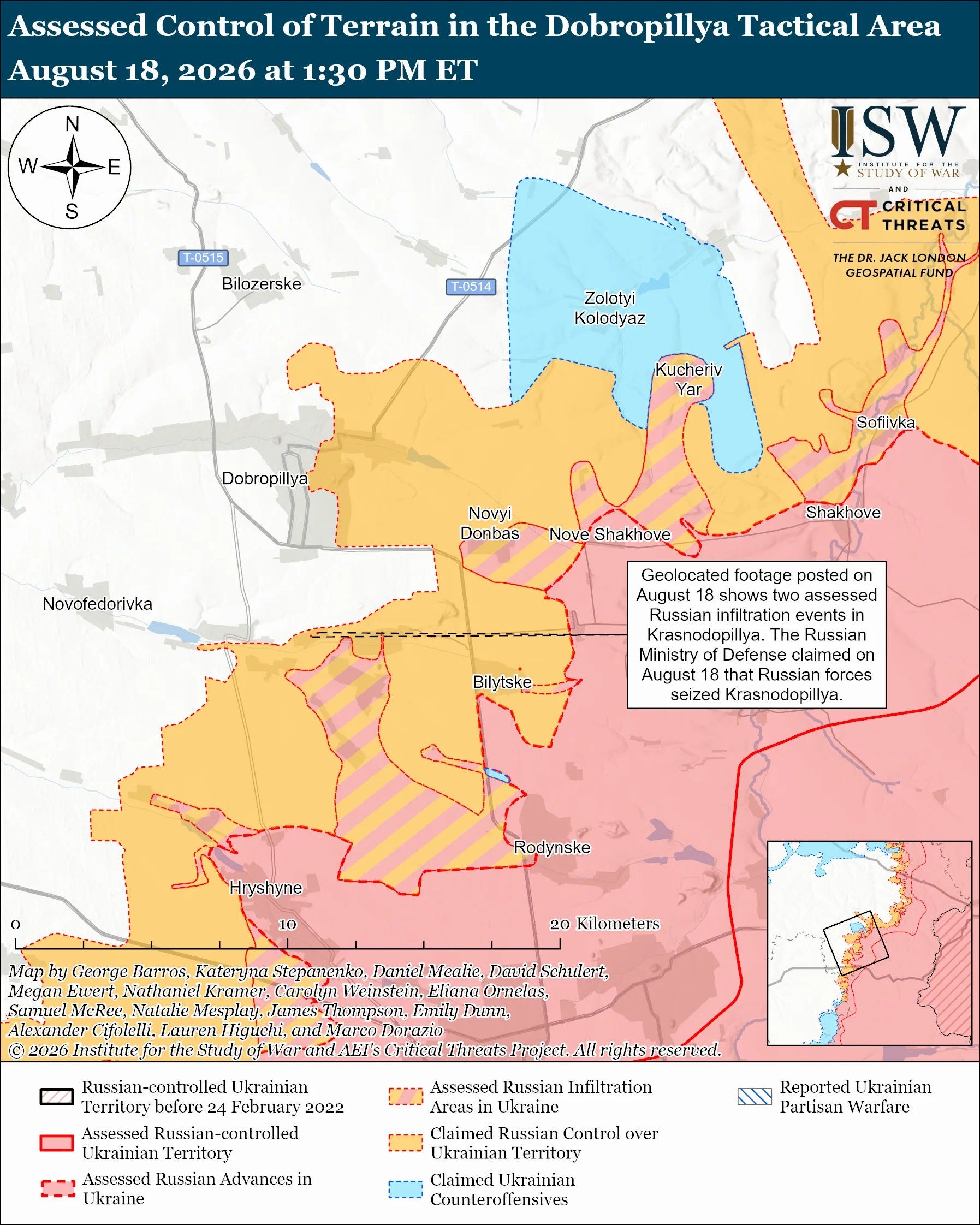
Dobropillya Sector: Russian forces recently conducted an infiltration mission in the Dobropillya direction.
Geolocated footage published on Aug 18 shows two Russian servicemembers raising flags in two areas in central Krasnopodillya (south of Dobropillya) after what ISW assesses were Russian infiltration missions.
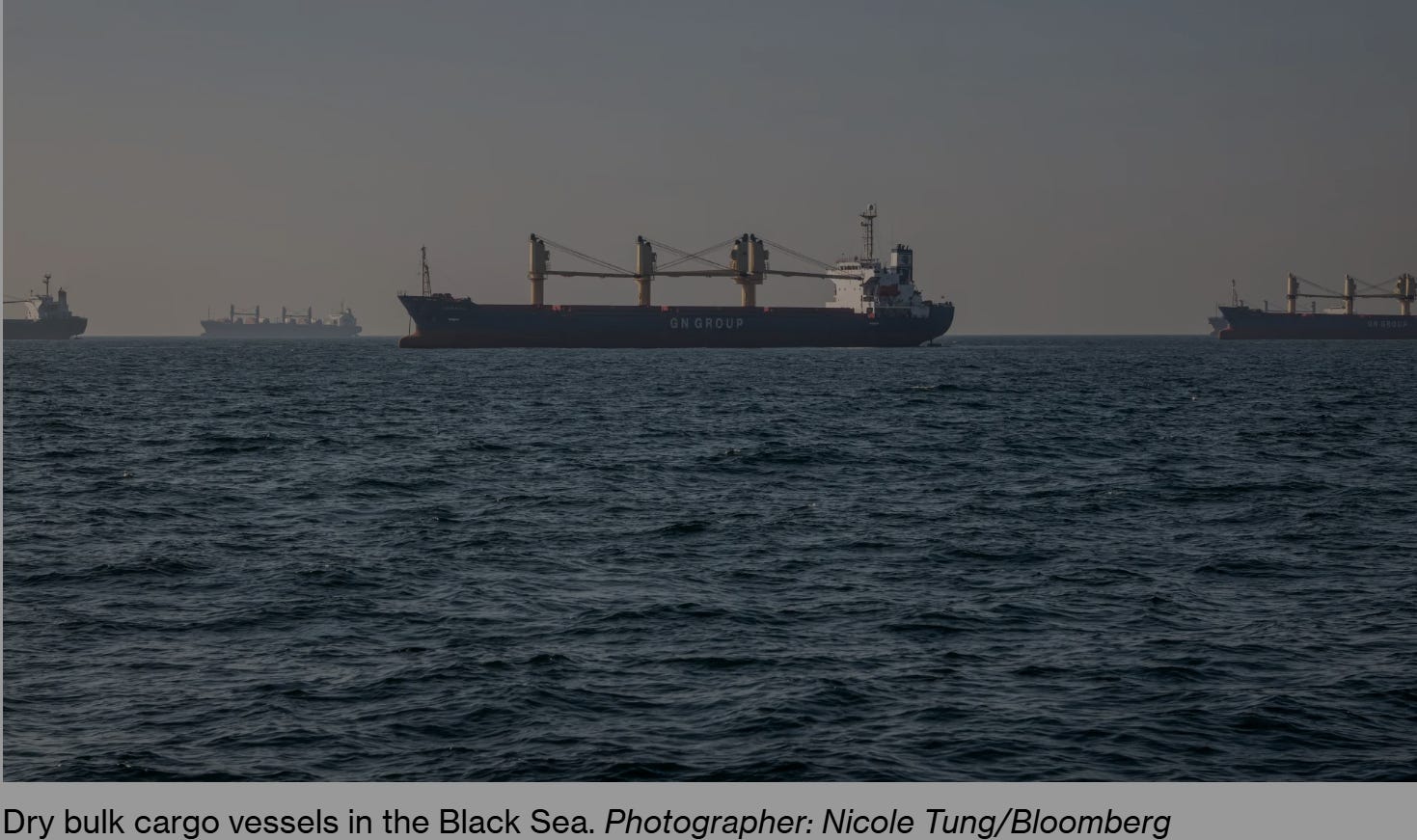
At least five grain carriers were attacked by drones near the Russian Black Sea ports of Novorossiysk and Tuapse, Bloomberg reported, citing sources who requested anonymity.
Four vessels were attacked on Tuesday morning, and another grain carrier was struck on Monday.
Among the damaged vessels was the bulk carrier Victoria V under the Russian flag, which was attacked near Novorossiysk after arriving at the port to load wheat. he Fehu, flying the Marshall Islands flag, was struck after leaving that same port with a cargo of wheat, but was able to continue its voyage.
The Malta-flagged bulk carrier Elina B was attacked after loading around 56,000 tons of wheat in Novorossiysk. Following the incident, it continued its way toward the Bosphorus.
Another damaged grain carrier was Necibe, sailing under the San Marino flag. It was attacked by UAVs in the port of Tuapse, where the vessel was scheduled to load around 20,000 tons of wheat.
The fifth incident occurred on Monday. The Liberia-flagged bulk carrier Anna S was en route to Novorossiysk, where it was scheduled to load barley. After a drone strike, a fire broke out on board, and the vessel was unable to continue its voyage due to the damage it sustained.
According to MarineTraffic, all of the vessels mentioned above are currently, or have recently been, in the Black Sea.
The publication noted that this is the first confirmed evidence of attacks on grain vessels serving Russian ports on the Black Sea.
Russia is trying to downplay the extent of the damage caused by Ukrainian strikes on port infrastructure amid growing concerns among shipowners about calling at its ports.
Earlier, Bloomberg sources reported that a tanker had been hit after loading Russian oil at the Caspian Pipeline Consortium (CPC) terminal near Novorossiysk.
The attack took place on Sunday near the terminal. The Suezmax-class tanker Skiros, which can carry about 1 million barrels of oil, was targeted.
Nothing major to report.
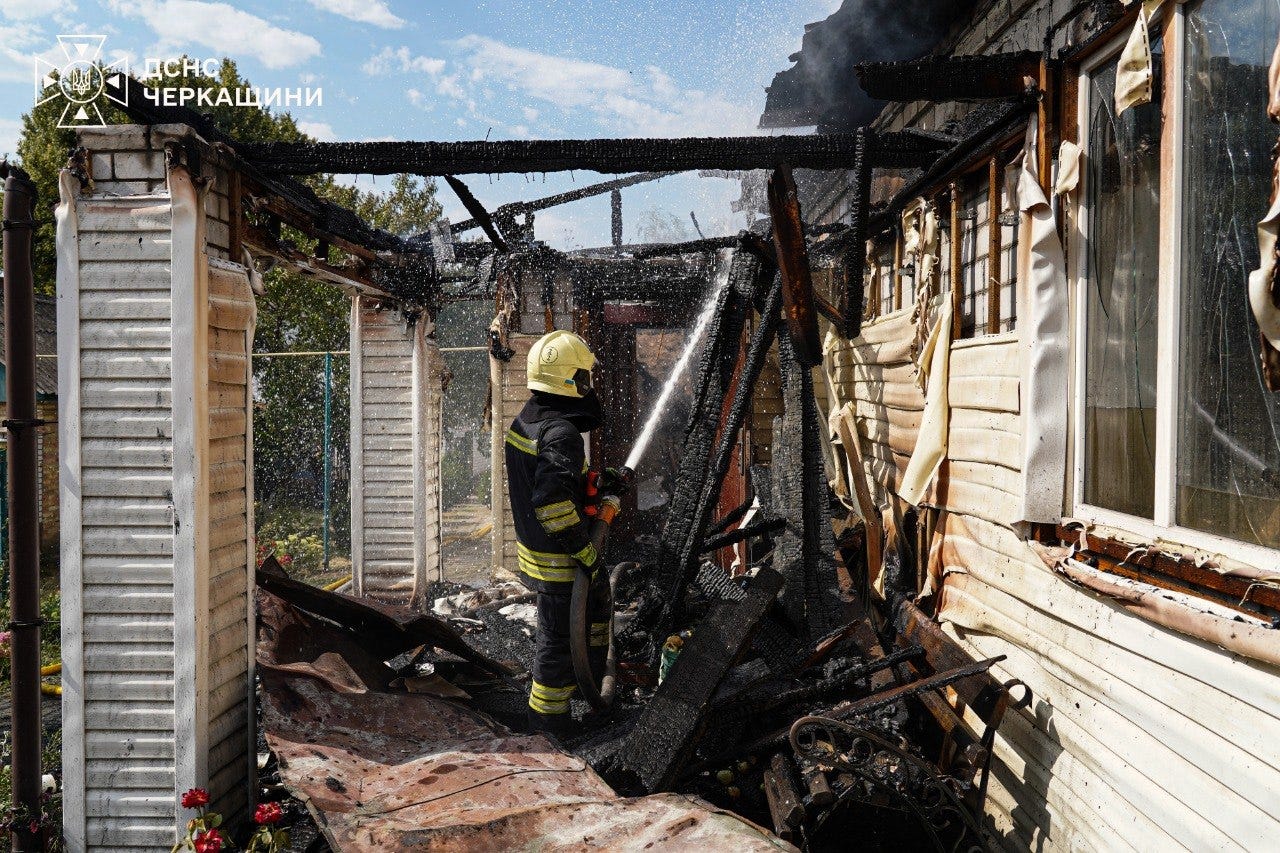
Russian attacks across Ukraine killed at least 17 people and injured at least 54 over the past day, the Kyiv Independent reported citing local authorities on Aug 19.
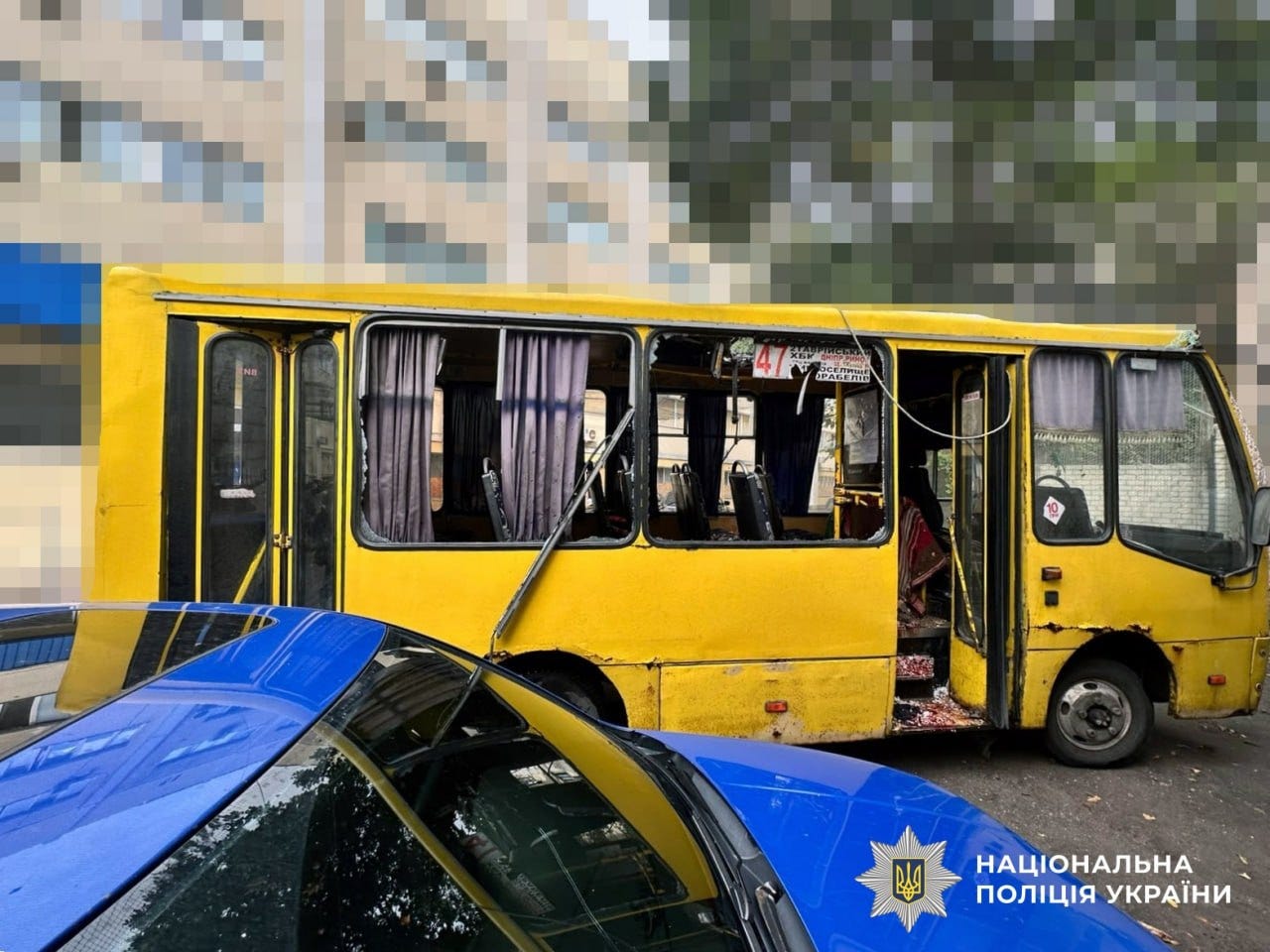
In Kherson Oblast a Russian drone struck a minibus in Kherson’s Korabelnyi district at around 8:50 a.m. local time on Aug 19, killing four people and injuring five others. All those injured women were hospitalized, according to Governor Oleksandr Prokudin.
Nine other people were injured in Russian attacks across Kherson Oblast over the previous day, Prokudin said. The strikes targeted critical infrastructure and residential areas, damaging three apartment buildings, a restaurant, and several cars.
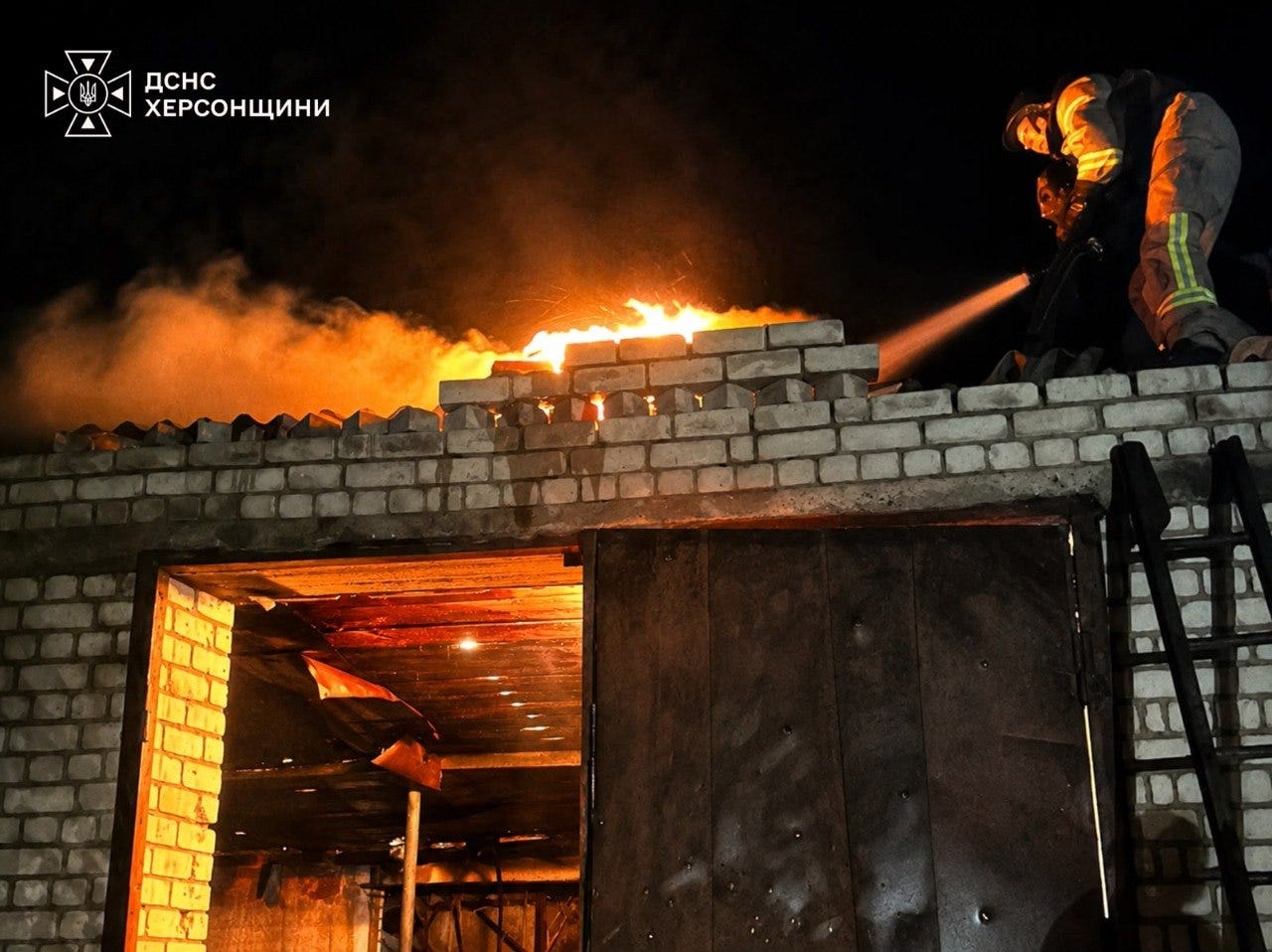
In Kharkiv Oblast, Russian attacks killed 10 people and injured 23 others over the past day, Governor Oleh Syniehubov said. The highest number of casualties was reported in Pechenihy, where a Russian strike on Aug. 18 killed 10 people and injured 18 others. Five others were injured in attacks elsewhere in the oblast.
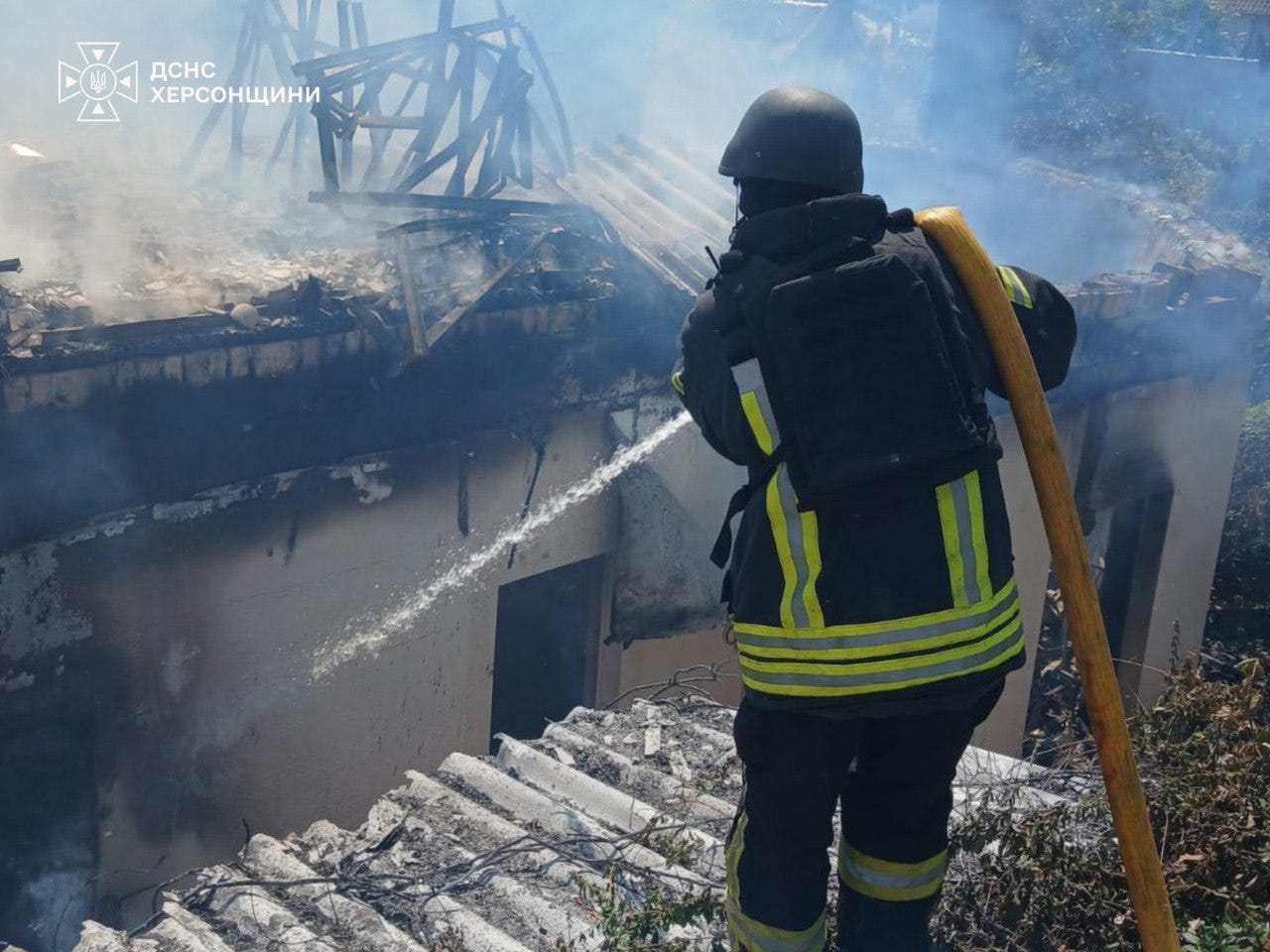
In Zaporizhzhia Oblast, Russian attacks killed two people and injured 10 others over the past day, according to Governor Ivan Fedorov. Russian forces carried out 1,019 strikes against 52 settlements across the oblast, Fedorov added.
In Donetsk Oblast, Russian attacks killed one person in Druzhkivka and injured four others over the past day, Governor Vadym Filashkin said. Russian forces struck settlements in the oblast 31 times.
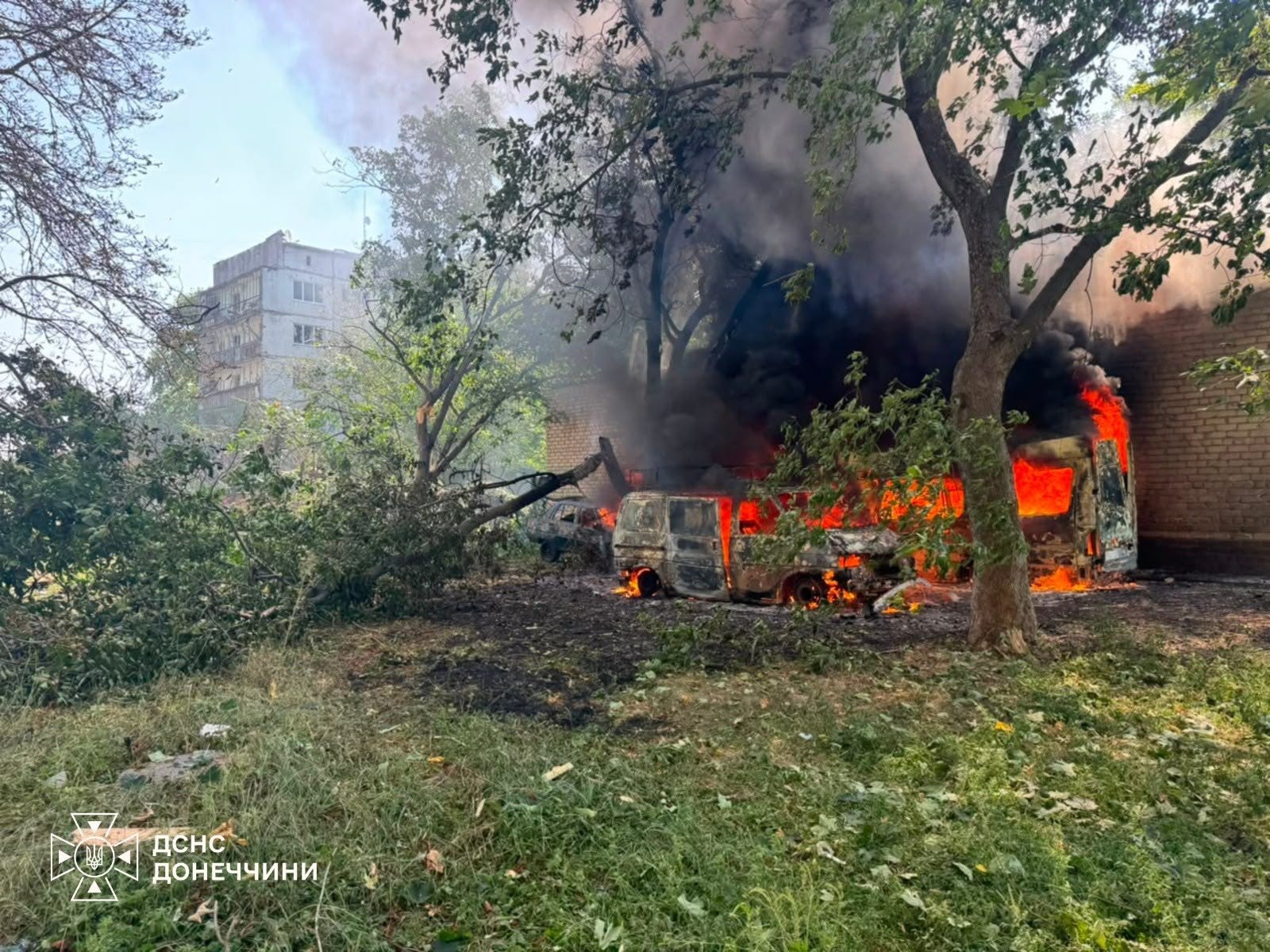
In Sumy Oblast, three people were injured in Russian attacks over the past day, local authorities said. Russian forces used mortars, artillery, FPV drones, other UAVs, guided aerial bombs, and a missile in attacks across the region.
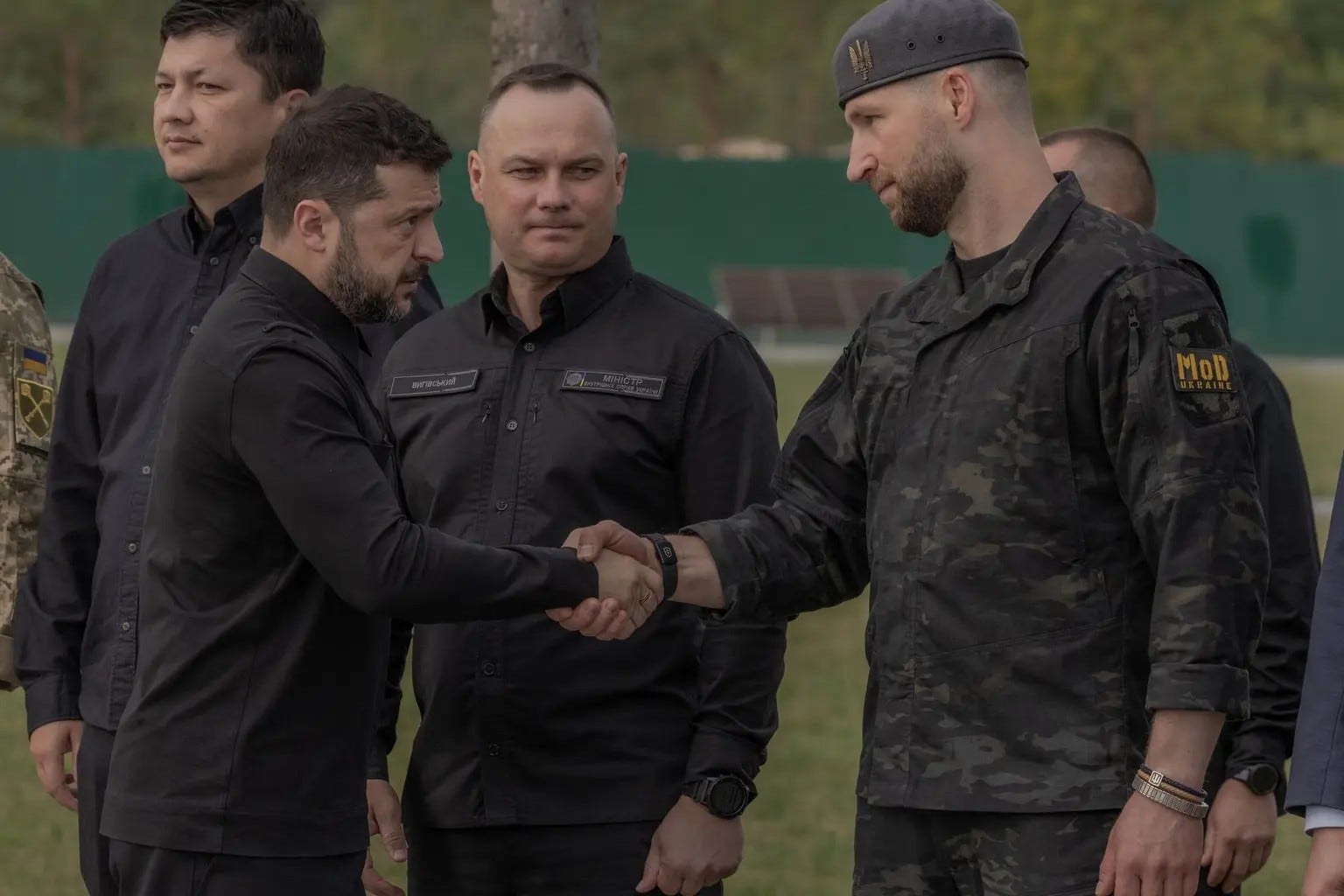
Ukraine’s parliament voted to approve President Volodymyr Zelensky’s defense minister pick, former top Security Service of Ukraine (SBU) officer Yevhen Khmara, on Aug 19, the Kyiv Independent reports.
Zelenskyy had already appointed Khmara as acting defense minister on Jul 16 after firing Mykhailo Fedorov the previous day. On the morning of Aug 19, Khmara was approved unanimously by the parliament’s defense committee.
In the final parliament vote, Khmara’s nomination was confirmed by 312 lawmakers. A total of 226 votes were required for the appointment.
The outcome effectively ends any hopes that Fedorov could return to his post as defense minister. Fedorov had demanded to return to the position since he was ousted, ruling out taking on any other job.
Khmara is an SBU veteran who previously commanded the agency’s Alpha Special Operations Center, overseeing Ukraine’s campaign of long-range drone strikes against Russia.
He also led the operation to liberate Snake Island in 2022 and was appointed as the acting head of the agency in January 2026 after Vasyl Maliuk stepped down.
Zelenskyy previously said that Khmara had gained “extensive and, in many ways, unprecedented experience” in conducting technological strike operations, adding that Ukraine’s defense should focus on developing long-range capabilities, a key area that Fedorov pushed during his tenure.
Ukraine’s ousted Defence Minister Mykhailo Fedorov called for wartime elections in a bombshell address on Tuesday, arguing the nation faced a crisis of governance, in the biggest internal challenge to President Volodymyr Zelenskyy since Russia’s invasion, Reuters reports.
Fedorov’s call, delivered in a video address posted on YouTube, is the first such demand by a major Ukrainian political figure since Russia launched its full-scale invasion in 2022. Ukrainian law prohibits holding elections during wartime.
“Democracy cannot be held hostage by Russia,” Fedorov said. “We must find a legal, safe and realistic mechanism that will allow Ukraine to renew its full democratic process even in the conditions of a long war.”
The 35-year-old Fedorov was a longtime ally of Zelenskyy’s until his unexpected firing from the Defence Ministry in July, just six months after he had been appointed, vowing sweeping reforms.
Shortly after his dismissal, the tech-savvy Fedorov publicly tore into the commander-in-chief of the armed forces, Oleksandr Syrskyi, exposing a bitter rift between the men and their different visions for the war.
Thousands of Ukrainians took to the streets to demand the sacking of Syrskyi — an old-guard military commander blamed by his critics for heavy troop losses at the front line — and Fedorov’s reinstatement.
Although Zelenskyy said he had dismissed Fedorov because of his inability to work with Syrskyi, the president fired the military chief shortly afterwards under public pressure.
Protests in support of Fedorov have continued for the past month, losing some of their early momentum but still regularly drawing a couple thousand attendees in Kyiv.
While Fedorov did not say in his address that he would compete in any election, a recent poll indicated the ex-minister would comfortably beat Zelenskiy in a runoff vote, where the top two presidential candidates go head-to-head.
Fedorov’s statement came just hours after Zelenskiy confirmed he had asked parliament to confirm new Defence Minister Yevhenii Khmara in office on Wednesday.
In what appeared to be an open challenge to Zelenskyy, Fedorov said Ukraine faced a “systemic crisis of governance.”
“The old system lives by its own rules too often. It protects itself. It is scared of change,” he said.
Without providing names, Fedorov condemned official corruption, which he said hurt Ukraine’s war effort.
The ex-minister recently said he believed his reform of the Defence Ministry’s procurement processes, responsible for purchasing billions of dollars of equipment, contributed to his sacking. Zelenskyy’s office had no immediate comment on Fedorov’s address.
The youngest minister in Ukraine’s history when he was appointed aged 28 as Ukraine’s digitalisation chief, Fedorov spent six years in that post. He was the last remaining member of Zelenskyy’s first cabinet in 2019.
His role running the Ministry of Digital Transformation saw him become an early adopter of drone warfare, which has turned combat in Ukraine on its head since 2022.
However, his nationwide profile grew greatly after his appointment to run the vast Defence Ministry in January, immediately vowing a data-driven overhaul. Unlike his predecessors, Fedorov publicly laid out a strategy to defeat Russia through attrition and technological superiority.
“Our people have long been ready for a different country,” Fedorov said in his address. “Now, our state must become worthy of its people.”

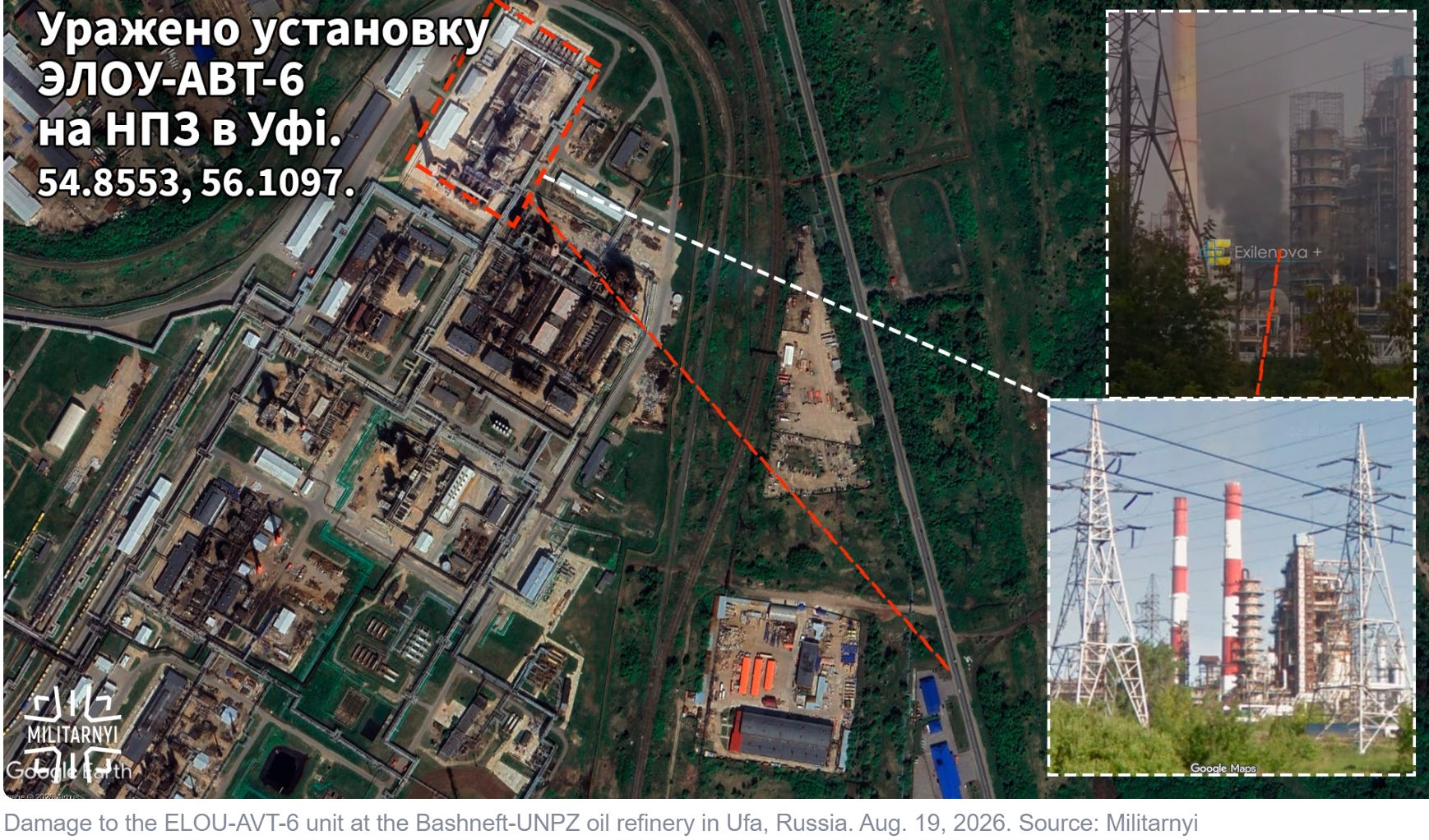
A morning attack by Ukrainian drones struck the key AVT-6 unit at Russia’s Bashneft-UNPZ oil refinery, Militarnyi reports.
Militarnyi’s GEOINT analysis indicates this based on footage of the fire published by the monitoring outlet Exilenova+.
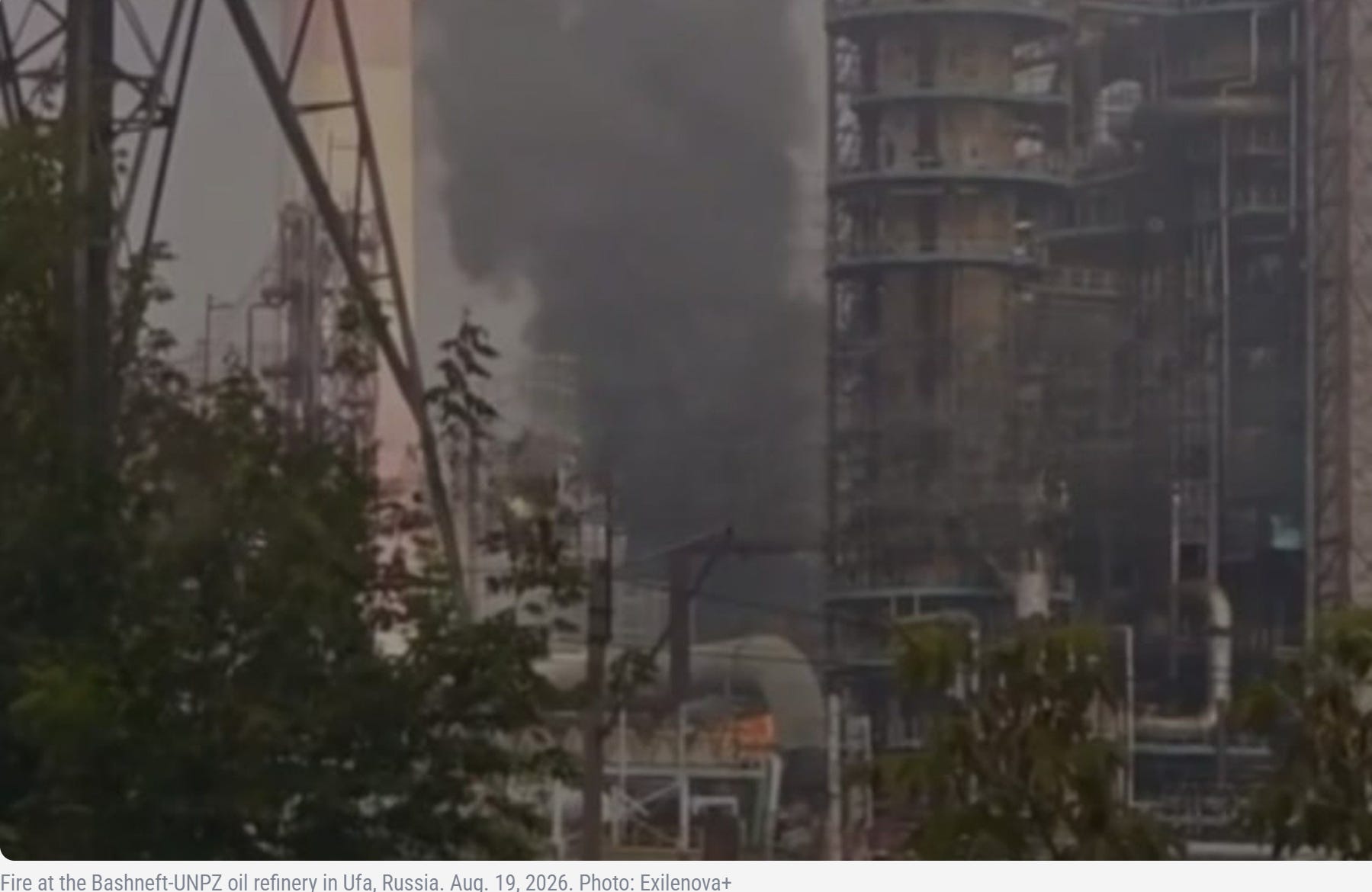
The refinery is located in Ufa’s industrial area in Russia’s Bashkortostan region, more than 1,400 kilometers from the front line.
The region’s governor, Radiy Khabirov, confirmed that the unit was damaged by a fire following the Ukrainian drone strike. According to him, the unit was undergoing maintenance.
A drone threat alert was declared in Bashkortostan shortly after 4:30 a.m. and lasted until 7:40 a.m. Witnesses reported explosions and the operation of Russian air defense systems on social media.
The ELOU-AVT-6 unit is a key crude-oil primary refining unit at the Bashneft-UNPZ oil refinery. It is used for desalting and primary fractionation of crude oil. Its capacity exceeds 6 million tons of crude oil per year.
A fire in the same unit’s area was reported on August 2, also following a drone attack by Ukraine’s Defense Forces.
Bashneft-UNPZ is the oldest of Ufa’s three oil refineries. The other two are Bashneft-Novoil and Bashneft-Ufaneftekhim. All three are part of the Russian oil company Rosneft.
The refinery produces Euro-4 and Euro-5 automotive fuels, jet fuel, bitumen and petrochemical feedstocks.
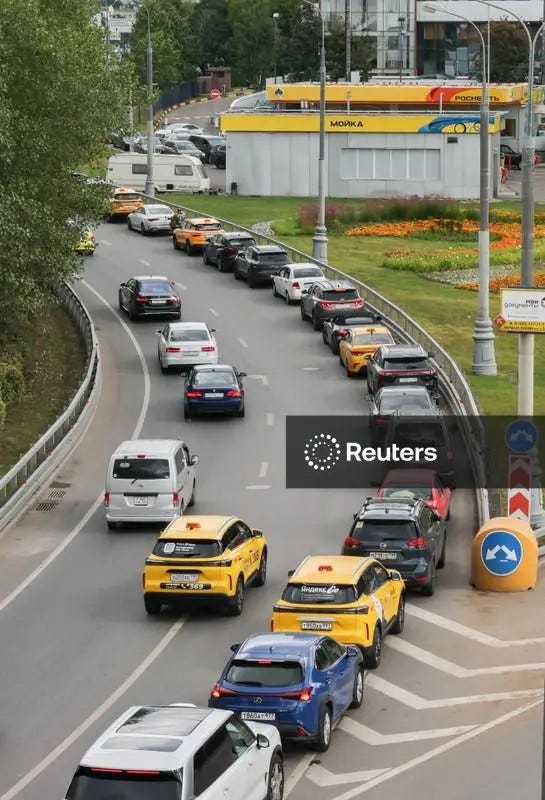
Fuel purchase restrictions are beginning to make a comeback in some regions as persistent shortages continue to dog the domestic market following months of Ukrainian drone strikes on oil refineries, in what Russian media is calling the “second wave” of the summer fuel crisis, the Moscow Times reports.
In Moscow and the surrounding region, Gazprom Neft gas stations have reinstated purchase limits of 60 liters (16 gallons) per customer for regular gasoline. The new limits follow a brief rollback earlier this month when Gazprom Neft eased restrictions across 13 Russian regions.
Tatneft, another major producer, has capped sales at 50 liters (13 gallons) of regular gasoline and 60 liters of diesel per vehicle across its network of gas stations in Moscow, according to the business news outlet RBC.
Dozens of Russian regions have faced fuel shortages this summer after months of Ukrainian drone strikes on oil refineries and storage hubs. Industry analysts warn that supplies will remain tight across much of the country until peak summer travel demand subsides.
The return of rationing measures in some parts of the country comes despite Deputy Prime Minister Alexander Novak saying last month that the domestic fuel market was showing signs of “partial stabilization.”
To protect supplies, the Russian government extended a temporary export ban on gasoline and diesel through early next year.
While some gas stations have lifted purchase caps, fuel shortages never fully abated in other parts of the country, including in Siberia and the Far East. So, too, does annexed Crimea continue to face an acute shortage.
Meanwhile, Ukrainian forces have continued long-range strikes against Russian oil facilities. On Wednesday, authorities in the republic of Bashkortostan said a Ukrainian drone set part of an oil refinery ablaze, adding that they expect repairs to take several days.
In July, the average price of gasoline in Russia spiked by nearly 20% since the start of the year. It has since fallen slightly to a national average of 76.04 rubles per liter ($3.38 per gallon) as of Aug. 10.
Energy Minister Sergei Tsivilyov admitted on Tuesday that long lines continue to form at gas stations, though he insisted that fuel remains available as the government works to resolve logistics bottlenecks. Tsivilev claimed diesel remains available “everywhere” in Russia.
Russia’s central bank reported that billions of roubles have been withdrawn from banks each month, as Russians pull out cash amid fears of the Kremlin seizing their savings to fund the war in Ukraine amid a deteriorating economy, EuroNews reported on Aug 19.
Russians withdrew around €24.4 billion from the country’s banking system in the first seven months of this year, as Ukrainian drone strikes on oil refineries and logistics infrastructure deepened the economic crisis, and fear spread that the Kremlin could move to freeze or nationalise private deposits to fund its war in Ukraine.
Data from the Banks.ru financial marketplace show that demand for cash began rising in early March and has continued growing, with around 300 billion roubles (€3.05 billion) leaving accounts every month.
Five of Russia’s seven largest banks have recorded net outflows of individuals’ deposits.
Gazprombank has been the most affected, losing 299.5 billion roubles (€3.04bn) — 10.8% of its total deposits — over four months. Rosselkhozbank shed 270.5 billion roubles (€2.75bn), a fall of more than 15%.
Alfa-Bank, Russia’s largest private lender, lost 179.4 billion roubles (€1.82bn) or 5.6% of deposits. Sovcombank and VTB recorded further outflows of 81.7 billion roubles (€830m) and 20.4 billion roubles (€207m) respectively.
Sberbank initially held steady, but its depositors have also turned to cash: 211.6 billion roubles (€2.15bn) left in June, followed by a further 31.8 billion roubles (€323m) in July. T-Bank was the exception, recording an increase of 193 billion roubles (€1.96bn) in deposit volume.
The total amount of cash in circulation rose by 643.4 billion roubles (€6.53bn) in July alone, the largest monthly increase since the start of the year, according to the Bank of Russia. In the first half of August, a further 300 billion roubles were withdrawn.
The withdrawal is being driven by two overlapping fears: that Ukrainian drone strikes could destabilise the financial system, and that the Russian government might move to seize or freeze deposits to cover mounting war costs.
The second scare is grounded in recent events. Russian prosecutors transferred approximately $51.5 billion (€44.3bn) in private assets to state control last year, according to the Washington Post.
In June, authorities seized around $7.6 billion (€6.5bn) in assets linked to billionaire Vadim Moshkovich, founder of the agricultural holding company Rusagro.
Putin has simultaneously been extracting what officials describe as voluntary “donations” from oligarchs, with hundreds of billions of roubles flowing into the federal budget by mid-August, the Russian business daily Vedomosti reported.
Russian banks have spent years extending government-directed loans to defence industries at the Kremlin’s instruction.
Large companies are also moving money beyond the reach of domestic regulators, with more than $9.4 billion flowing out of Russia’s banking system in the second quarter of 2026 alone, according to central bank data.
In 2022, Russians also pulled money from banks in significant quantities following the invasion and the initial wave of Western sanctions.
The central bank temporarily raised interest rates to 20% and imposed capital controls to stabilise the system. Those controls were later lifted and the rush subsided, but the current trend is larger and longer in scale.
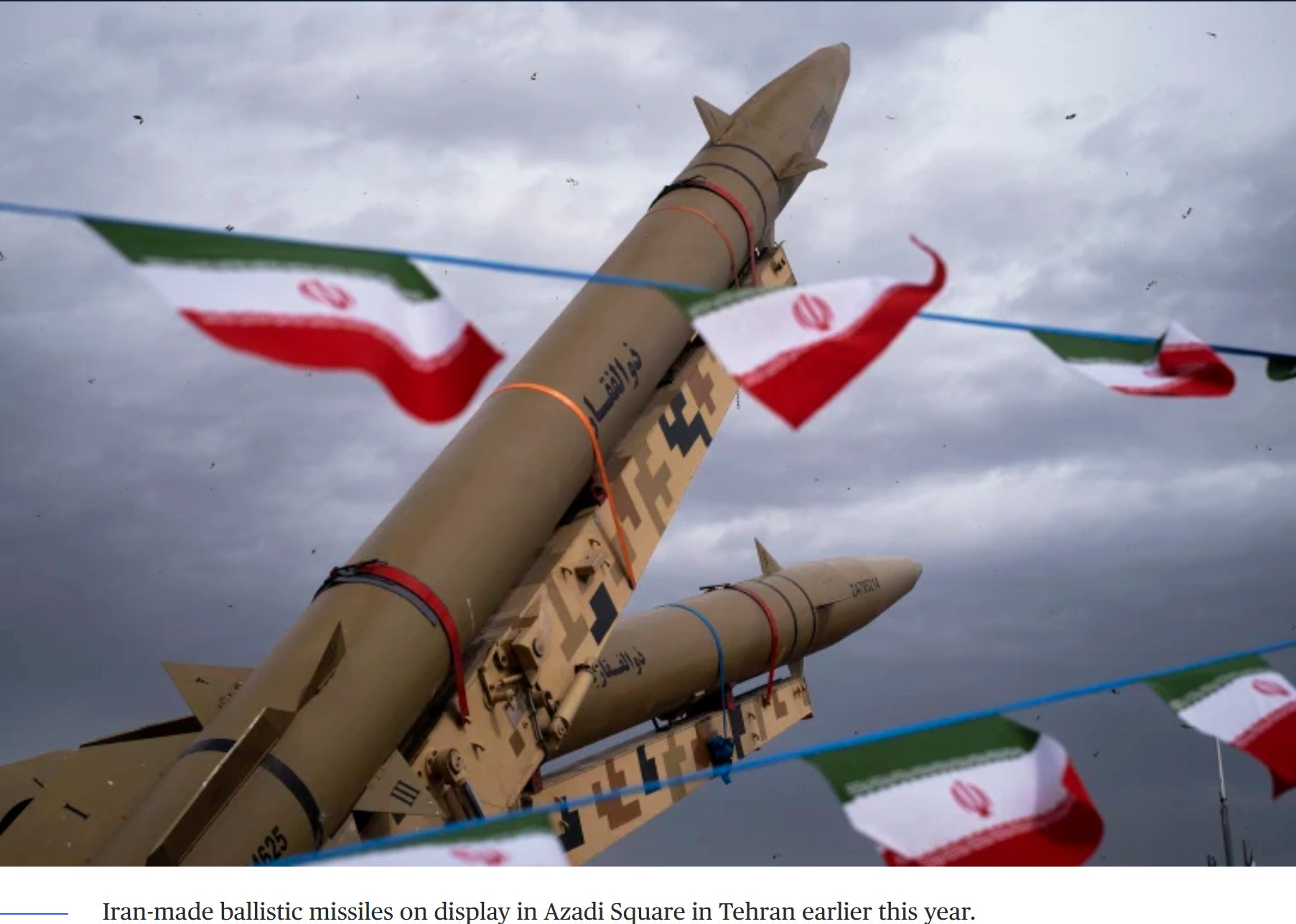
Russia is supplying Iran with ammunition, drone components, and TNT via the Caspian Sea, NBC News reported Aug 17, citing a European government document.
The Russian shipments, which haven’t been previously reported, underscore the deepening strategic alliance between Moscow and Tehran.
Over two dozen ships travelled via shipping routes in the sea to replenish Tehran’s stockpiles amid U.S. and Israeli strikes against Iran, the document, which was verified by an unnamed Western official, read.
As Moscow and the Middle Eastern country continue cooperation, Ukrainian forces on July 25 struck an Iranian ship transporting military cargo between Iran and Russia in the Caspian Sea, Ukraine’s security service (SBU) said.
Iran’s Foreign Ministry claimed the strike targeted a commercial vessel, killing one sailor and injuring another, describing the move as “an act of aggression that could further inflame and expand the flames of war.”
As the Kremlin continues to face isolation for its war against Ukraine, Moscow and Iran have deepened cooperation. Tehran has supplied Russia with military equipment and drones.
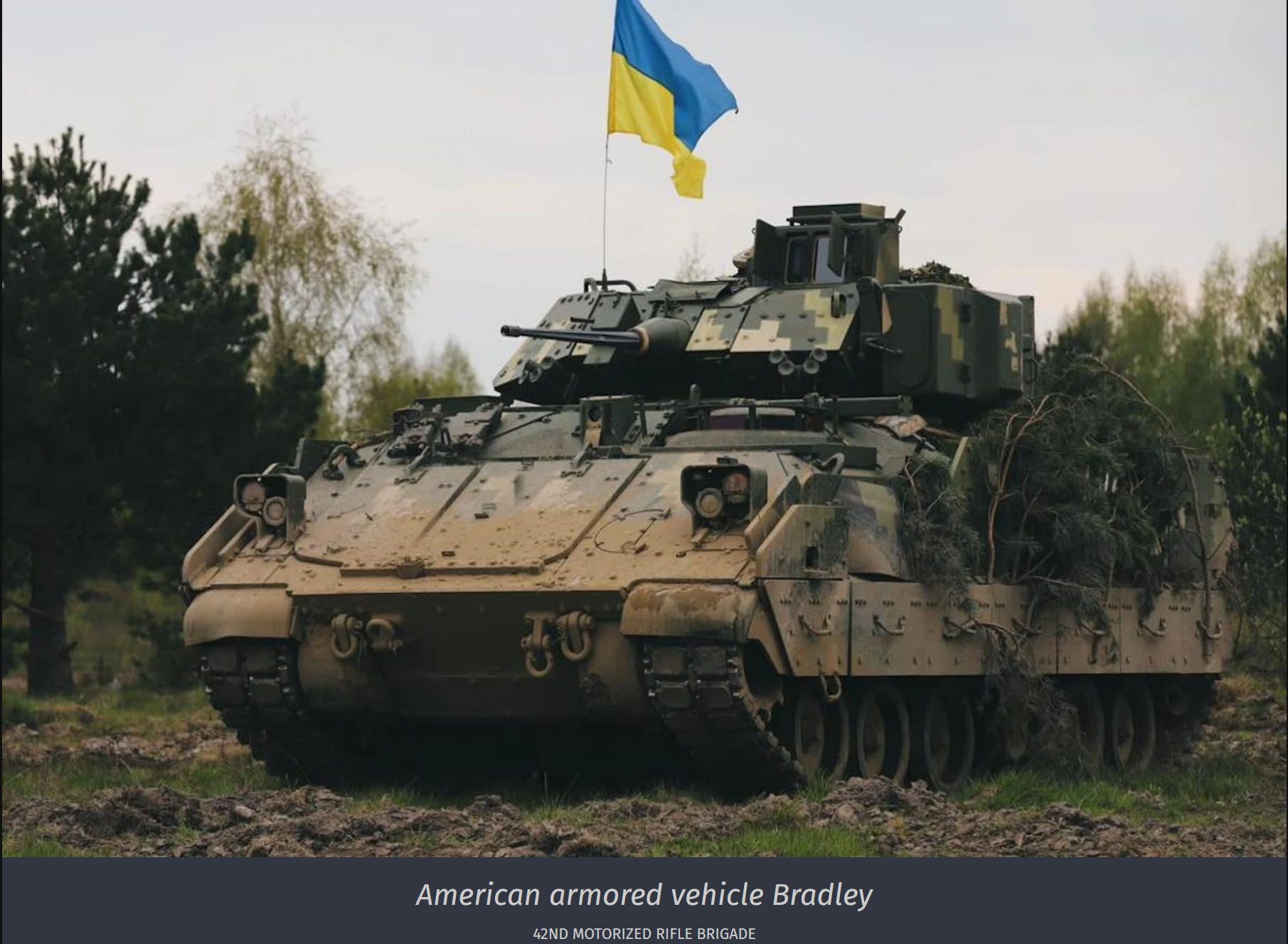
The United States is collecting information about contractors who could potentially supply obsolete spare parts for Bradley M2A2 ODS-SA armored vehicles to the Ukrainian military. The message was published on the website of the US Army Contracting Command - Detroit Arsenal, Mezha Defense reports.
The US military is conducting market research and looking for sources to supply scarce spare parts for infantry fighting vehicles. In particular, potential contractors are required to be able to provide training and mechanical training for Ukrainian soldiers.
Candidates must also have the technical ability to maintain legacy M2 Bradley equipment and perform operational deliveries. Required parts include turret drive control unit, transmission control module, ration heater mount, ammunition, TAS (Sighting System) lower bolt hex components, Dialight Corp lens lights, and associated specialized BMP structural, electrical, and mechanical subsystems.
“Crucially, interested sources must demonstrate immediate access to, or a viable plan to source, highly specialized, legacy, variant-specific components currently impacted by supplier obsolescence,” the statement said.
The US Army Contracting Command explained that the published notice is not a request for tender and no contracts will be awarded based on it. At the same time, potential contractors are asked to provide a detailed plan for the transition to full-fledged work and indicate the period from the conclusion of the contract to the delivery of the first reconditioned vehicle.
The M2A2 ODS-SA Bradley armored infantry vehicle is equipped with a 25 mm M242 automatic cannon with 900 rounds, TOW anti-tank missile systems and a 7.62 mm M240C coaxial machine gun with 2200 rounds. The IFV is designed for up to 10 people, including three crew members (commander, gunner, driver) and seven passengers. The vehicle is equipped with an 8-cylinder Cummins VTA-903T diesel engine with a capacity of 600 horsepower.
In Jul last year, the US Ministry of Defense and the State Department officially approved the sale of two packages of military aid to Ukraine worth a total of $322 million. In particular, the second package includes spare parts for maintenance and overhaul of Bradley infantry fighting vehicles.
That’s it for today’s Brief folks if you would like to keep up with events in Ukraine daily please consider subscribing, it’s free!
Comments
Nothing yet. Say the first thing.
Sign in to join the conversation.