
Lockhart Nuke Watch has emerged in Caldwell County to focus a public eye on the new Oklo nuclear facility in Proto-town. Proto-town was created to be some kind of 1200 acre cowboy entrepreneur startup miracle hard-tech “free space” outside of Lockhart.
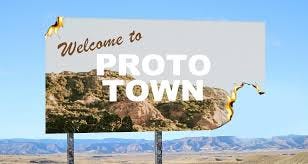
The Lockhart Nuclear Watch follows a fine Texas tradition of citizens protecting themselves from nuclear shenanigans by effectively putting pressure on the nuclear companies to be accountable, to be transparent and to follow proper regulatory procedures.
In the past, these citizen efforts are not enough to prevent the big power plant nukes from being actually constructed, but they have, so far, been effective enough to stop the nuclear contraptions from blowing themselves up and taking large chunks of Texas along with them.
Citizens in Austin and San Antonio battled the South Texas Nuclear Plant in the 70s and while they didn’t prevent its completion, they at least made sure that it was built with the required rebar. Brown and Root, which was hired by Houston Lighting and Power, thought it would be okay to build their concrete nuclear plant without rebar. Brown and Root threatened and fired inspectors who complained. They even tracked down a vocal opponent and beat him up in Austin.
Eventually, after protesting and filing suits and demanding accountability, the Nuclear Regulatory Agency listened to the complaints. They listened because 60 minutes ran a story on it.
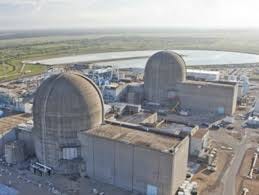
Here is Lanny Sinkin’s story. Sinkin, a vocal protestor of the nuclear plant, had been approached by an inspector with the story of the missing rebar.
“I asked him why don’t you go to the Nuclear Regulatory Commission and tell them that you’re experiencing this? And he said he didn’t trust them. That they came out there and basically palled around with the management and took a few looks at stuff and didn’t really do much. So I said well, let me try. So I took down his allegations of what was happening, didn’t let on that it was him making the allegation, and just took the allegations to the NRC office in Arlington, the Region Four office. They sent a team into South Texas, conducted an investigation, came out and said they couldn’t find anything. Well, I could tell them that the guy was telling the truth and that there was no reason for him to come to me and threaten his whole career or I could go public—so I called 60 Minutes.”
And poof it was done.
In 1981, the plant’s owners fired Brown & Root, citing a lack of nuclear experience and “mishandled” construction. Allegations included “faulty construction and falsification of quality control reports”.
A massive breach-of-contract lawsuit followed, resulting in a $750 million settlement paid by Brown & Root to the plant’s owners in 1985 and which sadly helped make the project viable again.
After Brown and Root was fired, a competent company was brought in to finish the nuclear power plant. The STNP plant hasn’t blown up, even though late into the 1980s, watchdog groups reported dozens of complaints from employees regarding construction defects and harassment of those who raised safety concerns.
When in operation, the plant has had consistent problems and, yet, is now projected to last until 2050 or so. And it hasn’t blown up…well…Yet. And that is always the worry with nuclear power plants built in that time period.
Citizens in North Central Texas battled the Comanche Peak Nuclear Plant and again, while they didn’t prevent its completion, they made sure that it was built safely. They filed enough complaints that the original permit was withdrawn, but the NRC mysteriously allowed the company to refile after fixing the problems. Members of that group didn’t understand the permission to refile. It was unprecedented. But they consoled themselves that at least they had prevented a faulty plant from being constructed.
Sinkin again…”the licensing board reached the conclusion that the utility did not have the competence to receive a license to operate a nuclear power plant. And so they gave them a second chance to demonstrate that competence. We thought well, what are we doing here, you know? What is the point? Oh, yeah. We’ll make it safer. They’re going to have to go back and correct stuff and show that they can do it better. But a license application is supposed to have a point where it’s denied or it’s granted. How do you get to the point where it’s denied and they get to go get second chance at it? Well, that’s the NRC.”
In both cases, the public advocacy groups had to scream about public accountability and safety for the public and demand effective regulation.
PHIT has not conducted oral histories in this field, but you can find those stories in Texas Legacies.
In Lockhart, the nuclear reactor proposed is not a giant nuclear power plant—those generally take 10 years to build and historically cost at least twice, if not five times, the estimated cost. (Note—The increased cost is because the public demands that they be constructed safely so the darn thing doesn’t blow up and take huge sections of Texas with it. Please also note that the increased safety is costly to the corporation. And they would rather not spend the money unless they have to.)
The Proto-town nuke also is not one of those small modular nuclear reactors that are being touted as the future of electricity generation. None of those SMRs are currently in operation in the United States. Russia has one. China has some. Everyone says they are safe. Maybe they are, but experience suggests that you shouldn’t just trust the nuclear industry. Nuclear power corporations have long and sordid history of lies and more lies and lots and lots of political “donations.”
Very, very soon, Texas may have a couple of the small modular plants, but more on this when I discuss the rural economic development history of Haskell County.
Oklo finally got NRC approval for its small nuclear modular plant in Idaho, and hopes to have one running next year in 2027. Final authorization will go through Department of Energy with its new Reactor Pilot Program. The NRC delayed the Oklo permit for two years, while it waited for Oklo to explain its safety procedures. Apparently, it didn’t have any and had to create them but I purely speculating here, because Oklo doesn’t share those details with the public.
But the Lockhart nuke is neither of those types of nuclear reactors.
The Lockhart proposal is for a special type of nuke—Groves Isotope Test Reactor. It is specifically designed to make medical radioisotopes for medical purposes.
Medical isotopes are a good thing. It is used for cancer medicines. Most of the stuff currently has to be imported. Or is made in really old and creaky facilities.
So this project is cutting edge and that is what the Proto-Town is supposed to be doing— cutting edge advanced technology.
But Oklo has already dodged regulation and accountability once and that kind of behavior is always suspicious.
It is doubly suspicious when it comes to nuclear business. Why? Because, as previously mentioned, companies involved with nuclear power plants have such a sordid history of lying. But…mostly because the consequences of getting it wrong and screwing up will be so utterly devastating to the local community.
Atomic Alchemy is the company that produces the medical isotopes. Atomic Alchemy was acquired by Okla in 2025.
Earthship, I think, is the new name of the company. Earthship filed plans with the state of Texas in March 2026 to develop a $23 million, 7,600-square-foot nuclear research reactor at Proto-Town.
$23 million seems cheap.
Earthship has not worked with nuclear before. Which is why they bought Atomic Alchemy.
The radioisotopes, once produced, will be sent to Idaho where the plant there will process the radioisotopes into useful medical tools. It is all perfectly safe and heavily regulated by the NRC. Yeah. Right.
The NRC requires medical isotopes to be shipped in heavily shielded, crash-tested containers. These packages are engineered to survive severe highway accidents, fires, and punctures without breaching. Plus they degrade quickly, minimizing long-term environmental hazards. So even if these “crash-tested” containers do crash and break, everything will be just hunky-dory in a quick amount of time.
Yeah! Right!
In any case, if you are suspicious of this activity, and you live in the area, then you should probably sign up with the Lockhart Nuke Watch. It is best to be cautious.
Possible isotope handling problems.
It the isotopes are handled improperly or the charcoal filters are replaced in time, the the isotopes become volatile. If that plume expands outdoors, there goes the business park and the surrounding community.
Suppose the start-up, the cowboy startup, doesn’t want to spend the time to do the paperwork to dispose of the regulated radioactive waste and tosses it in the trash bins or washes it down the drain. [remember that cowboy startups always whine about the cost of regulation.]
Or suppose the start up goes bankrupt and just abandons the project. Poof…Caldwell County is stuck.
So if you live in the area, you might want to sign up with Lockhart Nuke Watch.
No posts
Comments
Nothing yet. Say the first thing.
Sign in to join the conversation.