
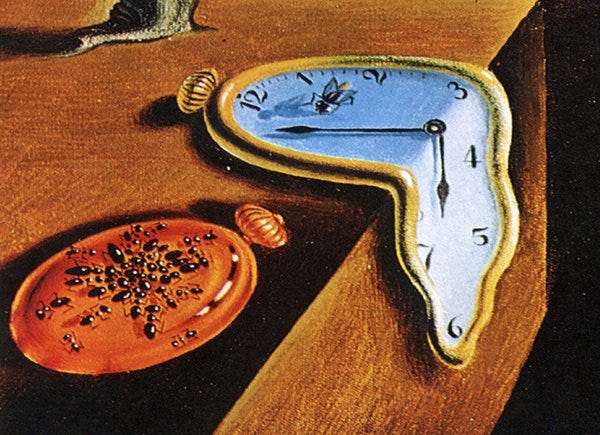
Perfect timing is deeply overrated.
We spend the first half of our lives racing to be early—early success, early promotions, early marriages, early exhaustion—and then one day, somewhere between your second pair of reading glasses and your third attempt at intermittent fasting, it hits you.
You weren’t late. You were marinating.
When it comes to writing as a business, I know the sweet spot isn’t 25 and caffeinated—it’s 50 and fearless.
In our early writing years, we were loud. Eager. Over-punctuated. We wanted to prove we had something profound to offer, even when we were mostly guessing. That pretense has burned off.
We’ve lived things. We’ve survived things. We’ve spent decades collecting observations the way squirrels collect acorns—forgetting half, rediscovering a few, but ending up with plenty of material.
Now we write perspective, not performance. We don’t struggle to sound like we have authority; we write from that position. And in a sea of online “experts,” that authenticity is golden.
Once in a galaxy far away, publishing meant chasing approval from people holding clipboards and advanced degrees in rejection letters. But those walls fell.
Between Substack, Payhip, Amazon, and a myriad of self-publishing choices, we can now build a personal publishing empire in our pajamas—one upload, one post, one email at a time. No agent required. No “please find attached.” No waiting for permission from the kingdom of gatekeepers.
We get to own our audience and our income. We, the independent writers, will steer and command the Community Economy—the current buzzword of 2026 and beyond. It’s a hard shift that prioritizes deep, reliable loyalty and in-person connection over viral reach. For writers like us, this means building a core community of paying members rather than just chasing a large follower count
It’s a little delicious that the golden age of creative independence happened just as we nailed the “I’m too old to care what anyone thinks” phase.
We’ve written professional emails, family updates, lesson plans, dating profiles, grocery lists with plot twists—and somewhere in all that, our narrative voice quietly sharpened itself. Turns out, we’ve been practicing this whole writing-life thing all along.
When you’ve spent decades communicating across bosses, teenagers, and customer service reps, “finding your voice” becomes less of a mystery and more of a reflex.
Yes, it talks back now, but so do we. The truth is, once we stopped being suspicious of the tech and started bossing it around, everything clicked.
Automation writes our reminders, design tools make our posts pretty, and AI drafts editorial idea lists while we refill the coffee. We used to think technology was our rival. It turns out it’s our most reliable intern—available 24/7, pays for itself, and never calls in sick.
We don’t have to master every tool. We just need to know which button gets the job done and which one deletes three hours of work. (How do I know?)
There’s a particular kind of focus that shows up around fifty, right after you realize that “someday” has commitment issues. We start treating time as something to spend wisely, not hoard indefinitely. And that’s when the writing starts to crackle.
Our sentences get leaner. Our choices sharper. Our goals braver. Our personality shines through. We finally understand the math of life. And that urgency, handled gently, becomes fuel.
We don’t beat ourselves up for not starting sooner. We get to work now, knowing that earlier could never have been this smart or creative.
There’s freedom in that. We no longer write to impress imaginary gatekeepers—or even real ones. We write because it matters—to us and to someone else who needs to hear, “Hey, same.”
We’re done performing cleverness; we’re here for connection. And somewhere between the last self-help podcast and the latest existential grocery store moment, we realize writing is not a luxury. It’s a way of making sense of life.
After a lifetime of meetings, parenting, teaching, managing, and politely agreeing through nonsense, most of us have developed risk-tolerant candor. We know what we believe—we just forgot it counted as marketable.
People crave writers who stand for something—and we’re old enough to stand on something without needing social media approval first. We have opinions, yes, but also context. Perspective gives opinions flavor. Experience keeps them from being tedious or lame.
We’ve earned the right to use phrases like “back in the day” unironically and profit from them.
While doomscrolling through twenty-somethings bragging about landing book deals, we wonder if we’ve suddenly become invisible. But here’s what the data (and the mirror) says: creativity does not expire.
Frank McCourt wrote Angela’s Ashes in his sixties. Laura Ingalls Wilder started her bestselling series at 65. I’ve shown you many more examples in past posts.
It’s not “too late” when the part of you that still hungers to create wakes up. We are not reinventing ourselves—we’re reclaiming ourselves, and with better Wi-Fi.
The best secret might be that the world has caught up to our wavelength. Readers are tired of fast-food content and AI-generated TV dinner stories. They want gourmet meals again—flavor, honesty, reflection, humor.
Exactly what people over fifty bring to the table. We can write for the generation we belong to and others, in our authentic voices, and promote that writing fearlessly. It’s not hustling—it’s relating, and it pays much better than overworked trendy topics.
We’re not chasing “retirement hobbies.” We’re building intellectual freedom projects: writing books, newsletters, guides, digital courses, all of it—because frankly, we finally have the chops to do it right.
We’ve reached that beautiful intersection of experience, focus, and unapologetic curiosity. And the truth is it’s good for our wallets and wildly good for our brains.
Back in the day (see what I did there?), I treated creativity like it needed a special mood ring and a thunderstorm to blossom. Now I treat it like what I do. Show up. Do the thing with heart and soul. Cross it off. Repeat next week.
Bravery over brilliance
We’ve learned the secret: the first draft is meant to be ugly. The bravery comes from finishing in spite of.
Simple systems, not spreadsheets
Our creative lives run better on rhythm, not chaos. Write something. Publish something. Repurpose something. Engage someone. Then rest.
Curiosity runs the show
We follow the itch, not the algorithm. Curiosity decides the topics; persistence turns them profitable.
And somehow, the whole thing becomes less of a grind and more of a personality.
Write what sets you on fire. Edit everything else. Champion fellow storytellers.
The writing economy is changing fast, but midlife writers—armed with sharp humor, lived wisdom, and reliable caffeine—fit beautifully into in-demand, growing markets:
Personality-driven newsletters. The kind people read for you, not just your niche.
Memoir-sized truths. Short personal essays that blend laughter, nostalgia, and life lessons (we’re natural pros).
Ghostwriting + book consulting. Plenty of younger experts, zero storytelling skills. We fix that. Handsomely. Do not overlook these opportunities.
Authority essays and LinkedIn thought pieces. Our resumes read like novels—may as well profit from the plot.
Email marketing with a pulse. Businesses are desperate for human-sounding messages. Guess who qualifies?
Digital courses + guides. Packaging what we already know is the closest thing to passive income magic. This is a hot, booming option.
Humorous personal development writing. The self-help world’s missing ingredient: self-awareness. And real, laughable humor.
Editing or “humanizing” AI drafts. Because robots still can’t land a joke or detect sarcasm. Look around for businesses that rely on written content, embrace AI-generating (ugh!), but realize they have to alter all of it. They will pay you to edit.
We don’t have to master all eight. We can claim one, make it ours, and stay consistent. Longevity is a strategy.
It’s surely time to stop asking, “Is it too late to start?” and start asking, “What do I want and need to say?”—a question that changes everything.
We can stop chasing polish and start writing truth. Late bloomers bloom longer and stronger. We understand that relevance doesn’t belong to youth—it belongs to anyone brave enough to keep creating.
Writing after fifty isn’t a backup plan. It’s the main event we didn’t know we’d been training for. We already have the stories. Now we need to build our community and tell the stories louder.
If you’re really, really ready to implement your writing potential and feel brave enough to turn hobby to income, Pen2Profit Academy is a click away.
Not ready yet? No problem. But would you consider a tiny bit of support for my work?
Comments
Nothing yet. Say the first thing.
Sign in to join the conversation.