
One of my subscribers, Matthew Hoare, has been a generous critic of my work. His comments keep pushing me toward a more nuanced reading of my own arguments than I naturally reach for on my own. His most recent one sent me back to Elinor Ostrom’s Governing the Commons, and it is the reason this essay exists.

My background is ecological modelling, specifically epidemiological modelling of wildlife disease, disease ecology and how it interacts with population genetics and the natural world.
I have spent my professional life releasing beavers and other keystone species to recreate nature at landscape scale and answer all the critics on disease, population growth and ecological effects.
That makes me a statistical animal. I look for correlation and causality, for what can actually be tested against a real system. It gives me a mechanistic view of most things, including economics, and I have been fairly hard on sociological and emotional readings of the world’s problems in essays like Zen and the Art of Land Value Tax. Matthew’s comment made me think I should turn that same scrutiny on my own instincts for once, rather than on everyone else’s.
So this essay tries to find a synthesis between Ostrom’s work and my own constant theme on this Substack, taxing economic rent and negative externalities. But I want to come at it from somewhere more personal than usual, because the commons is not only an economic structure to me. It is a memory.
I grew up in Blyth and Cramlington, in the South Northumberland coalfield. My father was an electrical engineer at Bates Colliery. Both my grandfathers were pit deputies. The communities I grew up in still had something of the old commons logic running through them, even though the pits themselves were owned, then nationalised. At 14 I went through the miners’ strike and knew real poverty, a crying mother with no food to put on the table, a farther hiding his desperation from myself and my brother. But in that culture, men stopped and talked in the street. They shook hands. Reputation mattered, and it was earned face to face over years, not performed for an audience. Cheats were not exiled. They kept some of their dignity, but everybody knew what they were, and that knowledge followed them. Those communities kept each other honest because they had to. You worked alongside the same men on the same shift for decades. There was no anonymity to hide behind.
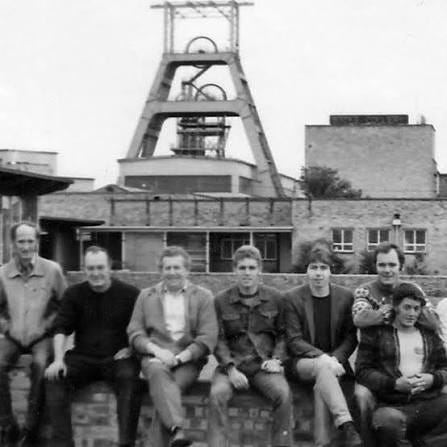
That world had owners, and its rights were narrower than a true commons. Some people had more standing than others, usually earned through competence and shown through respect rather than claimed as an entitlement. But something of the underlying logic survived the enclosure fields and the closure of the mines long after the commons themselves were gone. I miss it, and I think the country is worse for having lost it.
I say this as someone who is, by any clinical measure, a high functioning autistic. I am not naturally sociable and I generally avoid people. But I notice the absence of real community more than most, because I can see what has replaced it: relationships regulated by nothing except fashion, clubs and societies where you do not actually know anyone, and social media, which manufactures moral outrage on demand and sorts people into camps who shout at each other rather than work alongside each other. On a factory floor or down a pit, you had to get along with people you might not like. You had rights, but you carried responsibilities that came with them, and those responsibilities were real because the same people would be standing next to you tomorrow. That is a different world from one where rights are asserted with no responsibility attached, and I think that gap is close to the root of a great deal of what has gone wrong in Britain since.
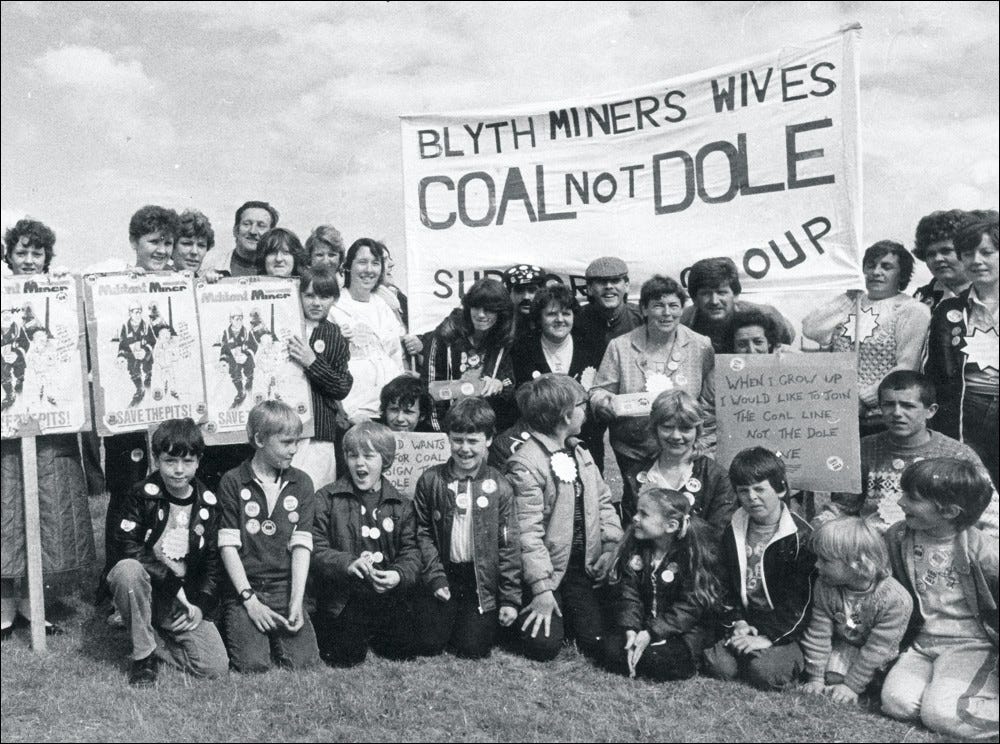
My advocacy for Georgism is cold and mechanical. I like it because the numbers work and because I can trace the causal chain from land rent to house prices to the 18-year cycle. But I do not think the case for it stops at economics. I think a Georgist settlement would also have a social benefit, because it would make room for exactly the kind of tested, locally grown institutions Ostrom describes, the kind my grandfathers’ generation lived inside without ever naming it.
That is the question this essay tries to answer. In a modern world where hierarchy is entrenched everywhere, in councils, in charities, in supposedly flat cooperative businesses, how do we recover the culture of the commons, where the rules were tested against reality for generations rather than written by a committee, or increasingly, drafted by AI, to sound impressive on a policy document? Written rules that read beautifully and satisfy a compliance officer often behave terribly on the ground. They produce a culture where everyone competes to claim the loudest protected characteristic, where the manager who protects the hierarchy is rewarded over the worker who does the actual labour, and where nobody wants to be the one holding the shovel. Real rules, the kind Ostrom found still working after generations, are not written that way. They are earned the hard way, tested, broken and mended by the people who have to live under them. That is what this essay is really about: how we get from the cold, atomised world we have built back to one where people are bound to each other by something more than a transaction, using the same fiscal tools I usually write about for entirely different reasons.
Elinor Ostrom wrote Governing the Commons to kill a false choice. For twenty years, policy on shared resources had been fought between two camps who agreed on everything except the solution. One camp, following Garrett Hardin, wanted a Leviathan: a central authority to ration access by decree. The other wanted enclosure: carve the commons into private parcels and let markets do the rationing. Ostrom’s fieldwork, from Swiss alpine meadows to Spanish irrigation huertas to Japanese iriaichi forests, showed both camps wrong. Communities had been managing shared resources sustainably for centuries without either state control or privatisation, through institutions they built and policed themselves.
Her eight design principles: clear boundaries, rules matched to local conditions, participatory rule-making, local monitoring, graduated sanctions, cheap conflict resolution, external recognition of the right to self-organise, and nesting within larger systems, are not a theory imposed from outside. They are a pattern extracted from cases that survived. That empirical discipline is the book’s great strength. It is also, oddly, the source of its central gap.
The reason so many well-intentioned modern rules fail on contact with a real workplace or a real street. A policy written to look perfect on paper, sometimes now literally drafted by a language model, is not the same thing as a rule that has been tested against a shift full of tired men for thirty years. Ostrom’s design principles were not designed. They were extracted, after the fact, from institutions that had already survived contact with reality. That is the difference between a rule and a slogan.
Ostrom’s cases work because they are bounded, both physically and socially. A Swiss grazing commons has a fixed membership of families who have known each other for generations, a resource with a countable carrying capacity, and an exit cost from the community high enough that reputation is devastating to lose. Take away any of those conditions and the mechanism weakens. Modern economies are built from populations that are mobile, anonymous to one another, and increasingly disconnected from any single bounded resource. Reputation-based sanctioning, principle five, has real trouble scaling to a fishery worked by transient trawler fleets or a river catchment shared by city populations that have never met.
More important than scale is a silence at the centre of the book. Ostrom asks how a community stops appropriators from over-extracting a resource. She never asks who captures the value of the resource once extraction is properly managed. Her herders, irrigators and fishers argue over quotas, not over rent. But a well-governed commons is not a valueless one. A Swiss alpine pasture that is not being overgrazed still has a scarcity value, created by its location, its fertility, its proximity to markets, not by the labour of any single appropriator. Ostrom’s design principles regulate the flow of resource units. They say nothing about the stock of unearned value sitting underneath the whole system.
This silence has consequences she does not examine. Principle one, clearly defined boundaries, decides who counts as an insider with a right to appropriate. Historically, that boundary was often drawn by feudal privilege, and it can just as easily calcify into a closed shop that excludes newcomers, migrants, or the landless, while insiders sit on valuable appropriator rights they no longer actively use. Nothing in Ostrom’s framework taxes that idle privilege or prices the newcomer back in. Her institutions are very good at preventing a tragedy of overuse. They have no mechanism at all for preventing a tragedy of enclosure by insiders, which is arguably the older and more persistent tragedy in the history of common land.
The book is also structurally quiet about externalities that cross the CPR boundary. Her cases are largely self-contained systems, a meadow, an aquifer, a lagoon, where the costs of overuse fall on the same people who caused them. Climate change, nitrogen run-off and biodiversity collapse do not respect that neatness. A well-monitored local fishery can still collapse because of ocean acidification decided nowhere near its shoreline. Ostrom gestures at this with her eighth principle, nested enterprises, acknowledging that CPR institutions must sit inside larger systems of governance. But she never says how the larger tiers are to be funded, or how a cost generated in one nested layer gets priced back into the layer that caused it. The plumbing between local commons and planetary commons is left undrawn.
Henry George supplies exactly the missing force at scale that makes the commons work on the smaller scale. His argument, laid out in Progress and Poverty in 1879, is that land and natural resource endowments are fixed in supply and that their value is created not by the owner but by the community around them, its infrastructure, its population, its economic activity. Because that value is socially created, George argued it should be socially collected, through a tax on the unimproved value of land and resources, rather than left to be privately pocketed as rent. A land value tax does not tax what an appropriator builds or produces. It taxes what the appropriator has done nothing to earn: the site value itself.
Put Ostrom and George side by side, and they answer two different halves of the same problem. Ostrom explains how a community can govern the use of a shared resource without an external Leviathan. George explains how a community should treat the value of that resource so that nobody has an incentive to hoard, enclose or speculate on access to it in the first place.
The commons was stolen in the centuries of enclosure because there was an economic reward for the theft; Geoism removes the economic reward. Geoism is also far more economically efficient than any so-called capitalistic system we have created and disguised as liberty.
Ostrom’s design principles are the operating rules. George’s rent capture is the fiscal architecture underneath them. Neither is complete without the other. A well-monitored commons with no rent capture will still produce an insider elite sitting on appreciating access rights, and the funds tto bend the rules in their favour. . A land value tax with no local governance institution will correctly price access but has nothing to say about monitoring, sanctioning or day-to-day rule-making on the ground.
The Pigouvian half of the synthesis, negative externality taxation, closes the second gap, the one Ostrom’s nested-enterprise principle raises but never resolves. A carbon levy, a nitrogen charge, a biodiversity offset priced at genuine ecological replacement cost, these are rent capture applied not to the value of holding a scarce site but to the cost of degrading a shared one. Crucially, unlike Ostrom’s monitoring and sanctioning mechanisms, externality pricing does not depend on face-to-face trust or repeated interaction. It works because it is impersonal. That is what allows it to scale up through her nested tiers, from parish to watershed to nation to atmosphere, in a way that reputation-based sanctioning cannot.
A modern architecture built from this synthesis would run on four linked mechanisms.
First, a monopoly tax replacing, over time, taxes on labour and enterprise. This directly attacks land price inflation and speculative withholding, the single largest driver of housing unaffordability and rural land concentration in Britain today. It also funds the state without punishing productive work, which is the standard Georgist case Fred Harrison has spent decades making through the 18-year land cycle.
Second, Ostrom-style local governance bodies for specific CPRs, watersheds, fisheries, grazing commons, rewilded landscapes, chartered with real legal standing so external authorities cannot simply override locally agreed rules, matching her seventh principle. These bodies would run the appropriation rules, the monitoring, the graduated sanctions. That is the part Ostrom already solved. Nothing here needs reinventing, only replicating.
I also feel sortation or direct governance through earned positions should replace political parties or populist elections where elections can be subverted by money. Gorgism removes the money to fix elections, but sortation, random selection and limited rotating representation fixes the problem of who represents the people
Third, negative externality taxes at the point of emission or extraction: carbon, nitrogen, pesticide load, habitat loss priced at restoration cost rather than at a token rate. Revenue from these levies would be ring-fenced, not absorbed into general taxation, and directed into land purchase and restoration funds of the kind I am trying to achieve through my work.
Fourth, the fiscal link between the first three: a large share of combined LVT and externality tax revenue distributed as a citizen’s land dividend, rather than banked by central government. This is the poverty-reduction mechanism. Land rent is currently a private transfer from the landless to the landed. Reversing that transfer through a universal dividend converts the same flow of money into a direct anti-poverty payment, without a single new welfare bureaucracy.
The ecological payoff follows almost automatically, and this is the part of the argument closest to my existing work on Ricardo’s margin of production. Once land value tax is applied, marginal agricultural land that only turns a profit because it is undertaxed relative to its true opportunity cost stops being worth holding for extraction. It becomes cheaper to release that land into a rewilding trust than to keep farming it badly. The same fiscal pressure that funds the citizen’s dividend also pushes low-grade land back toward ecological restoration, governed once it gets there by Ostrom’s design principles rather than by either a state ministry or a private landlord. Land reform and rewilding stop being two separate campaigns and become the same campaign.
The second payoff to reviving Ostrom’s institutions that has nothing to do with resource efficiency. A working commons manufactures something modern life is chronically short of: reasons for strangers to become neighbours. Enclosure did not just privatise land. It privatised the associational life that had grown up around shared stewardship, the grazing meetings, the water courts, the harvest customs, and left nothing in its place except the market and the state, neither of which requires you to know the person next to you. Rebuilding commons is one of the few interventions that rebuilds belonging as a side effect of doing something practical, rather than as a stated goal in itself. Community cohesion strategies tend to fail because they ask people to bond over nothing. A commons gives them a reason to bond over something real.
I recognise this from where I grew up, in the coalfield towns around Blyth and Cramlington. The pits were owned, so it was never a true commons, but the logic of monitoring and graduated sanctions Ostrom describes was alive in the way men treated each other on the factory floor and down the pit. A cheat did not lose his place. He kept his dignity. But everyone knew what he was, and that reputation followed him for the rest of his working life, in a way no HR policy or annual review has ever managed to replicate. Those relationships were intergenerational and tested against real stakes, not performed for an audience. It is the closest thing to Ostrom’s design principles I have lived inside myself, and I would add it to her list as a principle in its own right: a community stays honest only when its members are bound by shared, repeated, real-world stakes, not by a code of conduct nobody has to enforce in person.
Applying Ostrom’s principles at neighbourhood and parish scale in Britain is not exotic. The building blocks already exist and mostly need linking together and legally securing rather than inventing. Community land trusts and allotment associations already run something close to principle one, a clearly defined membership with rights to a defined plot. Community energy cooperatives and volunteer stewardship groups already run something close to principle three, collective decisions on how a shared asset is used. What is missing is the deliberate, funded connection of these fragments into full CPR institutions, with real monitoring, real graduated sanctions rather than polite disapproval, a cheap local body to resolve disputes, and legal standing so a parish council or a developer cannot simply override what the members agree.
Membership should be by commitment, not inheritance. This is the point where the synthesis with land value taxation matters again. A modern commons that assigns rights only to existing landowners simply re-creates the insider enclosure problem the first section of this essay raised. A commons funded and seeded through LVT and externality tax revenue, by contrast, can open membership to anyone willing to take on the reciprocal duties, monitoring shifts, work parties, attendance at the collective-choice meetings, that principle two demands. The boundary is drawn around behaviour, not birth. The same logic should decide who is respected inside these institutions once they exist. It should be the person doing the monitoring shift and the work party who is valued, not the person managing the paperwork around them. A commons that ends up rewarding administrators over labourers has already been captured by the same hierarchy it was meant to replace.
None of this requires waiting for national legislation. A parish or a trust can charter a small commons tomorrow: a community orchard, a fen, a stretch of river, a rewilding site, governed from day one by Ostrom’s seven core principles, with the eighth left as an open door to nest into the wider LVT-funded architecture once it exists. The resource being governed matters less than the fact that governing it together is what turns a scattered population back into a community.
At the international tier, where Ostrom’s framework runs out of road entirely, the same logic extends to genuinely global commons: a carbon price with subsidiarity, so that a share of revenue stays within the jurisdiction that collected it, funding local LVT-style dividends, while a share flows to an international fund for cross-border ecological repair, the sort of mechanism the IU has an obvious institutional interest in building out under a UN-affiliated mandate. Ostrom proved that local self-governance beats a Leviathan. George proved that the wealth locked up in land should belong to the community that creates it. Together they describe a system with no need for either, and, if I am honest about why I still care, a way back to something closer to the coalfield streets I grew up on than to the anonymous transactions we have settled for instead.
No posts
Comments
Nothing yet. Say the first thing.
Sign in to join the conversation.