
I helped host a walking event yesterday in Thornton, CO. It was in partnership with Adams County and Anythink Public Library on Huron St. The library manager, whom I adore, greeted me as I slowly limped inside. Hamstring injuries are humbling. She showed me her library’s tea selection (yes, you can try and borrow tea) and introduced me to one of her colleagues that manages a zine sharing program. She then walked me into a ceiling-high tree art installation near the children’s section where you can sit and listen to nature sounds. Thank everything for public libraries.
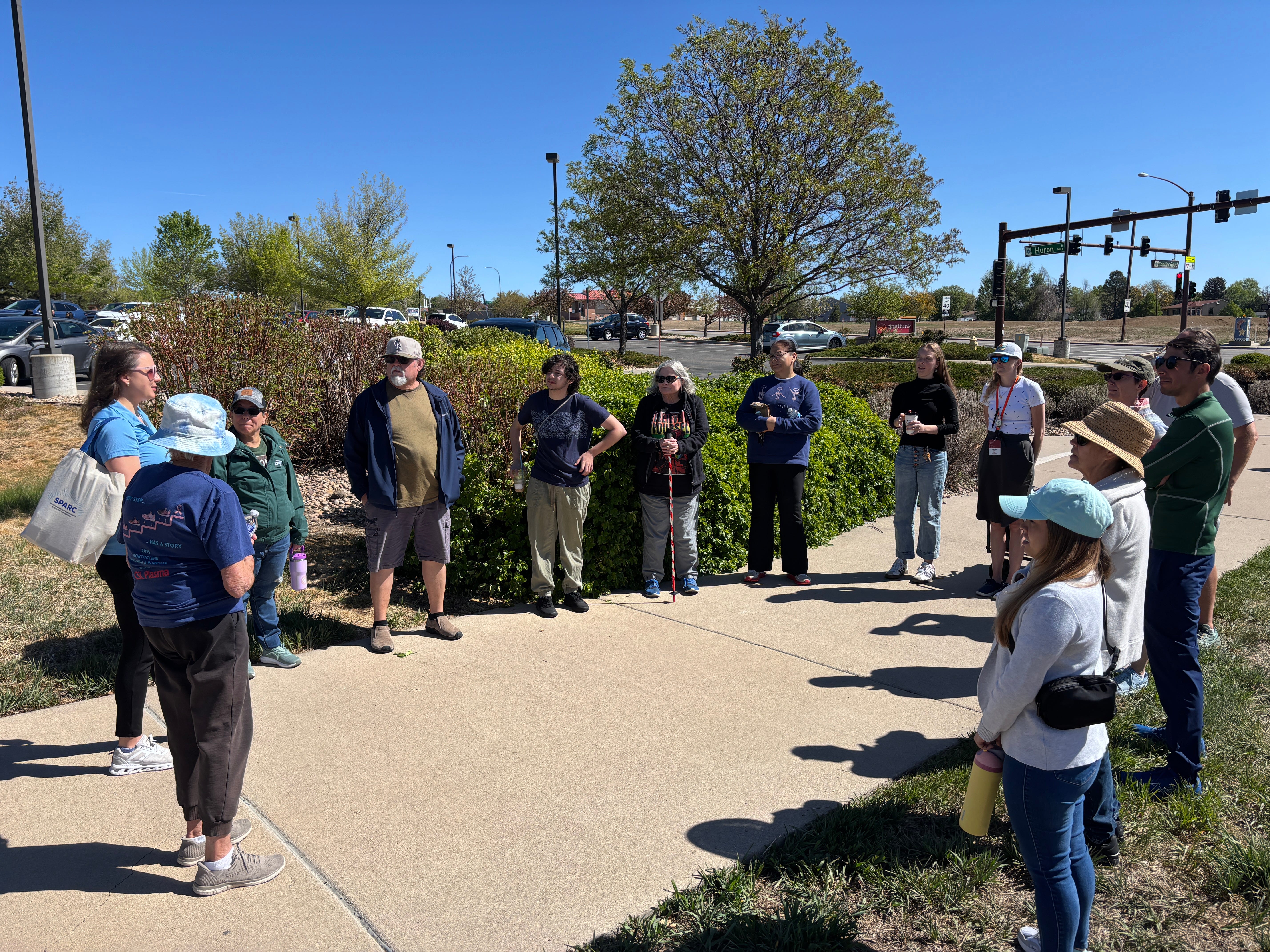
The focus for our event was connection. Connection to others, oneself, and our surroundings. We started in a circle and took a moment to share more about who we are and what brought us here.
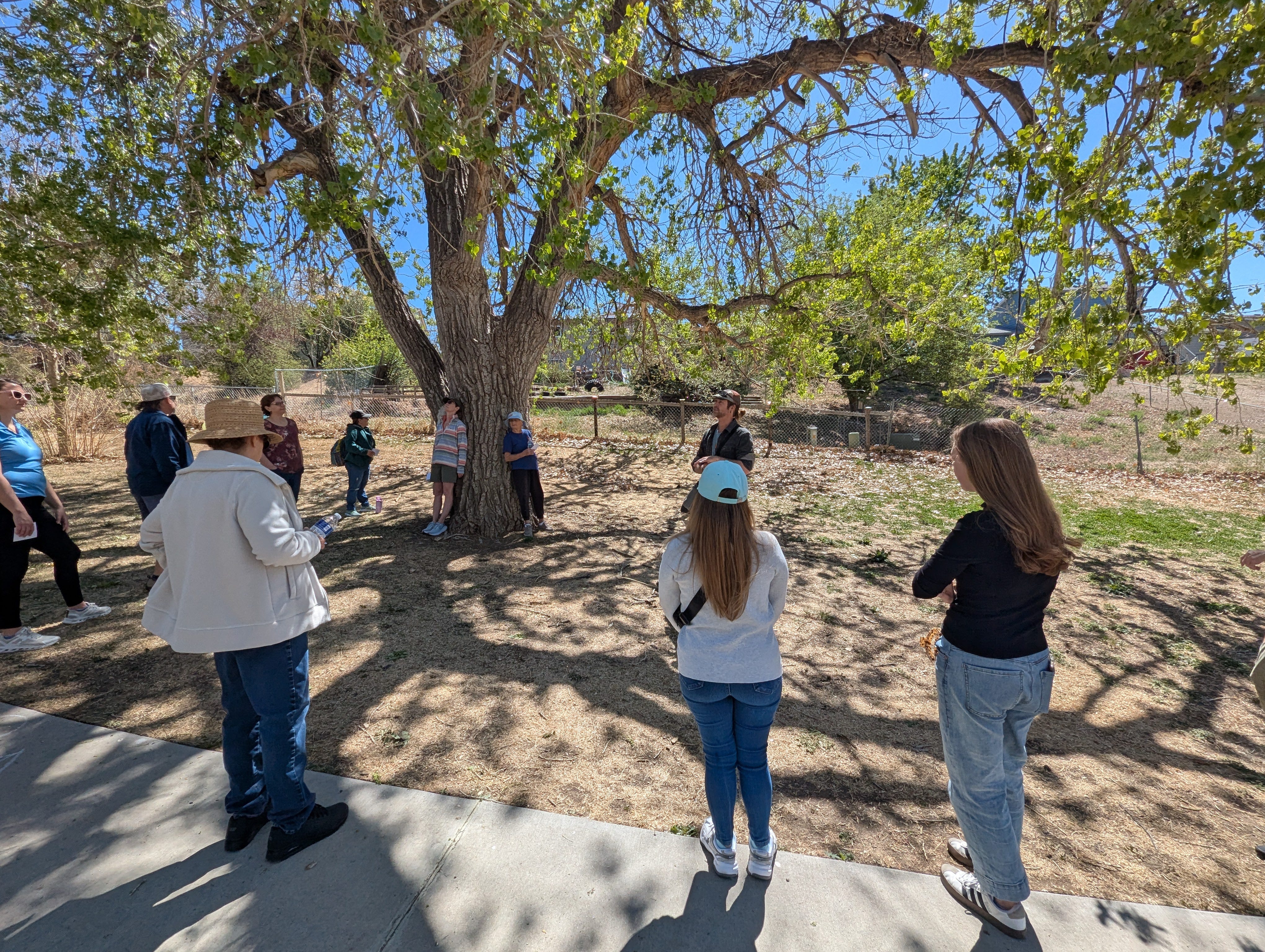
As many of you know, I care deeply about the benefits of moving more the way we’re made to. Slowing it all down. Side-by-side conversation under a big sky. Feeling the breeze. Leaning on trees.
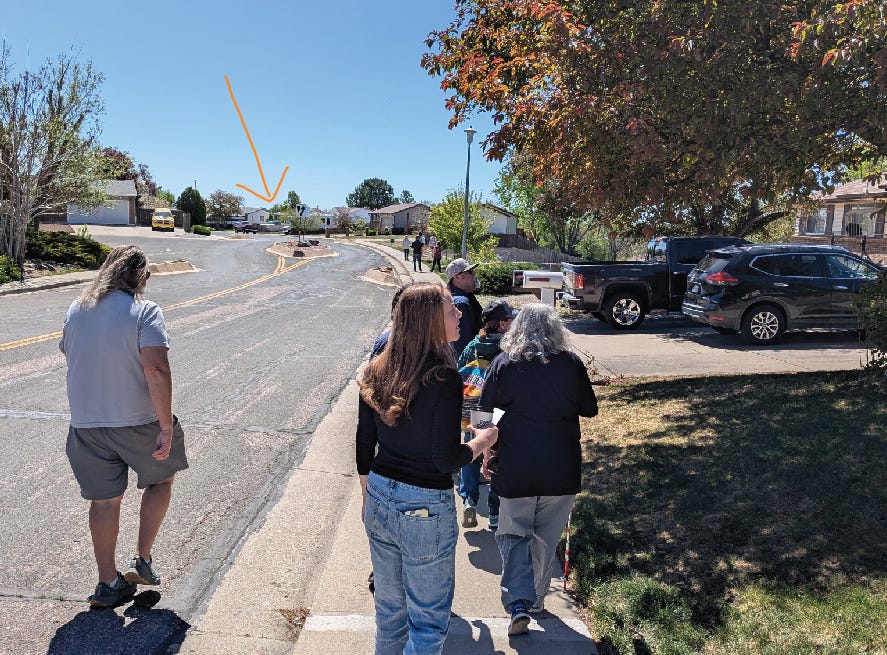
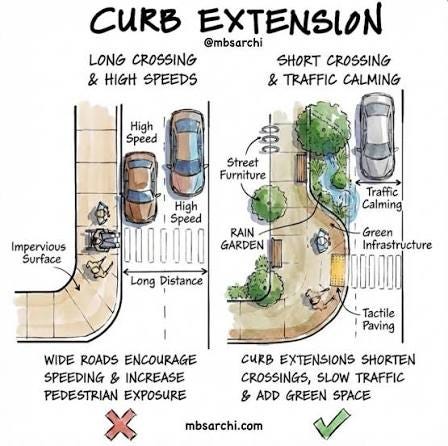
As we made our way back on neighborhood roads, I made sure to stop the group to show them the importance of actual infrastructure acting as traffic calming instead of only using signs and paint. I was preparing the group for our final stop before returning the library.
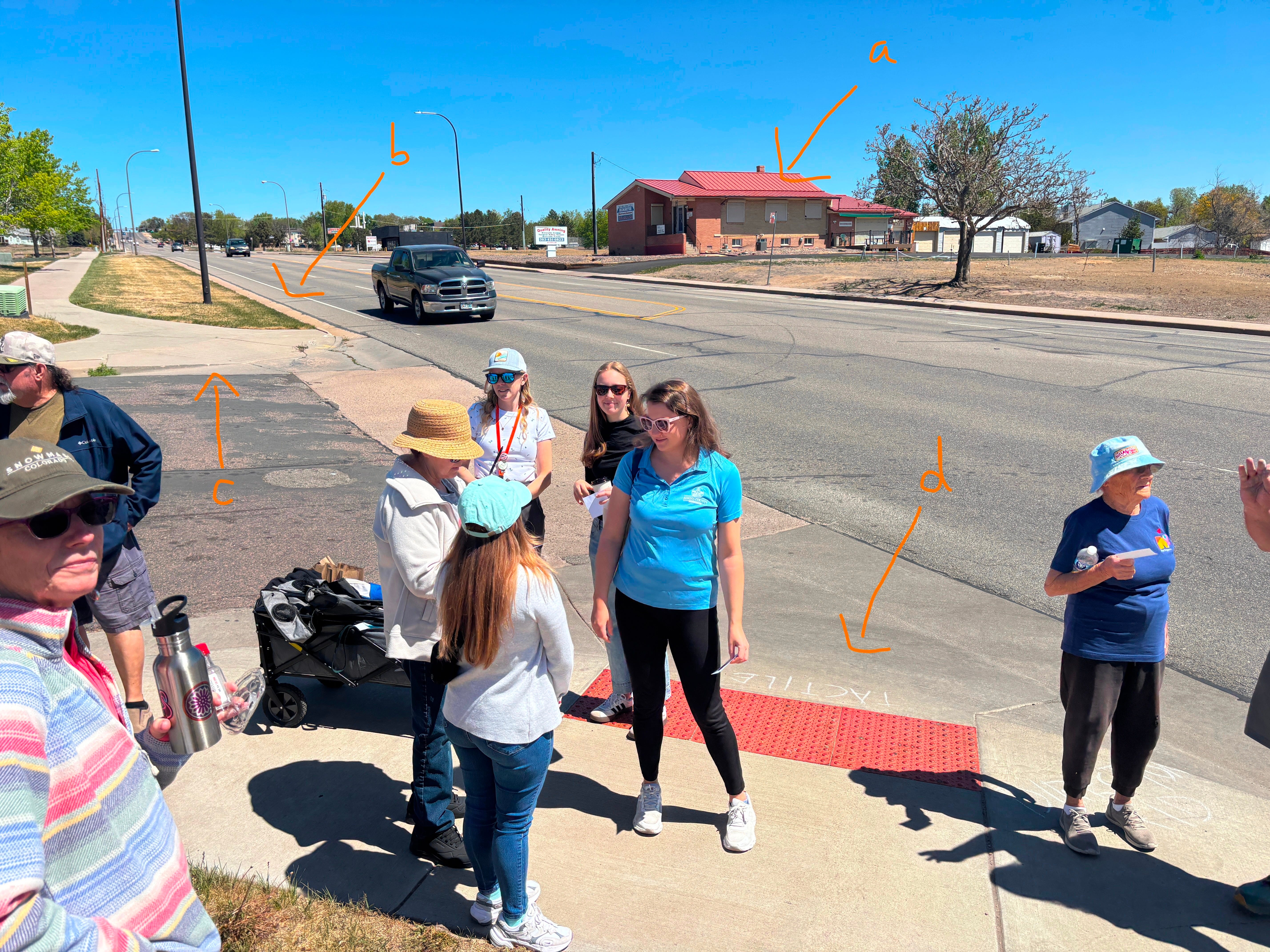
As you peer into this photo, I invite you to observe how the infrastructure helps transit riders feel safe, comfortable, and seen (or not) when getting off the #8 bus to reach the library. The library is located just behind me (taking the photo) on the northeast corner of the intersection.
I invited participants to face the intersection and share what they see:
“bus stop without a bench or shelter” (a)
“unsafe bike lane” (b)
“a broken diagonal ramp with a safer sidewalk than one next to the bus stop” (c)
“another diagonal ramp leading people into car traffic” (d)
What else do you notice? Add your observations in the comments. While there is a signal with crosswalks a bit further south, I asked everyone if they would dart near the bus stop OR walk/roll an extra block or two to the signalized crossing. Nearly everyone raised their hand saying they would dart near the stop.
Pedestrian behavior is endlessly missed in how we budget, plan, and engineer places where people live and work. Waves of intuition signal the body to make a variety of decisions as it navigates its environment. Choosing to dart should never be assumed as random and reckless. People who move outside of cars ALSO want direct access. Busses run late and some only run once an hour. Rain and mud slow down one’s pace. Pedestrians ALSO sleep through their alarm.
We need to get to work. We need to get to school. We need to get to our doctor’s appointment and we don’t always have the time to add an extra 15-30 minutes to get to the light or to take the sidewalk around the parking lot. And. For those who move on a wheelchair and powered scooter, it often means moving IN the road as ramps and sidewalks are too often broken and unreliable.
Consider taking a minute to watch the video I recorded for Pedestrian Dignity media before our event. You can see, feel, and especially hear some of the stress surrounding this intersection with video.
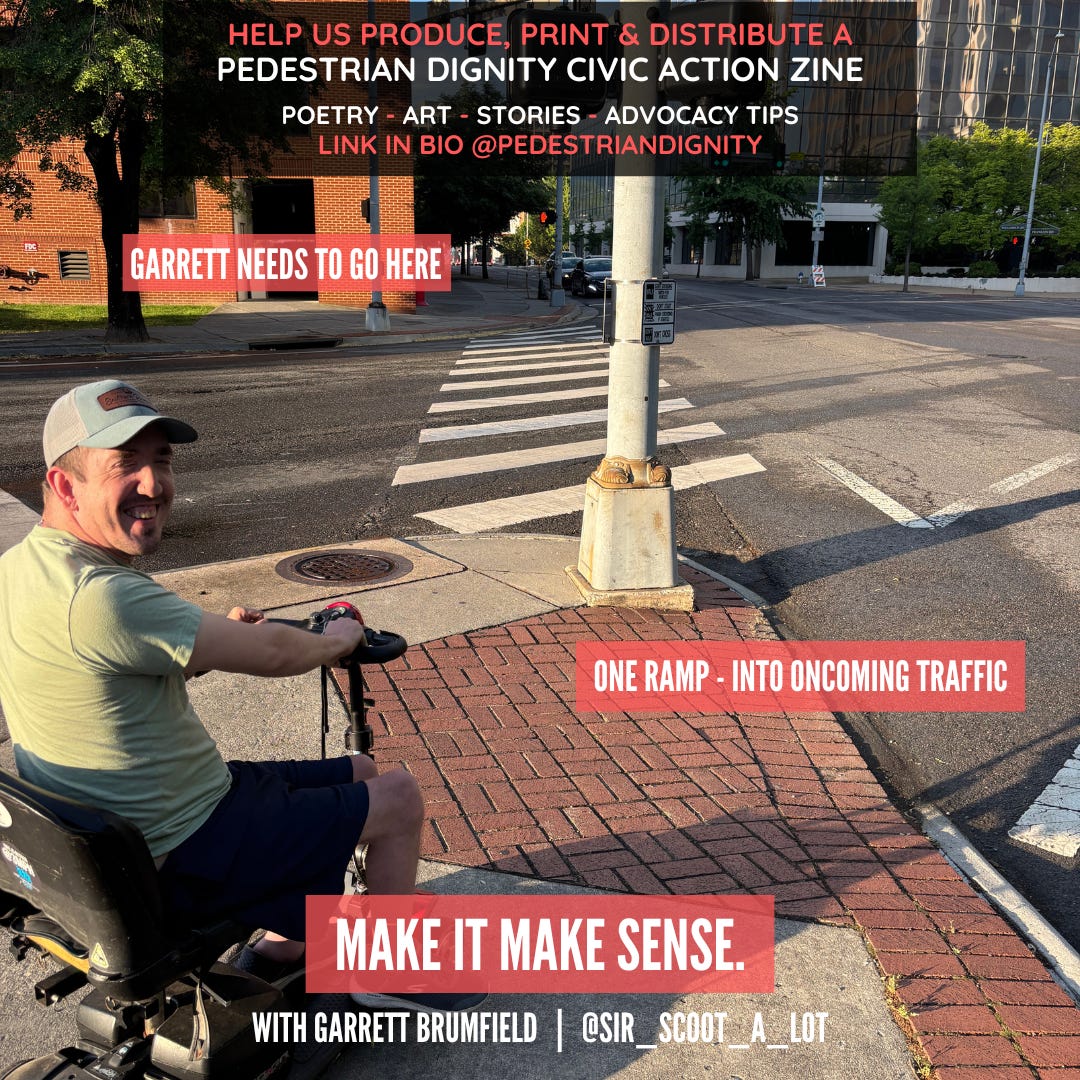
The photo above is another example for budgeting, planning, and engineering that doesn’t see the lived experience of those moving outside of cars. The rough brick ramp only pointing in one direction with crosswalks going in two. This forces Garrett to have to go out into a lane of moving car traffic with a pedestrian signal.
We need people to feel it. To solely study how to draw or pour a sidewalk is not cutting it. Art can help us get there. Poetry can help us get there. Stories from the real experts who live this every day can help us get there.
Help launch our mobility justice zine!
As many of you know, Alejandra and I (and a host of wonderful partners!) launched a crowdfunding effort to kick-off a pocket-sized, bilingual Civic Action Zine. Funds go directly to paying contributors, editing/translation, design/formatting, printing, and distribution. All who pledge will get copies of the zine.
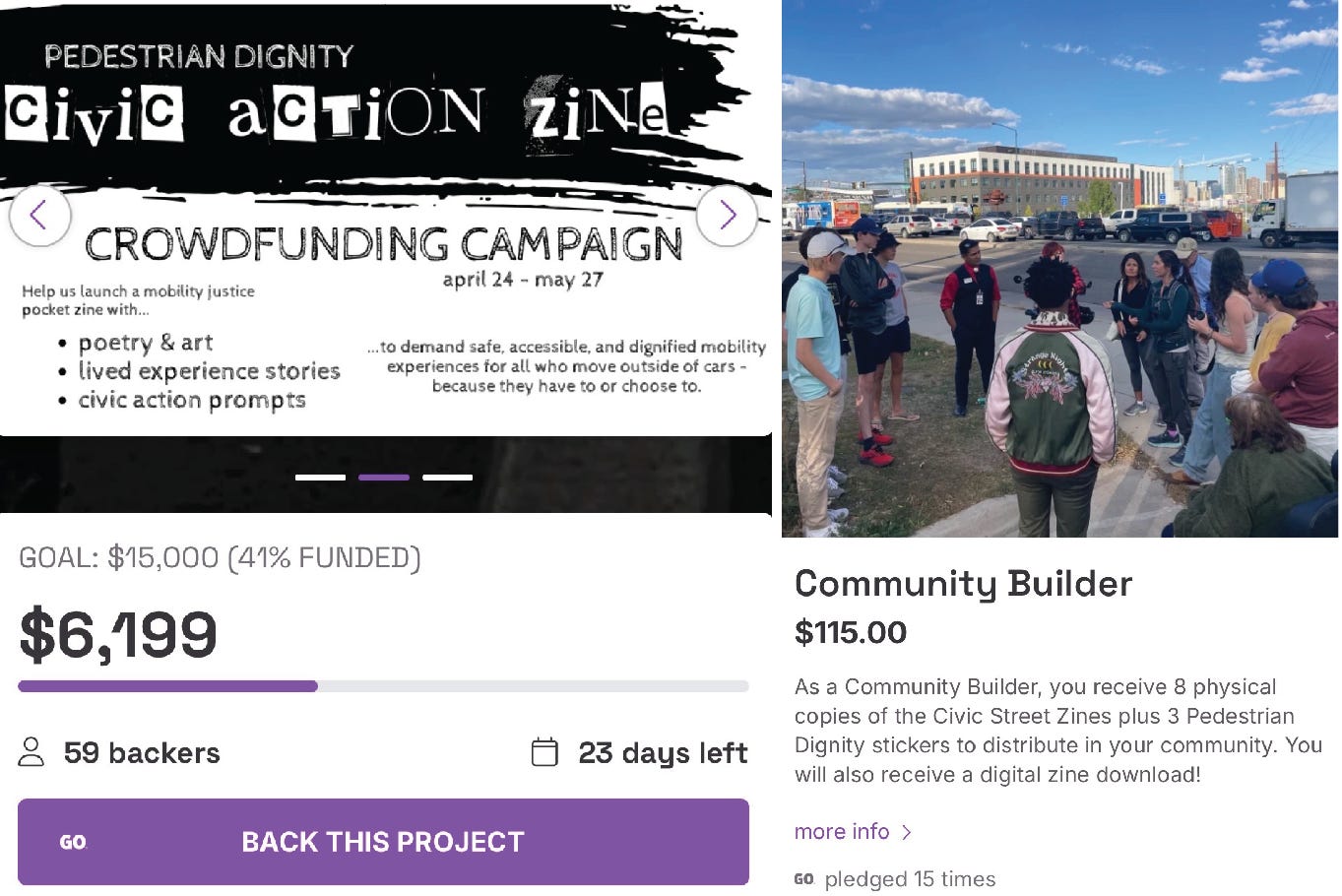
As of publishing this post, we are 41% of the way there! It is a fixed campaign. All pledges won’t go through if we don’t reach our goal. I’ve also shared our most popular reward tier (image right). If 75 of you (less than 20% of all who are subscribed!) made a Community Builder pledge, we would reach our goal and you would be a part of distributing 8 (or more if you print you’re own) zines to your community when they are completed in mid-August.
Art, stories & mobility justice? I'm IN!
To those who have already contributed, THANK YOU. Every aspect of this campaign is grassroots. We rely 100% on your pledges to make it all possible.
In gratitude,
Jonathon & Alejandra
PS - If you have ideas on artists, poets, and nondrivers who might want to share their story, be sure to check out and share our interest form here. A reminder that all selected contributors will get paid for their work. We plan to open the official submission form soon after our crowdfunding campaign.
No posts
Comments
Nothing yet. Say the first thing.
Sign in to join the conversation.