
I picked up the LRB, as I like to do on a fashionable street of a weekend morn, and paged through. The first calculation it invited was how that paper is always so cool, but even stiffer sums followed. I loved the long article on Albert Einstein. (Link)
The writer’s account of the existing biographies reminded me again how few biographies exist. Einstein is world famous but the book under review is only about the third serious biography. At the beginning of the consensus best prime ministerial biography, Robert Blake says one reason he wrote up Benjamin Disraeli was that no one else had.
Light competition and the loan of your subject’s fame make it into books. Another is “exposing” the elite institution you just graduated from (William Buckley, Ross Douthat, Theo Baker). My intended slipstream is the “become the hot lit girl” although one or two Einsteinishly complex equations throw themselves up for solution there.
Biography must also be a rewarding immersion spiritually. You feel it in the anticipated John Berger biography (link), which I’ve eagerly pinched an advance copy of. Young writers used to finish education and start roaming for their first biography subject. It sounds great. Yet I know almost no one trying it.
At present I’m mostly on the five-volume of Ernest Hemingway. I might as well say that it’s for the hundredth anniversary of The Sun Also Rises on October 22nd if any of you fancy writing essays yourselves. A hard one to pitch to magazines I imagine but we could all have a battle royale on Substack. Usually I’d be coy about future pegs but I love Hemingway so much that I want to read essays better than mine.
“Worst is beginning” thinks Leopold Bloom in Ulysses but in some cases worst is trying to even find the book so you can begin. No Waterstones I try has the Richard Ellmann James Joyce biography, meant to be the best of all time. In a strange vindication of the fact that they should have it in stock, they all have a new biography of the biography itself.
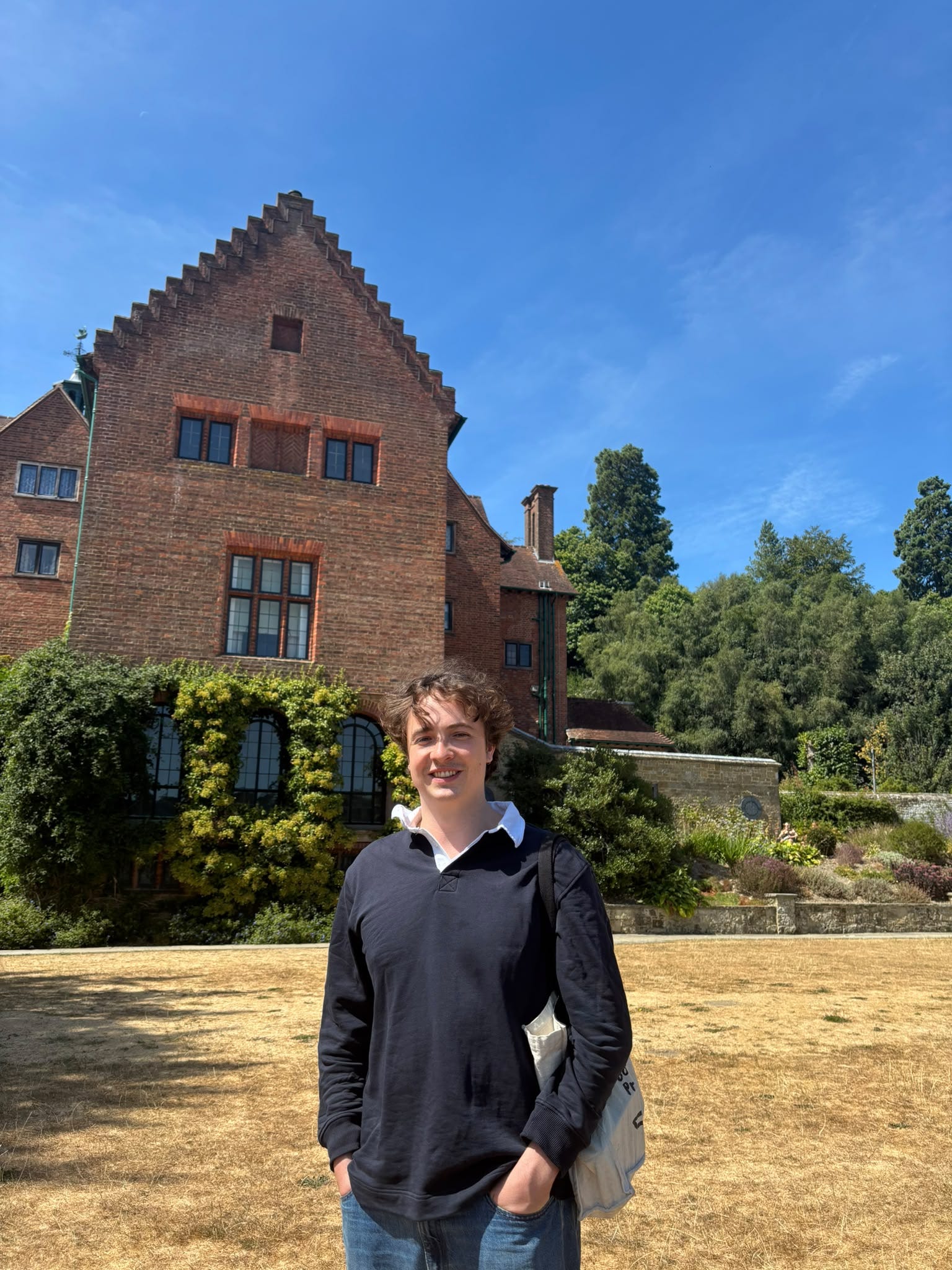
One man supplies exception to the biography scarcity rule. People call him the greatest Englishman and our nation’s saviour: Jason Arday lives near – no – I went to Winston Churchill’s stately home Chartwell. In my party there were partisans of both Boris Johnson’s and Simon Jenkins’ books while I treasure Andrew Roberts’s, which moved me so much and whom I interviewed here, so we were just one Martin Gilbert hardliner shy of a nearly-full count.
It’s a lovely brick manor that works with the slope it’s on in a pleasing way and which is surrounded by modest but adventurous grounds and a beautiful woodland. You absorb the industry and cheer Churchill generated. He produced 2,000 words a day, laid bricks for outside walls, painted copious bright canvases, and kept lots of happy animals. After the Canterbury pilgrimage, I’m still not quite ready for big walks but this was a great excursion.
Inspiring words from My Early Life:
“Twenty to twenty-five! These are the years! Don’t be content with things as they are… Don’t take No for an answer. Never submit to failure. Do not be fobbed off with mere personal success or acceptance. You will make all kinds of mistakes; but as long as you are generous and true, and also fierce, you cannot hurt the world or even seriously distress her. She was made to be wooed and won by youth.”
Lastly I am taking to the new Newsletters Editor role with an extreme of application and vigour. Backend distribution platform talks, API engineering or “how does the menu button parse clickers who subscribe from clickers who got forwarded the email” will not sound especially interesting to every literary soul subscribed here but I am relishing the detail.
It’s an exciting revolutionary moment for magazines. Two central traffic streams are evaporating with AI summary replacing search and social platforms dimming outbound links. Readers will get their reads in new ways and newsletters are key as trust moves from badge to face, institution to individual.
There is a great chance to improve on the conventional “homepage” as well. Too often, magazine websites resemble wine menus that need a sommelier. The New Statesman website would be a brilliant experience if I could sit next to you, ask your interests, then point you to what you’d like. Presently it is all too likely that you visit as a Westminster lover seeking the scoop of a SpAd’s reshuffle to a select committee and instead get some long sentimental indulgent crap by George Monaghan. Soon it will be clear that if you like the NS for the culture essays, ticking this particular newsletter from this familiar face will see them delivered to you with an illuminating intro, while if you want to be kept abreast of the young political left it’s this one, and so on.
As well as for the readers I am excited for all the colleagues who will be involved. There can be few better rewards of writing than the interest and response of steady subscribers. On which note thanks so much, as ever, for reading. It’s great that there are 900 of you now. Regarding coming material, I tried and duffed up the first recording of a podcast idea, but will have a new profile with you next issue! Let me know your favourite ever biography in the comments.
All the best
GM
No posts
Comments
Nothing yet. Say the first thing.
Sign in to join the conversation.