
Hantavirus is a family of viruses (genus Orthohantavirus) carried by rodents that can cause serious, sometimes fatal disease in humans. Hantaviruses are zoonotic; they spread from rodents to people, usually through inhaling aerosolized virus particles from rodent urine, droppings, or saliva, the most common route. Most types do not spread person-to-person. A famous casualty of hantavirus infection was Betsy Arakawa, the wife of the actor Gene Hackman, who died from hantavirus pulmonary syndrome (HPS).
Hantavirus infections primarily cause two distinct syndromes, depending on the strain and region:
Hantavirus Pulmonary Syndrome (HPS): common in the Americas (Sin Nombre virus in the U.S.)
Hemorrhagic Fever with Renal Syndrome (HFRS): more common in Europe and Asia
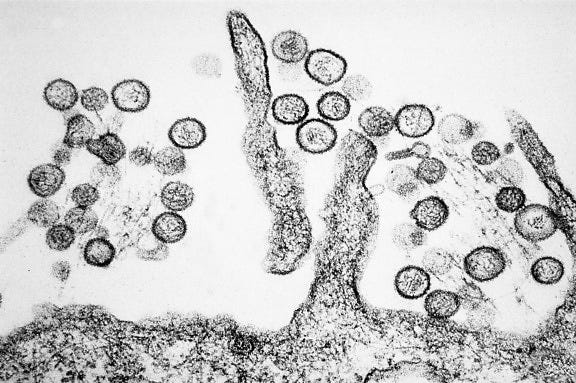
Infection with the virus is highly lethal and typically progresses in two stages.
Early Phase (Days 1–5)
This flu-like stage is often mistaken for other viral illnesses. Common symptoms include:
Fever and chills
Severe muscle aches, especially in large muscle groups
Headache, fatigue, and weakness
Dizziness
Nausea, vomiting, diarrhea, or abdominal pain
Cough (sometimes dry at first)
Late / Cardiopulmonary Phase (Usually starts 4–10 days after initial symptoms)
This is where Hantavirus becomes life-threatening. Symptoms progress rapidly:
Shortness of breath
Coughing (often with fluid buildup in the lungs)
Low blood pressure
Rapid heart rate and irregular heart rhythms
Pulmonary edema leading to respiratory failure and shock
The disease can move from mild flu-like symptoms to severe breathing difficulty in just a few hours.
Traditionally, Hantavirus was thought to have a very, very low risk of human-to-human transmission. However, a variant isolated from Argentina, known as the Andes virus (found in South America), has caused limited human-to-human transmission in close-contact settings, most recently on a cruise ship with passengers who had been birdwatching at a landfill. It appears that one, if not two, people brought the virus onto the cruise boat.
A virus replicating inside your cells is only a potential danger to you, but definitely not good if the virus has a high fatality rate. It becomes a danger to others when it starts to shed, leaving your body: sneezing, breathing, secreting, bleeding it out. Hantavirus has a relatively long incubation period, the time between infection and symptom onset. The length isn’t the issue. What matters is whether a person is shedding during incubation. Hantavirus doesn’t appear to shed before you have symptoms. Even if they are 2 weeks or 8 weeks after exposure.
COVID shedded before you felt ill. That’s why it spread so efficiently. You’re infectious before you know you’re sick. With hantavirus, it seems you incubate for weeks, feeling fine and not infectious. Then you deteriorate rapidly. And go to bed, or to the hospital, or whatever.
How Infectious Is It?
The basic reproduction number (R0) is the average number of people one infected person passes a virus to in a susceptible population. It’s a predictor of pandemic potential.
Measles: 12–18
COVID v 1.0: 2–3 (Omicron slightly higher)
Influenza: 1.2Smallpox: 6.5
For Andes Hantavirus, R0 estimates from the 2018 Argentina (human-to-human) outbreak ranged from 1 to 2. The best data come from the 2018–2019 Epuyén outbreak in Chubut Province, Argentina (34 confirmed cases, 11 deaths, driven by person-to-person transmission after one zoonotic introduction), before public health controls were implemented on 2.12. After isolation/quarantine measures, the R0 dropped to 0.96 (anything below 1 halts sustained spread). This would make it comparable to seasonal flu (1.3–1.8) or the 1918 Spanish flu (2).
Human-to-human transmission of Hantavirus requires close and/or prolonged contact. You won’t be catching it walking behind an asymptomatic person in the street. Also somewhat reassuring, people only shed the virus when symptomatic.
Cruise ships are renowned for epidemics. Loads of people, packed into shared buffets and cramped living spaces. If you wanted to maximize transmission of a tricky-to-transmit virus, boats are ideal, although likely not typical.
Who Gets It Worse
There are several documented genomic indicators associated with variable responses to hantavirus infection, including those caused by Andes virus (ANDV). These factors help explain why outcomes range from mild/asymptomatic to severe/fatal, even with similar viral exposure. The strongest and most replicated indicators involve human leukocyte antigen (HLA) alleles, which influence antigen presentation and T-cell responses. HLA genes are among the most common and strongest genetic associations with autoimmune diseases.
For ANDV in Chilean patients:
HLA-DRB1*15 allele is significantly more common in mild disease (protective effect, p=0.007).
HLA-B*08 is more frequent in severe disease (marginally significant, p=0.06).
HLA-B*35 alleles overall are more common in mild cases; specific subtypes.
Suffice it to say that if you are prone to inflammatory or autoimmune disorders or take immunosuppressive medication, you’ll want to keep an eye on how this situation progresses.
Case History
A KLM flight attendant had brief contact with a passenger from the cruise ship (MV Hondius), a 69-year-old Dutch woman, at Johannesburg airport in late April 2026. The passenger, severely ill, was removed from the KLM flight KL-592 before departure and later died in a Johannesburg hospital. Tests confirmed Andes hantavirus. Her husband had also died earlier, linked to the ship outbreak. The flight attendant developed mild symptoms and was hospitalized in isolation at Amsterdam UMC, raising concerns about possible transmission after short exposure. On May 8, 2026, she tested negative for the Andes virus (confirmed by WHO). Her symptoms were attributed to another cause, reinforcing that transmission typically requires prolonged close contact, not brief interactions like on a plane.
Takeway
Urolithin B, a natural metabolite of our microbiome from pomegranates, berries, nuts, and walnuts, strongly inhibited ANDV infection, reduced viral replication, and helped restore cellular metabolism with minimal disruption to healthy cells. This is promising preclinical research, but not a ready-to-use treatment. On the other hand, what’s the downside to eating more berries, nuts, and walnuts?
The breakout will likely go the way of most others, including the recent Ebola exposure in a Brooklyn bowling alley (I ate lunch across the street that same day and watched the hysteria; I’m still fine.) The media will no doubt have a field day with it. Keep your eyes on things, but go about your life.
Many of you will remember that I was one of the first to express alarm about SARS-CoV-2. Seeing films of dead Chinese people in the street will do that to you. This is noteworthy and concerning, but not another COVID.
Comments
Nothing yet. Say the first thing.
Sign in to join the conversation.