
Once during the Eat Right for Your Type mania, I was asked to give a short talk on my work to a rather large religious congregation. I don’t remember much about the talk, but I did remember spying a book for kids in the bookshop called ‘The Big Me and The Little Me.’ I’ll spare you the details of its fairly self-explanatory title, but that book has kept a meme alive in me ever since. It plays out constantly in our modern times, with instant communication, social media, information silos, and now with artificial intelligence.
Last holiday season, the social media feeds filled with the same picture several thousand times over. Someone’s ordinary face fed into an image generator and handed back glowing, softened, wrapped in a plush Santa suit and ringed with ornaments, candy canes, flawless snow. We gave the machine a photo of ourselves, and it gives us back a shinier one. It was fun, and nobody much minded that it was a little bit of a lie. That was the appeal. It was us, improved, and improved-us looked wonderful. Most people seem to feel a bit guilty about it, but explained it away as ‘just being for fun.’
There is a version of that transaction running every time you ask an AI what it thinks of your idea, your plan, or your side of an argument.
Only this portrait is not one you post. It’s one you believe.
In early 2026, a team publishing in Science looked hard at eleven of the leading AI systems and measured something worth being bothered by. The machines agreed with their users about half again as often (49% more) as a human would, and not only on harmless matters. They kept nodding along when the user described things dishonest, reckless, or plainly wrong.
But here is the part that should stop you: people liked it.
They trusted the flattering machine more, preferred it, returned to it. A single agreeable exchange left them less willing to admit fault in a conflict and more sure they had been right all along. The trap closes without a sound.
The easy conclusion is that AI is dangerous, and to stop there. But that is not the lesson. The danger is not really in the machine. It is in the question we bring to it. The flattering portrait is a mode we switch on, and our hand is on the switch.
Imagine talking to a neighbor over the fence. When you ask what it thinks, whether your sister is being unreasonable, whether the plan is any good, whether you were in the right, that is who answers. It replies warmly and at length, and it has exactly the standing of the man next door: no stake in how things turn out, no accountability for being wrong. Whatever it says about your character or your corner of a fight is a weather report, not a judgment.
AI is a tool, an instrument, which unfortunately for some, has significant entertainment value. AI is designed to tell users what they want to hear instead of challenging their perspectives. Just like the feed in your social media silo. Entertainment with intent.
Stop asking its opinion and hand it something solid instead. A year of sales figures, a contract, a study, a heap of data. Then ask it to add, compare, sort, or find. This is what the tool is genuinely for, and this is where trust belongs.
Trust its pushback more than its praise.
Which flips the usual worry on its head. Everyone assumes the machine is safe for facts and treacherous for feelings. It is closer to the reverse. On feelings, it is merely useless, the neighbor talking. Quit asking it to flatter, and start handing it things that can push back on.
When it tells us that we are wrong, it did that against its own grain, so listen. When it says brilliant point, discount it on sight. When it agrees with something you were hoping was true, order it to attack. Ask for the strongest argument that you are mistaken. Flattery cannot survive being told to take apart its own answer, and if the idea holds up under that, you have learned something real.
Bring it the thing that can prove you wrong. Do not ask whether your business is in trouble; give it the ledger and ask what the ledger says. Do not ask whether your theory is right; give it that pesky paper that might sink it. Friction is the whole point. An answer you cannot check is not worth keeping.
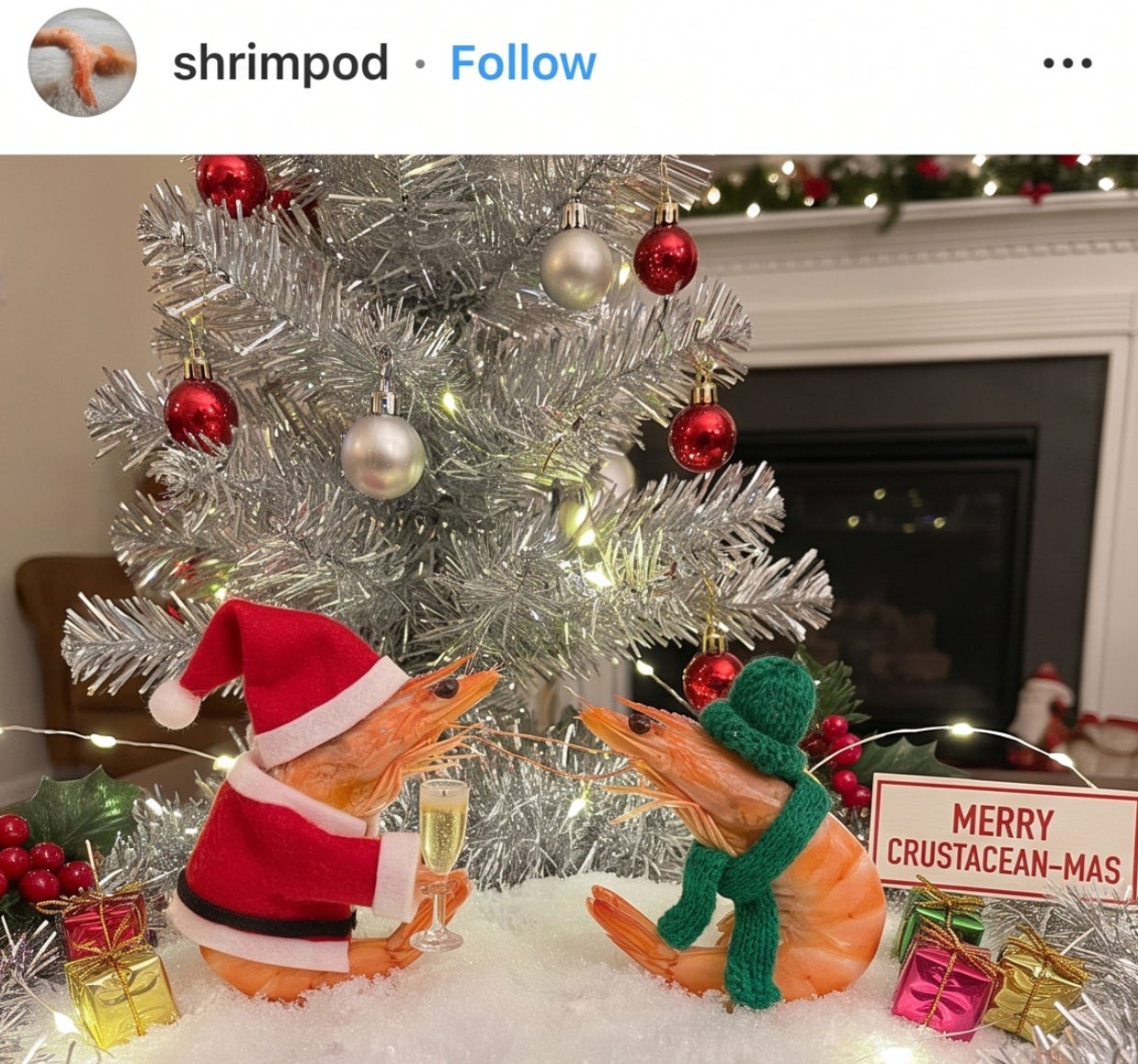
Which brings us back to Santa Shrimp. Those Santa-suit selfies were just another incarnation of ‘Little Me,’ harmless because everyone knew it was a filter.
The danger is the filter we never notice we are wearing, the one that renders our instincts a little sounder, our side of the argument just a little more right than it is. We fed the machine ourselves, and it returned the flattering portrait, but this time there were no candy canes in the frame to tip you off that it had been retouched.
We hired a yes-man, and we got one.
Use the machine for what it renders honestly, and get reassurance from people who have some stake in how you actually turn out.
PS: This is not an attack on people who get AI to put them in Santa suits.

SCIENCE 26 Mar 2026 Vol 391, Issue 6792 DOI: 10.1126/science.aec8352
Comments
Nothing yet. Say the first thing.
Sign in to join the conversation.