
In the past year, the United States has significantly reduced its international affairs budget-- which now includes its foreign aid commitments. Nearly 90% of USAID contracts were terminated, and thousands of personnel recalled before the promised foreign policy review had even concluded. These moves mark more than a bureaucratic realignment — they signal a dramatic shift in U.S. foreign policy and a retreat from decades of global leadership.
The question is no longer whether aid needed reform. It’s whether we replaced it with anything at all.
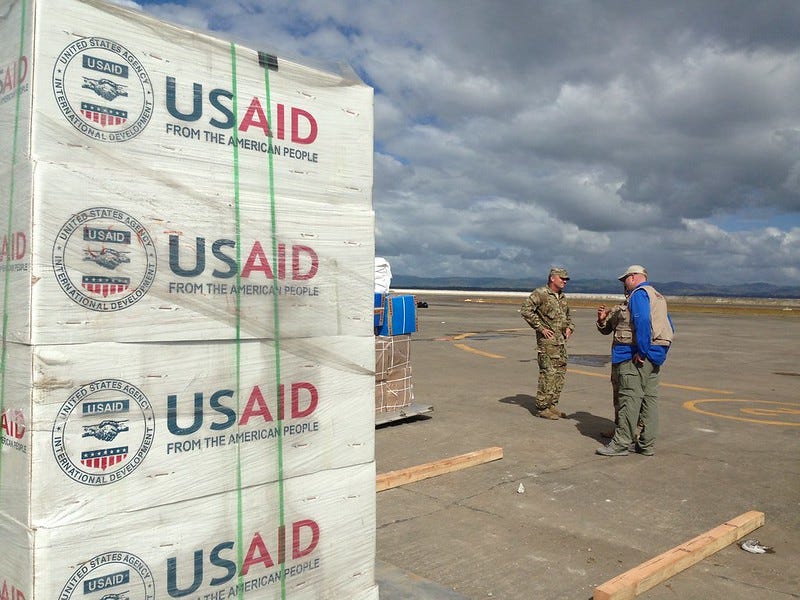
A 90-day strategic review was announced to evaluate the value and direction of U.S. development programming. In practice, however, cuts began within the first two weeks. Interviews with career staff and program administrators reveal that decisions were made quickly, often without cost-benefit analysis, a national security assessment, or local transition planning.
Entire portfolios — from PEPFAR-supported HIV clinics to democratic institution-building — were dismantled during the early weeks of the review period. Because many of these institutions were eliminated before the 90-day evaluation could conclude, the review became performative rather than substantive. Congress was left uninformed. Field teams received little-to-no explanation as to why their contracts were canceled. Even famine relief efforts — typically shielded from political swings — were reportedly frozen without justification.
Whether one views USAID as highly effective or deeply flawed, cutting over 5,000 contracts — representing nearly 90% of its operational portfolio — without due process or a credible strategic review raises serious concerns — not just about policy direction, but about the constitutional principle of checks and balances.
This invites deeper questions: Was the process consultative? Were efficiency metrics considered? Or was this a policy vacuum filled by political instinct?
The human and operational consequences were immediate:
In Cambodia, demining operations critical to national safety were halted. The U.S. exited; China stepped in to support clearance efforts, gaining both visibility and leverage.
In Myanmar, a devastating earthquake struck in March. While India and China dispatched medical teams and engineers, the U.S. offered a modest $9 million and limited personnel — a sharp contrast to previous rapid-response leadership.
In sub-Saharan Africa, long standing health programs were suspended. PEPFAR clinics closed. TB prevention and maternal health efforts stalled. Local NGOs laid off teams within weeks.
In many cases, these disruptions didn’t just pause progress — they erased years of institutional trust. USAID programs, however imperfect, had built vital diplomatic bridges across health, education, and governance sectors. Their collapse created operational vacuums now being filled by other global actors — or, in some instances, by U.S. defense, diplomatic, or private sector entities that are not always equipped or intended to perform long-term development functions. This shift not only strains interagency coordination, but also risks misalignment between humanitarian objectives and strategic imperatives.
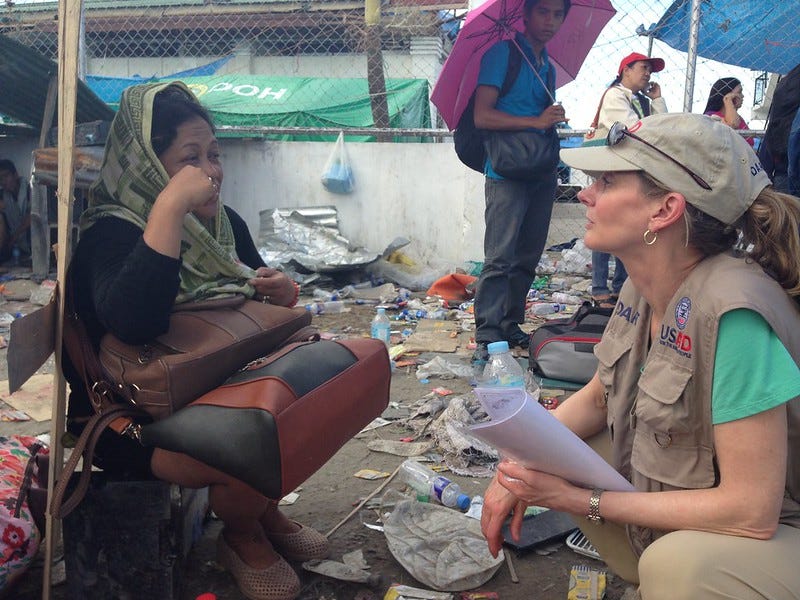
Foreign aid has never been just about charity. It has long served as a cornerstone of U.S. soft power — a way to stabilize fragile states, counter violent extremism, and promote democratic norms without deploying troops. Development programs have helped position the U.S. as a trusted partner, not just a dominant power — offering an alternative to authoritarian influence through diplomacy, technical expertise, and long-term investment.
Now, as U.S. development presence recedes, others are moving in:
China is expanding its footprint in Africa and South America, using infrastructure financing, debt relief, and health assistance to build lasting bilateral influence. These engagements aren’t just economic — they come with diplomatic visibility and narrative control, shaping how partner countries view governance, trade, and global alignment.
Russia and Iran, meanwhile, are amplifying their presence through food diplomacy, media channels, and targeted humanitarian outreach — particularly in regions where U.S. visibility has declined, such as the Sahel, Central Asia, and parts of the Middle East.
These moves are not ideologically neutral. They signal a redistribution of influence and a challenge to the liberal international order the U.S. helped build. As Washington steps back, its ability to shape norms, broker consensus, and promote democratic governance is weakened.
The result is a tangible erosion of American soft power. Where the U.S. once set standards and defined partnerships, it now risks being seen as unreliable — or irrelevant — in some of the world’s fastest-changing regions. In this vacuum, competitors are writing the rules of engagement.
While the U.S. reconsiders its presence, others are writing the rules of engagement.
Reasonable critiques of aid exist. Scholars such as William Easterly, Dambisa Moyo, and Angus Deaton have long argued that traditional, top-down assistance can breed dependency, suppress innovation, and distort local governance.
But the solution isn’t to dismantle the system — it’s to evolve it.
Across the development field, emerging tools are offering more locally responsive and accountable models. New approaches are reshaping how funding flows—by blending public and private capital to reduce risk and crowd in investment. Others prioritize building domestic markets by sourcing goods and services from local enterprises rather than international contractors. Advances in digital infrastructure are enabling governments to deliver social services more efficiently and transparently, while new financing models are turning remittances into investment capital for small businesses and infrastructure. Meanwhile, locally anchored institutions are fostering entrepreneurship and innovation by equipping communities with the skills, networks, and capital needed to lead their own development.
These approaches prioritize local ownership, reduce reliance on donor cycles, and encourage long-term resilience — not paternalism. The United States could have used this moment to pivot toward such a framework. Instead, it appears to have opted for a retreat without replacement.
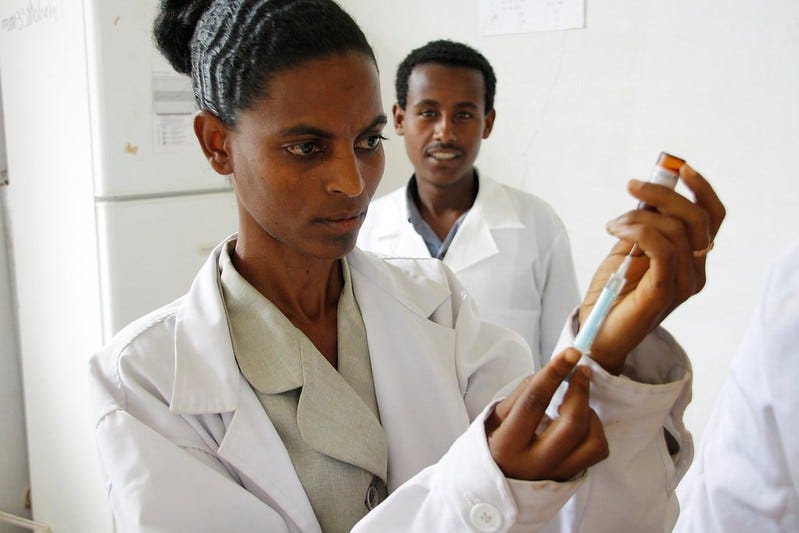
What happens next depends on whether we rebuild with intent or retreat further by default.
That starts with restoring credibility. Rebuilding U.S. global leadership will require more than reinstating contracts — it demands a strategy. The U.S. must reestablish a transparent aid review process with Congressional oversight, modernize its development tools, and prioritize partnerships that strengthen local ownership rather than reinforce dependency. From blended finance to digital public infrastructure and local procurement, the future of American soft power lies in development that empowers — not dictates.
At the same time, Congress must protect the institutional integrity of U.S. assistance — ensuring that major program overhauls require evidence, accountability, and deliberation. And the U.S. must re-engage in key regions where its absence has opened space for authoritarian influence — particularly across Africa, the Indo-Pacific, and Latin America.
If the U.S. aims to remain a global leader, it must recommit to thoughtful engagement — investing not just dollars, but credibility. That means transparency in how we reform aid, accountability for what was lost, and urgency in replacing presence with purpose.
The world is watching — not only what we cut, but what we stand for.
Because when the U.S. steps back without a plan, others step forward with one.
References:
Reuters – Trump official who oversaw closure of USAID has left State Department
Politico – Trump proposes slashing State Department and USAID budget
Cambodianess – Cambodia’s demining halted after U.S. aid freeze
Business Insider – China and Russia expand influence after USAID shutdown
USGLC – U.S. Global Leadership Coalition statements on USAID cuts
Written by Tate Mulligan, 2024-2025 PCFR Fellow.
The views expressed are solely those of the writer and not those of PCFR, which takes no institutional position on policy.
This is part of a series of articles written by PCFR fellows.
Comments
Nothing yet. Say the first thing.
Sign in to join the conversation.