Whether it’s a quick day hike or a multi-day trip, the right gear is what separates a great day outdoors from a miserable one - most hiking problems, from a sudden downpour to a blister that ends the day early, come down to something missing from the pack.
Here’s a complete packing list, organized from the non-negotiable basics to trip-specific extras.
Quick answer, if you’re skimming:
- Always carry the Ten Essentials, even on short day hikes
- Skip cotton - synthetic or wool clothing keeps you safer in cold or wet weather
- Plan on roughly half a liter of water per hour of moderate activity
- Day packs should stay under about 10% of body weight; backpacking packs under about 20%
- Overnight trips add shelter, sleep system, and cooking gear on top of the day-hike basics
What Are the Ten Essentials for Hiking?
Before the full packing list, it’s worth starting with the Ten Essentials - items every hiker should carry, regardless of trip length or difficulty.
Historical Note
Originally developed in the 1930s by The Mountaineers, a Seattle-based organization for climbers and outdoor adventurers, the Ten Essentials list has been updated over the years to reflect modern equipment.
| Essential | Description |
|---|---|
| Navigation | Map, compass, and/or GPS device |
| Sun protection | Sunglasses, sunscreen, and hat |
| Insulation | Extra clothing for unexpected cold |
| Illumination | Headlamp or flashlight (with extra batteries) |
| First-aid supplies | Including any personal medications |
| Fire | Matches, lighter, and/or fire starter |
| Repair kit and tools | Multi-tool, duct tape, knife |
| Nutrition | Extra food beyond what you plan to eat |
| Hydration | Water and a way to purify more water |
| Emergency shelter | Tent, bivy, or emergency blanket |
These items form the foundation of a hiking pack, covering emergencies and unexpected situations before anything else is added.
Safety First
The Ten Essentials are non-negotiable. Even on short day hikes, weather can change rapidly and emergencies can happen. Don't leave home without these items!
What Clothing Should You Pack for a Hike?
The right clothing keeps you comfortable across a range of weather conditions and protects against the elements.
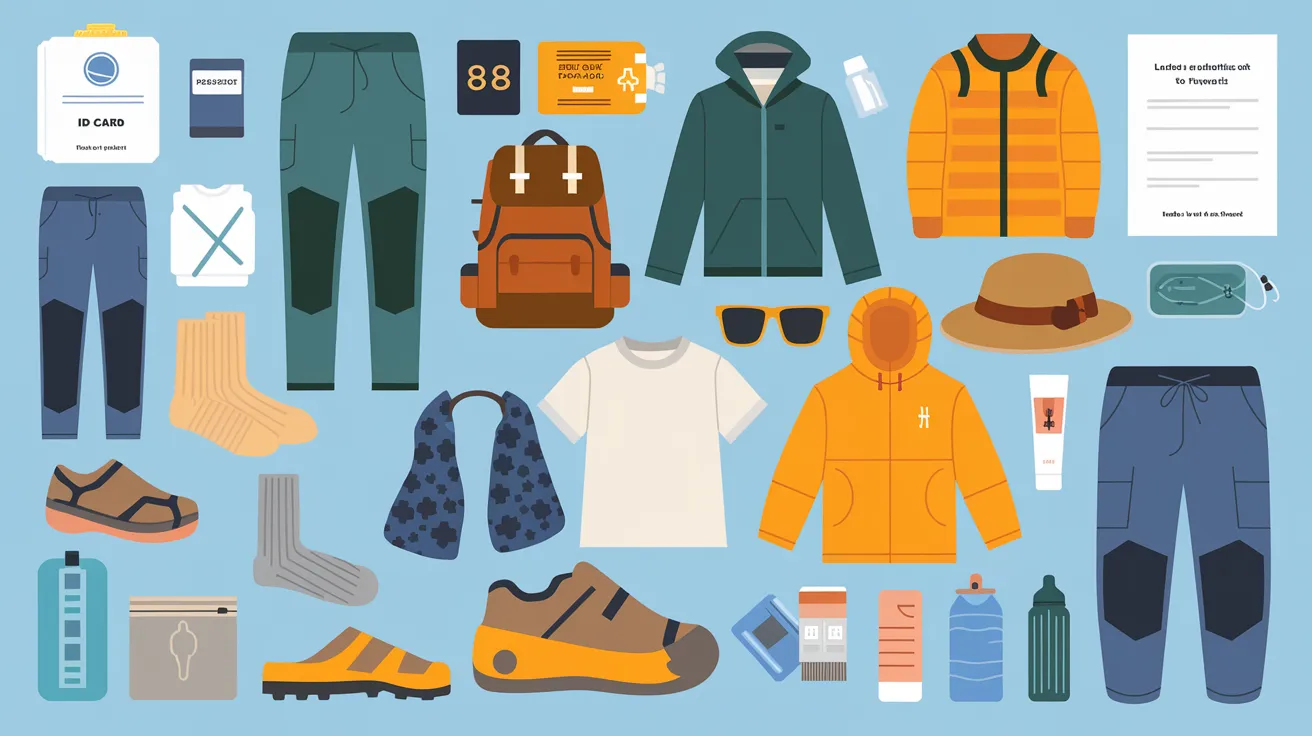
Base Layer
- Moisture-wicking t-shirt or long-sleeve shirt
- Moisture-wicking underwear
- Hiking socks (wool or synthetic blend)
Insulating Layer
- Fleece jacket or wool sweater
- Insulated vest (for colder weather)
Outer Layer
- Waterproof and breathable rain jacket
- Rain pants (for longer hikes or wet weather forecasts)
Accessories
- Hat or cap for sun protection
- Warm beanie (for cold weather)
- Gloves or mittens
- Neck gaiter or bandana
Footwear
- Sturdy hiking boots or shoes
- Camp shoes or sandals (for longer trips)
Critical Warning
Remember the old hiker's adage: 'Cotton kills.' Avoid cotton clothing as it retains moisture and can lead to hypothermia in cold conditions. Opt for synthetic or wool fabrics that wick moisture away from your skin.
What Navigation Gear Do You Need for Hiking?
Getting lost can turn a pleasant hike into a dangerous situation.
Carry at least one of these navigation tools:
- Topographic map of the area (in a waterproof case)
- Compass
- GPS device (with extra batteries or power bank)
- Guidebook or printed trail information
- Personal locator beacon (for remote hikes)
Pro Tip
Even if you're relying on a GPS device, always carry a physical map and compass as a backup. Electronics can fail, but a map and compass are reliable if you know how to use them.
How Much Water and Food Should You Pack for a Hike?
Staying hydrated and fueled is central to maintaining energy and morale on the trail.
Water and Food
| Item | Description |
|---|---|
| Water | 500ml water bottles or hydration reservoir |
| Water Filtration System or Tablets | To purify water on the go |
| Energy-Dense Snacks | Trail mix, energy bars, dried fruit |
| Lunch | Sandwiches, wraps, or ready-to-eat meals |
| Emergency Food | Extra day’s worth for unexpected delays |
Hydration Rule
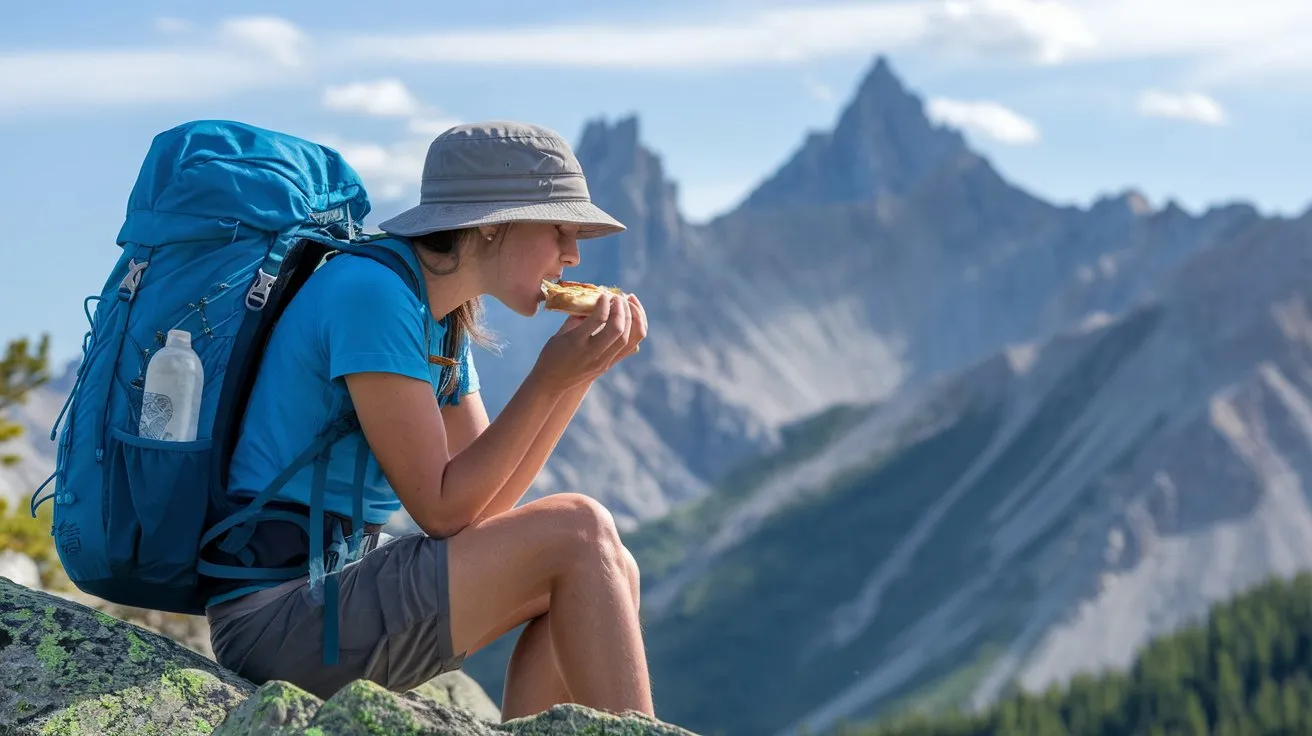
Plan to drink about half a liter of water per hour of moderate activity in moderate temperatures. Adjust this based on intensity, temperature, and your personal needs.
What Should Be in a Hiking First Aid Kit?
A well-stocked first aid kit handles minor injuries and ailments on the trail.
| Category | Items |
|---|---|
| Medications | Pain relievers, antihistamines, any personal prescriptions |
| Wound Care | Adhesive bandages, gauze pads, antiseptic wipes, blister treatment |
| Tools | Tweezers, safety pins, small scissors |
| Emergency | Emergency blanket, whistle, fire starter |
Also worth including:
- Multi-tool or knife
- Duct tape (wrap some around your water bottle to save space)
- Emergency shelter (lightweight tent or bivy sack)
- Signaling mirror
- Insect repellent
Knowledge is Key
Familiarize yourself with the contents of your first aid kit and how to use them before you hit the trail. A first aid kit is only as good as your ability to use it.
What Other Hiking Gear and Accessories Are Worth Packing?
These additional items make a hike noticeably more comfortable:
- Backpack (sized appropriately for your hike length)
- Trekking poles (reduce impact on knees, especially on descents)
- Camera or smartphone (for capturing memories)
- Portable charger or extra batteries
- Waterproof stuff sacks or plastic bags (to keep gear dry)
- Toilet paper and trowel (for answering nature’s call responsibly)
- Hand sanitizer
- Lip balm with SPF
- Watch or other time-keeping device
- Cash and ID
- Permits (if required for your hiking area)
Check out our Hiking Pocket Essentials guide for items to keep handy while on the trail. For a visual taste of what awaits, explore my Central Balkan National Park hiking photos.
Overnight and backpacking trips add a layer of gear on top of the day-hike basics.
Shelter
- Tent or hammock with rain fly
- Sleeping bag (appropriate for the expected temperatures)
- Sleeping pad
Cooking
- Lightweight stove and fuel
- Cookware and eating utensils
- Food storage (bear canister if required in your area)
- Biodegradable soap and sponge
Clothing
- Extra set of clothes for sleeping
- Additional warm layers
Miscellaneous
- Headlamp or flashlight with extra batteries
- Book or cards for entertainment
- Notebook and pen
How Much Should Your Hiking Backpack Weigh?
Pack weight is one of the most overlooked parts of hiking prep, and it has a fairly well-established guideline: a loaded day-hiking pack shouldn’t exceed about 10% of body weight, and a loaded backpacking pack shouldn’t exceed about 20%. For a 150-pound hiker, that works out to roughly 15 pounds for a day hike and 30 pounds for an overnight trip.
These are starting points, not hard limits - very light hikers often end up carrying a higher percentage simply because pack weight can only come down so far. If a pack consistently feels punishing rather than just noticeable, that’s usually a sign to cut gear rather than push through it.
How Do You Customize a Hiking Packing List for Your Trip?
This general list covers most situations, but it’s worth adjusting based on a few factors:
Trip Duration
A day hike needs far less gear than a multi-day backpacking trip - adjust food, water, and clothing accordingly.
Weather Forecast
Check the forecast and pack for it, including a buffer for weather changes, which are common in mountainous areas.
Terrain and Difficulty
More technical or strenuous hikes often call for extras like trekking poles or specialized footwear.
Personal Preferences
Some hikers carry small comforts - a camp pillow, a backpacking coffee maker - that aren’t essential but improve the experience. If it’s worth the extra weight to you, it’s worth packing. Related: efficient packing techniques for making the most of limited space. For minimalist travel, see my one-bag packing guide.
Group Size
Hiking with others makes it possible to split shared gear - first aid kits, cooking equipment - to cut duplicate weight across the group.
Smart Packing
Customization is key! A packing list should be as unique as the hiking style behind it. Start with this foundation and adjust based on experience, preferences, and specific trail conditions.
How Do You Pack a Backpack Efficiently?
| Tip | Description |
|---|---|
| Use a Checklist | Build a personalized checklist from this guide and check items off as you pack. |
| Pack by Weight | Place heavier items closer to your back and toward the middle of the pack for better balance. |
| Organize by Frequency of Use | Keep frequently needed items - snacks, water, rain gear - easily accessible. |
| Use Stuff Sacks or Packing Cubes | These keep gear organized and easier to find. |
| Compress Where Possible | Use compression sacks for clothing and sleeping bags to save space. |
| Practice Packing | Pack and unpack the bag before the trip to get familiar with where everything is. |
Weight Distribution
Proper weight distribution can make or break the hiking experience. Heavy items should sit close to the back and between the shoulder blades for the best balance and comfort.
How Do You Pack for Leave No Trace Hiking?
Leave No Trace principles help preserve trails for future hikers. A few packing considerations that support this:
| Consideration | Description |
|---|---|
| Reusable Containers | Opt for reusable water bottles and food containers to reduce waste. |
| Waste Bags | Pack out all trash, including biodegradable items like apple cores or orange peels. |
| Trowel and Toilet Paper | Carry a trowel and pack out used toilet paper for proper disposal. |
| Earth-Friendly Products | Choose biodegradable soap and sunscreen to reduce ecosystem impact. |
| Repair Kit | Bring a repair kit to fix gear on the trail instead of leaving broken equipment behind. |
Environmental Responsibility
Good packing isn't just about what you bring - it's also about what you don't bring. Every item should serve a purpose, and everything brought in must come back out.
Frequently Asked Questions
What are the Ten Essentials for hiking? Navigation, sun protection, insulation, illumination, first-aid supplies, fire, a repair kit, extra nutrition, extra hydration, and emergency shelter - the baseline gear every hiker should carry regardless of trip length.
How much water should I bring on a hike? A common guideline is about half a liter per hour of moderate activity in moderate temperatures, adjusted upward for heat, intensity, or elevation.
How heavy should my backpack be? Roughly 10% of body weight for a day hike and up to about 20% for a backpacking trip, as a general starting guideline rather than a strict rule.
What’s different about packing for an overnight hike versus a day hike? Overnight trips add a full sleep system (tent, sleeping bag, pad), cooking gear, extra clothing, and food storage on top of everything already needed for a day hike.
Do I need a first aid kit for a short day hike? Yes - conditions and injuries don’t scale down with trip length, and a basic kit covers most common trail issues.
Final Packing List Takeaways
A well-packed bag means focusing on the trail instead of sore feet or unexpected weather. Most hikers refine their list over several trips - start with the essentials here and adjust based on what actually gets used. The goal is being prepared without carrying a bag full of “just in case” items that never come out.
Final Thoughts
The best packing list is the one that actually gets used. Start here, adjust based on what gets used and what doesn't, and prioritize being comfortable and safe over being perfectly optimized.
Stay up to date
Get notified when I publish something new, and unsubscribe at any time.
Comments
Nothing yet. Say the first thing.
Sign in to join the conversation.