
Small living spaces amplify everything. There’s no closing a door on the mess when a bedroom doubles as a living room, kitchen, and office - every choice about comfort, light, color, and clutter shows up immediately, for better or worse.
That constraint turns out to be useful: it forces a more honest answer to what actually makes a space feel calm, versus what just looks calm in a photo.
Quick answer, if you’re skimming:
- Comfort comes from keeping things that genuinely feel good to you, even if they’re impractical or imperfect
- Fix lighting first - harsh overhead light does more damage to a space’s mood than almost anything else
- Neutral, consistent wall colors tend to hold up better in small rooms than bold accent walls
- Screen-free windows (mornings, before bed) do more for a “peaceful” feeling than any decor choice
- A short daily reset (around 10 minutes) prevents the kind of clutter buildup that makes small spaces feel chaotic
What Actually Makes a Home Feel Comfortable?
Most advice about small-space furniture focuses on buying the “right” pieces. In practice, comfort has less to do with the furniture itself and more to do with whether it’s genuinely right for you specifically.
An oversized reading chair that “shouldn’t” fit a small space can still be worth the square footage if it’s the one place a cup of tea and twenty quiet minutes feel restorative. The impractical choice is sometimes the more functional one, once mental comfort is factored in.
The Imperfect-Object Principle
An old, chipped mug or a worn-in throw blanket that isn't Instagram-worthy can still do more for daily comfort than something newer and nicer. Keeping things that genuinely make you happy matters more than keeping things that look put-together.
Comfort essentials differ from person to person - a stack of well-worn books, a plant that’s somehow survived months of neglect, a specific chair. The useful exercise is separating what actually brings peace from what’s assumed to be the “correct” version of a peaceful home.
How Do I Fix Bad Apartment Lighting?
Harsh overhead fluorescent lighting is one of the most common - and most fixable - problems in small apartments. It tends to flatten a space and make everything feel clinical rather than calm.
Natural light during the day is worth prioritizing; even rearranging furniture specifically to make the most of it tends to pay off. Evening lighting is where most of the difference happens, though.
Color Temperature Matters More Than Expected
Lighting preference is genuinely individual: some people find warm (2700-3000K) light relaxing in the evening, while others find it oppressive and prefer neutral (about 4000K) light instead. If a space feels subtly off after dark, it's worth testing a different color temperature bulb before assuming the room itself is the problem.
Floor lamps are especially useful in small spaces since they provide ambient light without eating into surface area. Specialty options - like a grow light for a plant that doubles as soft accent lighting - can do double duty in a small footprint.
What Wall Colors Actually Work for Small Spaces?
Color Palette Selector
Select Calming Color Scheme:
Choose a palette!
The advice that light colors make small spaces feel bigger isn’t wrong, but it leaves out the more important part: the right color is the one that still feels good after living with it for months, not just the one that photographs well.
Bold accent walls often look striking in photos but can add more visual weight than a small room can handle - a deep, saturated color on one wall of a compact space frequently starts to feel closing-in rather than dramatic once the novelty wears off.
A more durable approach is sticking to variations of the same neutral tone throughout, then adding personality through artwork and textiles instead. It’s more flexible, and far easier to update later.
Test Before Committing
Buy sample sizes and live with color swatches on the wall for at least a week. A shade that looks great at 7 AM can look completely different by 9 PM under artificial light.
Why Does Temperature Matter So Much for a Calm Home?
Temperature is an underrated factor in how a home feels. A common comfortable target is around 20-22°C (68-72°F) during the day, slightly cooler at night - the specific number matters less than keeping it consistent.
Small spaces heat up and cool down faster than larger ones, which cuts both ways. In summer, a fan plus blackout curtains helps keep heat out; in winter, layered blankets and a portable space heater cover most needs without overhauling the whole room. Finding a workable baseline and sticking to it beats constantly adjusting the thermostat in search of a perfect number.
How Do I Set Digital Boundaries at Home?
Phone habits shape how peaceful a home feels as much as the physical space does. A home can be spotless and still feel chaotic if scrolling happens in bed, on the couch, and at the table without any boundary.
The Phone Basket Idea
Keeping the phone in a basket by the door when arriving home forces a small moment of intention before picking it back up - a simple habit that noticeably changes how an evening feels.
A couple of boundaries tend to do most of the work: screen-free mornings until after coffee and getting dressed, and a hard cutoff on social media in the evening (8 PM is a common choice). It typically takes a couple of weeks for a new boundary like this to stop feeling effortful.
Curating feeds ruthlessly helps too - unfollowing accounts that reliably trigger anxiety or comparison is a legitimate way to protect a peaceful home environment, since mental space matters as much as physical space.
How Do I Bring Nature Into a Small Space Without Killing Plants?
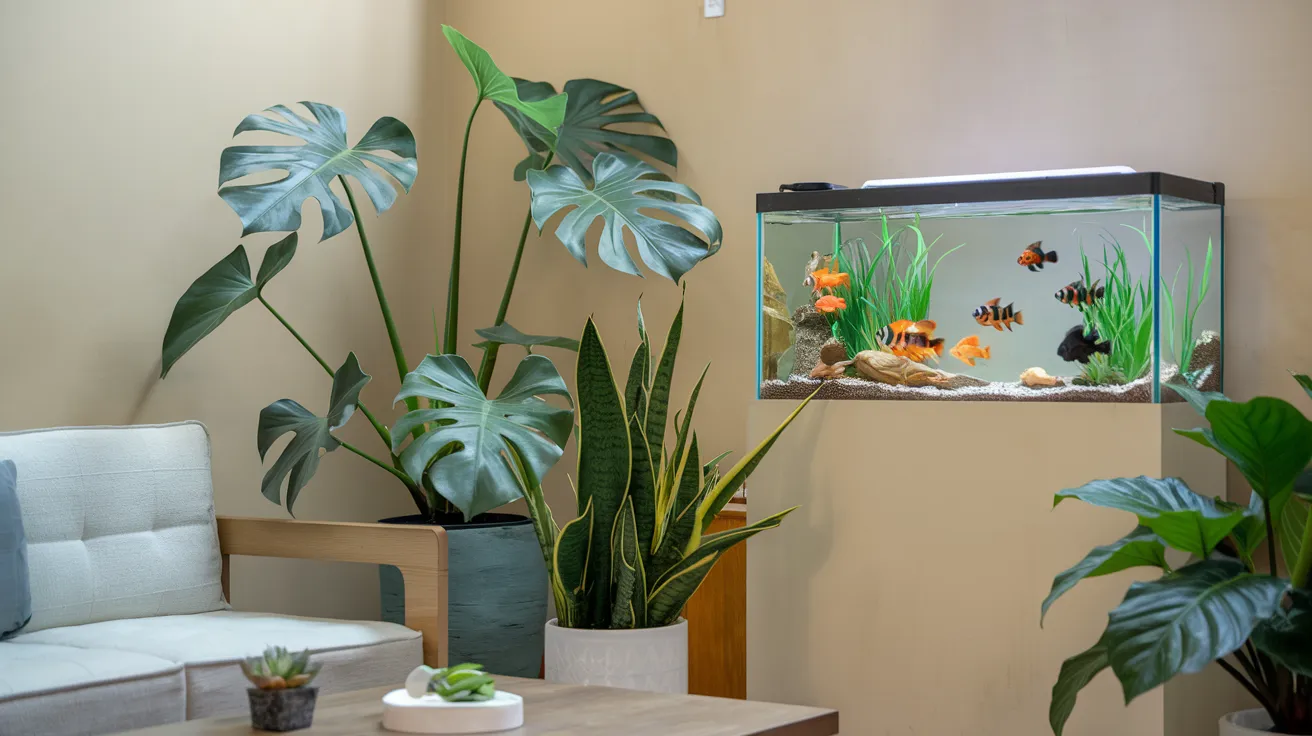
Not everyone has a knack for keeping plants alive, and that’s a common, not unusual, experience. Mixing in a few realistic artificial plants alongside one or two low-maintenance real ones (a monstera is a famously forgiving choice) removes a lot of the pressure without giving up greenery entirely.
Getting outside daily matters more than anything indoors - even a short, aimless walk around the block. Living in a small space works better when the environment isn’t limited to four walls; a regular walking habit does as much for a small home’s livability as anything inside it.
Nearby Green Spaces Are Easy to Miss
Small parks and green pockets tend to hide in plain sight in dense areas - often only noticed once regular, aimless walking becomes a habit rather than a one-off.
What Should a Peaceful Home Sound Like?
Total silence isn’t automatically peaceful - for a lot of people living alone, it can tip into feeling isolating rather than calm. The right ambient sound often makes a space feel alive instead of empty.
Opening a window to let in city sounds - traffic, distant conversation - can serve as a reminder of being part of something larger than one room. Low-volume background media, like a cooking show playing without being watched, can serve a similar purpose: not entertainment, just company.
Should I Get a Pet for a More Peaceful Home?
A small, low-maintenance option - like a fish tank with a few hardy fish - can add a surprising amount of calm to a room. Watching fish move is genuinely meditative for a lot of people, and the responsibility level sits well below a cat or dog, which matters in tight quarters.
Not everyone wants a pet, and that’s entirely reasonable. But for anyone on the fence, even a small aquarium (with its gentle filter hum) is worth considering as a low-effort way to add some life to a room.
How Do I Keep a Small Space Clean Without It Taking Over My Life?
A short, fixed daily reset - about 10 minutes, right before bed - tends to prevent the kind of clutter buildup that makes small spaces feel overwhelming. It’s not deep cleaning, just returning things to where they belong.
In a small space, mess compounds fast: one day’s dishes in the sink reads as much bigger visual clutter than it would in a larger kitchen. A consistent 10-minute reset keeps that from snowballing, even on busy days.
Less Stuff Beats More Storage
More storage solutions often aren't the real fix - having less stuff to store is. A simple 'one in, one out' rule (a new book means an old one gets donated) does more for a small space than another set of bins.
Storage tools - under-bed boxes, wall shelves, furniture with hidden compartments - genuinely help, but they’re not a substitute for owning less in the first place.
What Are Some Unusual But Effective Peaceful-Home Habits?
A few habits that sound minor but consistently show up in small-space advice:
- A designated “worry spot” - one specific chair where stress is allowed, with the rest of the space treated as worry-free. It sounds arbitrary, but the mental separation tends to work.
- A notebook by the bed for stray thoughts that surface while trying to relax - getting them out of your head and onto paper is often enough to let them go for the night.
- Fresh sheets on a fixed day each week, independent of whether they’re technically due for a wash - a small, reliable comfort reset.
- A consistent wind-down playlist - repetition itself becomes a cue that signals it’s time to slow down.
What Does a Truly Peaceful Home Actually Look Like?
A peaceful home isn’t defined by a perfect, minimalist look - it’s defined by whether the space works for the actual person living in it, chaos and all. A cluttered-looking desk with active projects on it can be just as “peaceful” as a bare one, if that’s genuinely how someone works best.
A space can feel like a sanctuary on some days and like a very small box on others - both are normal, and neither means something is wrong with the setup.
Small, Ongoing Adjustments
Rearranging something every few months - not out of dissatisfaction, but to keep a space feeling fresh - is a low-cost way to reset how a room feels. Something as small as turning a desk to face a window instead of a wall can shift the whole feel of working there. For more on that specific change, see optimizing your desk setup.
Frequently Asked Questions
How do I make a small apartment feel peaceful instead of cramped? Prioritize fixing lighting first, keep wall colors neutral and consistent rather than bold, and reduce the amount of stuff being stored rather than adding more storage - all three do more than any single furniture purchase.
What’s the single most impactful change for a calmer home? Lighting tends to have the biggest effect for the effort involved - swapping harsh overhead lighting for floor lamps and testing different bulb color temperatures.
Do I need real plants to make a space feel calmer? No - a mix of realistic artificial plants and one or two low-maintenance real ones (like a monstera) gets most of the visual and psychological benefit without the pressure of keeping something delicate alive.
How long does it take for new home habits (like phone boundaries) to feel natural? Around two weeks is a common timeframe for a new boundary - screen-free mornings, an evening cutoff - to stop feeling like an effort and start feeling automatic.
The most peaceful homes aren’t the tidiest or most photogenic ones - they’re the ones that accommodate the specific way someone actually lives, without apology. Take what genuinely applies, skip what doesn’t, and remember the goal is a space that serves the person living in it, not the other way around.
Stay up to date
Get notified when I publish something new, and unsubscribe at any time.
Comments
Nothing yet. Say the first thing.
Sign in to join the conversation.