
Recently I was in line at my local pharmacy and the woman in front of me was grumbling to the youngish pharmacist about growing older. In a ‘just you wait’ kind of rant she went through a list of her diminishing capacities and insisted that there was no advantage to aging.
Without thought, I blurted out, “What about wisdom?”
She was as taken aback as I was, and from the look on her face it seemed like wisdom hadn’t occurred to her. How could it have? Our culture idealizes and glorifies the beauty of youth and it’s all downhill from there. Furthermore, just an aisle away, there were shelves and shelves of anti-aging products for women. And that’s just the tip of the iceberg.
Let’s face it, old women in our culture are considered pretty irrelevant.
Here’s the antidote to this problem of our being sidelined: We ‘old women’ need to be the guardians of our own relevance. We need to honor our wise woman status even if, and especially if, no one around us does.
When we are old, we find ourselves repeating George Bernard Shaw’s words, “Youth is wasted on the young!” wishing we had appreciated our physical strength, quick minds, and perfect skin more; wishing that we could have it all again and savor it. We wish we could have it now that we are older and wiser.
We are older, but are we wiser?
I think we could be wiser if we valued our own wisdom of experience.
I am concerned that the wisdom of our own experience is wasted on us, and more importantly, on our family, community, and the culture at large. I want so much for us oldsters to step into our rightful place as the wise elders that we are and that we are meant to be.
In these apocalyptic times, we wise elders are more relevant than ever. We need to be a steady, grounding presence in our families and communities. We are needed for our wisdom of experience.
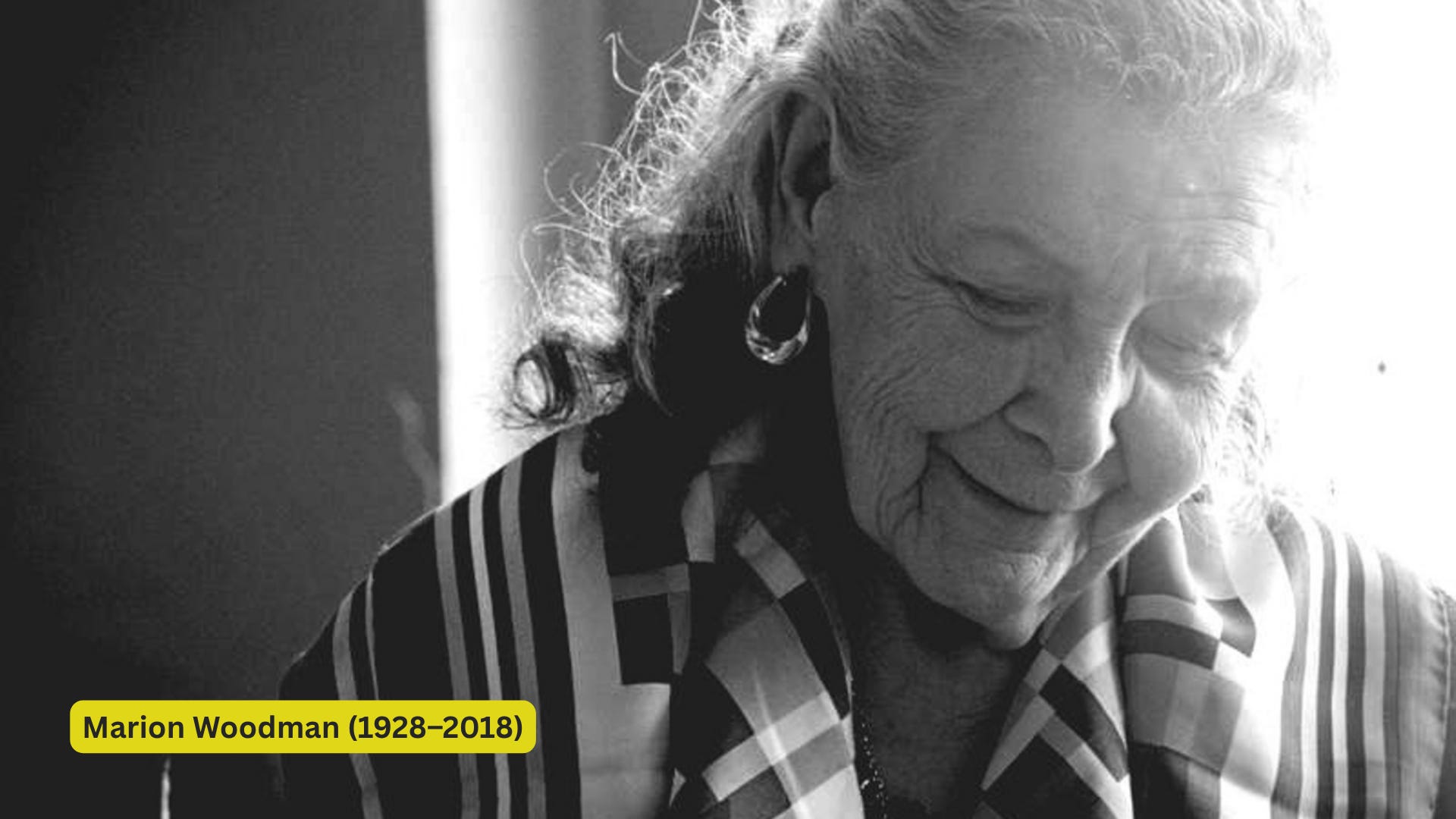
In midlife, I had the good fortune of having a wise elder as a teacher, mentor, and model of relevance. To me, she became more beautiful — not less — as she aged. She was incredibly wrinkled and incredibly radiant. She embodied the paradox of growing old — that while our appearance changes, and our physical strength wanes, our spiritual strength can blossom, ‘petal by petal’ as she used to say.
Her name was Marion Woodman, and she was a Jungian analyst and best-selling author who died in 2018 in her 90th year. She was also a self-proclaimed ‘crone’; she chose to embody the archetype with dignity and presence and threw away the standard dictionary definition of a crone being an ugly old hag. It seems to me that Woodman ‘wore the crown of age’ by knowing her value and relevance as a wise woman.
As she taught us (her students) about archetypal psychology and working with dreams, she wove in Emily Dickinson, Sylvia Plath, T.S. Eliot and Shakespeare. She had taught literature and theater for 25 years, and in midlife, she changed course and went to Zurich to become a Jungian analyst.
She was part erudite scholar, part mystic, and it was pure delight to learn from her. Developing a deep understanding of Jungian archetypal psychology, how to work with dreams, and how to decipher the wisdom of the body, was all invaluable knowledge for me to put to use in my psychotherapy practice.
What I didn’t expect, though, was the way in which Woodman would teach me what it means to pass through life’s many crossroads and thresholds, emerging as an elder: as the embodiment of wisdom and wholeness.
She once said:
“Arriving at middle age is agony for those who cannot accept the mature beauty of autumn. They see their wrinkles hardening into lines, and new liver spots appearing every day, without the compensating mellowing in their soul. Without the rites of the elders, they cannot look forward to holding a position of honor in their society, nor in most cases will they treasure their own wisdom.”
The genius of Woodman’s scholarship, and her personal loving containment, were crucial for me in developing a capacity to meet difficulties with patience, courage, and compassion. For example, a very painful divorce became a kind of embodied scholarship — a lived alchemical experience — of moving through what Woodman showed me could be a rite of passage. By showing me how to honor my difficult passages as meaningful and universal initiations, Woodman helped me to find infinitely resilient places in myself.
In these fateful moments, I had the courage to consciously step into my destiny. Woodman had given me a safe container, and a map, for transmuting my pain and fear into nourishment for my soul. She knew the territory: initiations had tenderized her heart, and she was able, little by little, to embody her feminine soul along her way home to her own true self. She mined the riches of her own life, including anorexia, and a battle with cancer that nearly ended it.
C.G. Jung once said, “Life really does begin at forty. Up until then, you are just doing research.”
For Jung, the second half of life is when one has the opportunity to do the ‘real work,’ to look within. It’s in this transition to the second half of life when, if we are lucky, we can have a reckoning with our soul.
That’s when we might ask, “Am I just going through the motions? What’s it all for?” That’s when we might ask, “Whose life am I living, mine or the life my parents or the culture wanted of me?”
That’s when we might find ourselves standing at the crossroads.
In midlife, quite reluctantly, Woodman found herself standing at the crossroads when her soul called her to leave her comfortable job as a teacher. She realized how deep her longing was to live a more meaningful, a more spiritual, life.
Also, as much as she loved teaching, she knew her creative process was drying up. She decided to go to an ashram in India where she thought she could find the answers that she was seeking. But before she arrived at the ashram, she became very ill with dysentery and nearly died. During this spiritual crisis, she even considered leaving her marriage of 20 years. Everything was up for grabs.
She once said of this time in her life:
“If we fail to nourish our souls, they wither, and without soul, life ceases to have meaning.... The creative process shrivels in the absence of continual dialogue with the soul. And creativity is what makes life worth living.”
Woodman laid out a ‘map’ for her students, drawn from her own lived experience, to be in continual dialogue with our soul. She gave us an archetypal map of the heroine’s journey so that we could consciously move through the inner psychological and spiritual stages that she had moved through.
Woodman taught us that we are crowned twice in this lifetime. Much is written about the promise of the first crowning, at birth, but what of the second, which comes after a lifetime of experience? She called this second crowning the “crown of age,” which she said was a symbol for the conscious culmination of our inner and outer development as human beings.
I am now 70 years old, the same age Woodman was when I studied with her. I’m a self-proclaimed crone teaching a younger generation of women who have discovered her magnificent body of work. It is in younger women’s growing interest in Woodman’s work that I sense a shift in the cultural zeitgeist. This shift was also echoed in my recent discovery of a new definition for crone in the Cambridge Dictionary online: “a woman who is venerated for experience and wisdom.”
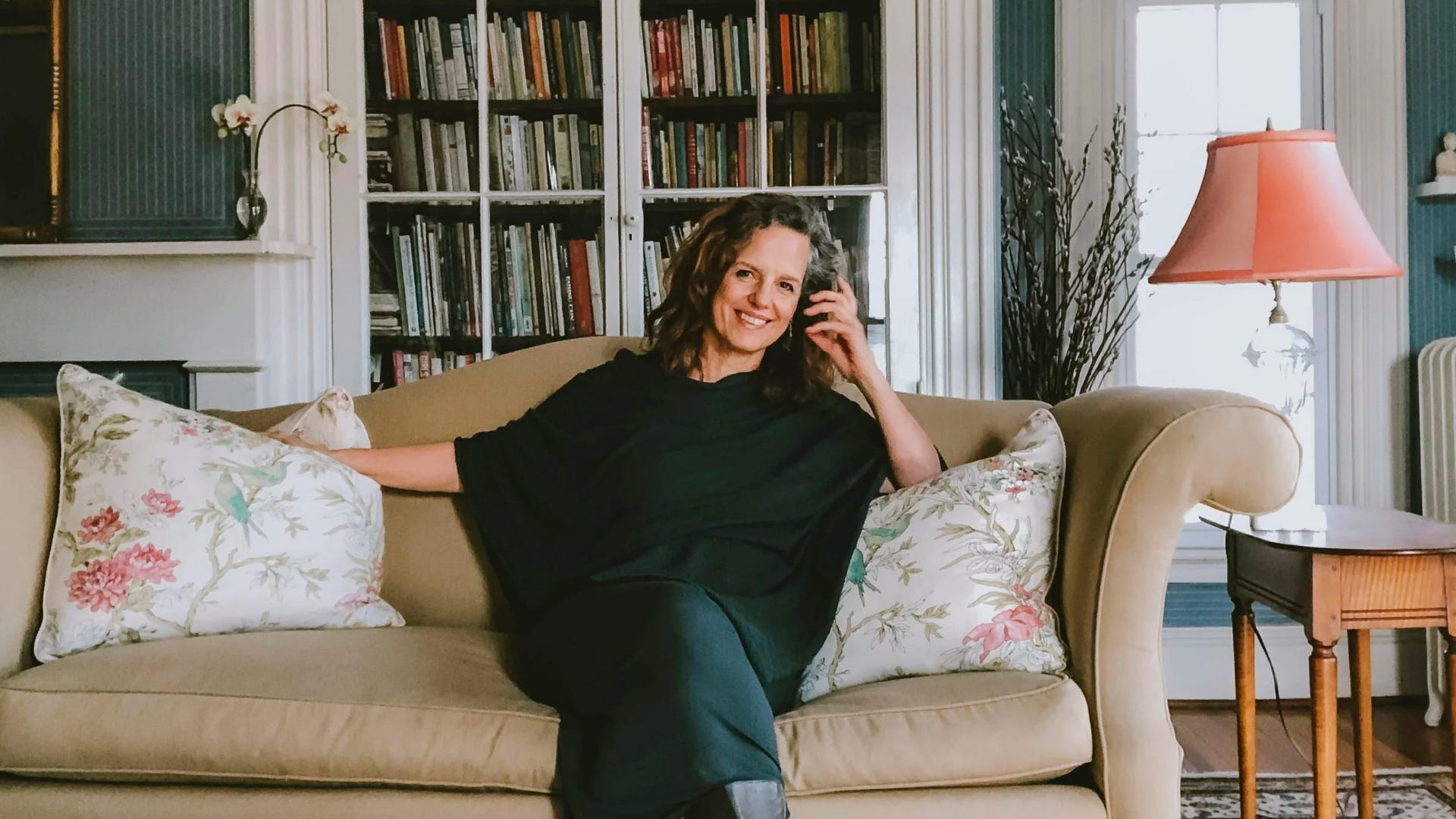
Sil Read is a mother, grandmother, crone, best-selling author, teacher, coach for women, and creator of The Soul-Making School. Learn more and connect here: https://www.silread.com/
Who do you know who you know would appreciate these wise words? Share this article with them.
No posts
Comments
Nothing yet. Say the first thing.
Sign in to join the conversation.