
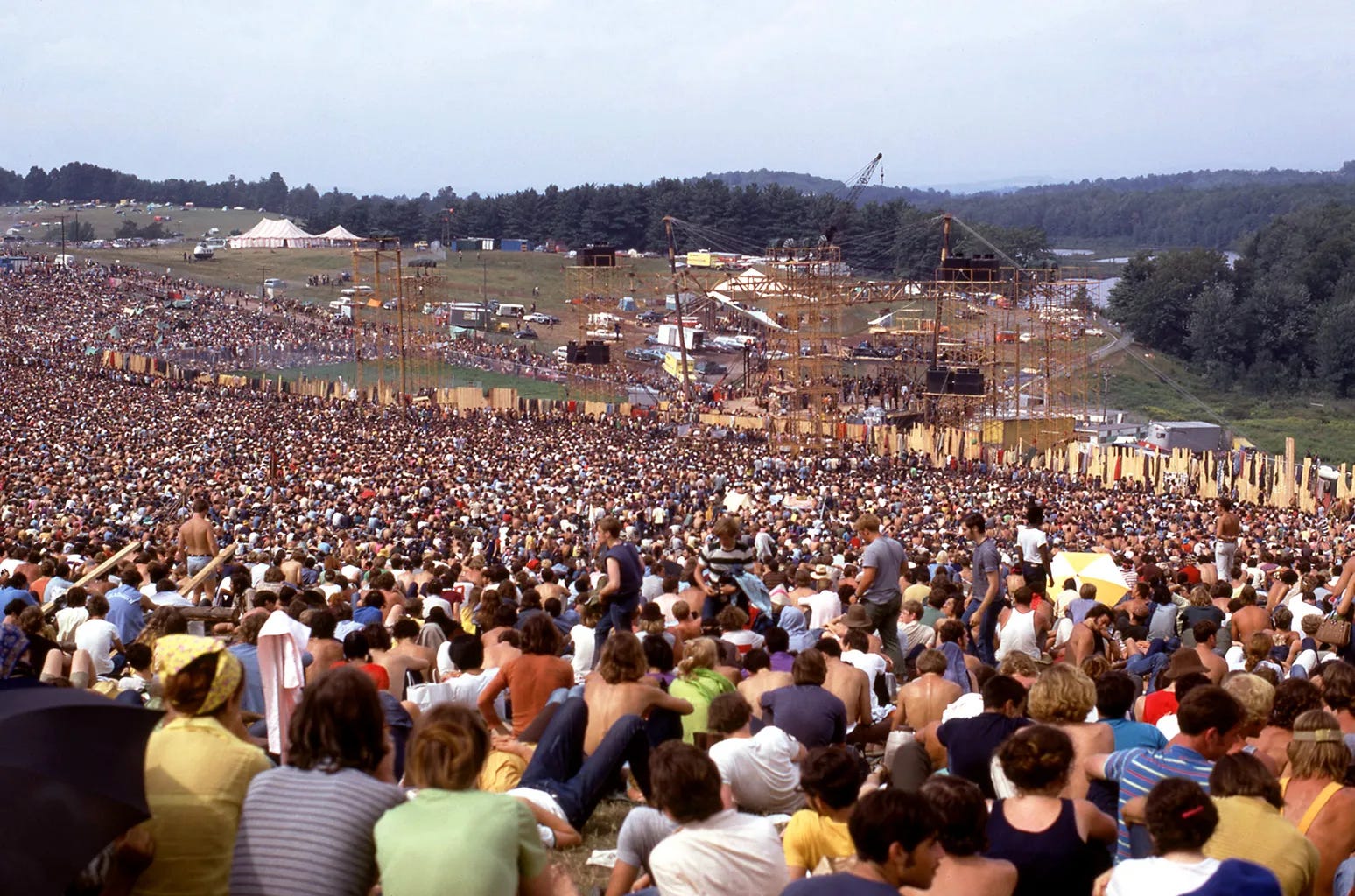
I’ve never been so sure that the Woodstock Music and Art Fair, a three-day slate of music, peace, and love held in upstate New York in August 1969, proved the viability of a bold social experiment.
Taken as a whole, lots of adventurous music was played at Woodstock, there was tons of dope, and there were too few places to pee, poop, or screw in private.
Rather than being the moment of countercultural self-actualization that millions of disaffected kids and young adults claimed it to be—you didn’t actually have to be there to feel you had participated—it seems more like a miracle of self-control by an enormous group of diversely fucked-up people.
The rose-colored impetus was there, though. You have to give them credit for that.
Woodstock was reckless, but in a benevolent way. It sure beat the most powerful country in the world trying to swing another country’s civil war by slaughtering hundreds of thousands of people who didn’t have to die.
A low bar, I know, but at least it beat that. And Jimi Hendrix finally played The Star-Spangled Banner with the munitions-heavy oomph it had long been crying out for.
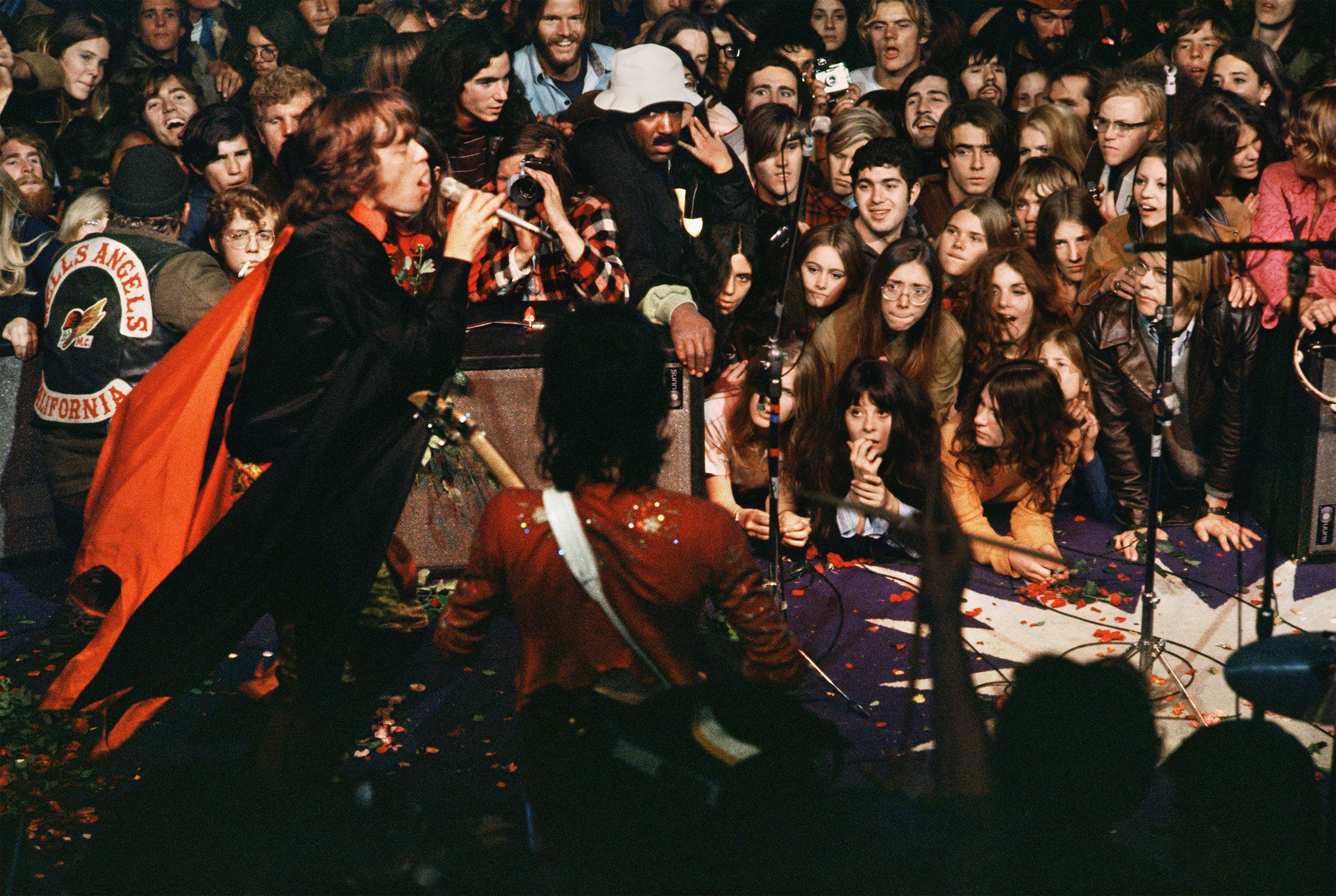
And then, four months later, while the counterculture’s memory still glowed with the warm light of we-told-you-so, there came Altamont, in which the Rolling Stones told Woodstock to hold its free cases of beer and watch.
The Altamont Speedway Free Festival on December 6, 1969, was supposed to be the Stones’ California version of Woodstock, but they did even less organizing for the event than the gang at Woodstock did!
The result was a well-documented monument to bad drugs, bad vibes, and rampant delusion, with, you guessed it, the now-traditional shortage of places to pee, poop, or screw in private.
The very special bonus at Altamont was the presence of LSD-spangled Hells Angels as onstage security who took to leaping into the crowd and beating people to a pulp.
When one poor kid unwisely pulled a gun on the Angels, they proceeded to kill him, right there in front of Mick and boys, who were in way over their heads regardless of how groovy Mick looked when he pranced around and shook ass.
Keith got really mad and yelled at the out-of-control motorcycle gang at one point, but somehow that didn’t stop them. Go figure.
The most astounding part of this is that the Stones, out of all the bands in both America and England who were being viewed as dispensers of The Truth by the experimenting masses, should have seen it coming. Or, at the very least, they should have been wary enough to proceed more carefully.
After all, just four days before the concert, they released an album that kicked off with a song about just such perilous possibilities.
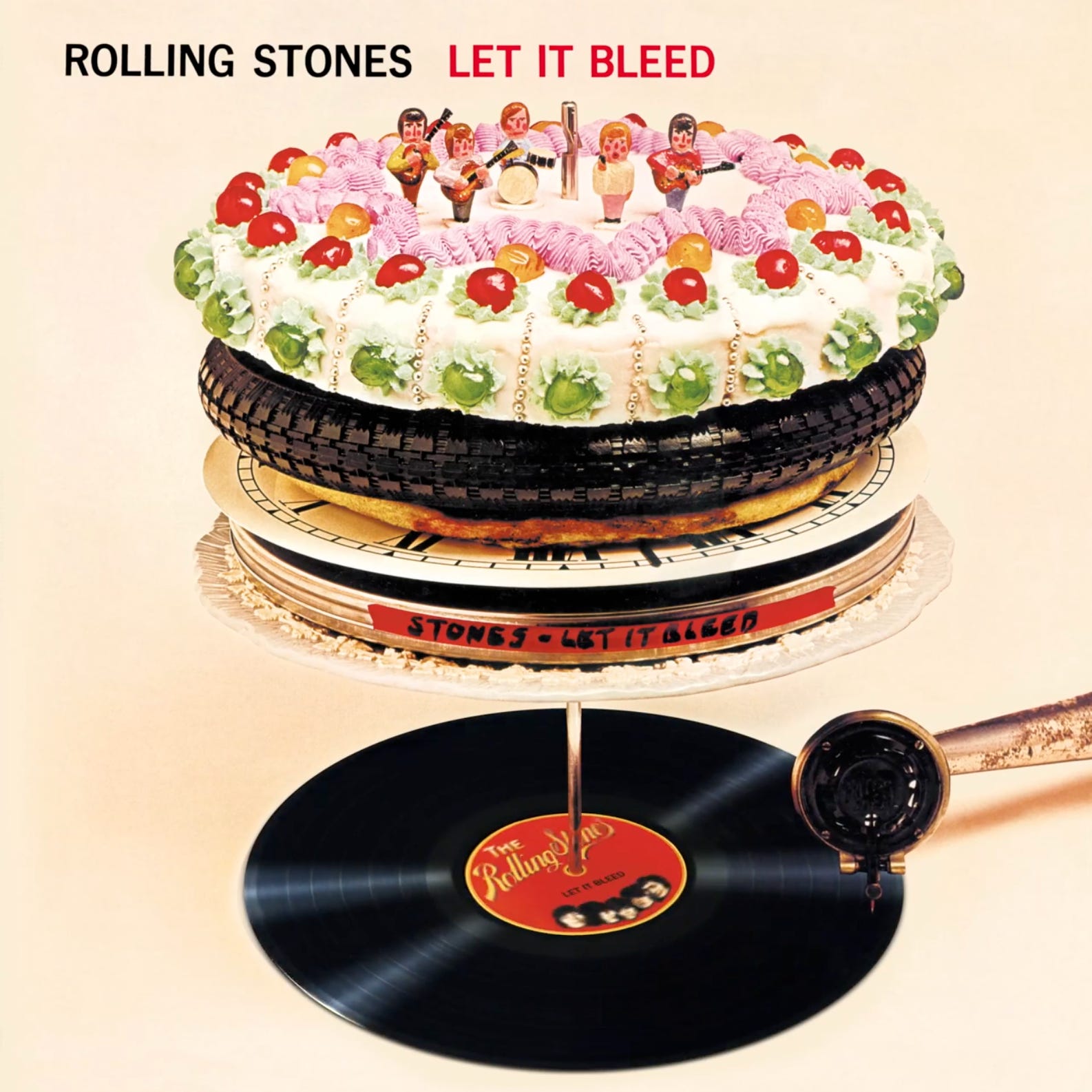
Don’t worry. The opening track on the Stones’ Let It Bleed is substantially better than the album’s cover.
“Gimme Shelter” is a deeply troubling blast of fear and loathing with a “hopeful” final verse that’s all the more effective for feeling like it was tacked on as an insufficient apology for the rest of the tune.
The Stones, of course, started out as a first-rate blues and R&B cover band, then mutated into something more explosive— white boys with too much superstar insulation and a blatant disregard for propriety. Lots of other bands eventually climbed onboard that particular train, but the Stones got there first and drove it the most effectively, at least until it ran out of steam.
“Gimme Shelter” rocks the nasty eternal truth that human beings are capable of frightening savagery, and once they let it fly, those of us who’d rather not participate often have no choice in the matter.
It’s the Stones’ peak, both as musicians and as cultural avatars, and stands as one of the defining artistic statements of the 1960s.
Here’s the tune, if you need a refresher. Lyrics are included for those who’d like to sing along.
The blunt-instrument qualities of “Gimme Shelter” were a shock to record buyers and FM deejays alike in 1969. Yes, the mostly unheard Velvet Underground had ventured that deep into the heart of darkness before, but a band of the Stones’ stature had never even approached it.
The Beatles sure as hell didn’t.
Eleanor Rigby may have been sad and lonely, but that was as far as Lennon & McCartney were willing to take it. She hardly feared that someone might rape and murder her in the church vestibule.
Backup singer Merry Clayton’s suddenly featured female cry of despair in the midst of the Stones’ boys’ club jamming is enough to raise the hair on the back of your neck. It’s one of the towering moments in all of rock music, or in all of blues music, for that matter. The Stones at this point were fairly unclassifiable.
There was nowhere else for them to go after “Gimme Shelter,” certainly not with such a candid degree of bleakness.
They released a couple of terrific albums in the wake of Let It Bleed, including Exile on Main Street, which may well be their best. But if they had continued to ring the bell as savagely as they did with “Gimme Shelter,” surely it would have been too much for both them and their audience to take.
After Altamont, the Stones seemed, if not timid, then at least a little bit spooked. The dissipation remained, but the brutality lessened until they were basically a corporation with a bellowing CEO.
But for every force there’s an equal and opposite reaction.
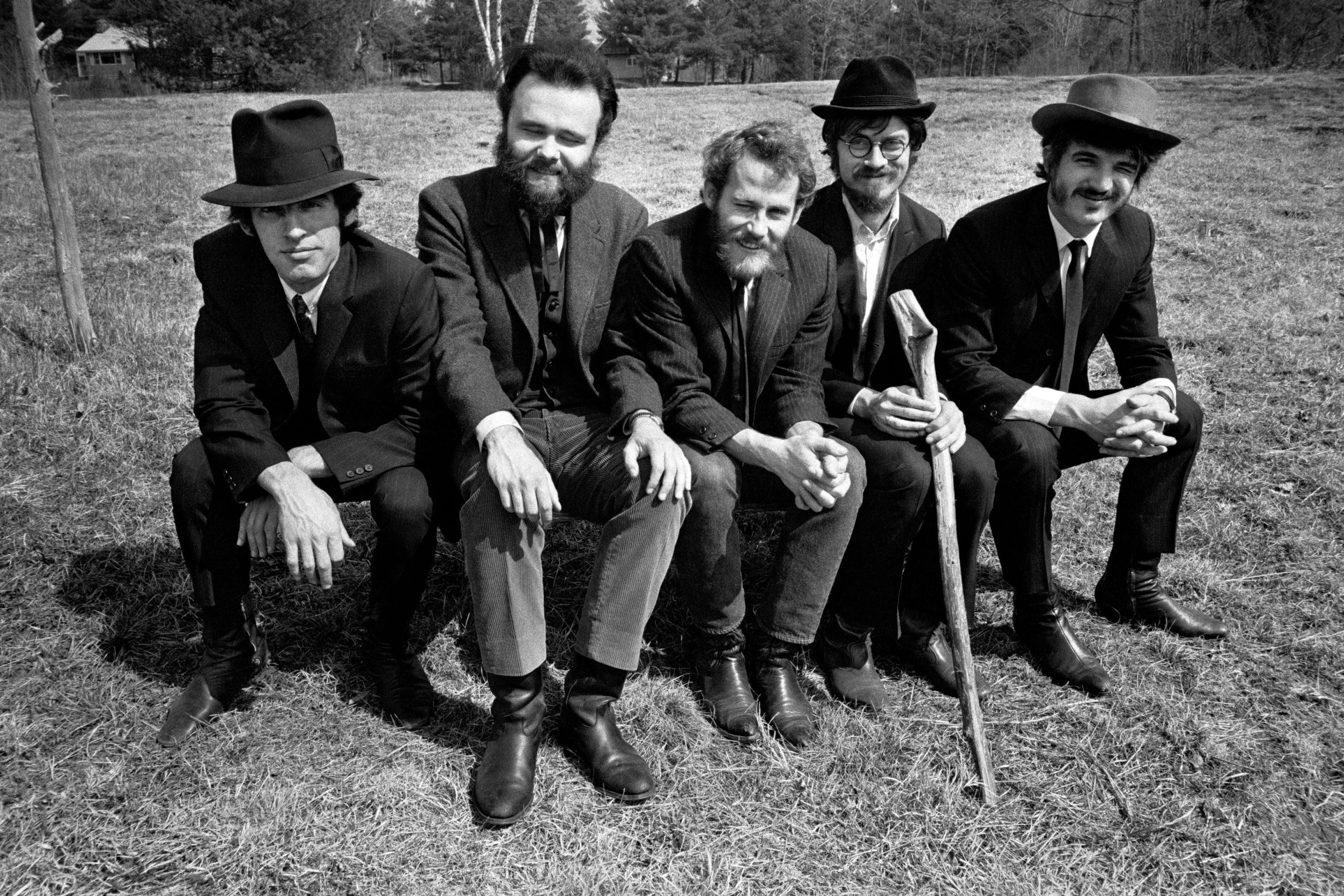
These upstanding young gentlemen are The Band.
Left to right, that’s Richard Manuel, Garth Hudson, Levon Helm, Robbie Robertson, and Rick Danko. Each member of the group played three or four instruments, and they performed round-robins on vocals, too. For the most part, Robertson wrote their songs and manned lead guitar.
These guys were a collective whose music conveyed a tangible sense of warmth and community. Although their self-titled 1969 album is an end-to-end masterpiece, I’d argue their finest individual song is 1968’s “The Weight,” off their torch-bearing debut, Music from Big Pink.
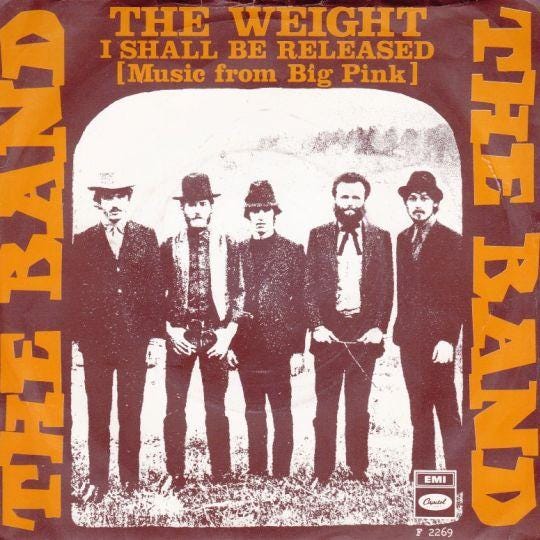
I personally rank “The Weight” and “Gimme Shelter” as the two most penetrating tunes of the rock era, groundbreaking works by way of a musical form that had moved several thematic steps beyond Chuck Berry and Hank Williams.
No one could have seen them coming when Elvis lit the commercial fire in 1956.
But it was only recently that I was struck by the songs’ relation to one another. They effectively contain the flip sides of what it means to be a human being, the strains we endure as we try to proceed with a glimmer of hope and a guiding sense of compassion toward others. There’s wisdom in them.
Let’s listen to “The Weight” now, in all its somewhat exasperated glory.
Robertson’s lyrics and Levon Helm’s magnificent, grounded vocal (he was one of the very best, and not enough people know it) are humane and totally free of music biz posturing.
No one is playing to the cheap seats here. The song runs counter to nearly everything else going on in rock music in 1968. Just to give you an idea, The Doors’ “Hello, I Love You” was the number one song the day “The Weight” was issued, and “Born to be Wild” was in the top ten, too.
The Band’s creaking-wood presence, as is the case throughout their best music, bolsters the austere, no-nonsense vibe. The tune is simultaneously sepia-toned and thoroughly of-the-moment, because, once again, it hinges on a core truth that runs counter to the one examined by the Stones.
Leaving people in peace while still helping them along when they need a hand is not always easy to do, but it’s a very effective way to live when you can manage it. “The Weight” feels like a modern-dress Biblical tale illustrating this generous concept.
Robertson, who had to have been at least unconsciously influenced by his neighbor Bob Dylan’s similarly evangelical John Wesley Harding, later explained that the song was inspired by the films of Luis Buñuel.
“In Buñuel,” he said, “there were these people trying to be good, and it’s impossible to be good. In ‘The Weight,’ it was this very simple thing. Someone says, ‘Listen, would you do me this favor? When you get there, will you say ‘hello’ to somebody, or will you give somebody this, or will you pick up one of these for me? Oh? You’re going to Nazareth; that’s where the Martin guitar factory is. Do me a favor when you’re there.’
The narrative, then, is about someone who tries to carry out a good deed, but so many people are in need of good deeds he grows overwhelmed by his own compassion.
Although the song is simple, warm, and funny—”Wait a minute, Chester.”—it contains multitudes, a sacred truth that admits its own flaw. The struggle of a brotherhood is the struggle to do right by others when there isn’t enough energy or time in the day to comfort everyone.
Cracks are available to fall through, and you should try to embrace your neighbors before they take the tumble. Hopefully someone will do the same for you when you’re reaching the precipice.
In “Gimme Shelter”, the Stones were dealing with victims. “The Weight” suggests victimhood isn’t necessarily a given. Maybe it’s even possible to save people, to give them a moment of grace.
We have a shared duty to at least try. We encourage pain when we avoid that responsibility.
Martin Scorsese has said that he had “The Weight” in mind when he was filming his breakthrough movie, Mean Streets, in which his main character, a low-rung Little Italy gangster named Charlie (Harvey Keitel), is saddled with his own impossible moral task— taking care of his hyper, self-destructive cousin Johnny Boy (Robert De Niro.)
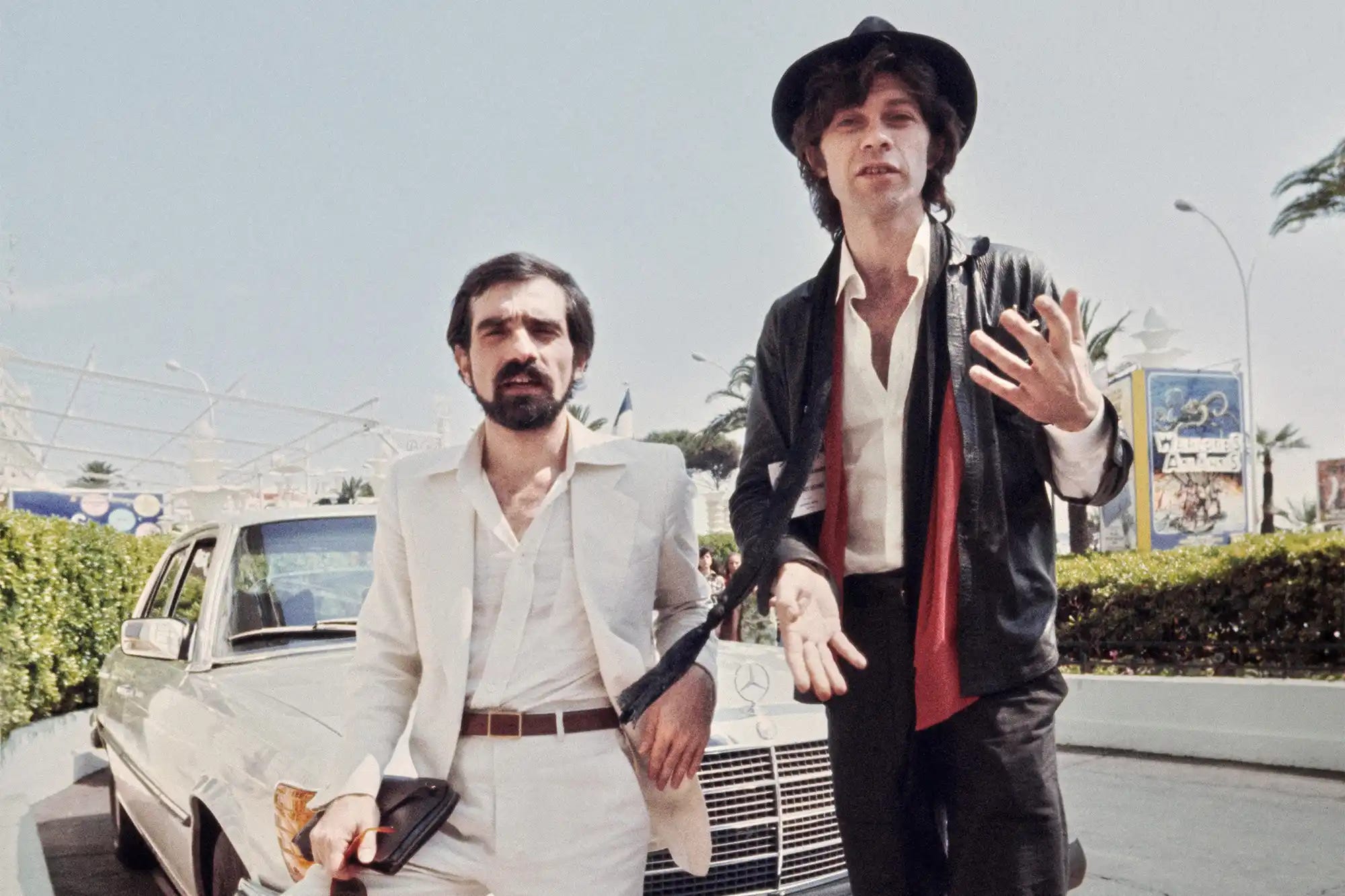
When Scorsese was directing The Last Waltz, his 1978 documentary about The Band’s celebratory final concert, he and Robertson decided to honor “The Weight” with a pre-filmed, beautifully choreographed sequence that stands apart from the concert itself.
The Band is joined here by one of their biggest inspirations, the legendary gospel-soul group, The Staple Singers. This mixed congregation of spiritually connected musicians gives “The Weight” even more breadth than its original version.
If it’s possible to surpass perfection, that may be it right there.
No posts
Comments
Nothing yet. Say the first thing.
Sign in to join the conversation.