

Conflict is the locomotive of all stories.
Nancy Reagan has done a great service to writers. She’s given us a mnemonic device that is essential for writing an impactful story.
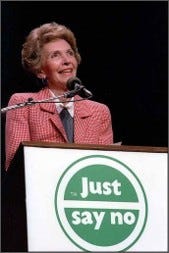
At Longfellow Elementary School in Oakland, California, in 1982, Nancy Reagan was asked what should be done to curb America’s drug problem among youths. She confidently said: “Just say no.”
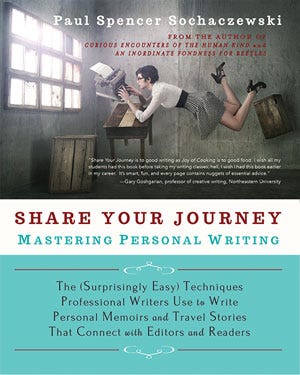
I’ve taken her statement and repurposed it into my rallying cry. The Nancy Reagan Principle is one of the 10 writing tips in my book Share Your Journey and arguably the most important. “Just say no” is an aide memoire to remind the writer to include conflict in the story — the more toil and trouble, the merrier.
Conflict, rejection, hurt, unrequited love, war, loss, contradiction, deception — these are the drivers of every story.
A conflict doesn’t have to be grand — it could be framed as a choice, as simple as whether to move into apartment A or apartment B or which dress to wear to your friend’s wedding. But, and this is important, if your story drags, make the problem bigger. Raise the stakes. To generate action, you need someone saying “Yes, I will” and someone (or a war, or an illness, or a mountain avalanche, or an alien) saying “No, you won’t.”
The conflict, the “No!” is the locomotive for all storytelling. Put another way, without a conflict, you’ve got no story.
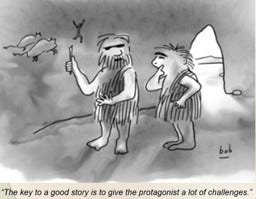
Easy Tools to Express Conflict
Here’s a tip: Four key expressions force you to write a conflict:
· But
· However
· Nevertheless
· In spite of
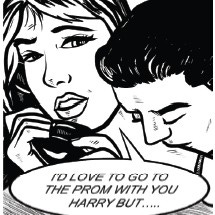
Illustration created for Share Your Journey. Sarah Steenland
But there are other ways to channel Nancy Reagan:
· A simple comma: “It was the best of times, it was the worst of times…”
· A ticking clock
· A quest: Getting a job in publishing, windsurfing across the Atlantic, Indiana Jones searching for the Holy Grail
· Asking a question
· Personality disputes: Thanksgiving approaches, but you dread seeing your mother-in-law who constantly makes snide comments about your hair, your job, your cooking…
One Good Example Of Tension
An excellent use of a Nancy Reagan “No” is the personal essay written by Lisa Sennhauser-Kelly, a participant in one of my writing workshops. Here’s how she starts “An Angel Like Connie” (published in full in Share Your Journey). The rest of her touching story is rich with problems, hidden truths, and difficult choices.
“Smiling, she reached out instinctively, unexpectedly, and stroked my breast with her right hand. I was mortified, as were the others on the train platform. This woman had appeared before me from nowhere.”
You’ll Find “No” Everywhere
And, if Nancy Reagan has too many negative connotations for you to be comfortable using her as a writing role model, try the Rolling Stones. Think of two songs: I Can’t Get No Satisfaction and You Can’t Always Get What You Want. Or pay attention when you watch a favorite movie or TV drama. Nancy Reagan appears everywhere.
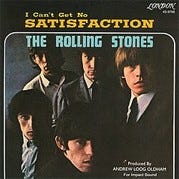
Choose whatever cultural icon you want. Just remember, the tension between “Yes” and “No” drives all storytelling.
In my book Share Your Journey: Mastering the Art of Personal Writing, you’ll learn how to:
● Recognize the dynamics of your own hero’s journey.
● Get started by writing just one scene.
● Avoid the dreaded “info dump.”
● Create instant intimacy with the reader.
● Tell the story by following the Little Red Riding Hood Strategy.
● Create conflict with the Nancy Reagan Principle.
● Keep ’em hanging on with the Scheherazade Scenario.
● Invoke the Story of One to represent the Story of Many.
● Write like Steven Spielberg directs.
● Eliminate fluff like Michelangelo.

Comments
Nothing yet. Say the first thing.
Sign in to join the conversation.