

Note for new readers – auto-estimated reading times are greatly exaggerated (lots of pix/links)
Hey Folks!
Have I got some grand-scale ideas for you! Big-heart stuff (yes, even in this mess).
One of the strangest things about trying to write to everyone at once, today (rather than feeding a tribalist faction something they already know, that flatters them) is that the tone you choose, has a lot to do with the reader you focus most upon. I may in fact be crazy for writing long form for younger people, who are less likely to read long form than anyone in generations, but they have been most bamboozled, most unfairly, and also long starved of much that can enrich their hearts and lives, that was known by previous generations, so my duty feels obvious on that front.
So let me say something to my younger (under 40) friends, which is not said nearly often enough – life has always been unfair in many ways – but modern life is both unfair and also outright cruel – it ain’t just you who feels it (and it is tragic, if you’ve been gaslighted into thinking this isn’t so, and the flaw is your own failure to be ‘tough enough’ or to conform to mass cynicism).
As usual – I’m not just shaking a stick and making a vague assertion – I want to discuss some very clear and clearly influential cultural history, and look at the long term social repercussions of that – I’m also trying to overcome my lifelong (essayist over journalistic) habit of ‘burying the lede’ and making people read half an essay, before they know its theme!
TLDR? – why (historically speaking) is everything now so furious, irrational, nonsensical and nasty?
I have gone directly at the historical, economic, imperial, propagandistic ‘great game’ angle at least a hundred times over the last decade, but today I want to build outward from ideas which are much more inside our heads, even if we do often pick them up (sometimes almost like diseases) from outside.
Stuff we can relate-to feeling, personally – and make better, directly – without having to wait for the whole world to change, before we can make progress (that is – actual practical hope!)
It is often argued there was no such thing as the modern ‘nation-state’ until the advent of radio, because it was impossible to create one single unifying national narrative, with the previous generation of mass media – newspapers – since they reflected too much specific local culture, and too many local interests which were at variance with the central state. Radio was one up-to-date and simultaneous message for all citizens of a nation, for the very first time in human history.
Listening to old radio shows (a worthwhile exercise for any writer) we can learn a lot about how to stage a drama with no visuals, and also realize something Marshall McLuhan pointed out many years later. In an auditory medium (just like when we are reading books) our brains ‘lean into listening’ and supply a whole bunch of missing detail with our imaginations. The pictures we see might not be exactly what the writer meant, but the fact that we are actively seeing them, in response to those words, brings us right into the story, in a way which television movies and other visual forms can’t. They can never be more interesting than the creators intended, because our own imaginations are richer than their’s! Books and radio are mentally active – TV, (and webvids) passive – pure consumption, no work for our brains (participation of creativity).
Of course the other thing we encounter is how hilariously ‘hit you over the head with it’ advertising used to be. Laughably obvious to us now – but we must remember, insanely effective in its own moment – because for decades, radio was the freshest most exciting medium going. (So people actively sought it out and mainlined the stuff – doing half the advertiser’s work).
The influence of Freud’s nephew Edward Bernays, who created the field of “Public Relations” by applying Freud’s insights into the subconscious to advertising and propaganda, began much earlier than the introduction of television. His first great success was convincing angry feminists in the 1920s that cigarettes were “Freedom Torches” and no man oughtta tell ‘em that they can’t!
But by the time television began to be widely adopted, the ideas of Bernays were dominant across the industry (and governments) – especially the key insight, don’t hit them over the head with it (like those corny radio ads) hit people in the part of their mind that they deny even exists! Manipulate people’s subconscious desire and irrationality, then let their own reason justify the obedient purchasing impulse after the fact (kind of like our minds actively filling-in the visual detail, in a radio play). That is, make the customer do half the work of selling it to themselves!

Now I want to quickly refresh an idea my regular readers will have encountered before, which I got from my reading of Julian Jaynes masterpiece of science applied to antiquity “The Origin of Consciousness in the Breakdown of the Bicameral Mind.” His thesis is so vast, many take other parts from it and emphasize (or attempt to refute) them. But I am personally fascinated by what I think is his most important idea, because I experienced it personally, in a very dramatic way.
To simplify it to an unfair extreme (you really should read the paradigm-changing book itself), the original shape of human consciousness was tribal local and shared to an extent that we cynical moderns cannot even imagine. The reason we see ‘household gods’ in so many ancient cultures was that venerated ancestors could still literally speak to those people, through their own minds. They weren’t sentimental memorials, as we’d see them, but still an active part of daily life.
Modern consciousness begins when that old mode of complete sharing and continuity of presence after death is first disrupted by interaction with another tribe, which shares none of the sacred referents, and knows none of the sacred ancestors of the tribe. This is a traumatic shock, because of course being forced to interact with people who do not share your sacred referents, means learning to reason and communicate without using them, which is a radically new way of being – not only alienated from the old gods and voices, but unprecedentedly lonely. We might even call this the birth of the ‘heroic’ free individual. Torn from all, to stand alone. (and remembering this freedom was first won at cost of great loneliness, might be helpful).
My own experience, first growing up in a cult, then being excommunicated by pretty much everyone I knew, upon finally breaking free, makes this stuff weigh a lot for me, emotionally. This is not in any way to say I wish I was still a manipulated part of a hive-mind (it was beyond excruciating, especially for someone naturally inclined toward both truth and kindness), but we have to resist simplifying our understandings. Good and useful change often feels terrible at the time!
There are two other important things to say about being part of a tribal mindset. When I was in the cult and fully convinced of it, I honestly believed that the four hundred or so members of it were right about pretty much everything, and all (then six billion) other people on earth were essentially wrong! Yes I know that is wildly irrational, just on probabilities – my point is that blind belief does not require reference to such anchors. If you’re sure, you’re sure.
The other more worrisome point is that when you are that sure, you feel authorized to cross boundaries that you wouldn’t cross on your own behalf, because you see yourself as an agent of a greater cause, and emotionally transfer all responsibility for your own actions to the cause, or the cause’s enemies.

Civil rights were not won by the boomers – that victory (almost immediately coopted by bankers) was won by the efforts of the beatnik generation before them, and the faithful of many churches, uniting together in principle and sacrifice. The beats were the last generation suckled on radio and lingering book culture inertia, and never did like television much (crazy for cinema, though).
How different was TV? Well, we can already see a very stark difference in the most basic sense of self-definition, with the arrival of the next cohort (boomers) who were the first generation raised in a TV dominated popular culture (nationalist and corporatist grand subconscious vision).
But right away I have a strange difficulty in describing this difference precisely and fairly – because the influence from this break-point is so great that we are still swimming in it today, and just as fish don’t know they are in water, we too see this as unremarkable context, and not a great culture split.
Let me give you my two favourite personal testimonies from ‘revolutionary’ minded boomers about the times. The first came from my recently departed and greatly missed friend (and radio personality and international music-booster beyond compare) DB Hawkes, who said, (with sadness)
“It really was incredible at first, so many truly brilliant and courageous people were doing amazing new things, all at once. But by the time it became the dominant thing, almost everyone you met who looked like a hippie, was really only there to get laid.”
(Shades of the numbers or quality question I discussed in Bargain Counter Revolutionaries)
The other personal testimony from those times which I have not ever been able to forget came from the extraordinary man I apprenticed with, who told me (with a perfectly straight face, mind you)
“We were all completely certain that revolutionary victory was around the corner, the numbers were overwhelming, and it was obvious to all of us that we’d win. But no one wanted to die on the front lines, and not be around the day after the win, to enjoy it.”
Zooming out, we have to note the boomers weren’t just TV people, they were the first to have wide access to birth control and economic opportunities that no other generation ever had – unprecedented upward class mobility (never seen again) which wealth was soon steered right back into re(over?)capitalizing stock markets with national retirement vehicles (401k, RRSP, etc.)
There was an extraordinary creative flowering (at the start), to go with this outsize cohort, many writers, musicians, filmmakers and visual artists gave us fine work that still moves us to this day. But rather than looking at the overt self-congratulatory messaging, I’d like to consider where the spirit of that time ultimately led us all. In particular – what happens when an entire generation considers themselves to be ‘rebels’ who are unfairly put-upon by the unjust system? (As opposed to mature citizens of that system, with equal measures of entitlement and responsibility).
Well, as rebels, who consider themselves offended by greater forces by definition, they grant themselves those same kind of authorizations as cultists do. So they are able to act in ways which violate morality, because they ascribe a far greater immorality to some offstage or symbolic entity.

Old fogeys like me remember many earlier cycles of anger in Black America. I find myself returning to Matthias Desmet now, when I consider these explosions. There is so much “Free floating anger, anxiety and fear” in the community, that when the right narrative spark arrives, it becomes a channel for expression of a million kinds of upset which cannot be easily named.
During the Rodney King riots, a whole bunch of Malcolm X rhetoric reappeared, completely shorn of the crucial context. “By Any Means Necessary” only works with a PROGRAM. When an extreme position like this is associated with mere rage, it becomes pure destruction (of justice). The better Malcolm X line (by far) is:
“I’m for Truth, no matter who tells it. I’m for Justice, no matter who it’s for, or who it’s against.” (can we please see some of THOSE T-shirts, folks?)
The question about responding to outrage is always – organize to do better, or seek vengeance? An infinitely easier appeal, emotionally – which is why we identify many great leaders by their ability to go the other way on principle, persuasively. (Malcolm X and MLK, outstandingly).
As I wrote in my piece about the Black Panther Party (for self-defence) a few years ago, initially, as an organized pro-gun-rights group, they were mostly seen as a policing challenge – they scared white America just by their defiant posture (and they enjoyed that fear, openly). They became a very serious cultural and political threat only later, when they began to organize social programs in communities which had never known them (certainly not run by people who understood them, and their actual problems) and to organize across racial lines. (can’t demonize them as racist urban terrorists if they help grandma get to the clinic every week, and are allies of your neighbourhood peeps, too)
We should stop to note that this transition was a huge achievement. They really were a group born in righteous anger (Huey Newton’s outrage over a California police shooting). The small leadership group was totally shocked by how fast their membership grew, and yet somehow they managed to organize that growth in a way which produced sustained community benefit and aspiration for more still, when it might also very easily have become nothing but a movement of anger-stoking and vengeance-seeking, which would have scared white Americans so much at the time, they would have backed extreme measures to suppress the entire black community for a generation. (As if the Crack epidemic and prisons for profit weren’t state-violence enough).
The reason the FBI concentrated on discrediting Stokely Carmichael, was because he was the Panther’s finest intellectual, saw through and resisted many traps, and even conducted diplomacy with newly independent Black States in Africa, as an ally-representative of American blacks, when the (then all-white) power centres in America were (as now) profoundly hostile to any truly independent African nation. (Chomsky’s lovely line presents “The Threat of a Good Example”)
I bring all of this up, simply to contrast an actual armed revolutionary struggle movement, which then became far more politically dangerous, by transcending mere outrage, with what happened to the rest of the general (outraged, with no program) culture. But first, a reference about the nature of the culture in question.
As was long ago noted about 1930s America, by John Steinbeck “I guess the trouble was that we didn’t have any self-admitted proletarians. Everyone was a temporarily embarrassed capitalist.”
Now back to that early question, what happens when you tell an entire generation not under any such threat, that they are all heroic individualist rebels against the vast faceless unjust ‘system’ which is cruelly depriving them and holding them down? (even though it is actually rewarding them better than any humans in recorded history) The entire cohort grants themselves (and by normalizing it, each other) permission to break all the rules of morality and responsibility, and feel perfectly great doing it, because it was either for a greater cause, or provoked by a greater evil – which they truly believe bears full responsibility for their own, wildly destructive actions!
This happened in institution after institution, first with simple nepotism, hiring friends and friends of friends, to help cash-in on any decent job a ‘rebel’ got (and the boomers were so numerous, that alone effectively locked my X-er generation out of decent starter jobs until our thirties).
This happened again in education. When I finally went to art school in my late forties (as a costume model, not a student), I was shocked to find that none of the (very intelligent and kind-hearted) tenured professors there had even noticed that there were virtually zero tenured professors from my generation. Self-involvement is a weird thing, and weirdly dangerous to all, at scale. Especially frustrating is that teaching really needs continuity – if we skip generations, we lose contact with subtle understandings which can take generations to recover (or be lost altogether).
When we ask what happened to the once proud and vital industrial trades in North America, the mechanism was very simple, between the austerity drives caused by the “Black Friday” market meltdown in 1987 and the follow-on recession of 1993, in union after union, boomer members agreed to sign new contracts which stripped key rights, benefits and dignities from all new hires onward, on the (bribe) condition that their own benefits weren’t touched.
Because they were starting from a position of (groundless) rebel outrage, they didn’t even fight for solidarity and future generations, nor show awareness or respect for all those who fought so hard to get them, the rights they alone of all humans enjoyed (won mostly by those embarrassed capitalists in the 30s and the WWII veteran unionists they turned into when they got home, who were, on the scale of organized motivated and capable unionists, unprecedentedly not to be f#cked with).
I should probably stop here to refresh one of my most important wisdom touchstones:
“Variation between individuals exceeds variation between types.”

I came of age, escaped my cult and discovered the real world, all in a big hurry at age 16, in 1981. Being clueless but bookish, I found myself trying to understand the normality I’d skipped while sequestered, almost like an anthropologist, studying an exotic tribe. I was also drawn to dance clubs of the time, for the company of other people who felt like freaks, but weren’t ashamed of it.
So here’s my first-hand cultural testimony about that moment. Having watched our parents tear-up the rule book about sex, relationships and families, and having been left to raise ourselves, while our parents were busy with their self-obsessions (and rebel-certainty), we felt very sure we could do better, be kinder and more respectful of one another, especially. But also, and this is really important, without dividing “freaks” (of character temperament or sexuality) into factions. Homosexuality had only been legalized relatively recently – in 1968, by papa-doc Trudeau on his first day in office – a lesson well learned by his idiotic and preachy son, who also did his very best work (decriminalizing THC) on his first day in office (and should have left, day two).
But more importantly, just as Mods, Punks and New Romantics were all pals, gay, straight and bi teenagers, and tons who didn’t really know, and did not appreciate anyone trying to define them, made fantastic lasting friendships and creative partnerships. Who you love is not in fact how you think!
This chance to grow a profoundly promising (and hearteningly widespread) mutual kindness and accommodation, was soon utterly destroyed by the intense politicization tribalization and professionalization of protest which followed from the AIDS epidemic. But it was a real chance, and that (post-boomer lesson-learning) moment contained a million times more hope than any modern identitarian indignation or tribalism can (by design, or you would never have heard of those theories at all).
Politicians now want sexual minorities to feel frightened and in need of special protection – but political tribalism has not ever been any kind of safety – the understanding of the community is – as the gay community proved to the greater society, with countless positive personal interactions, decades before any government ‘protector’ would even speak in favour of their right to marry.
Government does not give us rights – we all do that for each other. (more often, politicians try to limit our rights, because our rights cost the super-rich who bribe them, a lot of money).

I think the most powerful reverberating positive from the “Me Too” movement is a much more vivid common awareness of the kinds of threats extortions and sexual attentions women face. Sexual violence has always been abhorrent (tribalist feminist theorists, notwithstanding), but there are many other behaviours which are objectively hostile or demeaning, we can all discuss (and therefore respond to) much more easily now, having established general common insights.
Which makes me think about something a friend taught me long ago about the term homophobia. As I’ve mentioned, I am still kind of the man from Mars, ravenously curious about the experiences and insights of others, so, when I hear someone say something which angers me, I don’t just rush to my anger, but instead try to ask where it comes from, in them.
In this particular case an African friend of mine expressed his disgust with homosexuals, and his story (as distinct from his angry conclusions) turned out to be very sympathetic indeed. His anger was not derived from a religious position or one of triablist scapegoating (I’ve had that argument also, and my friends, it was EPIC). In this case the fellow was truly traumatized. He was a very serious bodybuilder, handsome, kind and gentle natured. But he kept getting gay guys trying to corner him and make sexual advances in the showers, where he felt vulnerable and threatened.
There is no case where we would excuse a man behaving like this to a woman, the trespass is clear and outrageous, but I have witnessed myself, many blur the line with “Rebel entitlement” and think they actually do have a right to sexually harass strangers, because “it’s different.”
Nope – it is hostile unwelcome psychic violence – full stop – every freakin’ time. (Also ‘letting down the team’ in the worst possible way, for the most selfish possible reason).
Now before I leave then-times and return to now-craziness, I should also give one more piece of important personal witness. The cult in which I was raised was full of child abuse and abusers, and also many gay folks who were then deeply ashamed of their own nature (and near outlaws).
I know of absolutely zero cases, I mean hard zero, where any of those gay men and women (all beautiful, artistic, generous souls, overflowing with inspiration and hard-knocks wisdom) abused any of the kids. Even in those traumatic self-hating days, their principle was goodness over tribe.
And I remain very deeply grateful for lasting gifts of inspiration from them, in drawing music and poetry.

Now, I’m pretty sure I’ve been doing my usual trick of offending everyone at once, at least a bit, so I hope this one won’t seem like singling-out (I know many who so identify, who I love a lot).
The tricky thing about “Non-Binary” is not the self-definition. Anyone can self-define however they want (back to that radio play idea, the limits are those of our own personal imagination). The question is – do you really think anyone else is actually binary? Binary is a dehumanizing and reductionist word which implies machines, not full-range humans, less-thans, untermenschen. Creepy!
All human beings are incredibly complex (not just ones like us). Modern emotionalist theories which are designed to maximize our level of (always functionally psychotic) indignation, so we can ignore common morality, are in every case ignorant bigotries. We (me-tribe) are good because “categorical they” suck, because (insert wild generalization and grotesque ignorance of your choice, here).
Yes, if we are fundamentally unhappy people, we can adopt radical costumes, then (just like that advertising trick) after the fact, pretend our new radical cause is why we have unquiet hearts. We can even change our radical rhetorical costumes, like a fashion trend. Follow the coolest stupefying fury.
But people – that whole anger and indignation game – seriously – the whole thing – has nothing to do with cause or principle, and absolutely everything to do with giving ourselves a pass for doing things which we absolutely know we ought not to do. It gives us an excuse to not grow up and learn strength, wisdom and responsibility.
Try this thought experiment – who is drag queen story hour for? It is certainly not something small kids were clamouring for, drag is an adult entertainment medium – this whole drama is solely for the ego of their parents. In fact, in this situation those kids are being used by their parents as cultural weapons, to express their own profound contempt for an out-tribe of ‘others’ who they love to celebrate hating.
But now ask yourself this, what happens when a kid with one of the most common fears small kids have (fear of clowns – which is to say fear of strange loud in-your-face people) starts crying because of something the drag queen does? Are we going to accuse toddlers of homophobia, just because their own parents don’t understand responsibility and boundaries? (in the fullness of their ‘heroic’ and ‘moral’ certainty, natch)

I love learning from people who are humiliatingly better than me (musicians, especially). One thing I learned from revolutionaries who were humiliatingly more serious than I, decades ago, is that the real test of any revolutionary is whether they can overcome their temper and need for vengeance, and act in a way which does credit to the movement (and to their own soul, also).
Don’t mean to insert faith there – we could also say more cleanly – can you direct your will so as to consistently put the program of the movement ahead of your own ego? But I should here also note – many religions struggle with this exact same problem – so many are drawn to them not so they can harness themselves to a far greater and deeply humbling purpose, but instead to become part of an in-group, so they can despise all of those outside it, in a way that feels comforting.
Now again we return to the question – what is left of a sense of self, after a television childhood? (That is, what do advertisers do to us early, to maximize lifelong alienation and greed, and undermine sharing?) Let me here cycle back a moment, to that idea of escaping one madness, only to struggle with a new kind.
The single most memorable passage I ever read from an American Veteran of the war in Vietnam was from a young man who was beyond overjoyed to get home intact after his service, but was shocked to find that everything at home now looked like war to him, also. I don’t mean he was paranoid or delusional, I mean he was so sensitized to pointless cruelty by his experience of war, that he could no longer do the polite thing we all do here, of ignoring it and pretending it doesn’t hurt us, and instead he recognized its sad normality, in the competitive and ruthless personalities and dehumanizing interactions we “Rebels.” now find everywhere around us.
Suddenly young Marlon Brando sneers his way into the scene on a motorcycle, unbidden, with his immortal line in response to the citizen ‘square’ asking what are you rebelling against?
“Whattaya got?”
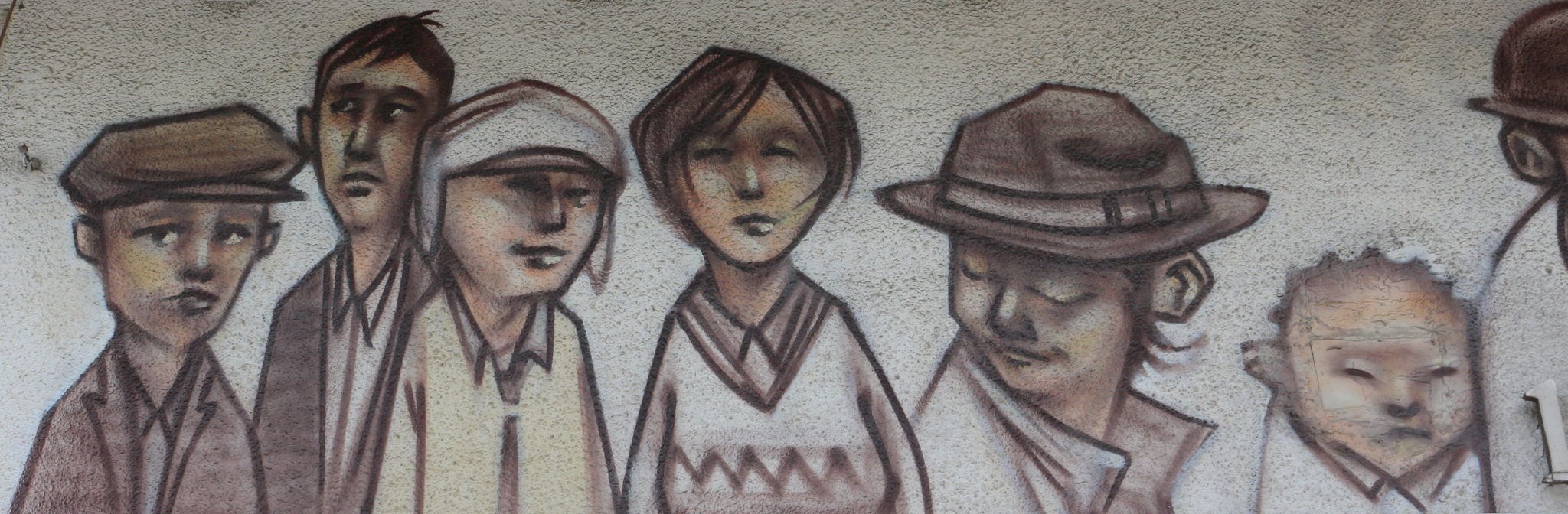
So here’s the thing folks – no the Boomers were NOT a revolutionary generation – not ever. They didn’t almost win societal advance, only to be sabotaged at the last minute by psychedelics, (even Patti Smyth’s drop out to garden and write poetry was more indulgent/undermining than Leary and co.) They called themselves revolutionaries because they called themselves any damned thing they wanted to, to enjoy the high and self-satisfaction of it, without ever showing up for the sacrifice part.
They enjoyed the high-water mark of western rights and freedoms, affordable housing and food, indexed pensions and real hope for growing international respect and cooperation (peace). Not one of those things will survive them. And you won’t find a single one ashamed of it, either.
For my middle aged chums tempted toward easy scorn about the strange new political fractioning among the young, we must recognize that (expensively state-crafted and promoted) identitarian outrage is the only possible frame left, to even attempt to make a claim for workers rights now! Because general worker rights, aspirations and consciousness, were all extinguished at the payroll point, two full generations ago. Irrational and self-harming, identitarianism may well be, (and is) but the old frameworks of common rights in which boomers lived and earned are gone.
So here’s what my younger friends need to understand, to learn lessons from that most costly generation. They weren’t just wrong because they were immoral self-centred and greedy (again, remembering that variation exceeds type, always) they were wrong because they made themselves into the kind of low character self-indulgents who are completely useless as serious change agents – who must first and foremost be the kind of people who can face the reality around them, not just the pictures they make of the radio play, inside their imaginative heads (glorious, though those can be).
Sex seemed incredibly important when it was arbitrarily controlled (even while simultaneously being used constantly, to goad our subconscious for advertising and propaganda purposes). Now that we’ve taken the lid off completely for a few decades and utterly commercialized loveless lust (and each other, in the process) sex has almost become boring (which is just so freakin’ sad!)
The simple truth is that sex is great but love is incalculably more important, and enduring love is how we discover not monotony, but our own infinite depth and growing capacities, together.
More simply (trust a fogey who has run this experiment) nice as pleasure is, there are a lot more moments in life when you need someone who can help you laugh at great difficulty, and carry on and forward with an active will, instead of mere alienated numbed-out surrender.
We don’t need contacts, lovers and apps. We need one true love and one real friend.
Having found those, meaning, gratitude and growth become approximately irresistable. (And duty – borne of love, not resentment or tribalism – presents very naturally indeed).
Purpose is best found in that special set of eyes looking back at me, and seeing more than I ever could.
No I am not saying it is easy. Real love is harder than ever (which makes me weep).
But love is still all the magic in the world (and the high-road where we win our real and lasting victories). Being and having a real friend, is always the best possible start.
Psychotic entitlement didn’t win the boomers all the loot – timing did. And still they aren’t grateful happy kind-hearted and beloved people. We see grasping bitterness and denial instead, and on a staggering scale – (with variations, much beloved)
Don’t mimic their egotism, indignation, or their special entitlement to ignore morality.
Love yourself better than that, so your love will find you lovely, when they find you!
¯\_(ツ)_/¯
First up – some truly superb reading from outstanding writers around the world
Mara writes about Islamic history and modern geopolitics with extraordinary specificity and subtlety. I was especially taken with this piece, restoring Sufism’s place in historical political upheavals (that is, recognizing it has held, not just advised, power). I had arguments for years with mistyoptics who considered ‘natural’ to mean safe in every circumstance and dose. My contrary experience is that anything which is powerful enough to be effective, can just as surely go wrong in a big way. Adding some of these imperfections and evolutions to the history of Sufi orders in power does not in any way diminish their poetry or wisdom, but rather enhances it greatly, by proving that, no fairy-tale, it did indeed ‘hold purchase’ repeatedly in its time.
The poetry is immortal and relevant, because the wisdom was so hard and well-earned!
Also from Mara – this piece adds a lot to the work I’ve previously shared by Kit Klarenburg, on the weaponization of Islam, by the west, and the displacement of authentic forms, by the promoted (and empire-serving) fakes. Ever wonder – why is that country named after one family?
Here’s something which adds more perspective still to the picture, from Vuk Bačanović. My regular readers will have seen me tilting at Z-big (Zbigniew Brzezinsky) a few times already.
Vuk brings together the key history I have discussed, with some more subtle reasoning (even from that cynical great gamer), and a fascinating longer-term perspective about the whole idea of contesting cultures (Bosnia being an unusually great vantage, for this).
And here is a real tour de force from Fabio Vighi which combines and much magnifies my point about the collapse of what we have known, from my last piece, with the ideas about the long slow degradation of western life, treated here – with about a thousand other valuable insights – and a truly bracing sampling of the extraordinarily perceptive Paddy Chayefsky! (Writer of “Network”)
Now for another Eccentric Bibliography – this time, a graphic novel edition
Bookstores are Temples – keep your brain well-fed by keeping them busy and active!
The Building – Will Eisner
If any single person deserves credit (or blame) for the shape of modern comic books, it is Will Eisner. In 1940, he developed his detective comic “The Spirit” into a single-story multi-page insert in the weekend paper, which form very soon outcompeted the original comic books (his precise assignment, from his publisher). His ink-work is some of the best ever done (and his splash pages still amaze, almost a century later). Later in life he worked on long form stories, more or less creating the ‘modern’ graphic novel. (see Masreel below) This one is really a love poem for cities.
Hand-Drying in America – Ben Katchor
I don’t know who at the MacArthur Foundation decided to give cartoonist Ben Katchor one of their famous grants, but I am eternally grateful they did, because this unique book is the result. A genuine masterpiece of urban surrealism and layered (absurdist) critique of modernity and nostalgia. I want to say this is exciting for art-crazy adults, the way Richard Scarry books were, when you were little – and as with Scarry, you find yourself getting right inside the crazy drawings (and being drawn into the even crazier stories). That he even took the time to joke about the ethical problems involved in the printing and distribution of the book itself just nails the meta critique to properly (all encompassing) scale. So damn much delicious smart fun!
Building Stories – Chris Ware
Chris Ware has one of the most recognizable lines and brands in modern independent comics, having established his Acme Novelty Library series in 1993 (wonderful blend of false-nostalgia with genuine reverence for cartooning greats like Herriman) and gone on from there to test the medium in many fascinating ways. Building Stories is a box with fifteen wildly different books and comics, which tell various tales and alternate realities of what I think are his most fascinating characters ever, over a really unusual arc of living and experience (for comics, in particular). Sublime!
Palestine – Joe Sacco
I’ve been reading Sacco since his earliest (humour) comics. Through the 90s, he pioneered the idea of first person witness journalistic cartooning. Sometimes collaborating with the extraordinary Marxist/Christian Pastor and journalist Chris Hedges. This work is a mature masterpiece, the line, design and story-telling all refined and sublime, the story, heartbreaking (real). If you need to remember the reality and humanity, beyond the tragically numbing numbers, dig here for heart.
Not the Israel My Parents Promised Me – Harvey Pekar
I am a bit too nice for my own good, but I adore cantankerous people, all the same, as long as their eccentric insistence is based on ideas and principles, not outright cruelty to others. Harvey Pekar was a pioneer in comics in two interesting ways. Not only did he write stories about normal boring life (that were incredibly recognizable, because so well observed) then get a host of interesting artists to illustrate them (including R Crumb), he took the old literary idea of the “unreliable narrator” one step further, by trying (and mostly failing) to make himself an outright unlikable narrator, repeatedly featuring his worst and angriest, instead of his best, side. Again, this book is a mature work from a man who really understood what he was doing artistically, and had thought a great deal and deeply about this subject, for many years.
To Afghanistan and Back – Ted Rall
Ted Rall helped me laugh during several years when I was truly appalled by the fast degradation of American peacetime into forever war. He didn’t do this by being gentle, but by calling W “Generalissimo El-Busho” and being absolutely brutal in his critiques of all warmongers. Rall is another guy with an extremely recognizable line, and a narrative style almost as cantankerous as that of Pekar. Hilariously, he also did the all time funniest comic-critique of the work of Chris Ware (out of jealous anger, when someone described Ware as “the most important artist alive”).
Here, Rall does the thing Sacco pioneered – he goes to the place to see for himself, and writes about what he found along the way. Weirdly moving, also surprisingly hilarious.
Passionate Journey – Frans Masreel
I said “Modern” graphic novel for a reason. We can go a lot of directions for sources and antecedents, but Masreel’s novels, made entirely of wordless woodcuts (to appeal equally to all, regardless of language or literacy level) are powerful and inspiring examples of moving a heart with what might otherwise seem insufficient means. My art pals need this. Comrades also.
Thanks for reading Large Ess Small Press! This post (like all of my posts) is public, so feel free to share it, far and wide. Cheers!
Comments
Nothing yet. Say the first thing.
Sign in to join the conversation.