
We need to talk.
By now, you’ve probably seen a thousand “AI-powered” tools that are basically ChatGPT in a different outfit. Another chat interface. Another coding assistant. Another “revolutionary” AI that asks you to type questions.

The real AI revolution is happening with tools that seamlessly integrate into your actual life, solving problems you didn’t even realize AI could tackle. These aren’t tools for developers or AI enthusiasts. They’re for users who want their money managed better, effective presentations that bring ideas to life, and their learning to actually stick.
Sure, LLMs can write code, answer questions, and generate text. But when was the last time you thought, “You know what would make my life better? Another conversation with a computer”?
The most exciting AI applications aren’t trying to replace human conversation. They’re quietly automating the tedious stuff, surfacing insights you’d never notice, and making complex tasks feel effortless.
Cal AI lets you snap a photo of your meal and instantly get calorie breakdowns, nutritional analysis, and personalized recommendations.
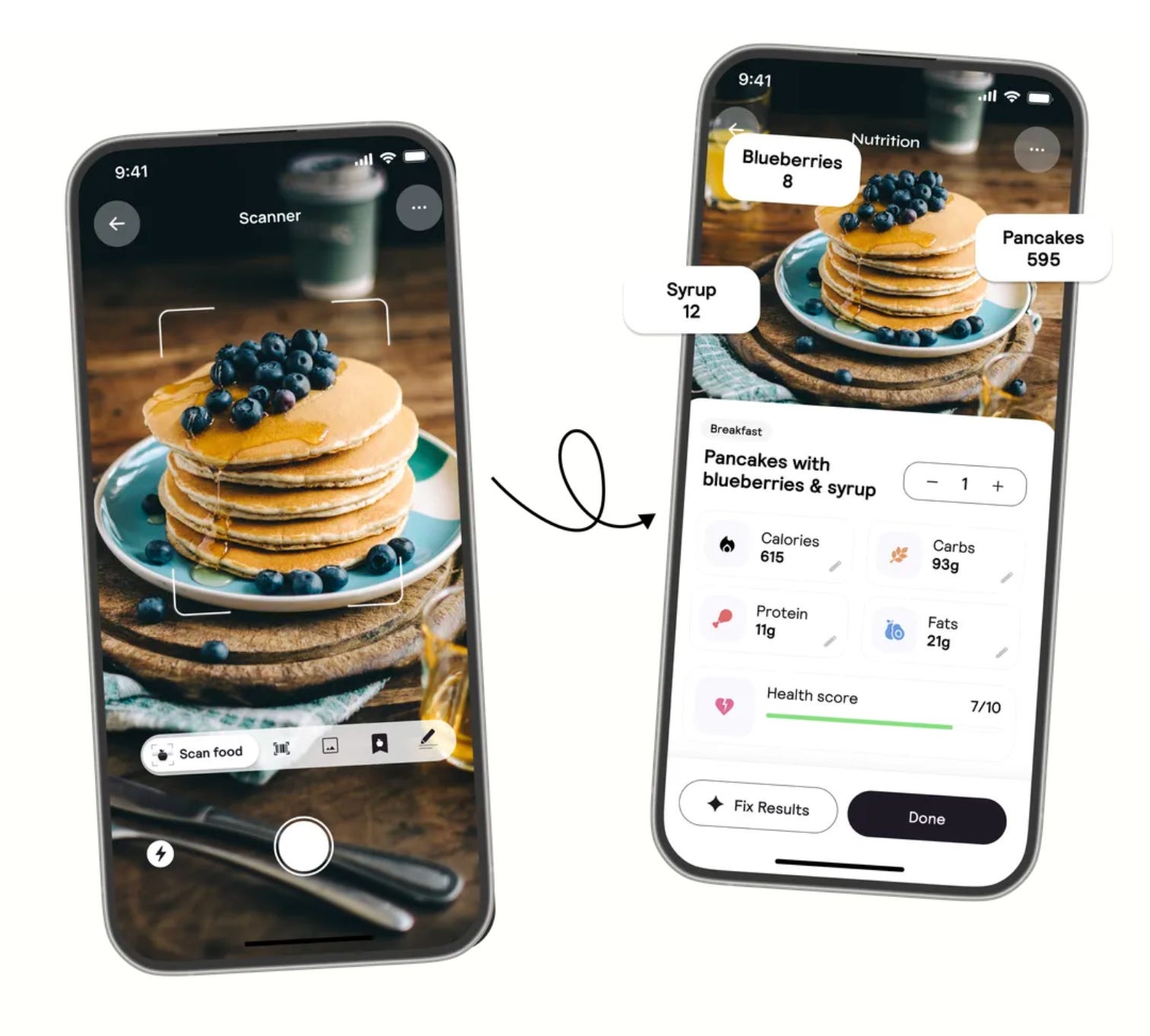
Cal AI recognizes an apple — it understands the difference between a Granny Smith and a Honeycrisp, estimates portion sizes, and tracks your eating patterns over time. It’s not trying to be your nutrition chatbot; it’s being your silent, incredibly smart food diary.
Real use case: Parents tracking family nutrition without turning every meal into a math problem.
Most budgeting apps show you charts and expect you to figure out what they mean. Peek.money feels more like having a financially savvy friend who gently roasts your spending habits.
“You spent $547 on Uber Eats… and $109 was delivery fees 😱”
“Your coffee habit isn’t the problem. The snacks you buy while waiting for coffee are. 🍪”
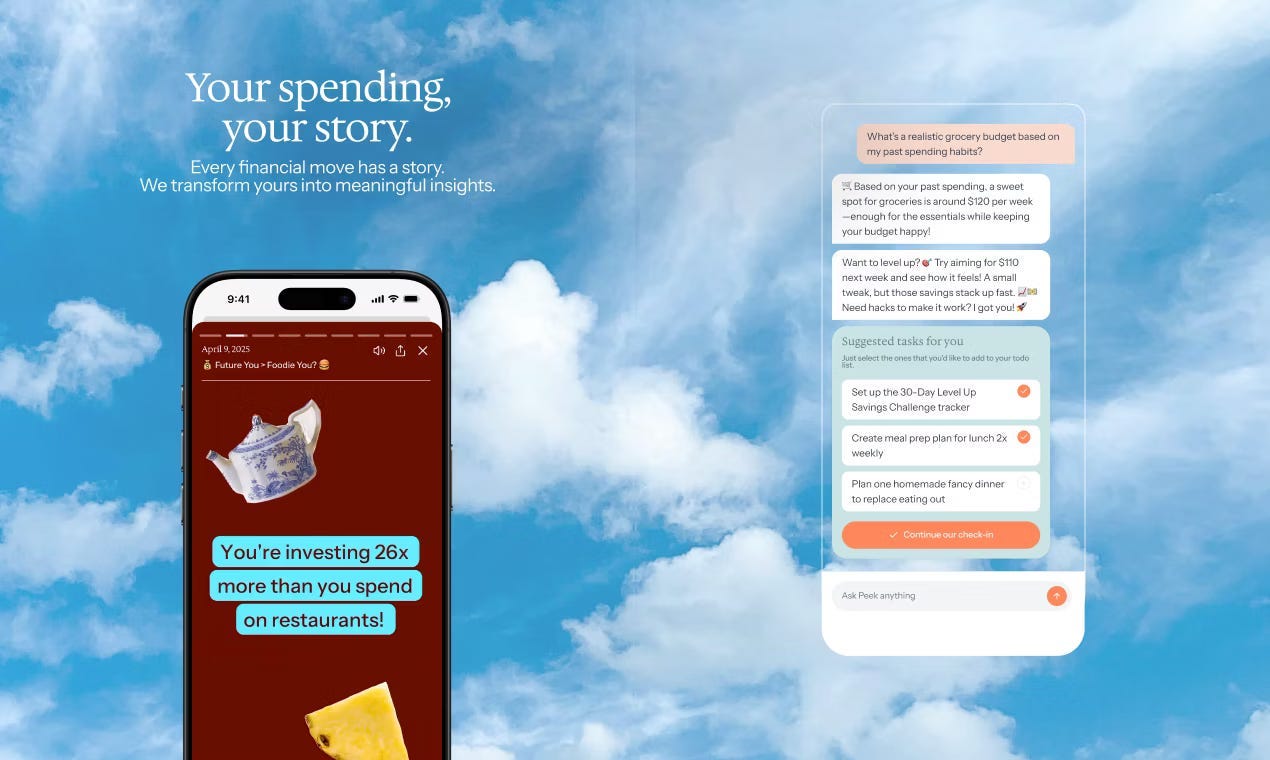
The AI performs “vibe checks” on your spending, connecting financial patterns to emotional states. It understands the psychology behind why you buy that third latte when you’re stressed.
Real use case: Finally understanding where your money actually goes without feeling judged by a spreadsheet.
Learning shouldn’t require juggling five different apps and cookie-cutter courses. QuizLink takes your YouTube videos, PDF notes, audio recordings, and web articles, then uses multimodal AI to create a personalized, gamified learning experience making learning fun.
NotebookLM + Duolingo ≈ Quizlink
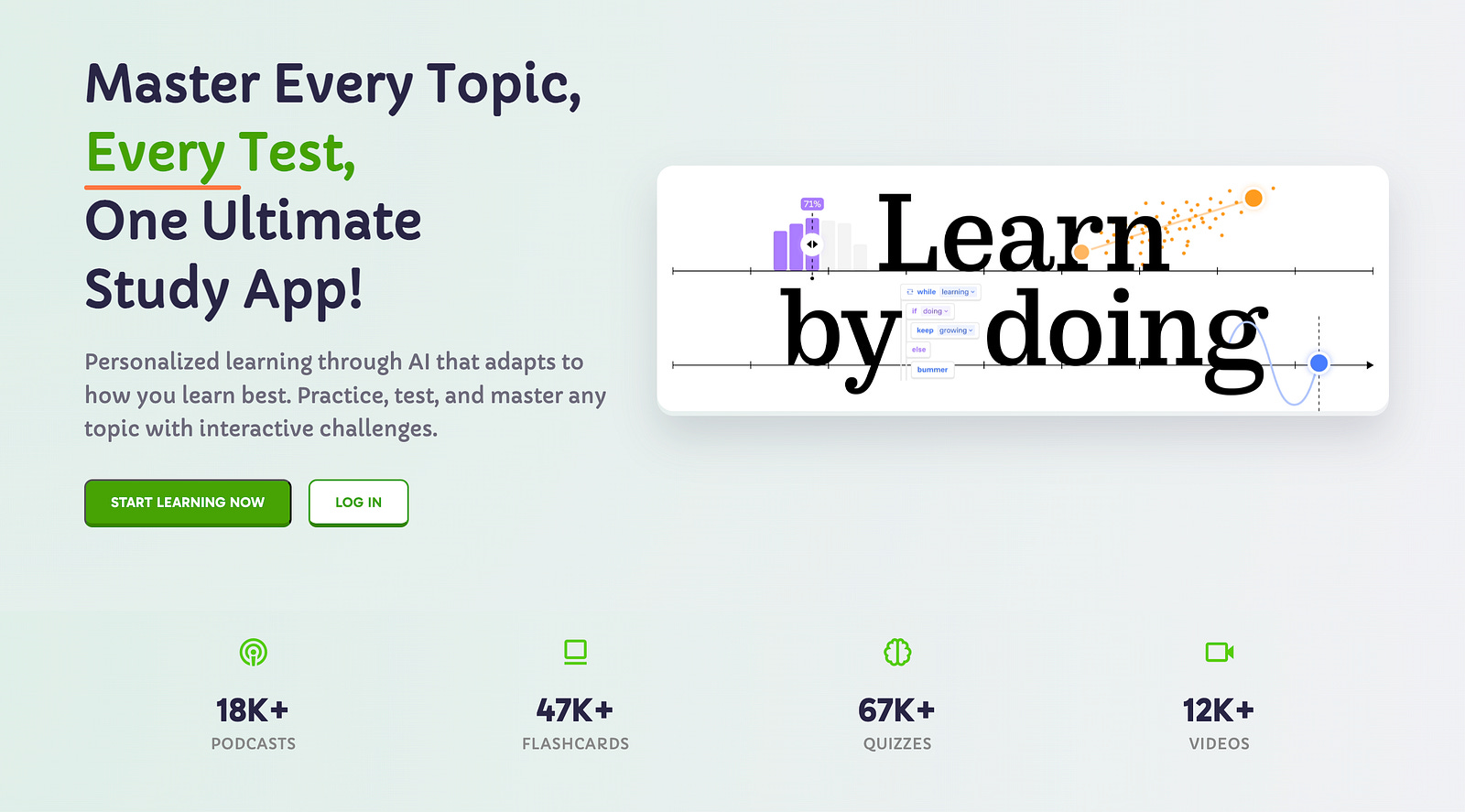
Upload a lecture video and accompanying slides, and get back podcasts, flashcards, quizzes, and crosswords that weave insights from all sources together. Its AI understands how different formats reinforce each other.
For educators, it offers course building tools, live classroom interactions with real-time analytics, and a content marketplace to monetize teaching materials. Businesses get comprehensive training dashboards, automated compliance tracking, and API integration with existing HR systems.
Real use case: Students and professionals who learn from diverse sources but struggle to synthesize everything into coherent knowledge. Educators building engaging curricula. Companies transforming mandatory training into interactive experiences that employees actually complete.
Creating videos used to require expensive software and a film degree. VEED.io’s AI handles the heavy lifting: automatic subtitles, background removal, voice cloning, and even generating entire videos from text prompts.
VEED.IO — AI Video Editor — Fast, Online, Free
Free AI video editor with text to video, avatars, auto-subtitles, voice translations and more. Record, edit and share…www.veed.io
Tell it “Create a product demo for wireless headphones” and watch it generate visuals, voiceover, and scenes automatically. Its AI understands video psychology, which clips keep viewers engaged, where to place text overlays, and how to structure compelling narratives.
Real use case: Small business owners creating professional marketing videos without hiring a production team.
Ever wondered how your living room would look with a different couch but didn’t want to commit to expensive changes? RoomGPT transforms any photo of your space into photorealistic renders in dozens of different styles.
Take a picture of your current room, select from styles like Modern, Minimalist, or Contemporary, and watch AI completely redesign your space in seconds. The tool even handles sketches and basic drawings, turning rough concepts into realistic visualizations. Real estate agents use it for virtual staging, while homeowners experiment with design ideas before spending money.
Real use case: Homeowners and renters who want to visualize design changes before committing to purchases or renovations.
Ever stood in front of your closet thinking “I have nothing to wear” while staring at dozens of clothes? Shakara.fit creates an AI-powered virtual twin that can try on different outfit combinations.
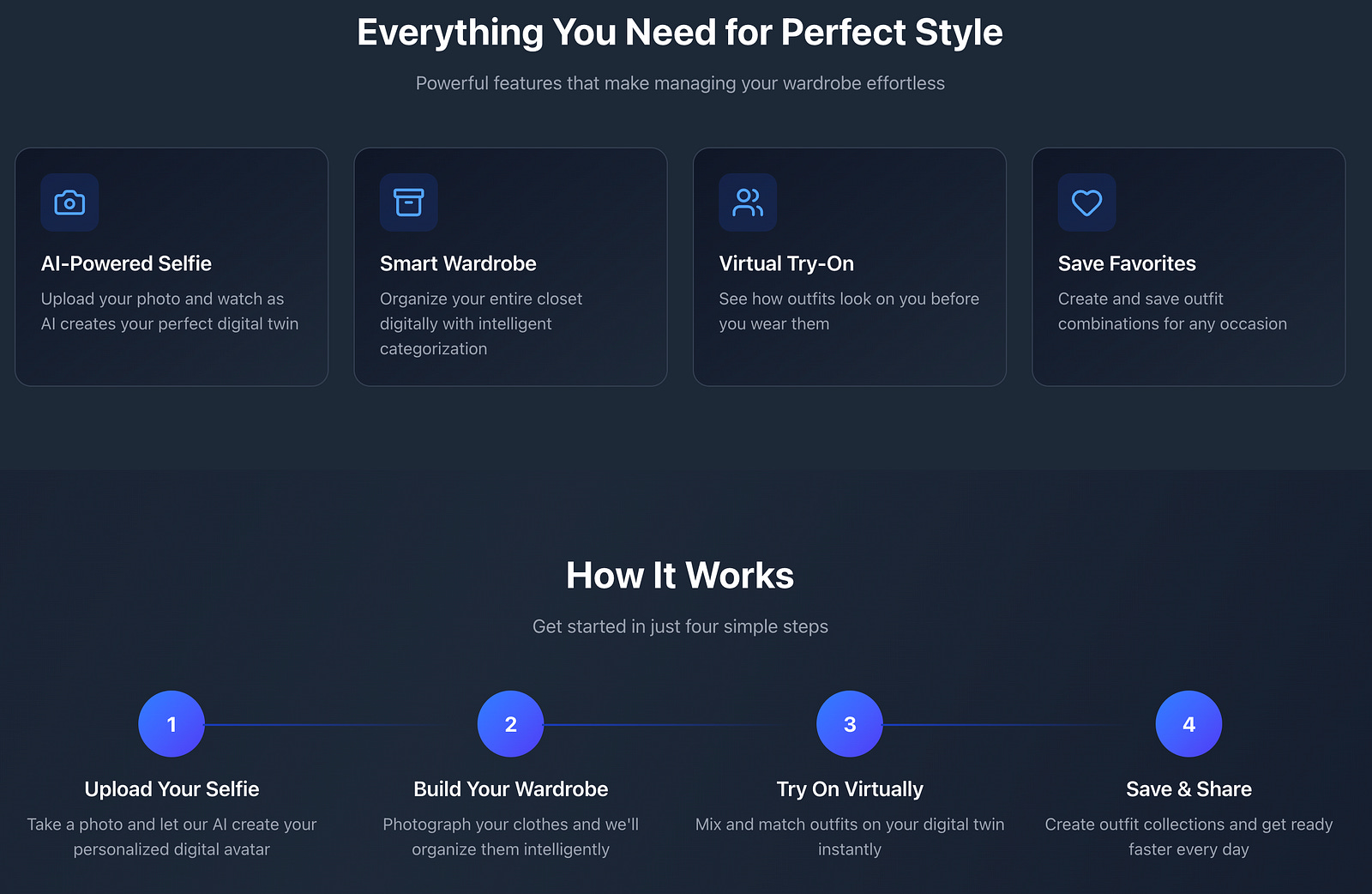
Upload photos of your clothes, and the AI organizes them intelligently. Then watch your digital twin model different combinations, helping you discover new outfit possibilities you never considered. It’s like having a personal stylist who knows exactly what’s in your closet.
Real use case: Fashion-conscious people who want to maximize their wardrobe potential and plan outfits in advance.
PowerPoint has trained us to accept that creating presentations is supposed to be painful. Gamma.app disagrees.
Give it a topic — “Q3 Sales Results” or “Why We Should Adopt Remote Work” — and it generates not just slides, but a complete narrative with relevant graphics, data visualizations, and even suggested talking points.
Its AI understands design principles: which information comes first, how to structure arguments, and what visual elements actually enhance (rather than distract from) your message.
Real use case: Professionals who need to communicate ideas effectively without becoming design experts.
Traditional startup evaluation is subjective and time-consuming. VentureLink brings AI precision to investment decisions with multiple specialized “judges” that analyze startups from different perspectives.
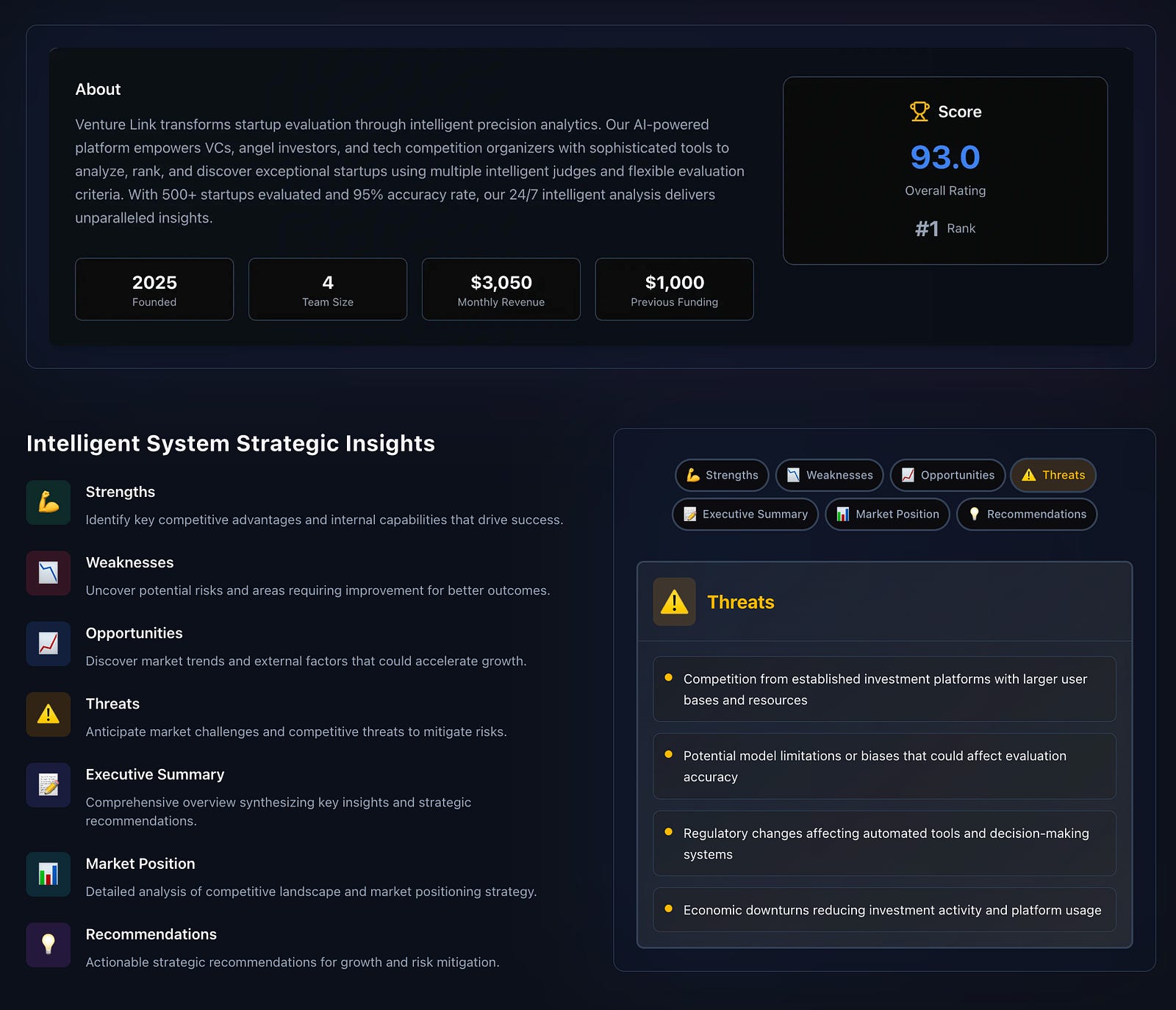
Think Y Combinator-style evaluation meets AI objectivity. The platform can assess pitch decks, analyze websites, generate SWOT analyses, and score startups across dozens of criteria. Each AI judge has a different investment philosophy — from value investing to growth-focused strategies.
Real use case: Angel investors, VCs, and accelerator programs who need to evaluate hundreds of startups efficiently and objectively.
Ever lose an argument and think of the perfect comeback in the shower later? Debate Arena lets you practice rhetorical skills against AI opponents who adapt to your skill level.
The app teaches you to recognize logical fallacies, construct compelling arguments, and respond quickly to counterpoints. It’s about winning arguments and communicating more effectively in high-stake conversations.
Real use case: Debate team practice, preparing for job negotiations, board presentations, or any situation where you need to persuasively advocate for yourself.
Ever watched a pastor struggle mid-sermon when they can’t remember the exact wording of a Bible verse? PewBeam AI listens to sermons in real-time and automatically displays the correct scripture on screen as pastors speak.
When a pastor paraphrases “love your neighbor” or mentions “the valley of the shadow of death,” PewBeam instantly identifies the reference and projects the accurate verse. The AI understands context, handles multiple Bible translations, and prevents the awkward pauses that can derail a sermon’s flow.
The system runs on lightweight models that work on everyday laptops but are sophisticated enough to distinguish between different biblical references to the same concepts. It’s not trying to replace theological knowledge — it’s eliminating the technical friction that disrupts spiritual moments.
Real use case: Churches wanting seamless services where pastors can focus entirely on their message without worrying about scripture accuracy or technical distractions.
Join the waitlist to bring PewBeam to your congregation and experience frictionless scripture display that keeps services flowing naturally.
This open-source project lets you run your own AI-powered hedge fund simulation with zero real money at risk. Multiple AI agents — each modeled after legendary investors like Warren Buffett, Cathie Wood, and Michael Burry — analyze market data and make trading decisions collaboratively.
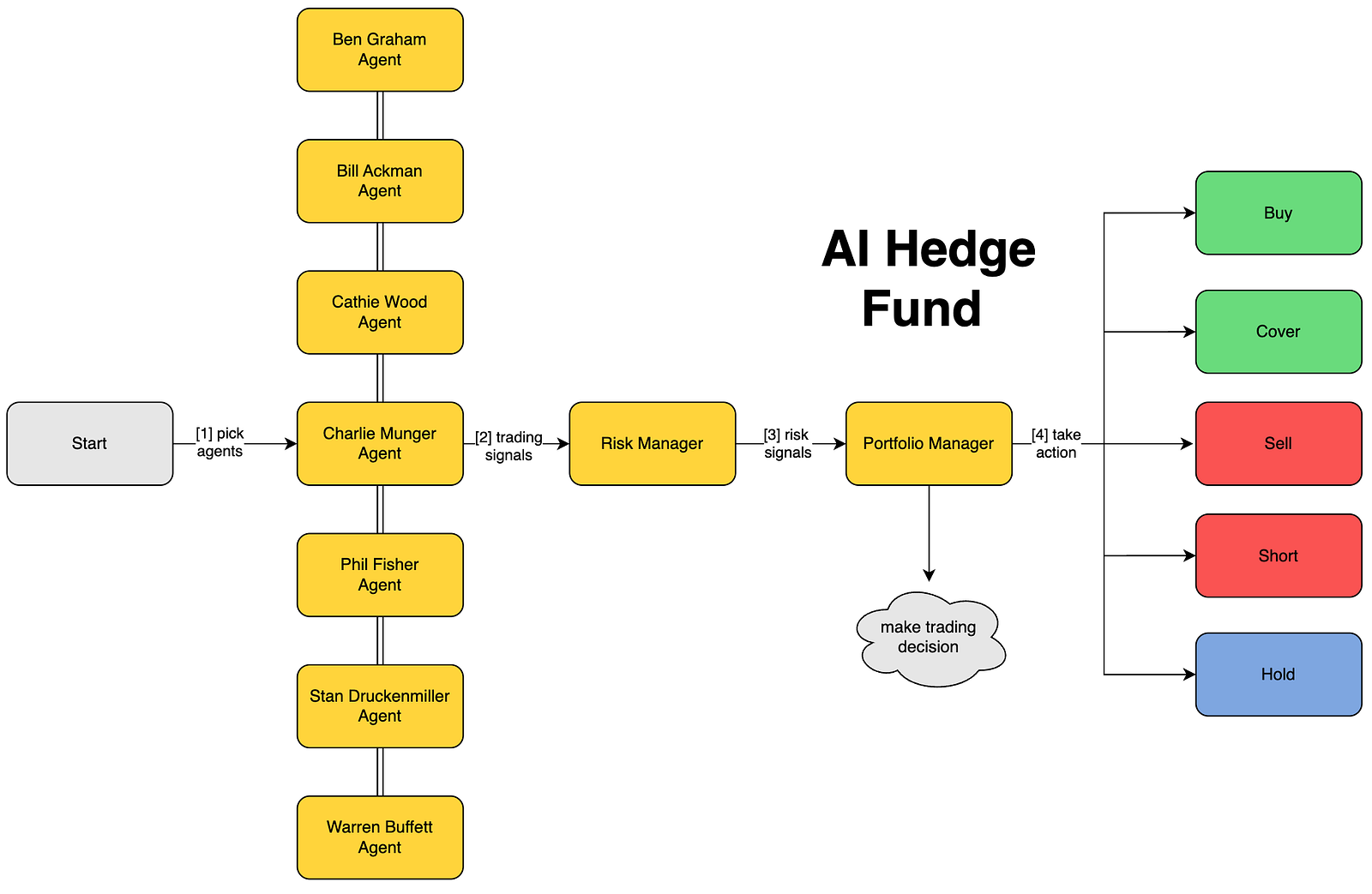
The system processes fundamentals, technical indicators, sentiment analysis, and risk management in real-time. It’s not a get-rich-quick scheme; it’s about understanding how AI is revolutionizing institutional trading with different perspectives to improve investors decisions.
Real use case: Finance students and professionals who want to understand algorithmic trading without risking capital.
The AI tool landscape is flooded with solutions looking for problems. But these tools solve problems that already exist:
Time scarcity: Automating tedious tasks that eat your day
Complexity overwhelm: Making sophisticated capabilities accessible to non-experts
Context switching: Reducing the cognitive load of moving between different tools and formats
Insight blindness: Surfacing patterns you’d never notice manually
Decision paralysis: Providing objective analysis for subjective choices
These tools fall into three distinct patterns:
Tools like Cal AI, VentureLink, and PewBeam excel at spotting things humans miss or finding needles in haystacks. They’re not smarter than you — they’re just tireless and consistent.
VEED.io, Gamma.app, and Shakara.fit don’t replace creativity; they remove the friction between idea and execution. They handle the technical complexity so you can focus on the creative decisions.
Peek.money, Debate Arena, and QuizLink make you better at things you already do. They’re like having a coach who is always there, helping you improve.
We’re moving from “AI as conversation partner” to “AI as seamless capability enhancement.” The tools that will matter aren’t the ones that impress you with their intelligence — they’re the ones that make you more capable without making you think about AI at all.
The question isn’t “What can AI do?” It’s “What can AI help me do better, faster, or differently?”
The answer, increasingly, is “Almost everything.”
Each of these platforms offers ways to experience AI that feels less like talking to a computer and more like having superpowers.
Try them out:
CalAI— Photo-based nutrition tracking
Peek.money — AI financial wellness coach
VEED.io — AI video editing platform
RoomGPT — AI interior design visualization
Gamma.app — AI presentation creation
Shakara.fit — AI virtual wardrobe management
VentureLink — AI startup evaluation platform
AI Hedge Fund — Open-source trading simulation
Debate Arena — Rhetoric and argumentation training
QuizLink — Multimodal learning experiences
PewBeam — Real-time scripture display for churches
The best AI is the kind you stop noticing.
No posts
Comments
Nothing yet. Say the first thing.
Sign in to join the conversation.