
Ok, so here’s the rant… why don’t more hiring managers take reference checks seriously?
For the life of me, I can’t understand why someone would skimp on this step. It’s like buying a used car without running a vehicle history report. Who cares what the previous owner tells you, or if the test drive went well.

I’m serious. My sister just got a job offer where they never called her reference, and so I advised her to not take the job. If this hiring manager doesn’t check references then clearly they don’t care about the quality of their team. I’m sure they tell themselves “hire quickly fire quickly”, but is that really the environment you want to put yourself in?
Lots has been written outlining the basics - but below is my editorial.
Get your mindset right - don’t fool yourself into thinking that references are just a formality. Yes, you’re excited about this candidate. Yes, they jumped through all your hoops so far. Yes, you want to be done with hiring. But remember that even the best managers mis-hire > 50% of the time. A bad hire is a much bigger headache than continuing the interview process. I try to reject at least a third of candidates at the reference stage.
Talk to a direct manager and ideally their skip. Nobody knows more about a candidate’s actual performance than their direct reporting line. Managers know the most, but skips are also helpful because they will contextualize the manager’s reference. Require that the candidate makes the direct manager intro, and don’t accept excuses. Obviously if they are currently managing the candidate, then don’t talk to them until after the offer is accepted.
Credible referencer = credible reference. Weigh the reference according to who’s giving it. How precisely did they work with the candidate? Do they have any incentives to warp the truth? Do they have the sample size needed to make the claims they’re making?
Ask the hard questions. The obvious questions here are: “Is ___ the best ___ you’ve ever worked with?” and “How would you compare ___ to your other reports?”. Don’t accept fuzzy language - just patiently keep asking them to be more specific until they have no choice. Also, make a list of your own concerns about the candidate and ask the referencer directly. e.g. “One thing I’m worried about is that the job requires a lot of clear x-functional communication and gnarly incentive alignment. Do you think ___ might struggle with this?”.
Get detailed. “Say more” or “Can you give me an example?” should be your default response to practically anything said in a reference call. If you don’t fully understand their response then you need to keep digging and digging until you do. The devil is always in the details.
Look for fire. The call should ideally start with “____ is a *&@!ing star. You should close ASAP”. Other good signs are that the person you’re talking to is themselves trying to hire the candidate, or that you can feel them vetting you back. Anything else is worthless. You’ll try to convince yourself otherwise, but please don’t.
For senior candidates, do 4+ references. The more senior a candidate the less “one dimensional” performance gets. Everyone has a bias and your job is to solve the mystery by collecting the clues. David Skok’s extreme referencing article explains this process well.
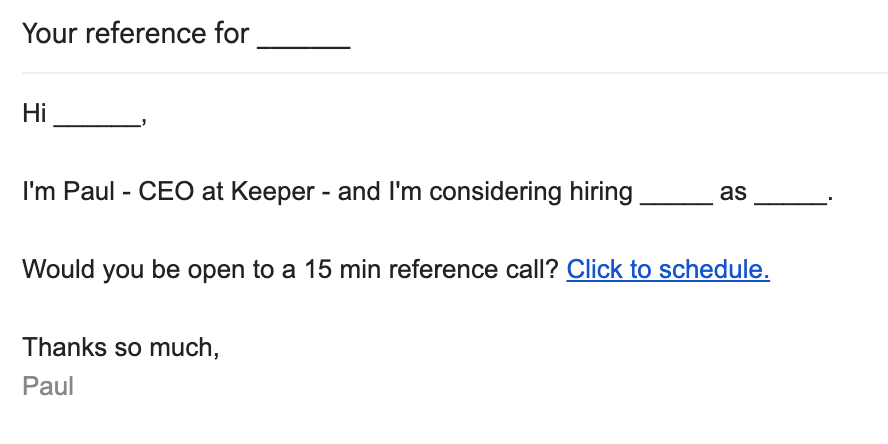
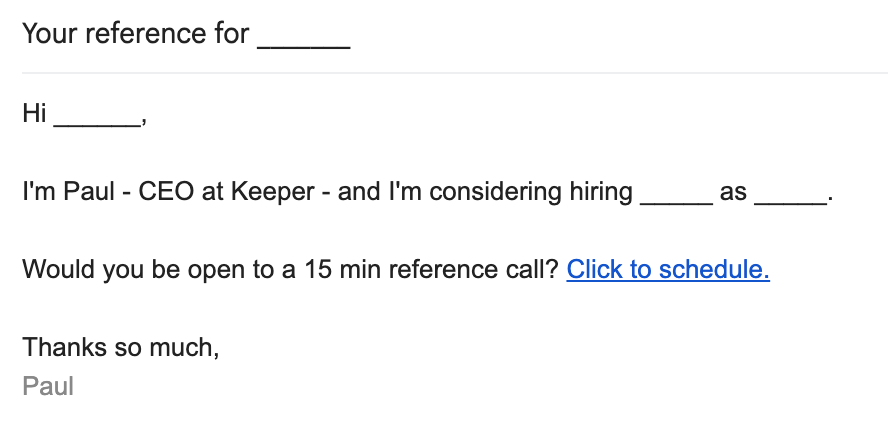
Back-channeling is good. It’s flattering, not creepy. Just make sure you warn the candidate that you’re going to do it, and that the person you’re reaching out to is not an active co-worker. Go on LinkedIn, find people they used to work with, and send something simple like the below. Send a followup and make it clear that this is time-sensitive. I typically get an 80% response rate within a few days. Non-response is not a good sign — it means the person doesn’t care about preserving the relationship with the candidate.
Good referencing will also endear you to your candidate. If you do references well, your offer accept rate will be insanely high because you get to start the offer call with “Listen, I spent this week talking to ___, ___, ___, and ___. You’re clearly a star you’ve got an incredible reputation, but I’m also convinced this role is a perfect fit for your strengths and growth interests.” It also helps with method acting — by the time you’ve done all these references you’ll personally STOKED about the candidate and they’ll be able to feel it. They can also feel that you’ll be a great manager and that you care about team quality.
Don’t forget to give the candidate a list of your own references. Not only is it a nice way to build trust, you also want people to know what it’s like to report to you — if they realize your management style is not going to work from them then they might self-disqualify saving you both time and headache.
No posts
Comments
Nothing yet. Say the first thing.
Sign in to join the conversation.