
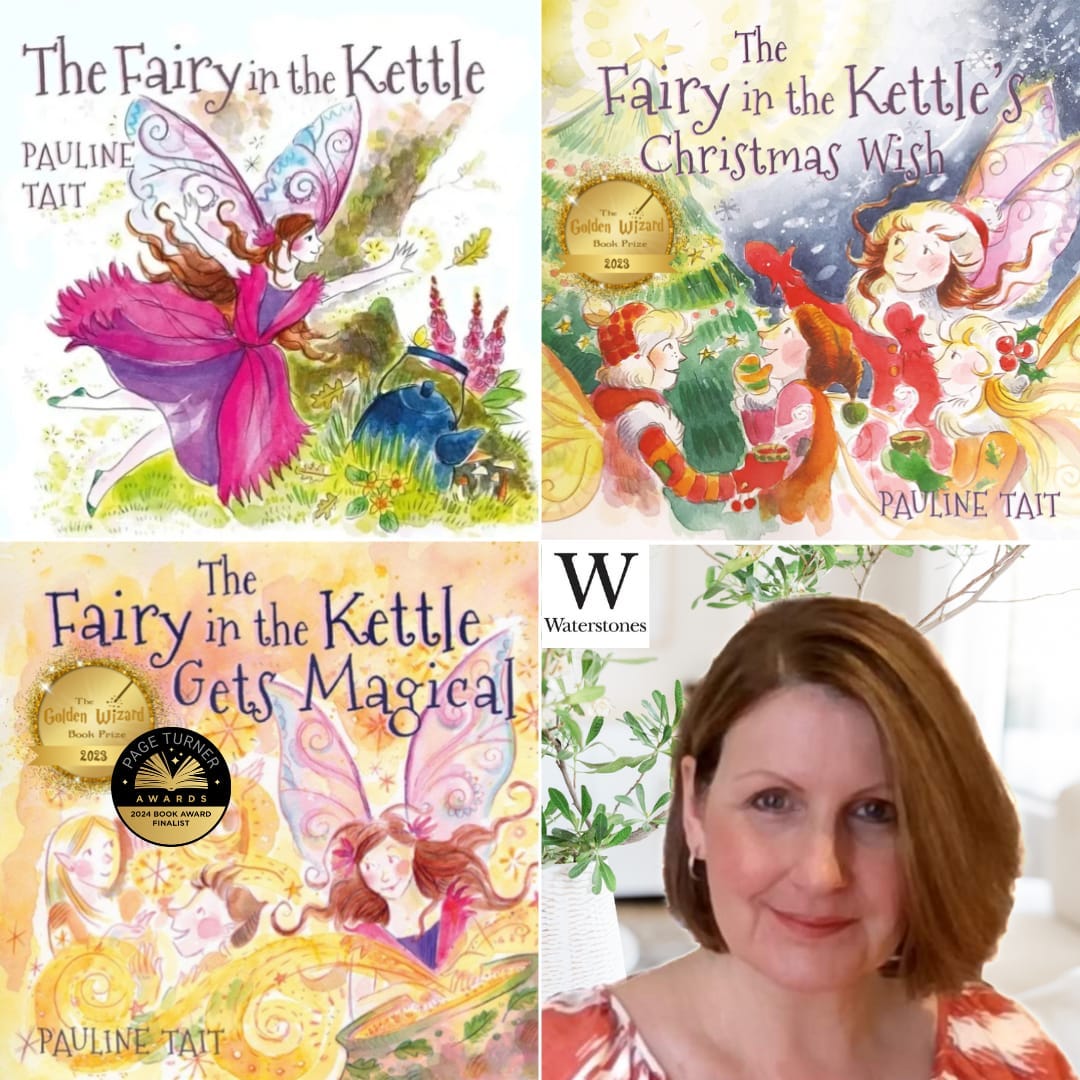
When I began writing the first book in The Fairy in the Kettle picture book trilogy, I knew I wanted to create a home that felt completely unexpected yet still sat within relatable surroundings. What began as a simple idea, a fairy named Leona dancing inside a cast-iron kettle, soon blossomed into a layered, magical setting full of adventure, emotion, and positive morals.
Worldbuilding might be a word we usually associate with epic novels or sprawling series, but it plays a vital role in picture books, too. Consistency and creativity must go hand in hand when writing for younger readers, and a well-built world offers familiarity, comfort, and curiosity, while also nurturing children’s imagination and literacy skills.
Why Worldbuilding Matters in Picture Books
In stories for children aged 3 to 7, the world your characters live in can be just as important as the characters themselves. It’s where emotion lives, imagination soars, and the story finds its rhythm. Young readers love patterns, repetition, and touchstones they can return to again and again. When a world is consistent and engaging, it helps build confidence in early readers and draws them back for repeat visits.
For me, worldbuilding isn’t about making something big, it’s about making something believable. The scale can be tiny (a kettle sitting beneath an old oak tree) or vast (a secret glen hidden in the hills), but it needs to feel real to the characters living in and to the children reading about them.
Finding the Heart of the World
Leona is the central character in my picture book trilogy. She is kind, caring, and true to herself. She lives in an old cast-iron kettle, which sits in her favourite spot beneath the old oak tree. Her home fills her with joy. She feels safe and doesn’t care that the other fairies aren’t so keen on her precious kettle.
But the kettle becomes the beating heart of the world I have created, and a safe place for all the fairies of Bramble Glen.
What started as a visual image, a girl spinning to the rhythm of raindrops inside her unusual home, quickly became something far more emotional. The world had to reflect Leona’s personality: warm, creative, and full of wonder. It needed to feel safe, even when the storm was raging outside. Because underneath all the sparkle and magic, the stories are about finding comfort in the familiar, and courage when stepping into the unknown.
Building the Rules: What Stays Consistent
Even in a world where fairy dust shimmers in the air and secrets lie hidden in the glen, there must be rules. Picture book worldbuilding is all about gentle structure. Children notice details, so if something shifts without reason, they’ll spot it before you do!
I created a few rules for The fairy in the Kettle trilogy early on:
· Leona’s kettle is always safe, always home.
· The sound of the rain is her music. It’s part of her inner rhythm and helps guide the emotional tone.
· Bramble Glen shimmers with a warm amber glow when fairy dust is used. (Book Three)
· The fairy dust is not magic. It’s merely a portal for the fairies to spread their inner magic, and it must always be used for kindness.
These consistent details help create a sense of security, even as new places or characters are introduced. They anchor readers and give them familiar threads to hold onto as the trilogy unfolds.
Allowing the World to Grow with Each Book
One of the joys of writing this trilogy was expanding the world slowly and carefully through each book.
Book One – The entire story takes place in and around Leona’s kettle. We see the world through her eyes as she dances to the sound of the raindrops, unaware of the storm raging beyond her precious home.
Book Two – The fairies celebrate Christmas, once they’ve overcome the problems they encounter while searching for their perfect Christmas tree. I also introduced my readers to Old Badger, who quickly became a much-loved addition to the original cast of fairies.
Book Three – The trilogy concludes with the fairies finding their magic. Of course, the fireflies played their part, and they too became a much-loved addition to the cast.
Although each book introduced something new, a place, feeling, or character, the world of Bramble Glen remained recognisable. The rhythm of the rain, the shimmer of fairy dust, the glow of the fireflies, they carry through each story like threads in a tapestry.
That balance between the familiar and the new is essential in picture book series. It keeps young readers engaged without overwhelming them. They feel proud when they spot a detail they remember, and curious when something changes just enough to spark wonder.
Working with Illustrators to Bring the World to Life
Worldbuilding in picture books is always a collaboration. The illustrator I worked with brought Leona’s world to life just as I had envisioned while writing. From the glow of amber light in the glen to the texture of the kettle’s walls, every visual detail added depth and magic to the world.
We made sure the world stayed visually consistent across the trilogy, from the inside of Leona’s kettle to the four main characters. This attention to detail allows young readers to further bond with the characters and the world we created.
Final Thoughts
Worldbuilding for picture books doesn’t need to be grand, it needs to be honest. It needs to grow from the heart of your story and expand only as far as your character and reader can stretch.
If you’re writing your own picture book series, here are a few tips I’ve learned along the way:
Start small. The sound of raindrops was the seed that grew The Fairy in the Kettle trilogy.
Let your character shape the space. Whether your main character is shy, bold, gentle, or wild, it should be reflected in their world.
Be consistent. Little readers love familiarity, so once your world is established, hold onto it.
Collaborate with care. Your illustrator is your worldbuilding partner. Give them space to imagine and share what matters most.
For more on my books, writing, and mentoring: www.paulinetait.com
No posts
Comments
Nothing yet. Say the first thing.
Sign in to join the conversation.