
What have we done? And why? Join me ‘On Earth As It Is’ . . . because only by understanding the past will we free ourselves from its tyranny.
‘The Kaiser will have the Russian Government informed that he must regard himself as in a state of war with Russia brought on by Russia herself . . . and that, as France does not guarantee her neutrality, we must assume that we are also in a state of war with France . . . We have not willed the war, it has been thrust upon us’ - Theobald von Bethmann Hollweg, German chancellor, letter to the Bundesrat, 1 August 1914
Next Thursday: Germany declares war on France
ON 31 JULY, Germany proclaimed Kriegsgefahrzustand, the state of war readiness.
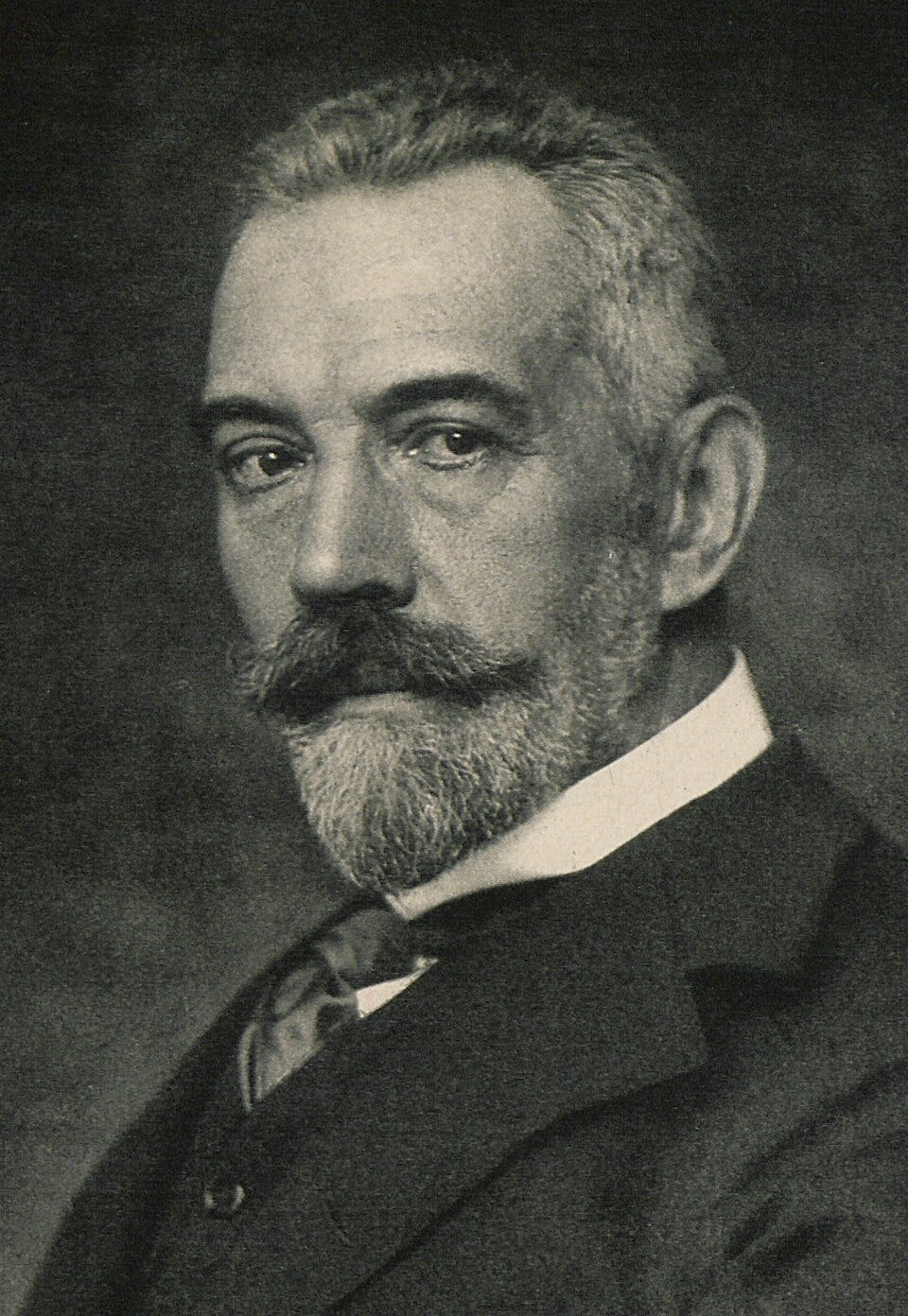
Berlin held back from announcing full mobilisation because that would have committed Germany to ‘war on two fronts’ - with Russia and France - as Chancellor Bethmann Hollweg warned his Cabinet that day.
Germany’s Schlieffen Plan may have been a decade old, but it still prescribed, in a revised form, a lightning encirclement of northern France and then a massed attack on Russia. That prospect horrified the civilian leadership as well as the Kaiser, who sank deeper into the slough of despond with every passing hour.
For weeks the German generals and admirals had been champing at the bit to mobilise as soon as possible now that their government had provoked Russia to do so. The weakening of civilian resolve handed them the reins of power.
Helmuth von Moltke the Younger, chief of the Great German General Staff, had recovered from his earlier docility and sent the first of many instructions to Vienna, pressing them to join Germany in the fight against Russia (the Serbs were fading in importance, and Franz Ferdinand’s murder was now an irrelevance).
‘That is good!’ shouted Franz Conrad von Hötzendorf, Moltke’s Austrian counterpart, on receipt of the message, adding, ‘Who is in command [in Berlin], Moltke or Bethmann Hollweg? . . . I had the impression that Germany was wavering. Now, however, I have satisfactory explanations . . .’
It seemed Moltke was now in charge. In demanding that Vienna order full mobilisation, he undercut his chancellor and acted without his government’s authority.
Indeed, Germany’s civilian leaders were seen as increasingly redundant and inept, in the eyes of Moltke, Admiral Tirpitz, War Minister Falkenhayn and the Prussian officers. If war had come, as they all believed it had, only the armed forces could save Germany.
—
Hour by hour, news arrived in Berlin of the approaching Russian threat.
Haggard, exhausted, horrified at the course of events, Bethmann Hollweg tried to impose a semblance of authority. He decided to send a desperate, last minute ultimatum to St Petersburg, offering Russia a stark choice: stop mobilising or face war.
But he didn’t use the word ‘war’; he warned only that Germany would order ‘full mobilisation’. Misunderstanding the distinction would have terrible consequences, this time for Russia.
At the same time, the German Cabinet activated Kriegsgefahrzustand: all railway lines and depots were commandeered; the press muzzled; martial law proclaimed; soldiers ordered to return to their garrisons and reserves called up – every measure executed short of actually moving the men to the border.
—
At 5 pm on the 30th July, Bethmann Hollweg admitted to the German Cabinet that he had lost control of the nation.
Speaking in thin, slow, aggrieved tones, the chancellor warned that Russia had mobilised; England was sure to fight with the Entente; Italy’s position was uncertain; and neither Romania nor Bulgaria could be relied on.
He knew not what to do, he said; events had overtaken him. His painful candour was that of a desperate man anxious to share a great load, to spread responsibility. He cried out from a place of terrible isolation. He snatched at ‘might have beens’ and lost opportunities. He bemoaned the failure by England and Germany to mediate (he seemed to have forgotten that he had helped to kill that possibility). He even openly admitted – now – that Serbia, ‘except on small points’, had satisfied the Austrian ultimatum!
—
Meanwhile, all four monarchs – the Kaiser, the Tsar, the King and the Austro-Hungarian Emperor – shrank from war.
Wilhelm’s bluster disguised an essentially frightened man who panicked now that hostilities were upon him and the survival of his regime was at stake.
The Tsar, appalled at his complicity in the coming slaughter, endured nerve-wracking regret.
King George issued antique sentiments of dismay, and mild hopes of preserving the peace, even as events sped far beyond his influence or understanding.
Old Franz Joseph in Vienna bustled about his palace, out of sight and mind.
The civilian leaders – Bethmann Hollweg, Edward Grey, Raymond Poincaré – more or less hoped that war could be avoided yet were at a loss to know how, now the world was on the brink.
—
If so many leaders claimed to be working against war, why could it not be stopped? Why were governments and kings helpless to stall the machinery of mobilisation?
In a rhetorical departure from his usual composure, the historian Luigi Albertini flung at the reader that terrible question: ‘If nobody wanted war, and if, should it break out . . . why was it not being avoided at all cost and the civil government again put in the position of control which it ought never to have let slip? But not one of the men in power in Germany, whether civilian or soldier, rose that day in Berlin to save Prussia and the Empire, just as on the morrow in Vienna no one rose to save the Monarchy.’
One answer is that the monarchs and government officials had, to a greater or lesser degree, surrendered their authority to the military.
Bethmann Hollweg had ‘lost all control’, and was now a creature of the generals. The Kaiser had been reduced to sending dictated telegrams. The other monarchs were similarly helpless and merely sealed or signed the documents with which they were presented.
The civilians in government in Russia, Austria-Hungary and Germany were losing executive power to the armed forces. Grey and Asquith were under siege by British conservatives to make a firm stand against Germany. Grey had lost all the credibility he had once enjoyed in Europe. Only French President Raymond Poincaré seemed to be the master of his house.
Just when they were needed most to exert a restraining hand, the civilian leaders, and their monarchs, yielded to the diktat of blood and iron.
The gigantic forces of mobilisation converged on Europe like a nuclear missile in slow motion – unstoppable once they pushed the button, or set the trains rolling – and Schlieffen’s terrifying vision of war on two enormous fronts was about to become real.
—
The German people awoke on 31 July to the news of Russia’s war drums. At noon, the Kaiser served his only useful remaining function: to rally the people, in whose eyes he retained a measure of affection.
Sword in his good hand, his crippled one tucked away, he stood resplendent on the balcony of the royal palace in Berlin and said:
‘A momentous hour has struck for Germany . . . The sword has been forced into our hands . . . War will demand enormous sacrifices by the German people, but we will show the enemy what it means to attack Germany. And so I commend you to God. Go forth into the churches, kneel down before God, and implore his help for our brave army.’
They went forth and prayed. In coming days, Orthodox, Catholic and Anglican Christians similarly knelt in their churches, and enlisted Russian, French and British gods to their cause. All were persuaded that He was on their side, that He would serve them all.
—
Austria-Hungary had not yet assured Berlin of its support in a general war against the Tsar’s regime, compared to which its action against Serbia seemed a skirmish. The Austrians assumed until now that they would be fighting a local war in the Balkans, not a major offensive against the Russians.
Most of their troops, they now learnt, were needed to hold Russia in the east, while the rump German Army dealt with France in the west. Schlieffen’s ghost reached beyond the grave and would not be disobeyed.
And so, on 30 July, Bethmann Hollweg pressed Hötzendorf to order Vienna’s general mobilisation against Russia.
For this, the Austrian Chief of Staff needed Emperor Franz Joseph’s permission. The news frightened the head of the House of Habsburg. Had he partially mobilised against Serbia, to punish regicide, only to take on the might of Russia?
On the 31st, Bethmann Hollweg made this brutally clear to Vienna, and brought forward the death knell of the House of Habsburg: ‘We have proclaimed imminent danger of war, which will probably be followed within forty-eight hours by mobilisation. This inevitably means war. We expect from Austria-Hungary immediate active participation in the war against Russia.’
The demand stunned the Austro-Hungarian Government and created ‘an entirely new situation’, Hötzendorf wrote on 1 August. To meet it, Vienna had to redirect most of its army – which was then heading south to fight Serbia – north-east to face Russia.
—
At 3.25 pm on 31 July a fresh offer to mediate sailed into the European embassies from Sir Edward Grey. The British foreign secretary stubbornly persisted with these quixotic gestures. That he tilted at windmills in earnest made them all the more eccentric.
Would the European powers kindly drop everything and come and share a peace pipe with Britain, Grey suggested? This, at a time when all continental Europe was steeling itself for Armageddon.
Nobody was listening to Grey any more. Never had he seemed so out of touch. In his latest telegram, he suggested, with his familiar, studied vagueness, that he would ‘not immediately take the part of France’ if Germany showed ‘some evidence of a conciliatory spirit’.
Grey repeatedly stressed that ‘England was bound by no treaties’. Was this a golden, last-minute chance to resume mediation talks with Britain? Alas, the moment passed.
—
Bethmann Hollweg resumed his grisly task. Like a raging current, the passage of events quite overwhelmed him. With Moltke breathing down his neck, he finally dispatched the German ultimatum to St Petersburg . . . and sentenced Europe to death:
‘Russia has mobilised her entire army and navy against us. On account of these Russian measures, we have been forced, for the safety of the country, to proclaim the threatening state of war, which does not yet imply mobilisation. Mobilization, however, is bound to follow if Russia does not stop every measure of war against us and against Austria-Hungary within 12 hours, and notifies us definitely to this effect.’
Russia had until 12 noon on Saturday 1 August 1914 to respond.
To Germany, ‘mobilisation’ meant war, but the ultimatum did not make that clear. Moments later, Bethmann Hollweg sent another ultimatum to Paris, via Ambassador Wilhelm von Schoen.
Berlin demanded an answer from France, within 18 hours, to the question of ‘whether, in a war between Germany and Russia, France would remain neutral’.
The cable to France did define the German meaning of mobilisation: ‘war’. It also carried a ‘secret’ note, which demanded the impossible: if France agreed to remain neutral, ‘we shall have to demand the turning over of the fortresses of Toul and Verdun as a pledge of neutrality; these we could occupy and return after the completion of the war with Russia’.
The French had until 4 pm on 1 August to reply.
The full face of the German government’s arrogance and aggression had finally revealed itself. In sending impossible demands to Russia and France, which neither country could accept, Germany had irrevocably committed itself to a two-front war.
—
In St Petersburg that evening, 31 July, foreign minister Sergey Sazonov read the German ultimatum with mild composure, entirely unsuited to the gravity of the occasion.
Sazonov still thought peace salvageable because Germany hadn’t threatened war; it had simply threatened to mobilise. He had plainly misunderstood the meaning Germany placed on the word.
Blind to his error, he tried to reassure Count Friedrich von Pourtalès, the German ambassador, that Russian mobilisation ‘did not at all imply . . . going to war’.
Pourtalès understood exactly what mobilisation meant in the Prussian mind. The German Supreme Command, he argued, could hardly be expected to wait ‘until Russia had assembled her mighty army masses on our frontier’.
Sazonov still failed to comprehend the nature of what confronted him. He had that night and half a day to find out. Night passed. Day dawned. Birds sang. Animal life carried on, oblivious to the deadly schemes of men.
—
In Berlin that morning, 1 August 1914, Bethmann Hollweg rose to address the Bundesrat, to inform parliament of the situation.
His speech was a tissue of half-truths and self-justifications, but a single sentence, which grotesquely cast Germany as a victim, lay at its core:
‘If the Russian reply is unsatisfactory,’ he said, ‘and there is no absolute unambiguous declaration of neutrality from France . . . the Kaiser will have the Russian Government informed that he must regard himself as in a state of war with Russia brought on by Russia herself . . . and that, as France does not guarantee her neutrality, we must assume that we are also in a state of war with France . . . We have not willed the war, it has been thrust upon us . . .’
Time ticked away. The noon deadline passed. No reply from Russia came.
At 4 pm, the Germans stopped waiting. War Minister Falkenhayn drove to the chancellor’s office to request him to accompany him to the Kaiser’s palace and ‘ask for the promulgation of the mobilisation order’.
Falkenhayn records the moment in his diary:
‘After considerable resistance [Bethmann Hollweg] consented and we rang up Moltke and Tirpitz. Meanwhile, His Majesty himself rang and asked us to bring along the mobilisation order. At 5 o’clock in the afternoon the signing of the order by His Majesty on the table made from timbers of Nelson’s “Victory”. As he signed I said: “God bless Your Majesty and your arms, God protect the beloved Fatherland.” The Kaiser gave me a long hand shake and we both had tears in our eyes.’
—
At 7.10 pm that night, St Petersburg time, Count Pourtalès presented Sazonov with Germany’s declaration of war on Russia:
‘The Imperial German Government have used every effort since the beginning of the crisis to bring about a peaceful settlement . . . but Russia, without waiting for any result, proceeded to a general mobilisation of her forces both on land and sea. In consequence of this threatening step, which was not justified by any military proceedings on the part of Germany, the German Empire was faced by a grave and imminent danger. If the German Government had failed to guard against this peril, they would have compromised the safety and the very existence of Germany. The German Government were, therefore, obliged . . . to insist upon a cessation of the aforesaid military acts. Russia [refused] to answer this demand. I therefore have the honour, on the instructions of my Government, to inform your Excellency as follows: His Majesty the Emperor, my august Sovereign, in the name of the German Empire, accepts the challenge, and considers himself at war with Russia.’
Selected sources and further reading:
Albertini, Luigi, The Origins of the War of 1914 (3 vols), Enigma Press, New York 2005
Bethmann Hollweg, Theobald von, Reflections on the World War, (transl. by Young, George), Cornell University Library, New York, 1920
French Yellow Book, Chapter II, No. 8. M. Dumaine, French Ambassador at Vienna, to M. René Viviani, President of the Council, minister for foreign affairs, Vienna, 2 July 1914.
Geiss, Imanuel, July 1914 The Outbreak of the First World War: Selected Documents, Charles Scribner’s Sons, New York 1967
Hochschild, Adam, To End All Wars: A Story of Loyalty and Rebellion, 1914–1918, Mariner Books, Boston 2012
Hötzendorf, Conrad von, Aus meiner dienstzeit, 1906–1918, University of Michigan Library, Ann Arbor 1921
Keiger, John, Raymond Poincaré, Cambridge University Press, Cambridge 1997
Ludwig, Emil, July 1914, Putnam, London 1929
Ludwig, Emil, Wilhelm Hohenzollern: The Last of the Kaisers, AMS Press Inc, New York 1978
Margutti, Albert von, La Tragédie des Habsbourg, Bibl. Rhombus, Vienna 1923
Paléologue, Maurice, An Ambassador’s Memoirs, (transl. by Holt, Frederic), George H. Doran Company, New York 2008
Seton-Watson, Robert, Sarajevo: A Study in the Origins of the Great War, Hutchinson, London 1925
Smith, David James, One Morning in Sarajevo: 28 June 1914, Phoenix Press, London 2009
Sondhaus, Lawrence, Franz Conrad von Hötzendorf: Architect of the Apocalypse, Brill Academic Publishers, Leiden, Netherlands 2000
Sosnosky, Theodor von, Franz Ferdinand. Der Erzherzog-Thronfolger. Ein Lebensbild, Verlag Von R. Oldenbourg, Munich 1929
Strachan, Hew, The First World War: Volume I: To Arms, Oxford University Press, USA 2003
Sulzberger, Cyrus Leo, The Fall of Eagles, Crown Publishers, New York 1977
The World War I Document Archive, ‘The Assassination of Archduke Franz Ferdinand’: http://wwi.lib.byu.edu/index.php/The_Assassination_of_Archduke_Franz_Ferdinand
The World War I Document Archive, Records of national diplomatic communication: The Belgian Grey Book, The French Yellow Book, The German White Book, The Russian Orange Book, The Serbian Blue Book, The Austro-Hungarian Red Book, see also: http://www.gwpda.org/
This essay is an edited extract from my book 1914: The Year the World Ended published by Penguin Random House (UK and Australia).
Comments
Nothing yet. Say the first thing.
Sign in to join the conversation.