
I grew up north of Boston. When I was about 9 years old my mother started taking care of a boy 3 years younger than I. This boy would come to our house after school and stay with us until his mother picked him up after her work. The boy’s father had died suddenly in 1950 when the son was in utero. The boy’s paternal aunt had also died suddenly at a young age. This boy was like a brother. He stayed with us for dinner when that was necessary. We played with my friends in the neighborhood together, but this boy could never keep up with us when we were running from one play area to another. We generally used the fields in the Route 128 cloverleaf as our baseball and football fields and would run from them to our driveway basketball court. My “almost brother” would always lag behind. We called him “hound dog” because he would always sniff out where we were and find us.
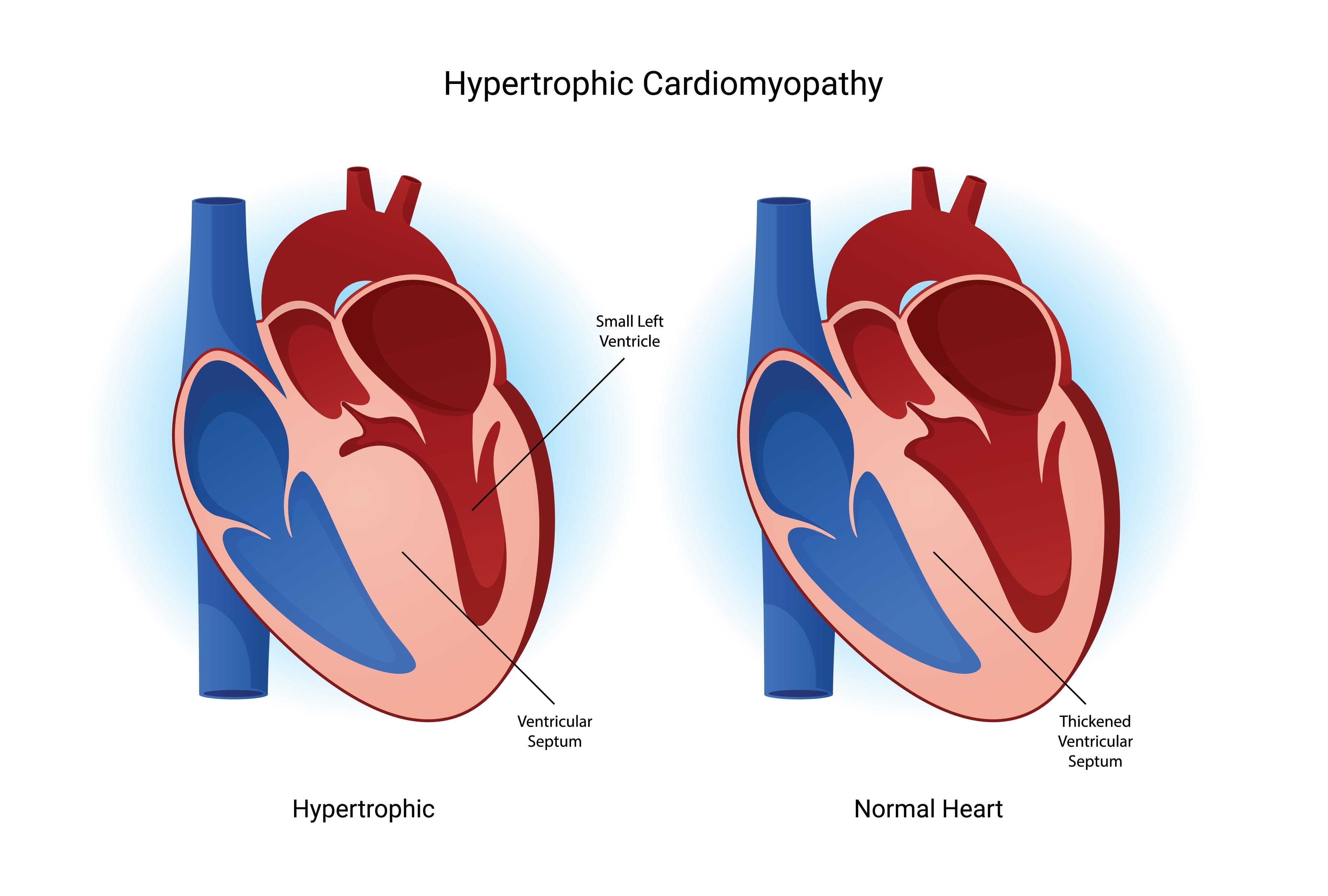
We were friends, but not extremely close. I had three older sisters who also helped take care of him, and I think I felt a little displaced by the new arrival. I think he also resented me because I was a better athlete even though he was physically bigger. We lost contact after I went to college until he called me in 1990. He was turning 40 and wanted to make sure he did not have what killed his father and aunt. He came to see me at the Miriam Hospital at Brown University. The nurse handed me his ECG before I entered the room. I knew immediately that he had hypertrophic cardiomyopathy (HCM). I treated him with beta-blockers, which he could not tolerate, and ultimately with verapamil. I left Brown in 1992 for a position at the University of Pittsburgh. One of my colleagues assumed his care when I left, but they never bonded.
In about 1994 I saw an article about automatic implantable cardioverter-defibrillators (AICDs). These devices were not widely available or used at that time, but were being implanted in some high-risk patients. They were developed by two cardiologists, Drs. Michael Mirowski and Morton Mower at the Sinai Hospital in Baltimore and Johns Hopkins Medical Center. (1) I wrote a letter my friend telling him that I thought he should have one implanted, and asked him to call me. He never called. I interpreted that as a “no thanks.”
I relocated from the University of Pittsburgh to Hartford Hospital In 1997. I still remember every detail of the August night in 1997 when his wife called to tell me that my almost brother had had a cardiac arrest and that the emergency personnel were at their home. He did not survive. At the wake, his wife told me that she found my letter on his desk.
Barry Maron, MD, and his son and colleague, Marty Maron, MD, have detailed the amazing progress we have made in preventing sudden cardiac deaths (SCD) in patients with HCM.(2) Barry has had a large role in that progress and was a early advocate of AICD placement in HCM patients.(3)
My childhood friend’s father and aunt were not diagnosed because HCM was not recognized during their lifetimes.
The British pathologist Robert Donald Teare is credited with discovering HCM even though there were case reports before his 1958 publication.(4) Teare was a pathologist at St. George’s Hospital in London. He described eight individuals with cardiac septal hypertrophy, seven of whom had died suddenly.
The National Institutes of Health (NIH) was the major site in the United States for the study of HCM in the early days after HCM was discovered. Eugene Braunwald and a cardiac surgeon, Andrew Glenn Morrow, encountered a patient with septal hypertrophy similar to Teare’s case in 1958 at the NIH. (4) The presence of a systolic murmur and a sub-valvular gradient suggested discrete subaortic stenosis from a membrane-like structure. But Morrow found only septal hypertrophy at the operation, and performed a septal myectomy, (the “Morrow Procedure”) to relieve the obstruction. The NIH became one of the major sites for the study and treatment of HCM. Amazingly, Braunwald diagnosed HCM in Dr. Morrow, who refused surgery and died suddenly in 1992. Several of Morrow’s offspring inherited the disease.
Barry Marron was at the NIH from 1972 until 1992 and participated in many of the early HCM studies. Barry also combined his personal interests in sports and HCM to write one of the earliest reports on sudden cardiac death (SCD) in athletes. (5) He and colleagues collected 29 athletes aged 13 to 30 years, 22 of whom died during or soon after exertion. All but one of the victims underwent necropsy. HCM was the cause of death in 14 of the athletes. The cases for this paper were collected from media reports and from reviews of the autopsy registry at the NIH and at the Armed Forces Institute of Pathology. Barry subsequently collected 1,866 sudden deaths in athletes of which 1049 (36%) were due to cardiovascular disease. (6) The most common causes of SCD were HCM (30%) and anomalous coronary artery origin (17%) especially when the deaths occurred during exertion.
These reports identifying HCM as the predominant cause of death among athletes have often been questioned because of possible ascertainment bias because some of the cases were found via the NIH registry of SCD, and the NIH was a major site of HCM clinical care and research.
A group in Great Britain, led by Professor Sanjay Sharma at Saint George’s Hospital, who is also the medical director of the London Marathon, reported that the predominant cause of SCD in athletes was not HCM but sudden arrhythmic death syndrome (SADS).(7) Among 128 adolescent athletes, 58% had an ostensibly normal heart and were thought to have died of SADS, whereas only 3% and 7% had HCM and idiopathic left ventricular hypertrophy (LVH), respectively. These cases were evaluated by expert cardiac pathologists, but all of the cases were referred to these specialized pathologists raising the possibility that the more obvious cases, such as obvious HCM were not referred.
Selection biases may also exist depending on the athlete populations studied, recreational young athletes or competitive young athletes.
A recent study examined the cause of SCD in 143 collegiate athletes.(8) Only half of the deaths were during exertion. The autopsy was unrevealing in 19% of the cases, implying that they were SADS deaths. LVH was present in 17% of the victims and HCM in 12.7% of the victims, making it possible that again, approximately 30% of the SCDs in college athletes could be HCM.
Consequently, it appears that HCM is still the predominant cause of SCD during exertions, but there are several issues worth noting.
The incidence rate of SCD in patients with diagnosed HCM has clearly decreased. The Marons attribute this to the development of newer medications that reduce cardiac obstruction, the widespread use of AICDs, and the increased use of ECG screening. (3) I agree, but I also think that ECG screening has changed the clinical profile of patients with HCM. Previously, HCM was detected primarily because of symptoms. Now, with widespread ECG screening, we are detecting asymptomatic individuals with mild disease, whose risk of SCD is likely less than that of those with symptomatic disease. Also, the use of ECG screening of athletes is probably identifying an even less risky subgroup because individuals with HCM and the cardiac capacity to be athletes, likely have less risk than symptomatic non-athletes.
And determining how we treat all individuals with HCM based on results from highly selected athletes is potentially dangerous. For example, a report described 76 elite athletes of whom 66% were National Collegiate Athletic Association (NCAA) Division I athletes and 34% were professionals.(9) All were allowed to return to competition after being diagnosed with such conditions as HCM and long QT syndrome. Their subsequent event rate was only one exertion-related and two non-exertion related adverse cardiac events over 6±7 years, but 63% of the athletes were found by screening and were asymptomatic when diagnosed. Interestingly, the three events all occurred in athletes who had been diagnosed after presenting with symptoms.
So, no Rules, but I have two concerns. One, is that screening asymptomatic athletes detects primarily low risk disease. Such screening might do more harm than good because these athletes were going to remain…asymptomatic. Two, is that recent recommendations, (10) that liberalize the restrictions on athletes with HCM are increasingly based on outcomes from asymptomatic individuals, who were found by screening. Such results may lead us to forget that HCM in symptomatic patients can be a very dangerous disease.
That is something I can’t forget.
REFERENCES
1. Maron BJ, Estes NAM, Rowin EJ, Maron MS, Reynolds MR. Development of the Implantable Cardioverter-Defibrillator: JACC Historical Breakthroughs in Perspective. J Am Coll Cardiol. 2023 Jul 25;82(4):353-373. PMID: 37468191
2. B J Maron 1, W K Shen, M S Link, A E Epstein, A K Almquist, Maron BJ, Maron MS. Evidence Supporting Decrease in Sudden Deaths Due to Hypertrophic Cardiomyopathy: Athletes and Patients. JACC Adv. 2026 May;5(5):102735. PMID: 42206791
3. Maron BJ, Shen WK, Link MS, Epstein AE, Almquist AK, Daubert JP, Bardy GH, Favale S, Rea RF, Boriani G, Estes NA 3rd, Spirito P. Efficacy of implantable cardioverter-defibrillators for the prevention of sudden death in patients with hypertrophic cardiomyopathy. N Engl J Med. 2000 Feb 10;342(6):365-73. PMID: 10666426.
4. Thiene G, Calore C, De Gapari M, Basso C. Storytelling of Hypertrophic Cardiomyopathy Discovery. J Cardiovasc Dev Dis. 2024 Sep 28;11(10):300. PMCID: PMC11508572 PMID: 39452271
5. Maron BJ, Roberts WC, McAllister HA, Rosing DR, Epstein SE.mSudden death in young athletes. Circulation. 1980 Aug;62(2):218-29. PMID: 6446987
6. Maron BJ, Doerer JJ, Haas TS, Tierney DM, Mueller FO. Sudden deaths in young competitive athletes: analysis of 1866 deaths in the United States, 1980-2006. Circulation. 2009 Mar 3;119(8):1085-92. PMID: 19221222
7. Finocchiaro G, Radaelli D, D’Errico S, Papadakis M, Behr ER, Sharma S, Westaby J, Sheppard MN. Sudden Cardiac Death Among Adolescents in the United Kingdom. J Am Coll Cardiol. 2023 Mar 21;81(11):1007-1017. PMID: 36922085
8. Petek BJ et.al. Sudden Cardiac Death in National Collegiate Athletic Association Athletes: A 20-Year Study. Circulation. 2024 Jan 9;149(2):80-90. PMID: 37955565
9. Martinez KA, Bos JM, Baggish AL, Phelan DM, Tobert KE, Newman DB, Scherer E, Petek BJ, Ackerman MJ, Martinez MW. Return-to-Play for Elite Athletes With Genetic Heart Diseases Predisposing to Sudden Cardiac Death. J Am Coll Cardiol. 2023 Aug 22;82(8):661-670. PMID: 37587576
10.Ommen SR, et. al. 2024 AHA/ACC/AMSSM/HRS/PACES/SCMR Guideline for the Management of Hypertrophic Cardiomyopathy: A Report of the American Heart Association/American College of Cardiology Joint Committee on Clinical Practice Guidelines. Circulation. 2024 Jun 4;149(23):e1239-e1311. PMID: 38718139
#hypertrophiccardiomyopathy; #suddencardiacdeath; #barrymaron; #athletes; #cardiacrisksofexercise; #eugenebrauwald; #exercise; #exercisecompliations
No posts
Comments
Nothing yet. Say the first thing.
Sign in to join the conversation.