
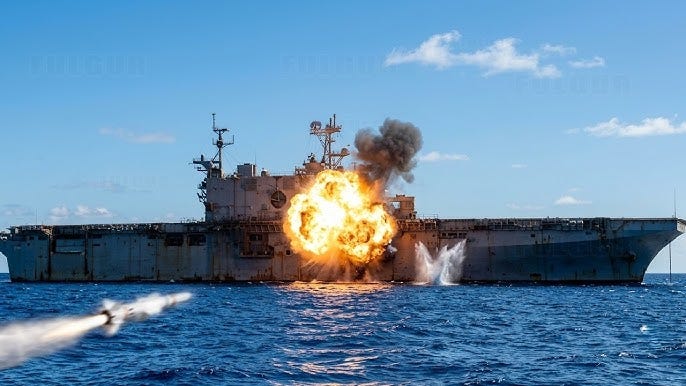
Seeing the ship that I spent nearly six months aboard, as part of the 11th Marine Expeditionary Unit (MEU), getting sunk in a coordinated attack was bittersweet. The USS Peleliu, LHA-5, was the lead ship of the Amphibious Ready Group (ARG) I was a part of way back in 1988 patrolling the Western Pacific.
I served as the artillery forward observer and aerial observer for the MEU’s helicopter assault infantry company conducting operations, exercises and training in places such as the Philippines, Okinawa, South Korea and even remote WWII airfields on islands like Tinian. We also paid visits to Hong Kong and Guam.
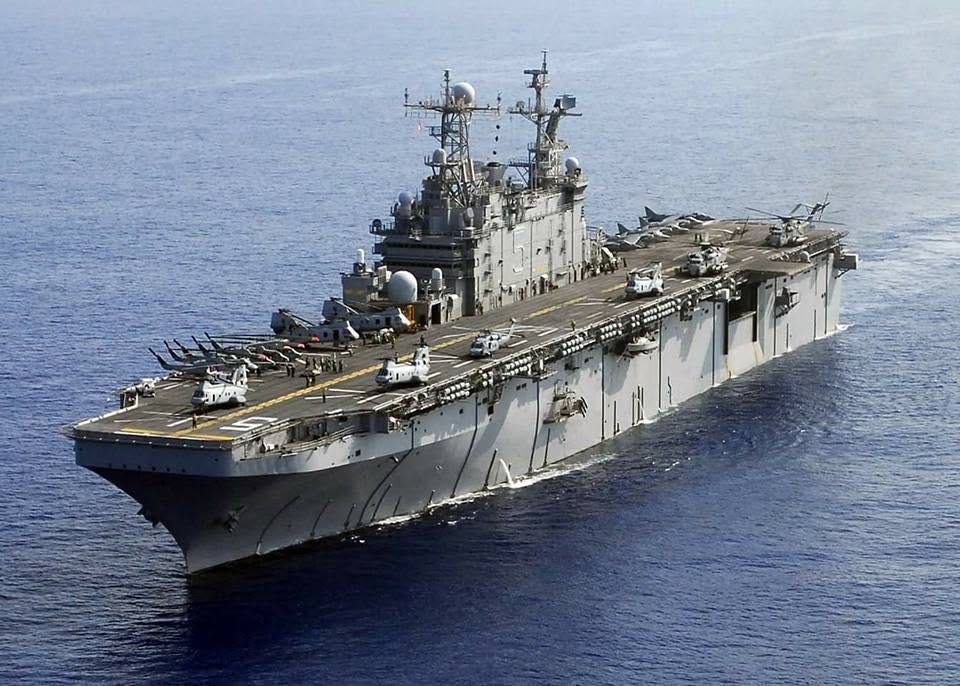
LHAs are the largest of all amphibious warfare ships, resembling a small aircraft carrier. Today’s versions carry helicopters, MV-22 Osprey tiltrotor aircraft and vertical takeoff F-35B stealth fighters.
On July 17, the impressive ship was hit by anti-ship missiles from submarines and aircraft, missiles from attack helicopters, and even by an advanced experimental seaborne explosive drone boat that blew a huge hole in its hull.
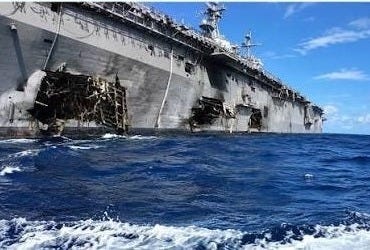
Eventually all these hits sank the huge 40,000-ton amphibious assault flattop beneath the waves and sent it to the sea floor 15,000 feet below.
But before we assume it was attacked by Iran, China, or other U.S. enemies, I need to note the ship was decommissioned in 2015 (after 35 years of service) and was sunk by U.S. and allied navies in a week-long sinking exercise (SINKEX) live fire shoot during RIMPAC 2026 in the Pacific. It was still a bit sad to watch.
ARTICLE CONTINUES BELOW. TO READ THE REST PLEASE BECOME A PAID SUBSCRIBER.
Free subscribers get valuable content, but paid subscribers get full access.
Comments
Nothing yet. Say the first thing.
Sign in to join the conversation.