
It was a Friday night, and like many other nights of the week in the family I was raised, I was sitting in a church. In the place where the pulpit usually stood was a man with a furrowed brow yelling and screaming. I was no stranger to the pews of Pentecostal churches, so loud ecstatic shouting was not an unfamiliar occurrence to me.
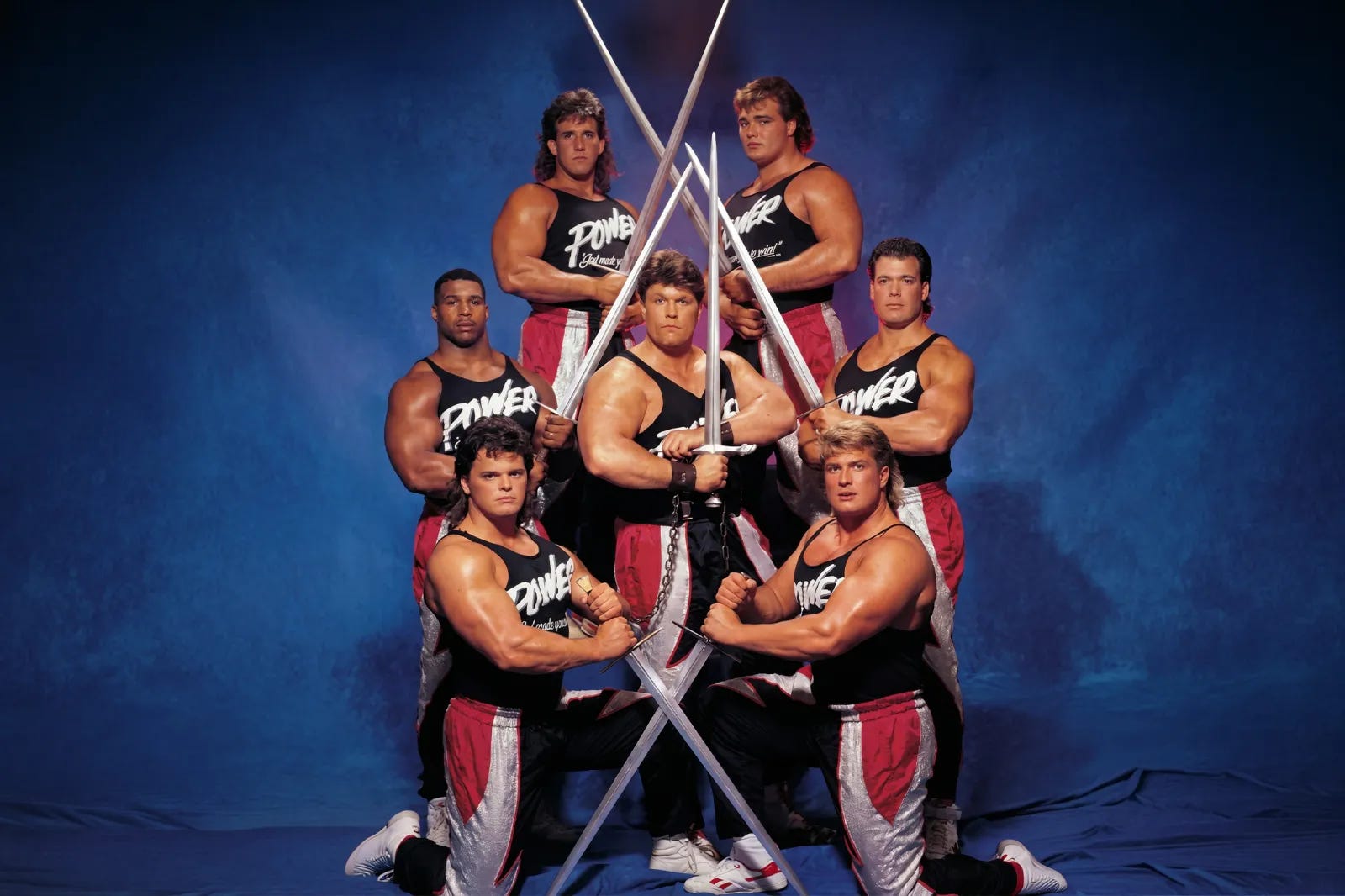
But on this particular evening, the man standing near the altar wasn’t thumping a Bible or speaking in tongues. He was attempting to rip a Yellow Pages phone book in two with his bare hands. Young boys in the congregation screamed with him as Christian hair-metal music played loudly in the background. The man had biceps wider than my torso, exposed by a black tank top with the word “POWER” in all caps across his enormous pecs.
I looked over at a middle-aged dad with a balding mullet, baggy Zubaz pants, and tight fitting t-shirt that said “Lord’s Gym” and featured a picture of a muscular Christ doing a push up with the Cross of Calvary resting on his v-shaped lats. The man lifted his hands to the sky in worship, wiped a tear from his eye and the sweat from his brow, and thanked God that he finally found a church where his testosterone could find a home.
That night in 1990, we had witnessed the masculine ministry of the Power Team. If you don’t believe what I’m telling you is real1, well then maybe this episode of Walker Texas Ranger will convince you. Yes, there really was a Power Team-Chuck Norris crossover in Walker Texas Ranger canon.
Lots of people who grew up in this type of Christian subculture love to dunk on the Power Team as they deconstruct the more “problematic” features of their childhood faith. I’m not here to do that. I’ve got a graduate degree in theology, and I’m well aware of the valid critiques of this spectacle, but these days I think that jacked-looking Jesus on the “Lord’s Gym” t-shirt kinda rules.
Why? Because I can understand the deeper quest beneath it for acceptance and integration of masculinity in a man’s life of faith.

One of the problems with our discussions about masculinity is that many people are simply uneducated on what testosterone is and how it impacts both physiology and psychology.
While I’m generally inclined to agree with C.S. Lewis that masculinity and femininity are not mere biological accidents or social constructs, but profound, spiritual realities embedded into the very fabric of the cosmos, I would also be quick to note (still in general agreement with Lewis) that these deeper spiritual forms get expressed within matter and biology. And when it comes to the biological expression of the masculine principal, there is one hormone most responsible for the division between masculine and feminine.
Testosterone.
Testosterone is a hormone synthesized mostly in the testes in men and in smaller amounts by the ovaries and adrenal glands in women— which is to say everyone has it, men simply have ten to twenty times more. In the womb it does the work of sexual differentiation; at puberty it deepens the voice, thickens the bones, grows the body hair, and builds the muscle; across adult life it maintains muscle and bone density, red blood cell production, libido, energy, mood, and motivation.
To get to be as massive as the dudes on the Power Team, who were rolling up frying pans in their bare hands like a burrito, you need testosterone. Lots of it. This, of course, can be produced naturally in the body or administered exogenously— some through legal means like doctor-prescribed testosterone replacement therapy (TRT), or through less legal means like the way Mark McGuire and Barry Bonds did when they were knocking 70+ home runs out of the ball park back in the late-1990s.

While most people have some familiarity with testosterone’s effect on the body and mind, there is a common misconception about testosterone that has impacted our discussions on masculinity in both the broader American culture and within Christian subcultures. These popular misconceptions often assign morally derogatory assumptions about being a man with above average T. To have high testosterone is to be a domineering, narcissistic “alpha”, a philandering playboy, a violent instigator, or a greedy Wall Street wolf.
While testosterone does increase natural proclivities for aggression and sexual promiscuity, more recent studies have shown that the deeper drive that gets amplified by higher “T” is social status pursuit. Violent aggression and sexual promiscuity may be just be a common culturally-conditioned outlet for the deeper drive of status acquisition.
Across multiple studies on testosterone, across multiple cultures worldwide, the shape of social status pursuits as testosterone levels are elevated take on slightly differing expressions in those differing cultures. An increase in T to a person living in one culture with its own unique guiding story, values, and distinct life strategies will produce a particular kind of social status pursuit that will differ from a person given the same level of testosterone living within a different cultural container.

In one study performed in a Western culture, researchers found that when men who were given a medically induced boost in testosterone experienced a significant reduction in desire to submit to “audience expectations” and behaviors of “feigned prosociality” were effectively eliminated.
But in another Chinese study, men who were given heightened levels of testosterone experienced an increased desire to help the group and be generous to people seen as honest contributors. Testosterone enhances whatever behavior obtains and maintains high standing within the rules of the social status game set by that particular culture.
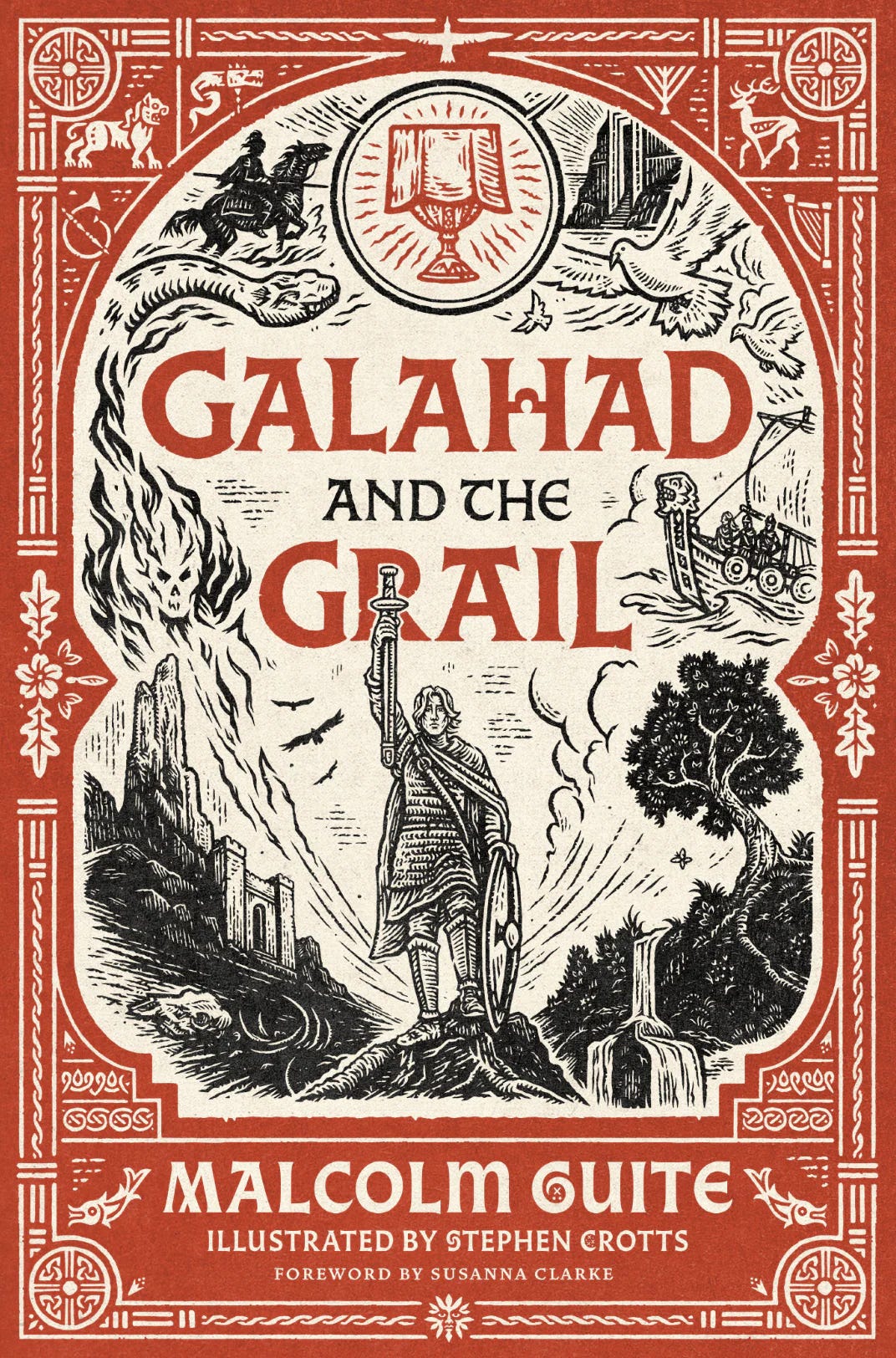
Different cultures with differing values establish different social status incentives. In a culture where “red-pill manosphere” status is celebrated, that status pursuit will look like an Andrew Tate or Clavicular (I wish I didn’t know who that was too). But if you’re an aspiring knight in medieval England, that cultural container might shape your testosterone-fueled status pursuit to look like the chivalrous behavior of King Arthur or Sir Galahad.
Yes, T will increase features such as disagreeableness, sex drive, and muscle mass in every culture, but—and this is where much of popular Christian messaging has struggled— none of these things are inherently sinful. They just need to be directed toward their ultimate telos and aligned to go with the grain of God’s intended order for reality.
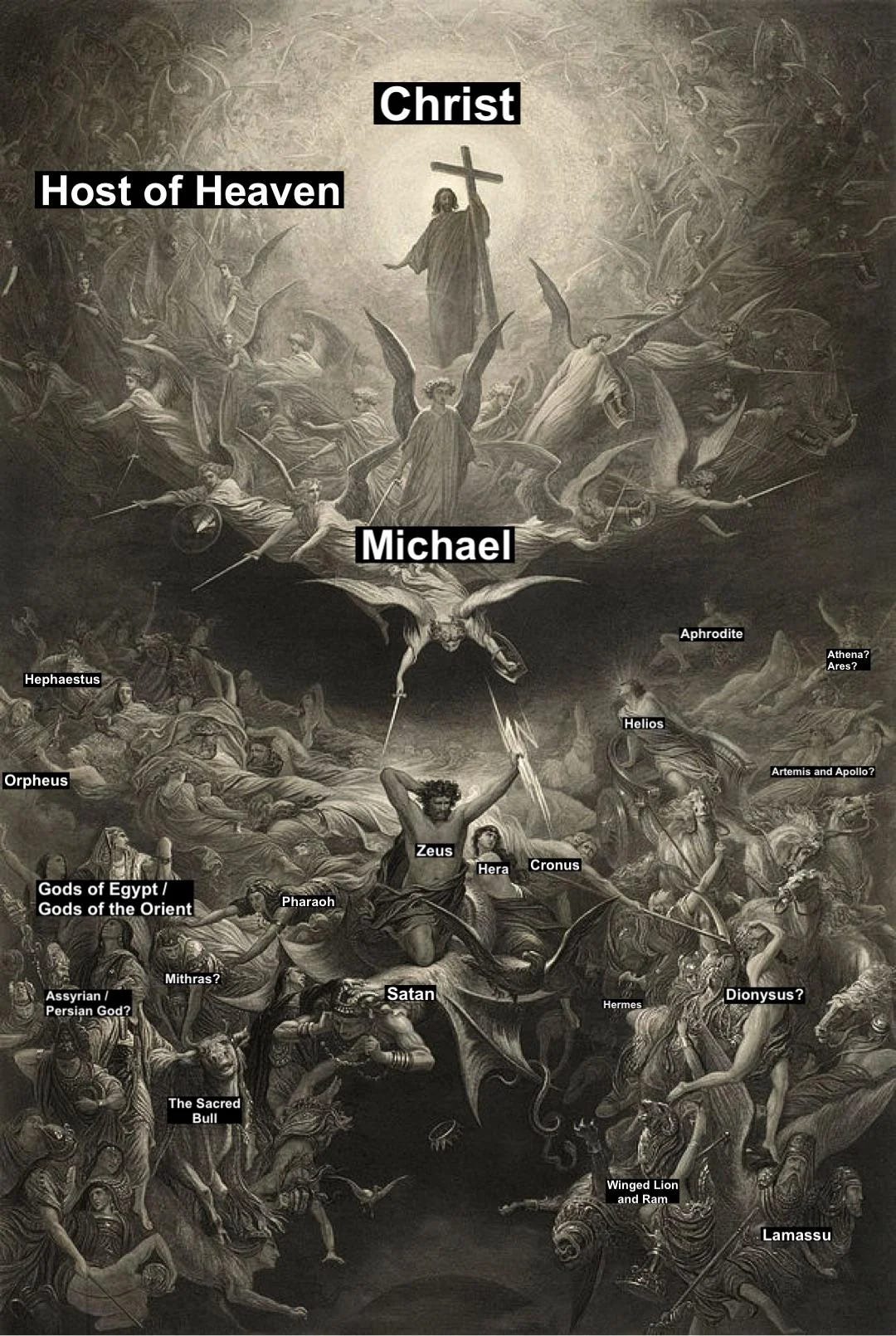
Jesus teaching “the first shall be last and the last shall be first” wasn’t a universal declaration against the inherent status seeking propensity of the male hormone. It was a statement about what the correct aim of status-seeking pursuits should look like. The noble ruler should properly care for the least of these, recognizing their inherent worth and dignity, and the low man on the status ladder should not give up their pursuit of the “victor’s crown”, believing that there may be a great reversal fortunes in the age to come.
Jesus told his disciples that they would sit on thrones of judgment because of their faithfulness to him. Paul told Christians in Corinth that they should treat their life of faith like someone who isn’t trying to be second place in a race. “Do you not know that in a race all the runners run, but only one gets the prize? Run in such a way as to get the prize.”
These are status seeking aims. They take disagreeableness, assertiveness, and, at times, an utter lack of politeness toward demands for groupthink submission.

Now this one might be tricky for all you “purity culture” kids out there, but high-libido isn’t a sin either. It just needs to be directed toward its proper function— a truth that might have gotten lost beneath all the awkward youth group talks about STDs and a truth that our broader American culture still has not grasped.
Why does higher T lead to higher desire for promiscuity? How could a pro-testosterone Christianity ever square that drive with an orthodox Christian sexual ethic?
Well, I’ll just float one theory you can kick around. Feel free to disagree and postulate an alternative.
In an earlier world of scarcity and shortened life expectancy, there may have been some, less-than-ideal but still very real, need for men to have the drive to procreate with multiple mates. We don’t live in that world anymore, just like we don’t live in a world where sources of sugar and fat are sparse. Gorging yourself on a source of sugar and fat in a world of scarcity may have been the proper thing to do in that world, but in a world of increased abundance, that behavior leads to death. Sex drive function may function the same way.
Recognizing that those desires are “natural” does not mean that giving in to them are for our good or the good of others. I have to curb my innate desire for endless sugar and fat every time I walk through a Costco. The desire isn’t wrong. Costco didn’t exist for my ancient ancestors who passed on their primal instincts to me. Neither did OnlyFans (or Baywatch for you millennials that experienced puberty in a pre-internet world). My ancient ancestors who passed on to me their genetic proclivities lived in small bands of probably less than 120 people, most of whom were cousins who didn’t bathe. They didn’t even have Cinemax “after dark” much less hook-up apps on a machine that’s connected to every person in the whole world. There’s a lot more options for our libido that could do a whole lot of harm to ourselves and others.
So what is the Way that leads to life?
We already know that monogamous marriage is the answer to that question. We’ve done civilizational stress testing on that for millennia.
In fact, we know that cultures which create social status incentives for high status males to mate with multiple woman ( polygyny) experience higher rates of violent crime—including murder, assault, and r*pe—as well as theft, domestic abuse, and overall greater social instability than cultures that have established monogamy as the status-norm (Henrich et al., 2012).
In polygynous societies, these high-status men accumulate multiple wives, which mathematically leaves a larger pool of lower-status, unmarried men. You do not want a large pool of unmarried men with no options in your society. Scarcity of marriageable women drastically increases deviant behaviors among men with little to no possibility of pairing with a mate.
Hierarchical difference is inevitable. It’s a function of distributed roles within systems. Denigrating or demonizing men with healthy testosterone levels seeking to climb hierarchical status ladders is a mistake. You will not be able to overwrite their biology, so what they will turn to instead are the Andrew Tates and Hugh Hefners of the world to give their testosterone a place to go.
What we should want instead is the building of cultures with status games that incentivize the ultimate flourishing of the group, promoting virtuous Supermen and true knights—lesser icons that point upward toward to the ideal apex in Christ.
An “alpha” will always exist, but the guiding story we accept as true will determine the alphas we produce.
All of that scene I just described was real, with a slight “evangelical license” applied to the description of man in the Lord’s Gym shirt. He is archetypally real, and I certainly saw him on numerous occasions, but it may not have been on this same night and in this exact way.
Comments
Nothing yet. Say the first thing.
Sign in to join the conversation.