
“I will take my mind out of its iron cage and let it swim—this fine October.” —Virginia Woolf
There is a kind of afterlife to finishing a book. After years of being crowded by voices and scenes that woke me at three a.m., the room was suddenly mine again. At first it felt uncomfortable and a little haunted—my footsteps too loud, the silence heavy as furniture. The pages were done, but the world hadn’t met them yet. I kept turning to ask my characters questions, and no one answered. I stood in the echo chamber of my own attention, unsure what to do with all that space.
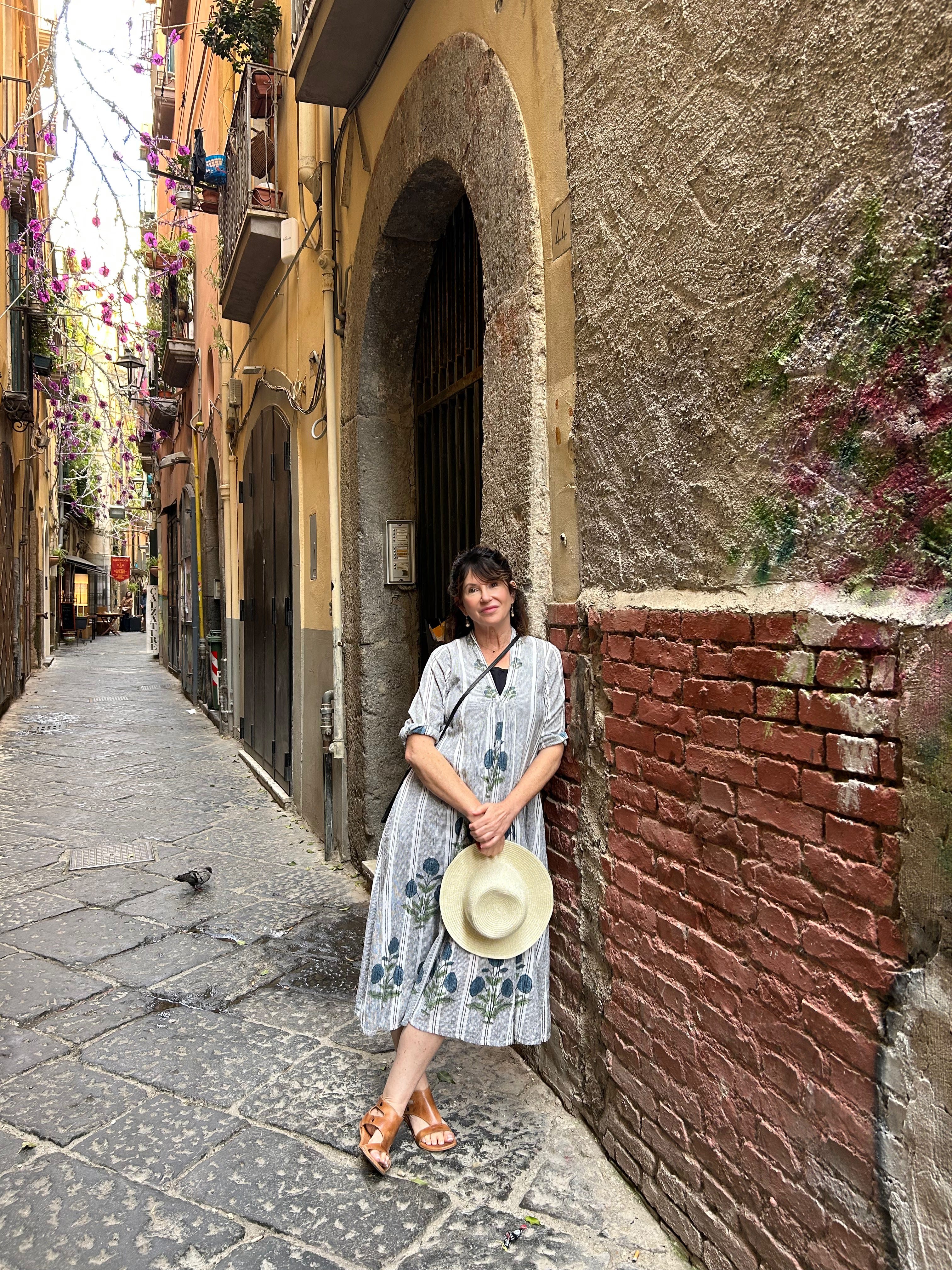
I arranged to meet friends in Italy for two weeks, hoping for a reset. Woolf’s invitation felt made for that octave of October: sit on pavements, drink coffee, let the mind swim. A time to let the gears wind down and the springs unclench.
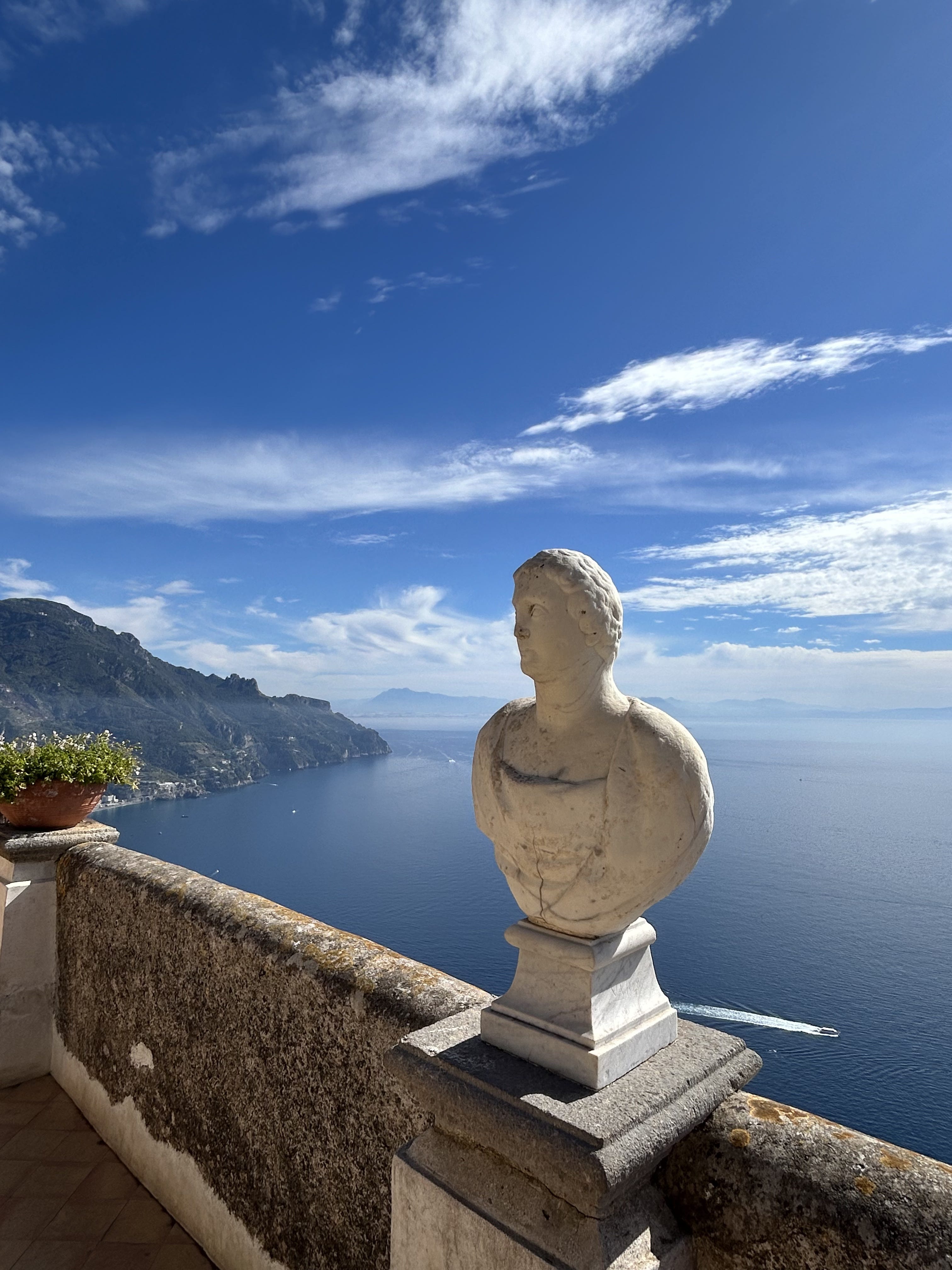
So I did. I sat at small marble tables with tiny cups of espresso, time tended by church bells. The first few days—despite the beauty and the pasta and the laughter of dear friends—I still felt on deadline: efficient, purposeful, checking off sights. For three years I’d been harnessed to my desk, tethered to the insatiable machinery of Skylark—drafting, revising, re-revising, ten and twelve hours a day. My body was in Italy; my nervous system was at my desk, braced for the next pass.
This is the tricky part of a writing life—and of any life—the in-between when we’ve left one thing and haven’t begun the next. Liminal comes from the Latin limen, threshold: that not-quite-here, not-yet-there space that breeds uncertainty and the urge to speed up, though there’s nowhere to go. We fling ourselves at anything, just to feel ground underfoot.
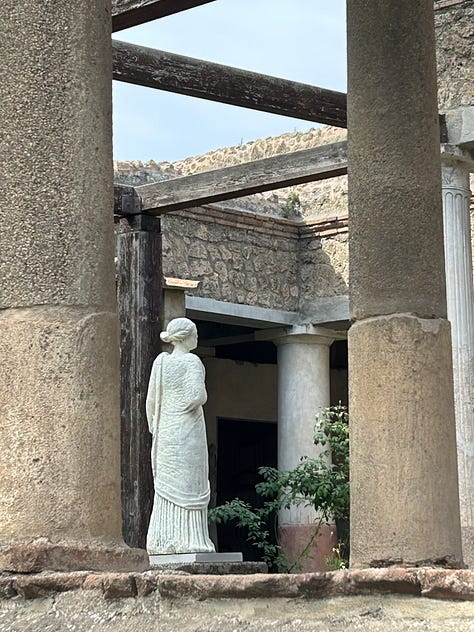
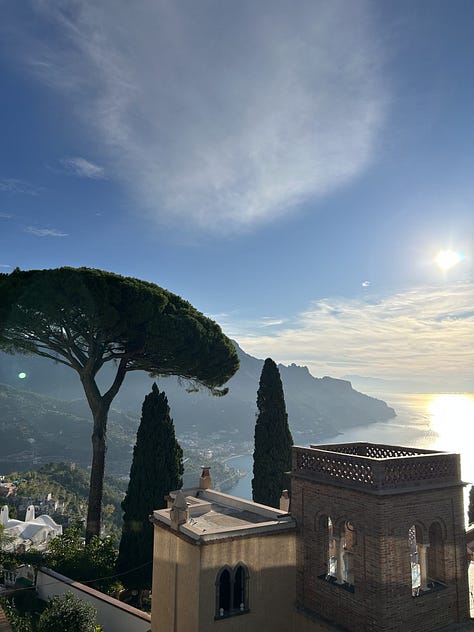
I kept catching myself trying to earn the rest—counting steps, turning mornings into museums, turning days into tidy factories. Then I would sit back down. I practiced being porous: reading without underlining, napping behind shutters and waking to a low, local light that made everything look freshly washed. Small images arrived sideways—glint on mossy stone, a sudden lift of birds—nothing to convert into plans or prose. They felt like gifts, not assignments.
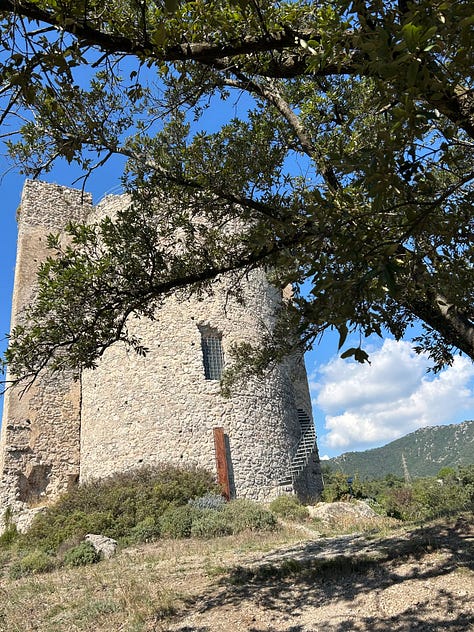
One still afternoon I climbed to the ruins of a medieval castle above Salerno, dust in my shoes, lizards flicking across the path, coin-small gold butterflies wavering in the heat. I leaned against sun-warmed stone that had stood for centuries and let my mind swim. It traveled toward what matters—not to ideas for the next book, not yet, but to voices I love and miss, to the ache and luck of this life.
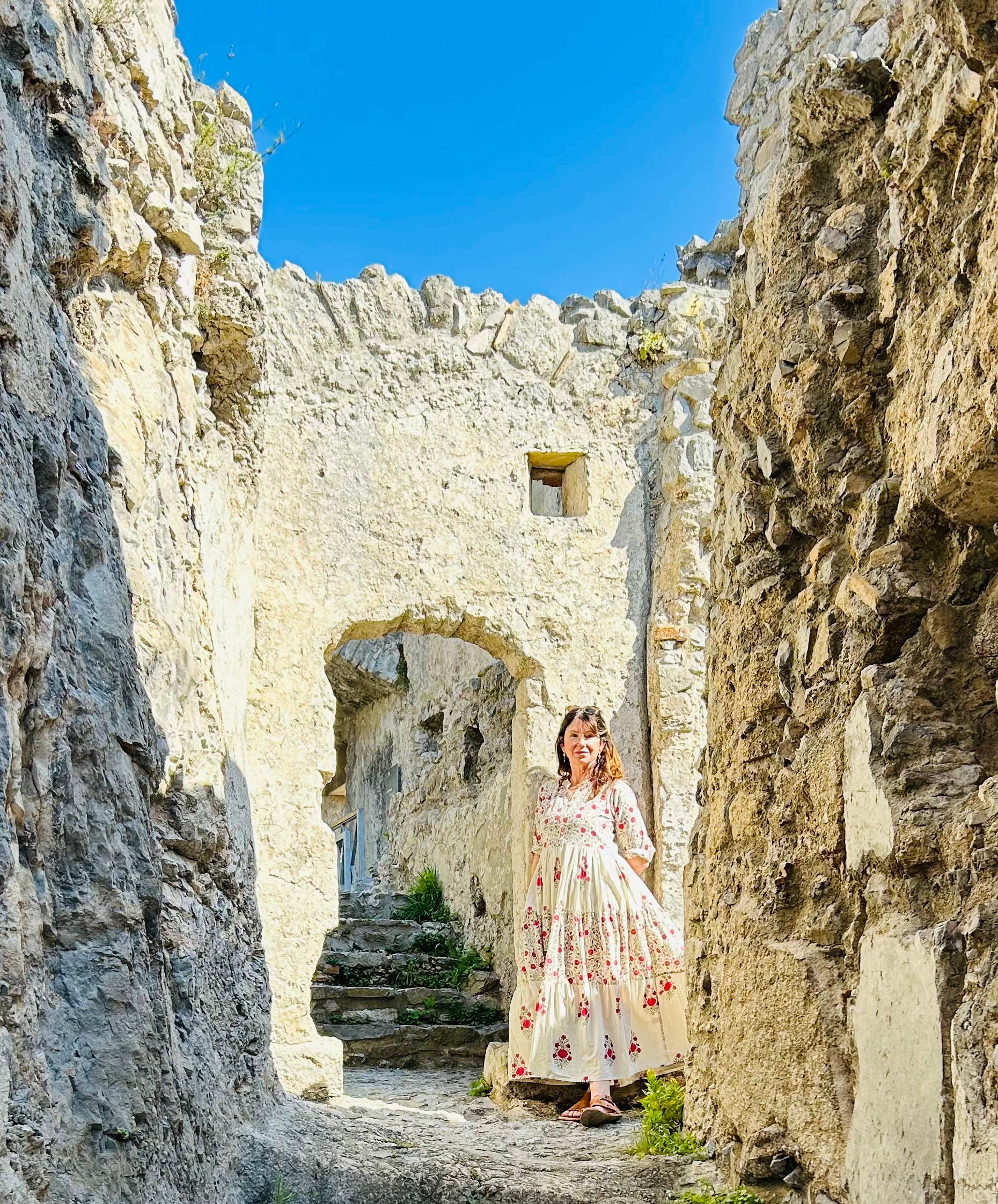
My mind swam, too, toward the young writer I’d been—the one who thought the world was for other people—and I put an arm around her. Look at us, I wanted to say. We made it to October.
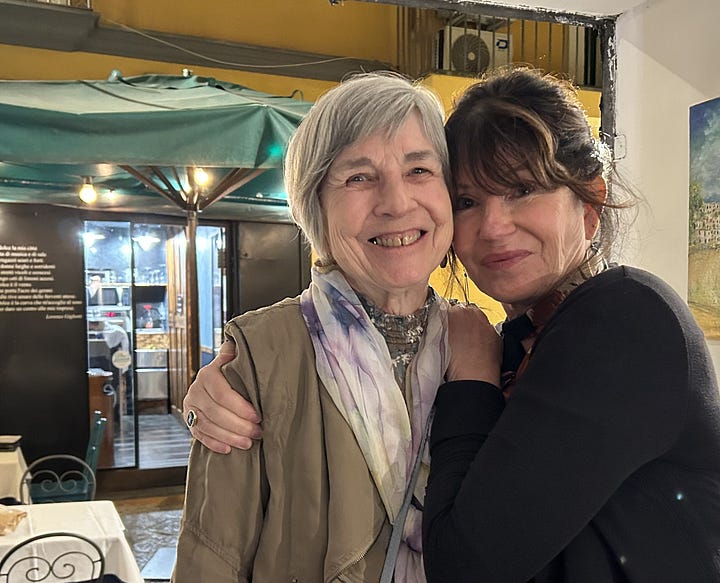
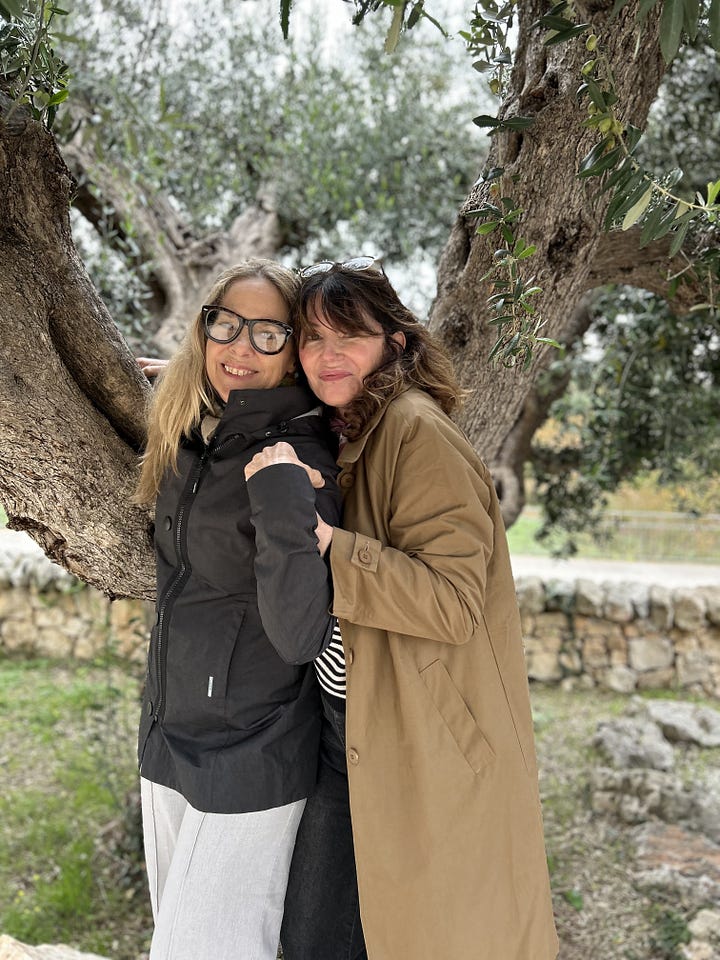
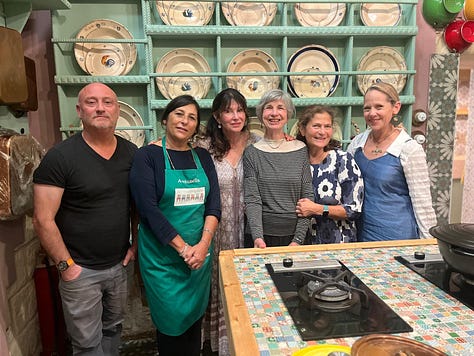
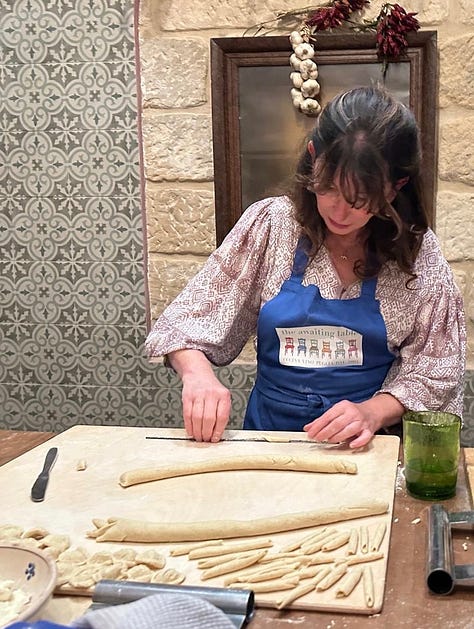
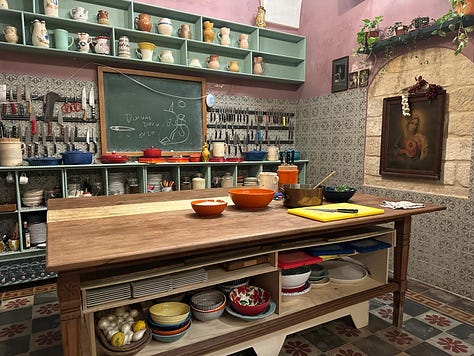
On my last night, in Lecce, a dear friend gifted us a cooking class at The Awaiting Table, the small school Silvestro has tended with curiosity and care for nearly twenty-five years. We stood around a wooden table in his warm, music-filled kitchen, durum and barley flour dusting our forearms, learning to hand-mix and roll orecchiette—little ears pressed with a thumb. The work was simple and precise, requiring nothing but attention. My hands remembered what my mind had forgotten: how to make a thing slowly, without rushing toward done. We cooked and broke bread with strangers—a newly divorced woman, a couple on the edge of early retirement. We learned almost nothing of one another’s stories, but we recognized the shape of the hunger that brought us there.
Later I thought about how, if we can tolerate slowing down, the room fills again—with surprising things, and people. How the empty-feeling afterlife of a book might be compost. What looks like idleness is dark, living work: attention returning to baseline, curiosity resetting, the nervous system unlearning urgency.
I’m home now, jet-lagged and blinking at newly changed orange and ochre leaves. The season turned while I was away; the air has an edge. In a few days the emails and lists and joyful commotion of ushering Skylark into the world will begin in earnest. The harness will be waiting, and I’ll step into it gratefully; I built it to fit. But I’m carrying a few delicious bits of October with me—the permission to drift a little, to sit on the pavement and drink coffee, to stand in the way of beauty and let it strike. If a book has an afterlife, maybe a writer needs one too: not a pause between projects, but a way of belonging again to the world that made the pages possible.
What does your “October hour” look like—your small ritual of rest? I’d love to hear it.
No posts
Comments
Nothing yet. Say the first thing.
Sign in to join the conversation.