
Deep Dive Podcast
Audio segment produced with AI narration summarizing Patrick Madrid’s written content.
0:00
-19:37
BEFORE I STARTED working as a full-time apologist at Catholic Answers in early 1988, I was an avid listener to The Bible Answer Man radio broadcast. It aired locally on KKLA 99.5 FM, a Los Angeles-based Protestant radio station owned by Salem Communications. By the end of the decade, it was nationally syndicated on more than 100 stations across the country.
(Little did I know then that one day I’d have my own daily, three-hour, live call-in radio program broadcast on more than 225 stations covering many of the same biblical and theological topics.)
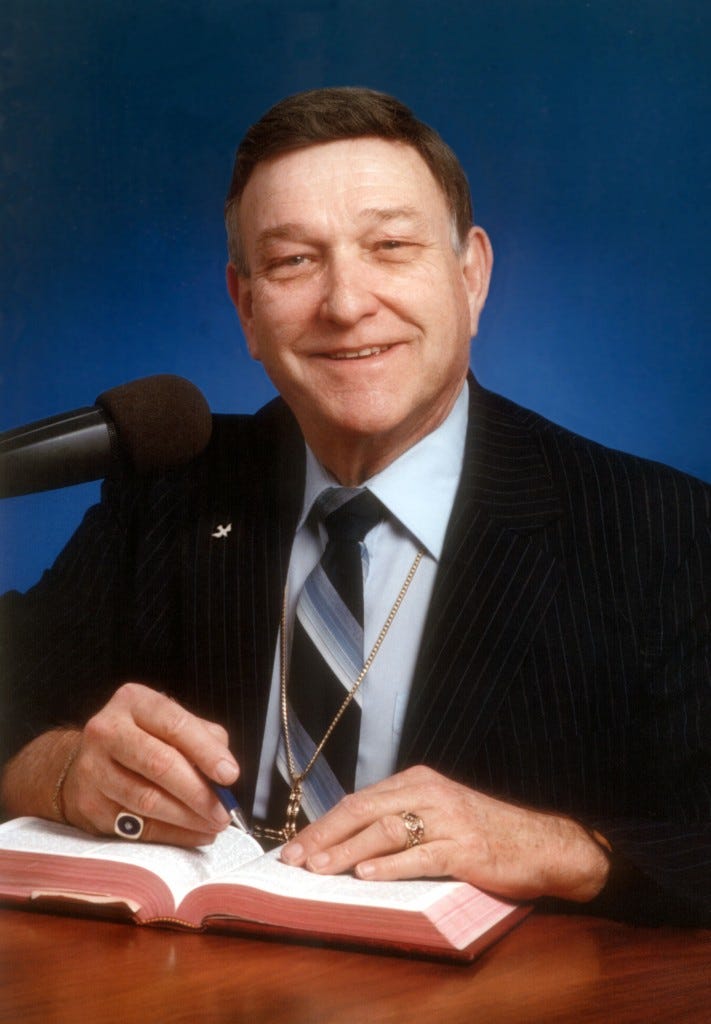
The host of The Bible Answer Man was one Walter R. Martin, a savvy, articulate, glib, and hard-charging Southern Baptist apologist who founded the Christian Research Institute in 1960, the year I was born, as a Protestant bulwark against “the cults.”
Mormonism, Jehovah’s Witnesses, Scientology, Seventh-day Adventism, Christian Science, the Worldwide Church of God, and similar non- and quasi-Christian groups bore the brunt of Martin’s critical on-air commentary.
And although I was born and raised Catholic, I was nevertheless a devoted daily listener because I found his style of apologetics captivating. I had never heard anything like it: always interesting, informative, energetic, and endlessly entertaining.
It was pure joy to me whenever a member of one of these religions would call in to take him on. It usually didn’t end well for them, mainly because Martin knew more than they did about their own religions, or at least that’s how it seemed. His punchy style of aggressively confronting callers with challenges about their beliefs was something I never tired of listening to.
Without realizing it at the time, though, I was also absorbing Martin’s pugnacious style of apologetics by osmosis, something I later had to intentionally unlearn when I recognized it in my own work.
Walter Martin (1928-1989), a native New Yorker, raised in Brooklyn, had an early connection with the Catholic Church. His mother was Catholic, and he attended a Catholic school before transferring to the Protestant Stony Brook School, where he was rebaptized at the age of fifteen. It is said that his father had him baptized in the Episcopal Church as an infant.
In any case, Martin’s real, if tenuous, childhood connection with the Catholic Church might explain why, whenever he touched upon Catholic topics on his show, he seemed to pull his punches ever so slightly compared to the vigor and relentlessness with which he would prosecute his arguments against “the cults.” Or at least, that’s how it came across to me in my Bible Answer Man listening days.
Not infrequently, Protestant callers would ask Martin to comment on the Catholic Church. They seemed determined to egg him on and often appeared disappointed when he didn’t give the fire-breathing condemnation of the Catholic Church, or one of its teachings, that they obviously hoped he would. I got the impression that much of Martin’s Protestant listenership would have been happier had he spent more time and packed more of a punch going after Catholics than he did critiquing other groups.
That doesn’t mean Martin was shy about airing his disagreements with Catholic teaching, though he always seemed slightly restrained when doing so, at least compared with the ferocity of his apologetics critiques of “the cults.”
I’ll admit that I greatly enjoyed it when he laid into them.
But whenever Martin offered critical comments on things Catholic, my amusement gave way to bemusement. His whacks at the Catholic Church tended to land with about the same accuracy as a blindfolded man swinging vigorously at a piñata.
Sure, he’d land a few rhetorical blows here and there, but for the most part, Martin’s criticisms of the Catholic Church were far enough off the mark to frustrate me. Still, though, convinced Catholic that I was, I tuned in faithfully every day for more.
Back then, The Bible Answer Man show aired two hours a day, Monday through Friday. My secular job as an outside salesman enabled me to listen in my car for long stretches as I drove to different appointments across So Cal. I made sure to schedule my sales calls so that I could be in the car during those two hours.
“Appointment listening,” as it’s known in the radio business. That daily two-hour exposure allowed me to absorb a lot of Walter Martin’s brand of apologetics. This was both good and bad.
On the plus side, listening to his show helped me ramp up much faster on the learning curve of understanding Mormonism, Jehovah’s Witnesses, etc. I assimilated a great deal of biblical material relevant to the challenges posed by these groups, and that knowledge served me well over the years.
I also, as a matter of fact, learned a great deal about the weaknesses and inconsistencies within Protestantism itself, especially the unbiblical principle of sola Scriptura (the Bible alone), which Walter Martin unwittingly exposed in his efforts to combat the cults.
On the negative side, I was also imbibing a steady stream of Martin’s combative style of apologetics, something I had to work hard to curb and eventually eradicate as I matured personally and as an apologist.
True, his pugnacious and commanding on-air persona was attention-getting and entertaining, but also counterproductive if the goal was to move beyond mere polemics and actually persuade someone that his beliefs were mistaken, at least as Martin understood them.
The polemical showmanship on full display during the program was enjoyable, but I soon discovered that there are better, more effective ways to reach people with the truth than to bludgeon them with it.
Those years of daily listening to The Bible Answer Man and absorbing the major themes and methods of Protestant-style apologetics, the techniques, the biblical proof-texts, and the (some accurate, others not so much) historical arguments, provided me with a unique and extremely useful storehouse of knowledge from which to draw once I entered the full-time work of apologetics.
Later, reading Martin’s book, The Kingdom of the Cults, also helped, though I had to filter out a number of his specious arguments and erroneous theology. For example, on pages 117-118, he explicitly denies that the pre-incarnate Logos, the Second Person of the Trinity, was “eternally begotten by the Father,” as the Nicene-Constantinopolitan Creed affirms. 1
“There cannot be any such thing as eternal Sonship,” Martin erroneously insists, because he argued that sonship is a temporal term implying a father who existed before the son was begotten. This view, though, confuses the Father’s eternal generation of the Son with temporal human begetting and completely misunderstands the biblical and theological truth formally articulated by the Councils of Nicaea and Constantinople. The Father’s eternal begetting of the Son entails no temporality whatsoever: no before or after, no beginning. 2
When I started working at Catholic Answers in early 1988, my parish apologetics seminars and the articles I wrote for the Catholic Answers newsletter focused mainly on Mormonism and Jehovah’s Witnesses, but by the end of that year, I was routinely writing and presenting seminars on Protestant issues as well.
The more public seminars I presented, the more knowledgeable and proficient, not to mention confident, I became. The freewheeling question-and-answer sessions at each event were especially formative. I’d spend an hour or more fielding live, sometimes hostile, questions and challenges from the audience, some of whom were non-Catholic. These sessions were an invaluable trial-by-fire for me as a cub apologist.
Years of frontline experience in public speaking inevitably turned me into a seasoned veteran, taking on thousands of live, in-the-moment questions. But having been steeped in Walter Martin’s aggressive, combative style of doing apologetics was a drawback I had to overcome slowly. As the old saying goes, you can catch more flies with honey than with vinegar.
Here’s an example of what I mean: A donut shop in the grocery store plaza near my house was the scene of an unusual apologetics ritual I engaged in a couple of Sunday mornings when, as a family, we’d stop in to buy a dozen donuts after Mass.
I confess that it irked me to see, Sunday after Sunday, one particular Jehovah’s Witness fellow standing right outside the front door of the donut shop with copies of Watchtower and Awake! magazines in hand. No one could go in or out of the shop without that man trying to engage him in conversation and hand out a copy of his Watchtower literature. His presence there annoyed me, and I intended to do something about it.
After a few Sundays of ignoring the man as I passed by to buy donuts, I had had enough. Grabbing a few copies of Catholic Answers’ This Rock magazine from my car, I stood right next to the Jehovah’s Witness.
He was clearly bugged by that, but not nearly as bugged as he was when I would butt in to any conversation he managed to strike up with passersby. As soon as he had buttonholed someone and began discoursing on why the Trinity was “unbiblical” and how Jesus is not really God, I became his third wheel.
It was actually kind of fun to watch the reactions of the people walking by as I stood there with my magazines, engaging the Jehovah’s Witness’s claims whenever he tried to draw someone into conversation.
More than a few times someone would walk past us and cheer me on with an “Amen!” or a “Jesus is Lord!” word of encouragement. I didn’t actually debate him, but for the 20 minutes or so that I stood there next to him, I basically thwarted his efforts to strike up conversations with others.
I admit, this was rather odd, but for me it wasn’t some kind of eccentric apologetics stunt. I just didn’t like the idea of someone preaching publicly against the Trinity and the divinity of Jesus Christ. But because that sort of thing is a perfectly legal and protected form of free speech, there was nothing I could do about it . . . except take up my station right next door and exercise my right to free speech in response to what the other guy was saying.
It was my way of putting into practice the old saying, “If you can’t beat ’em, join ’em.”
A couple of years earlier, before I joined Catholic Answers, I was flipping through channels one evening, I chanced upon a Protestant apologetics show featuring a young Jesuit priest named Fr. Mitch Pacwa. With his Bible open, he was going toe-to-toe debating Catholic teaching with none other than Walter Martin!
They were debating in studio on a Protestant apologetics program I had never seen or even heard of before called the John Ankerberg Show. It struck me as an unfair arrangement, clearly intended to give Martin the advantage, because Ankerberg, the host, also blatantly acted as a second debater, making it two against one. I had never heard of Fr. Mitch Pacwa before, but as I watched the exchange, I was impressed by how ably he held his own against both Martin and Ankerberg.
Fr. Mitch told me later how irritated he was because he believed the show’s producers had selectively edited the substance of his debate with Martin in such a way that that the expurgated version they aired on TV did not include some key parts of the discussion when the priest had decisively refuted Martin’s arguments. Those bits, apparently, all wound up on the cutting room floor.
I don’t blame Martin personally for that tactic, nor did Fr. Pacwa, as it’s unlikely he had any say in the final edit. But it did teach me something about how these things can go if you’re not careful. I myself experienced this kind of thing at the hands of two different non-Catholic apologetics organizations which promised to provide me with the unedited, unexpurgated video of debates I did with them. One simply refused to honor its promise to release the videos to me once the debates were complete. The other claimed that an unforeseen “technical error” was responsible for a major gap in the video during a crucial part of our debate. Luckily, the audio survived intact.
In May 1989, Fr. Pacwa had arranged for me and a few other Catholic Answers staffers to visit the Christian Research Institute’s headquarters, then located on Alton Parkway on the border between Irvine and El Toro. 3 (He and Martin had become good friends subsequent to the Ankerberg debate.) It was a fascinating day. We took an extended tour of the facilities, including the Bible Answer Man studio.
We had a private working lunch catered by CRI and enjoyed a friendly theological discussion with several of the key CRI staffers, including Hank Hanegraaff, who would very soon become Walter Martin’s successor, though none of us had any inkling of what would happen to bring that about.
Martin wasn’t in the office that day, but I happened to be invited back again the following week for another meeting with us. At the end of that visit, just as we were about to depart, we were walking down the hallway toward the front entrance when who should step out of his office and greet us with a big smile, but Walter Ralston Martin!
We shook hands and chatted for maybe five minutes. When I told Martin how much and for how long I had enjoyed listening to his radio show, he invited me to return to CRI so I could sit in the studio and watch him do the show. I wish I’d had the chance to do that.
Our brief discussion in the hallway ended with a quick prayer. We bowed our heads and Martin offered a gracious prayer for us. Then, he gave me a powerful bear hug and a hearty handshake and promised he’d soon come down to San Diego to visit us at Catholic Answers. We said good-bye and left.
On the way back, I mentioned to Fr. Pacwa that I was surprised at how friendly Martin had been to us. “I figured he would have been less welcoming to Catholics,” I said.
“On the contrary,” Fr. Pacwa responded. He explained that, after their debate on the Ankerberg show, he and Martin had become personal friends. He said that Martin’s attitude toward the Catholic Church had grown increasingly open and even conciliatory. Who knows? With enough prayer and discussion, even someone as set in his opinions as Walter Martin could become Catholic, right?
Before I leave Walter Martin, let me tell you how Walter Martin left us.
Several weeks later, on June 26, 1989, a CRI staff member happened to be over at our house for a backyard barbecue. Someone, his wife I think, called asking urgently for him and delivered the shocking news that Martin had just died suddenly of a massive heart attack at the age of sixty.
May he rest in peace.
Since that day, I’ve prayed for the repose of Walter Martin’s soul countless times at Mass and in my daily rosary. I hope to see him in heaven someday. If I do, I’ll be sure to return the bear hug.
Copyright © 2026 Patrick Madrid. All rights reserved. All text, images, and other original content are the property of the author. Revised and expanded from the foreword to my 2012 book Envoy for Christ: 25 Years as a Catholic Apologist (Servant Books), p. XXXIV-XXXVIII.
I hope you enjoyed this article. If so, please restack it and tap the Share button above. Restacking this article helps it reach a wider audience. Thank you!
And if you enjoy thoughtful, friendly, faith related content, you’ll appreciate my daily program on Relevant Radio. Listen here or get the free Relevant Radio app.
Image credit: Walter Martin (1928–1989). Public domain, PD-self: jbwoks, Wikimedia Commons.
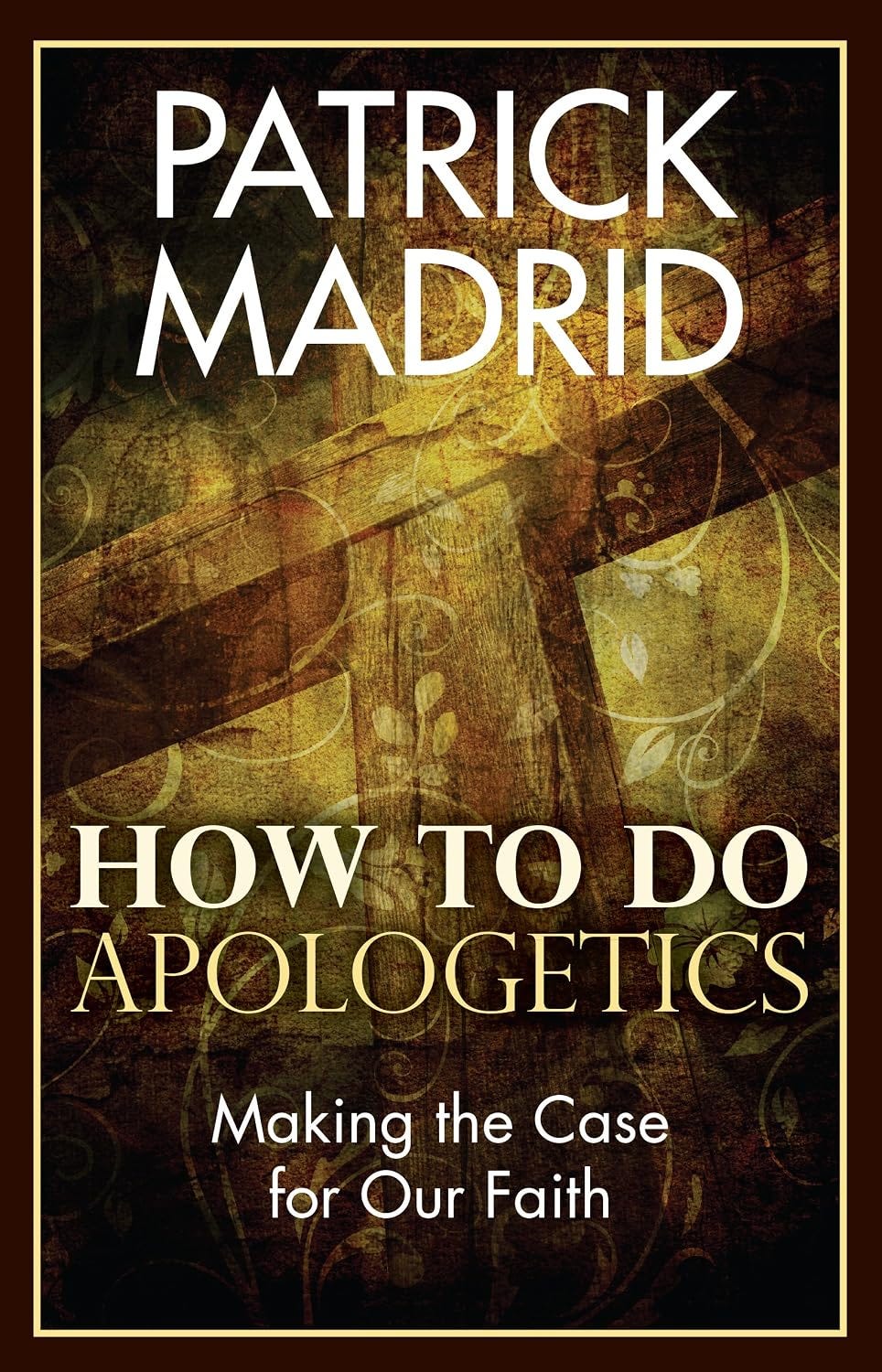
How to Do Apologetics: Making the Case for Our Faith (Our Sunday Visitor Publishing), 2016, 208 pages.
See Walter Martin, The Kingdom of the Cults (Minneapolis: Bethany House, 1985), 117–118.
See David Waltz’s brief overview of Martin’s position and how it was critiqued by his fellow Protestants.
Then called El Toro, which officially incorporated as the city of Lake Forest in 1991.
No posts
Comments
Nothing yet. Say the first thing.
Sign in to join the conversation.