
This post is about the pros and cons of psychotropic medications as a treatment for serious mental illnesses. It was originally posted in June 2025. I’m reposting it this week (August 13, 2026) because I haven’t finished reading the 389 page report on Assisted Outpatient Treatment (AOT) in New York that both patient’s rights advocates and Treatment Advocacy Center say supports their almost diametrically opposed positions on AOT. Since the devil is always in the details, I’m reading all the details before I comment on the results and the possible implications of the report for California. Our AOT program differs substantially from New York’s. I made it through the first sixty pages in three hours. I hope to finish in time to write about it next week.
Since most high-functioning people rely on meds to help us keep the boat steady and our psychosis under control I thought I would talk about meds today and why it takes a brave soul to go down that path and why many people refuse to take them.
Most people who are living successfully with serious mental illness, things like bipolar disorder and schizophrenia, are on meds. Nearly all of them. Some people aren’t able to take the meds that might help them due to other health issues or severe side effects. These people might be relying on rescue meds—sleep aids for example—to help them when they are having trouble sleeping, which has provoked a crisis. And some high-functioning people are going without meds because they don’t agree that the benefits outweigh the risks, which to my mind is like trying to walk a tightrope without a net—a dangerous proposition.
Psychiatrists have many drugs to choose from when they are deciding what to prescribe for someone living with serious mental illness. For bipolar disorder, there is lithium, which helps with mania and somewhat with depression. It’s kind of in a class by itself. Then there are mood stabilizers most of which are also used to treat epilepsy. There are antidepressants with four different groups within that larger class. There are antipsychotics, subdivided into atypical and typical. And finally there are the drugs used primarily to manage anxiety but that also might be used to manage catatonia and withdrawal from alcohol. There are also “psychotropic-adjacent” meds that get prescribed for specific things like sleep aids and drugs for restless legs syndrome, a somewhat common side effect of many psychotropic meds. Psychiatrists have a veritable symphony of meds to experiment with when faced with a person with symptoms of serious mental illness. (Notice I said experiment.)
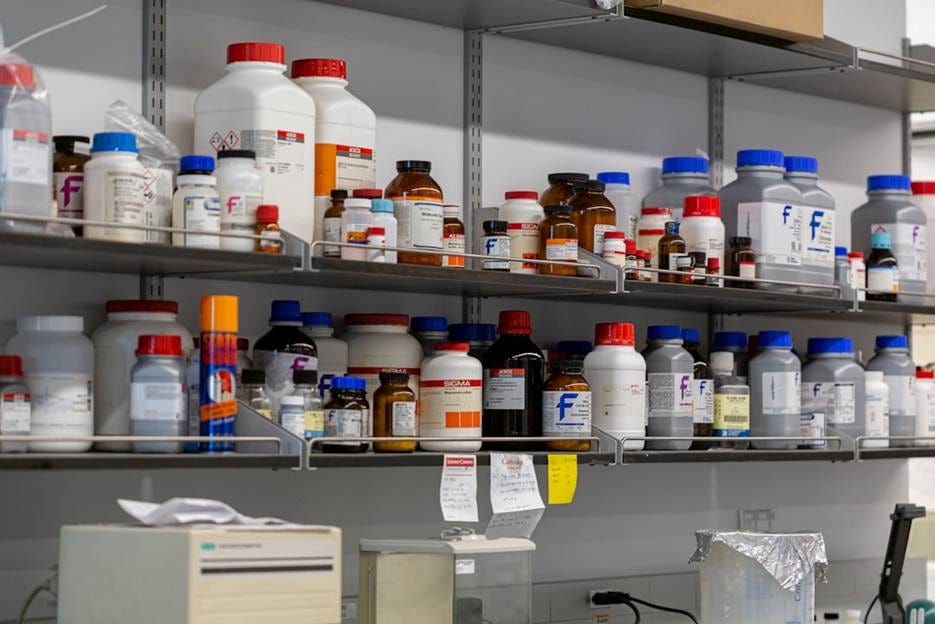
Photo by Adam Bezer on Unsplash
So the good news is that there are choices. If something doesn’t work or has bad side effects there’s often something else to try instead. The downside is that the trial and error process of finding the right med or combination of meds can be torture. Meds for serious mental illness can act quickly or slowly depending on the drug, the dose, the dosing schedule and how they are administered—with or without a specific amount or type of food for example. There are rarely any handy external measuring sticks to use to tell when you’ve reached the right dose or found the right combination. So figuring out how long to wait to see if something is going to help is a little like playing the lottery but with side effects.
There are general rules of thumb but every brain is unique, and those rules are really just guides not hard and fast limits. One person might improve in a week, another person might take two months, and a third person never does. Maybe the dose was too low or too high and rather than try another med, another dosing schedule is needed. Some meds are known to be faster-acting than others but for maintenance meds it can often take months or even years to find an acceptable combination that balances desirable and undesirable effects.
A psychiatrist who trains psychiatric residents told me his rule was that if there wasn’t at least 25% improvement in symptoms after six weeks, it was time to try a different medication. If there was more than 25% but less than total improvement, then he would up the dosage and go another six weeks. You can see that this schedule of six-week intervals and the multitude of medications available mean you could be trying medications for many years before you completely ran out of ones to try. And in the meantime, there might have been some new ones approved. So the cycle can literally be endless.
This is a risky dance, for all these drugs come with potentially life-threatening or life-altering side effects like liver failure, tremors, akathisia (a terrible need to constantly move so some people can’t even sleep), significant weight gain, low libido, and diabetes, to name a few. I live with a tremor in my right hand and arm and although the tremor has improved in the past ten years, it still keeps me from eating spaghetti unless you chop it into tiny bits and give me a spoon.

Photo by Thomas Bormans on Unsplash
With each new med, you face the potential for new irreversible side effects. At each increase in dose, you face the possibility of new or worsening side effects. It is a measure of our desperation that so many of us keep trying. Some people look at the risks, especially the metabolic side effects, and decide to take their chances and refuse medications. And some people—people who are struggling with delusions or with mania and suicidal thoughts, or who are preoccupied with the voices telling them not to take the meds—voices that are as real to them as the person sitting next to them—some people just give up. They try for a while and then they run out of nerve or energy or will or whatever enables some people to keep trying despite the tremors and tongue thrust and changes in their cardiac rhythm. And the list of side effects goes on and on.
Say you spend a year or two finding a combination that works pretty well with side effects you can live with. This means you’re set for life, right? No. It is very common for drugs to “poop out” or lose effectiveness. And you can develop new side effects at any point. So at any time you may find yourself back at the starting gate facing a new round of experimentation to figure out what will keep you stable and your symptoms at bay.
Those side effects are one reason some people living with serious mental illness are unwilling to take psych meds. Another reason, true for up to 50% of people with bipolar disorder, schizophrenia, and schizoaffective disorder, is because they don’t think there’s anything wrong with them, or certainly not bad enough that they need medicine for it, medicine that makes them feel lousy or that gives them some miserable side effects. The technical term for people who have poor insight into their illness is anosognosia. I’ll be doing a post on anosognosia soon. For now, the main takeaway is that this belief is often unshakable and may not respond to medications that eliminate other symptoms like mania.
Some people living with serious mental illness experience mood or psychotic states that are seductive. They may experience periods of euphoria—exalted periods of oneness with the universe or God. Who wouldn’t want to feel one with the universe? These feelings may be heightened by drugs like meth, leading to substance use disorders that complicate effective treatment of serious mental illness. Giving up spiritual exaltation in favor of sobriety and side effects can be a hard sell, especially to someone who doesn’t think there’s anything wrong with them due to anosognosia.

Photo by Greg Rakozy on Unsplash
One myth that persists is if you go on meds, you will lose your creative edge or drive. While it is true that some meds dull your thought processes (known as cognitive slowing) or make you so tired that staying awake is a daily battle, these problems might be addressed by changing your medication cocktail or taking a lower dose or taking a dose at a different time of day, et cetera. Like my tremor, which has forced me to give up sculpture and handwork, including dollmaking and felting (I once made 20-some-odd wet felted vessels in three days when I was manic), some side effects may force you to take a detour and find a new outlet for your creativity. I have been stable on meds for many years. In that time, I have sung in choirs, created beautiful art, plunged into poetry, and written a book. And now I’m on Substack. Stability does not have to destroy your ability to connect with the creative energy that I believe is an innate human asset. When I was at my sickest, I couldn’t read or write or drive a car. I wouldn’t call my choice to accept the tremor and take the meds easy exactly, but the alternative was profound impairment and I was able to find other outlets for my creative energy that work for me.
So now you know. Despite the process and despite the side effects, most people with insight are on meds and we are thankful for them. Since this was a post about meds, I did not go into the other piece of the stability equation: lifestyle hacks that bolster your ability to deal with stress—physical, mental, and emotional—which is a major trigger for relapse. I’ll talk about that another time.
Comments
Nothing yet. Say the first thing.
Sign in to join the conversation.