
The AI revolution has proceeded in stages of levels and cycles.
The cycles have become familiar to us, as ‘AI freakouts’ with refrains that repeat with regularity. We’ve gotten AI hit a wall freakouts every time new frontier AI models are slow to release. Every tech layoff stirs up the ‘AI will take our jobs’ freakout.
The AI safety freakout: A more-powerful-than-ever model like Mythos 5 comes out, and AI doomers worry that the end is nigh with “AI will kill us all” narratives. With Mythos 5 and Fable 5, the freakout became actionable when the Government blocked Fable 5 from non-US users getting and Anthropic took it off the market. Three weeks later, it was back on the market. Then OpenAI and Anthropic released GPT-5.6 and Claude Opus 5 respectively while tamping down fears by claiming improved guardrails on cyber-security.
The Chinese AI freakout: Every time China releases a frontier-level AI model, like Kimi just did with K3, it gets presented as a threat to US AI labs and by implication US dominance in AI. Pundits tell us “we cannot let China win the AI race” but not lose ourselves when we do. When a new frontier US-based AI model lands, we forget it until next time China scores a great AI model.
We can describe the evolution of frontier AI systems since the ChatGPT Moment in late 2023 as advancing upwards through five broad capability levels, categorizing the progression from conversational assistants toward autonomous AI systems.
Level 1: Conversational AI that answers questions. With GPT-4 in 2023, we got natural language conversation useful for everyday work. It was turn-based chat interaction, zero autonomy.
Level 2: Multimodal AI that understands different types of information. GPT-4o and Gemini-1.5 releases in 2023 and 2024 gave us AI that could understand not just text, but also images, PDFs, videos, and code.
Level 3: Reasoning AI that reasons through difficult problems. OpenAI’s o1 and o3 and DeepSeek R1 in 2024 and 2025 introduced AI that could execute structured reasoning, via test-time compute, before answering. All subsequent AI model improvements have been based on improving AI reasoning, and through that, its ultimate intelligence capabilities.
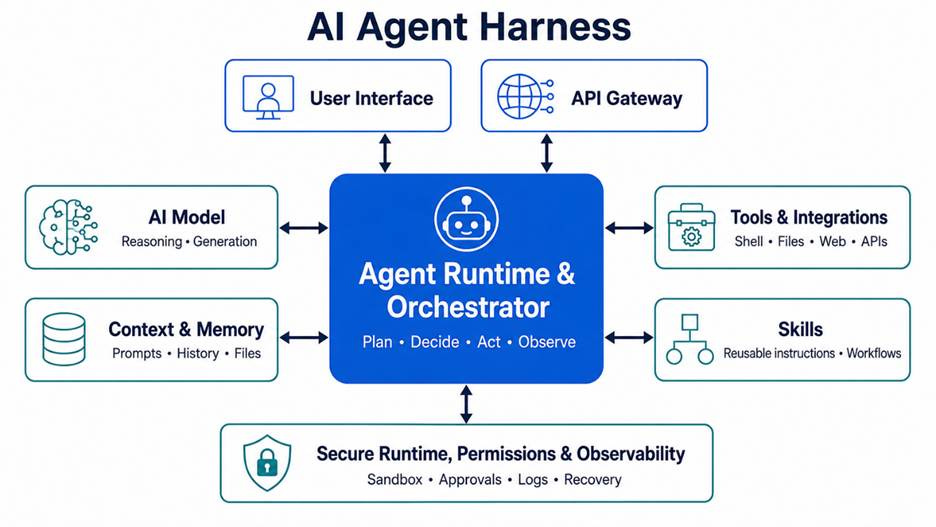
Level 4: Agentic AI that completes complex tasks autonomously. As AI reasoning advanced into multi-step reasoning in 2025 and 2026, with AI models like Claude 4.x Opus, GPT-5 through GPT-5.5, and Gemini 3.1 Pro, AI models became able to solve ever more complex research, mathematics, and software engineering tasks. Goal-directed task completion also needs tools, browsers, code execution, memory, and planning to effectively and autonomously complete tasks. Thus, AI harnesses such as Claude Code, Codex, Cursor or OpenClaw provide support for tool use, skill use, and context engineering to get the most out of these capable AI models.
Level 5: Long-Horizon Autonomous Agentic AI that autonomously manages and completes large projects. AI is now capable of long-duration planning, delegation among specialized agents, sustained projects, complex software and research collaboration.
This new level is not a change in kind from Agentic AI but a change in scale and scope. In late 2025, AI models such as Opus 4.5 improved their internal reasoning and autonomous code generation enough to tackle more difficult scientific, mathematical, and programming problems. The releases of GPT-5.6 Sol, Claude Opus 5, and Kimi K3 are doing that again: Expanding the scope and scale of Agentic AI.
Agentic AI was the shift from answering questions to completing tasks: researching, coding, editing, debugging, coordinating tools, and iteratively improving results.
The leap from Agentic AI to Level 5 Long-Horizon Autonomous Agentic AI is largely about operational capability around long-horizon planning and multi-agent coordination. As such, the harness used plays a major role in having usable strong capabilities. However, higher AI model intelligence is needed for reliable orchestration of complex problems.
Agentic AI models in 2025 could handles time-horizon tasks of tens of minutes. Now, combining the latest AI models with very long context, persistent working memory, and access to orchestrate multiple AI sub-agents, enables coordinated multi-agent execution over days or longer.
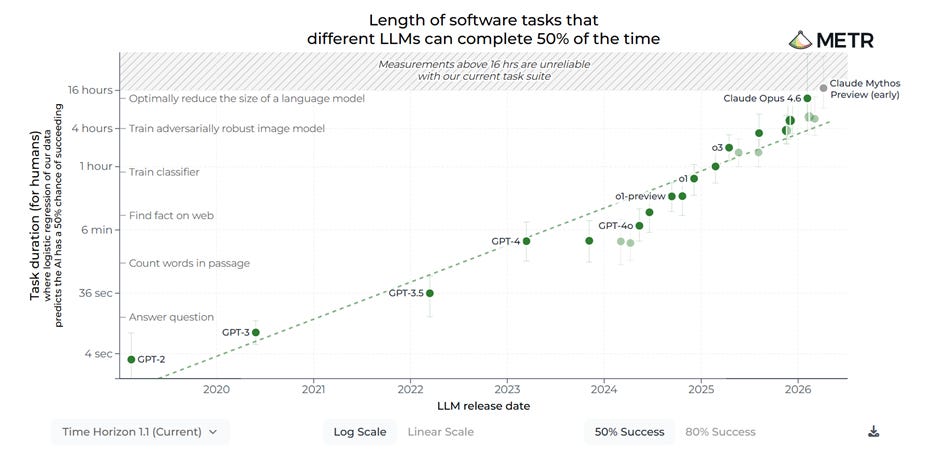
Several models are established on the Level 5 beachhead: GPT-5.6 Sol, Fable 5, Claude Opus 5, and Kimi K3. MemClaw stacked them up. These AI models exhibit stronger reasoning and more reliable agentic behavior than any prior AI model. With persistent memory and tool use, they can be combined into systems capable of sustained collaboration on complex work.
More models are coming: GPT-6 will come soon. Gemini 3.5 Pro is delayed because it is not performing at this competitive level yet. Alibaba’s Qwen 3.8 Max is in preview and seems to be on Kimi K3 level.
When frontier AI models improve on capabilities and intelligence, it’s wise to update prompting, context engineering, and your harness to take advantage of the new powers they possess.
Anthropic has produced a Context Engineering guide for Claude 5 AI models. They found out that less is more with Claude Opus 5. They removed over 80% of Claude Code’s system prompt and got better results.
Overall, we found that we were over-constraining Claude Code, both through our system prompt and in our CLAUDE.md files and skills.
Prompting Claude Opus 5 like a less capable AI model holds it back. They suggest relaxing constraints:
User fewer strict rules but let Claude use judgement instead. “… newer models have better judgement and can handle these decisions well without explicit rules.”
Don’t give examples, design interfaces.
Claude now automatically saves memories. You don’t have to save it explicitly in CLAUDE.md.
Claude used to rely of specs in markdown files, now it uses complex references. “Claude can reference HTML artifacts created by our new artifacts feature.”
Use progressive disclosure, and by implication make most practices skills. “Progressive disclosure is not just for skills; we also use it for tools.”
If the guidelines are too vague or unclear, or you just want Claude to clean up your files, Anthropic rolled out a Claude doctor command, to help you do this automatically.
AI is now smart enough to complete a variety of tasks and be your AI assistant; treat AI as an employee. Give AI the support (harness), guidance (via context and memory), tools (access to tool use and skills), and incentives (proper intentional prompting) to be a most helpful AI assistant.
What kind of assistant can these AI models be? These latest frontier AI Models are an intelligence and autonomy upgrade that promotes the AI from junior assistant (agentic AI) to senior developer and project manager (Long-Horizon Autonomous Agentic AI). You need less micro-management of details in many prompts:
You won’t need to instruct the model to double-check its work. Claude Opus 5 will perform needed verifications and self-correction.
Don’t give bite-size multi-turn step-by-step guidance. Instead, give complete context, inputs, and end-goal specifications in a single prompt, where Opus 5 performs best. /goal and loops are more effective than ever.
To limit Opus 5 to avoid overthinking or over-engineering answers, set limits on scope and target deliverables. You can cap summary lengths or set word count limits to limit verbosity.
Just as a senior employee needs less hand-holding and thrives on delegation, your AI employee improves if you delegate more and micro-manage less. In simple terms, do less: Simplify prompts, skills, and tools definitions. Cut down instructions built for earlier, weaker AI models, and reduce them to what you really need.
You need a good AI model and a good harness that works with them. You can get that with integrated Claude Clode / Cowork or OpenAI ChatGPT with Work / Codex, each using their respective AI models.
You can also get that by using an open harness like OpenCode, OpenClaw or Hermes Agent and picking your own AI model. You can use Kimi K3 as your driver, now that the weights are available.
These days my go-to harness for code development is Claude Code. I use OpenAI’s ChatGPT with Codex and Work for other tasks. These harnesses are growing with the AI models.
I use Gemini Deep Research occasionally, for both complex research (supercritical CO2 heat exchangers for Brayton cycle turbine) and mundane questions (which brand of security camera to buy), but it can be ‘flabby’ and verbose. To fix verbosity on frontier AI models, I’ll use the “I have ADHD” skill to get just the facts and actions I need.
Hermes Agent is my personal local AI assistant. I haven’t run the latest frontier AI models on it yet, since open local AI models are good enough for my local AI tasks, for example, analyzing personal medical files. Hermes Agent is great at managing and automatically building skills from your interactions, and it has a Kanban-style feature to manage tasks and agents. I’ll take advantage of that, feeding Hermes Agent more ambitious tasks, encoding repeated tasks as skills, and orchestrating delegated tasks in parallel.
more ambitious tasks, encoding repeated tasks as skills, and orchestrating delegated tasks in parallel.
AI can do more than ever before. GPT-5.6 Sol, Fable 5, Claude Opus 5, and Kimi K3 are more intelligent than any prior AI models. Today’s frontier AI models can act as a project collaborator, decomposing large objectives into specialized sub-agents, coordinating their work, monitoring progress, revising plans, and producing integrated results with relatively little human supervision.
The latest harnesses bring skills, memory, tools, and gateway connections that build on these capabilities and make AI agents more capable than ever.
It may be easier to use AI as you did before, and it will be a more reliable chatbot and inline copilot. However, achieving real productivity leaps with AI requires taking advantage of AI’s next-level capabilities. You’ll need to embrace Level 5 Long-Horizon Autonomous Agentic AI.
Your advantage, your “alpha” with AI, is intent and initiative. Increase your ambition with AI.
Do more with AI. Free AI from constraints of limiting system prompts, from feeding it bite-sized problems that don’t fully complete your task, and from reviewing in detail each activity. Become a manager of a fleet of AI agents, and delegate to AI like it’s a knowledgeable, capable employee. Give it the knowledge, context and guidance it needs and let it rip. AI is now ready for it.
Comments
Nothing yet. Say the first thing.
Sign in to join the conversation.