
The past year has shown me that keeping things in separate pieces doesn’t work. Not for creativity, not for happiness, not for the kind of beauty I’m actually trying to make. I spent years approaching different parts of my life as though they were unrelated, the work in one place, the personal in another, the things that inspired me filed away from the things that ran my days. It felt organized. Professional. Disciplined. What it actually was, I can see now, was fragmented.
What I’m after now is integration. The understanding that the same person who is rethinking her closet is the one designing the room. That the instinct sending me down a midnight rabbit hole of vintage textiles is the same one pulling art for a client. That how I dress and how I speak and how I show up in my closest relationships and how I make things in the studio. These are not separate expressions of separate selves but one continuous conversation that gets richer the more honestly it’s allowed to flow between all those places.
This is a post about that conversation. About the books and the rabbit holes and the creative voices and the bits & bobs that are guiding me through a genuine turning of a page. About what happens when you stop containing your life into tidy separate categories and let it become, finally, one whole thing.
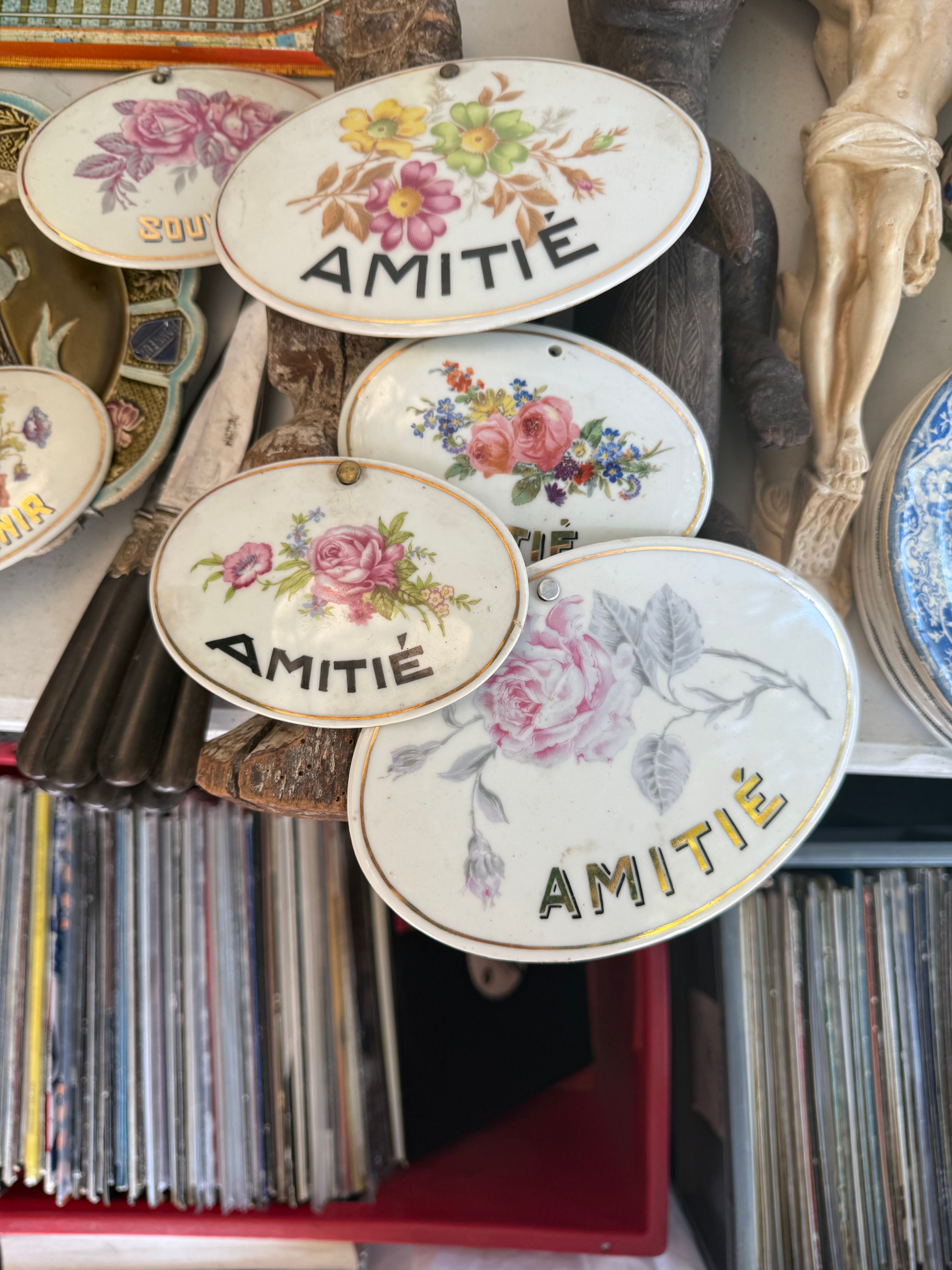
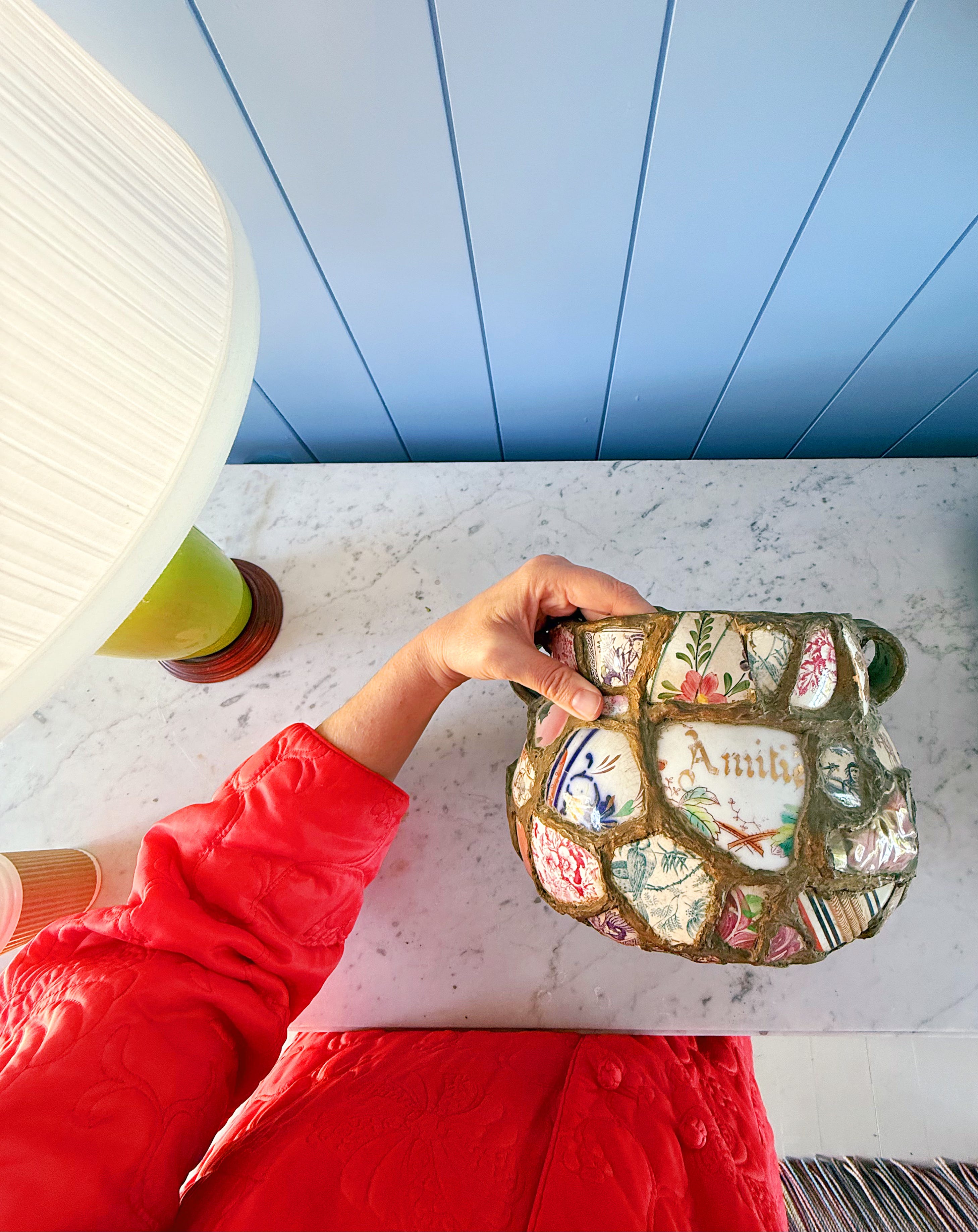
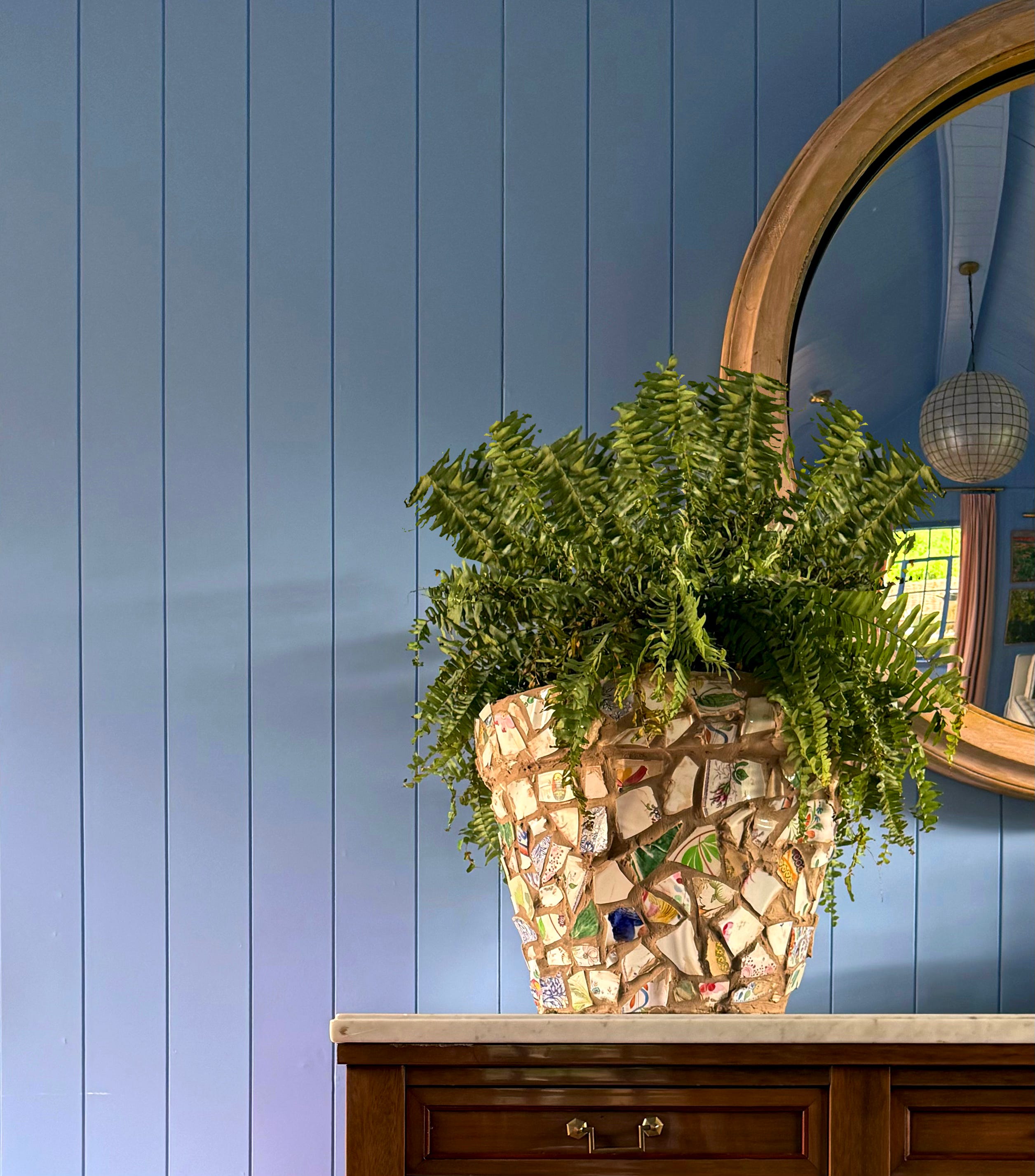
Last summer I found myself in a dusty brocante shop where I came across a pot that stopped me completely. The piece was covered in broken ceramics with the most prominently displayed piece having"Amitié” inscribed on it. This word, meaning friendship, had been finding me for the better part of a year along with the deeper question of what it actually looks like, and I couldn’t stop myself from buying each piece once I had discovered them. There was no question that this pot had to be mine. After this purchase, in true form, I slipped down the rabbit hole to learn more about this unique craft.
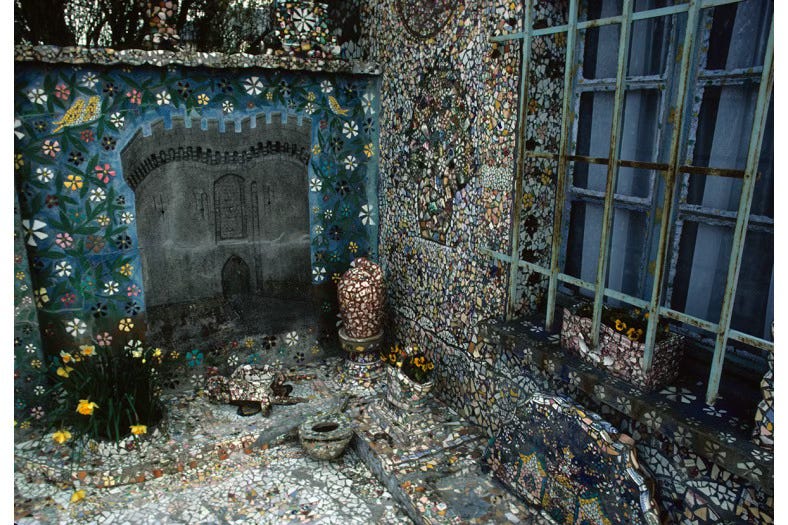
Pique assiette is the French mosaic tradition of making something beautiful from broken things and translates loosely to "stolen from the plate". Raymond Isidore, a French postal worker with no formal training, spent decades covering his entire house and garden in mosaic made from broken crockery and glass, finishing in 1962. While he’s not the only one to have practiced this craft I think I’ll be hard pressed to find someone more committed.
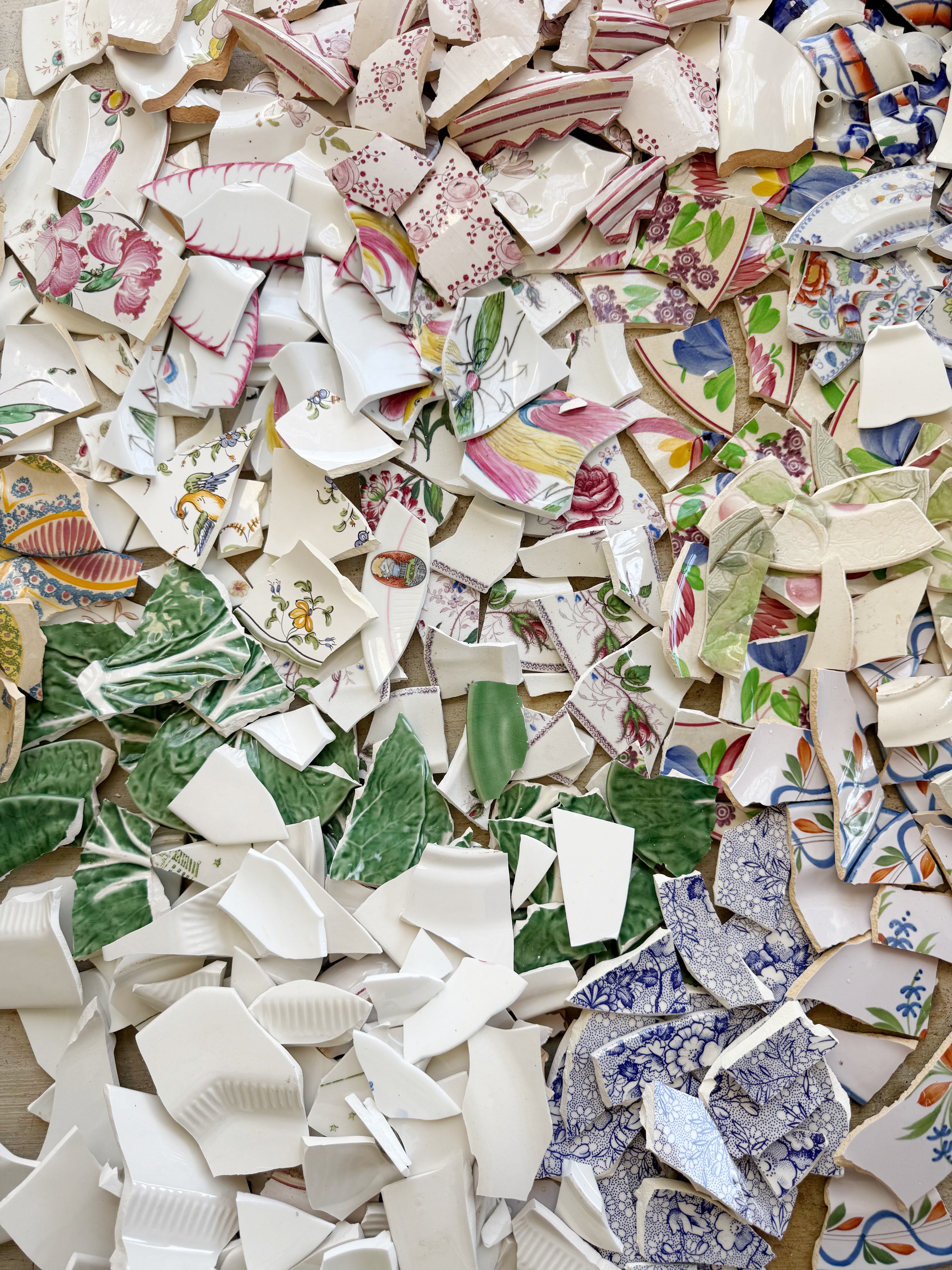
Inspired by the idea I began keeping a box of the lost pieces. The plates that didn’t survive shipping, the ones that slipped just slightly on a drive and shattered at my feet the moment I opened the door, the ones that met their end at the hands of a long and full evening with friends and children and all the beautiful chaos that comes with both.
After accumulating a bin full of damaged goods I sat down with my oldest daughter and we set out to create our own pique assiette pots. Pressing the pieces onto terracotta, finding where each shard wanted to go, watching something coherent and lovely emerge from what had previously represented loss or a mistake. Even though they’ve just been completed these pots feel like some of the most precious things I own.
The second rabbit hole arrived this week entirely uninvited, as some of the best ones do. I first discovered the world of the Pearly Kings and Queens of England when looking through images of Battersea Decorative Fair and Gilbert Bannerman had this incredible button encrusted coat. My eyes popped and I couldn’t help but squeal at this collection that had been so lovingly crafted.
In research I realized that the tradition dates to the 1880s in London’s East End, when a street sweeper named Henry Croft, an orphan who had grown up with nothing, began sewing pearl buttons onto his suit in an effort to stand out enough to attract attention and raise money for charity. He was inspired by the costermongers, the market traders of Victorian London who had long decorated the seams and edges of their clothing with a few pearl buttons as a mark of identity and pride. Henry took the idea and made it extravagant. He covered himself entirely. Head to toe in buttons, thousands of them, arranged into patterns and symbols and flowers and crowns. He became a figure of such warmth and generosity in his community that others followed, and an entire culture of Pearly families grew up around him, each family claiming a borough, each suit more elaborate than the last, all of it in service of charity and community and the profound human desire to make something magnificent out of very little.
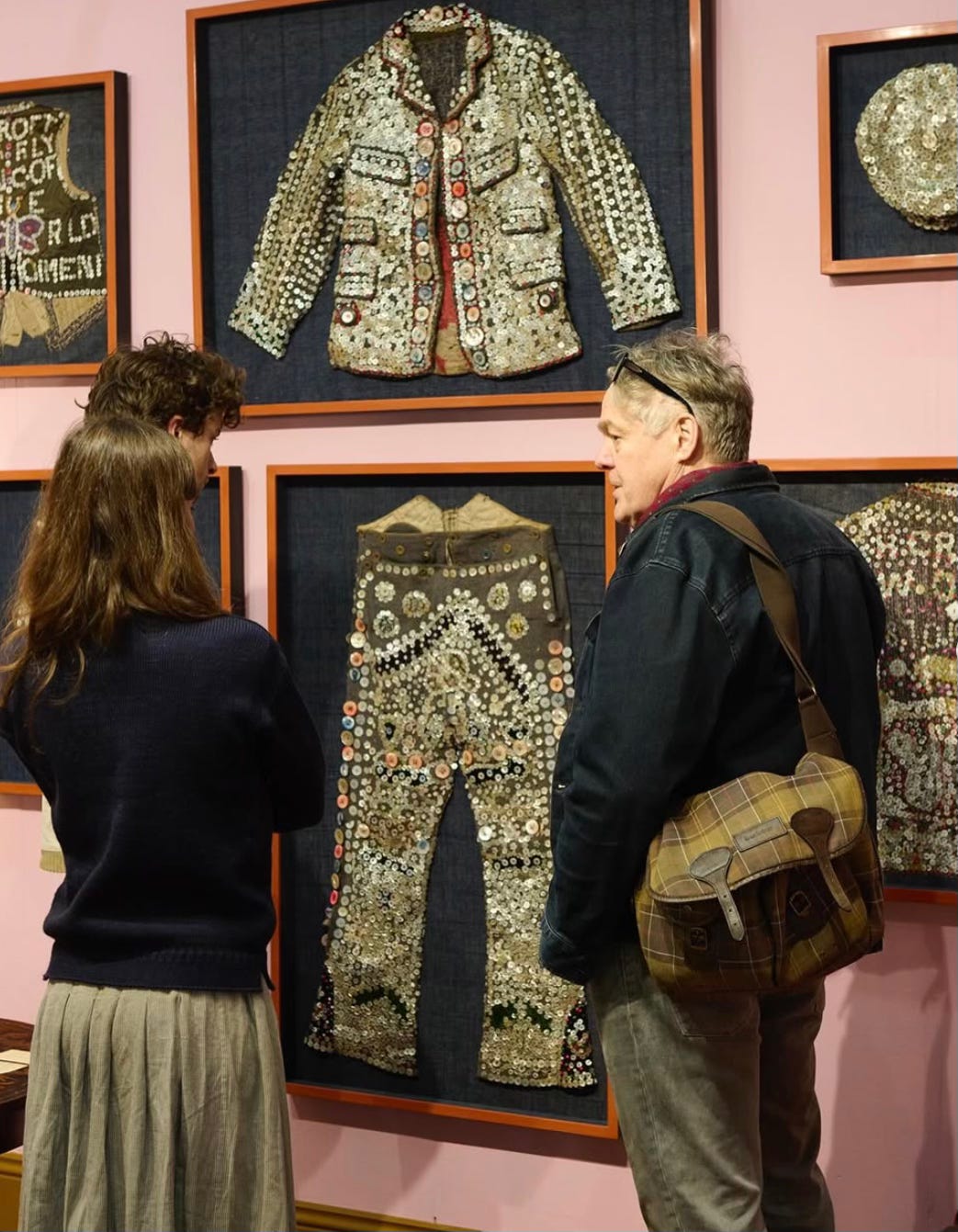
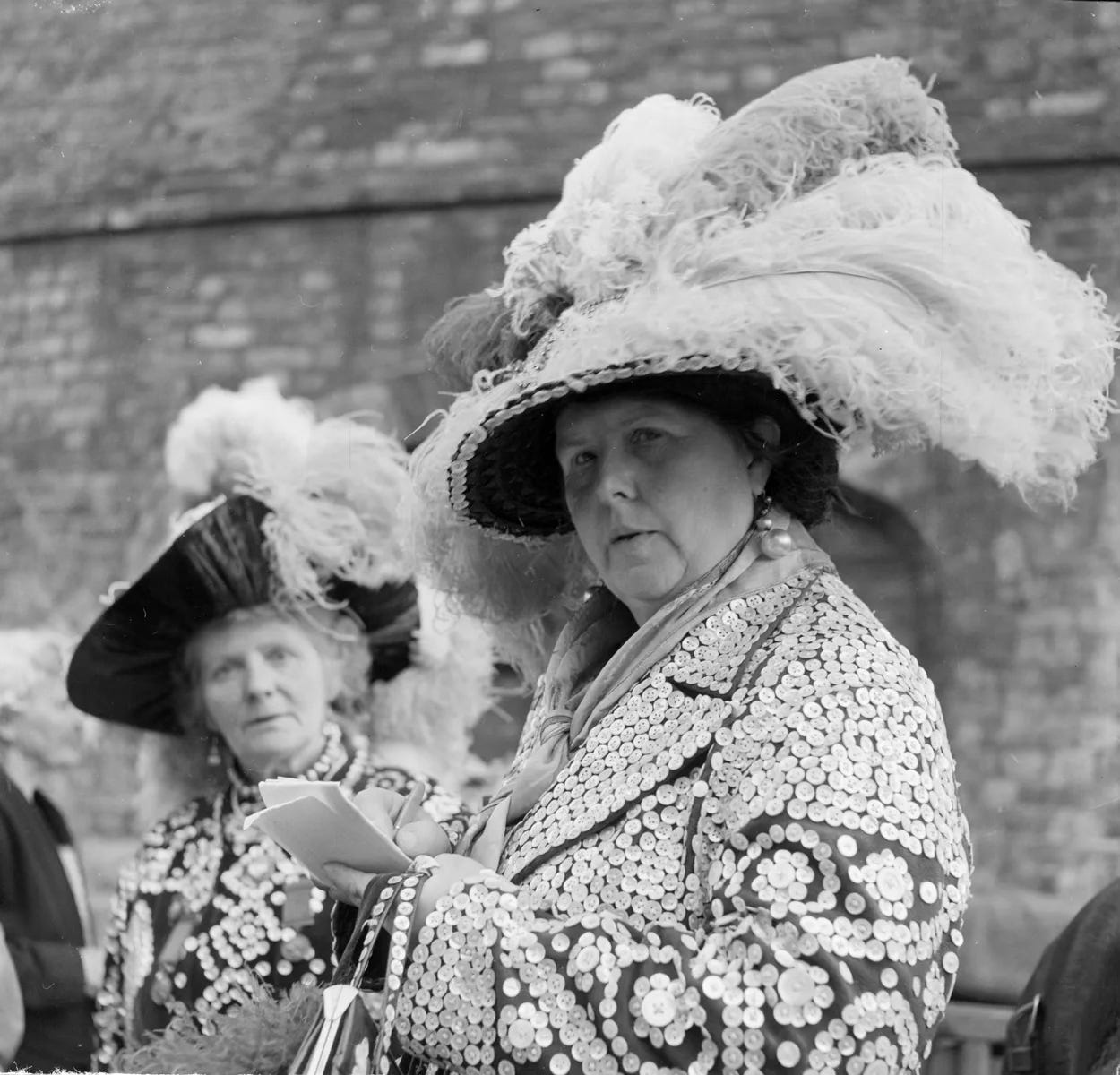
Some of the suits contain over thirty thousand buttons and are passed down through generations, repaired and added to and worn with complete commitment on ceremonial occasions that continue to this day.
And so now I’m fostering a new intention. I’ve been noticing buttons for years at estate sales, antique malls, flea markets, warehouse finds. The beautiful ones, the strange ones, the ones that clearly came from something beloved. I’ve been buying them without a plan, which is always how the best plans begin. What I’m imagining now is collecting them more deliberately. Stitching them onto a textile with the same loving attention the Pearlies bring to their suits. Arranging them into something that is part portrait, part archive, part personal history. Framing it in a shadow box like the artifact it will be. I know it will take a long time, but that is entirely the point.
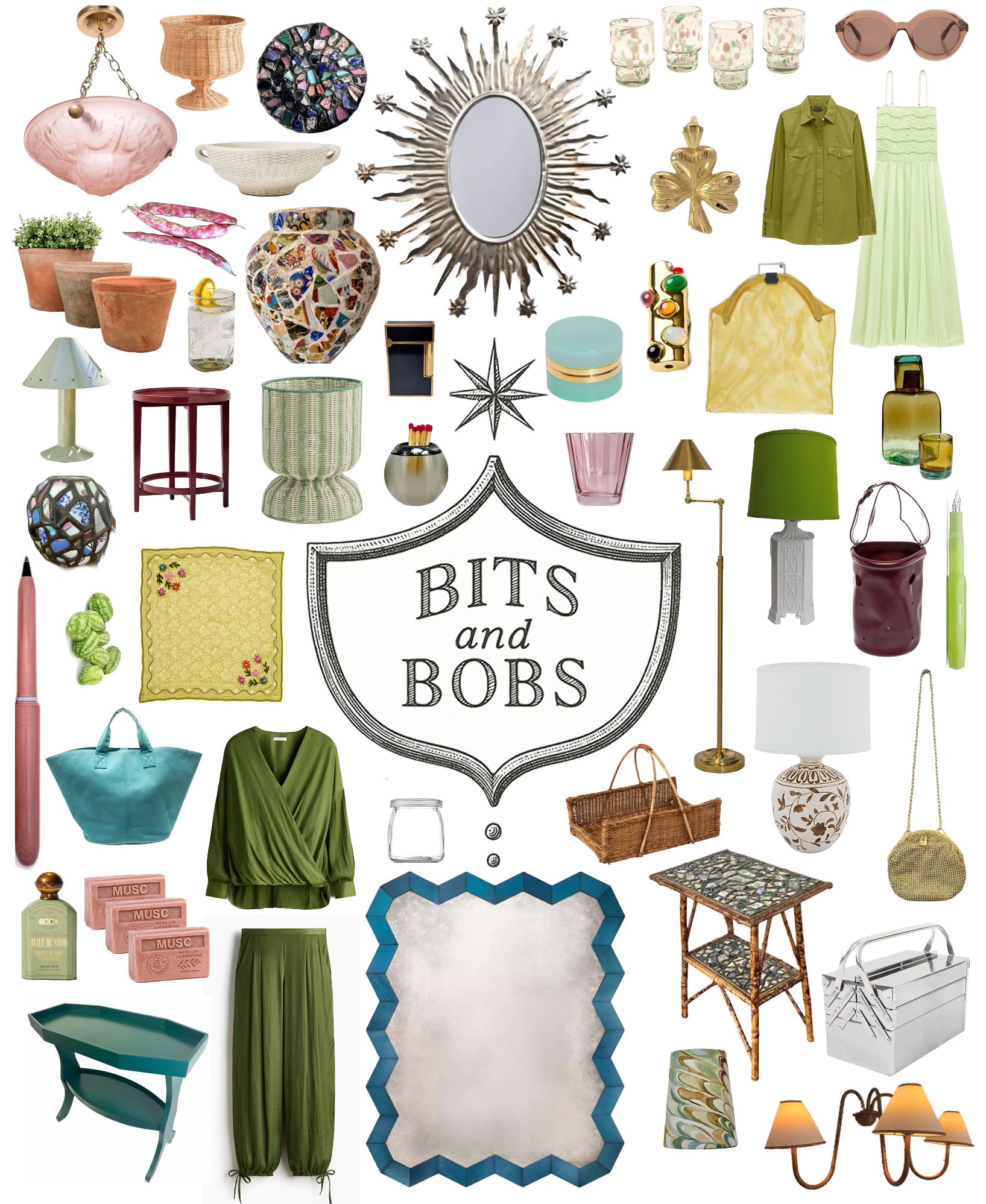
Links to Bits & Bobs are here - not a Shopmy member yet? Create an account here.
I’m always hunting, layering, looking for pieces for clients, and stumbling upon things I can’t pass up for myself. It’s always a mix of high and low and this weeks Bits & Bobs is no different, but this weeks has some vintage incorporated, some seeds for your garden, and pique assiette pots should you fancy one for yourself.
Not a syllabus. Just the ones I keep returning to or finding myself pressing into someone’s hands.
The Creative Act, Rick Rubin. Quiet and spacious. It reframes creativity as a practice of attention rather than production and I return to it whenever I feel the pressure to perform crowding out the ability to notice.
Big Magic, Elizabeth Gilbert. Less about discipline and more about not letting fear make all your decisions. I come back to this one when I feel timid about something I want to try.
How to Do Nothing, Jenny Odell. Not about disengaging but about choosing more carefully what and who gets your attention. This one consistently helps me reorient toward depth over noise.
The Principles of Uncertainty, Maira Kalman. Part memoir, part visual essay, part philosophical wandering. It feels like spending time with someone who moves through the world slowly and notices everything. Always nudges me back toward wonder.
A Frame for Life, Ilse Crawford. Design as an act of care. I return to this when I need to remember that spaces are always about people first.
The Perfectly Imperfect Home, Deborah Needleman. A quiet argument for lived-in beauty over polish. This one consistently recenters me on why home matters and what it’s actually for.
Anam Cara, John O’Donohue. More philosophical, more poetic, but deeply useful when I’m thinking about belonging and beauty and the inner life that makes the outer work possible.
Why don’t you pull every book off your shelf that you bought with good intentions and spend one evening deciding which ones you actually want to read? Return the ones that were never really for you or no longer are. Make room for what will resonate now.
Why don’t you reach out to someone whose work you genuinely admire and tell them so? Not a comment, not a like, a real message. Specific and sincere and without an agenda.
Why don’t you find one person in your life who is making something, anything, and ask them about it with your full and genuine attention? Not to advise, not to compare, not to redirect the conversation toward yourself. Just to understand what they’re building and why.
Why don’t you give one morning a week to the work that has no deadline and no client and no deliverable? The work that exists purely because you are curious about it. Protect it the way you protect everything else on the calendar, because it is the thing that feeds everything else and it will be the first thing you sacrifice if you let it.
Why don’t you go somewhere alone this season, a museum, a garden, a part of your city you don’t usually visit, and move through it slowly and notice what you notice? Your eye is always gathering. Give it somewhere worth going.
Why don’t you write down what you actually want the work to feel like this year? From the inside, on an ordinary day, when no one is watching. Keep that somewhere you can see it and refer to it when things start drifting.
Why don’t you let something you make this season be imperfect and show it anyway? Not as a disclaimer, not with an apology attached, not framed as a work in progress to soften the exposure. Just finished enough and honest enough and yours enough to share. Polish has its place. But so does the thing that is still a little raw.
This is where I am. Not at the end of something or the clean beginning of something else, just somewhere in a season. Keeping the box of broken things. Hunting for buttons. Letting the threads connect where they want to connect. It is slower than I expected and more interesting than I hoped.
Best,
SK
No posts
Comments
Nothing yet. Say the first thing.
Sign in to join the conversation.