

Are you tired of staring at screens?
Step outside. That’s it. That’s the whole article.
I’m joking — but only slightly. Because the research on what time outdoors does to the tired, overstimulated, screen-saturated nervous system is so consistent and so compelling that the prescription really is that simple. The complicated part is that most of us have stopped doing it.
This article is a case for going outside. Not for exercise, not for fitness, not to hit a step count or train for anything. Simply to be outside, in the natural world, as a practice of restoration and awe.
The research on the restorative effects of time in nature has been accumulating for decades, and it is remarkably consistent across cultures, climates, and contexts.
In the 1980s, environmental psychologists Rachel and Stephen Kaplan developed what they called Attention Restoration Theory: the idea that directed attention — the focused, effortful kind of attention required by modern work — is a finite resource that depletes over the course of a day, and that natural environments restore it in a way that built environments cannot. Nature, they found, engages what they called involuntary attention — the effortless, almost automatic noticing that happens when you are watching clouds move or water flow or leaves shift in wind — and this effortless noticing allows directed attention to recover. (The Experience of Nature, 1989.)
In other words, nature is not just pleasant. It is where the mind goes to repair itself.
More recently, the Japanese practice of Shinrin-yoku — forest bathing, or the deliberate practice of spending time in the presence of trees — has generated a substantial body of research demonstrating measurable physiological effects. Dr Qing Li, one of the leading researchers in this field, has shown that time among trees lowers cortisol levels, reduces blood pressure and heart rate, boosts immune function through increased natural killer cell activity, and improves mood and sleep quality. (Forest Bathing: How Trees Can Help You Find Health and Happiness, 2018.)
You do not need a forest. A park will do. A garden. A street with trees. A single bench with a view of the sky. The effects scale down with the dose, but they do not disappear. Even brief exposure to natural elements — daylight, birdsong, the sight of growing things — has measurable restorative effects on the stressed nervous system.
The outdoors is not a luxury. It is maintenance.
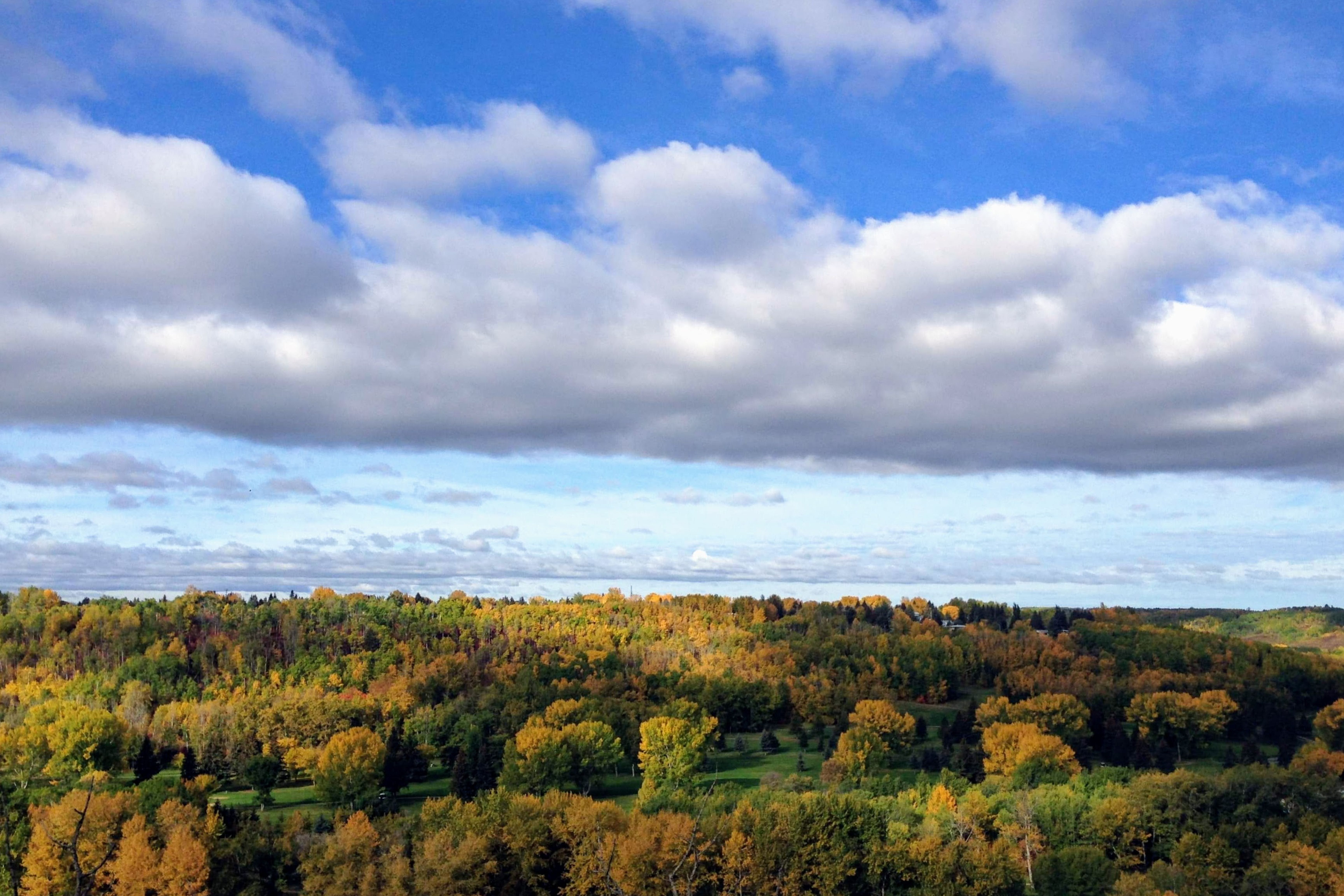
Here is a number worth sitting with: according to research from the Environmental Protection Agency, the average American spends approximately 93 percent of their time indoors. That figure includes time in buildings and time in vehicles. It leaves roughly thirty minutes a day, on average, in open air.
The figure for Canadians and most Western Europeans is similar.
Thirty minutes. For a species that spent the overwhelming majority of its evolutionary history outside, hunting, gathering, walking, tending, resting under open sky.
The writer Robert Macfarlane, who has spent his career exploring the relationship between landscape and the human interior, argues in The Wild Places (2007) that the loss of contact with natural landscapes is not merely an environmental concern but a psychological one. We are shaped by the environments we inhabit, and when those environments are entirely human-made — artificial light, controlled temperature, engineered sound — something in us goes quietly unmet.
This is not nostalgia for a simpler time. It is a recognition that the nervous system evolved in relationship with the natural world, and that severing that relationship has costs we are only beginning to measure.
We explored in Article 4 how the body is the most direct path to the present moment. Nature extends that argument outward: the natural world is the most direct path to the kind of presence that feels genuinely larger than yourself. The kind of presence where the usual self-focused commentary of the mind goes quiet, and something else — older, quieter, more connected — becomes available.
If going outside is so restorative, so freely available, so well-evidenced as a practice of both wellbeing and wonder, why do so many of us do so little of it?
The honest answer is that modern life has made indoor existence extraordinarily comfortable and convenient, and going outside requires habit and commitment.
There is the weather. There is the busyness. There is the feeling that a walk is not productive in any measurable way, that the time spent outside is time not spent on the list. There is the pull of the screen, which offers stimulation without requiring us to put on a coat.
And there is something subtler than all of these: we have gradually lost the habit of going outside for no reason. We go outside to get somewhere. To exercise. To walk the dog. But the idea of going outside simply to be outside — with no destination and no purpose beyond the being there — feels strange to many of us. Almost indulgent.
I want to make the case that it is not indulgent. It is essential.
The naturalist and writer Robin Wall Kimmerer writes in Braiding Sweetgrass (2013) about the concept of reciprocity with the natural world: the idea that the land offers us things — beauty, restoration, perspective, a sense of belonging to something larger than ourselves — and that our attention and presence are, in some sense, what we offer in return. “The trees act, not from self-interest, but from the nature of trees,” she writes. The world is generous by its nature. The question is whether we are present enough to receive what it is offering.
Going outside, in this sense, is not an errand. It is a relationship. And like all relationships, it requires showing up.
I want to say something about where I live, because it matters.
Alberta is not always easy to be outside in. The winters are long and genuinely cold, and the temptation to stay inside from November through March is entirely understandable. There are mornings when the temperature makes going outside feel less like a restorative practice and more like an act of minor bravado.
And yet.
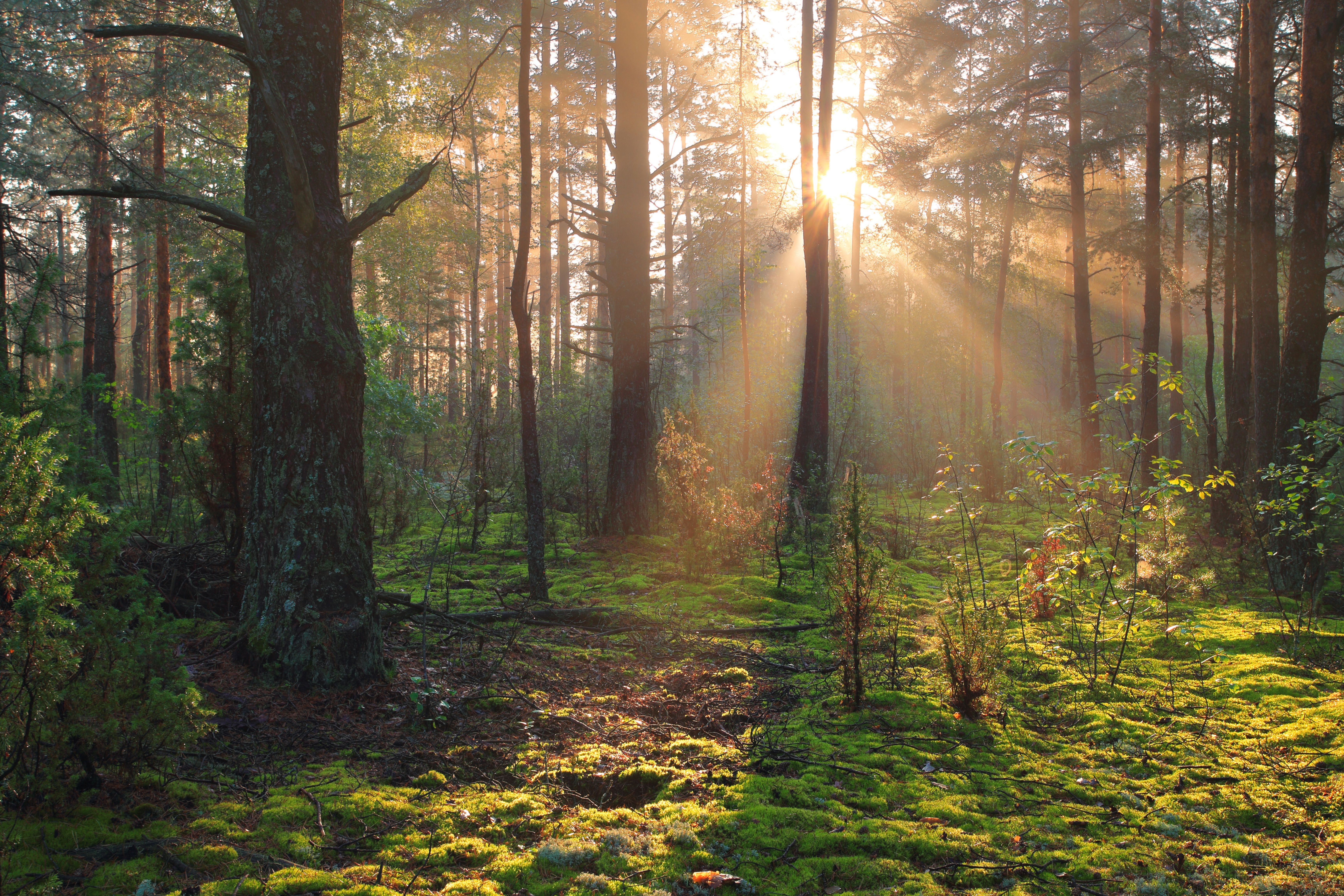
There is a particular quality of light on a clear Alberta winter day that exists nowhere else I have experienced. The way snow holds silence. The particular blue of a prairie sky in January. The grand arch of endless sky - truly big sky country. The drama of a chinook arriving, the temperature swinging twenty degrees in an afternoon, the air suddenly soft and almost warm when an hour ago it was bitter.
In spring, the return of green after the long brown of winter has a quality that people who live in milder climates rarely get to experience — because they have never gone without it long enough to feel the full force of its return. The first crocuses. The first birdsong. The smell of the earth coming back to life.
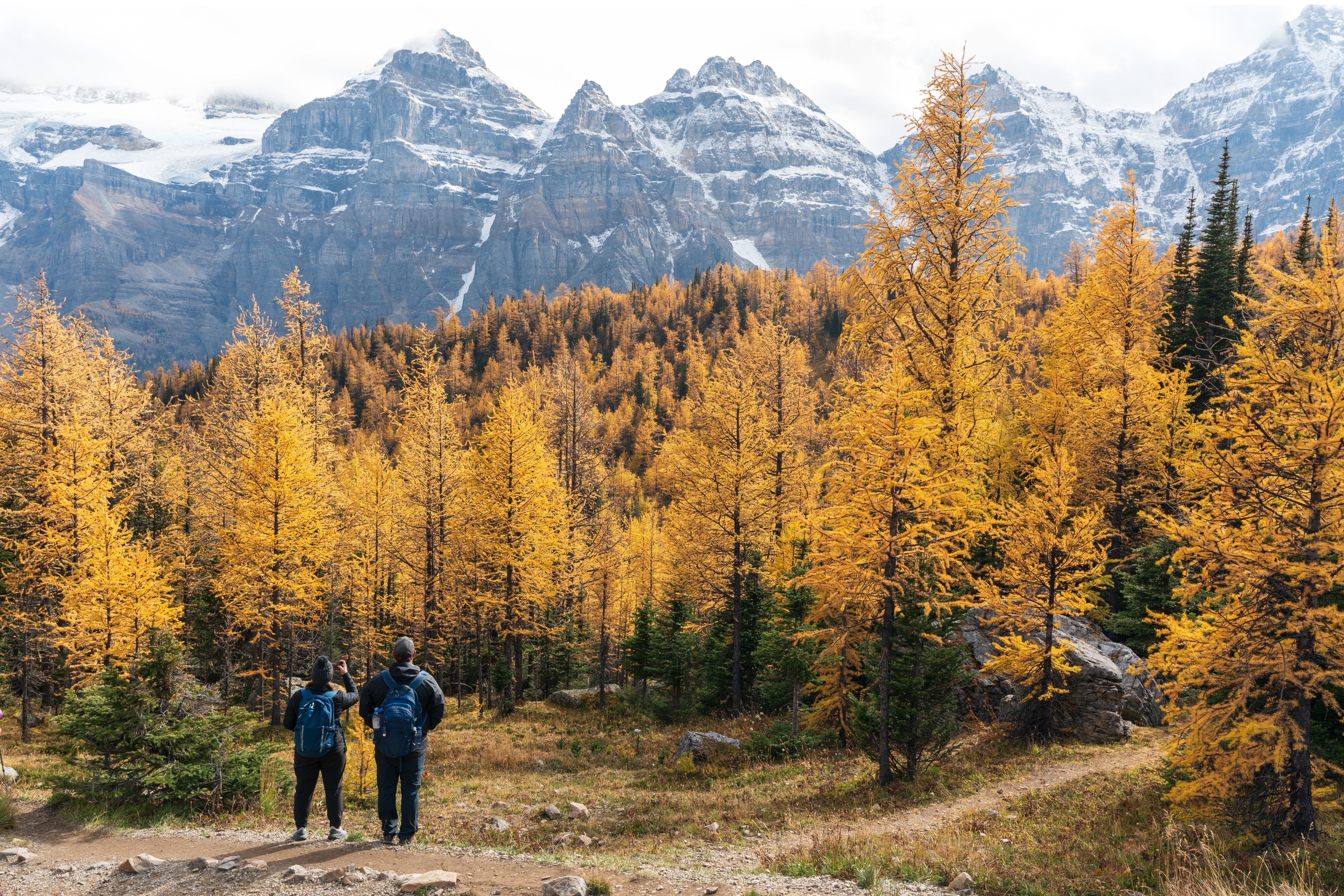
In summer, the long evenings of northern light — the sky still bright at ten at night, the crisp evening air. In autumn, the golden alpine larches that lights up the mountain valleys for a few extraordinary weeks before it is gone.
We live in a place of great natural beauty that is, in its extremity and its drama, designed to produce awe. The owl I described in the essay that began this series appeared in the trees of an Alberta forest. He was not a coincidence. He was a reminder of what is always out there, waiting for the person willing to step outside and look up.
The weather is not the obstacle. The habit is the obstacle. And habits, as we have been exploring throughout this series, can be changed.
I want to address something directly, because not everyone reading this has easy access to forests or wilderness.
Urban nature counts. Fully and without qualification.
A park bench with a view of the sky. A street lined with mature trees. A community garden. A river pathway. A single large tree in a courtyard. The birds that come to a feeder on a balcony. These are not consolation prizes for people who can’t get to the wilderness. They are genuine access points to the restorative and awe-generating effects of the natural world.
The Kaplan research found that even views of nature through a window — trees, sky, greenery — had measurable restorative effects compared to views of built environments. Hospital patients with window views of trees recovered faster than those with views of walls. Office workers with views of nature reported lower stress and higher job satisfaction.
What matters is not the grandeur of the natural setting. What matters is the quality of attention you bring to whatever natural element is available to you. The pigeon on the city ledge, watched with genuine curiosity, can offer something. The weed pushing through the pavement crack, attended to carefully, has something to show you. This is not a romantic exaggeration. It is a practical reframing: nature is not somewhere you have to travel to. It is wherever you are willing to look.

This week’s practice is the simplest in the series, and possibly the most important.
Go outside every day. That is all.
The guidance:
Once each day, spend at least fifteen minutes outside with no purpose other than being there. No fitness goal, no destination, no podcast or music. Just you and whatever is outside.
Walk if you want to walk. Sit if you want to sit. Stand and look up at the sky for fifteen minutes if that is what calls to you.
Leave your headphones behind. This is not optional. The soundscape of the natural world — birdsong, wind, rain, the particular silence of a cold morning — is part of what the nervous system is receiving. Filling that soundscape with a podcast removes most of the benefit.
Look up more than you look down. The sky changes constantly and most of us rarely look at it. Make it a habit this week to notice the sky at least once each time you are outside: the quality of the light, the shape of the clouds, the particular colour of the horizon.
Notice three things you would not normally notice. Not the familiar landmarks, not the usual route — something specific, something small, something that is actually there today that you have been walking past without seeing.
If the weather is difficult, go anyway. Not for long. Not heroically. But go. The quality of air in a morning, the particular light of an overcast November day, the sound of rain on leaves — these have their own gifts. They are different from the gifts of a warm summer evening, but they are real.
If you tried my Wonder guided journaling practice after Article 3, this is a beautiful moment to return to it.
Because what going outside does — genuinely, unhurriedly, without a purpose or a destination — is fill the well that wonder draws from. You return from an outdoor practice with fresher eyes, a quieter nervous system, and a kind of receptivity that is harder to access from inside. The journaling that follows an outdoor practice tends to go somewhere that indoor journaling, for all its value, does not always reach.
If you haven’t tried Wonder yet, this is perhaps its most natural home: after a walk, while the impressions of what you saw and felt are still present, before the day has had a chance to cover them over.
You will find it in my guided journaling collection on InsightTimer.

There is a line from the naturalist John Muir, who spent his life in the wild places of North America and wrote about them with a joy that has never quite been matched: “In every walk with nature, one receives far more than he seeks.”
This is the promise of going outside. Not that you will find what you are looking for. Not that the walk will solve the problem you are carrying or answer the question you have been turning over. But that you will receive something you did not know you needed — something the natural world has been holding for you, patient as trees, waiting for you to come and collect it.
The owl was in the tree long before we walked under it. The light on the winter snow has been extraordinary every clear morning for as long as there has been snow and light. The birds have been singing at the edges of the day without ceasing.
We just have to go outside to hear them.
Next in the series: The Evening Return — How to Close the Day with Intention and Gratitude.
Kaplan, R. & Kaplan, S. (1989). The Experience of Nature: A Psychological Perspective. Cambridge University Press.
Kimmerer, R.W. (2013). Braiding Sweetgrass: Indigenous Wisdom, Scientific Knowledge and the Teachings of Plants.Milkweed Editions.
Li, Q. (2018). Forest Bathing: How Trees Can Help You Find Health and Happiness. Viking.
Macfarlane, R. (2007). The Wild Places. Granta Books.
Muir, J. (1938). John of the Mountains: The Unpublished Journals of John Muir. University of Wisconsin Press.
United States Environmental Protection Agency. (2018). Report on the Environment: Indoor Air Quality.
Website: Passion Purpose Today
InsightTimer: Follow Me
Books: Focus Flow Formula and More Books
LinkedIn: Rachel Collins
SubStack: Mandala Card of the Day

Comments
Nothing yet. Say the first thing.
Sign in to join the conversation.