
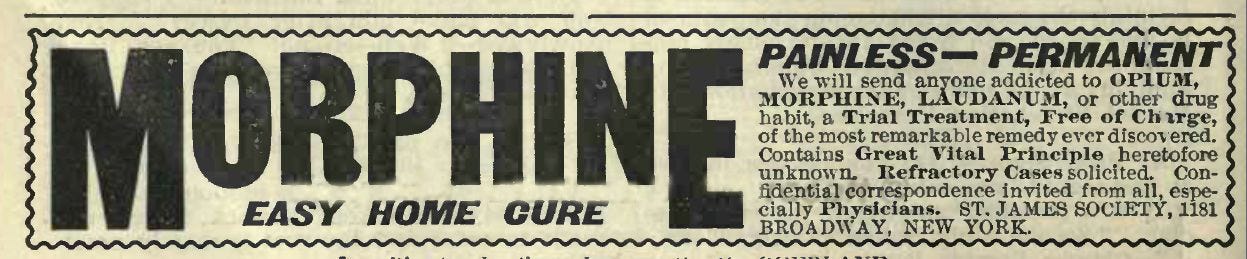
Opiates are both very good (they effectively treat many types of pain) and very bad (they are highly addictive, and if you take too much you stop breathing and die). In many ways, the final boss of pharmaceutical sciences is developing something that’s just as good as opiates at treating pain but without the very significant downsides.
The fundamental challenge here is that the target for pain relief (the mu-opioid receptor) is also the receptor that causes the euphoria that leads to addiction, and the respiratory depression that leads to overdose.
We had the opposite situation with cocaine as a local anaesthetic. The euphoric and addictive effects of cocaine are via the dopamine transporter, while the anaesthetic properties are through an entirely different target (voltage-gated sodium channels). So it was, maybe not trivial, but achievable with early 1900s medicinal chemistry to find/synthesise a bunch of non-addictive local anaesthetic drugs.
Opiates have had a much harder time separating pain relief from euphoria and addiction. Much of the strategy is on getting a low level of activation of opiate receptors for pain, while avoiding (deliberate or incidental) addiction-causing euphoria, as well as never getting to receptor activation levels that cause the respiratory depression that can be fatal. If you’re not in a hospital on a time-controlled morphine drip though, this is very hard to achieve, especially since the counterparty in many cases is a highly motivated drug addict.
This is a list of ideas and attempts to do this, rated subjectively by me for ingenuity and efficacy.
A prodrug is a drug that is inactive (or has very low activity) until it’s chemically modified by the body into something else. The categories were made for man — it’s always a complicated cascade of metabolites with varying activities, etc. etc. — but this is a useful framework.
Morphine prodrugs are, at least conceptually, a pretty good strategy. Drug addiction is to some related to the speed of onset of effect. Drugs that come on faster generate a much stronger association between the drug-taking and the effect (this is in part why smoking crack is more addictive than snorting cocaine, which is more addictive than chewing coca leaves). For a morphine prodrug, activity is bottlenecked on the rate at which your enzymes can convert it into morphine, and the blood concentration will cap out and not increase even if you take more.
There are two major morphine prodrugs1 relevant here: codeine and diacetylmorphine (heroin).
Efficacy: 6/10
Ingenuity: 5/10
Codeine is metabolised in the liver, where around 10% is converted to morphine by CYP2D6, which can then make its way to the brain for analgesic effects. Taking a massive dose of codeine won’t actually get you any more opiate effect once the enzyme is saturated. Generally pretty effective at keeping morphine levels from being intensely euphoric and addictive.
There’s a hiccup though: genetic variation. Of course all drugs vary in effect because of genetics, but codeine has incredibly high variability. That 10% conversion is for the baseline case. Around 5–7% of Caucasians are poor metabolisers who lack enough of the enzyme to get any analgesia from codeine. Another 2–3% are ultrarapid metabolisers who convert way too much into morphine due to multiple enzyme copies, to the extent that they can get opiate like side effects2. All of this varies by ethnicity, to the extent that Ethiopians are around 30% ultrarapid metabolisers. So codeine get’s dinged a few efficacy points here.
Efficacy: -5/10
Ingenuity: 2/10
Not a whole lot to say here. Most people are aware that Bayer marketed it as a non-addictive alternative to morphine. Unlike codeine, heroin crosses the blood-brain barrier rapidly and is quickly and near-totally converted into morphine, giving it a very fast onset of action, a rush of pleasurable euphoria, and massive potential for addiction.

Efficacy: 10/10
Ingenuity: 9/10
This is probably the most promising strategy we have and by far my favourite (see the name of this blog).
Here the idea is to put a cap on opiate receptor activation right at the receptor level. Classically, drugs are either agonists (they bind the receptor and activate it) or antagonists (they bind the receptor and do nothing, preventing agonists from binding). Partial agonists3 are a relatively newly discovered class of drugs that bind the receptor but only activate it, say, 20%. So no matter how much you take, you’re only ever going to hit 20% receptor activation, even if every single receptor has drug bound.
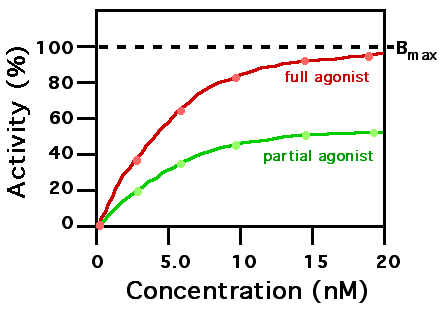
As an added bonus, every receptor with a partial agonist bound is “blocked” (antagonised in pharmacology speak) and can’t get activated by any other opiates you might take.
So the idea is you take the partial agonist, get enough opiate activation to give pain relief, but taking more has a hard ceiling on euphoria/respiratory depression. Similar concept to prodrugs, but we’re working at a layer closer to the actual effect.
We also have decent real world evidence that unlike most clever-sounding receptor pharmacology ideas that crumble upon contact with messy biological reality, this one actually works in practice. Buprenorphine (the flagship partial opiate agonist) shows no real increase in respiratory depression at higher doses and is by all accounts pretty good at not getting people high.
You can read a good article here from a niche blog you’ve probably never heard of on its use in treating addiction.
Ingenuity: 3/10
Efficacy: 2/10
Lame and boring.
Full disclosure: I loved my pharmacology degree but absolutely hated the formulation courses and found them all incredibly boring, so this may be somewhat biased.
Here you just leave the active drug as-is but formulate it in such a way as to counteract crushing up the pills and snorting/injecting them. So rather than bottlenecking things at the receptor or metabolism level like prodrugs or partial agonists, the idea is to bottleneck the speed at which it can come into the body, preventing more abuse prone administration routes.
The main method is addition of polyethylene oxide. This is a polymer that is fused into the tablet such that it’s impossible to crush into a fine powder for snorting. Also, when it comes in contact with water, it swells up into a gel that clogs syringes and makes injection impossible.
I say impossible, but these methods don’t actually work to stop anyone halfway interested in getting high, since chemistry instruments like “a microwave” could be used to work around the formulation barriers. Finally, since our compound inside the mix is the same, the ingenious technique of “just take a lot more pills” is also pretty effective at getting high if all you have is crush resistant pills.
Efficacy: 1/10
Ingenuity: 10/10
I lowkey love this even though it never really took off. Rather than any complicated or advanced formulation or pharmacology development, you just mix a load of capsaicin into the tablets before you put a coating on. This idea was patented in 2002.
Orally you wouldn’t notice, but intranasal use is obviously incredibly unpleasant. Intravenous use would apparently be fine, but, to quote directly from the patent:
Should the abuser miss the vein by even a little, the pain from the resulting subcutaneous capsaicin will be excruciating. This should provide a deterring effect against future abuse.
Sadistic and creative but never even made it to trials.
Efficacy: 1/10
Ingenuity: 3/10
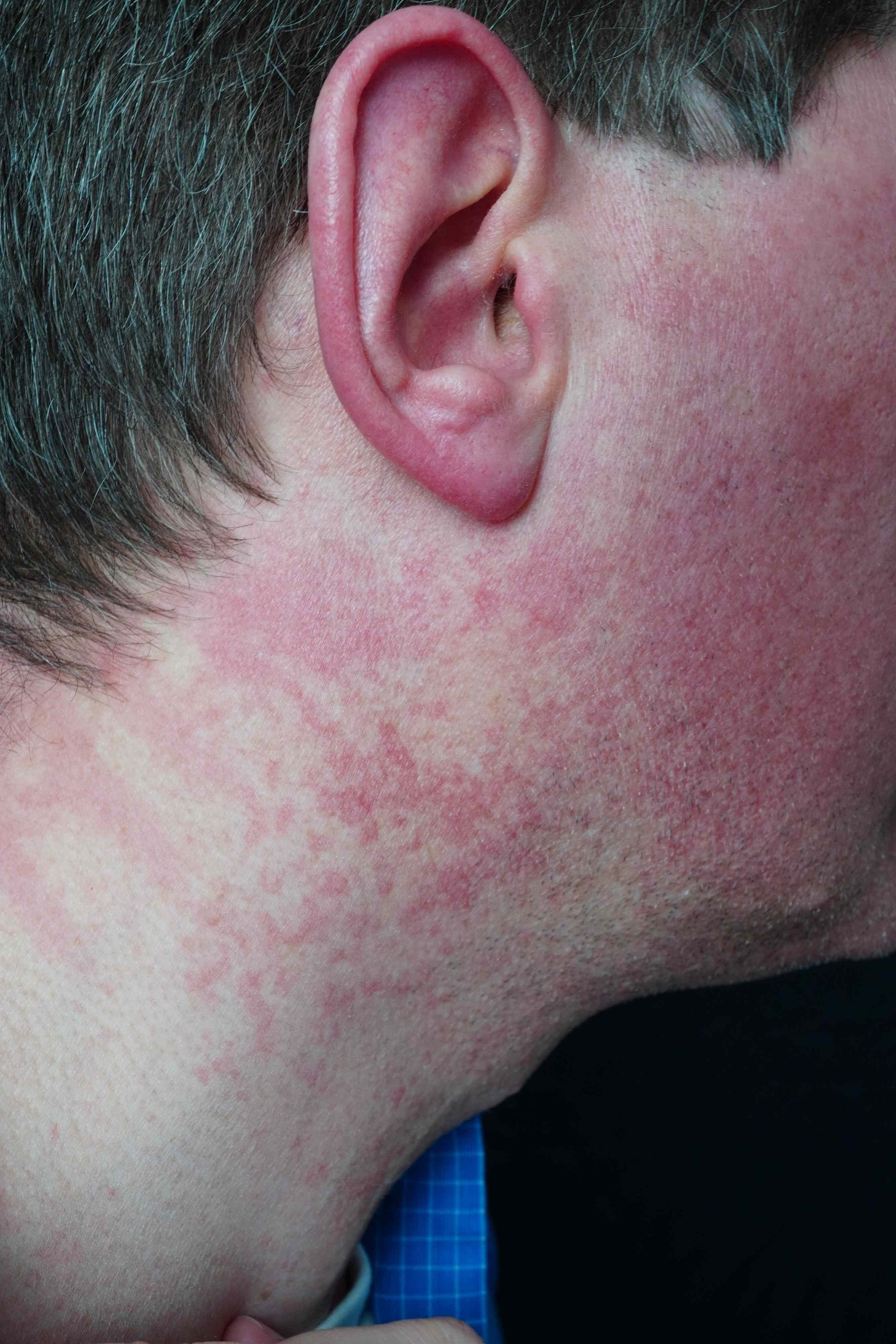
Niacin (vitamin B3) at high doses gives a distinct and unpleasant flush reaction — warmth, redness, tingling, and itching. Mixing this into opiates should be no issue at prescribed doses, but if you take too much, you get the red flush.
Fine idea, but falls apart after thinking about it for 5 minutes.
First, the niacin flush isn’t actually that bad4. High-dose niacin was an FDA-approved treatment for high cholesterol for years. Huge numbers of normies were voluntarily taking big, flush-inducing niacin doses daily. The deterrence for a drug addict would have been rounded to zero.
Second, to actually get flushing at a 3x dose you need the to be actually pretty close to the threshold at a 1x dose. Since this wasn’t a selective thing that only kicks in if you crush the pills or something, they were seeing flushing at normal oral doses in trials in some patients, which was ultimately the reason it was rejected by the FDA.
Get’s a few ingenuity points for being pretty out of the box.
These are both naturally occurring in the opium poppy, but I'm using "developed" to mean extracted, purified, and marketed.
Researching this article sent me down a codeine ultrarapid metaboliser rabbit hole. In 2006, there was a case of a mother prescribed codeine for postpartum pain. The baby died, allegedly due to morphine overdose, thought to be due to the mother being an ultrarapid metaboliser and the baby receiving a lethal morphine dose through breastfeeding. This was a flagship ultrarapid metaboliser case, and codeine was given a bunch of warnings and restrictions driven in part by this. However, the report of the case has been disputed since 2008, and as late as January 2026 there are still ongoing calls for retraction since the toxicology numbers apparently don’t make sense. Despite all this, the ultrarapid metaboliser phenomenon is clearly real, with other more clear-cut cases of low-dose codeine leading to dangerously high blood morphine concentrations, and genotyping of these cases often showing multiple copies of the relevant enzyme.
The world of partial agonists, inverse agonists (turn the receptor activation level down from the unoccupied state), biased agonists (activate the receptor in a specific way), and superagonists (give more activation than a full agonist) is weird and fascinating, and I’ll hopefully get round to a full article about it one day.
Fun fact: high dose niacin was used as the active control in a famous psychedelic experiment. If you want a blind control group for psylocibin, you can’t give nothing, but you also can’t give anything “psychoactive” that might have it’s own effects. The idea was to give niacin, so that the dramatic flushing would make sure subjects knew they got some kind of drug. Unfortunately (and maybe unsurprisingly) in practice every single participant was able to figure out whether they were given psylocibin or not.
No posts
Comments
Nothing yet. Say the first thing.
Sign in to join the conversation.