
The conditions most intensively farmed animals live in are objectively terrible. Lab grown meat taking over any appreciable fraction of the animal meat market would be a massive utility win. Many people including myself want this very very badly. There’s been a lot of investor input and research, and we have some legitimate products gearing up to go to market. Will 'similar enough' lab grown meat ever compete with animals on price at similar quality/consumer preference?
Here is one view you could take:
Obviously lab grown meat will be cheaper eventually. Growing a cow or chicken or pig in order to obtain meat is insanely inefficient. It involves converting energy, carbon and nitrogen into lots of stuff that isn‘t actually sellable meat. The animal makes skin, bone, sense organs, reproductive organs, brain, intestines to capture the energy, sometimes feathers. This stuff then gets either thrown away or we squeeze some low value product out of it. On top of that all these organs and tissues are constantly burning energy to function.
A quick chat with my therapist best friend Claude says that feed is typically the biggest input cost for a factory farm. There's a 5-25:1 input:output ratio for calories in growing an animal to eat, and only around 40-70 % of that animal by weight is a meat product you can sell. Even if we're not there yet, growing exactly the animal tissue we want and using the energy inputs for nothing else is inevitably going to be cheaper from a resources in products out perspective.
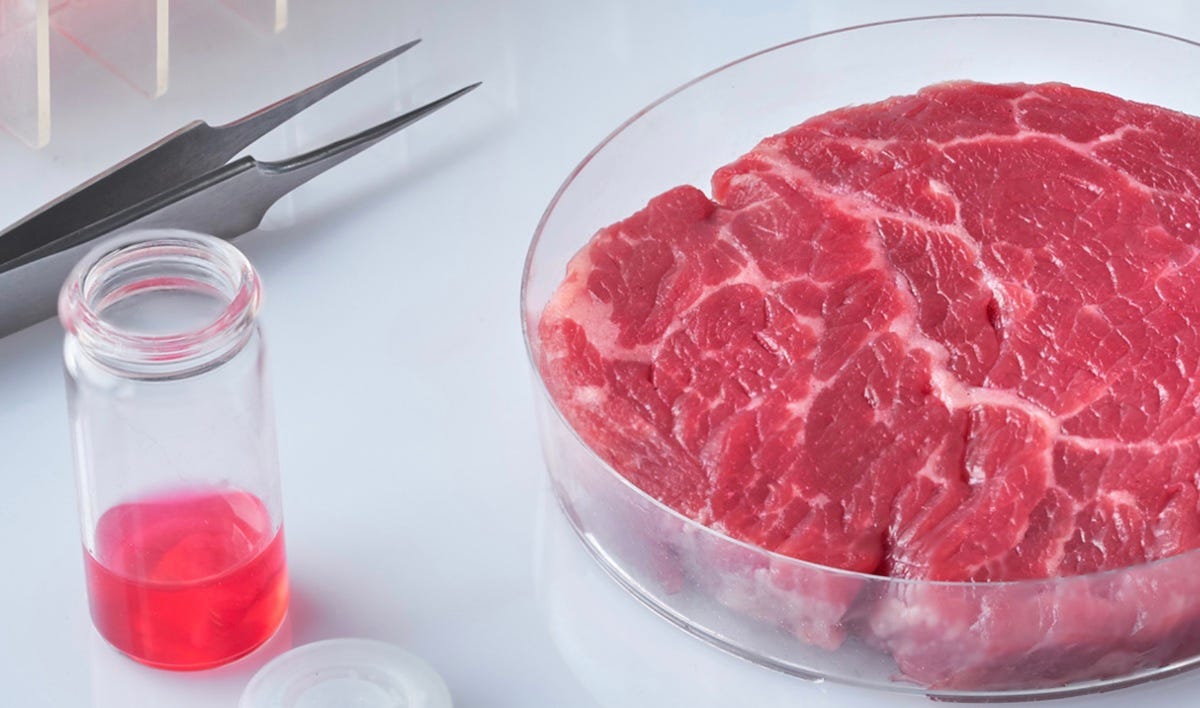
On top of that there's also space. Even a completely amoral factory farm as far as I know can't literally have animals (apart from chickens) stacked on top of each other, so the production area is basically the floor space, even if you do build massive hellish 8 story pig farms. Once we start growing in dishes and reactors and scaling vertically much higher density becomes possible.
Animals can get sick and spread diseases to each other, wiping out whole farms. Sure, cell cultures can also get infected with various things but they're at least segregated from each other and don't cough and sneeze. On top of animals infecting each other, high density factory farms are also incubators for mutations that let diseases jump to humans . This can be very costly to the farmer (in the first case) and the famer along with the rest humanity (in the second). This is a not insignificant tail risk.
So it seems straightforwardly true thinking about things from first principles that lab grown will inevitably become way cheaper than whole animal meat.
To these points one could quite reasonably respond:
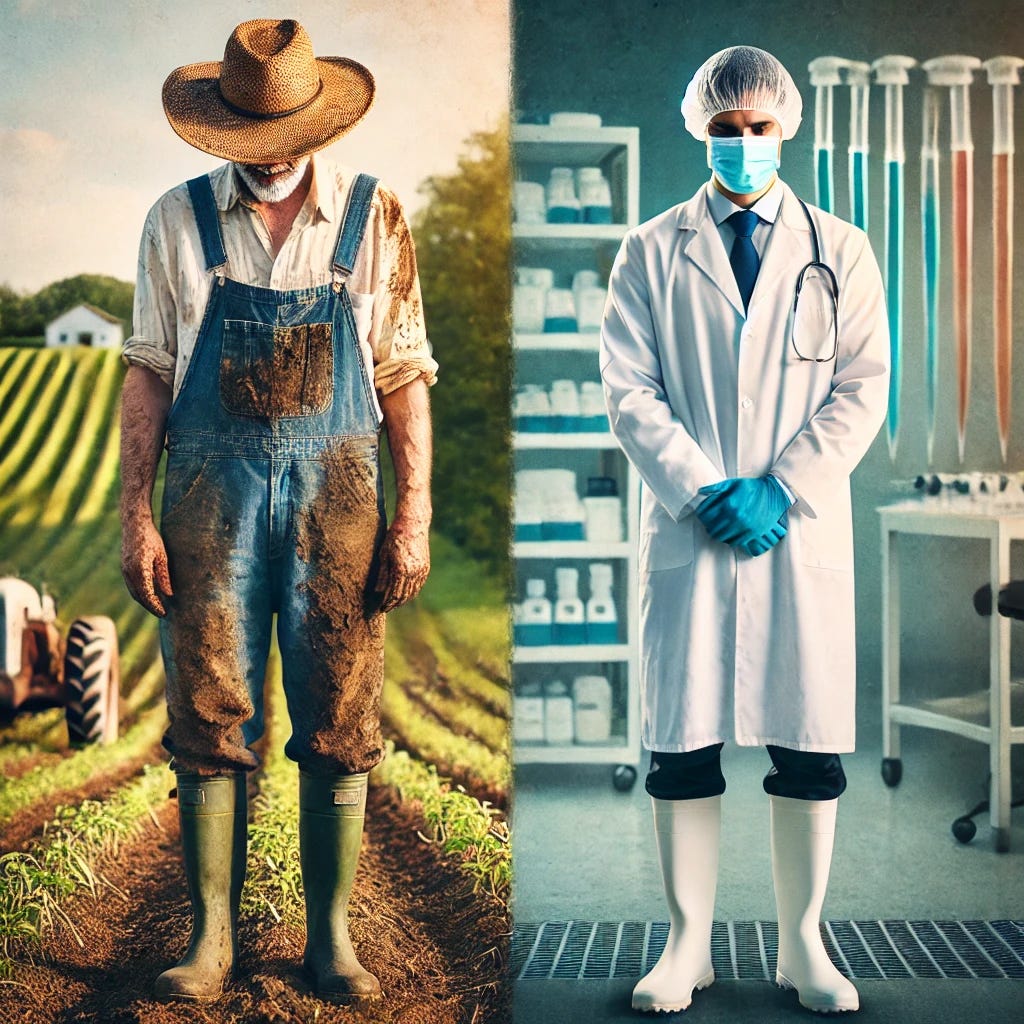
Ah but you're fundamental point just assumes all this non-meat stuff is an inefficiency. Let's take skin. You know what that does? It prevents infection. You ever seen what people working a farm wear compared to people working in a tissue culture lab? That's because cells in a dish are actually very bad at fighting off infection, and animals are pretty decent.
What about the digestive system? This is a highly optimised machine for taking cheap inputs, extracting what's needed and turning it into flesh. Sure maybe from a calories in, calories our perspective there’s a better theoretical ratio in lab grown meat, but animals eat grass and grain available by the truckload for pennies/kg while tissue culture need purified nutrients in exact ratios.
We could go on for the other organs, most of them are actually a relatively efficient way of building relevant components for turning feed into meat.
You also mention animals spreading infections and the risk of this jumping to humans, but this externality isn't actually reflected to any meaningful extent in the consumer price, which is the relevant metric here. As a species we are terrible at investing in preventing uncertain but very costly events (see, e.g. COVID, AI, wildfires, climate change, etc. etc.).
Which one of these two views wins out? I'm not actually sure. I think on balance I probably lean towards lab grown winning within a decade but biology is complicated and I'm fully willing to believe that there's challenges here that are much harder to surmount. I think we basically have two plausible scenarios though: one is that lab grown overtakes to become a clearly superior product at a much lower cost across all the relevant metrics, and one where it doesn’t and barely makes a dent in animal meat sales.
One unlikely baseline scenario is that price points and quality naturally end up kind of close and we naturally end up with anything more equitable than a 90 - 10% market split in either direction over an extended period of time. The prices may end up close for a while, but there's masses of technological development to be had on the lab grown side, and once it hits parity it's hard not to see another (relatively rapid) cost reduction of 10x on the cards.
It would be like if we discovered some totally new method for producing ammonia, completely unrelated to Haber-Bosch. It's either cheaper, and takes over nearly fully and the price of ammonia drops, or it isn't and no one uses it. It would be very weird if we found some completely novel chemistry that ended up after full depreciation costing roughly the same as our existing method.
Now, consumers might have more of a preference for how their food is produced compared to the preferences of industry for how raw nitrogen is produced. Even still, it seems like in any other comparable situation price and taste dominates any other preferences. For example: there's probably a neutral to very strong preference consumers have for chickens not to be tortured if they actually think about it. Cage free eggs are around 2x the cost, but cage free is still only 25% of the US market, and a lot of that is coming from restaurants and retailers deciding to move away from cage eggs in response to pressure from a small group activists (who, to be clear, are doing Gods work and should get massive points for actually moving the needle on a serious problem). Given the choice though, looking at the products next to each other on the shelf, nearly everyone will pick the cheaper option that they know tastes just as good.
It's unlikely that there's a significant amount of market sharing in a vacuum. There are some forces that could have us end up there though.
One possibility is that lab grown meat splits along culture war lines. If the Rogan, Trump, red tribe side of things ends up coming down hard on this and we don't see any softening of the culture war battle lines then this could easily push down the market share. Would culture war be enough to compensate for an identical looking prime rib that's 90% cheaper losing out?
Probably not without some regulatory shenanigans but regulatory shenanigans downstream of this could easily do it. Farmers are a pretty powerful lobby group, and lab grown meat is creepy, and very much dystopian and "slop"- coded. Farmers and the MAGA / new right could form a pretty strong coalition, and food is ripe for regulation (there’s already some lab grown mean bans in southern states). "Frankenfood" was a powerful marketing angle and the EU still effectively bans GMOs from food.
The flip side of this is once we can eat quality meat on the cheap without torturing animals maybe that will be enough to break the cognitive dissonance around it for many people. Technology can change morality (e.g. women's liberation was probably somewhat downstream of the invention of washing machines). Smart, well timed lobbying could be pretty effective in this direction, although general vibes are almost certainly the most important thing in making sure lab grown meat isn’t regulated out of existence.
No posts
Comments
Nothing yet. Say the first thing.
Sign in to join the conversation.