
The summer has thus far been absent of the harp and consumed with two things: trekking back and forth from Astoria to Morningside Heights, and studying for my Italian classes at Columbia, where I’m starting my PhD. The class is small, but lively. We are but two students and a patient professor, who enthusiastically goes into detail when asked about etymology or grammatical convention, and smiles blankly when we both slip into using French rather than Italian in our third-person conjugations of essere (to be).
One of the best aspects of the class is that we also delve into the nitty-gritty of film, music, and art. As if to compensate for the urban middle school experience I never had (having been homeschooled in Tennessee, myself), our teacher has arranged for a field trip to The Met. We’re set to listen to a talk in Italian by a curmudgeonly guide and also to give a short presentation on a painting of our choosing (on the condition that it’s Italian).
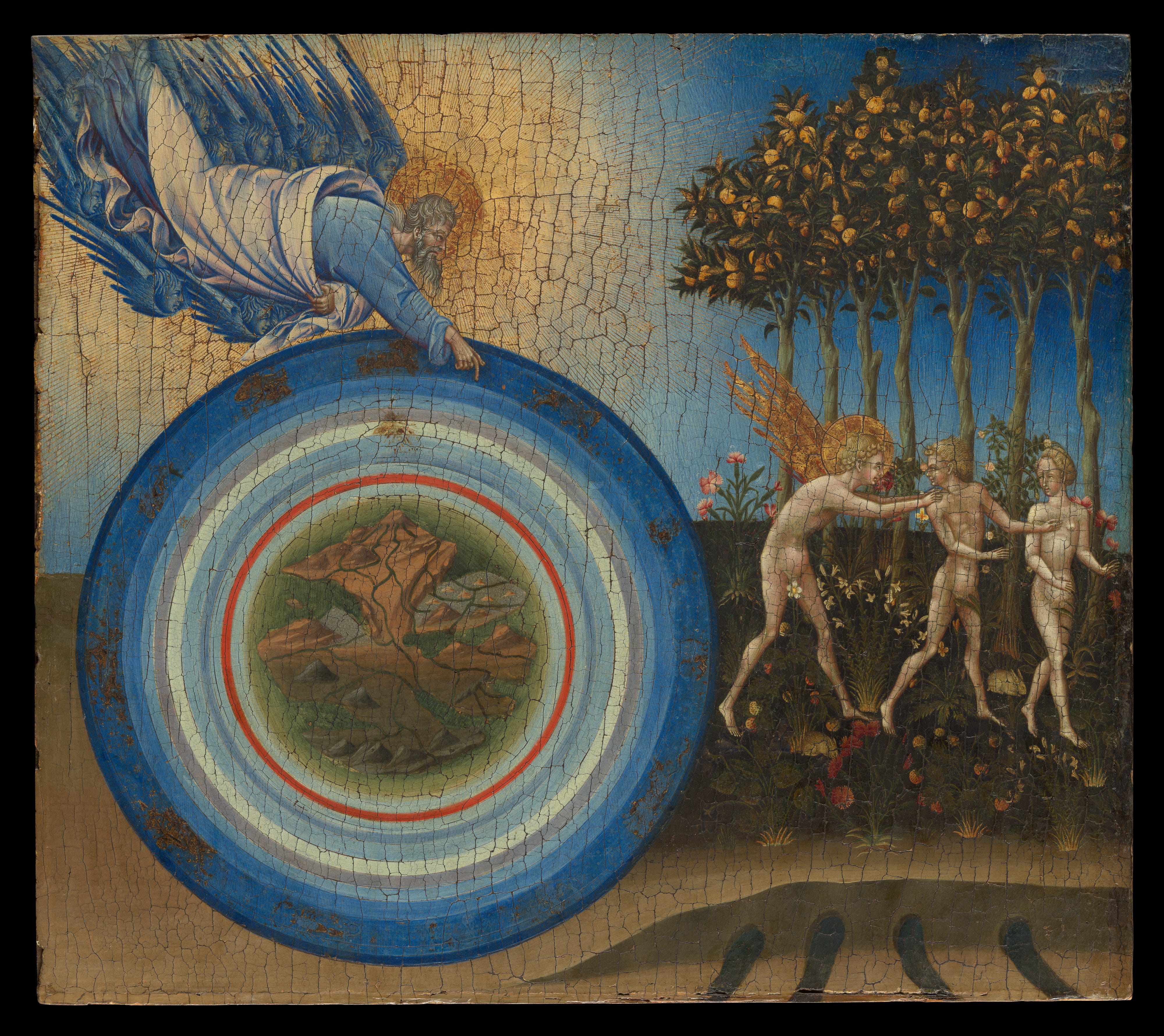
My research is likely to be caught up in late Medieval and Renaissance music, so I naturally gravitated towards one of my favorite paintings at the Met, Giovanni di Paolo’s The Creation of the World and the Expulsion from Paradise. The painting is a dreamscape of references, both biblical and not.
6 Thou coveredst it with the deep like as with a garment; the waters stand above the hills.
7 At thy rebuke they flee; at the voice of thy thunder they haste away.
8 They go up as high as the hills, and down to the valleys beneath; even unto the place which thou hast appointed for them.
9 Thou hast set them their bounds, which they shall not pass, neither turn again to cover the earth.
10 He sendeth the springs into the rivers, which run among the hills. (Psalm 104:6-10)
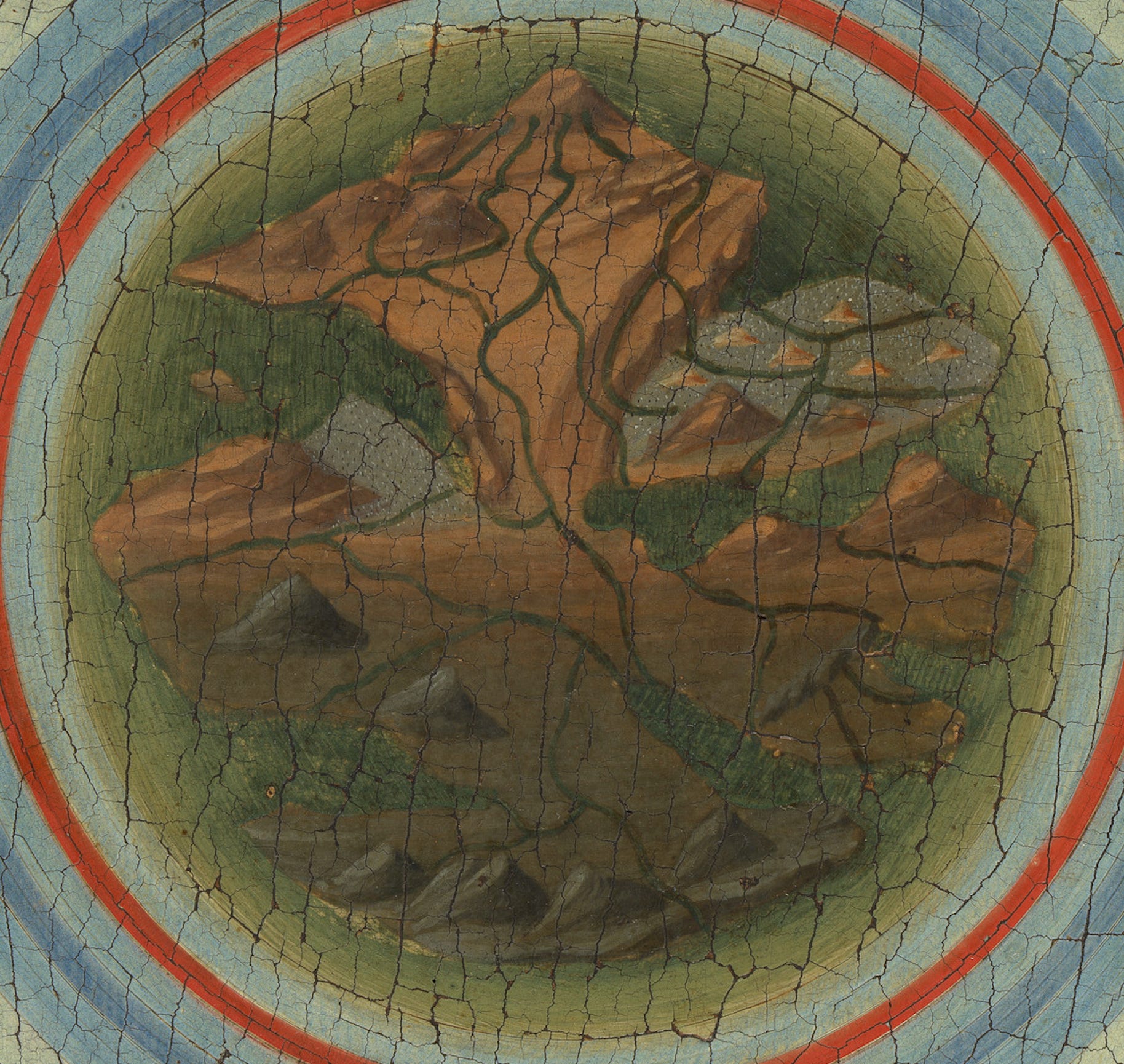
On the left, God creates Eden, complete with the four rivers of Pison, Gihon, Hiddekel and Euphrates. Mountains appear in gaps left by land masses from which rivers flow into nothing.
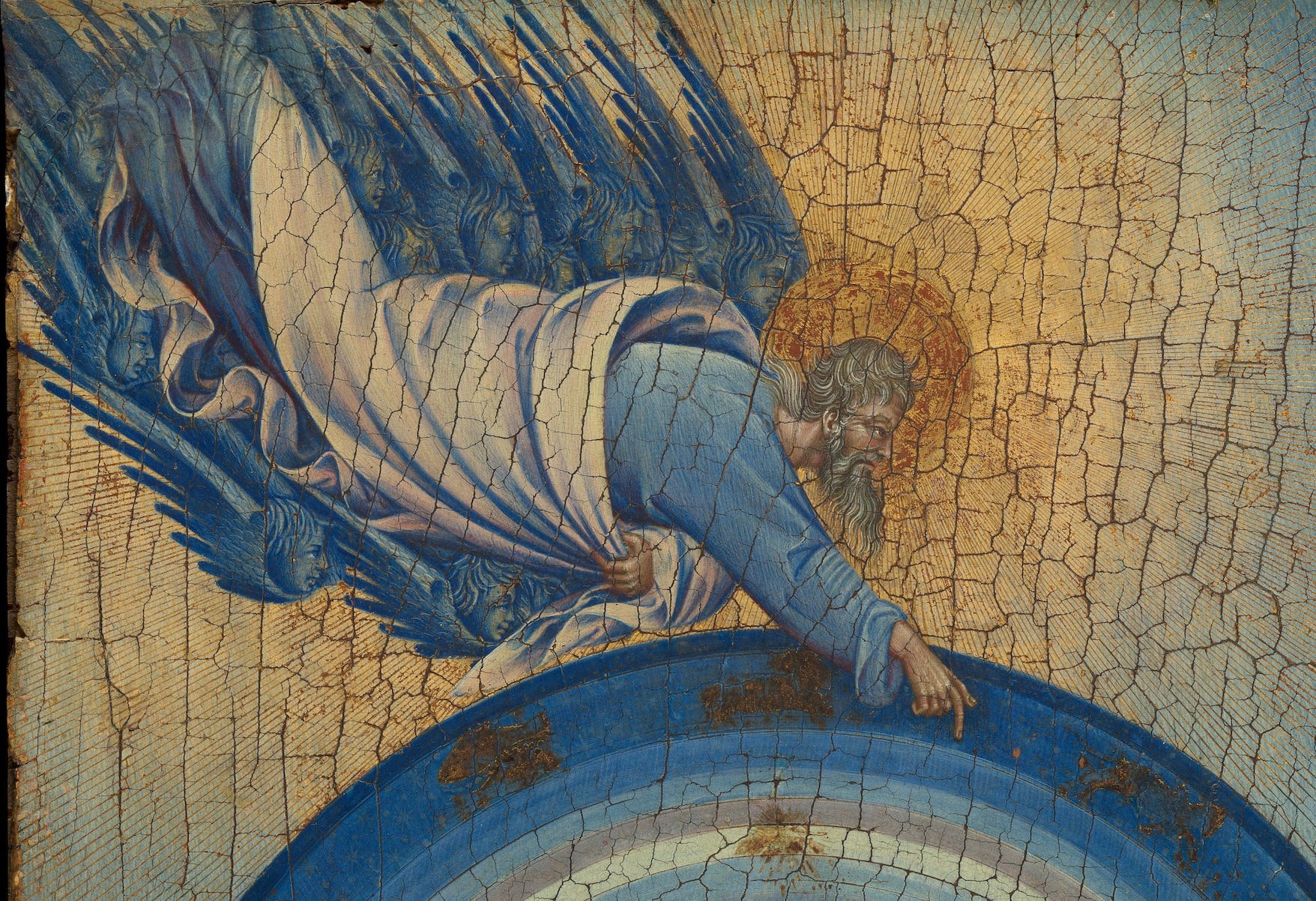
He descends as in flight, with angelic spirits (perhaps cherubim) emerging seamlessly from his blue garments.
3 Who layeth the beams of his chambers in the waters, and maketh the clouds his chariot, and walketh upon the wings of the wind.
4 He maketh his angels winds, and his ministers a flaming fire. (Psalm 104:3-4)
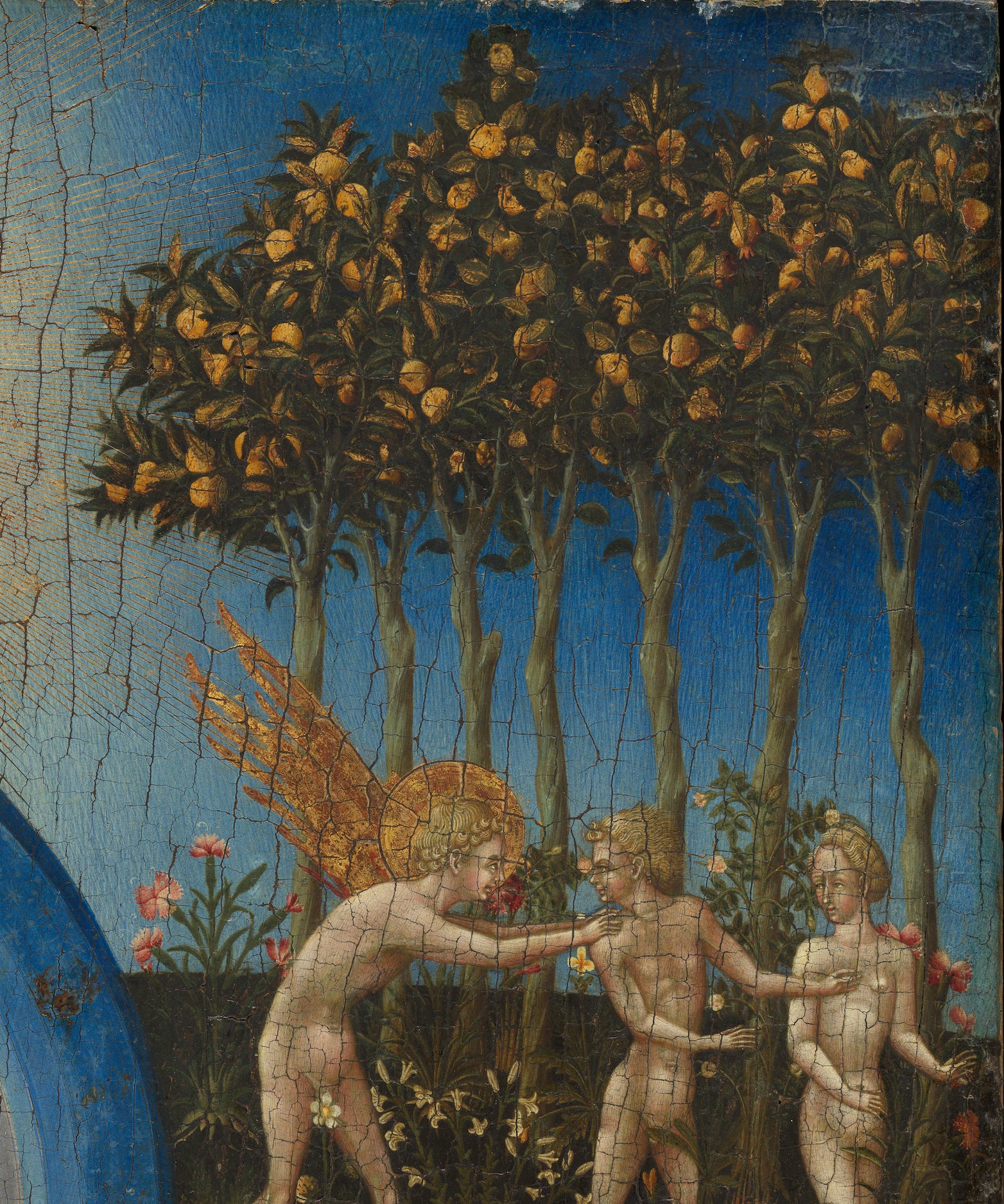
On the right, Adam and Eve are naked, being sent away from Eden by the angel. Adam’s hair is windswept, as if change is literally in the air. They have sinned. They must go. The couple’s spiritual poverty is seen in the plain, unremarkable green leaves that cover their genitals.
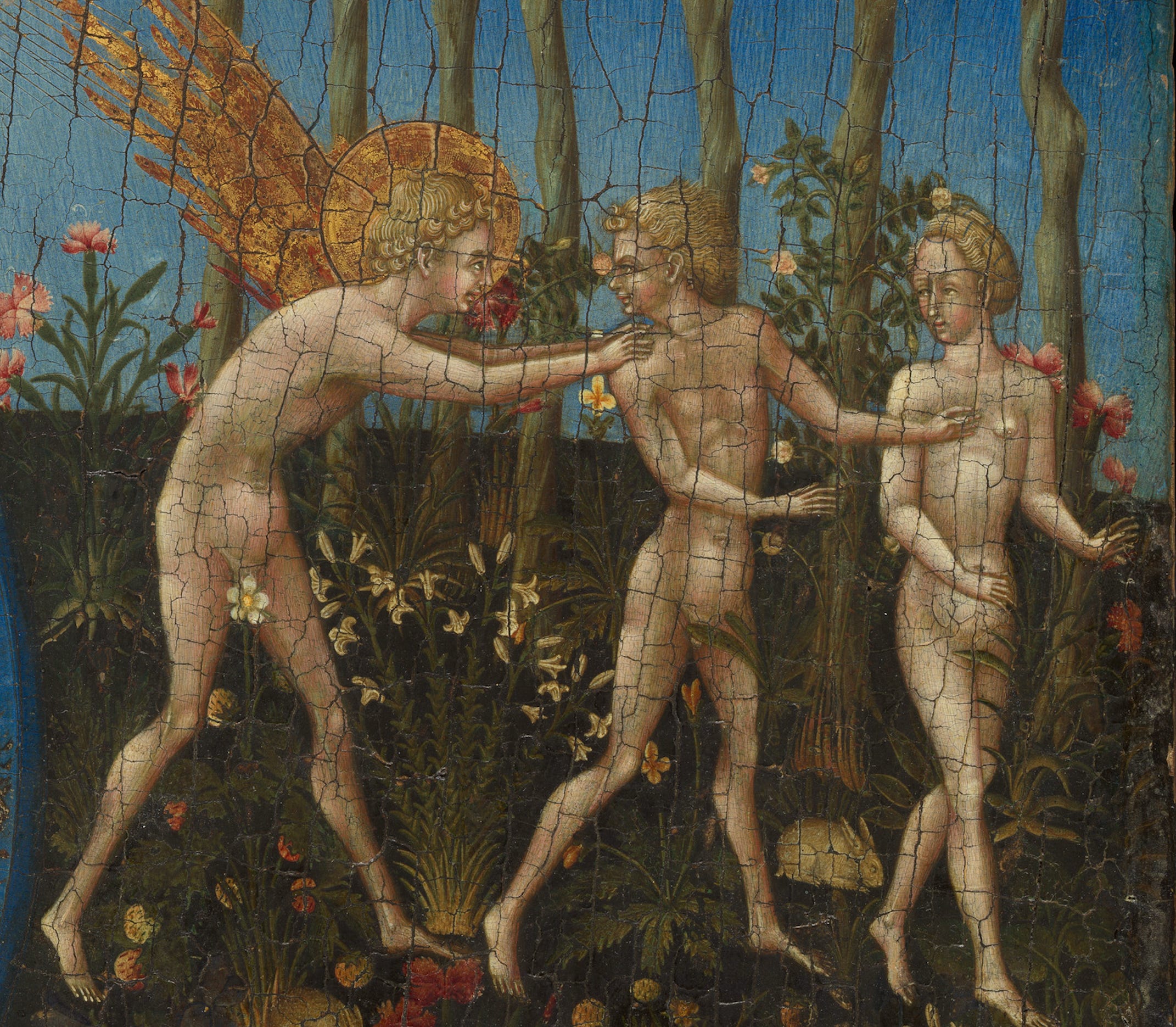
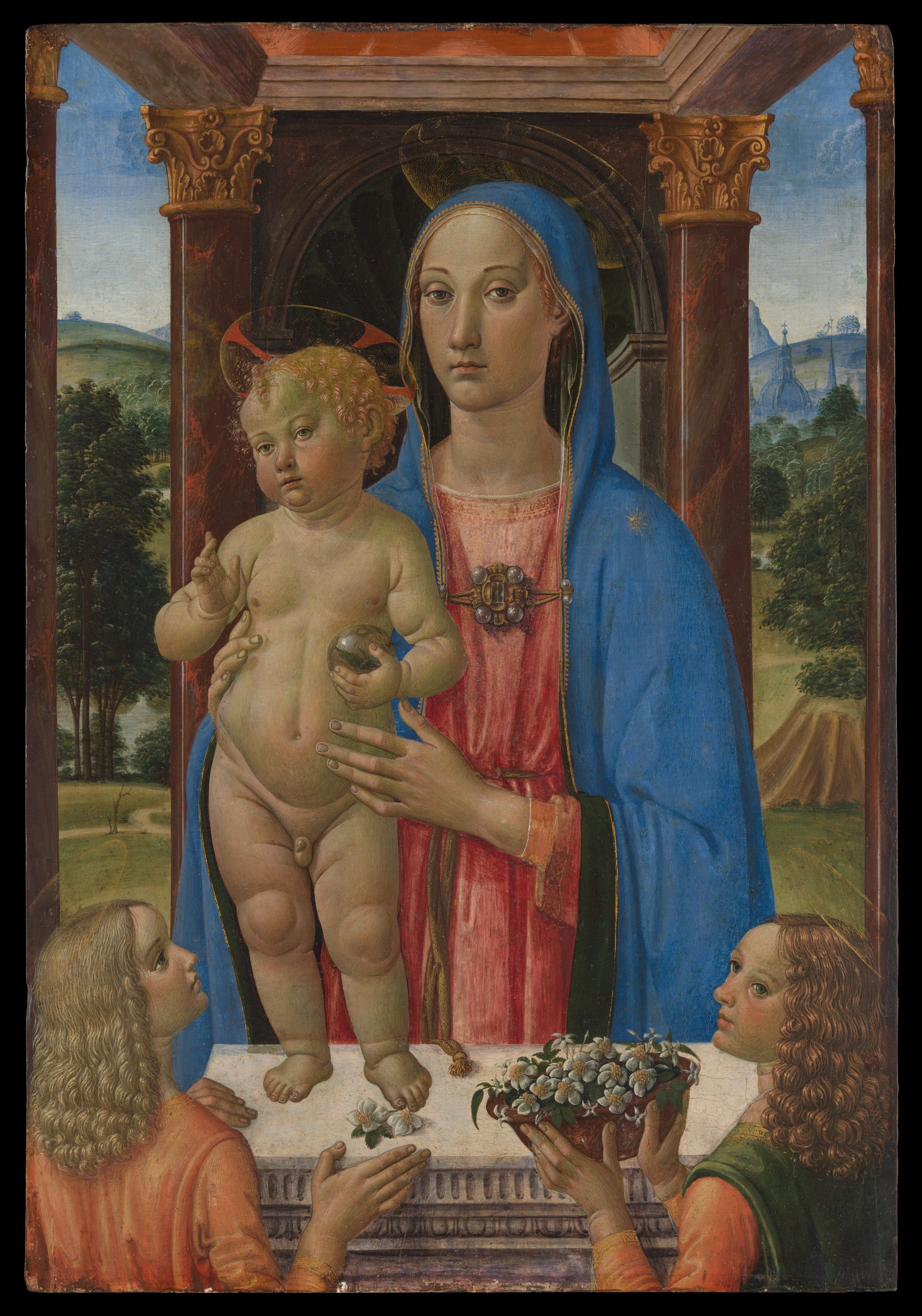
Meanwhile, the angel’s penis is covered by a five-petaled white flower (curiously similar to that used in Cosimo Roselli’s Madonna and Child with Two Angels, also at the Met), a symbol of the Five Wounds of Christ. Adam and Eve are meant to be sent away, as their sin is a necessary lynchpin for the story of salvation and the necessity of corporal sacrifice.
Back on the left, the world is surrounded by layers or celestial rungs. Perhaps it’s a reference to Dante’s Paradiso. (After all, Giovanni Di Paolo took it upon himself to illustrate scenes from Dante’s writings.) On the outer edge, God touches a Zodiac wheel between Taurus and Pisces, but repositioned somewhere between 12 and 1 o’clock. If we go by Medieval conventional wisdom, the date is the beginning of spring as well as the Feast of the Annunciation (March 25).
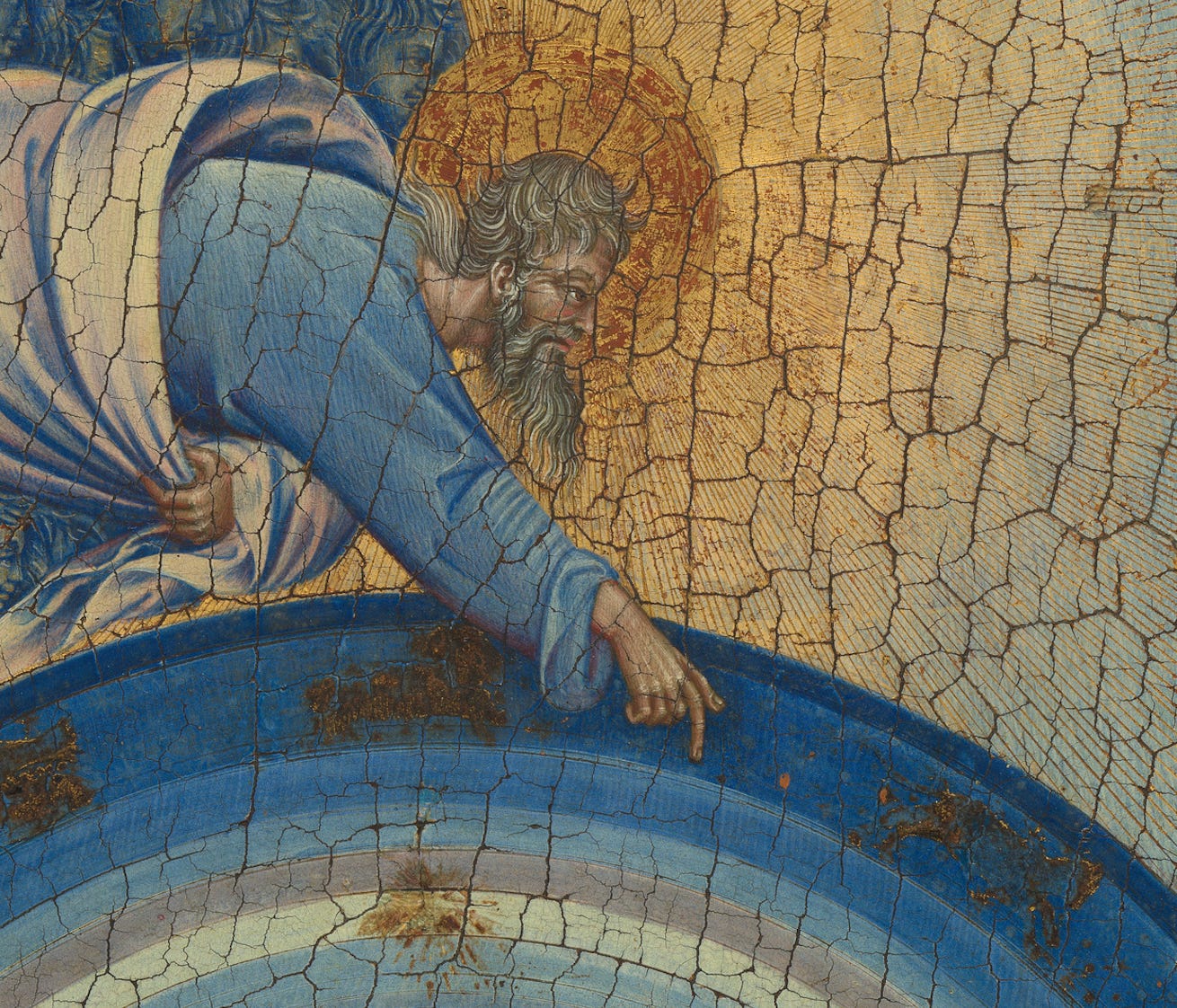
When thou lettest thy breath go forth, they shall be made; and thou shalt renew the face of the earth. (Psalm 104:30)
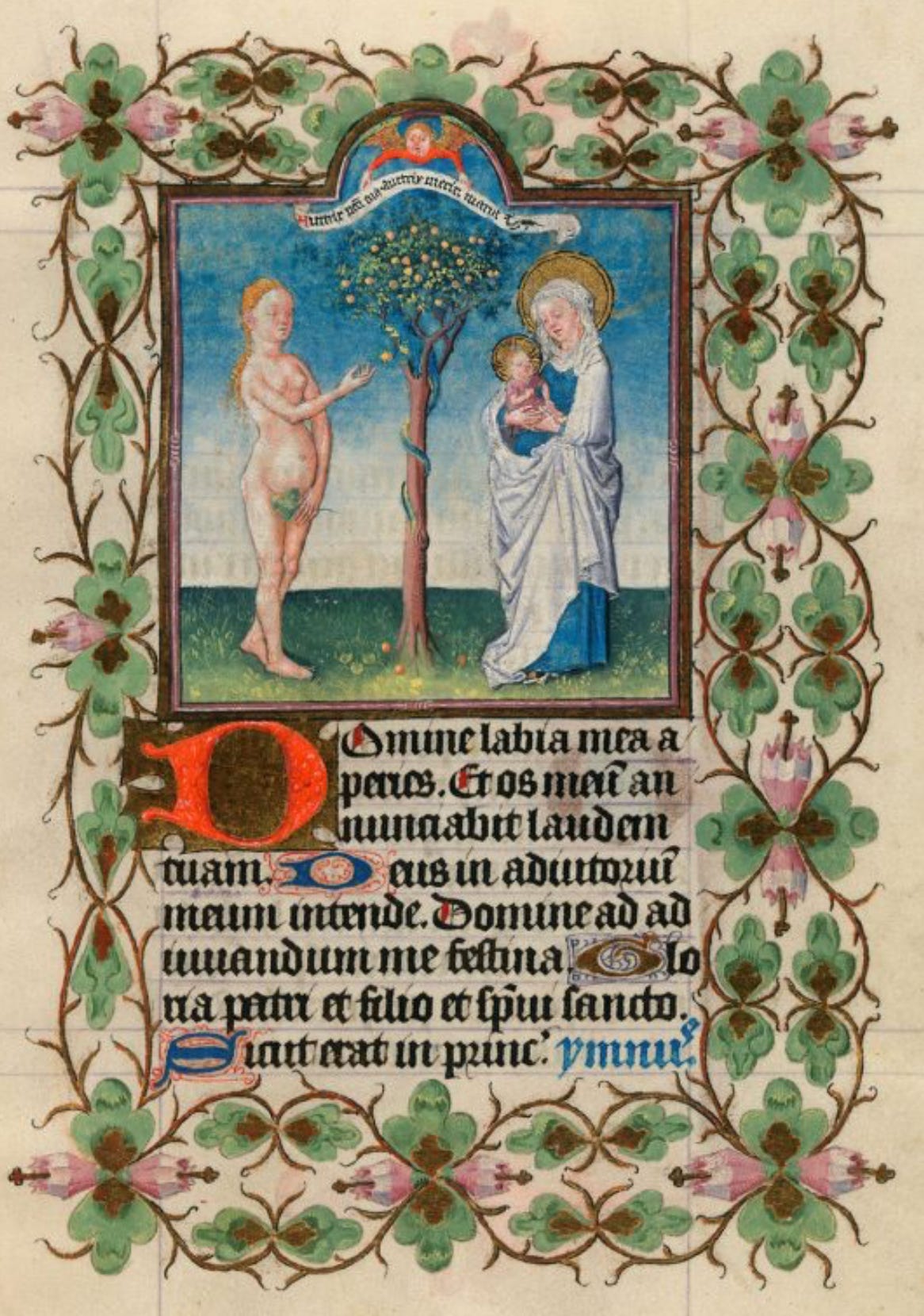
Again, salvation is foreshadowed through symbol. Eve’s original sin on the right is compensated for on the left. The creation of the earth and the renewal of salvation are made one and the same via Mary, who will bring forth the Messiah. One might also note that just as it is an angel who expels Adam and Eve from Paradise, so it is an angel who announces Mary’s pregnancy to her with the words “Ave Maria, gratia plena” (Latin Vulgate). There’s no catchier (or more annoying) an encapsulation of this idea than in an English Medieval Carol, whose refrain goes: Nova, Nova, Ave fit ex Ava. (New, New, Ave is made from Eve.)
There are no snakes, but two rabbits nibbling innocently, constituting maybe another wink and nod toward the notion of purity. The fruit on the tree behind is not red, but yellow, even golden. I admit my mind heads towards Hercules, the figure whose eleventh labor (and penultimate task) was to head to a distant garden to pluck an apple from Hera’s sacred tree, deemed by Zeus to be guarded by the reptilian Ladon; who is born of both God and mortal, of Zeus and Alcmena.
Such knowledge is too wonderful and excellent for me : I cannot attain unto it.
Whither shall I go then from thy Spirit : or whither shall I go then from thy presence? (Psalm 139: 3-4)
The trees are also seemingly incredibly tall, with fruit that could not be reached by the humans who have supposedly eaten of them. Adam and Eve do not look ahead, but look back at the angel as if to challenge or question the decision, as Adam is being pushed by hand out of the garden. It’s as if they don’t know why it is they are being expelled.
Forgive them, Father, for they know not what they do. Luke 23:24
The number of allusions stacked on top of one another, with no real order, symmetry, or even consistent theological thread, make the painting endlessly fascinating, at least to me. I’m not especially religious. And one doesn’t have to be to know that people fuck up, with varying degrees of cogniscence as to their errors and the stakes thereof. For me, di Paolo’s nerdy details potentially beckon more painful questions: were Adam and Eve culpable? Did they know what they were doing? Without them, would the salvation narrative fall apart? Were they set up?
Obviously not.
Then the Lord God took the man and put him in the garden of Eden to tend and keep it. And the Lord God commanded the man, saying, “Of every tree of the garden you may freely eat; but of the tree of the knowledge of good and evil you shall not eat, for in the day that you eat of it you shall surely die.”
It’s easy to reinterpret a story if you leave out the facts. Like the painting as I do, there’s a deceptive quality to it, as it seems to deny that the rules were set out and that both Adam and Eve knew right from wrong. I’m reminded a little bit of Andrew Lloyd Webber’s disgusting Jesus Christ Superstar in which the protagonist seemingly is unaware that he has made himself a hostile and manipulative presence in his community, or that the Roman and Judean apparatus might just be violent and punitive (as they are beholden to a security clause, like any other power structure).
Adam and Eve do look distressed, confused - but perhaps it is they who are being deceptive. “What tree? What apple? God never told us anything? You can’t kick us out.” People lie all the time, and perhaps the Angel knows it. The angel is making no effort to be nice: his back is bent forward, while Adam’s has curved inward from a shove. When we are looking at the right side of the painting, is it possible that we’re looking at our natural defense mechanisms when we’ve backed ourselves into a corner? Either way, we fuck around and find out, God or no.
My blog has lain dormant for a while. I’m moving my writing activities to Substack in hopes that a slightly more user-friendly platform might welcome new readers and beckon me to resign my inertia. I promise I’ll start writing about music again at some stage. For those who are interested, a recent essay for the New York Times can be read here.
No posts
Comments
Nothing yet. Say the first thing.
Sign in to join the conversation.