
Many academics are already doing great work to advance our understanding of the staggering predictions surrounding population collapse, like the fact that 100 of today’s South Koreans will only have 15 grandchildren between them. Unfortunately, these experts commonly make two mistakes. Firstly, lots of them are male, which is an unforgivable crime in many corners of the internet, with the result that their expertise is often disregarded and sometimes inspires outright hostility. Secondly, they often focus on debunking one myth or exploring one issue at a time because they want to continue working in their field and writing articles. Luckily, I suffer neither constraint. As always, I wrote this deep-dive primarily to answer some of the questions that haunt me while I walk my dog. But I hope that it can help others make sense of a thorny problem. Spoiler alert: the situation is objectively bad and there are no microwave-ready solutions.
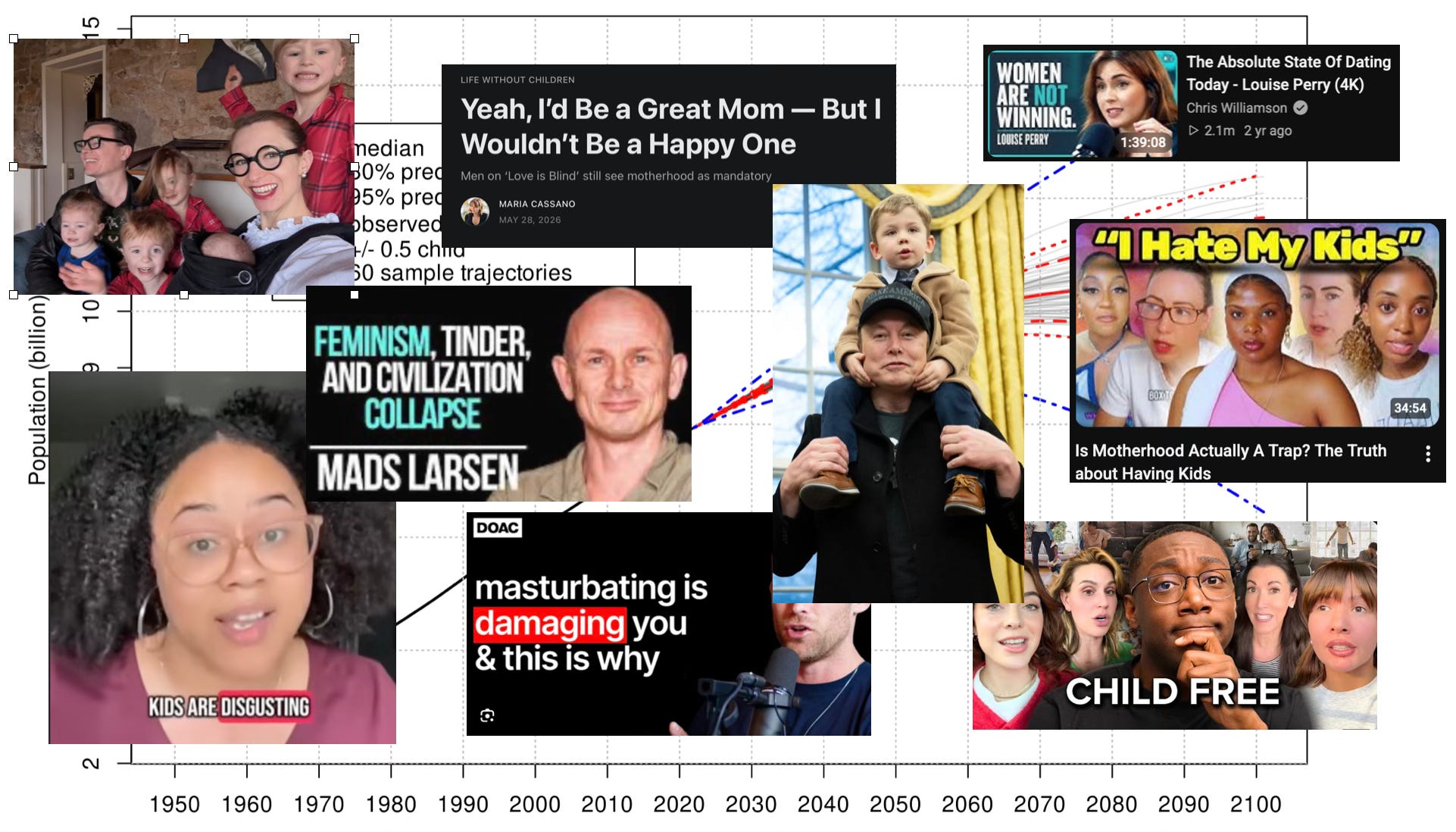
The structure is as follows. In the first section, I’ll attempt to get us on the same page about the severity of the problem, and debunk some of the common counterarguments. Then, rather than trying to find the One Big Cause, we’ll chronologically explore everything that needs to happen for a new person to be born, and examine why each hurdle has become harder to clear. As always, the deep dive will provide the overarching framework and link you to the best writers, researchers and thinkers on each topic, so you can dig into your favourite aspect of the population collapse! I’ll conclude that most of the relevant issues are completely out of scope for normal policymaking, and all we can do is elevate pro-parenthood narratives while preparing for a future with much fewer young people. Let’s get into it!
Asking women to have more babies is politically toxic. This is especially so in jurisdictions which have criminalised abortions, with the inevitable result that women have lost their lives after doctors hesitated for too long before terminating life-threatening pregnancies. This becomes even more fraught if your government appears to suddenly lose interest in the wellbeing of children once they’re out of the womb. It is no wonder pronatalim gets lumped in with all of that, but it should really be completely separate insofar as it is a movement to encourage people to want children, and then have the children they want. I think the focus on ‘women’ throws people off. Undoubtedly, a bunch of guys debating how to boost ‘births per woman’ is always going to be a little creepy—but it is simply a mathematical reality that once you have counted all the children that women have had, you have counted all the children. There are no other children. Asking men about their children will only add complexity and noise. And while talk of ‘native’ births has an ethno-nationalist ring to it—again—it is just how you count people (crossing a border does not a new person make).

Obviously, there are plenty of ethno-nationalists and sexists out there, and many of them are waving a pro-natalist banner, but your neighbourhood pronatalist academic is probably not one of them. Sure, Lyman Stone is clearly working through some trauma related to mixed-use public spaces, and Mads Larsen went ahead and based one of his most popular studies, which informs much of his overarching philosophy, entirely on a Netflix show… but these guys really are just trying their best to make sense of what’s going on, and it is slanderous to suggest that they have any desire to force anyone into motherhood.
Crudely, populations remain stable when women have on average 2.1 children in their lifetime. This is because it takes two to tango, and you need a little extra to make up for the fact that women outnumber men, and some people die young. It’s worth pausing to appreciate just how complicated this is to track in practice. Firstly, data on births is incredibly patchy. Some 850 million people don’t have any form of ID, so global population estimates could easily be off by something of that order of magnitude. But even with perfect data, you can only see completed fertility for cohorts that have aged out of childbearing, i.e. women in their late 40s and above. Looking at childless 30-year-olds, you actually have no idea how many children, if any, they will have. Best you can do is guess, or make God laugh by asking them about their plans.
Nevertheless, the results we do have are sobering. Almost everywhere, societies are not producing enough young people to sustain themselves. There is a popular narrative that this is only a rich white problem but, in reality, population collapse is coming for Mexico, Thailand, Jamaica, China, Colombia, Romania, South Korea, you name it. African countries are the notable exceptions: 60% of Africans are under the age of 25. What makes Africa so different? Obviously, large swathes of it are still majority-pastoral or tragically war-torn—women in those regions have no access to career opportunities or contraception, and children are still needed as household labour. But it is also true that rapidly modernising and more prosperous African countries seem to retain high birth rates, and many argue this is purely down to a pro-family cultural environment, which could theoretically be reproduced elsewhere.
But let’s zoom in on Nigeria, which boasts a GDP of $377bn, roughly the same as Wisconsin. Alongside its rapid economic growth, it retains a fertility rate of 5 births per woman (compared to Wisconsin’s measly 1.6, despite Drunk Wisconsin’s great work to boost these stats). But this high fertility is not evenly distributed. Women in Sokoto, Nigeria’s poorest state, have 7 children on average. Nigeria’s richest state, Lagos, which accounts for about a third of the country’s GDP, has a fertility rate of 3.3 per woman and dropping. Far from being unaffected by the usual modernising forces, Nigerian families also seem to shrink as they become urbanised, rich, and educated—with women’s education as a key predictor of lower fertility rates. The average fertility rate for Nigeria’s top 30 most influential women currently between the ages of 40 and 60 is just 1.9 (this is my back-of-a-napkin calculation, and I do not profess to have any insight into any of these women’s private circumstances—but in aggregate, their family sizes appear to indicate that the fertility rate of Nigerian elites is already below replacement).

The reason I am exploring this in a bit more detail is the popular assumption that population collapse around the world will be magically solved by migration from Africa. This is usually coupled with the assertion that European and North American pronatalism is an inherently racist project (never mind that both Europe and North America are multiethnic). While millions of people are clearly willing to move continents for work, and this is already a crucial economic stabiliser for industrialised nations, it is simply not the case that there is an endless global supply of workers, qualified and ready to fill all the different expertise and labour gaps in low-fertility regions. Less than 1% of Africans migrate out of Africa. Nomadic pastoralists in Turkana County and wealthy lawyers in Lagos are not dreaming of sending their children to shear sheep in New Zealand, grow coffee in Colombia, or work in a nursing home on the outskirts of Bucharest. People love to argue that it’s racist to want more babies born in Paris, Bogotá and Tokyo, but when you scratch the surface, they seem to be imagining a future in which those African women who don’t have access to contraception indefinitely provide cheap labour to the world. Get a grip!

Up next is the assertion that rapidly aging populations are somehow good for the environment. Of course I am aware that we are already putting a huge amount of pressure on the natural world. From air pollution (including greenhouse gases) to deforestation, we are pushing at planetary limits in ways we don’t fully understand. I’ll be the first to admit that, environmentally speaking, things are not good. It’s not impossible that this article is actually being written by the microplastics in my brain, using me as a vessel for creative expression, like the rat in Ratatouille. The world is getting richer and more wasteful by the minute, and we obviously need to redesign resource use and reel in linear consumption and inefficient energy use. But rapidly getting rid of young people is not the way to do that.
If humanity is a massive ship with a broken steering system, currently headed in the wrong direction, what we really need is lots of young, ambitious, collaborative, resilient, hard-working people who can put their heads together to figure out how to turn this thing around. It is pretty well established that innovation mostly originates from the younger half of the population, provided they’re not too busy watching a 30-part roommate drama series on TikTok. We want the deck to feel like a university town, buzzing with youthfulness, energy and solutions. If it ends up looking more like a nursing home manned by a handful of 17-year-old religious fundamentalists, we are going to crash into rocks and take our grand sustainability ambitions with us to the bottom of the ocean. At last, nature will heal! But for whose benefit?
Next, automation and AI: can they make up for labour shortages? Machinery and automation have previously dramatically reduced the need for administrative, secretarial and manual labour, with Keynes famously predicting we’d be working 15-hour weeks by now (did he foresee quiet quitting?) And yet, we have not seen a leisure class emerge out of the rubble as the need for human labour sprang up elsewhere.
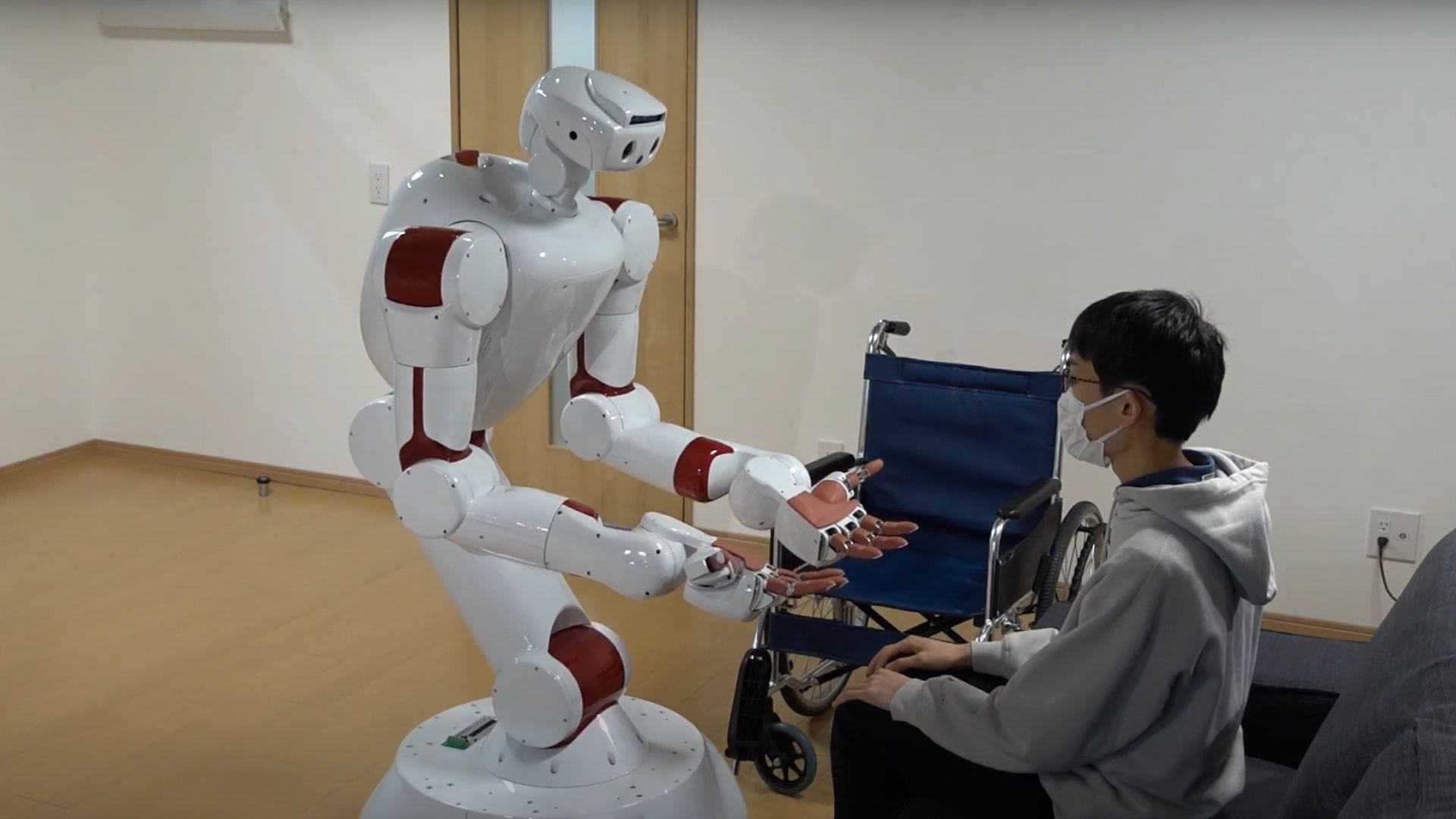
While I am in awe of modern technology, and very excited about some potential AI applications (e.g. earlier-than-ever cancer detection, smart energy grids, remake of the Odyssey but it’s about squirrels, etc) we simply do not have the technology to automate away the maintenance and care work on which society rests. An unmanned machine is not going to insulate homes, modernise energy infrastructure, and take care of the elderly (though this is now being attempted in Japan, where 75% of care work job openings remain unfilled). And a machine is certainly not going to build communities and generate ideas that give life meaning. We need people, and it looks like we won’t have enough of them for future societies to thrive.
As always, some helpful trends might mitigate the blow. For example, GLP-1s might help to extend people’s productive lives by eradicating hundreds of thousands of slow declines or so-called ‘slow deaths’—a term coined by Peter Attia, presumably just after quipping with convicted paedophile Jeffrey Epstein that ‘pussy is low carb’. Big shame about the guy, but the concept is useful: if older people can indeed stay healthy, productive, socially active and independent for much longer than ever before, that’s great news for a top-heavy population. Another bit of positive news is that thanks to medical advancements and changing cultural norms, births to women over 40 have nearly doubled since 1990, now constituting around 4% of all births in the USA—this could mean cohorts that appeared childless for most of their fertile window could still have a mini baby-boom at the last minute. Good!
Despite these potential mitigations, populations are still shrinking at an unmanageable pace. The ideal is not to boost fertility back to Sokoto levels, but simply to slow down the decline. It would be much less worrying if fertility rates were hovering around 2, sending populations down a very gentle downwards slope. The reassuring news is that 2 is actually pretty close to women’s desired fertility. Aside from a minority of staunchly child-free people who are building alternative lives for themselves, the majority of women and men in declining populations still want to have 2 or 3 children. Far from being a movement trying to force women into motherhood, pronatalism should be understood as an attempt to make parenthood more appealing and to help people achieve their fertility goals, which should be just about enough to stop societies from stagnating. This leads us to the second part of the article: what’s getting in the way?
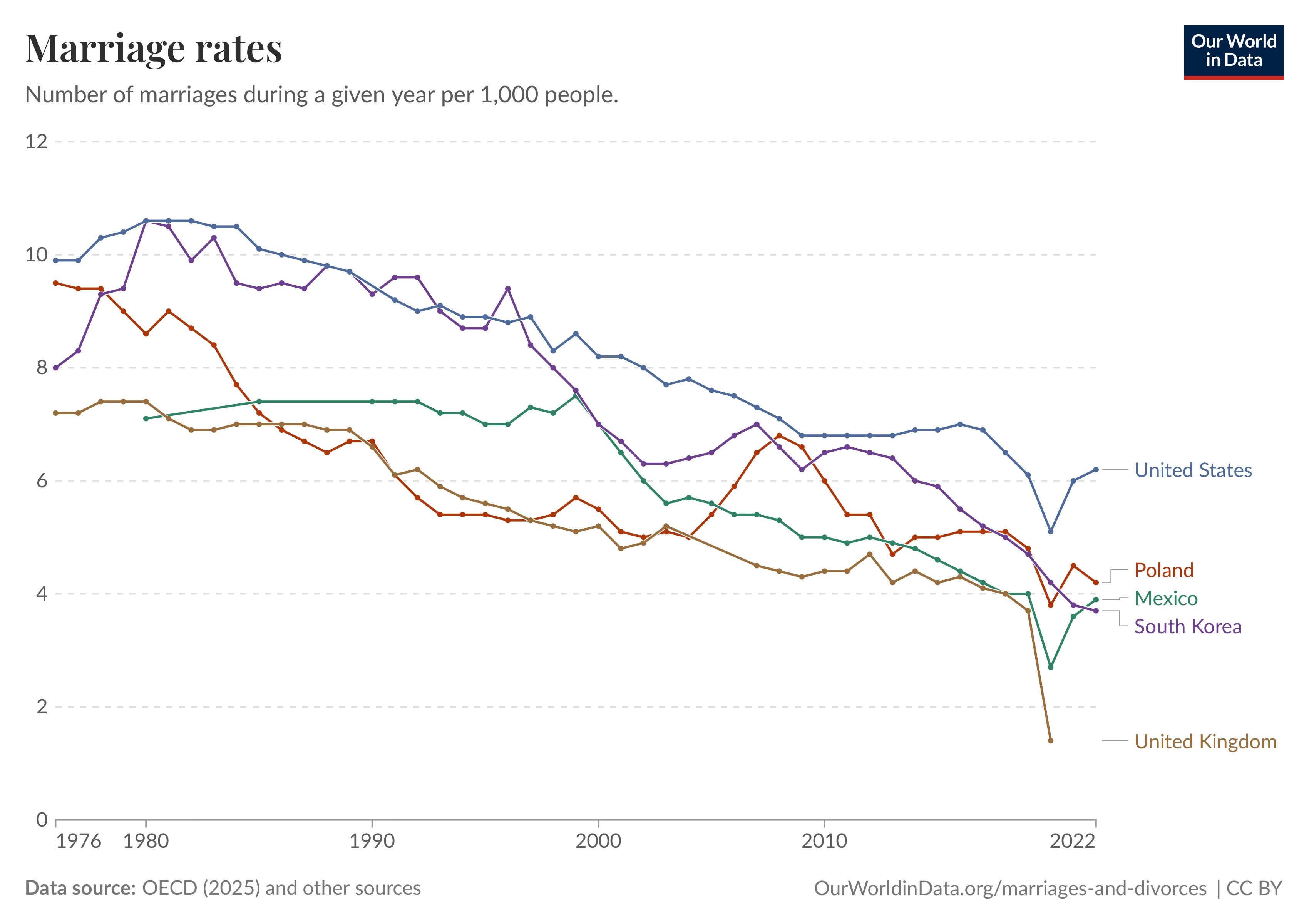
Though intentional solo motherhood is on the rise, the first step to having a baby is usually finding someone with whom to have said baby—so it feels relevant to explore why the modern dating market is a hellscape. Marriages and stable romantic relationships have been on a steady decline for decades (despite some countries experiencing a little boost after legalising gay marriage as thousands of long-term couples could finally marry). Obviously, the macro trend is downstream from women’s civil rights and the pill—every honest analysis of dropping fertility rates has to start there. Marriage used to be the default because women used to rely on it for financial security and status, and men used to rely on it for sexual intimacy and status. All those things are now also available elsewhere: women’s careers generate status and financial security, and the pill has radically increased the availability of casual sex. As a result, marriage has become optional. It is something people evaluate on its merits, and often reject.
Nowhere is the ‘fuck no’ louder than among women stuck on the lower end of the socioeconomic spectrum, whose dating pool may include men with a criminal record, a history of unemployment, addiction, and a traditionalist view of gender roles to boot. No hate to these men, by the way—they, too, are victims of a system stacked against them, and it is worth dipping into Richard V Reeves’s thinking on ways we can help men to lead more prosperous and dignified lives (and maybe even attract a gal pal as a result). But as Cathy Reisenwitz has pointed out many times, women cannot be blamed for rationally choosing to remain single over tethering themselves to someone who will likely act as a lifetime financial or emotional burden.
As we move up the socioeconomic scale, marriages appear steady, but they happen much later. In my research for this piece, I listened to lots of interviews about population decline with increasingly kooky academics on Chris Williamson’s chart-topping podcast Modern Wisdom. The whole time, I kept wishing one of the interviewees would finally examine the most interesting fertility phenomenon in the room: the host. Williamson is 38, model-handsome, a multimillionaire, and clearly concerned about population collapse, alongside being a kind, thoughtful and composed person—and yet he remains unmarried and childless. His problem is definitely not that he can’t get a date or that he can’t afford a house. So what is his problem?
In short, Chris Williamson has spent a long time getting ‘ready’ to find a wife. His advice for guys looking for a relationship is to ‘work on themselves first’, which is very much in line with the pervasive modern culture of endless self-improvement. At least in my demographic, everyone has to do weights, take probiotics, and meditate before even considering signing any documents. It feels innocuous until you realise all these things are completely open-ended, cost money, take a lot of time, and you do them alone. Underlying all of this is the self-hating assumption that whoever likes you now isn’t good enough, and it is best to self-improve ad infinitum, presumably in the hope that once you cross some unidentified future threshold, Dua Lipa automatically gets in touch.
The issue with this strategy is that there’s simply not that much the average guy can do to radically improve his dating prospects. The strongest predictors in assortative mating are not a man’s ‘resources’, as the manosphere would have us believe, but IQ and the socioeconomic environment in which he grew up. This reflects the fact that talking to someone much smarter or much slower than you is a drag, with both sides likely to wind up feeling exhausted and misunderstood in the long term. And although we don’t like to admit it, marriage across different socioeconomic classes isn’t all that common, either. Physical appearance remains a useful lever, with both sexes opting for the best they can get (as opposed to a match), but there is only so far this can take you. Men who delay pair-bonding in the hope of eventually finding a more attractive partner may be disappointed to find that the dating pool available to them has not become better, only smaller. If the fatherless manosphere influencers actually cared about men, they would be advising them to marry earlier—a surefire way for men to boost their earrings and wellbeing. But I guess it’s much easier to hawk your shitcoin!
People who aren’t intentionally delaying pair-bonding are also struggling to find matches. Here, dating apps and smartphones are the most likely culprit. Despite driving most modern relationships, dating apps have an abysmal conversion rate: it can take around 10 active hours on the app before you can even meet someone in person. That’s a big investment, given that person might fucking suck. I write a lot about the way modern life requires us to split up and sequence lots of activities which used to be synchronous: our ancestors did not need to schedule ‘socialising’, ‘working out’ or ‘spending time outdoors’—these deeply necessary activities formed the fabric of their daily lives. Today, they are scheduled add-ons, which is why modern life feels like it’s always bursting at the seams. ‘Finding a partner’ has similarly become a stand-alone project. Quite apart from all the complicated casino psychology behind the apps, pair-bonding was simply much more efficient (and, may I add, much more romantic) when it involved just meeting someone as you went about your life. As people spend more time alone, more time watching TV and porn, swiping and scrolling, they spend less time dating and having sex.
Finally, the political divide between young men and young women has been touted as a romance killer, although it’s not entirely clear how widespread a phenomenon it is (see this rather alarming piece in the FT versus this paper which presents more reassuring data). Nonetheless, it is apparent that at least in some demographics the polarisation has become unmanageable. My husband and I do not sit in the same exact area of the political spectrum, but we live on the same planet. This cannot be said for a young woman who believes society should be radically reformed to optimise for #NetZero2030 and trans rights, and a young man who believes that Judeo-Christian civilisation is being destroyed by immigration and feminism. With no common ground between their algorithmic feeds, they’ll both walk away from the conversation feeing angry and despondent.
There’s no single overarching reason for the pair-bonding crisis: it has been driven by a complex web of shifting cultural, ideological, legal and technological norms. We want to keep some of these new norms, like women having civil rights. Others norms, like everybody just wanking at home instead of going to a party, we’d probably like to do away with—but there are no sane policies that could achieve this. And though it’s easy to troll Chris Williamson, taking a little bit of time to understand yourself is not a bad idea before embarking on the project of family formation. And you can hardly criticise millennials, raised by the most divorced generation of all time, for being cautious. As a result, we’ll likely to see less and less pair-bonding.
Nearly half of pregnancies worldwide are unintended. In the UK, where the proportion is 45%, the statistic includes anyone who wasn’t actively ‘trying’, meaning huge numbers of desired but mistimed pregnancies (e.g. a second or third child arriving into a loving family a little earlier than originally planned—often because the parents were being knowingly lax with contraception). Only a minority of pregnancies still happen to women who absolutely do not want a child, mostly because taxpayer-funded oral contraceptives are available at every pharmacy in the UK free of charge and without a prescription. In regions with poor access to contraception, pregnancy is often an unexpected education-ending event for young women (not to mention that 60% of unplanned pregnancies end in abortion and almost half of those are unsafe). If everyone could more-less plan their pregnancies, which is every sane person’s hope for the future, the birthrate would be significantly lower, and we would need to see plenty more planned pregnancies to balance things out. Obviously, we are seeing the reverse. The percentage of people intending to stay childfree grows with every cohort passing through their fertility window.
It seems obvious to say that the astronomical cost of childcare could be to blame, but the picture is more complicated. To be clear, I believe that supporting families with the costs of maternity and childcare is the morally correct thing to do. But in developed countries, taxpayer-funded childcare subsidies are only modestly effective at incentivising existing families to have one more child, and only somewhat effective at encouraging highly educated women to have their first child. In Norway, parents get 42 weeks of shared leave at full pay, and daycare is capped at $200 a month whilst being ridiculously high quality, and Norwegians still have an approximate fertility rate of 1.5 per woman to show for it. Despite being the right thing to do, maternity and childcare subsidies simply aren’t the best bang-for-your-buck (teehee) fertility boosters.

A significant fertility suppressant is the cost of housing. You’d be excused for looking at house prices these days and thinking: what the actual fuck is that? In the 1950s, you could buy a family home with 3x the average annual salary with a deposit as low as 6%. The average house price is now around 7-9x the average annual income, with much higher deposits required. You don’t need to be a policy wonk to notice that if the average 28-year-old couple could afford a charming little house with a garden, financed by a fraction of their monthly income, instead of shelling out £1100 to rent a small flat with 3 flatmates, they’d be a bit keener to reproduce. Shall we reduce the cost of housing, then? Okay! The obvious challenge here is that the cost of housing is a top priority issue on every modern political agenda ever, and it continues to get worse around the Western world. Ironically, one of the most significant cost of housing shortages are… labour shortages. It’s the ciiiiircle of life!
So far, this is all reasonable. Women don’t want to get stuck in bad relationships for the sake of having children. Women are apprehensive about disrupting their hard-earned careers in a volatile economic environment. Young people in general don’t want their children living in the cupboard under the stairs. Who’s going to argue with that? But moving up the socioeconomic scale, we get to people who are in stable relationships, enjoy a good level of financial security, and just aren’t sure if they want kids. And it does seem like at least some of these people are making the right choice for themselves by remaining childfree. Parents have been getting happier on average, and one possible explanation is that those individuals who know themselves to be temperamentally unsuitable for parenthood are now simply rejecting it and no longer dragging down the average self-reported happiness ratings (source). The polite thing to do, apparently, is to just leave them alone. It’s a personal choice!
The impolite thing to do is to flag that people generally suffer from impact bias, the extremely well-evidenced ‘inability to infer the severity or duration of the emotional consequences of an event – positive or negative’ (Wilson et al, 2005). When young people express their desire to remain childfree, they’re often told they’ll change their mind. This is as disrespectful as it is untrue. More likely, just like aspiring parents, they’re making some big cognitive errors in their assessment of the future. I’ve always wanted to be a mum, but my mind would go straight to taking a 3-year-old on fun little trips (which is as good as I imagined). I didn’t fully appreciate how much the first few months would involve someone strikingly toothless screaming at me, and I struggled much more than I anticipated. My psychological mirror image is put off form having children because infancy is more salient for her—but she is not thinking enough about a future in which her toddler says ‘Look mama, is a very, very nice pebble for you!’

Another uncomfortable truth is that there’s nothing unique about individual fertility preferences, which are just malleable and mimetic as any other preferences. Again, this is the perfect opportunity for me to complain about algorithmic media because the content we consume can be very impactful. If you’re a woman concerned about the uneven division of the mental load between men and women, and perhaps you’ve lingered on a few videos, guess what TikTok is going to start serving up? Never mind that millennial husbands and dads do more unpaid domestic labour than any previous generation of men. Never mind that, for the purposes of personal decision-making, the only data you need is how much your partner contributes at home. Never mind that, should your contributions be uneven, the most reasonable thing is to talk to your partner about it and problem-solve, and the least reasonable thing is to rant about it to strangers on Instagram. Some algorithmic landscapes really make it seem like married mums are universally miserable and oppressed, which is just not true.
The only antidote is to be equally loud about the many positives of parenthood. I wish it was better known, for example, that kids are amazing community builders. Pre-parenthood, our social circle was almost exclusively NGOers, policy nerds, academics and journalists, all dotted around London. Since becoming parents, we’ve become friends with fashion people, actors and social workers. A professional trumpet player kindly takes care of our dog when we’re away. They all live minutes away from us, but the only reason we ever crossed paths is because our children go to the same nursery. It’s pretty awesome. And paradoxically, becoming a mum has made me take much better care of myself. I used to say yes to all sort of exhausting projects and parties, surviving on 6 hours of sleep and a ready-made Netflix dinner. Now I am simply too irreplaceable to fuck around with my health. Overall, my life has improved in countless ways since I became a mum (alongside all the challenges), and I’ve recently become more confident in sharing that with childfree friends who otherwise only seem to hear bad things.
And after all of that, millions of people find that conceiving and maintaining a pregnancy to term is eluding them. Female fertility obviously does decline with age, and the decline progresses faster as you get older, with the result that the quality and quantity of available eggs starts to decrease rapidly in your late 30s. This is an extremely well-evidenced fact, and I find it frustrating when it gets dismissed by people spreading misinformation, feministly. Advanced paternal age of 35 and above also has a negative impact on the likelihood of conception, miscarriage, pregnancy complications and developmental issues in childhood, which is less well-advertised.
The good news that women still have thousands of eggs when they reach 40, and you only need one good egg to get the show on the road. About 1 in 10 women will still conceive spontaneously around 40, and assisted reproductive technologies have boosted births by 2-3% in the rich world, adding around one child to every classroom. Nonetheless, advanced age is one of the main reasons couples are unable to conceive, although I would love to retire the phrase ‘leaving it too late’ in a world when a lot of people are sprinting to a finish line that keeps moving further away.

Lifestyle factors also play a huge role, and this is yet again where I am compelled to knock the more delusional end of the body positivity movement—either partner having a BMI and a hip-to-waist ratio outside of the normal range makes it a lot harder for couples to conceive and have a healthy baby. Again, this is so well-documented that no amount of Huffington Post articles about how BMI is actually a tool of imperialist oppression will make it untrue. Everyone is already shouting at women about smoking, drinking and sushi, so I won’t labour the point, but we are seeing a lot more evidence pointing to a relationship between paternal lifestyle and health. I am skeptical about some of it, which looks like mere correlation. For example, people who pay £15 a day to poison themselves unsurprisingly have lower IQ on average, and children of smokers perform less well on standardised tests—but this probably mostly because they’ve been cursed with dad’s IQ. Nonetheless, it might be worth dads joining mums on the clean living train for a few months pre-conception.
Finally, we get to another well-publicised aspect of the fertility crisis which nobody really knows how to solve, and which definitely has an Alex Jones vibe to it: the global sperm count collapse. While gay frogs have not impacted my daily life nearly as much as I had hoped, it does appear that male testosterone and sperm count have both halved over the last 50 years. It’s hard to say what’s causing this. Obesity rates have tripled in the same time, with more men than ever in history carrying extra weight, which in itself suppresses testosterone and interferes with sperm count. But chemicals we’ve gradually released into the environment could also be having a significant impact on hormonal health, and lots of people are trying to filter their water, move away from food-contact plastics (e.g. takeout containers), replace non-stick and plastic cookware, and curate their toiletries to reduce exposure. It’s unclear how much this stuff helps. Don’t get me wrong, I got my hands on Silent Spring as a teenager and I have always been willing to spend a startling percentage of my monthly salary on a ‘non-toxic’ mattress—but environmental pollution simply does not currently appear to be a huge driver of declining birthrates compared with the other factors discussed above.
I’m often struck by how often people talk about wanting or deciding to have ‘children’, as if the children all arrive at once. Most people start by just having one child. People should really be asking themselves whether they want a child, and then it’s back to the drawing board. Do you still have a co-parent? Do you want to have another child with or without them? Can you have another child? This stuff is by no means straightforward. Couples can be negatively affected by the early stages of parenthood. They may not be able to put two children in daycare at the same time (costs exceed $15,000 per year in the USA, but are capped at around $2000 per year in Sweden, so this will differ across countries). And of course, things may simply not work out, with secondary infertility affecting around 5% of families. The widespread use of c-sections could equally play a role in suppressing family size in some countries, as Ann Ledbetter has persuasively argued here. And of course, you can age out of your fertile window before you reach your fertility goals, especially if you were pushed into a late start. Even despite all this, family size is not shrinking as quickly as the number of families with children. The reassuring news is that having one child tends to increase people’s fertility desires—so having kids is more like eating Pringles, and less like the nightmare we see on social media and TV.
I wrote this article mainly to push back on three things. One, that population collapse is a non-issue, or perhaps even a positive thing. This is its own brand of ignorant denialism: population decline caused by a rapid drop in births just means we slowly lose our disruptive problem-solvers and proportionately gain older people, many of whom require care. This will likely result in stagnant and ineffective societies. The second set of narratives I’ve challenged is that there is some simple and obvious solution that people are missing, insert the author’s special interest. In fact, the most impactful initiatives are probably highly complex and localised housing reforms which will look very different in different countries (see e.g. USA-specific suggestions from Matthew Yglesias here, and more UK-specific analysis from Grace Blakeley here), and there’s no means guaranteed to work.
Finally, I’ve tried to push back on the narrative that women have somehow collectively decided they don’t want to be mothers. The radical left believes it’s because they have finally thrown off the shackles of being human incubators within an imperialist patriarchy, and the radical right believes they are too busy girl-bossing and chasing Chads. Neither narrative is true: most women hope to become mothers, but they are struggling to build the requisite level of relationship and financial security in the modern dating and financial landscape. And the people who do find themselves in a position to have children are bombarded by reports of endless struggle, which are not representative of the width and breadth of the average parent’s experience—social media famously elevates the voices of the most emotionally unstable, and that includes mumfluencers. The most accessible lever we have might just be platforming happier parents: here’s to hoping Chris Williamson soon begins broadcasting the joys of fatherhood to his vast audience.
No posts
Comments
Nothing yet. Say the first thing.
Sign in to join the conversation.