
Yesterday, just moments before I left to pick up my oldest from high school, I watched Alysa Liu literally leap onto the medals platform to receive her gold.
I was so grateful to have a good story to share with my daughter when she got in the car — not just the story of an American women’s figure skater winning gold for the first time since 2002, but the story of Alysa Liu’s absolute JOY while doing so.
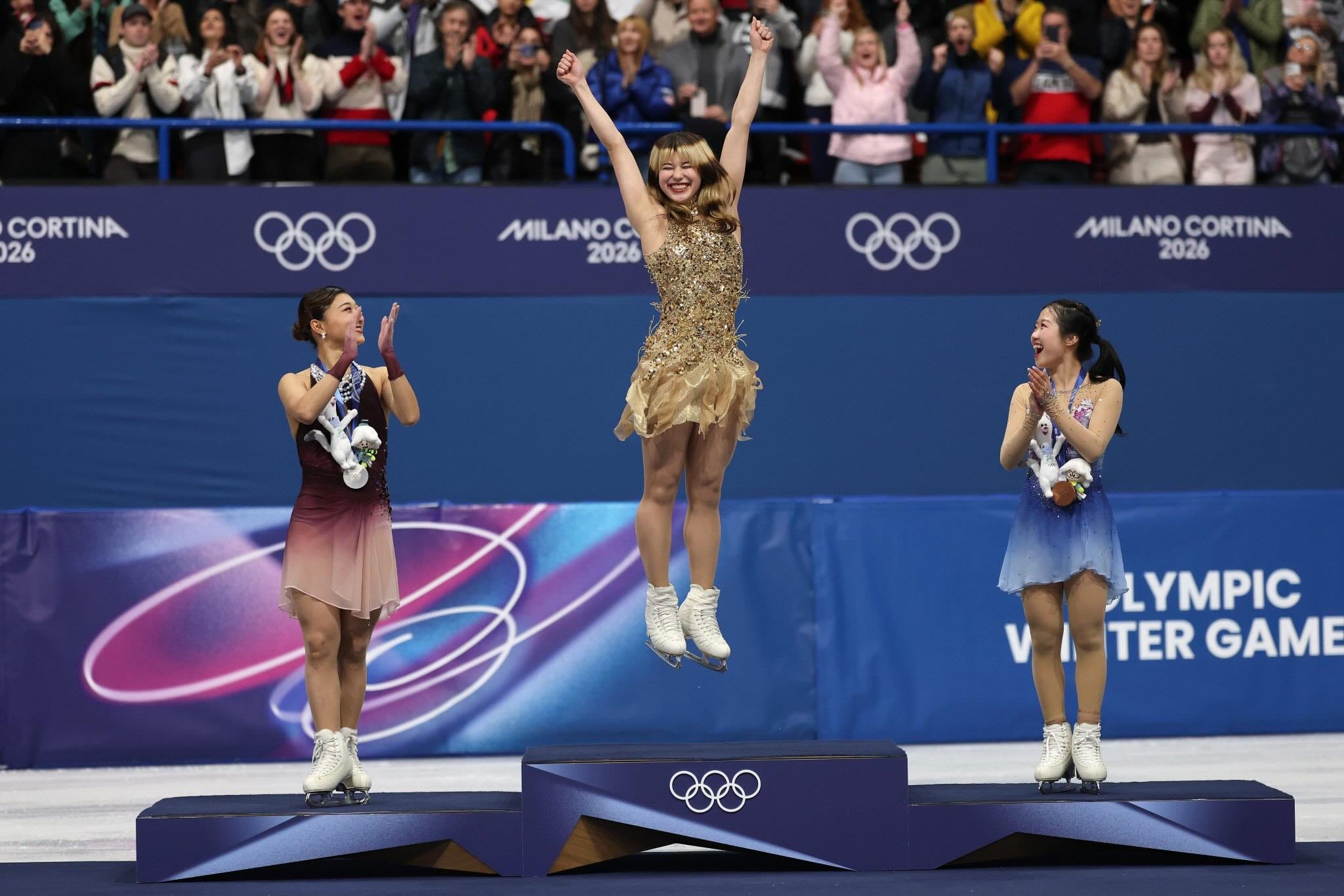
My son and I watched the final free skate together. He’s been transfixed by the Olympics as a whole, waking up at 5am most days to watch athletes fly on skis and dance on ice.
We both recognized something different about Alysa’s skate — her movements felt free and full, like embodied delight. And her glow when she finished, the way she roared ““That’s what I’m *** talking about!,” the way she embraced her tearful coaches.
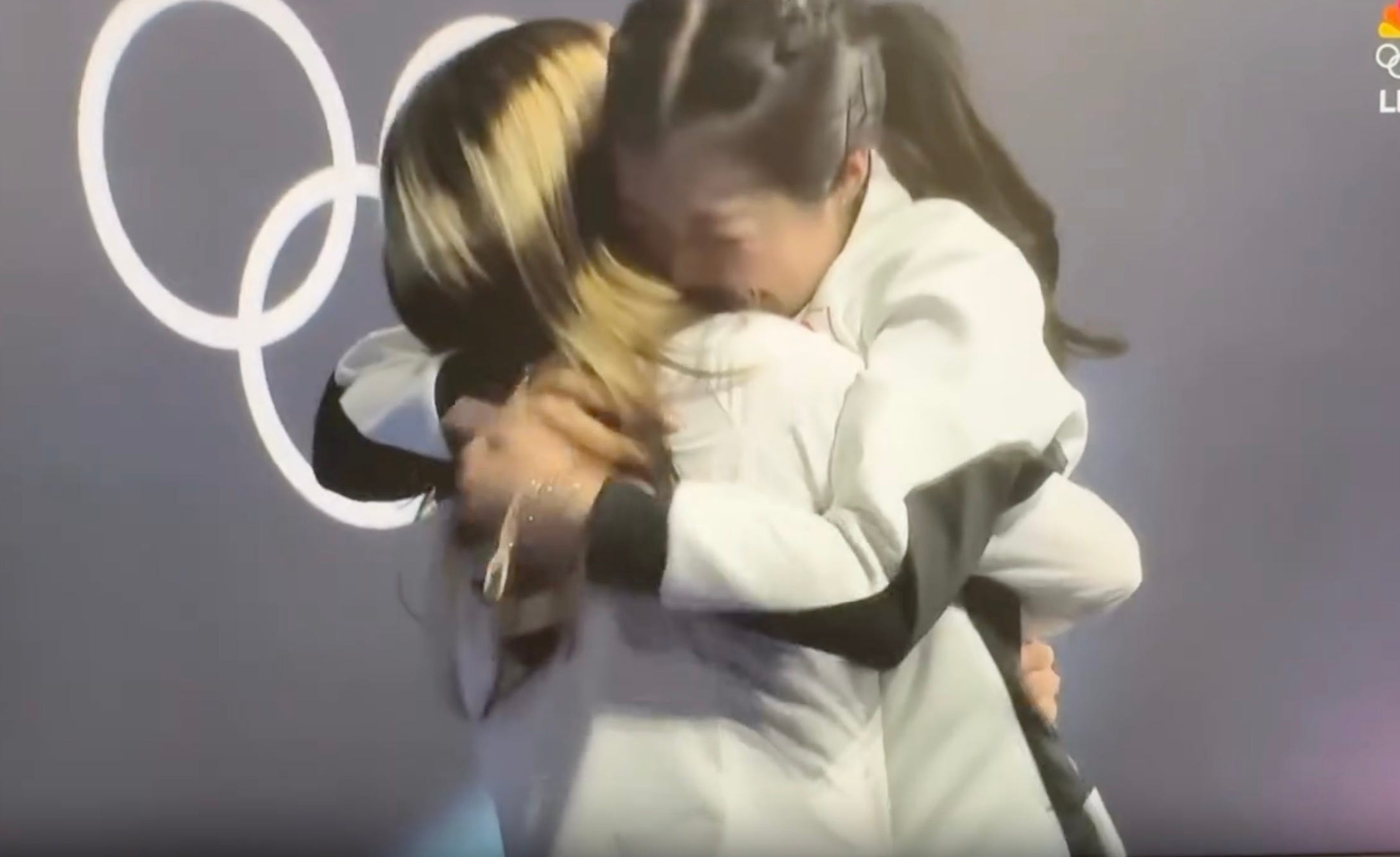
And then the way she didn’t just hug her final 17-year-old competitor when the final scores were read — she practically smothered her with a fierce joy, like she was reminding her that they had both done something rare and wonderful, and that it was their right to explode with that knowledge.
If you follow the sport, you know that Alysa quit skating after the 2022 Olympics. She was 16 and felt like skating had become a job not a joy. It was taking her away from her family and friends and childhood. She told 60 Minutes that skating felt like a job, “Especially as a kid, you know, you don't really know what you want. Skating feels more like a responsibility, or a burden even.”
So she said “when.” As she said at the time, “I was lacking in experience in other things in the world.” So she enrolled in college, took up photography, and spent time being young. She realized, “"I really like not skating."
Two years ago, she began to miss being on the ice — but if she was going to come back, it would be different. She would own the work.
She told her coach: “I get to pick my own program music. I get to help with the creative process of the program. If I feel like I'm skating too much, I'll back down. If I feel like I'm not skating enough I'll ramp it up. No one's gonna starve me or tell me what I can and can't eat.” She told her father that she was grateful for all he had done, but he needed to take a step back this time around.
Her coach later said that with her in charge, she became a better skater in every way. For years she had been dropped off at the rink and told what to do. Now it was collaborative.
Watching Alysa reminded me of a passage in Raising Awe-Seekers. I interviewed psychologist Michele Borba about her book Thrivers: The Surprising Reasons Why Some Kids Struggle and Others Shine.
In her research, Borba found that “thrivers have hobbies — something they can decompress to.” But when she asks teens, “What are your hobbies?” they often reply, “What’s a hobby? We don’t have enough time.” Life becomes a string of “should do’s” instead of “want to do’s.”
As we help kids and teens find purposeful activities, remember:
Their interests will evolve — and that’s a good thing.
Their interests may not align with ours.
It’s a dance, of course. Kids won’t discover passions unless someone introduces them. Someone had to take Alysa to her first skating lesson.
When psychologist Benjamin Bloom studied highly skilled mathematicians, athletes, and musicians, he found that adults usually introduced them to their field early on.
But — and it’s a big but — “before long, the child was pulling the parent,” Borba says. And that shift is key for motivation and mental health. Periodically step back and ask: Who is doing the pulling? If you’re always the one tying the cleats or insisting on piano practice, maybe your child is telling you something.
Borba suggests becoming a curious observer:
What activities ignite my child’s imagination?
What gives them an extra spark of joy?
What increases their confidence, reduces their stress, or helps them enjoy their own company?
“Find out what helps your child be the best version of themselves,” Borba says, “and give them the freedom to pursue it.”
Amazingly, Alysa Liu asked herself those questions. She stepped away, explored, rested and then stepped forward again on her own terms. She prioritized health and joy — something that allowed her to celebrate her competitors and to spark wonder in her audience that went far beyond her technical prowess.
Thank you, Alysa Liu, for sharing your light.
Cheers,
Deborah
Deborah Farmer Kris * www.parenthood365.com
No posts
Comments
Nothing yet. Say the first thing.
Sign in to join the conversation.