
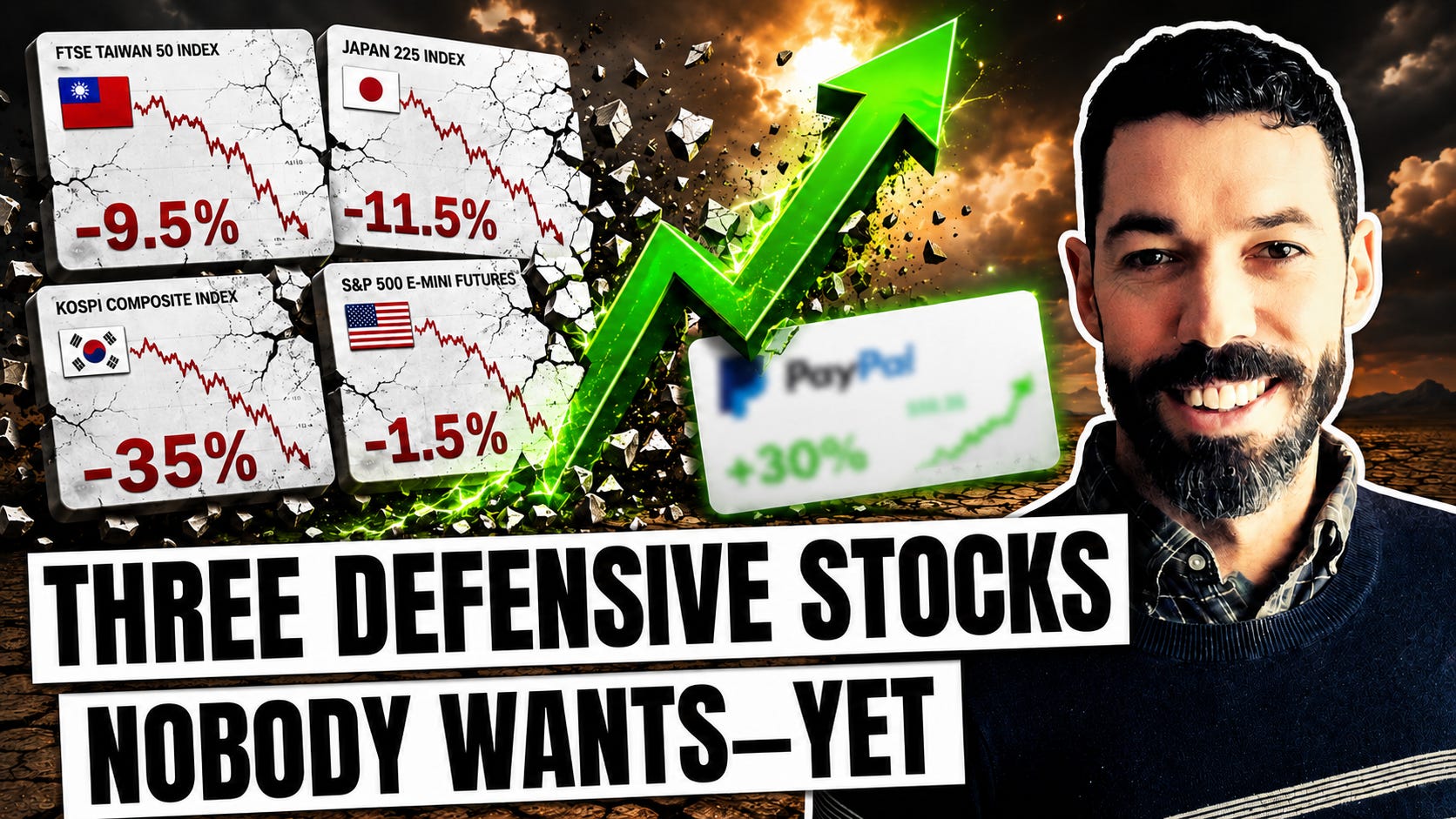
In recent months, the markets have felt a lot like being stuffed into a barrel and thrown off the back of a boat during a violent storm. After a stellar 2025, in which gold, silver and the miners all produced spectacular returns extending into the first month of 2026, many precious metals investors were caught swimming with their pants down.
By that, I mean they mistakenly extrapolated recent returns into the future without factoring in the likelihood of a substantial correction. Believing in an asset is no excuse for bad risk management, and I started warning people about this heading into 2026, especially with the miners, because it was obvious that we were over our skis.
Speculative money was piling into the space, and the usually dour and depressive mining sector was suddenly filled with optimism and glee. That’s not normal. Most of the time, people who own gold and silver miners are nursing their wounds and talking about ‘someday’. Instead, it seemed we had total consensus that things could only go higher.
But anyone who studies the history of the space knows that only for brief periods do these companies produce spectacular returns. If you want to succeed with gold and silver miners, you have to be a contrarian—even to the point whereby you might eventually disagree with other investors in the gold and silver mining space.
Unfortunately, most people don’t know how to handle the cyclicality of miners, or cyclical companies period. Thus, they treat them like growth stocks or buy and holds. They are not, they are buy and sells! Even when they produce great profits, hold them long enough, and they eventually give most of them back. Then the cycle repeats.
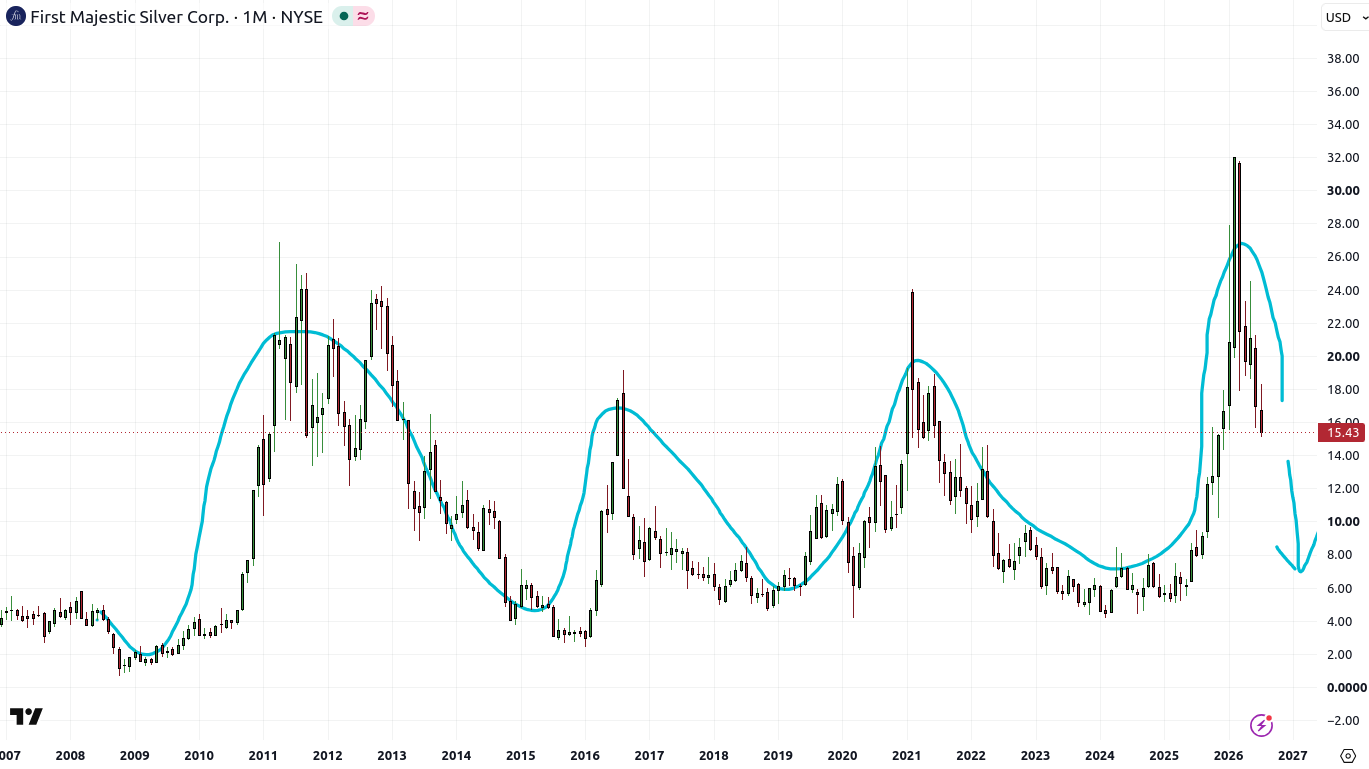
The fact that most companies in the space are down 50% since February has been, for some people, their first real lesson in the cyclicality of miners. It’s normal for the space, however, and the good news is that we are now well into the decline, meaning the next great buying opportunity will arise soon enough.
There is one caveat: the opportunity will arise only for those who are ready.
On that front, my next cohort of Group Coaching for Investors begins at the end of August. This is where I teach people the strategies I use to navigate the cycles in gold and silver miners, identify when the risk-reward equation has changed and move into opportunities before the wider market catches on.
Those same strategies proved invaluable this year. While the miners and oil rolled over, I was already looking elsewhere—finding a number of deeply overlooked companies that continued rising while almost everything around them was falling. These forgotten stocks are now benefiting from the great rotation of capital out of the AI bubble.
This includes one major company whose shares are up 30% this month—a stock almost everyone had ignored until recently. But more on that in a moment. First, if you would like more information on the upcoming coaching group, please check the bottom of the post or DM me here on Substack.
Shameless plug over, now we will move onto the focus of this weeks article: what do we actually do during times like these? When markets are sitting at record overvaluations, speculative mania is at its peak, and even the usual contrarian assets—gold, silver and the miners—are already correcting.
Buying the same stuff you always buy, and simply hoping things turn around, is not the answer. The risk of a major market correction is now extremely high. Likely a major crash. Just take a look at the South Korean KOSPI to see what I am talking about. This is a domino that eventually leads to the S&P 500. The AI bubble is one gigantic interconnected cesspit, that has now engulfed pretty much all major indices.
Meaning when one indices goes, the others will eventually follow.
Unfortunately, those kinds of crashes result in everything going down together. It does not matter what you hold during the initial selling. You could own the best company in the world, with the strongest profitability and the best management team. In a market crash, all correlations go to one for a time, and everything gets hit.
Of course, capital will then rotate rapidly out of the toxic, phony narrative companies that produce no profit and into genuinely good, viable businesses whose profitability is going nowhere.
A handful of names—what I call the Forgotten Few—are already benefiting from this great rotation of capital. These are the only companies I want to own right now. But you might be thinking: but wait a minute, Mike. If you believe a crash is coming, surely you want to be completely out of stocks?
The answer is more nuanced than a simple in or out.
Now is certainly the time I want to be positioned mostly in the bottom two tiers of my Wealth Preservation Pyramid. That means long-term holdings of metals, which protect me no matter what happens. These are not positions you trade in and out of, and I am adding to gold at the current level. But this is not an investment. For me it is protection, and a long term savings vehicle.
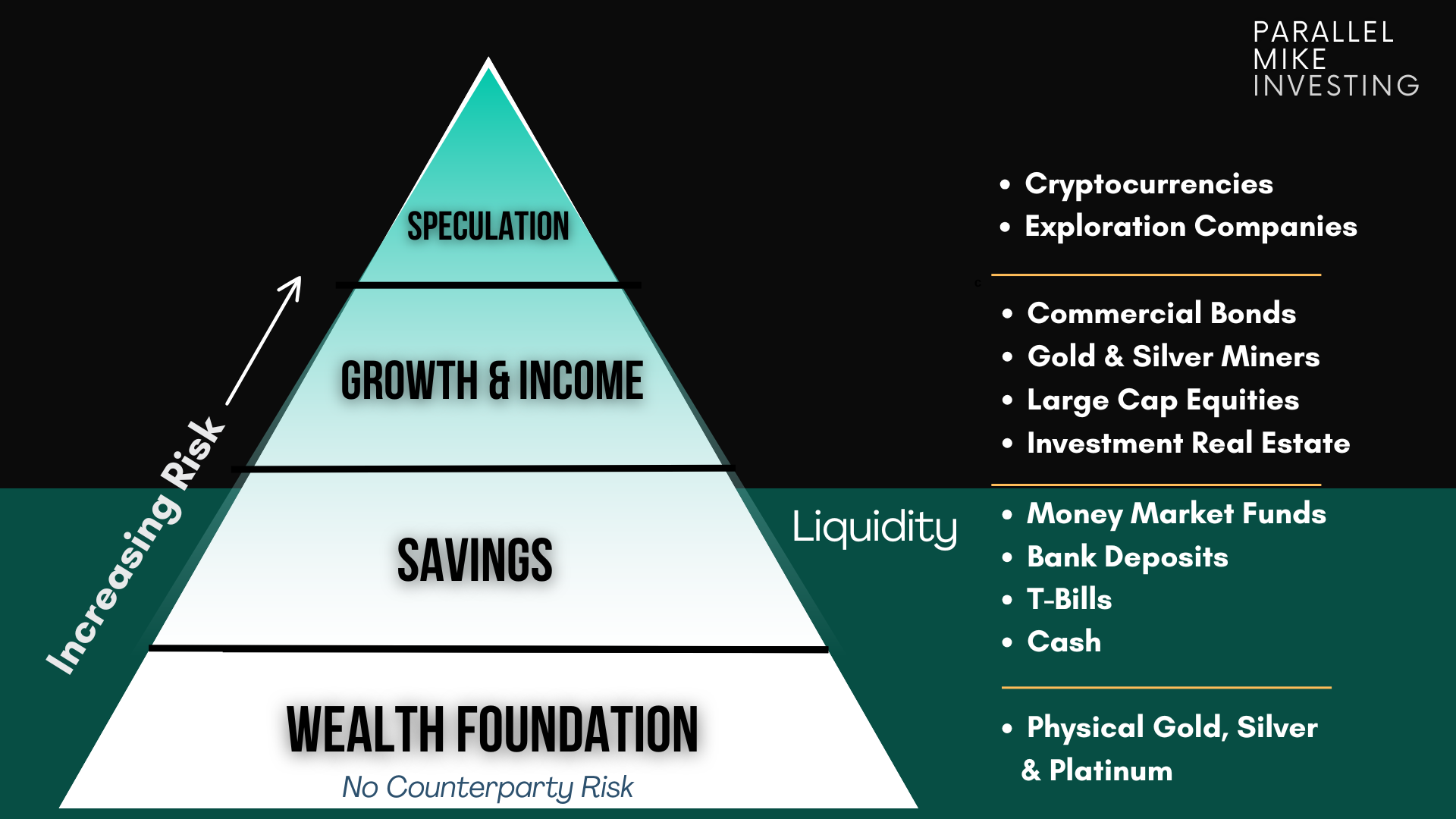
Beyond the foundation, I am also heavily positioned in the liquidity tier. This is where I place anything I plan to deploy within the next six to twelve months. With market risk now so extremely high, I have transitioned almost, but not entirely, out of the top two tiers and sitting in liquidity, waiting for the big opportunities I believe lie ahead.
Again, “big opportunities” really depends on how you are positioned going into a crash. If you are fully allocated to stocks, you do not have a huge opportunity ahead of you. Not historically speaking and not in light of the warning signs springing up everywhere.
What you have is massive risk and potentially great loss ahead of you. So right now wealth preservation is the main goal. For me, the first rule of investing is not to lose money. Even if that means missing an opportunity here and there.
And right now, the probabilities are not in favor of great returns, at least not at the mean. On the other hand, I would be lying if I said I knew exactly what comes next. Nobody does. But the signs are there that they have run out of runway, and now we are simply waiting for the next excuse for a big, BIG print. That excuse will almost certainly include a sharp correction in the markets.
This is not pure guesswork. It is based on my study of financial history, market cycles and what is unfolding in real time. So why wouldn’t you want to be 100% out of stocks?
The answer is contained in the above: because we do not have a crystal ball. I am certainly heavily positioned towards what I believe happens next. The last time I was this heavily skewed towards a crash was when I sold all my stocks in October 2019. Come March, I was glad I had.
Having said that, there are always opportunities and despite the massive overvaluation of the wider market, some sectors are already trading at generational lows. I am talking about strong companies trading at or close to the the lowest valuations in their entire history. That creates an exceptional risk-reward opportunity.
To be clear, these are not tiny, speculative commodity producers. In fact, they are not commodity producers at all. They are defensive stocks—companies I singledout both because of their exceptional value, and because I know that as the AI bubble unwinds, these are precisely the kinds of companies mainstream investors will be forced rotate into.
Stable, defensive companies, many of whom are also offering dividends over 6%.
During the dot-com crash, we saw precisely the same setup. Going into the peak of the bubble, these kind of companies had been forgotten, and Warren Buffett was considered washed up for sitting mostly in cash and holding a handful of these neglected businesses.
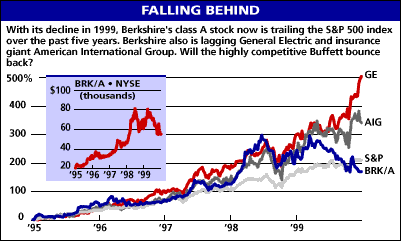
So what happened next? Who was correct? The herd, piling into dot-com IPOs for companies producing zero profits, or Buffett, the old laggard who had underperformed for three straight years? I think you all already know the answer to this one.
From 2000 to 2010, technology companies went nowhere. It was a lost decade. Meanwhile, the “forgotten few” that had fallen 90% in the years leading up to the 2000 crash became some of the best performers in the index. Buffet’s Berkshire Hathaway went from underperforming the market in 1998 and 1999, to massively outperforming it in the years that followed.
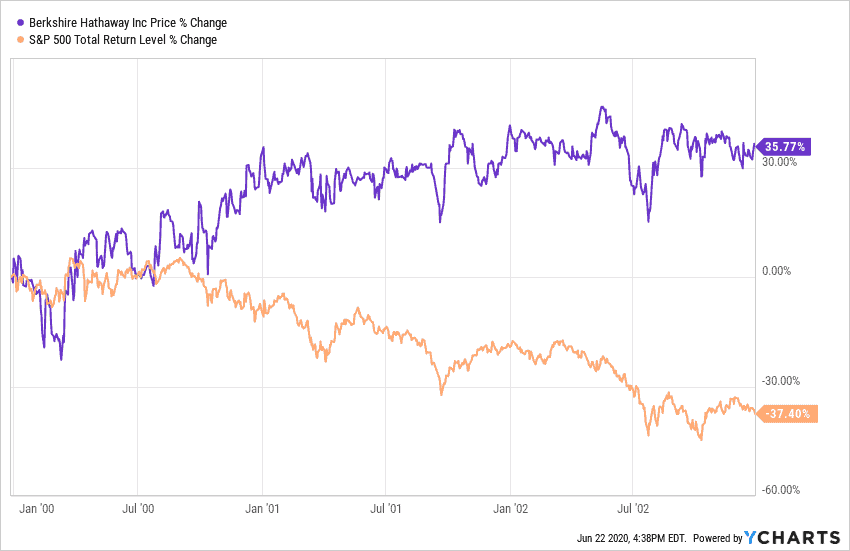
My bet is that exactly the same thing happens this time. In fact, it is already happening. The three companies I bought recently are substantially outperforming the S&P 500. Like during the early part of 2000, right now, these companies are not on most people’s radar, and only a handful of early movers are paying attention.
They see the tide beginning to turn and are quietly diverting their capital, while the masses (see: bag holders) remain fixated on the bubble. This is great news, because it means there is an enormous upside ahead of us. These companies remain deeply undervalued.
So, in today’s article, I am going to discuss my three most recent purchases—what I bought and why I bought them. Given the market risk, these companies make up only a small part of my overall portfolio, but I believe all three offer significant upside over the next 12 months as the AI bubble continues to unwind and capital rotates into neglected, highly profitable businesses.
Comments
Nothing yet. Say the first thing.
Sign in to join the conversation.