

Welcome to the latest edition of the Paragon Policy Fellowship newsletter! Here’s what the team has been up to since our last issue:
Paragon was invited to table at the Stanford Public Interest Technology (PIT) Career Summit on October 10, sponsored by the McCoy Family Center for Ethics in Society. In addition to fascinating keynote speakers and discussions, attending students had the opportunity to learn about organizations like Paragon as pathways to break into public interest technology policy and technology ethics as career paths.
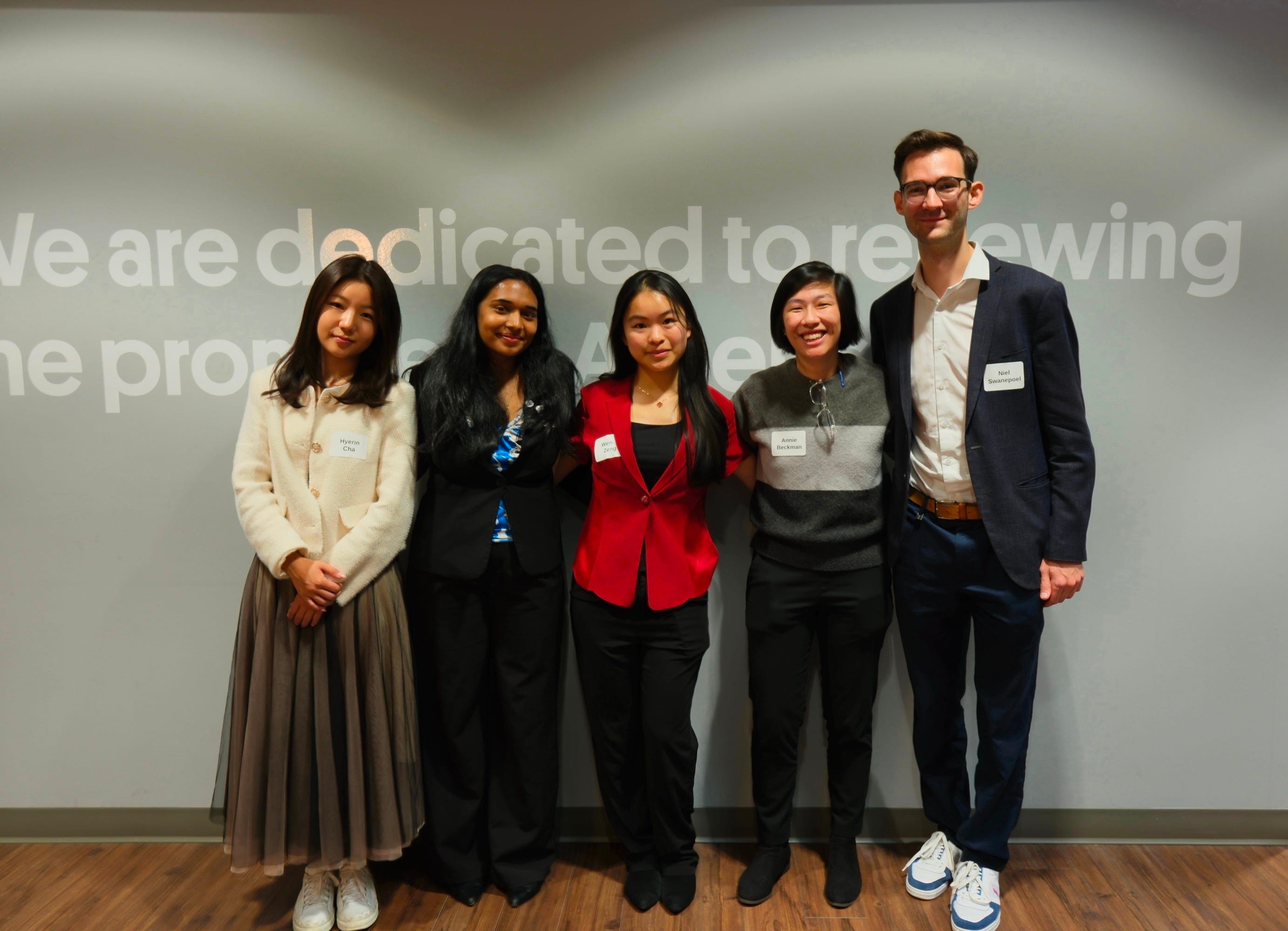
Additionally, former Paragon fellows and current organizing team members attended the Digital Service for the Planet (DSP) launch by the Environmental Policy Innovation Center (EPIC), New America’s Technology and Democracy programs, and New America’s New Practice Lab. This pilot focuses on developing digital tools and strategies that improve the use of technology and data to address environmental goals. The Paragon team had the opportunity to hear about some of the DSP fellows’ work in aggregating drinking water datasets, addressing permitting challenges, and using emerging technologies to support climate initiatives. The team also had the chance to discuss the importance of student engagement in state and local digital governance.
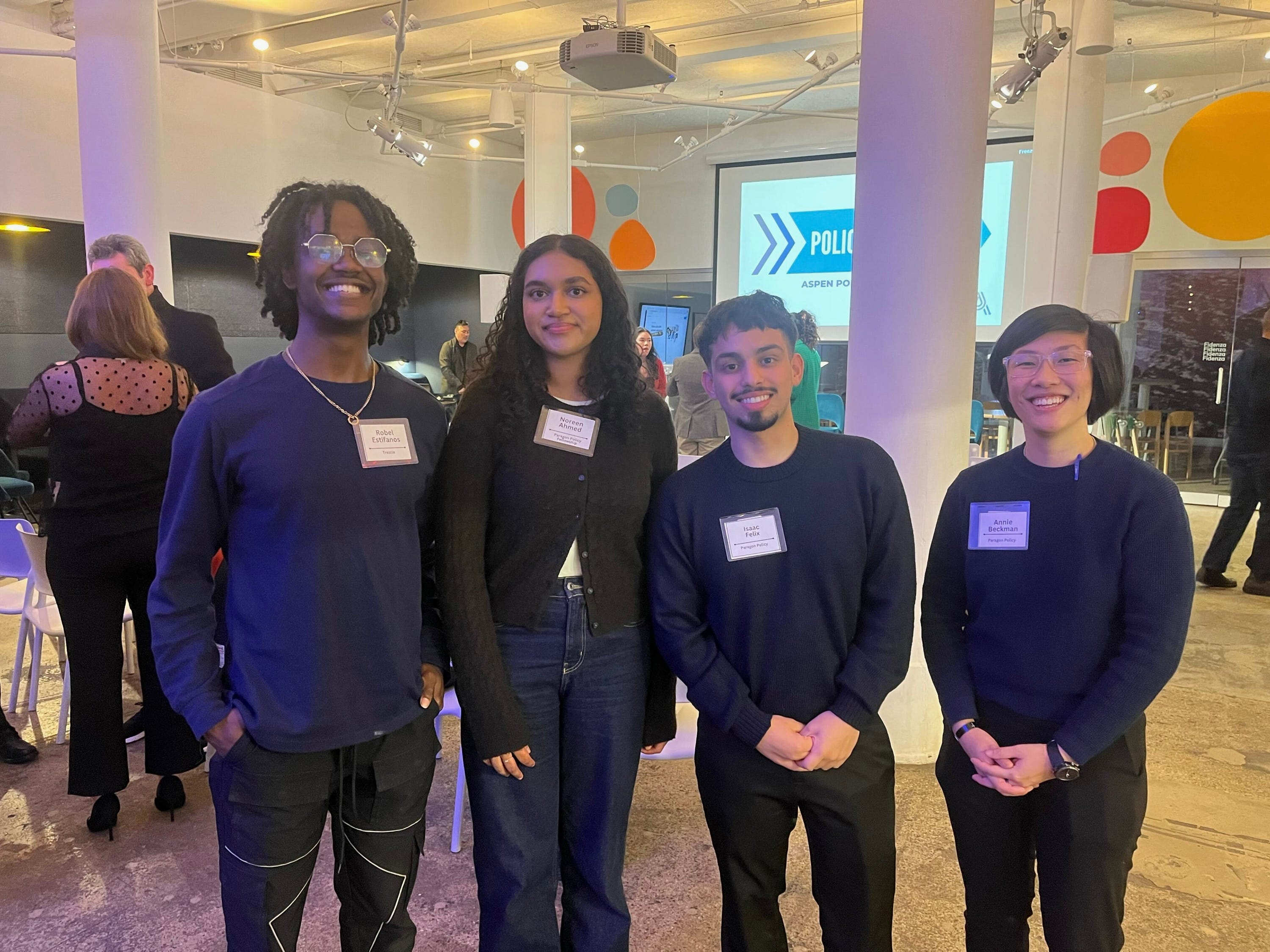
Lastly, Paragon organizing team members, current fellows, and alumni also attended the Aspen Policy Academy’s “Policy in Action” event, where Aspen Science and Technology Policy fellows discussed their work on Generative AI guidance and Computer Vision Deployment for the New York City Office of Technology and Innovation. The Aspen Policy Academy staff also launched their “Getting Through to Governments: A Civic Engagement Guide to Action” report which provides practical steps for communities and individuals to effectively advocate to government officials. The event concluded with a panel featuring former San Francisco Mayor London Breed, former Tulsa, Oklahoma Mayor G.T. Bynum, and Ryan Pierce from Bloomberg Philanthropies Government Innovation. The former Mayor discussed the imperative of making government more accessible to enable user-centered design. The panelists also highlighted the need for cities’ intentional and purposeful engagement with their communities to deliver outcomes with more efficacy through feedback mechanisms and data evidence and evaluation.
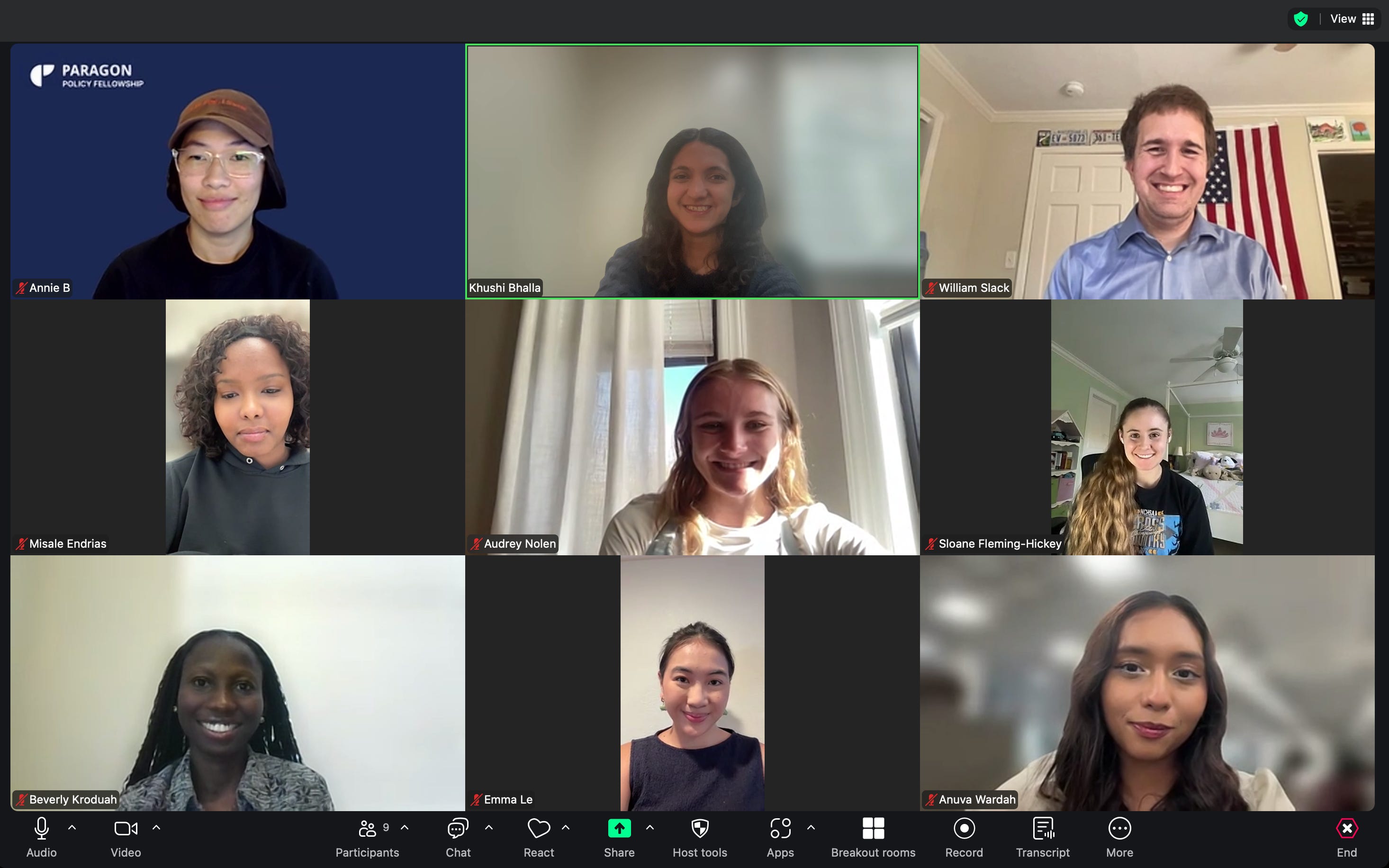
Paragon has been honored to have an inspiring lineup of visionary leaders, working at the intersection of technology, governance, equity, and global change, to speak with our Fellows. Halfway into the semester, our Fall 2025 Fellows had the opportunity to hear from and connect with three outstanding experts whose careers exemplify public-minded innovation:
🎤 Dr. Mei Lin Fung: Our keynote speaker for our cohort’s opening ceremonies, Dr. Mei Lin Fung is a Singaporean technologist and global leader whose work has shaped the very foundations of modern digital systems. A former programmer and analyst at Shell, Intel, and Oracle, where she helped design one of the world’s first customer relationship management systems, Dr. Fung has dedicated her career to ensuring technology serves human well-being. Trained under Nobel laureates Fisher Black, Robert Merton, and Franco Modigliani at MIT, she has carried that rigor into public service, including helping guide the U.S. Department of Defense’s health futures initiative. Today, she is Chair of the IEEE Technical Committee on Sustainability, Co-Founder of the People-Centered Internet with Vint Cerf, and a founding advisor to the UN’s GovStack initiative. Her forward-looking leadership extends to major policy efforts, including G7 briefings and the Puerto Rico Prosperity Initiative, the first digital transformation sandbox of its kind.
📖 Brenda Isabel Murrugarra Retamozo: Our first speaker event of the cohort featured Brenda Isabel Murrugarra Retamozo, a Ph.D. student in Anthropology at UNC–Chapel Hill and Fellow of The Royster Society of Fellows. Originally from Peru, Brenda is an accomplished multidisciplinary researcher whose work bridges law, technology, human rights, and equitable governance. She has served as a Fellow with the U.S. Department of State’s Community Engagement Exchange Program, CREA’s Disability, Sexuality & Rights Online Institute, and LACNIC’s Líderes Program, where she examined AI and Internet governance across Latin America. With experience as both a law professor and legal counsel, Brenda brings a human-centered lens to issues of data protection, privacy, cybersecurity, and digital inclusion, particularly for marginalized communities. During her speech, she encouraged Fellows to think critically about power, equity, and the future of ethical technology.
🌐 Will Slack: Our most recent speaker event featured Will Slack, a Fellow in the U.S. Digital Corps and an experienced practitioner of public-interest technology. Will has contributed to major modernization efforts across the federal government, from improving backend systems at the Centers for Medicare & Medicaid Services to helping launch the Department of Homeland Security’s first cloud-hosted public website. His prior work at the United States Digital Service (USDS) and at 18F spanned hiring reform, product and platform portfolios, and large-scale digital service transformation. With additional background in education access, sound design, digital payments, and web development, Will emphasized the importance of empathy, collaboration, and service-driven leadership in strengthening public systems. His conversation with Fellows highlighted the global, interdisciplinary nature of public technology and the need for durable digital infrastructure that advances the public good.

George Mason University student and current Operations Director Sharanya Maddukuri shares her journey from policy newcomer to organizational leader shaping the Paragon Fellow experience.
📖 See what our organizing team has been reading since the last issue:
Brookings: The future of data centers (Sofia Rodriguez, Executive Director)
Tech Policy Press: Dispatch from Hanoi: UN Cybercrime Treaty Signing Exposes a Highly State-Centric Process (Kaitlyn Cui, Executive Director)
Aspen Policy Academy: Getting Through to Governments: A Civic Engagement Guide to Action, American Enterprise Institute: Low Earth Orbit Satellites Are Taking Off. Governments Need to Catch Up (Annie Beckman, Executive Director)
International Journal In FYP We Trust: The Divine Force of Algorithmic Conspirituality (Jae Wan Ahn, Policy Director)
Wall Street Journal: When AI Hype Meets AI Reality: A Reckoning in 6 Charts (Garv Jain, Advancement Director)
Greenberg Trauig: Executive Order Aims to Accelerate Commercial Space Development Through Deregulation, TIME: ‘Time Is Running Out’: New Open Letter Calls for Ban on Superintelligent AI Development, NeurIPS 2025: Position Paper: If Innovation in AI Systematically Violates Fundamental Rights, Is It Innovation at All? (Ahmed Diongue, Partnerships Coordinator)
The Guardian: ChatGPT violated copyright law by ‘learning’ from song lyrics, German court rules (Ruth Ayele, Professional Development Coordinator)
*These recommendations are made out of personal capacity and do not reflect Paragon’s opinions as an organization.
Thanks for reading until the end! Check us out on LinkedIn and Instagram, and subscribe to Substack below to keep up with all things Paragon.
If there are topics you would like covered in future newsletters or have an opportunity for us to publicize, let us know via this feedback form! 📝
— Contributed by Kaitlyn Cui, Garv Jain, and Anne Do

No posts
Comments
Nothing yet. Say the first thing.
Sign in to join the conversation.