

Welcome to the latest edition of the Paragon Policy Fellowship newsletter! Here’s what the team has been up to since our last issue:
53 Fellows from 34 different universities joined Paragon’s summer cohort! Take a sneak peek at the projects the Fellows worked on and bookmark our website to stay updated when all the project briefs are publicized:
U.S. Virgin Islands - Culturally-Responsive Local STEM Education 🏫🧪: Paragon Fellows collaborated with the Virgin Islands Next Generation Network to develop a policy framework improving STEM learning outcomes in local high schools. Fellows created a comprehensive final report outlining the findings from the literature review, comparative case studies, and stakeholder interviews, a framework for understanding the USVI’s specific challenges and opportunities, and insights into benchmarking, evaluation, and alternative funding sources. This report was coupled with graphics and presentation slides, which viNGN can use in targeted outreach efforts.
Tempe, AZ - Workforce Data Literacy Curriculum 📊: Through conducting a literature review, interviewing employees and academics, and developing a competency survey, Paragon Fellows developed a data proficiency classification system, curriculum assessment, and implementation strategy for the City of Tempe to understand the data literacy and needs of its city workforce.
Bismarck, ND - Cyber Incident Response Plan 🌐: Paragon Fellows developed a tailored Cyber Incident Response Plan that met national standards while adapting to the City of Bismarck’s resource limitations and governance context. The resulting deliverables consist of a governance framework defining responsibilities across city departments with a tiered escalation plan, a core incident response management playbook, and sector-specific playbooks for public safety, public health, and water utilities-related incidents.
Fort Collins, CO - Mitigating the Impacts of Deepfakes on Public Input 🗣🤖: A misleading video clip garnered high traction on the internet, showing a Fort Collins police officer using excessive force against a community member. The City of Fort Collins enlisted Paragon Fellows to help proactively protect its public officials from such cases of harm, and to enable community members to become conscious consumers of media as AI-generated content proliferates. Fellows developed a public awareness campaign in partnership with local trustworthy institutions and demographic- and platform-tailored messaging. The team also recommended expanding existing legislation to include deepfakes within the definitions of counterfeit image and identity theft, and expanding property rights to include individuals’ rights.
Charleston, SC - Predictive Flood/Natural Disaster Management 🌊🗺️: In response to chronic flooding threats the city faces associated with climate change, Paragon Fellows reviewed academic literature on urban flood modeling, analyzed Charleston’s current data landscape, and spoke with leaders across six key city departments to develop a detailed report analyzing Charleston’s data ecosystem, relevant case studies, and proposing phased policy recommendations to recommend a citywide proactive flood management strategy.
Lebanon, NH - Internal AI Policy Review 📑: The City of Lebanon adopted its first citywide AI policy in December 2023, “ADM-143: Use of Artificial Intelligence.” Summer Fellows drafted proposed policy revisions to ADM-143 and a set of complementary AI guidelines for policy implementation, including reducing policy ambiguity for employees, expanding policy coverage on environmental sustainability and high-risk use case restrictions, considering new challenges posed by agentic AI, and updating a strong governance framework with distributed employee responsibilities to reduce policy burden on Lebanon’s Chief AI Officer.
Montana - Cybersecurity Stakeholder Guide and Engagement Resources 🛡️🔐: Fellows reviewed the State of Montana’s MT-BASE (Malmstrom Air Force Base) Critical Controls Stakeholder Guide, recommending 1) plain language, 2) increased user interactivity, and 3) role-specific resources to support executives in prioritization and taking action to improve statewide cybersecurity compliance and understanding. Fellows recommended a two-part approach to achieving these priorities: 1) updating the guide via a hybrid model that incorporates best practices from other states’ guides to enhance clarity and consistency, and 2) providing user engagement resources developed for practicality—visual briefings, checklists, and explainer videos, for example—that connect existing policy into concrete actions for Montana’s cyber landscape.
One of our Summer 2025 Project Leads, Niel Swanepoel, traveled to Bismarck, ND, to visit his team’s government partner. Their project focuses on developing a Cybersecurity Incident Response Plan (CIRP) for the City of Bismarck, strengthening its ability to respond to cyberattacks across three critical domains: public health, public safety, and water utilities.

Niel spent several days embedded with the City’s IT team. “I had just really enjoyed engaging with the city stakeholders, built a good relationship with our government partner, and became fascinated to actually see how these systems and teams,” he reflected.
The visit included tours of key infrastructure sites like the fire department, police department, water and wastewater treatment plants, and the emergency communications center. Niel observed key operations in action, from water treatment sensors and IoT monitoring tools to police dispatch workflows and the city’s network architecture. These site visits provided invaluable context for understanding how critical operations function on a day-to-day basis and the constraints under which they operate.
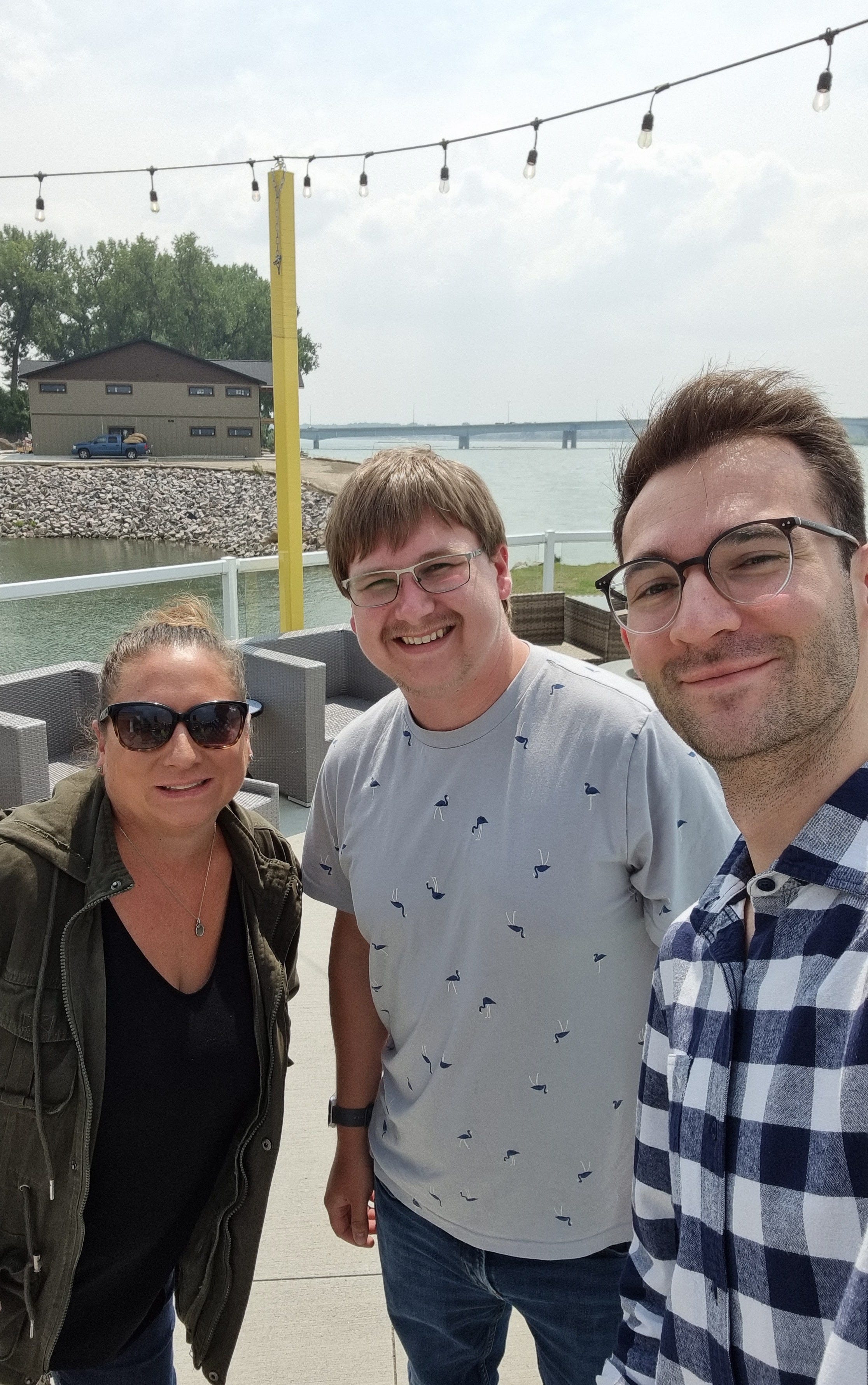
By seeing these systems up close, the CIRP design shifted from a conceptual plan to one rooted in the city’s operational realities. This firsthand exposure helped the project team to design a CIRP that is not only technically sound but also tailored to local conditions. This trip demonstrated the mutual value of close collaboration between Paragon Fellows and the government partner. For Niel, it was an opportunity to deepen his expertise in municipal IT operations, strengthen partnerships with local stakeholders, and translate theory into practice, an experience he says will shape his professional growth. For the City of Bismarck, it brought fresh insight and precision to the CIRP’s design, ensuring that the final product will be a truly operational tool for those who need it most.
This summer, Paragon Fellows, alumni, and members of the organizing team gathered in cities across the country to connect, share experiences, and strengthen our growing community. From the East Coast to the Bay Area, these in-person meetups offered a chance to move beyond Zoom screens and build relationships face-to-face.
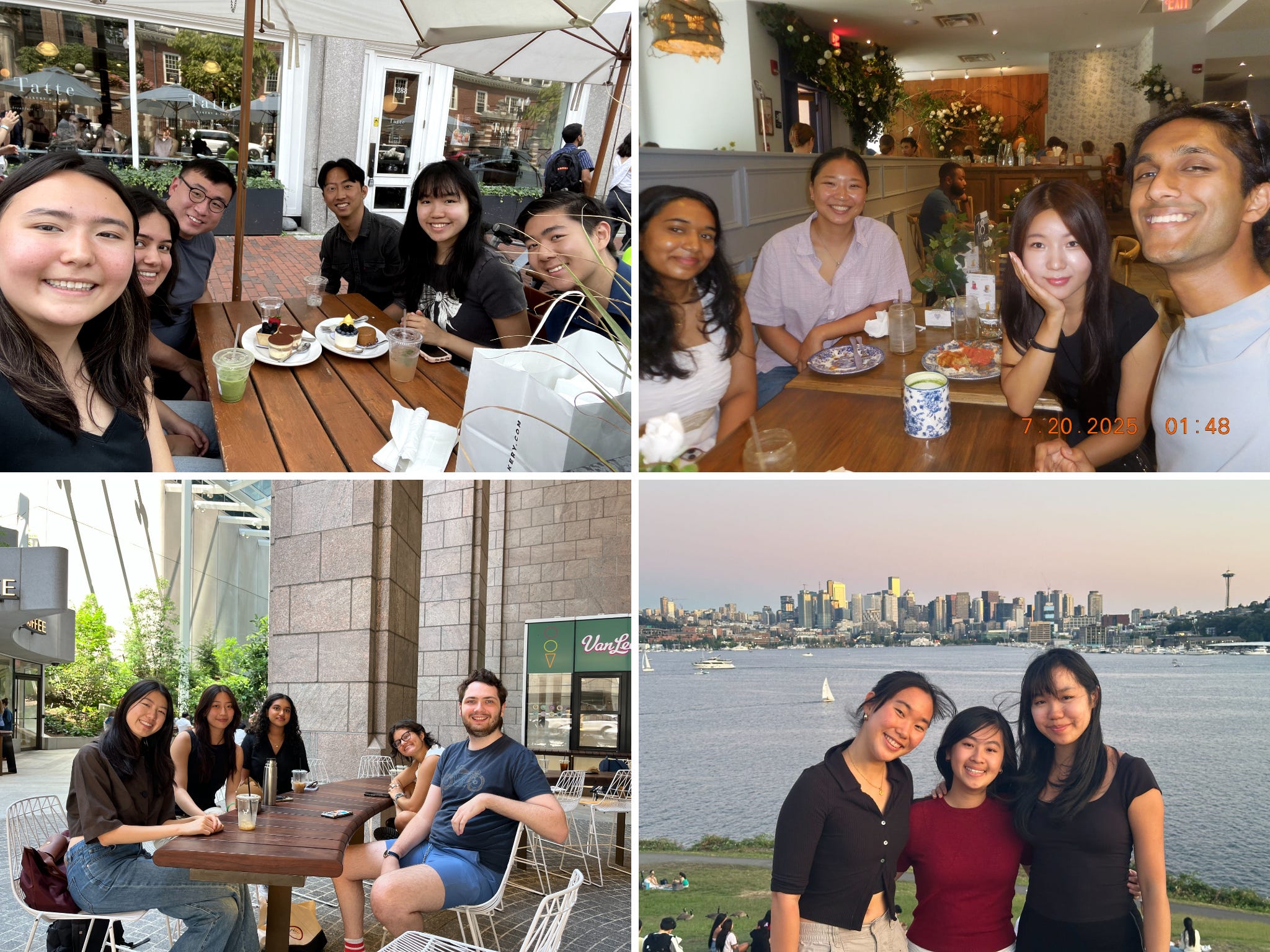
From cafes in NYC and Boston to brunch in DC, ice cream in Seattle, and a happy hour in San Francisco, our Paragon network had the opportunity to bond deeper and build connections to support one another. During these meetups, Fellows had the opportunity to learn from alumni navigating the next steps of their careers, while the organizing team gained valuable insights into how we can continue improving the Fellowship experience. Throughout our meetups, one thing was clear: the Paragon network is a vibrant, supportive community that extends beyond the summer.
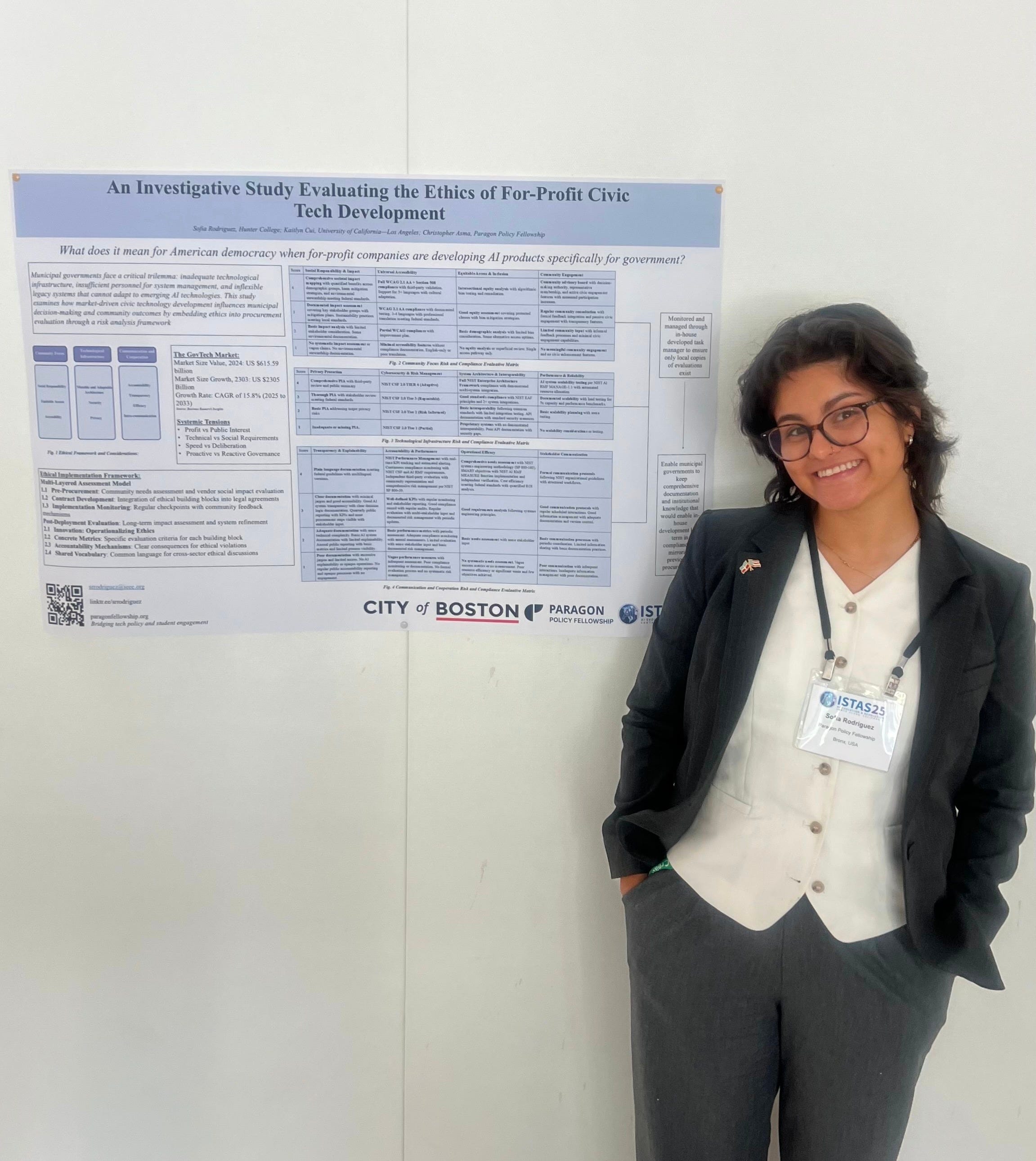
Two of Paragon’s Executive Directors, Sofia Rodriguez and Christopher Asma, flew to San Jose, CA, to attend IEEE’s International Symposium on Technology and Society (ISTAS). ISTAS is an annual multidisciplinary forum for technologists, entrepreneurs, policy makers, and academics to discuss the social implications of technology. Paragon was selected to present our research on the landscape of state and local government technological procurement, and its Spring 2024 project developing ethical AI procurement guidelines for the City of Boston. Below are reflections on how it was to attend the symposium:
In three short days, ISTAS allowed us to meet and learn from thinkers and doers across the world in their quest to integrate AI into various fields. Throughout the conference, we were posed this question: “Is this an AI evolution or an AI revolution?” Every conference-goer we spoke with openly and thoughtfully grappled with this question and how it related to their own work across all disciplines.
One workshop had us use AI to come up with ideas as to how to combat flooding in one of India’s poorest regions, allowing the group to compare our approaches and outputs and better understand the strengths and weaknesses of AI in policy and workflows. Another speaker discussed her experience training animal shelter volunteers and staff to integrate AI into their work, providing a fascinating look into how the general public thinks about AI, how they can adopt it, and the impacts it can have when applied to a woefully underfunded field such as animal rescue.
A recurring idea throughout the conference was that while everyone there was excited about AI and were already seeing (or even implementing themselves) AI tools to improve people’s lives, nobody was dismissive of the consequences of such a technology. Nobody shied away from how AI data centers have a deleterious effect on the environment, and that bad actors can use AI tools to their own ends just as easily as good actors can. Every participant was committed to facing this tension head-on without shirking their duty as technologists and citizens.
Furthermore, it was an honor to be given the privilege to present Paragon’s research both through a student poster and a presentation to the IEEE audience. Hearing questions and feedback from the conference-goers about Paragon has allowed us to think more robustly about how to best achieve our goals and meet our dual objectives of providing tech policy/governance resources to students and communities.
ISTAS was an incredibly energizing conference that left everybody, including us at Paragon, eager to incorporate what they’ve learned into their own work!

From local government to an international fellowship, UW-Madison student Helen Song transforms research into real-world solutions.

Starting out as a Policy Fellow working with the City of Madison, WI, Claudia Hebert chats with us to explain her project and current role as one of Paragon’s Policy Coordinators.
📖 See what our organizing team has been reading since the last issue:
Rest of World: What we learned from tracking AI use in global elections (Christopher Asma, Executive Director)
Tech Policy Press: Access to Critical Minerals is the Achilles’ Heel of Trump’s AI Ambitions, Tech Policy Press: ‘Tech Prosperity Deal’ Binds UK to US AI Dominance Strategy (Sofia Rodriguez, Executive Director)
Tech Policy Press: Cities Need a New Model for Incentivizing Responsible AI (Kaitlyn Cui, Executive Director)
National Bureau of Economic Research: AI-Powered Trading, Algorithmic Collusion, and Price Efficiency (Jae Wan Ahn, Policy Director)
The Present Age: The Man Calling Bullshit on the AI Boom (Claudia Hebert, Policy Coordinator)
AI 2027, Stanford University Human-Centered Artificial Intelligence: AI Reshapes Global Power: Insights from Stanford HAI’s Congressional Boot Camp, First Monday: The TESCREAL bundle: Eugenics and the promise of utopia through artificial general intelligence (Desiree Junfijah, Partnerships Coordinator)
Wall Street Journal: Who Pays? AI Boom Sparks Fight Over Soaring Power Costs (Garv Jain, Media Coordinator)
Google Cloud Blog: How much energy does Google’s AI use? We did the math, Brookings Institution: As energy demands for AI increase, so should company transparency (Anne Do, Media Coordinator)
*These recommendations are made out of personal capacity and do not reflect Paragon’s opinions as an organization.
Thanks for reading until the end! Check us out on LinkedIn and Instagram, and subscribe to Substack below to keep up with all things Paragon.
If there are topics you would like covered in future newsletters or have an opportunity for us to publicize, let us know via this feedback form! 📝
— Contributed by Kaitlyn Cui, Garv Jain, and Anne Do

No posts
Comments
Nothing yet. Say the first thing.
Sign in to join the conversation.