
Coverstory is Paper Covers Rock's ongoing interview series exploring the people, books, ideas, and art that inspire us.
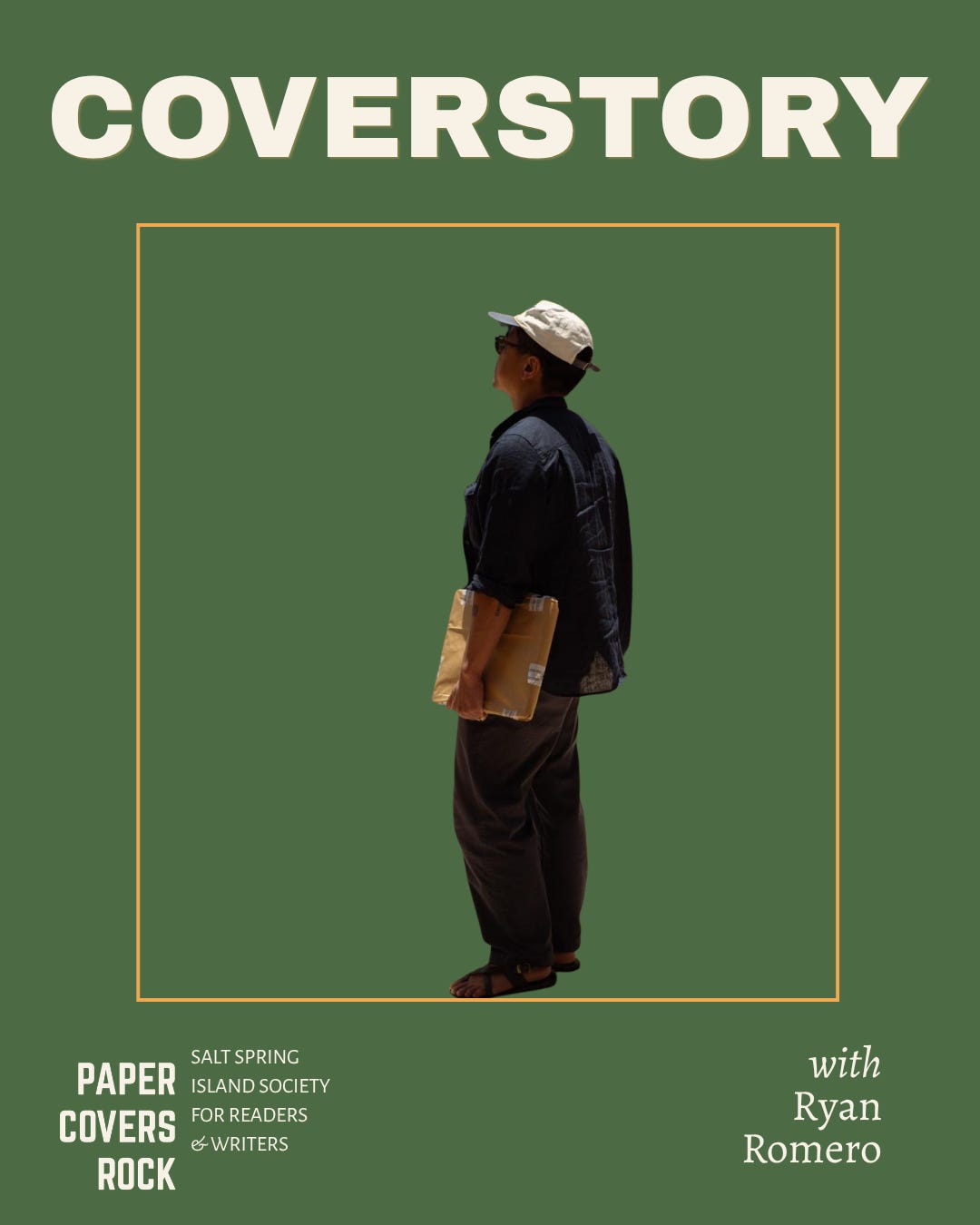
Ryan Romero is a Filipino-Canadian visual artist based on Salt Spring Island. His work explores themes of memory, migration, and identity through an expressive, intuitive approach to image making. Romero’s practice reflects his diasporic experience, drawing from a life shaped by global movements, political unrest, and cultural hybridity.
Born in Manila, Philippines, raised in Riyadh, Saudi Arabia, before living and working in British Columbia, Canada, Romero has a unique perspective of culture and the identities we form around it. His extensive background in design and advertising for brands have imposed stark considerations that he chooses to ignore and instead convey lucid responses to moments in his art practice.
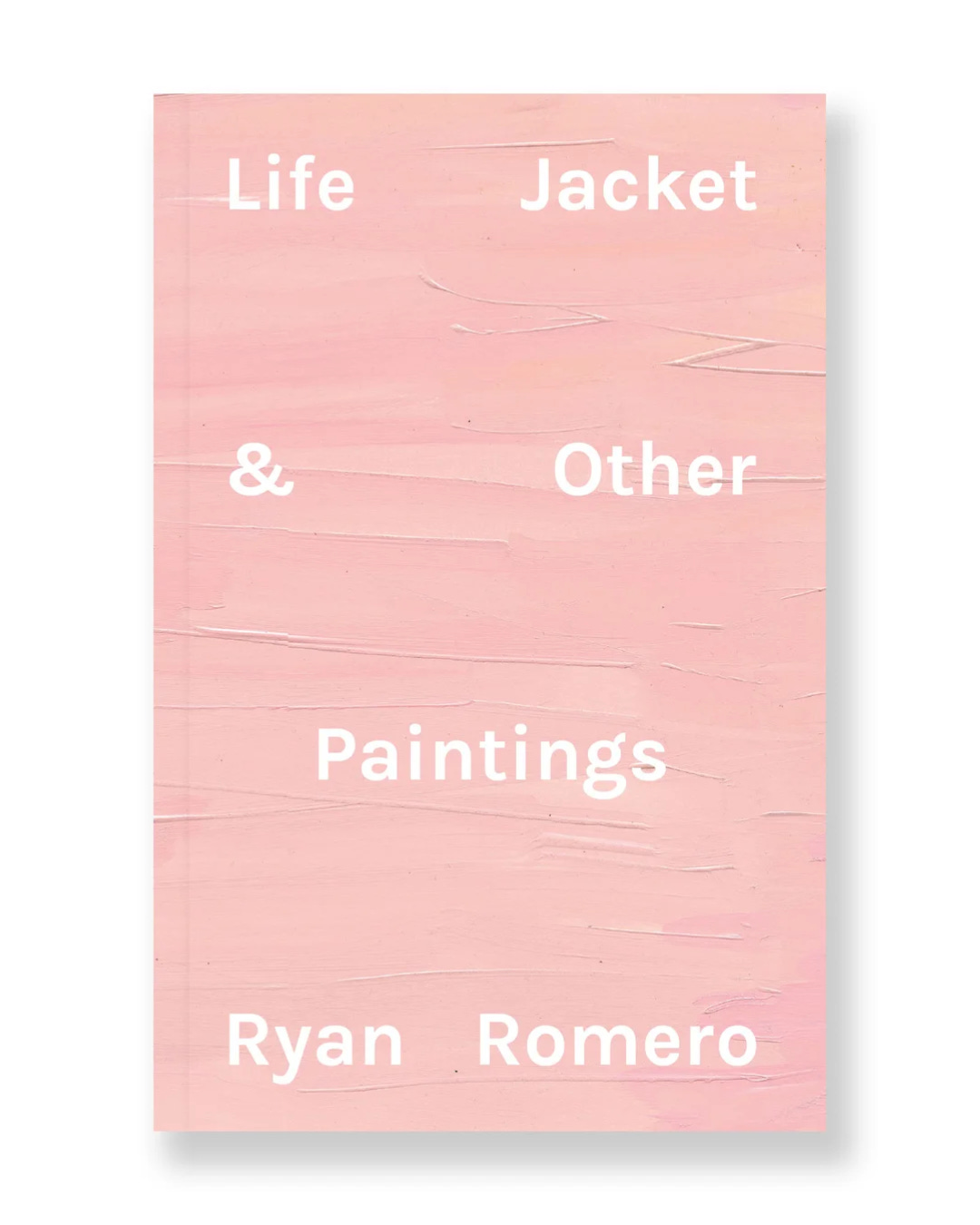
In 2019, Ryan self-published Life Jacket & Other Paintings, a collection made over a year spent living at Elmo’s House Artist Residency in Batan, in the Philippines. He shares how the book came together, what he left out, and why he still believes in making something people can hold in their hands.
I started by making a painting every few days of things I noticed around me—the handwritten signs, roadside scenes, tropical plants, neighbours, and quiet moments of daily life in a small fishing village in the Philippines. At first, each one felt random. Then they became bookmarks to the week. By the end of the year, they had become chapters. It wasn’t until I stepped back and looked at the work as a whole that I realized I had been documenting a much larger story.
The paintings were made over the course of a year while I was living at Elmo’s House Artist Residency in Batan, during a period when almost every part of my life was changing. A book allowed the paintings to remain connected to the people, place, and moments in which they were created. Through supplementary writing, I could add the emotional and geographical context that the paintings alone couldn’t fully express.
As I began putting the book together, I became excited by the idea that a book could travel differently than paintings. It invites people to spend time with the work at their own pace, moving between images and text, almost as if they’re experiencing that year alongside me. It became less about publishing an art catalogue and more about preserving a record of a place, a time, and a version of myself that no longer exists.
Once I got into the rhythm of painting, I painted furiously and quickly. I wasn’t trying to document everything that happened that year. I painted the things that caught my attention—a certain quality of light, someone’s posture, a fleeting interaction, or a small detail that felt meaningful in the moment.
When I began selecting the work for the book, I wasn’t necessarily looking for the strongest individual paintings. I was looking for the moments that felt connected to the experience of living there. Some paintings carried a quietness, while others reflected moments of uncertainty or emotion. Together, they created a feeling of the year as I experienced it.
Editing became less about choosing my “best” paintings and more about creating an honest reflection of that period in my life. If an image didn’t contribute to that feeling, I was comfortable letting it go.
What surprised me most was how much the order of the work changed the way I understood it. When I was painting, each piece responded to whatever I happened to be experiencing that day. I wasn’t thinking about how one painting would relate to another or what the collection would eventually become.
Once I started laying everything out as a book, I began to see relationships between paintings that I hadn’t noticed before. Images started speaking to one another across dozens of pages. Themes of grief, belonging, observation, and growth became clearer in hindsight.
The editing process became another form of storytelling. The book didn’t just preserve the paintings—it revealed connections and meanings that I couldn’t have seen while I was in the middle of creating them.
I keep returning to the idea of home and how complicated that can be. As someone who is Filipino-Canadian, I’m interested in the spaces between places—the feeling of belonging somewhere while also feeling slightly removed from it.
I’m drawn to ordinary moments and overlooked details. Storefronts, light and shadow, moments from old photographs, mismatched chairs, conversations with strangers—these encounters often reveal more than what is immediately visible. Painting helps me slow down enough to notice them, but often it is only afterward, when I step back and look at the work as part of a larger series, that I begin to understand what I was really responding to.
More broadly, my work often explores moments of transition. I’m interested in the periods when things feel uncertain or in-between, when you’re still trying to understand a place, a person, or even yourself. Those moments of change often become the places where I find the most to paint.
The self-portrait near the beginning of the book is probably the most meaningful to me. I painted it shortly after arriving in Batan, before I really understood what that year would become.
At that point, I had stepped away from the commercial design practice I had spent years building, and I hadn’t seriously painted in a long time. My confidence as a painter had almost disappeared. That portrait captures someone standing at the beginning of something uncertain. In the introduction to the book, I wrote, “I’m not the man I thought I’d become... I had no confidence in what I did from that point on. I only painted what I saw.”
Looking back, I see someone trying to let go of the habits of design—control, precision, and certainty—and relearn how to trust intuition. The rest of the book grows out of that moment. It marks the beginning of finding my way back to painting.
My thoughts and ideas can often feel messy and abstract at first—like a web of a hundred different points connected to one central thought. That space between identifying a problem and finding a clear solution can be filled with anxiety, especially when nothing concrete has taken shape yet.
On difficult days, my instinct is to keep pushing through and try to force an answer. But experience has taught me that stepping away is often where the work actually happens. Going for a run helps separate those scattered thoughts and organize them into something clearer. The movement creates space for the noise to settle, and more often than not, a stronger idea eventually rises to the surface.
When I start a painting, the process is very deliberate. There’s the underpainting, followed by the initial sketch that maps out the composition—the architecture of the image. That stage is a form of problem-solving. My mind is both proactive and reactive, making decisions while also responding to what is appearing in front of me.
The first few hours of painting often feel the same. I’m laying down the foundation of colour and structure, and that stage can feel a little anxious because so much of the painting depends on those early decisions. But when everything begins to come together, that foundation gives me permission to relax and trust the process.
That is probably my favourite part. I can let go and enter a state of flow. My mind almost goes quiet, and I stop consciously thinking about the painting in front of me. Instead, my thoughts begin to wander. I might revisit something I said to my partner months ago, remember a childhood experience I hadn’t thought about in years, or replay a conversation where I wish I had responded differently. The act of painting creates space for my mind to move freely, and the work becomes a doorway into unexpected thoughts and memories.
I’m still learning to trust the process and be comfortable not knowing where the work will lead. It’s easy to want every project to fit neatly within the themes or style I’ve been comfortable exploring, but I’ve found that the most meaningful work often takes me somewhere unexpected.
I’m trying to stay open to that. The next body of work might look completely different or land on ideas I haven’t considered yet.
What I Talk About When I Talk About Running by Haruki Murakami. It’s a book I return to whenever I find myself in a creative rut. Part memoir and part reflection on his life as a novelist, it traces how running and writing gradually became intertwined in his daily practice after he left behind a very different life running a jazz club in Tokyo.
I love that it’s not really a book about running. It’s about discipline, perseverance, and embracing the long, often unglamorous process of making creative work. It reminds me that consistency and showing up every day are often more important than waiting for inspiration.
We’re meant to leave a mark. Books and paintings are physical objects with weight. They occupy space. They cast shadows. In a world where so much of what we make exists only on screens, I still find something meaningful about creating something people can hold in their hands.
A book reminds us that ideas can have a physical presence too. It can be lived with, revisited, passed along, and eventually discovered by someone else. I like that kind of permanence and accountability.
Thanks for reading! This post is public so feel free to share it.
Life Jacket & Other Paintings will be available to purchase at Mavericks Cafe (319 Upper Ganges Rd., Salt Spring Island) through the month of August.
Read past Coverstory editions here →
Until the next one,
Terri
Comments
Nothing yet. Say the first thing.
Sign in to join the conversation.