
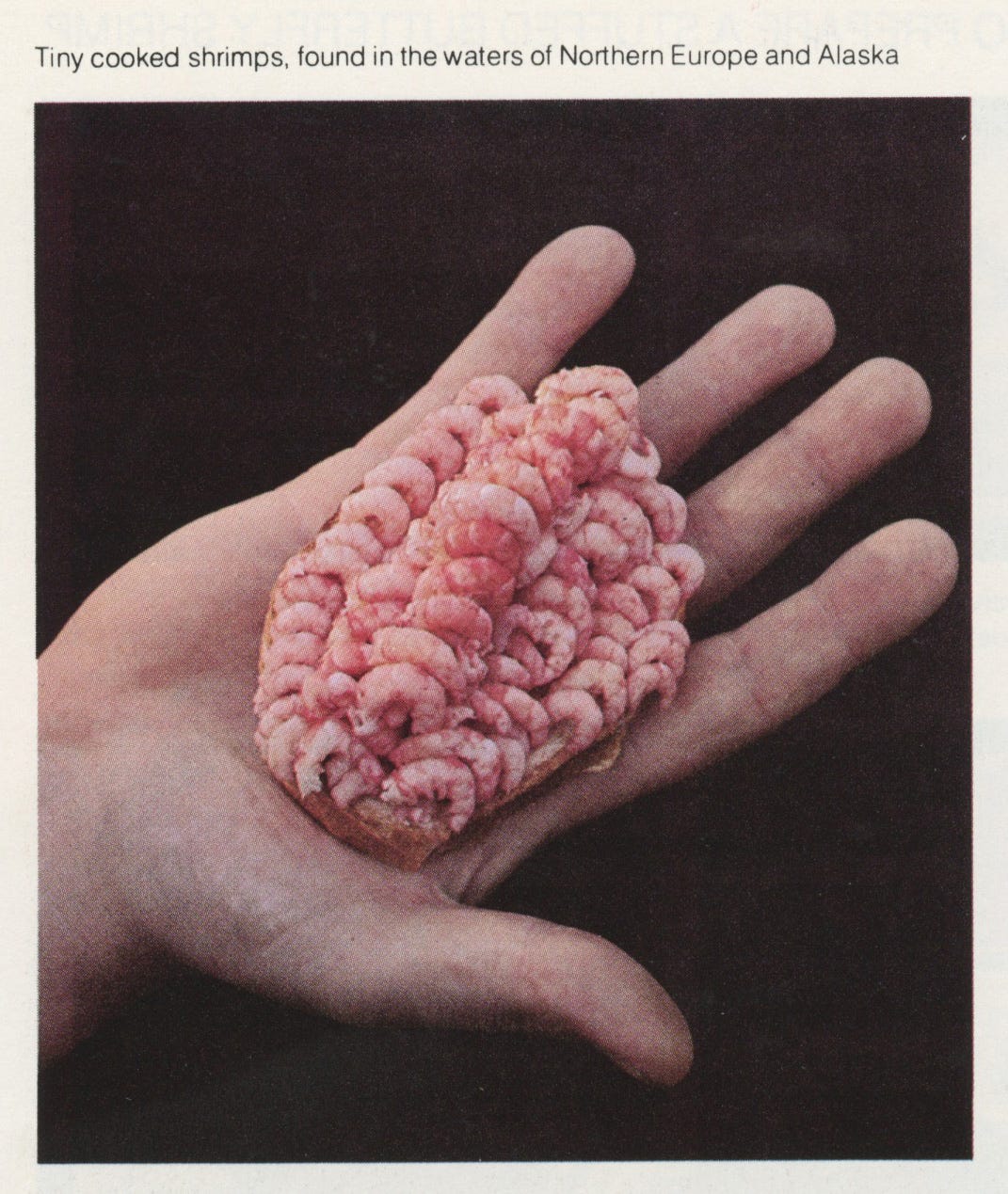
I have for you and for me a gasp of visual stimuli, pushed out from deep within a cocoon of surprisingly arduous recipe development and social media abstinence. Setting aside for a moment the process of writing one, I like cookbooks in theory but find most of them aesthetically lazy or simply inert, and often lacking in contextual meat. I don’t see why cookbooks shouldn’t be considered glimmering artifacts to be scrupulously mulled over, admired, critiqued, studied, in the same way that any other thing that someone took the time to write, bind, and distribute is. I’m sure I’m not special in being drawn to the ones that, like a good novel or essay, are personally or politically inspired, be it through written or visual display. But this can be tricky, because cookbooks are mostly considered utilitarian objects (indeed, it’s a big reason why I wanted to write one), and they’re often sought out and used because of their specific instruction. This latter component, a clear intention or focus, is what a publisher and audience can immediately grasp, can immediately buy and sell.
Sometimes I’m pulled through the ever-growing sea of cookbooks by a desire to learn a specific skill (I love an instructional pastry doorstopper, for example), but more often than not I’m drawn by… feeling, for lack of a better term. I want to surround myself with books that feel like they were made because someone couldn’t help themselves. Publishers have a hard time banking on feeling, though, and if you write through food and want help producing and selling your book these days, you need to have more than that on offer. This inevitably precludes risk-taking, fluidness, and abstraction in favor of legible definition. It’s a real loss for the readers and for the writers, many of whom I’m sure would utilize the medium in brilliant and provocative ways if they felt it a fruitful pursuit.
This was not always as much the case. The entire publishing industry is imperiled, and if any genre has the potential to certify it’s offering through commercial lifestyle appeal and didacticism, it’s cookbooks. We suffer from this, I fear, in that the pool of food-driven commentary, archiving, and exploration is diluted by formula and surety.
Below are five cookbooks that I’ve picked from the many in my stacks that I love for their very palpable personalities, like they are themselves distinct people. After I read a good book it exudes a kind of unique stink from its spot on my shelf, that idiosyncratic musk of a crush or a stranger briskly passing on the street. It’s not actually a whole person, but it makes it clear that there is one lurking underneath, quite nearby.
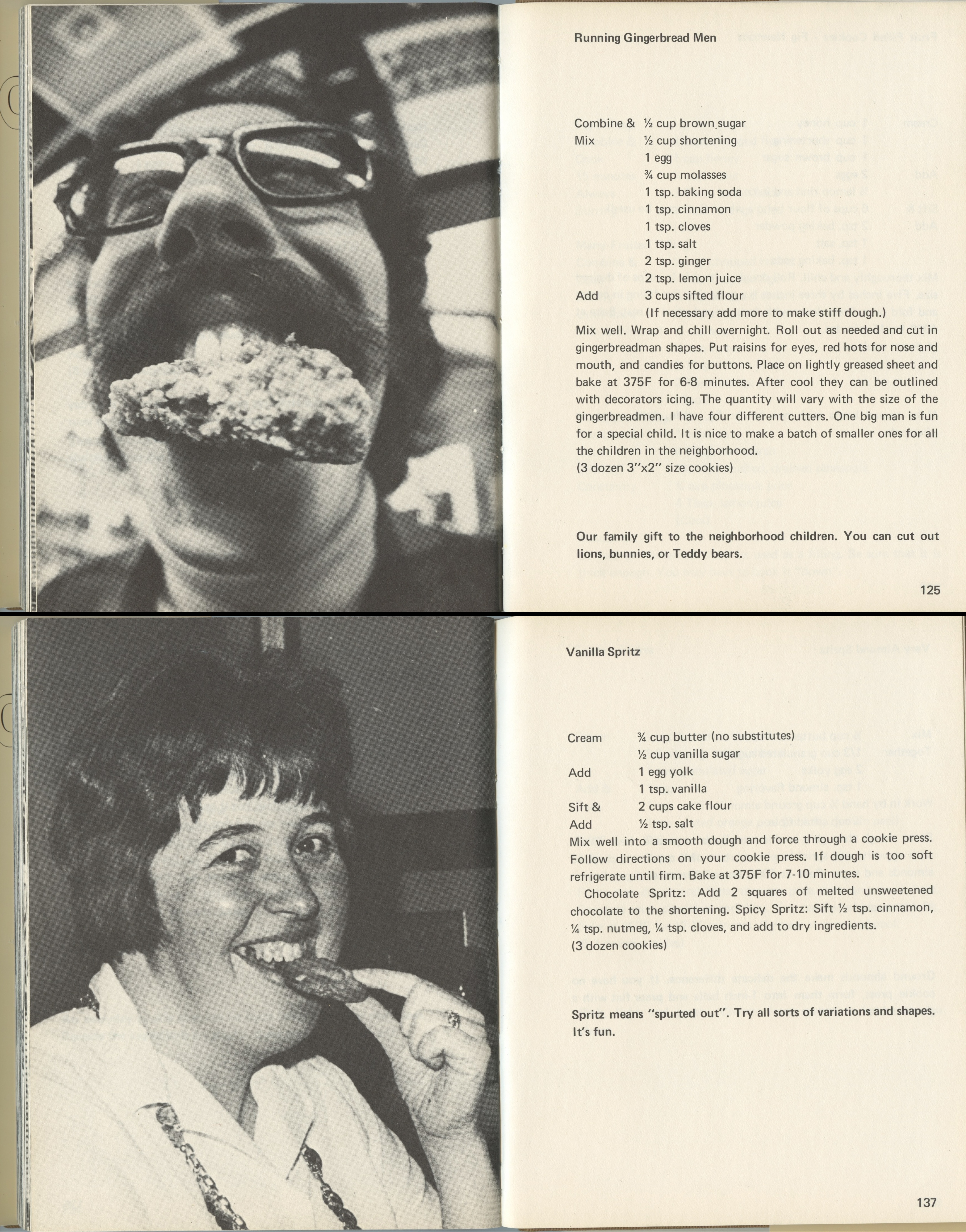
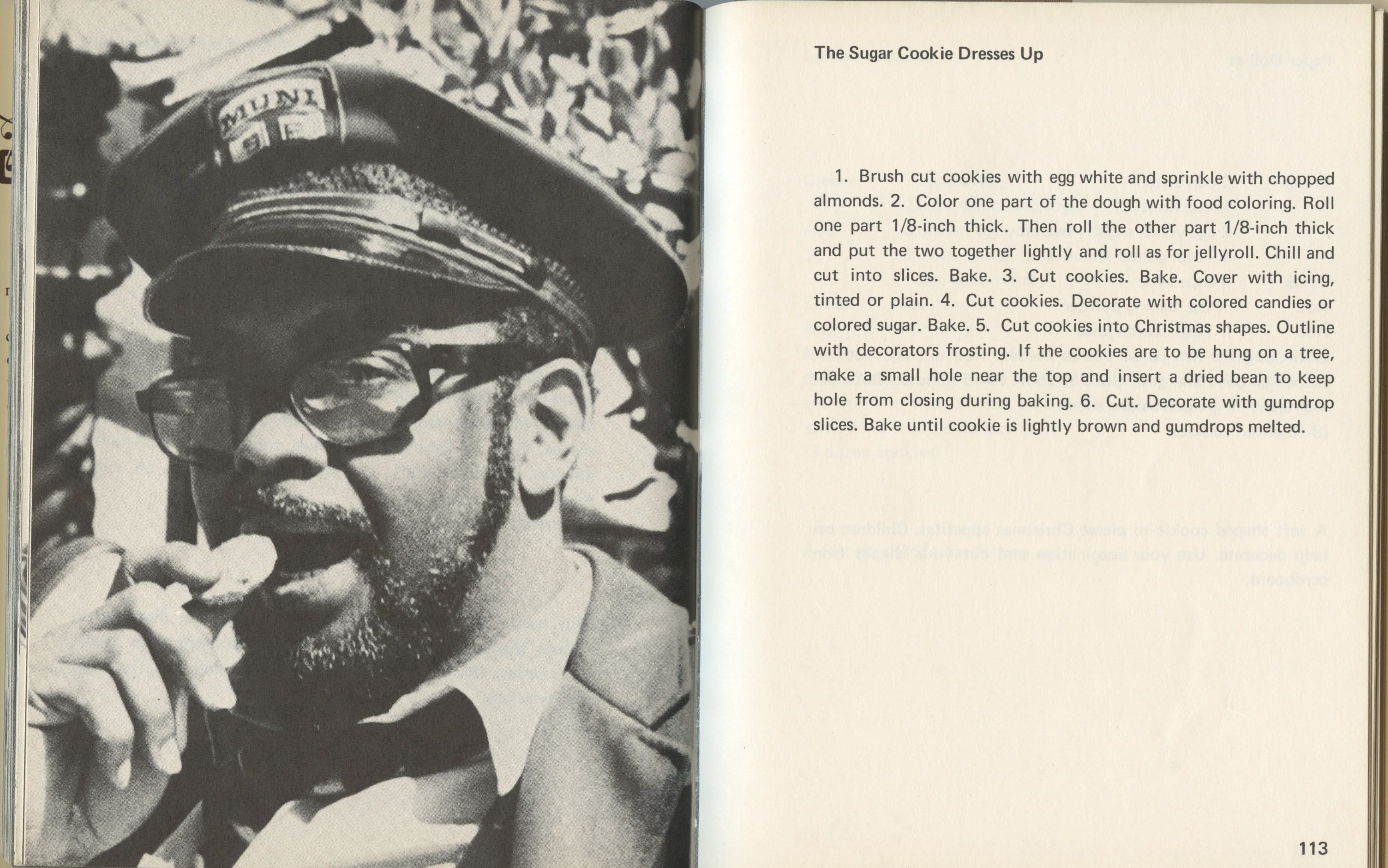
Cookie Originale, by Marilou Dyer
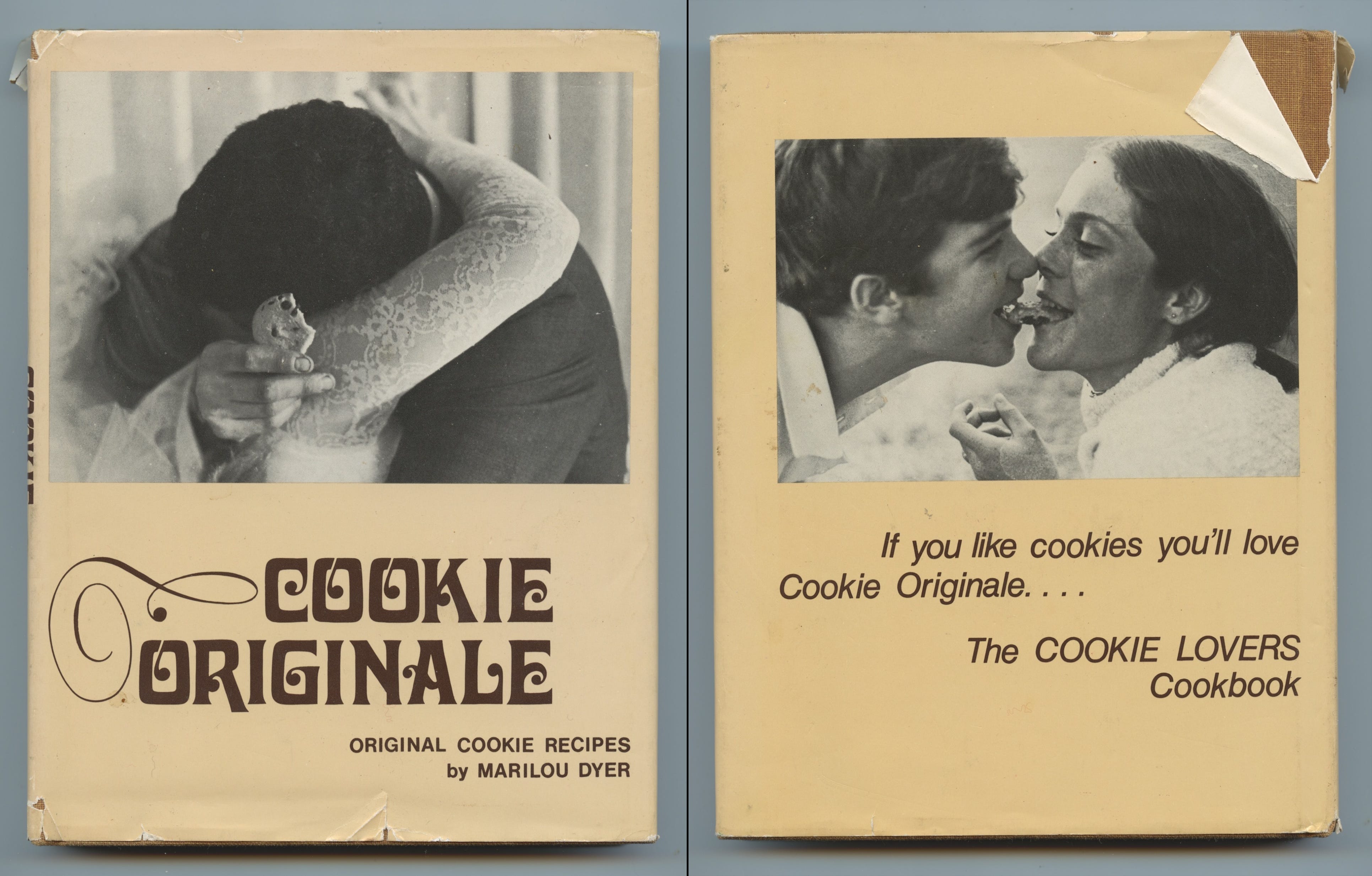
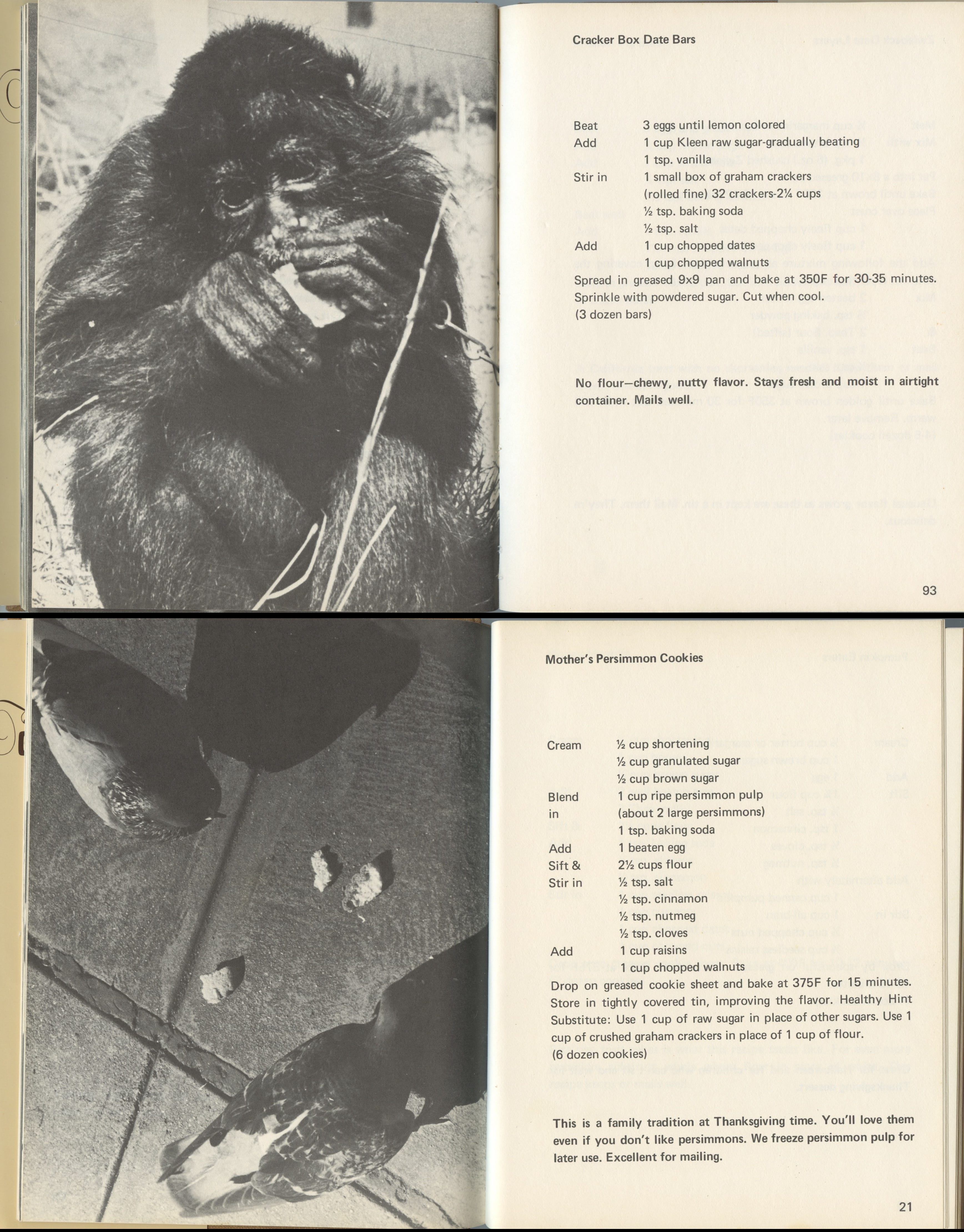
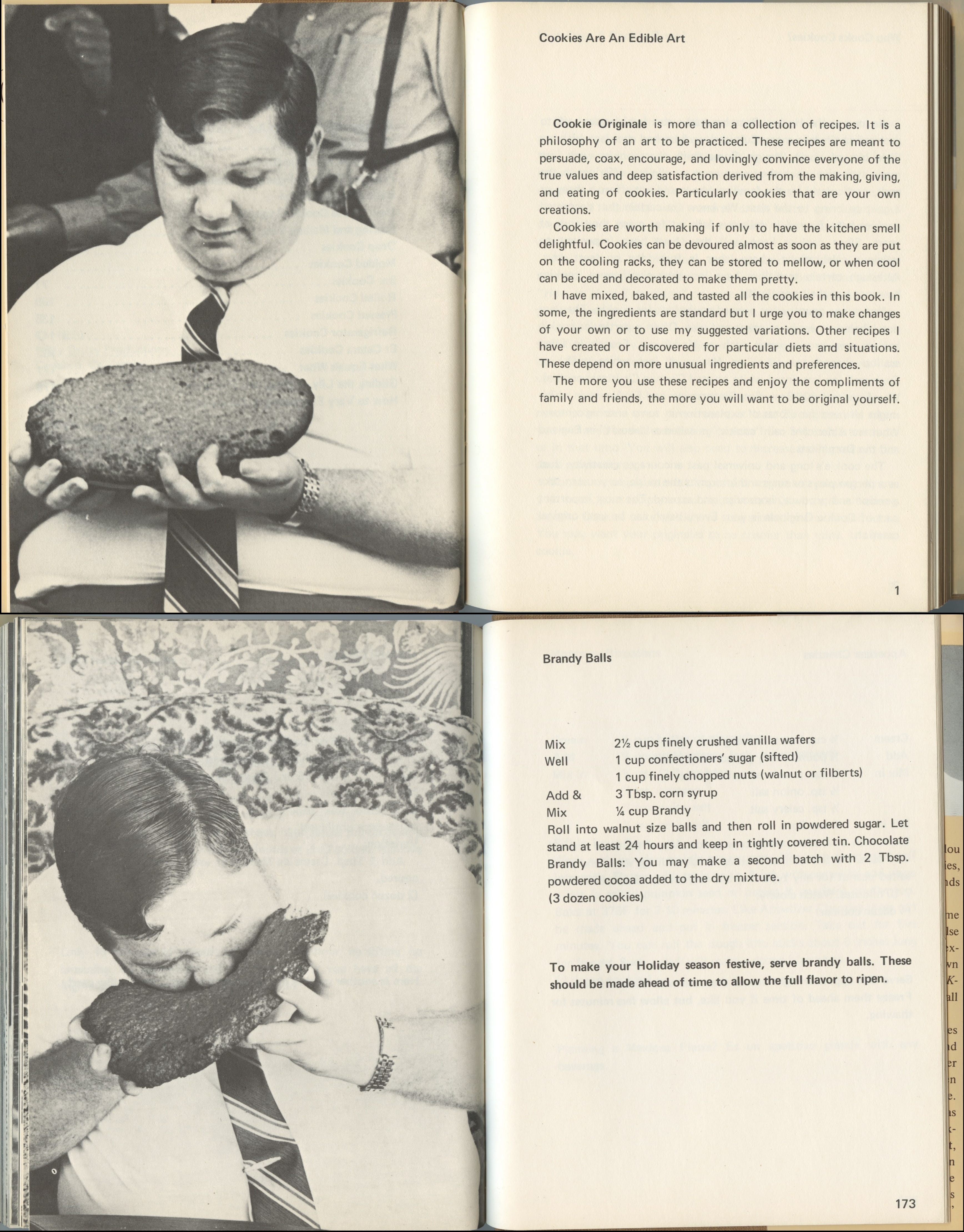
This book is small and specific and unlike any other I’ve found. It was published by something called Nitty Gritty Productions, which is doing a lot of work for it already. I haven’t made a single recipe from it and doubt I ever will, but I love the layout and images, which are playful and ridiculous. They use the cookie as mere prop in capturing a wide swath of (consistently joyful) humanity. And why not.
The Encyclopedia of Fish Cookery, by A.J. McClane and Arie deZanger
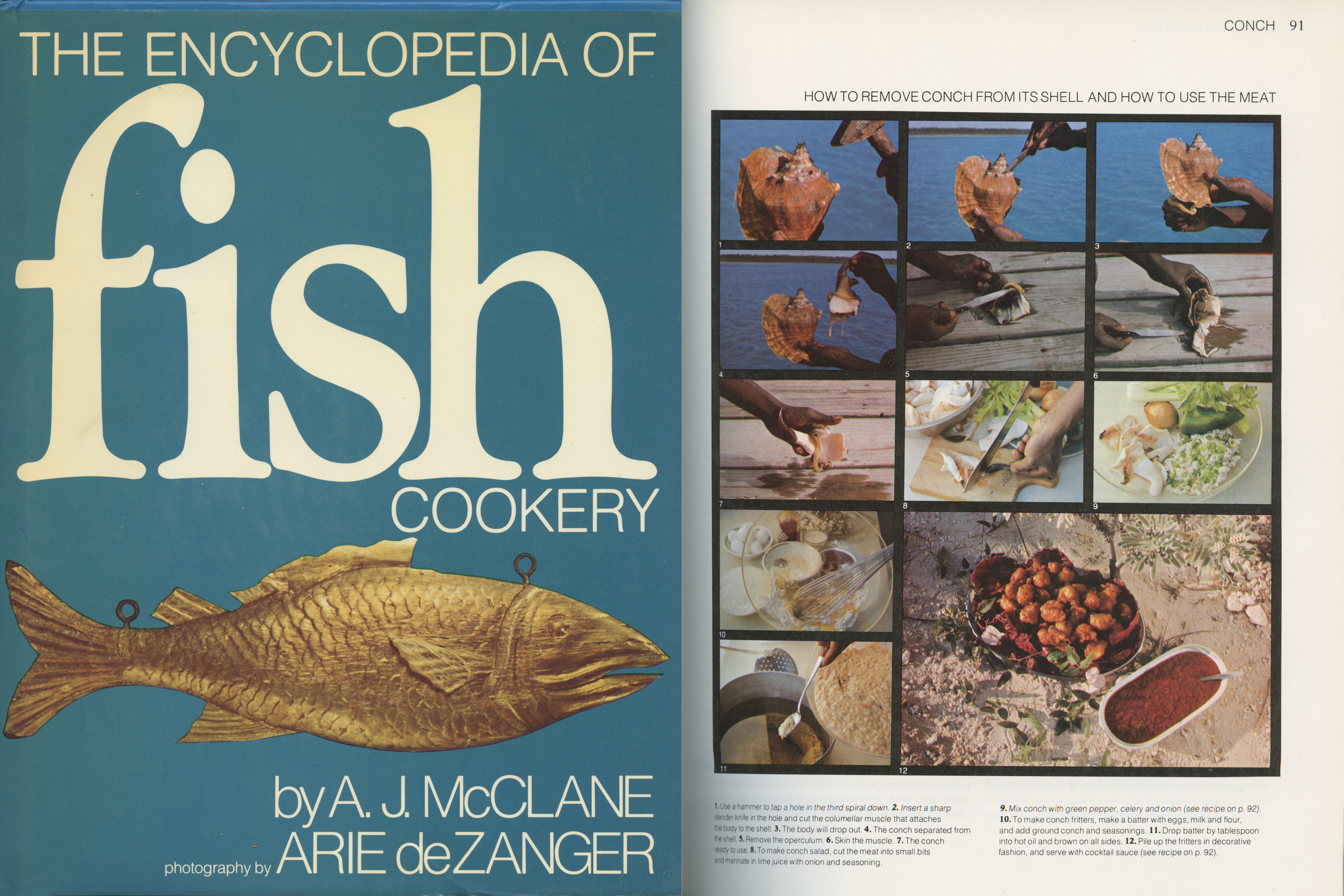
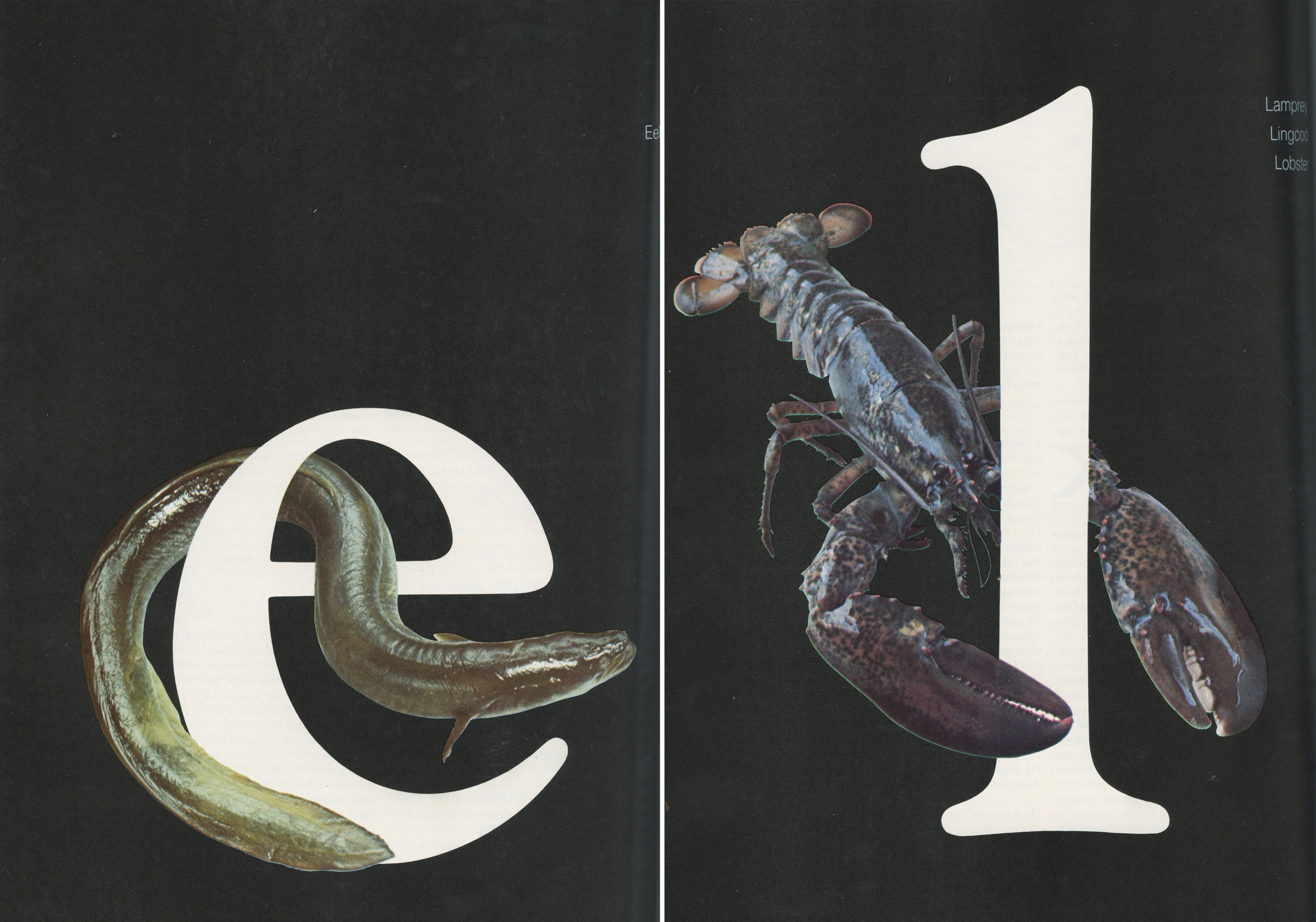
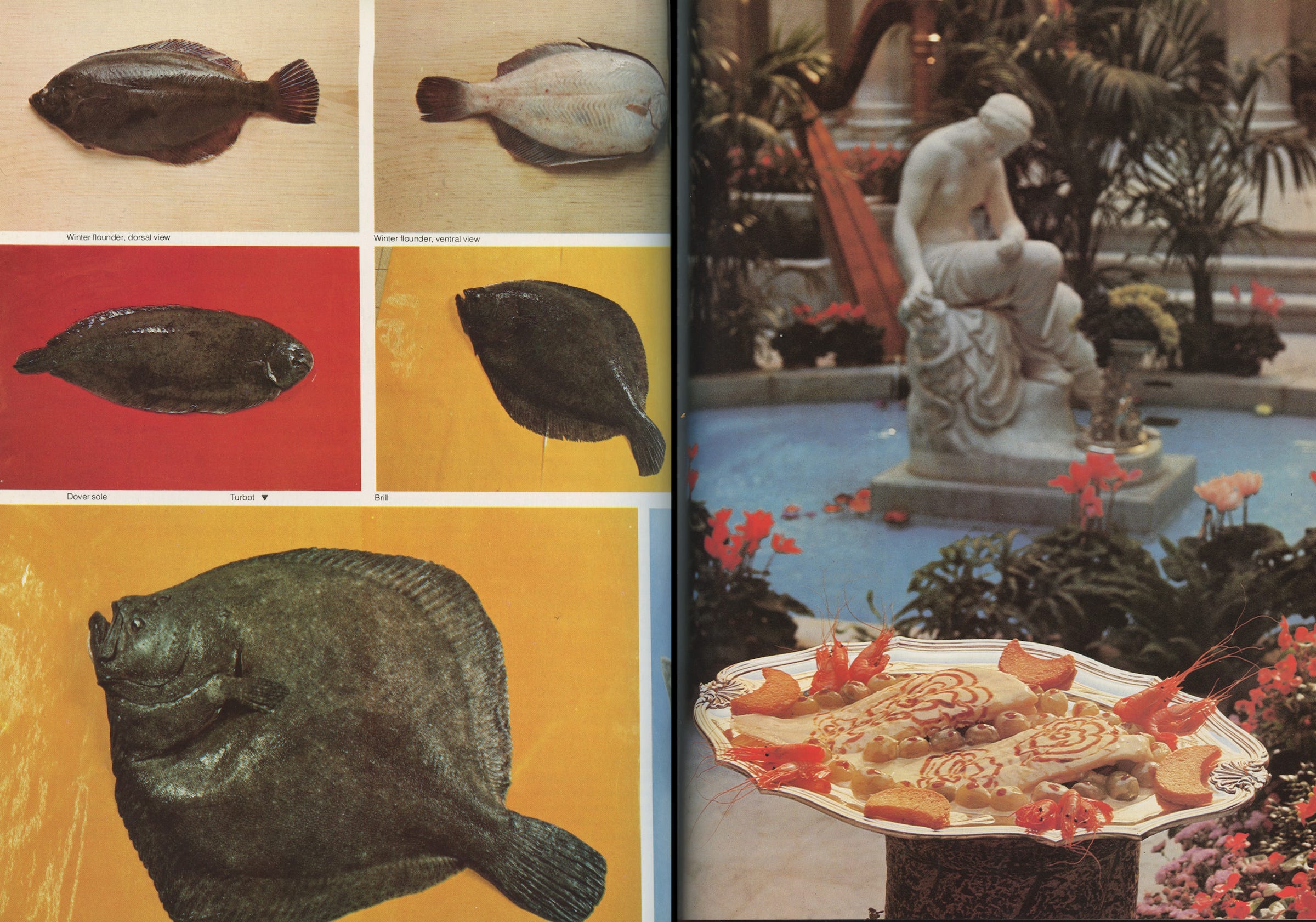
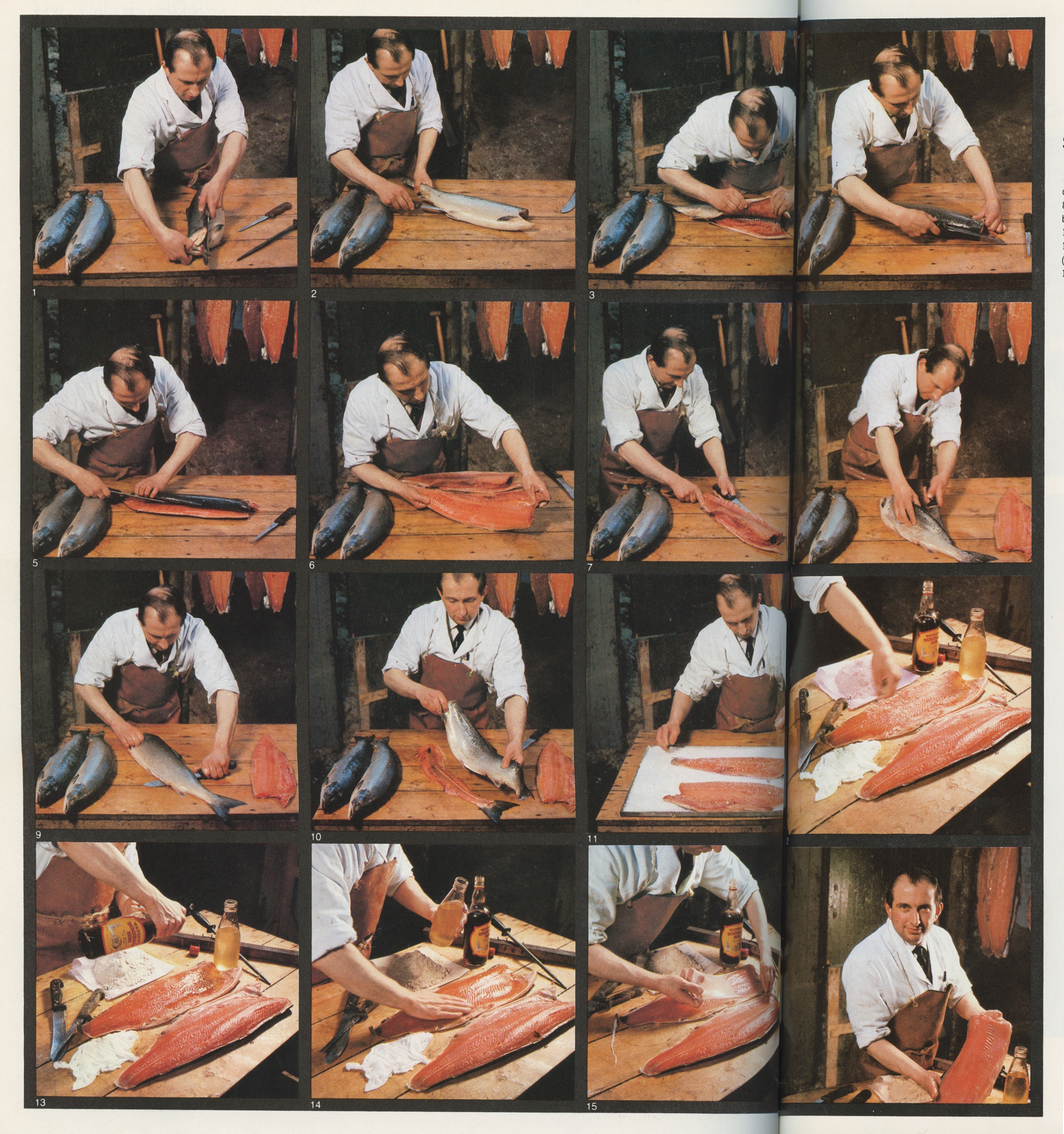
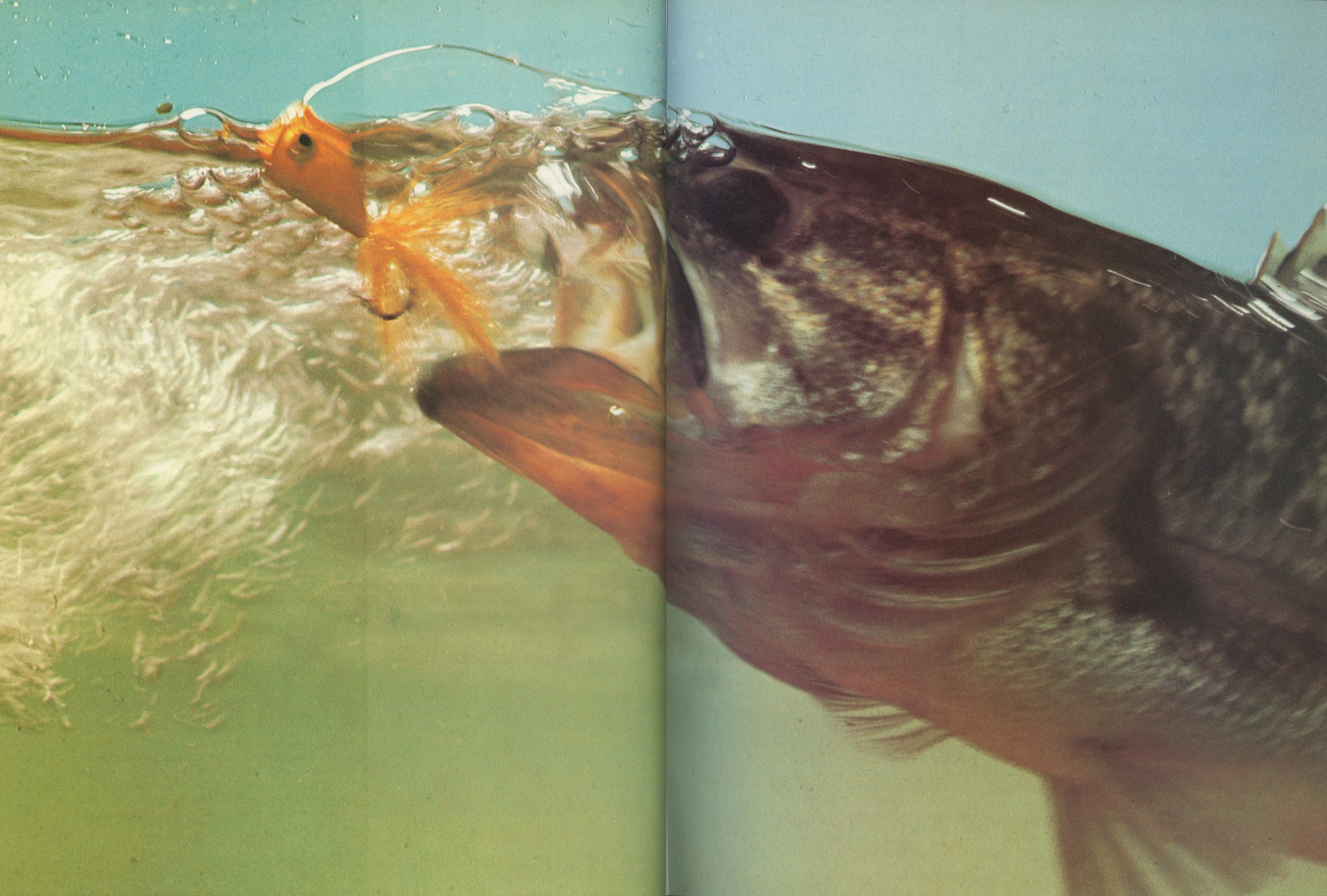
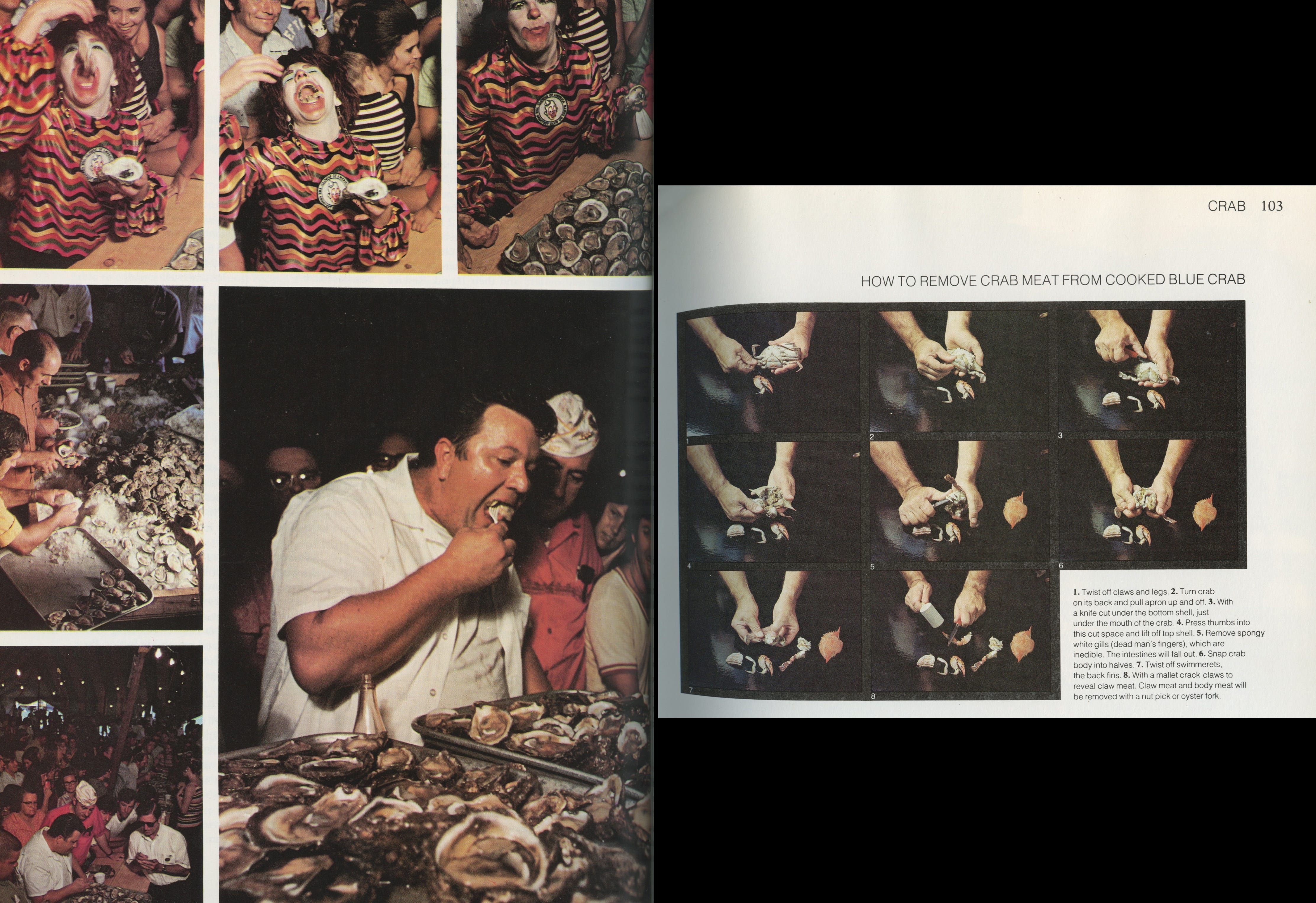
I’ve been baking since I was a teenager but really fell in whole-hog, if you will, when I was borderline macrobiotic in college. A few years later I got my first real kitchen job as a prep cook in a vegan diner. For a while after that, this initial lack of interest in cooking meat was reinforced by a lack of means to purchase any of reasonably good quality. The tendency to avoid preparing something that could once breathe has only slightly dimmed, and I keep my meat preparations very low-fi. But this book compels me towards a different path entirely. I found it after buying The Four Seasons Cookbook, another totally delightful, kind of surreal and surprising cookbook from the 1970s. In both, the photographer Arie deZanger does strange and unnecessary things with light and color and composition that bring a kind of unserious seriousness to the matter at hand. An ‘it’s just food after all’ and ‘it’s food after all’ kind of thing. The designer certainly had something to do with the inspired layouts, which sometimes take us through dozens of process shots in gridded lines to reach the end result, a kind of bildungsroman of fish preparation. We are (I am) invested and enthralled by the end of each one.
With Our Own Hands: A Celebration of Food and Life in the Pamir Mountains of Afghanistan and Tajikistan, by Frederik Von Oudenhoven and Jamila Haider
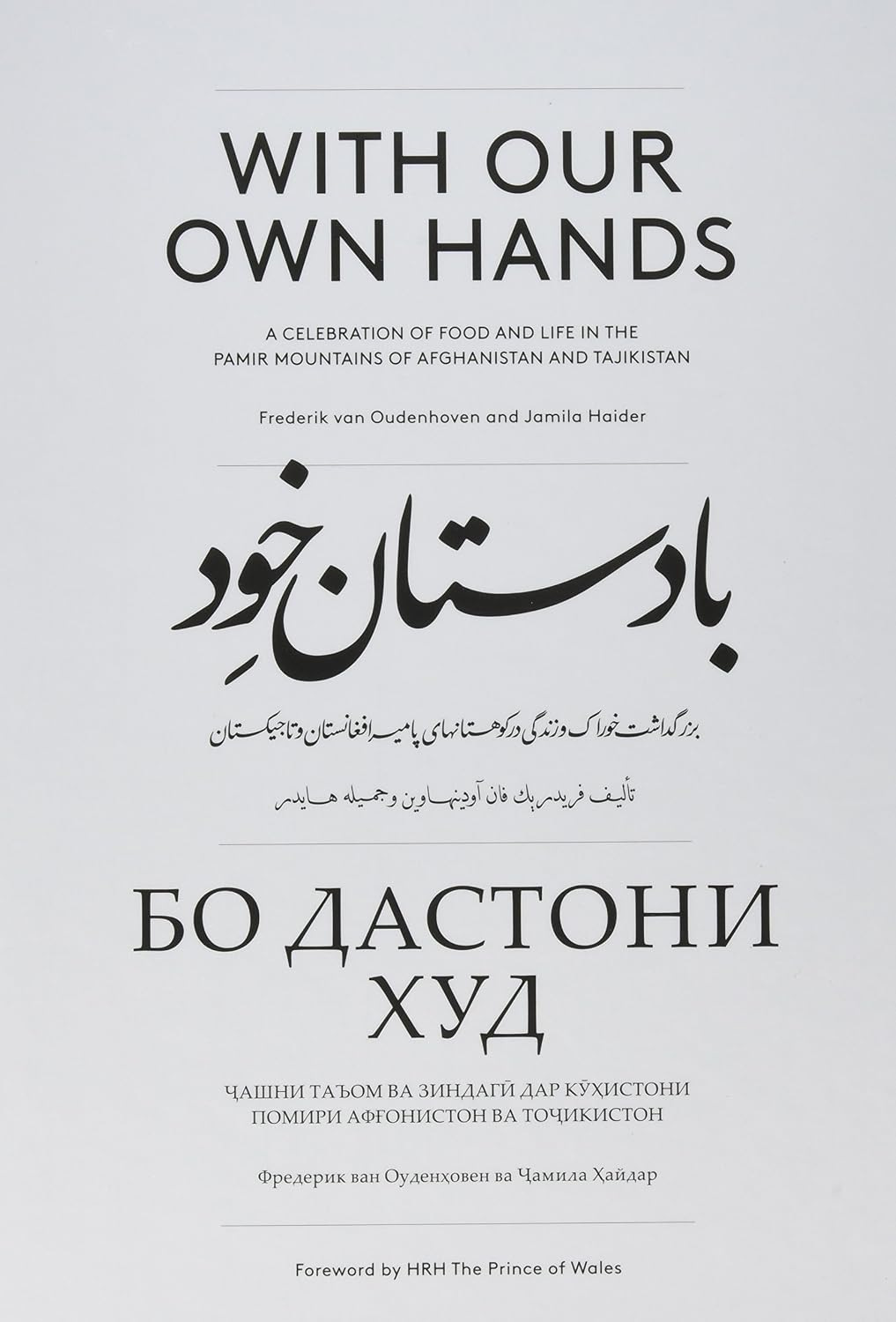
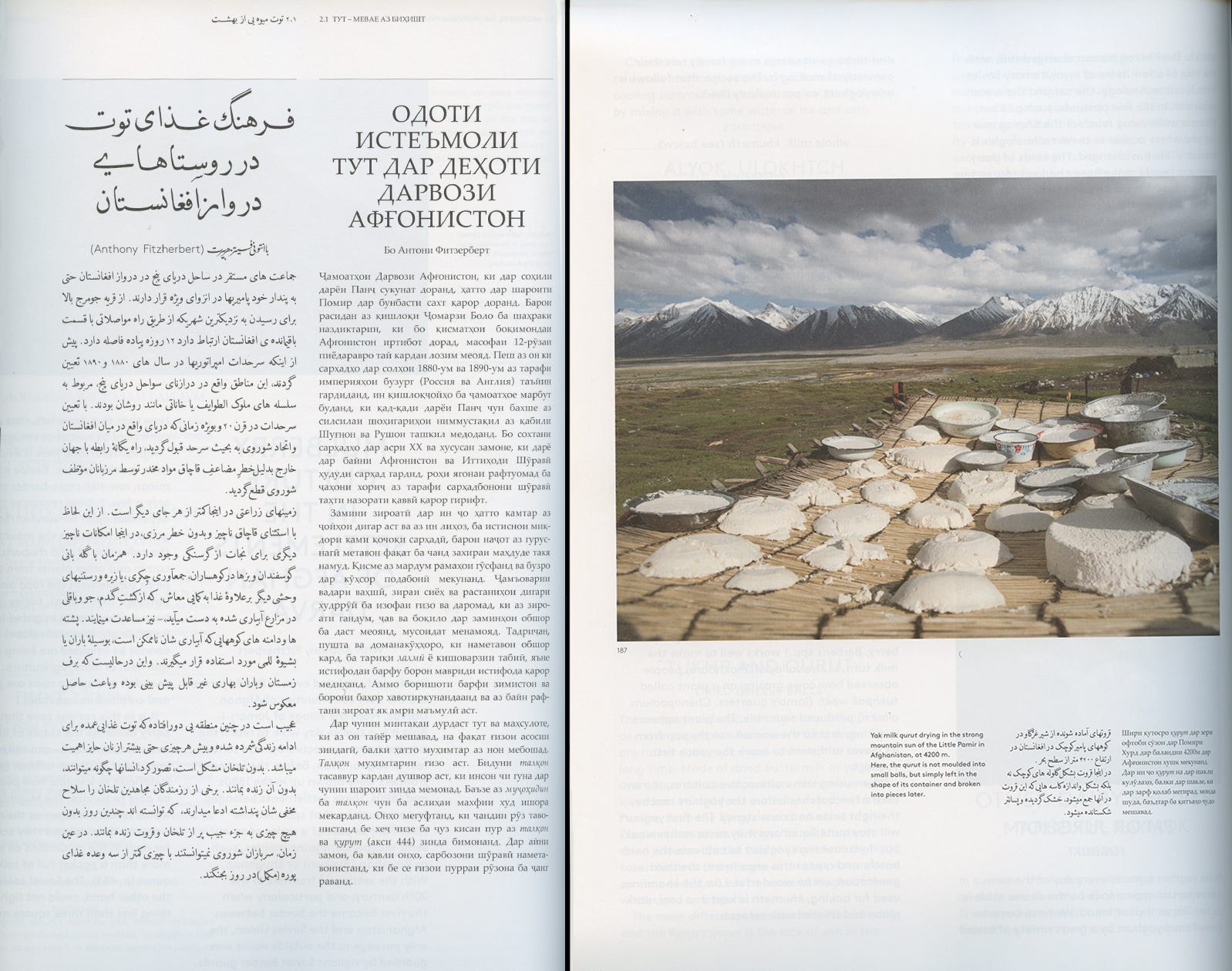
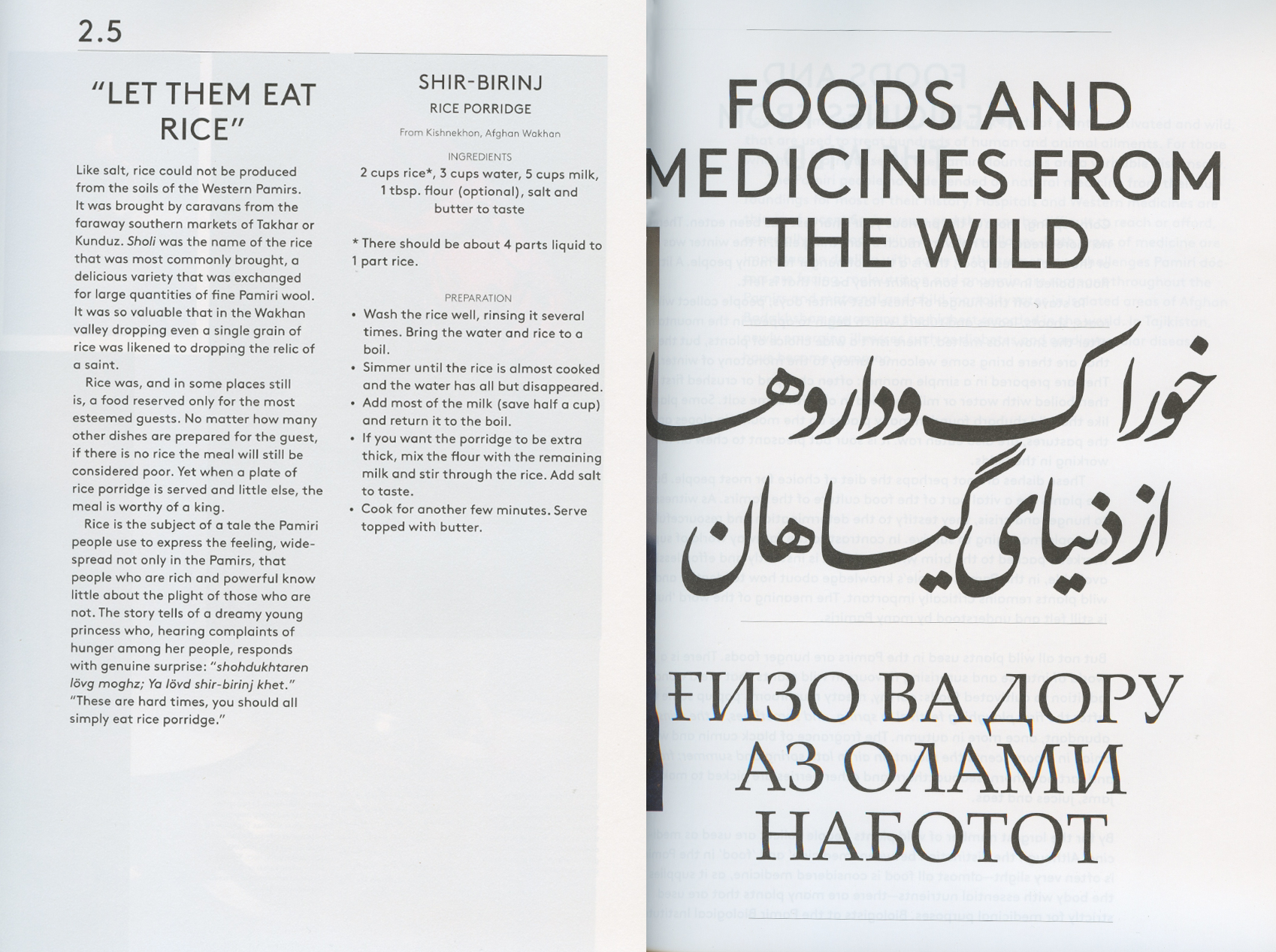
This book is so enormous that I couldn’t easily fit it onto my flatbed scanner, so the images are fewer and wonkier. I guess that’s because it’s taken on the task of documenting an entire region’s cuisine and much of its broader history for posterity. That is not a poeticism either but the explicit purpose of the book, which is a collaboration between a pair of archaeologists and members of the Pamiri community. The cuisine of the isolated borderland is a blend of Tajik and Afghan neighbors, though it is slowly evolving due to the inevitable creep of globalization. The book is written in three languages - English, Dari and Tajik - so everyone in the region (and someone like me, presumably) can read it in their native tongue, a lifeline to an ancestral place. The authors brought books to every town in the mountain range, some 1500 copies. Reading it from over here feels a bit like peeking into an intimate trove of family secrets, passed down between generations.
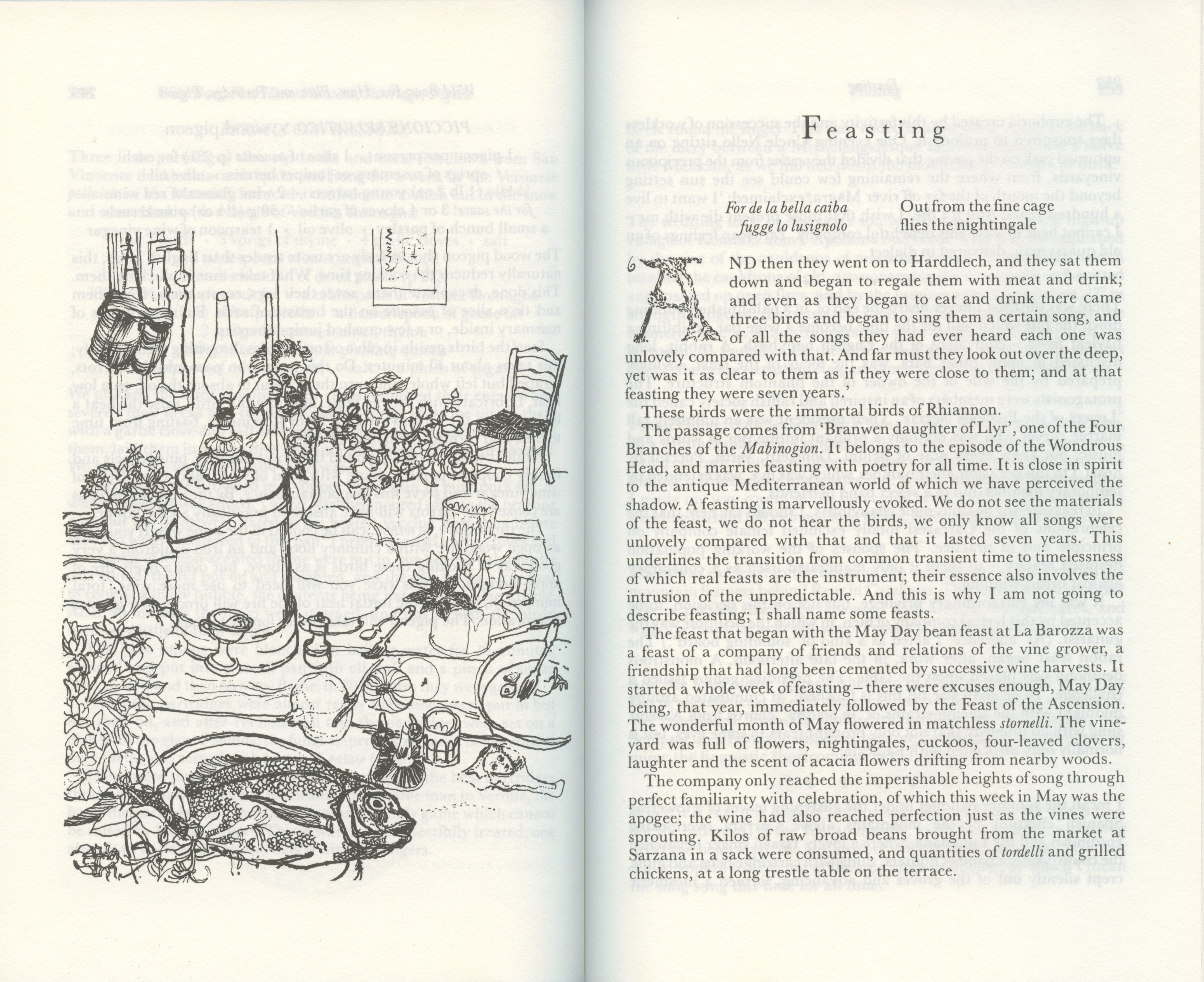
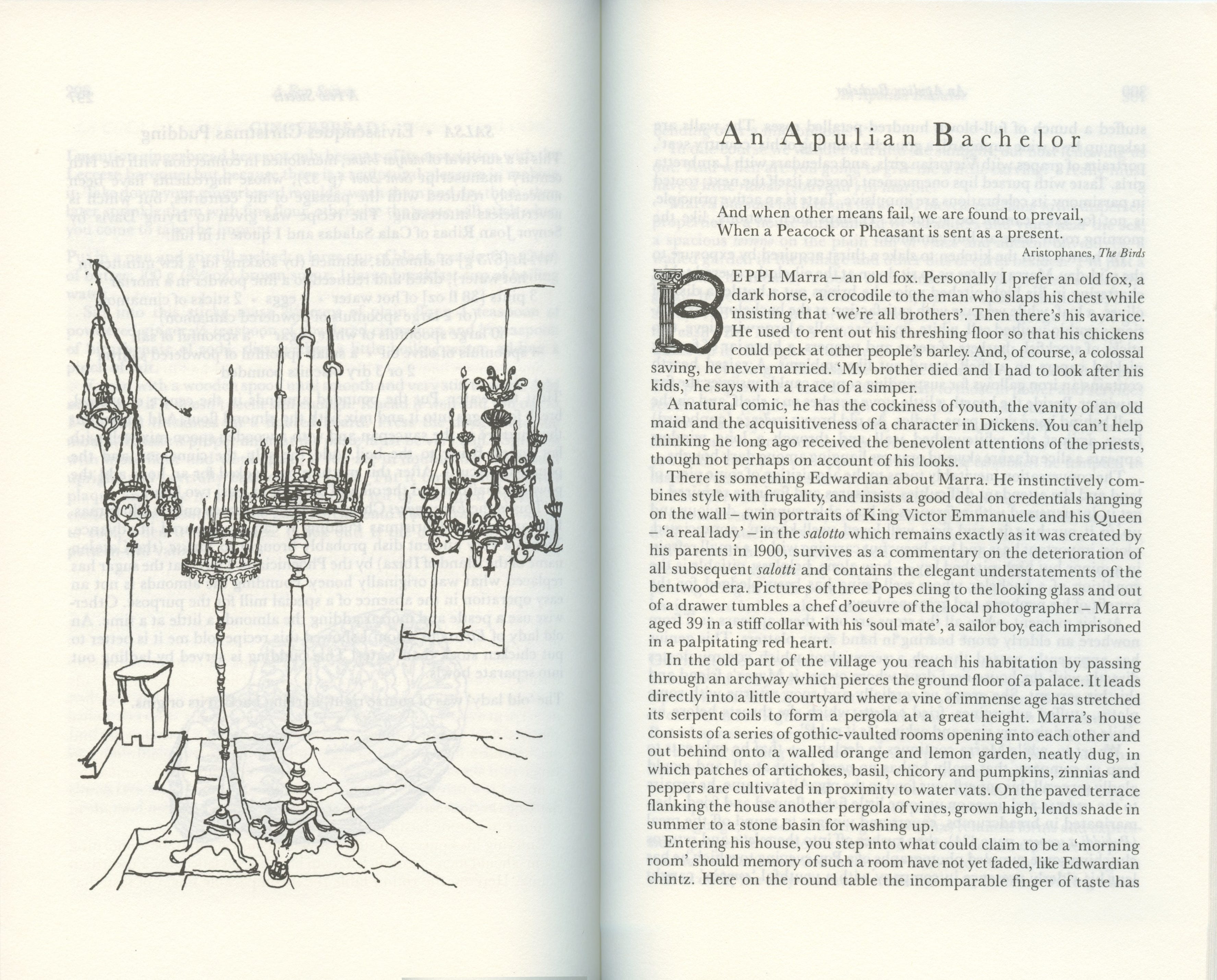
Honey from a Weed, by Patience Gray
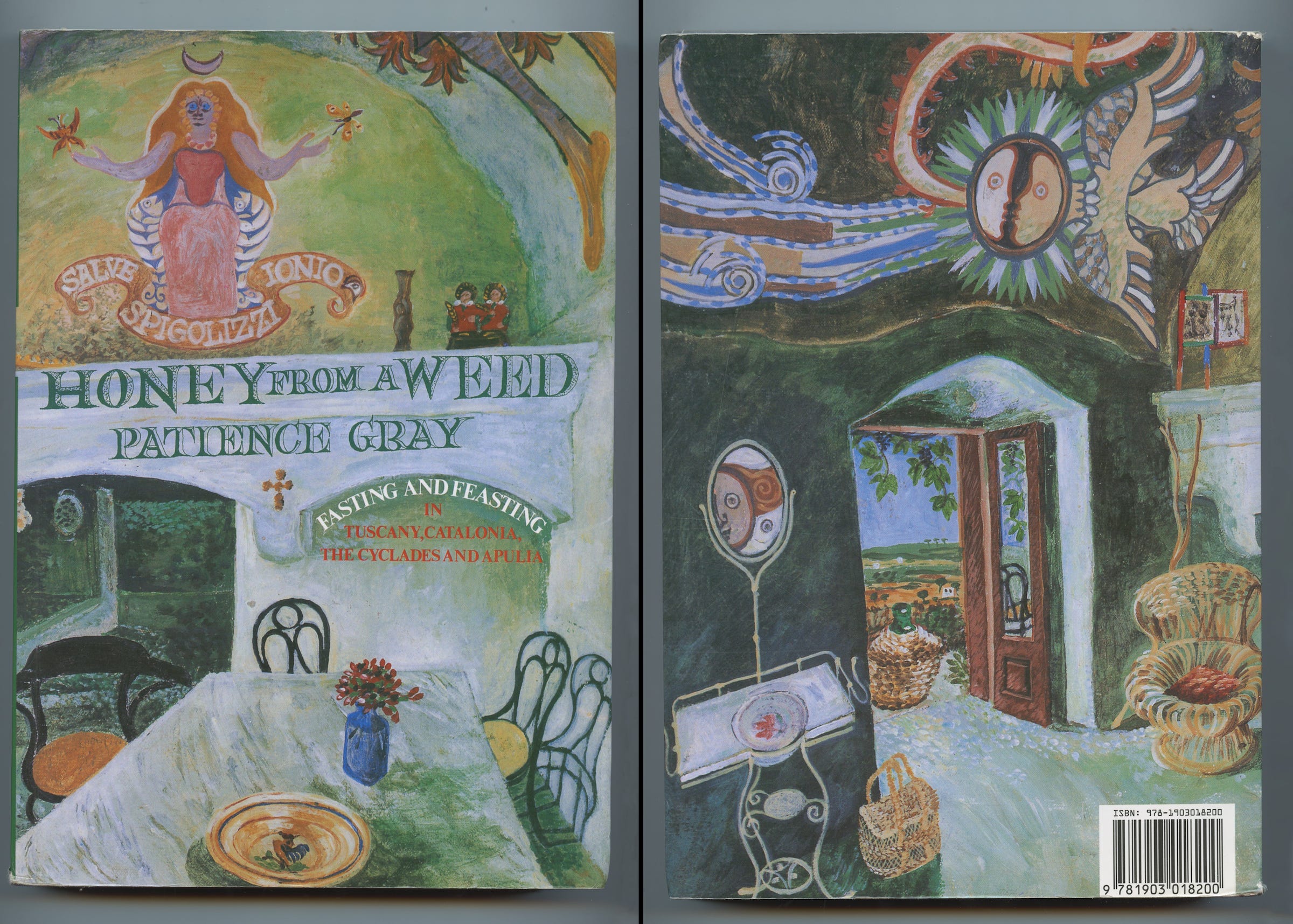
Is this a cookbook? It took Patience Gray 16 years to find a publisher for what was an unconventional and impossible-to-categorize manuscript even some 40 years ago, but it was immediately beloved and hailed as a classic upon publication, and continues to spike onto bestsellers lists decades afterwards. A lesson! It’s full of textured personal narrative, myth, history, and intensely-lived detailed instruction. It’s an expat’s local story, a kind of ode, full of authorial charm and exposition.
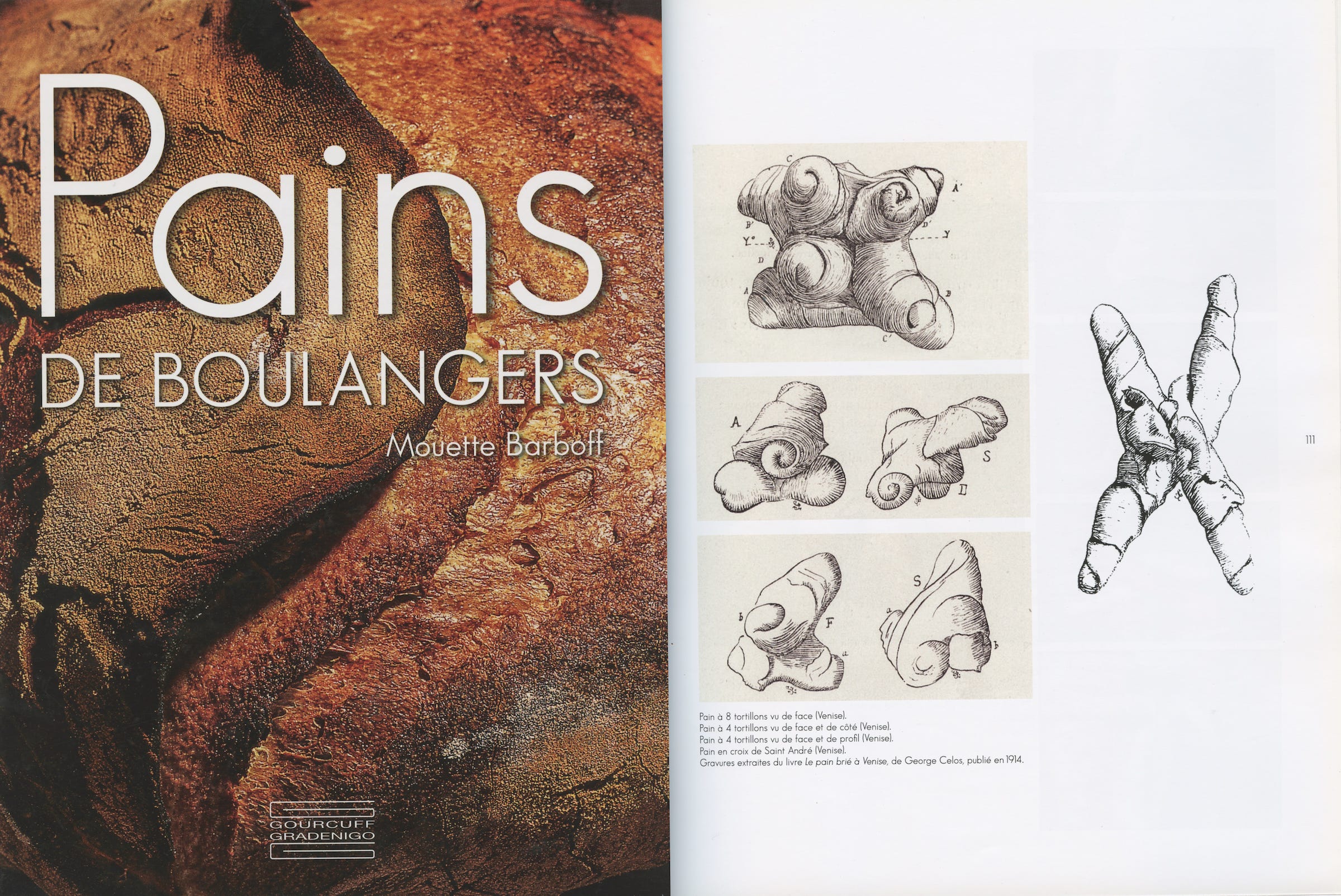
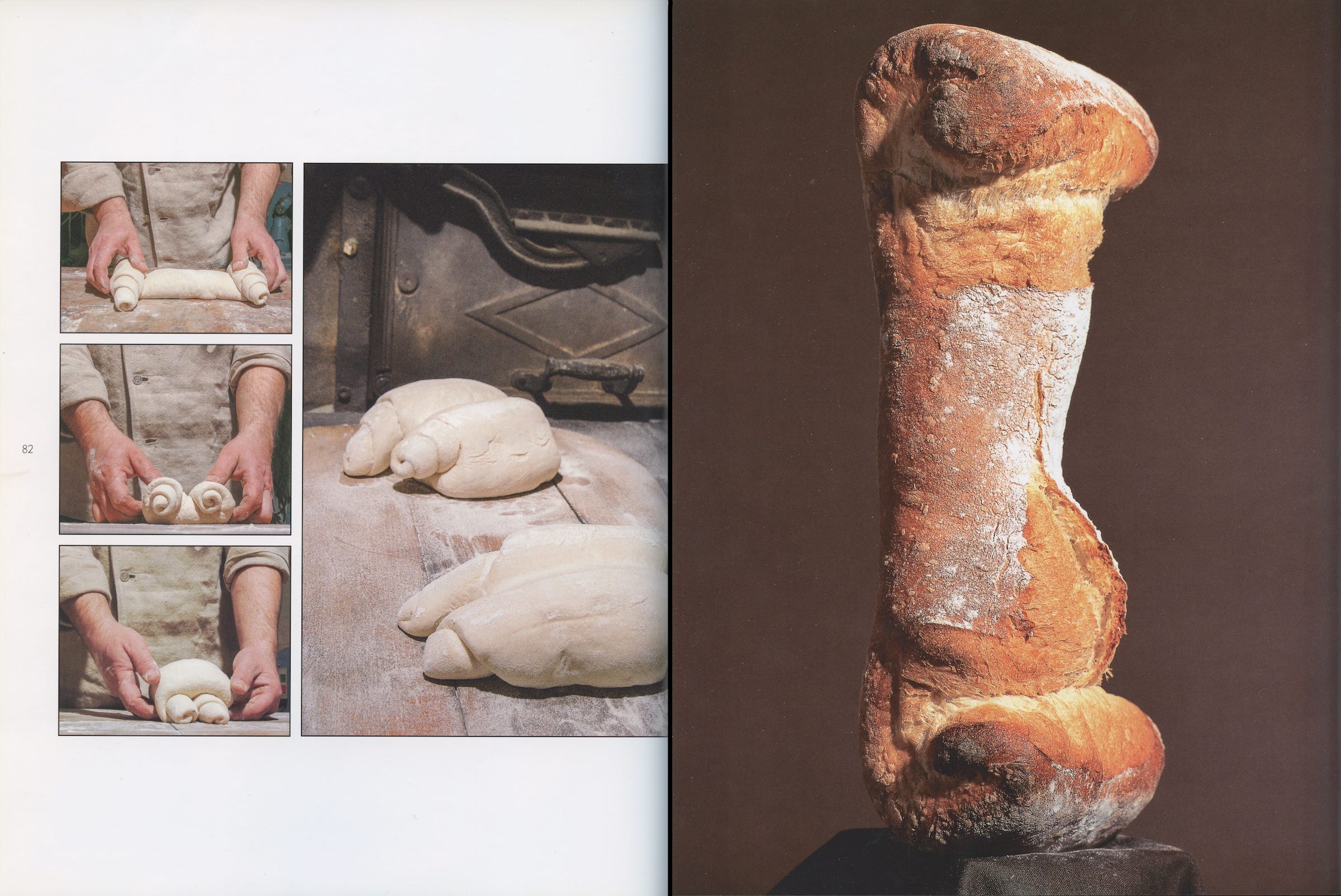
Pains de Boulangers, by Mouette Barboff
Mon dieu, I spent so much money on this at Kitchen Arts & Letters, and I regret nothing. Can you find it on eBay? I don’t know, refused to look! Is it entirely in French? Oui. Do I speak French. Non! But I feel French just by leafing through it. I feel the sweat and dense humid breath of the subterranean kitchens and their stone walls, the harsh clamp lights peering into ancient ovens, the bare hairy forearms and elbows in and on doughs. I am enlivened by the impropriety of it all, from how it was shot to its unpolished loaves, on display like glorious, phallic trophies. There’s something absurd and so French in its reverence, and it pulls me along to a place where I am delighted to be in a countryside basement beside an old balding man who is telling me what to do.
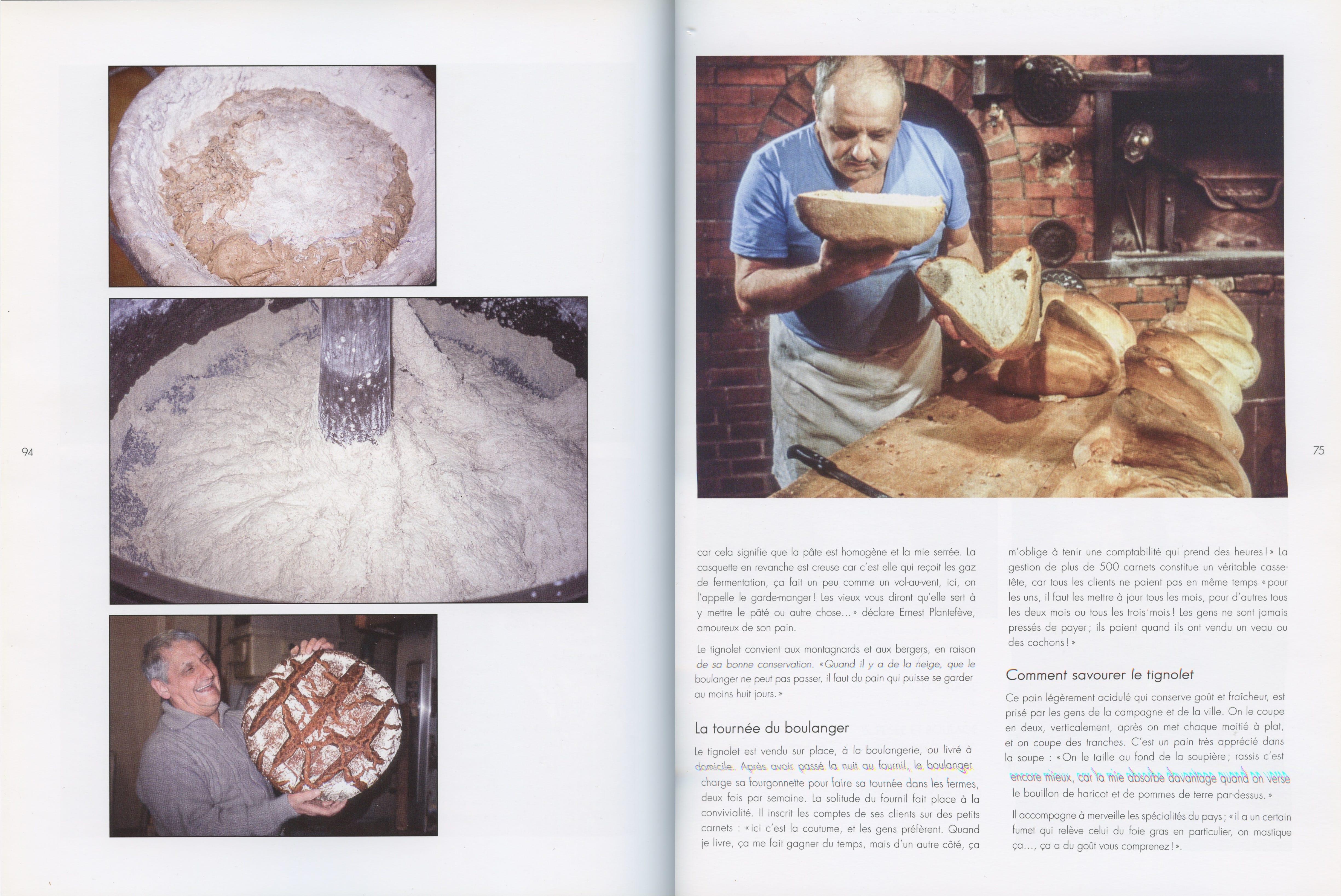
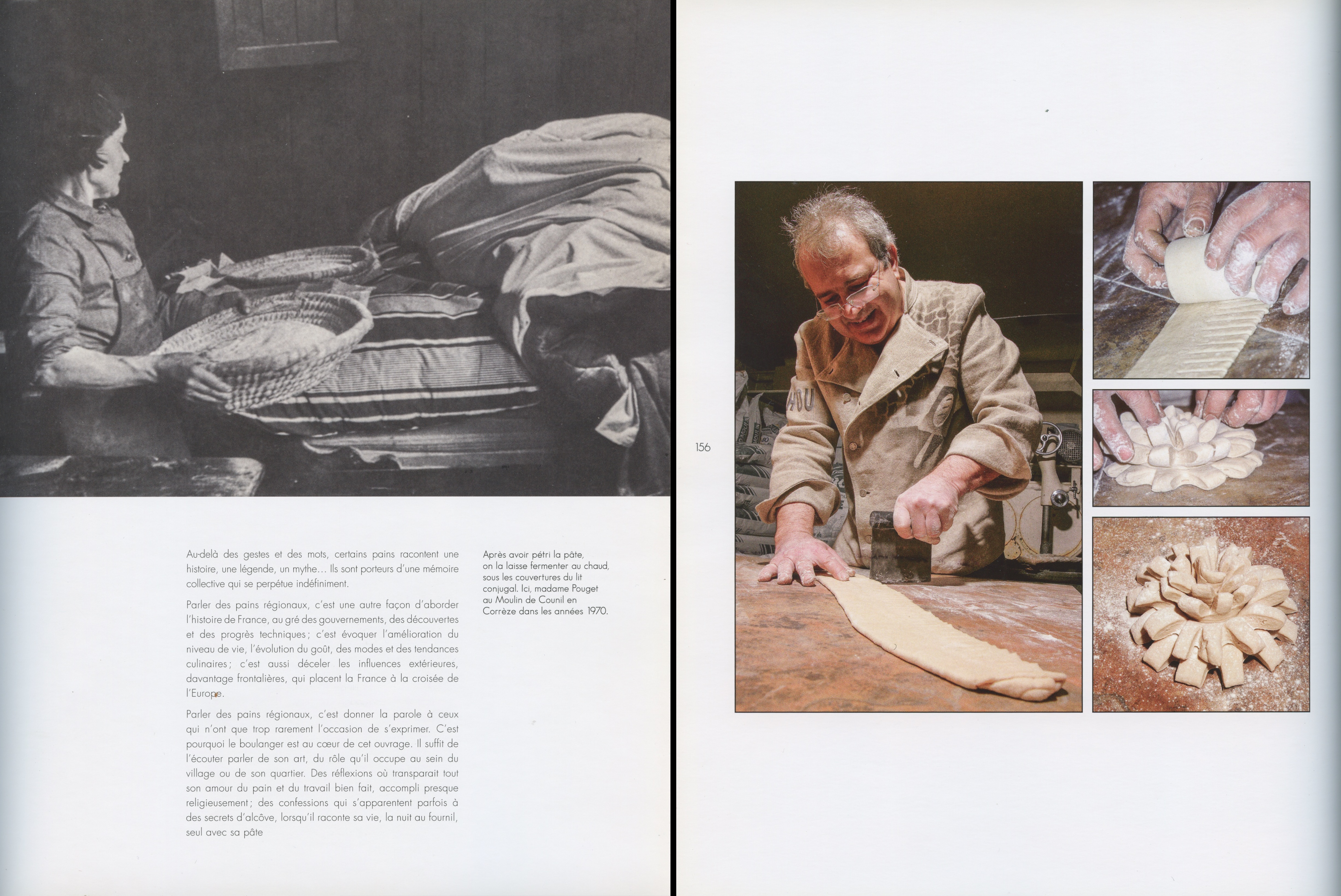
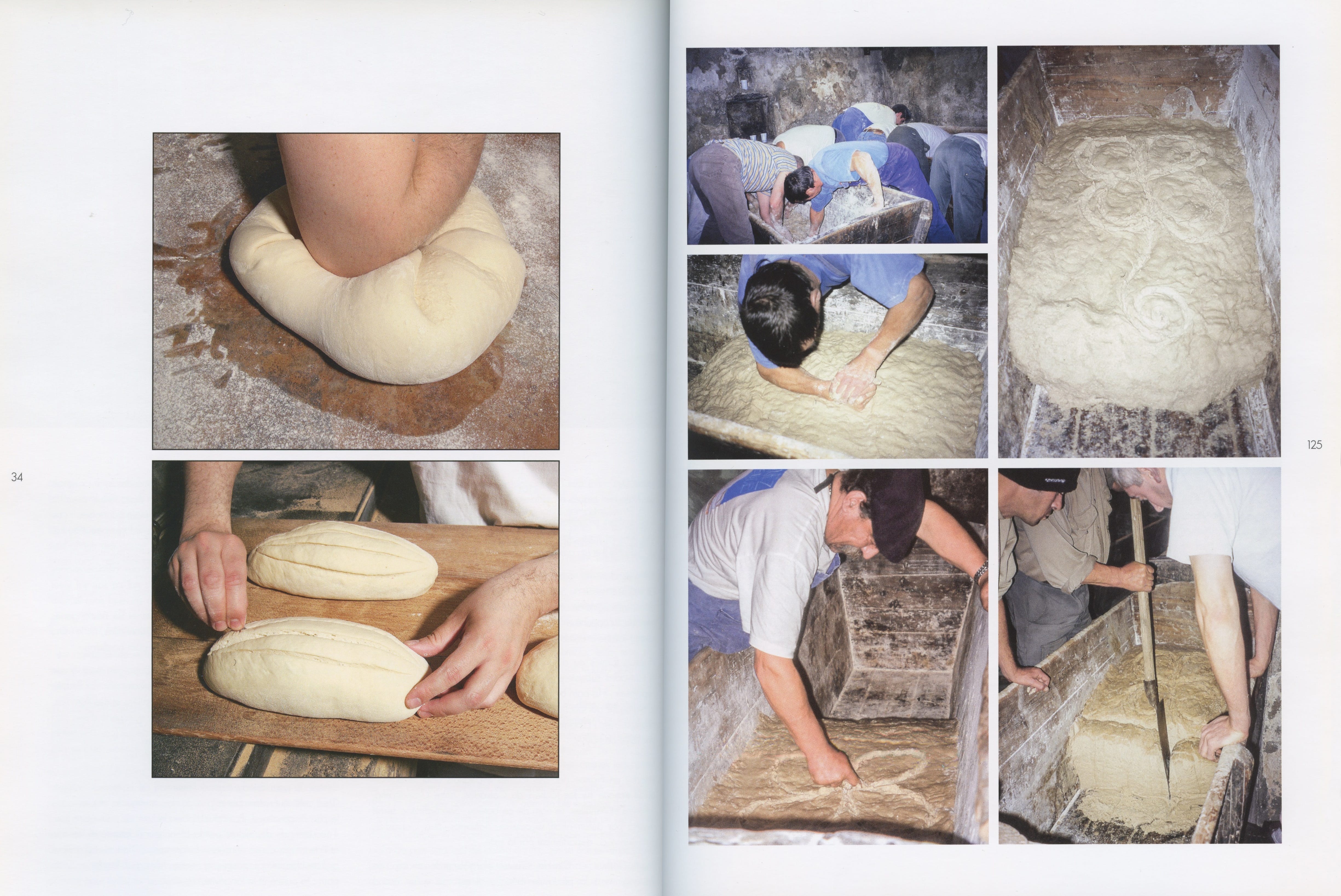
Every page of each of these books is an absolute delight and I wish I had scanned and formatted all of them for you to stare at through your screens, but alas, I sometimes lack technological fortitude. More than that I wish you could come over and sit on the floor of my kitchen and look slowly through them yourselves while I throw crusts at you and say ‘what about this one? it’s a couple days old but i think it’s still pretty good.’ The books are lively and not too careful and full of real life, which is all I want from the foods that I make or that I eat and the words that accompany them. Food is a totally unavoidable part of our lives, and that fact stretches it across the spectrum of inane+banal to cherished+divine. It could then rightly assume any emotion in between. I prayyyy we find a way to keep it human, emotional, and representative of the broad range of experience that we must endure as actual living beings with mouths and anuses. Let us write and read the manuals that prepare us to steal back our food from the mouth-and-anus-free robots, if and when that becomes necessary.
kiss
Lexie
Comments
Nothing yet. Say the first thing.
Sign in to join the conversation.