
Hello! Sorry for being so unreliable. School holidays are my opportunity to reset. A chance to be present with my children. To be physically rather than mentally exhausted. Next year I’ll be more organised with my sched!
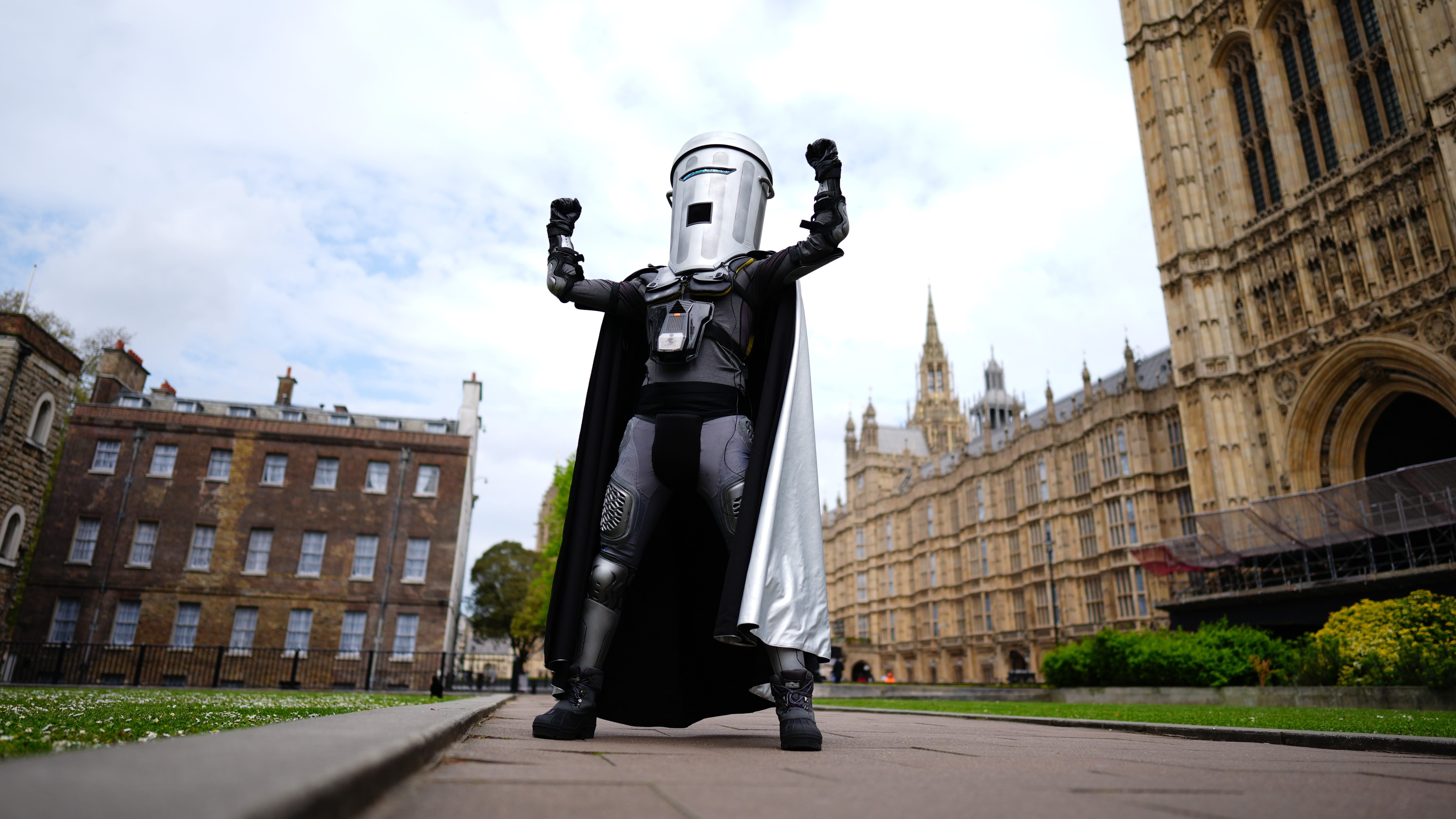
Today’s letter is a real light and shade edition. A reminder that August is known as “silly season” in news journalism. Which means that daft stories can make front page headlines and that for better and sometimes for worse, small stories can take on outsize power. In homage to the former, this letter is dedicated to Count Binface, the intergalactic space warrior of my dreams.
Under the paywall: a note-perfect YA show that I prescribe to every.single.teen; why children deserve the finest literature of all; a beautiful new book to keep in your present drawer; how to interview someone when they are legally unable to speak; and what the devastating case of Lindsay Clancy reveals about the enduring (and frankly egregious) misunderstanding of postpartum psychosis.
I was also going to write about the many lives I lived watching The Odyssey, but it took too long — not even pun intended — so I’ll include that next week…
Also: I’m really excited to be interviewing Nazanin Zaghari-Ratcliffe in London on 26 Sept for How To Academy. You can book tickets here. And for any Fundamentally fans, I’ll be interviewing Nussaibah Younis at Southbank on 16 October - tickets here.
Quick hits:
My children’s latest obsession is this butter squishy which — and this really makes me heave — smells like butter. When is someone going to write a longread on how sensory toys to alleviate stress and over-stimulation have taken over playgrounds and pop culture?
Last week The Cut’s Substack, Book Gossip, published my ideal piece1: how 20 well-read people make time to read. I align most with Keith McNally (“I tend to read in the dead of night”) and Parul Sehgal (“when I say how much I read, it’s not with pride. I should be doing all these other things and I resolutely don’t”).
A super interesting piece from the Gen Z historian, Kahlil Greene, on the history of apartheid and why South African racial identities differ from American. I learn so much from this dude.
Another meticulous investigation from Lucy Osborne and Sirin Kale — who previously reported on Noel Clarke, and the extreme free-birthing movement — about Britain’s best-selling crime writer, accused of abusing women and children. (NB this is a harrowing read.)
After perusing Ilse Crawford’s new lamps for IKEA, I fell down a Google hole and read this 2020 interview with Crawford for The Gentlewoman, by Mark Smith, where Crawford talks about how triplets shaped her family and introducing wellbeing into design in the ‘90s. I love long profiles (good ones, obvs.) When I interview people for print, I’m only ever given 2,000 words. I hate all the chat I have to cut out! Chat is what we are made of. I am 99% chat, 1% water and I won’t hear otherwise.
My obsession with Diabolical Lies continues. Two particularly good eps (I am not listening in order): this on the rise and fall of girlboss culture (spoiler alert: they never rose in the first place); and this on the origins of SkinnyTok, with impressively deep and nuanced research into the social value of female bodies and the false promise of body positivity. ICYMI, in this letter, I recommended their ep on relatability.
Cheering:
I started to feel a sense of deja vu when I read the 10th (of 249) scathing op-eds on author and Cambridge sociologist, Jason Arday. This man is being hounded to death, I thought. It reminded me of Caroline Flack. The particulars are very different — not least that Arday was Black, something absurdly rare in British academia and undoubtedly part of why the response to his plagiarism became so incendiary — but this sense of battering someone when they are at their lowest ebb felt ominously familiar. There is a famous newsroom adage, “if it bleeds, it leads”. Arday’s death was like a death by a thousand cuts — where pens became knives.
We like to say — I hear it often — that wouldn’t happen anymore. We know too much about the impact of public shaming, the toxicity of social media, the nuances of mental health. We use kind hashtags! But — and it pains me beyond belief to think this of my own industry — I don’t think it’s gotten better and, with how febrile things feel right now — how regressive — I sometimes wonder if it ever will. You can change the stage, switch up the mediums, but the sport stays the same. A colosseum, a pair of stocks, a single lone gladiator unable to parry the blows.
In 2019, the term “Instagram face” emerged to describe an ethnically ambiguous and augmented face, popularised and rewarded by social media: full lips and brows, ski jump nose, airbrushed skin and feline eyes. (Widely credited to Trick Mirror’s Jia Tolentino, it was in fact coined by beauty writer Jess DeFino.) In 2026 — the era of AI slop and docu-slop — this facial sameness has broadened in age and demographic to become “slop face”.
In his piece for The Hollywood Reporter, James Hibberd blames virtual casting sessions (“reducing a producer and director’s first impression to a flattened, boxed image cannot help but boost the value of a perfectly pleasing, symmetrical face at the expense of more intangible attributes”), while in her latest longread for The New Yorker, Tolentino neatly sums up the dissonance as:
“[T]he young inject their faces and look old; the old inject their faces and look uncanny.”
Another interesting piece of commentary came from The Telegraph’s fashion director, Lisa Armstrong, on “the interchangeable face”. When did looking like AI become empowering? She asked on Instagram, after Vogue’s photographs of Nicole Kidman went viral. Uncanny, indeed.
The thing that cheers me the most about the current wave of YA telly, is not just the pure, sweet yearning at the centre of it all, but that unlike Euphoria, Skins and The O.C. to an extent (did my beloved Marissa actually do anything?), I would be genuinely thrilled for my teenage children to watch it.
In TSITP, Heated Rivalry, Off Campus and the newest show to go viral, Prime’s Sterling Point (the only one not to have been adapted from a book), there is a focus on emotional honesty, low-key sexual fluidity and friendship before romance. There is an optimism keenly missing from the shows I grew up with, an understanding that goals — whatever they are — must be worked towards. And there is an understanding that teens deserve better than TikTokkified crap.
Comments
Nothing yet. Say the first thing.
Sign in to join the conversation.