
Welcome to the WHO Hub for Pandemic and Epidemic Intelligence newsletter! Here we bring you the latest updates on our transformative approach to collaborative surveillance so that countries are better equipped to detect, monitor and manage public health threats.
Each month, we’ll spotlight key projects, share insights from our experts, recommend resources and highlight upcoming events and opportunities.
We look forward to hearing from you! If you have feedback or questions, you can contact us here
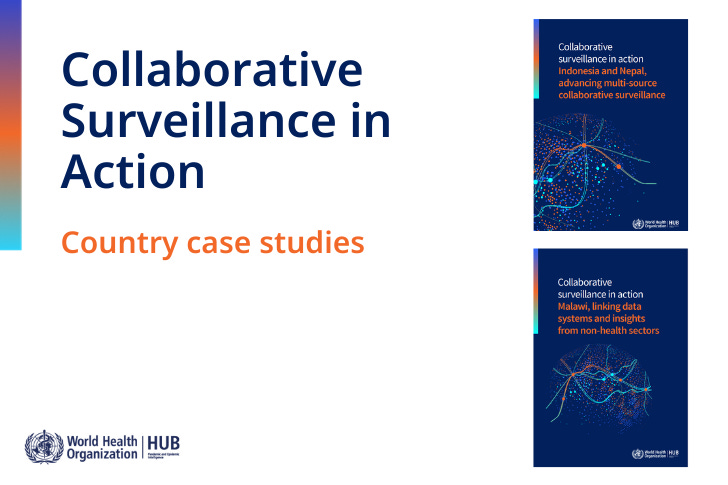
With support from the WHO Hub in Berlin and WHO regional offices, countries worldwide are starting to implement collaborative surveillance to strengthen the way they detect and respond to health threats. Our first six country studies highlight diverse national experiences, demonstrating how multisectoral collaboration and data sharing can strengthen public health surveillance systems. Each case offers practical insights, challenges faced and lessons learned to inspire and inform similar efforts around the world.
➡️Download and read all case studies.
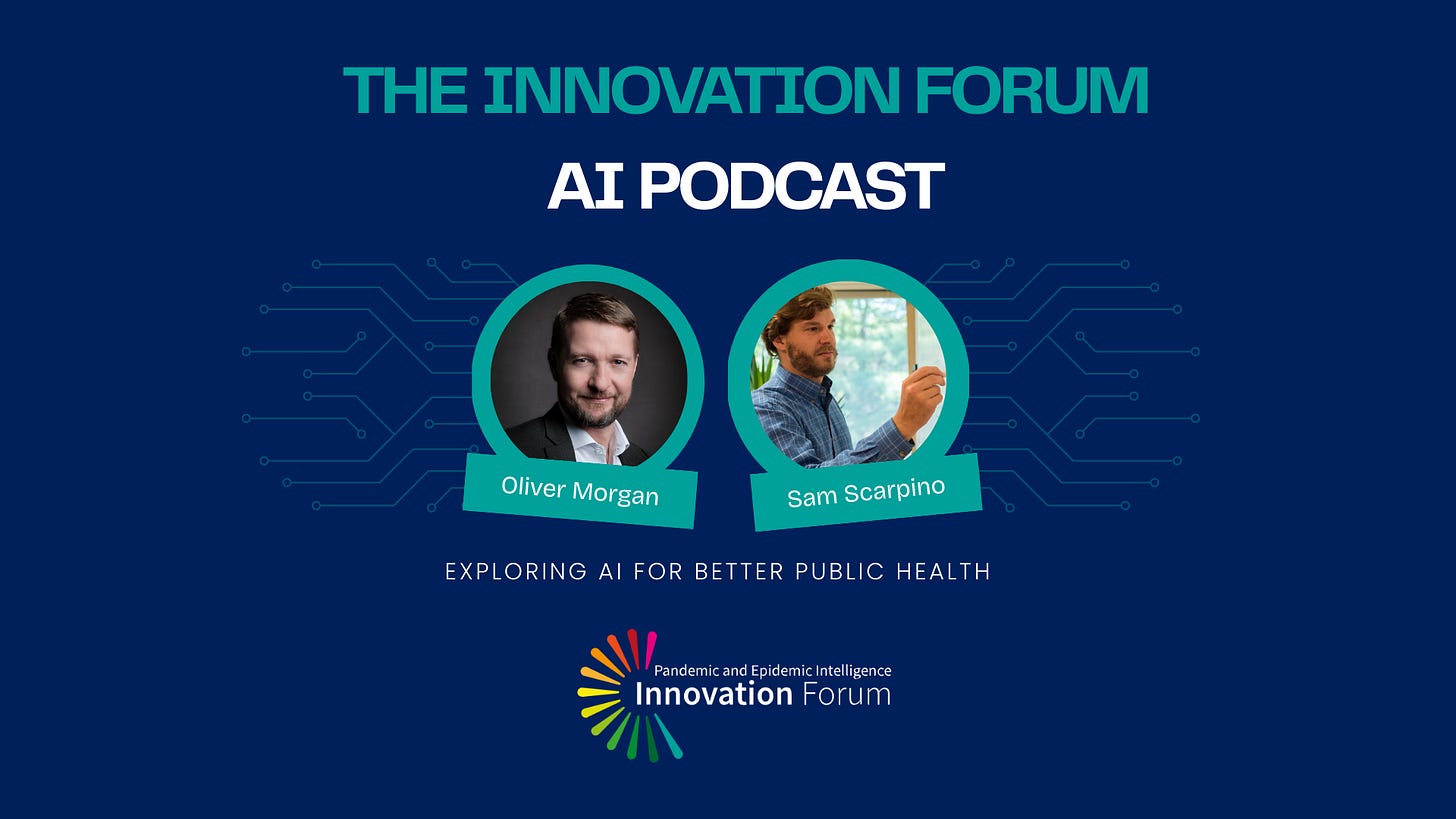
Tune in to the latest episode of our Innovation Forum AI podcast. Oliver Morgan, Head of the WHO Hub in Berlin, speaks with Samuel Scarpino from Northeastern University and the Santa Fe Institute about how AI can strengthen epidemic and pandemic intelligence when systems are built on good data, clear goals and real public health workflows. From outbreak surveillance to modeling and data governance, Sam shares why keeping humans in the loop remains essential for responsible AI use in public health.
➡️ Listen now to the Innovation Forum AI podcast on YouTube, Spotify, Apple Podcasts or Amazon Music.
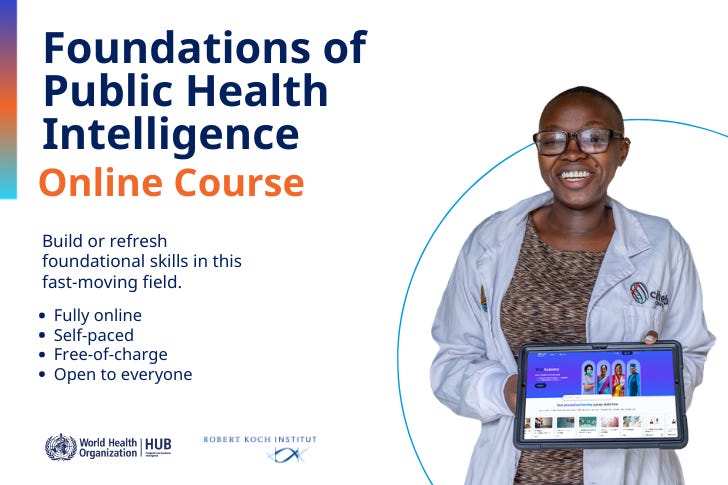
Are you looking to build your skills in public health intelligence, to better detect, assess and respond to health threats? Enroll now in our new course, Foundations of Public Health Intelligence (PHI): Lead, Implement, and Practice. It is fully online, self-paced, free of charge and open to everyone. The course provides a practical and flexible entry point if you want to build or refresh your skills in this fast-moving field. It was jointly developed by the WHO Hub in Berlin, the Robert Koch Institute and the WHO Eastern Mediterranean Regional Office and is based on our recently published WHO Public Health Intelligence Competency Framework and Curriculum.
➡️Start learning today on the WHO Academy platform: WHO Academy | Foundations of Public Health Intelligence
Strong research is essential for effective pandemic and epidemic intelligence and requires sustained and well‑aligned funding. To allow funders, researchers and policymakers to identify where resources are being invested and where further support is needed, we have launched the first-of-its-kind Pandemic and Epidemic Intelligence Research Funding Tracker. Developed together with the Pandemic PACT programme, this interactive tool maps global investments across 23 priority research areas, ranging from AI and data preparedness to community-centred approaches.
➡️ Explore the funding tracker.
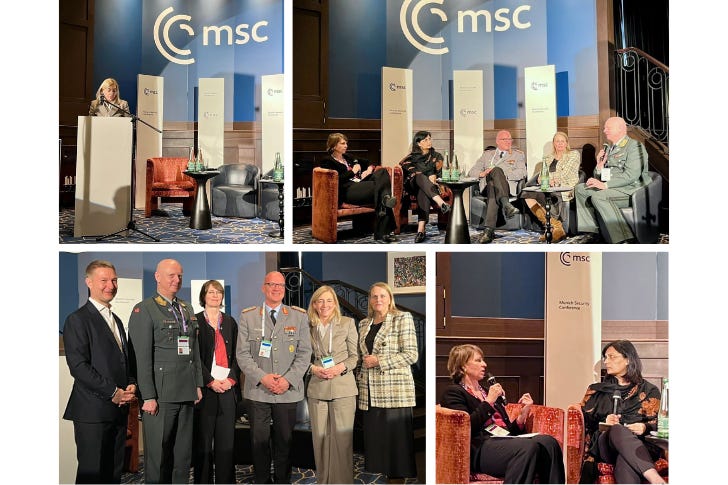
“We must recognize that global health is national security. And that national security must be built during peacetime to deliver resilience during crises.” - Nina Warken, Federal Minister of Health for Germany
Together with the German Ministry of Health, we organized an event at this year’s Munich Security Conference, bringing together leaders from health, defence and international organizations to discuss why early detection of health threats is essential for national security.
➡️ Read and share our LinkedIn post about the event.
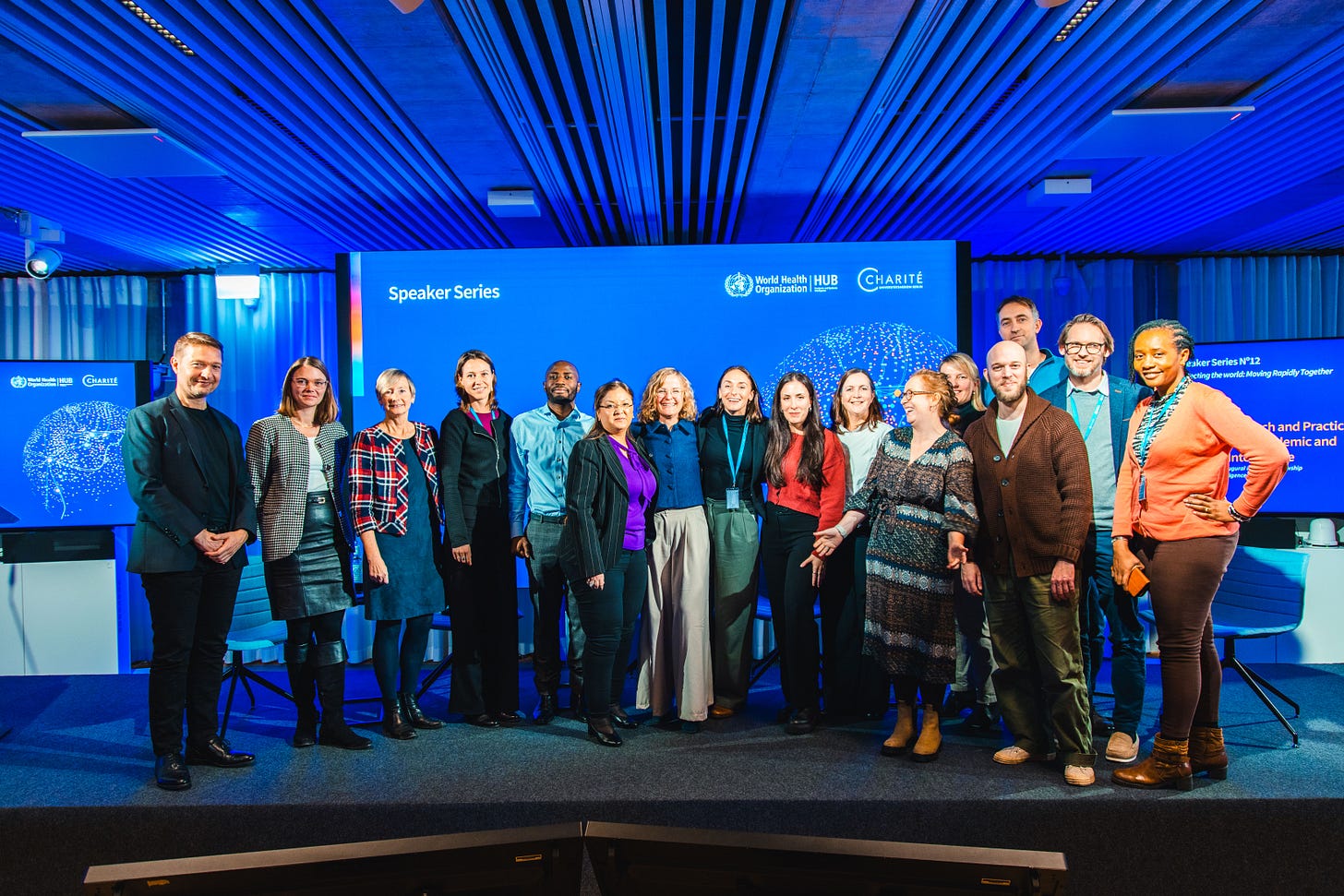
Mid- or senior-career academic researchers working on pandemic and epidemic preparedness can now apply for our Research Fellowship in Public Health Intelligence. Organized jointly by the Charité - Universitätsmedizin Berlin Center for Global Health and the WHO Hub in Berlin, this fellowship invites researchers to spend a 5–6-month research stay in Berlin, working on priority research areas including AI and technological advances, data preparedness, analytical frameworks and multisectoral approaches.
📅 Application deadline: 3 March 2026
ℹ️ Learn more and apply here.
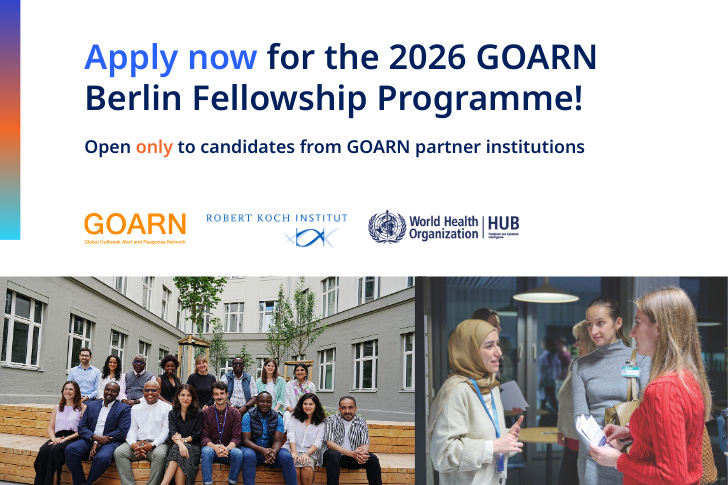
During this six-month fellowship, public health professionals build their expertise in public health surveillance, epidemic control or emergency preparedness and bring these skills back to their home institutions. Fellows benefit from mentorship and technical expertise of the Robert Koch Institute, the WHO Hub for Pandemic and Epidemic Intelligence, and the Global Outbreak Alert and Response Network (GOARN). For the first time, applicants can choose whether to complete their project in Berlin or at their home institution.
Please note that only candidates from GOARN partner institutions are eligible to apply. For more information and to obtain the application documents kindly contact your institution’s GOARN focal point.
📅 Application deadline: 16 March 2026, 17:00 CET
🔗 More information.
💻 Register now for the online information session on 3 and 4 March.
The WHO Pandemic Hub is on LinkedIn! Follow us for regular updates in English and German on how we support public health intelligence communities worldwide with innovative solutions, knowledge-sharing networks and stronger systems for better decisions during epidemics and pandemics.
👉 Follow us and leave us a comment, share or like!
Comments
Nothing yet. Say the first thing.
Sign in to join the conversation.