
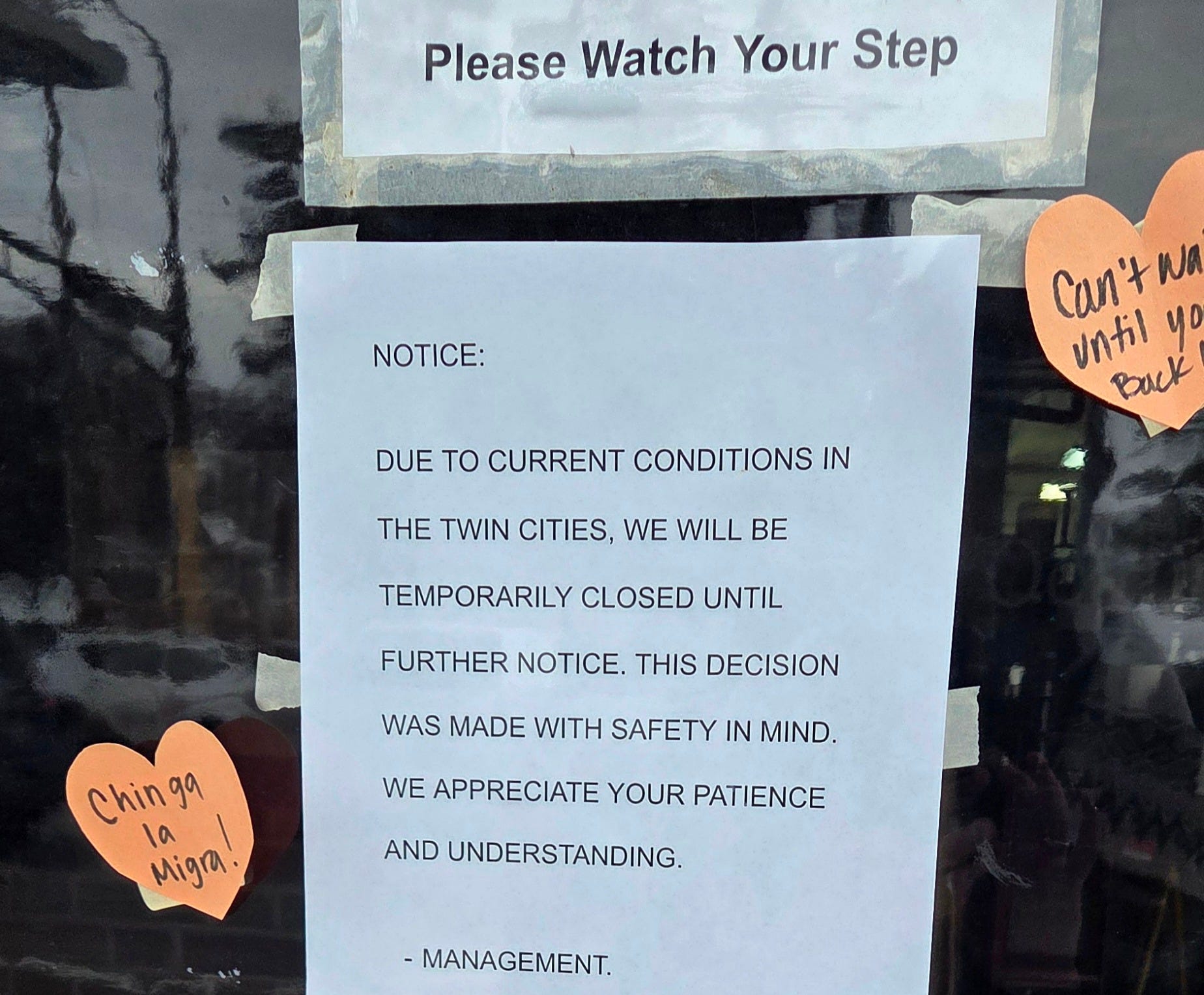
My memory’s not great, so I make lists. A lot of them. The list below was the one that nearly broke me.
Chorizo. Cheese. Plaintains. Avocado. Tapioca. Green Onions. Sugar. Spaghetti. Oranges. Baby purée.
This partial list came from a Twin Cities family too fearful to leave their home. A family on lockdown, paired with another family that still has the freedom, for now, to move through the world, although that world is quickly changing.
It’s the list of a family whose baby hasn’t felt fresh air on their skin or seen the sky in weeks. A family that, for a while, stopped reaching out to the family that wants to help them because the family in hiding no longer knows who to trust.
ICE, you see, is growing ever more sophisticated even amid its supposed drawdown here. Border Czar Tom Homan, he of the money-filled Cava bag, announced the departure of 700 federal agents from the Twin Cities this past week. But that still leaves 80 percent of ICE’s invading force acting extra-legally in a state that doesn’t want them. The 2,300 who remain still exceed the total number of police officers in St. Paul and Minneapolis combined.
Consider: 700 is fewer than the number of people looped into a single, hyper-local Signal group here.
Also consider: Homan made it clear that, “We’re not ending our mission. We’re just making it more effective and more smart.”
Smart doesn‘t mean ending random citizen checks in parking lots and stores or at bus stops, or even your front lawn. “Smart” simply means shifting tactics. It means tailing cars as they leave food shelves with provisions for families too terrified to go out. Families that might be here legally but have heard the stories: Car windows smashed, their occupants dragged away by ICE agents before they even have a chance to show their papers, and put on a plane bound for Texas before their lawyer can file a habeas petition, before they can contact a lawyer at all, and finally (in a best case scenario) released from custody hundreds of miles from home with no phone, no ID or papers or way to return.
“Smart” is a U.S. prosecutor admitting to a federal judge earlier this week that the surge into Minnesota has “outpaced the system’s capacity to ensure that the Constitution is being complied with.”
“Smart” means agents blending in by trading camo gear for puffy jackets and hats with pompoms. Putting beanie babies on dashboards, slapping rainbow magnets on bumpers, sending out more agents presenting as female and with darker skin tones.
“Smart” means using facial recognition , social media monitoring and other tech tools to ID immigrants and track protesters. It means telling a neon-vested school monitor you’re from Indivisible and casually asking: How can we sign up for shifts here? (Smart also means using your spidey sense to pick up on the weirdness of this request.)
Chorizo. Cheese. Plaintains. Avocados. Reminders of where we came from, what we left behind. Food of resilience and love.
It’s still out there, actually. In this nonstop swirl of “smartness” cloaking state-sponsored terror, there are glimmers of what we can be.
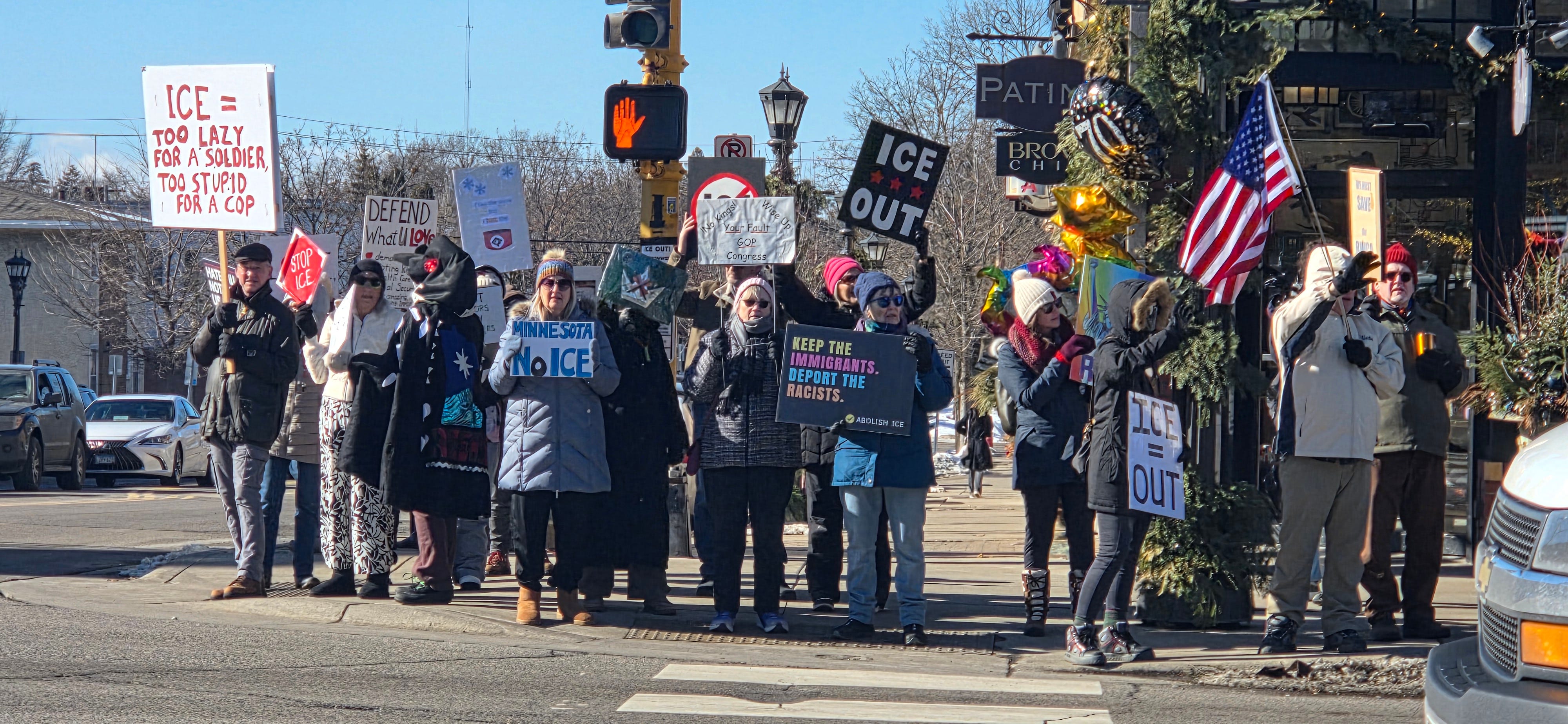
At noon on Friday, I joined a protest at the intersection of Selby and Snelling Avenues, only blocks from the St. Paul gas station where a Honduran man had been violently abducted by federal agents three weeks earlier. Folks have been gathering on that corner weekly (as well as on Mondays and Tuesdays) for months, but the numbers were typically small. Friday, nearly 100 showed up.
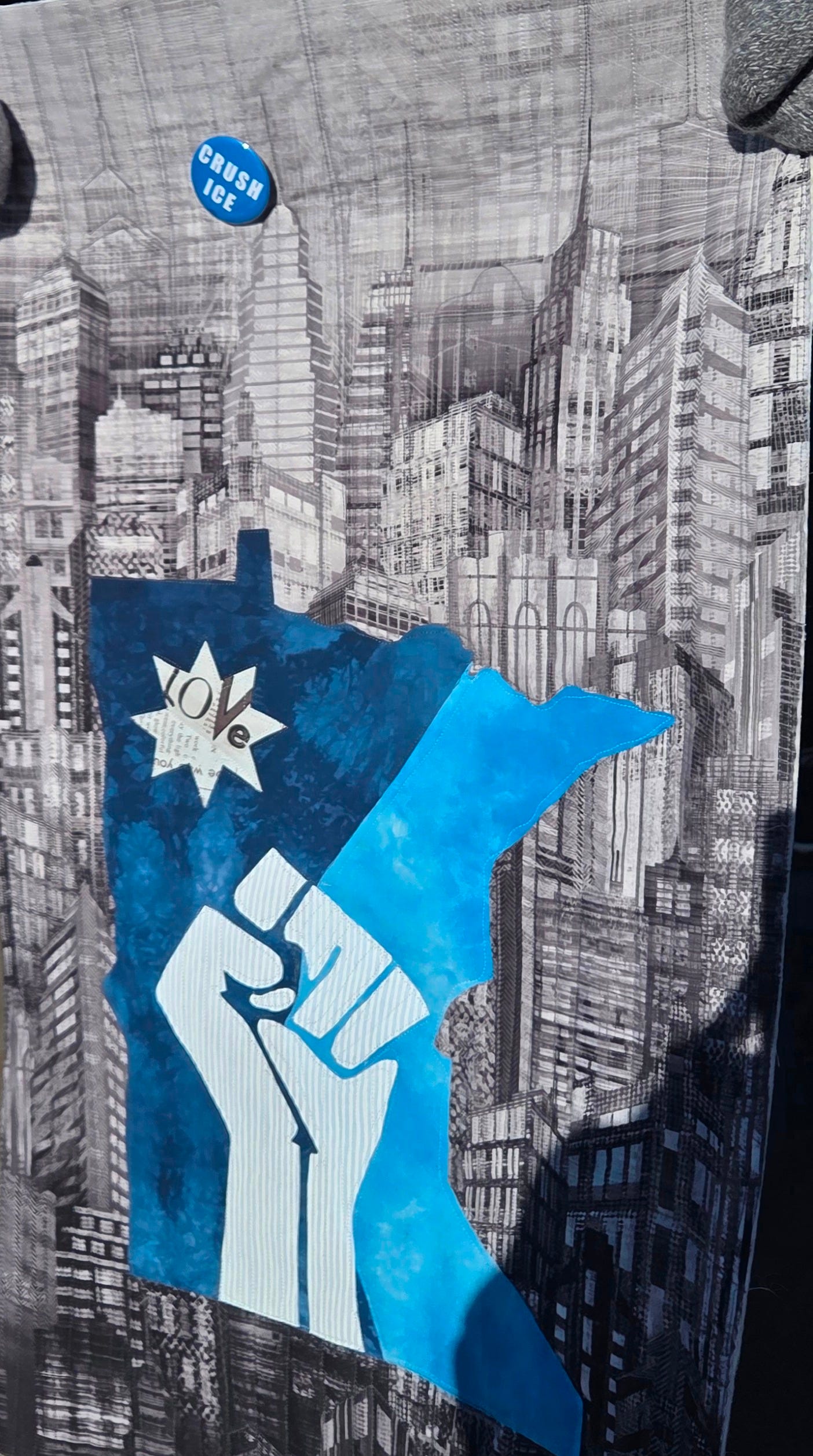
As cars, buses and even semis honked in lusty support, I found myself chatting with Nancy, an 80-something regular who channels her fury into quilting. “I’m not quite done with this one but wanted to bring it anyway,” she told me as she held up her latest creation: the Minnesota flag shorn into the shape of the state, cradling a raised fist of solidarity and the star of the North inscribed with love—all set against the backdrop of the Minneapolis skyline. ‘It took me a day and a half to make,” she said. “I’m sure it won’t be my last.”
At about half past the hour, a southbound yellow school bus pulled up to the red light on Snelling. The windows, I noticed, were partly open, and as the bus idled, nearly a dozen kids smiled through them, cheering our anti-ICE signs.
“ICE out NOW!” a girl no older than ten chanted from the bus, her words strong and clear, and before long we were all chanting. It became a call and response — back and forth, over and over, between those brave, brown kids and the mostly white crowd. By the time the light finally turned green, I was chanting through tears. I know I wasn’t the only one.
Afterward, my friend and I made our way back toward Grand Avenue, walking between a public charter middle school and the Cities Church, where activists disrupted a January service after discovering that one of the church’s pastors leads the St. Paul’s ICE field office.1
On each side of us, dueling messages squared off only feet from each other:
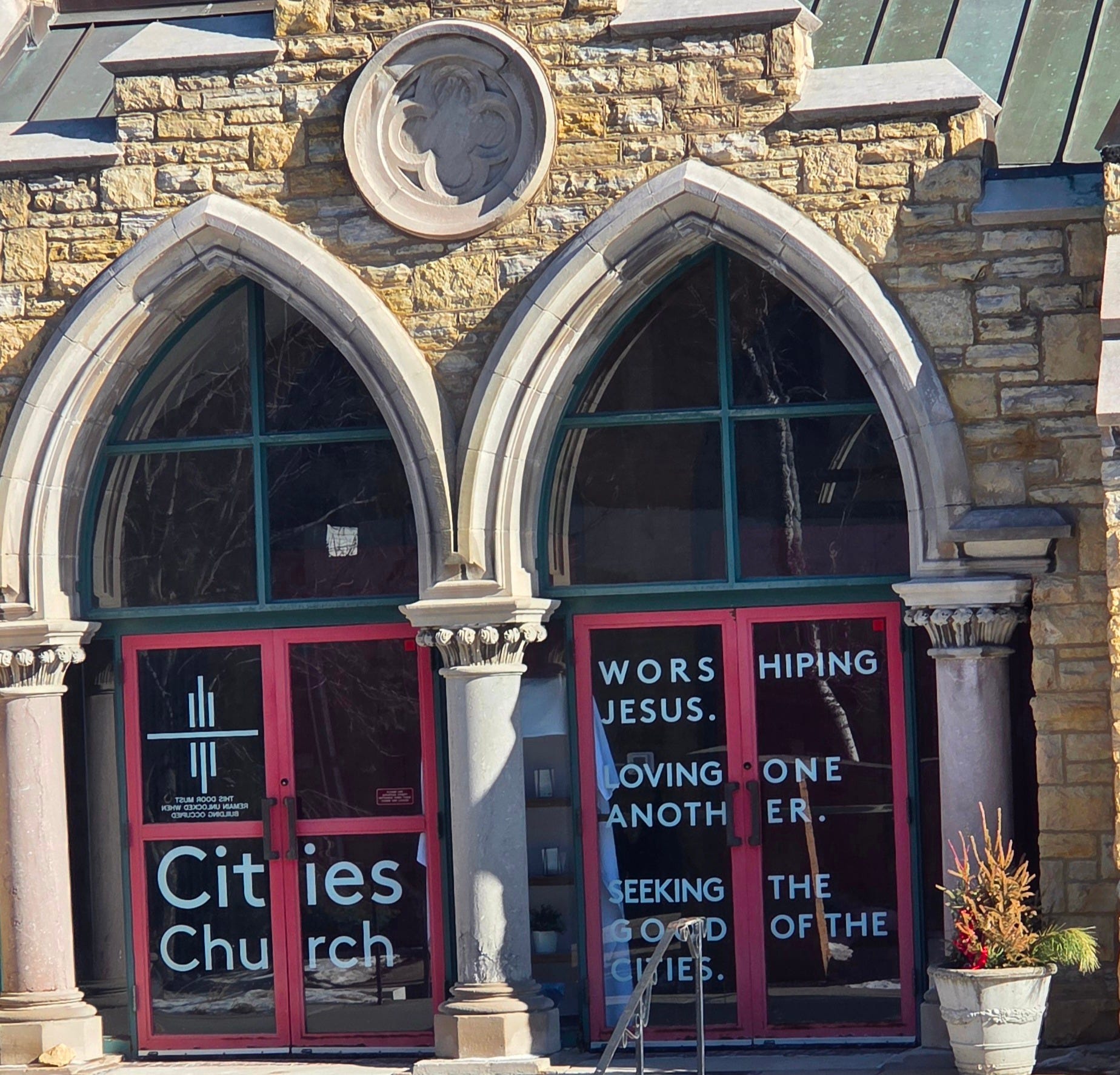
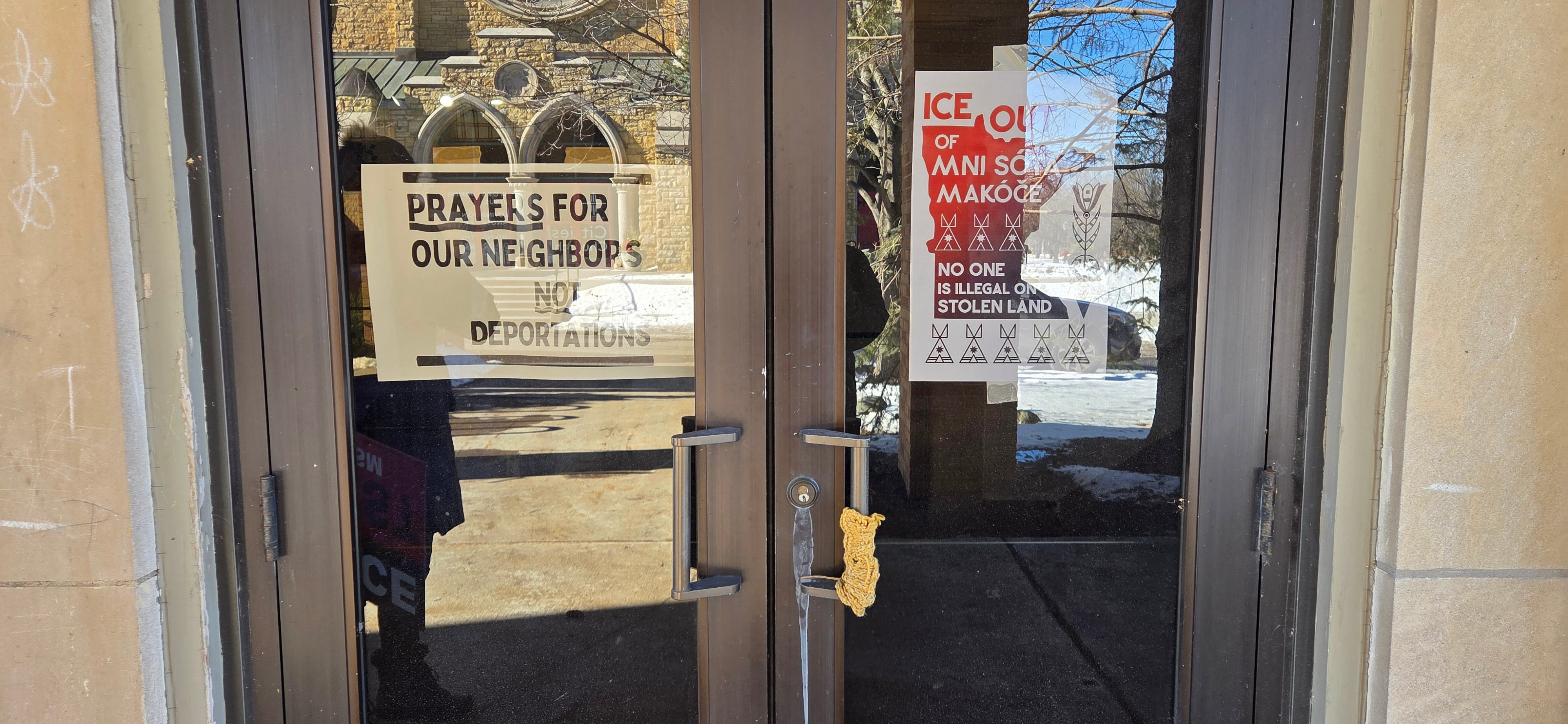
Where is the love? It’s there, plastered on the doors of a school proclaiming support for its neighbors, even in the shadow of ICE. It’s embedded in a list of comfort foods: Chorizo. Cheese. Plaintains. Avocado. It’s stitched into quilts of resistance, and born as a chant on a school bus.
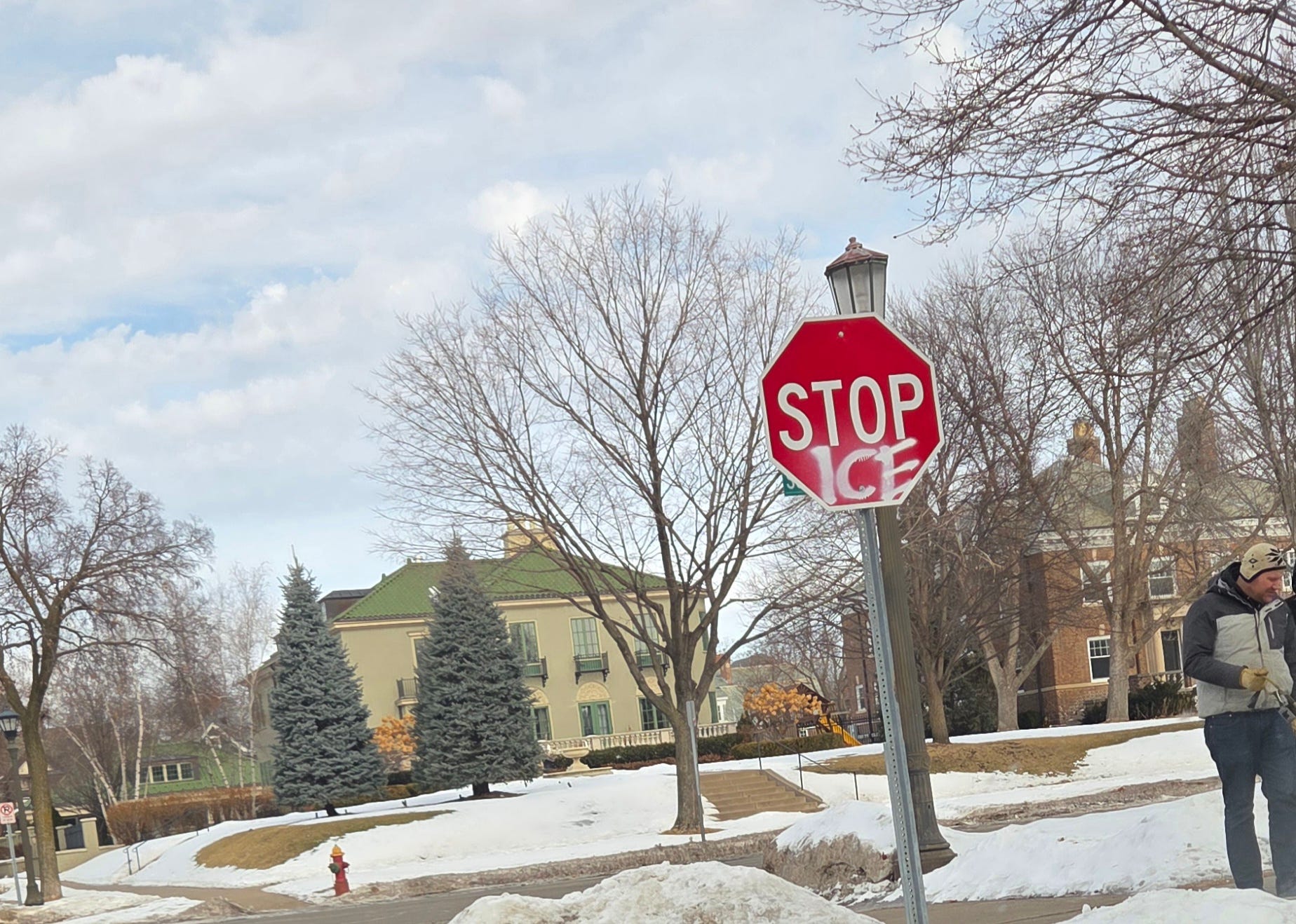
It’s everywhere, actually, if you know where to look.
Thanks for reading Unpacking the Words! This post is public so feel free to share it.
*Looking for ways to help those struggling in Minnesota right now? Check out Stand With Minnesota, a directory of places to donate provided by activists on the ground.
No posts
Comments
Nothing yet. Say the first thing.
Sign in to join the conversation.