
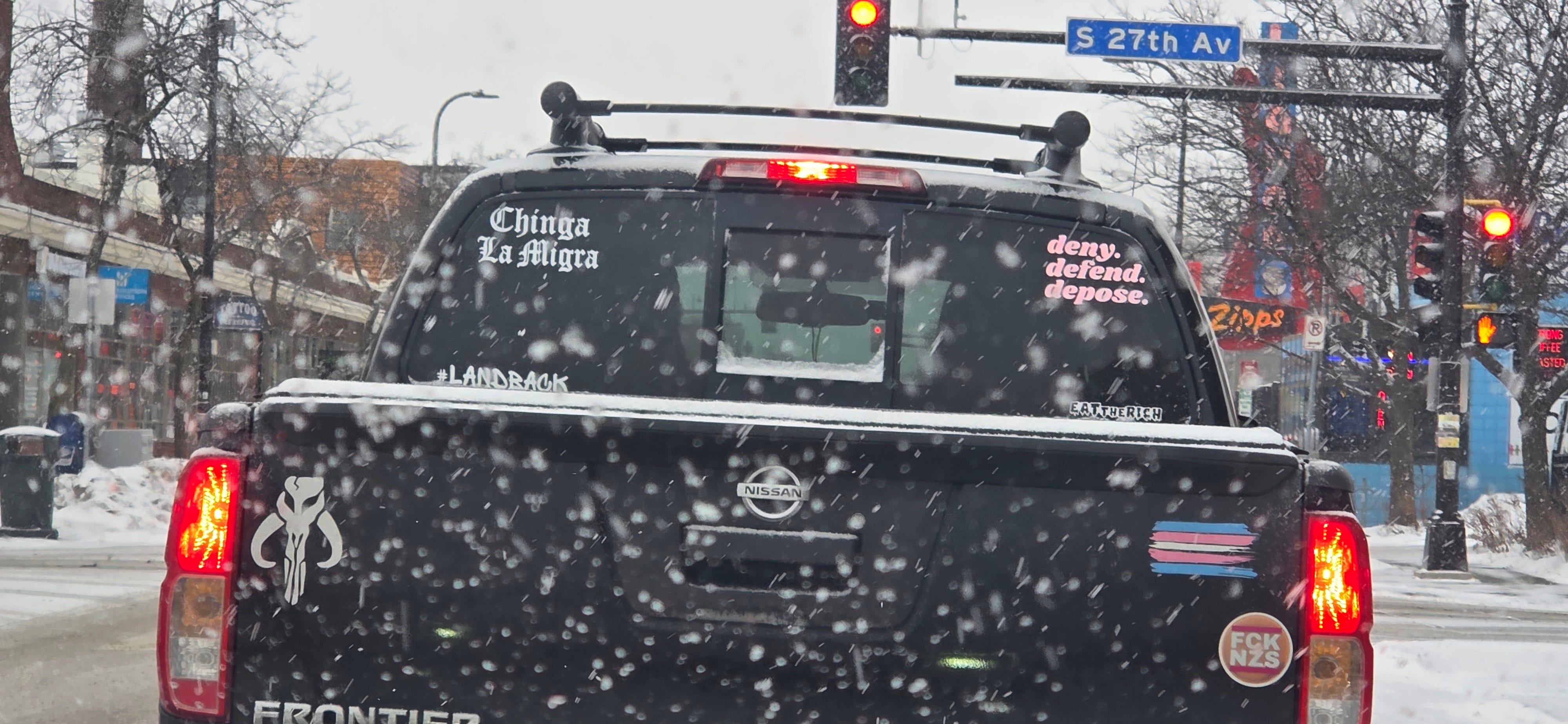
It’s morning in Minnesota, and on MLK Day, the thermometer outside reads 5 below zero, with the wind chill making it feel closer to 26 below. The National Weather Service has issued an alert for the southern half of the state that reads, in part:
“Use caution while travelling outside. Wear appropriate clothing, a hat, and gloves.”
These days, many of us exercise caution while travelling outside. But we aren’t just wearing our gloves, balaclavas, hats and Yaktrax. We have our whistles and phones at the ready. Because you never know when ICE might show up and try to nab another one of our neighbors.
On the morning of Jan. 7, I began to write a post about ICE’s expected surge in Minnesota, about how 2,000 agents were descending on the state, and how no good could come of it.
A few hours later, across the river in Minneapolis, 37-year-old poet and mom Renee Nicole Good was shot execution-style in her car by ICE officer Jonathan Ross, shaking the community to its core.
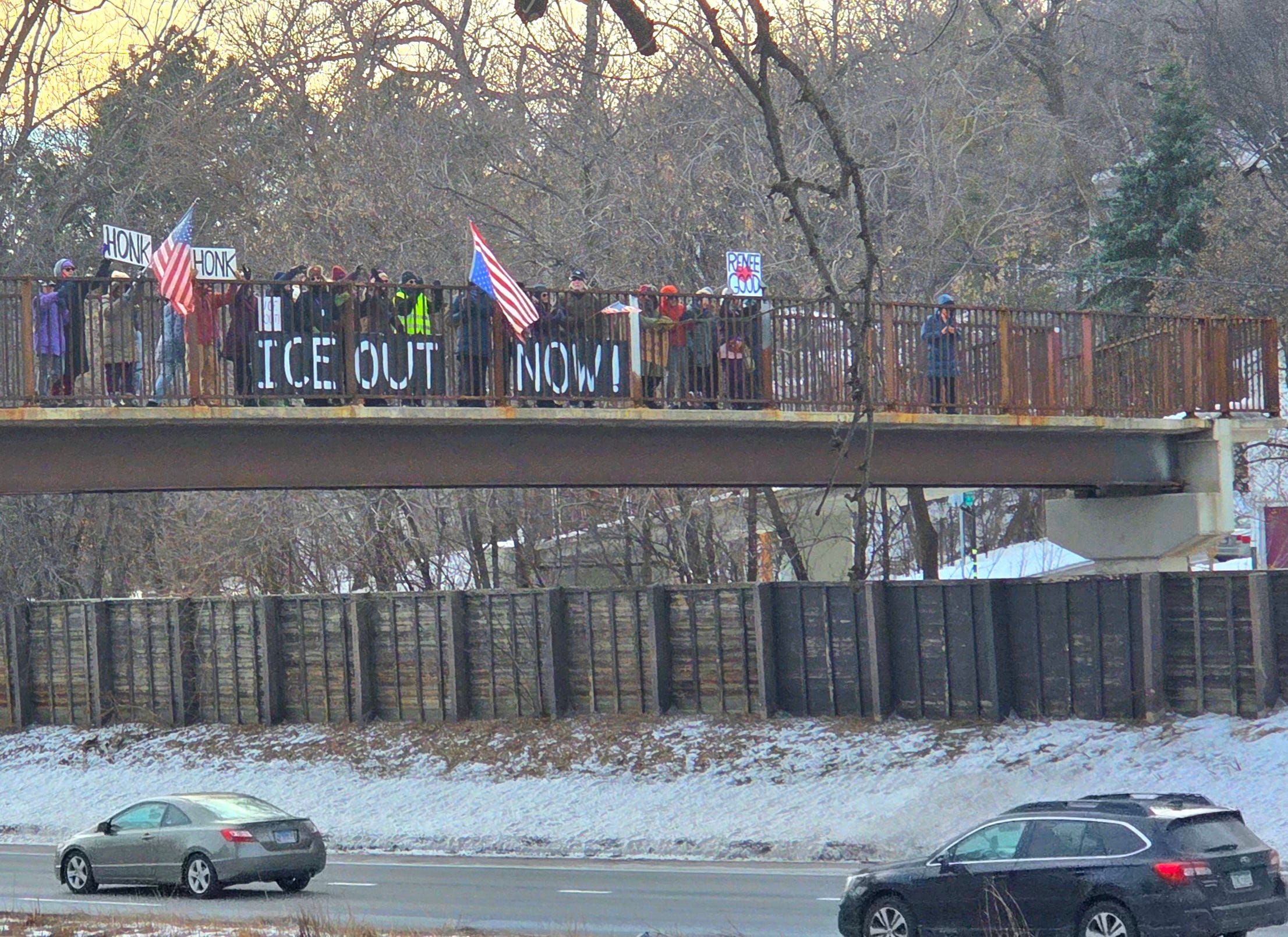
Now, things are unfolding so quickly that it feels like a game of whack-a-mole, except we’re the moles being whacked. Peaceful protest has broken out on street corners, parks and overpasses, everybody clamoring for one thing: ICE OUT NOW. We’re demanding this in a not-so-Minnesota-nice way, in both English and Spanish.
Now, we’re up to 3,000 federal agents in the state, and the Pentagon has ordered another 1,500 troops to prepare for possible deployment here. The reason given is to “preserve public safety,” in case violence “escalates.” This despite the fact that protests have been almost uniformly peaceful here, the violence in our communities perpetrated by the ICE agents inflicting untold trauma and terror.
Last Sunday, as more than 50 of us protested the ICE surge on an overpass bridge in St. Paul, dozens of masked and armed federal agents were swarming a Speedway station a couple miles away. Officers pulled a Honduran native, Mauricio Henríquez Serrano, from his car and dragged him, bleeding and unconscious, into an SUV1 — an operation captured from all angles, thanks to the courage of multiple witnesses. (Before it was over, one witness was tackled and briefly arrested for doing nothing more than observe what was happening.) It should be noted that the operation was overseen by U.S. Border Patrol Chief Greg Bovino, recently found by a federal judge to be “outright lying’ about the use of force during a previous ICE surge in Chicago.
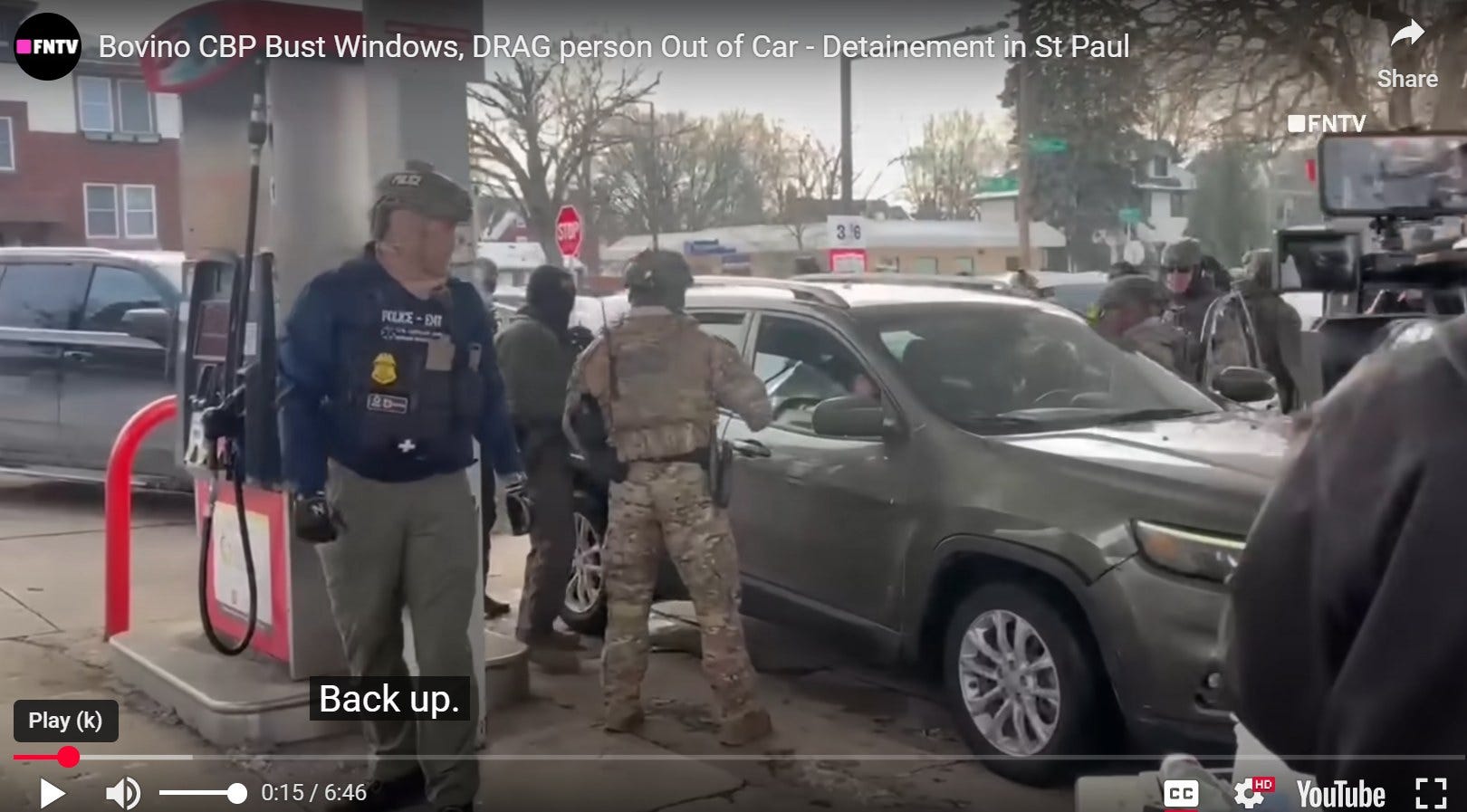
Around 2:30 p.m., as we waved to honking motorists from the bridge, a few of us noticed a convoy of beige, southbound SUVs flashing their lights at us as they passed underneath. We figured they were probably ICE. Only later did we learn that the SUVs involved in the Speedway raid were also beige, and that the quickest way from the Speedway to the Whipple Federal Building would have taken the convoy south, directly under our bridge. Perhaps they were trying to taunt us, but not before seeing our message.
After night fell, rumors began to spread that masked and armed agents were going door to door nearby with guns drawn. What does one do in such a situation? Turn all the lights off and pray? Later, we learned that agents had conducted raids of houses in the immigrant-heavy Frogtown neighborhood, just north of us.
Five years ago, I never left the house without a mask. Now, it’s an orange whistle I have with me at all times. I’m constantly on the watch for SUVs and trucks with out-of-state plates, or with tinted windows, driving suspiciously slow or recklessly fast. Your cortisone level is always elevated. It’s hard to eat or sleep.
It’s hell on the nervous system to live in constant fear, and as an older, economically stable, U.S.-born white woman, I’m relatively safe. I feel my privilege acutely. I can’t imagine the terror of someone living here with a foreign accent or darker skin, knowing that people are being picked up whether or not they’re U.S. citizens, often without even having a chance to show their papers. Agents are arresting first and asking questions later.
On Sunday, our wonderful Saint Paul mayor, Kaohly Her, posted the following on her Facebook page:
The situation on the ground at our mercados and Hmong markets is more dire than I can possibly share with you. I visited a few of them today just to check in and be together in community. We shared food, hugs, and a few tears.
These spaces, usually packed on Saturdays, were nearly empty.
People are finding out about their loved ones being detained on social media. One woman, who is a US citizen, went to the hospital because she had a severe anxiety attack from the fear. Many US citizens are staying home because they are afraid they don’t have the language skills to explain their status if they are stopped by ICE – or if federal agents will even care.
One person shared with me that their family members who survived the Secret War in Laos are more scared now than they were at the end of the Vietnam War.
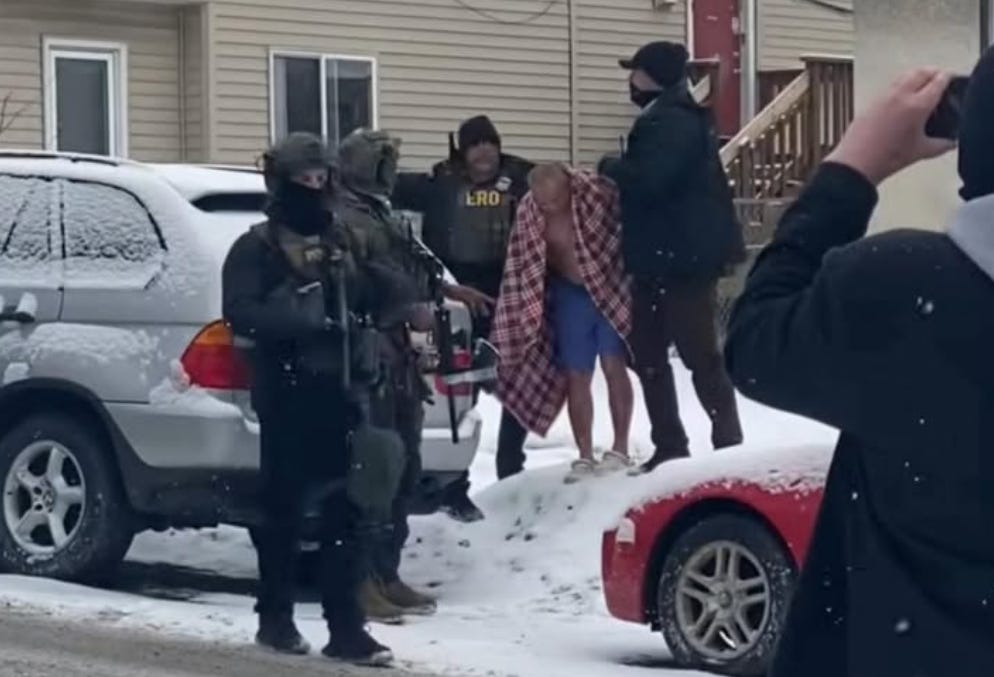
Only hours later, news broke that ICE had busted into the apartment of a 57-year-old man of Laotian descent on the east side of St. Paul, then handcuffed and forced him from his home in his underwear in subzero temperatures as his 4-year-old grandson watched and cried. The family of the man, ChongLy “Scott” Thao, a naturalized U.S. citizen with no criminal record, believes agents were looking for someone who had previously lived at the address but never asked him for identification.2 Later, in an interview with the Associated Press, Thao said agents brought him back to his house an hour or two later, made him show his ID and then left without apologizing.
There are times when words fail.
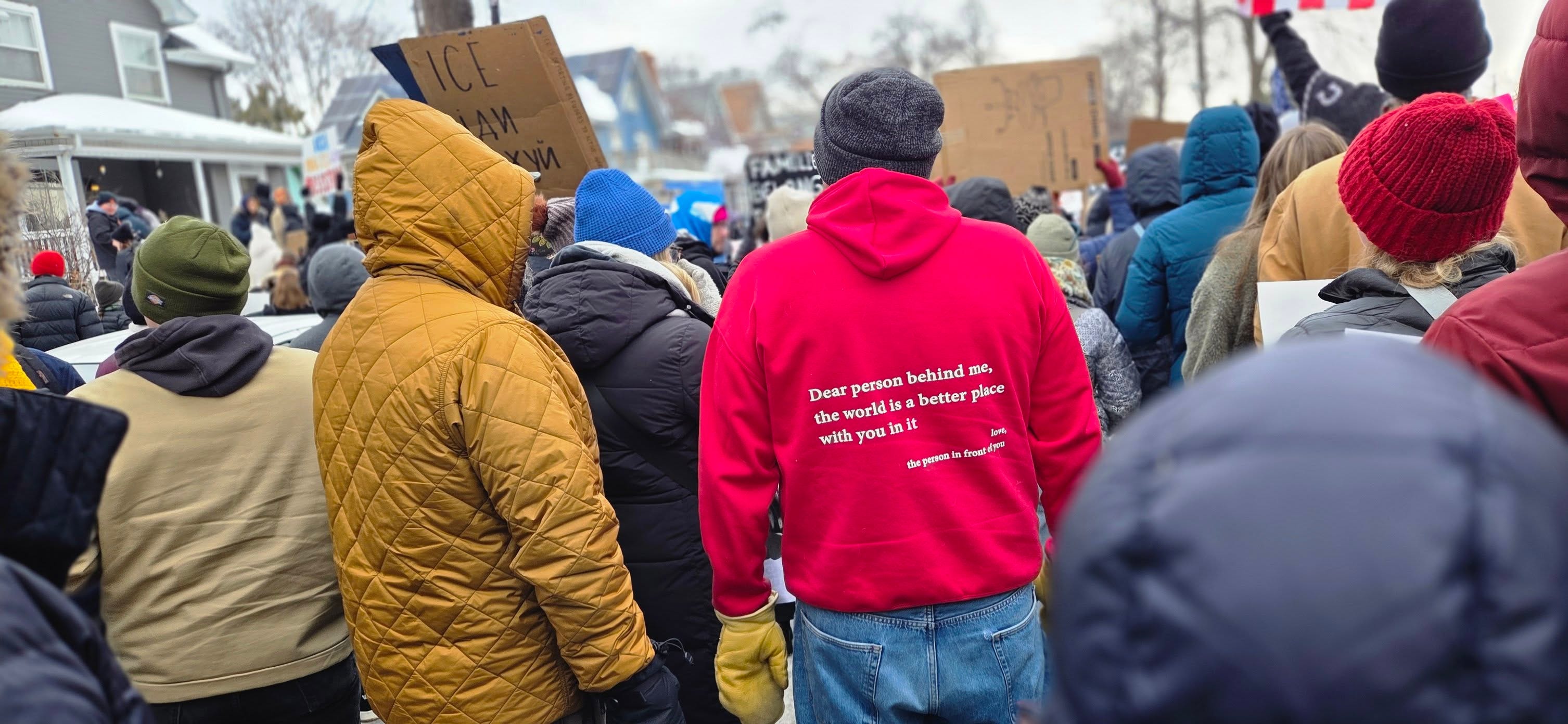
Here’s the difference between 2020 and now: We’re not stuck at home and isolated. We can be in community, and our community is sustaining us. Neighborhoods, including my own, have developed complex eco-systems of care and comfort, standing on street corners in neon-yellow vests adorned with hearts, offering rides to work and school, delivering groceries, diapers and food.
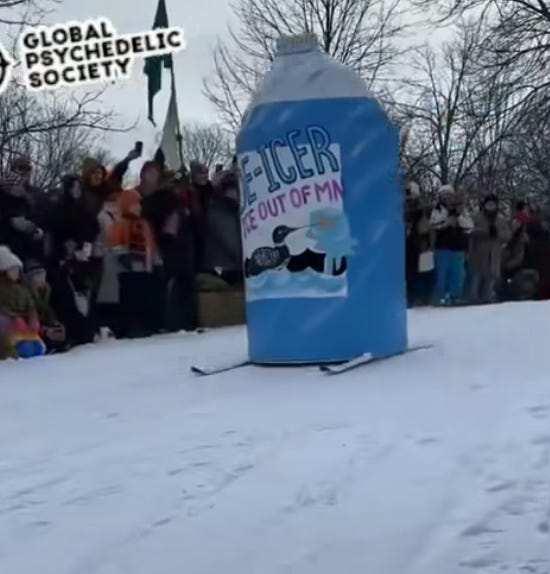
We’re also carving out spaces for joy. In Minneapolis this past weekend, a parade of elaborately decorated sleds careened down a hill in Powderhorn Park as part of the annual Art Sled Rally. The contraptions included a giant bottle of De-ICER, a warm Horchata Drink that flung ice cubes as it descended and a bowling ball that knocked over pins representing the world’s dictators (including you-know-who).
Last Thursday, another day of subzero wind chills, I decided to combat cabin fever by bundling up and walking to the library. On the way home, I passed by the Speedway federal agents had raided less than a week earlier.
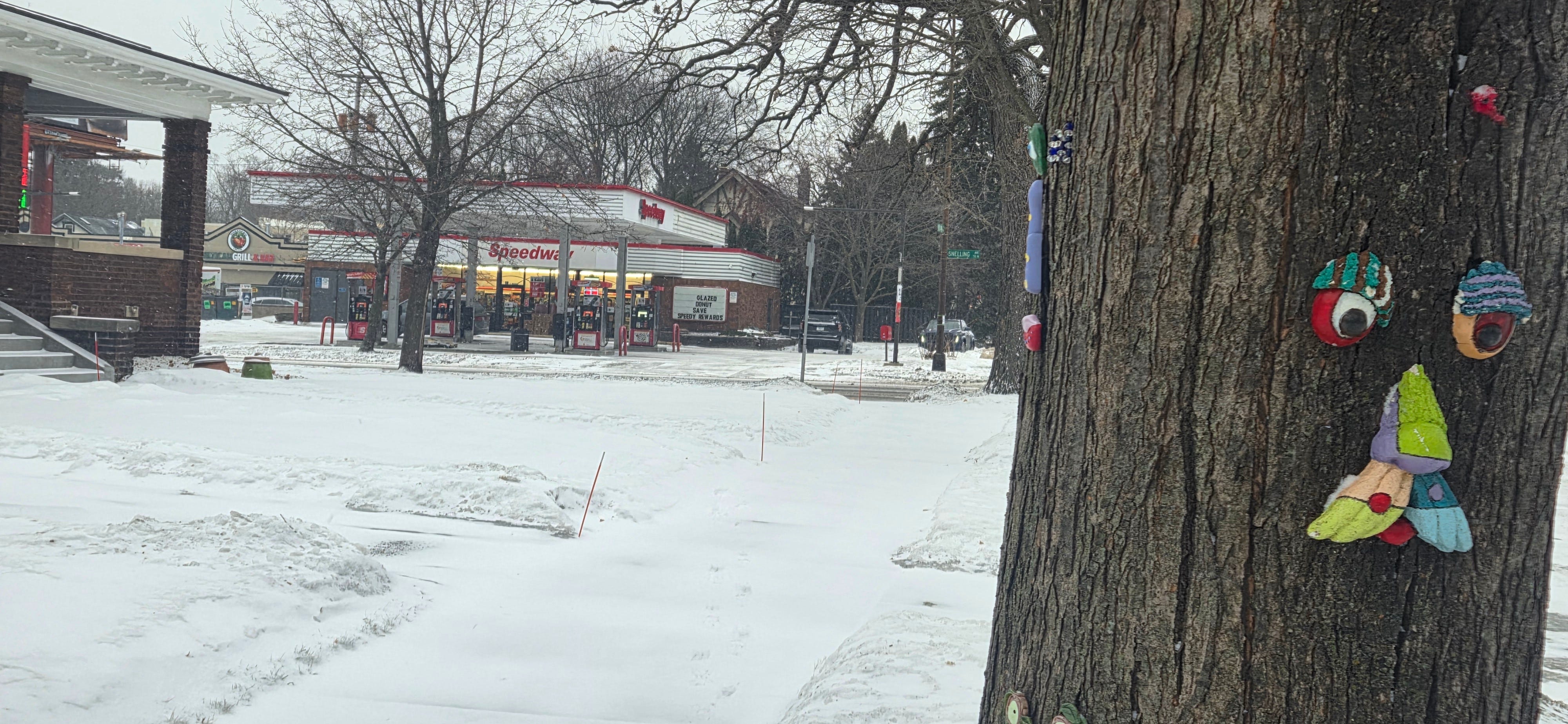
The sign out front still promoted glazed donuts and Speedy rewards. Another layer of fresh snow covered the sidewalks, and the cold muffled the sound of cars driving by. It felt almost peaceful, but there was a sinister edge as well. When I shivered, it wasn’t because of the cold.
Serrano has no active warrants or criminal history in either the U.S. or his home country of Honduras, according to his family. He is currently being held in El Paso, TX, and despite suffering “significant pain” from his injuries, has received no medical attention, his family says. His family has set up a Gofundme page here.
No posts
Comments
Nothing yet. Say the first thing.
Sign in to join the conversation.