
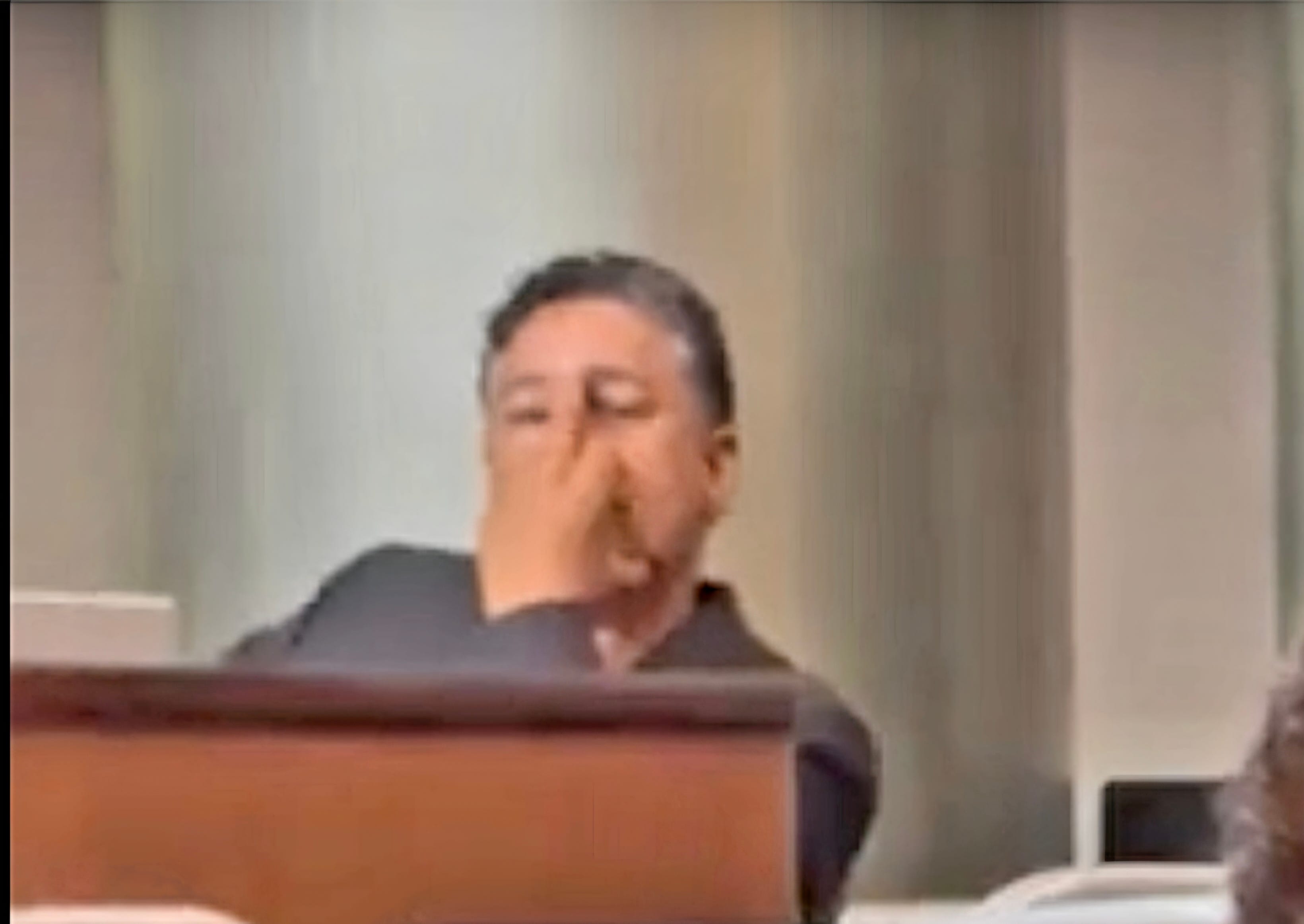
“If they want to take that finger as ‘eff you,’ then take it as ‘eff you,” Houston said, from an Oaklandside article of Dec. 19th shortly after a controversial council meeting.
CM Houston was even more exorcised after a council meeting in which the Selection Panel for the Oakland Police Commission, the most innovative and independent in the country, explained to the council why they had chosen to reappoint a commissioner, as the alternate. The council denied the Selection Panel's choice without offering any rationale and the meeting was tense as it appeared that members of the SP felt their work hadn't been honored.
So now Mr. Houston, he of the famous finger (apparently the photo went viral quickly,) is suggesting that the City Council should put a measure on the November ballot [along with a possible change to the basic government structure of the mayor and council] to curtail some aspects of independence in civilian oversight of police in Oakland.
Charter reform is a big deal although it only requires a 50% vote to alter the form of government in Oakland. However, a ballot measure is also a big deal. It requires raising a pile of money to run a citywide campaign to convince voters that you have a valid argument to make serious change in how things are done here.
So Mr Houston, esteemed leader of Council District 7, the same son-of-oakland who railed after the night of that council meeting, in which he dissed the OPC ‘s Selection Panel, against all boards and commissions suggesting that he would like to get rid of them all. But he has since deleted those angry Facebook outbursts.
But he apparently has not forgotten his desire to curtail the power of the Oakland Police Commission's Selection Panel. “The Selection Panel, with the assistance of the City Administrator, solicits and reviews applications, and interviews applicants interested in serving on the Police Commission.” The only role the city administrator has in this process is to publicize the search for police commissioner candidates. After which the 9 Selection Panel members, chosen by councilmembers and the mayor, spend months interviewing and vetting candidates before they appoint them to the commission. It's a laborious process, mostly available to the public and quite comprehensive.
I was in the crowded, borrowed office with 15 to 30 police accountability volunteers as we worked trying to design a process that would be as free of political influence and common bias as possible; and someone (not me) suggested a two step process to appoint the civilian oversight members. We had seen how other boards and commissions had suffered from the undue influence of local politics which experienced minor scandals and major political scuffles based on who had directly appointed them and that member's own political fate.
We believed a two step process would give the Police Commission itself a chance at the independence needed after all the years, decades really, of political and emotional upheaval as a result of police department scandals.
We had learned many lessons watching other commissions and review boards fail at changing police culture in cities where it had become corrupted and oftimes deadly. Oakland's own department had experienced that maelstrom and was, despite continuing turmoil, looking to turn a corner. We could not afford to go back.
Ultimately the coalition of some 30 groups in Oakland that had come together to offer a substantial change in how to promote policing and community safety, came up with a unique design that stands out as a national model. It is a beacon of small d democracy, of civilianizing bureaucracy in a way that the average neighborhood advocate can understand and participate in.
Despite the reactionary cabal complaining about this bottom up approach, this grassroots representation of governing, it is an innovative institution that Oakland, with its long history of struggling for social justice and equity, can be proud of and brag on, that other cities look to for ideas.
But like any democratic institution it's only as good as its members-as is true for the city council- but unlike the council, it has been designed to be removed from political aspirations and bias.
Perhaps not surprisingly, this is the first thing my friend Ken is attacking. He wants to remove the Selection Panel along with all its vetting processes to allow councilmembers to directly appoint the commissioners; using their own political vetting process-I’ll leave that to your imagination. Of course, these appointees will see themselves as their CMs representatives, especially when making difficult decisions involving, for instance, police discipline cases, including issues cases of corruption involving the police chief. I wonder why he wants to convince you that this change, though less democratic, less community driven, is a good idea.
But I'll leave that for you to ponder— watch this space….
No posts
Comments
Nothing yet. Say the first thing.
Sign in to join the conversation.