
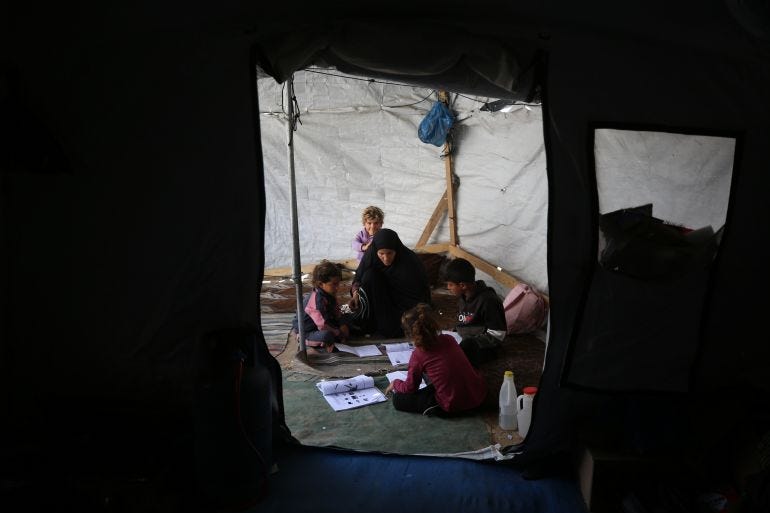
The genocidal Israeli assault on the Gaza Strip has created more than 28,000 widows since October 7, taking the total number of widows in the besieged enclave past 50,000. That number is likely an undercount, as many widows have not been registered due to the breakdown in administrative services as a result of the unending Israeli savagery on Palestinian civil institutions as part of its stated intent to make Gaza unliveable.
In the furnace to which the Israelis have reduced the Gaza Strip, the widows are finding it extremely difficult to care for themselves and their surviving children as resources remain scarce and prices of essentials are through the roof.
“There is no normal life inside the tent. Every day begins with the same questions: how will we secure our needs, and how will we get through another day surrounded by this exhaustion?” Mona al-Masri, whose husband was killed by the Israelis in September 2024, making her the sole provider for her four young children, told Al Jazeera.
“The war did not only take away our homes; it took away our sense of safety and stability and made even the simplest things require enormous effort.”
Aziza al-Kahlout, spokesperson for the Ministry of Social Development in Gaza, rued the lack of resources available to widows to make their situation bearable as they endure extreme hardships without their partners.
“The war has left these women facing a difficult reality, including the responsibility of supporting their families without a provider, amid widespread destruction and the collapse of the basic conditions needed for a decent life,” al-Kahlout told Al Jazeera.
“This requires effective programmes for economic empowerment, job creation and strengthening self-reliance to help lift them out of poverty and deprivation,” she added.
Al-Kahlout highlighted that widows need more than financial aid, emphasising the importance of psychological and social support, healthcare, and legal assistance on issues such as guardianship, custody, inheritance, and financial rights. She also pointed to the need for emergency and regular financial support, educational opportunities, vocational training, and assistance for small and family businesses to help widows achieve greater stability and independence.
“Protecting and empowering widows in the Gaza Strip has become a shared national and humanitarian responsibility that requires an urgent and sustainable response,” al-Kahlout added.
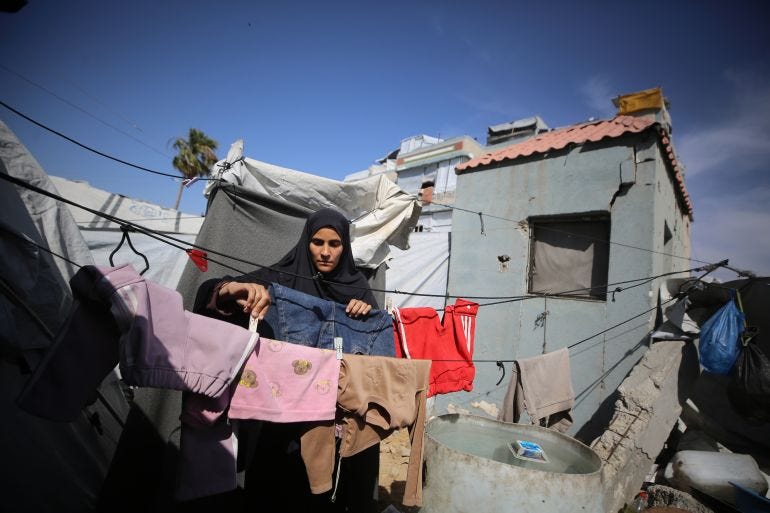
Despite the supposed ceasefire of last October, the Israelis have prevented necessary aid from entering the enclave in contravention of the terms of the agreement, increasing the hardships faced by genocide survivors.
Moreover, the relentless bombings, the total absence of reconstruction of the devastated enclave, and the continued displacements have led to psychological exhaustion among widows with young children.
“A widow in Gaza faces the pain of losing her husband, the responsibility of supporting her family, and caring for her children in an environment filled with fear and instability,” Aseel Abu Shaweesh, a psychologist, explained.
She added: “Many women are forced to hide their grief and emotional collapse so they can carry on in front of their children, while the accumulation of daily pressures and the lack of space to express their pain increase levels of anxiety and psychological exhaustion.”
The loss of their father has meant that the children have lost their sense of safety, and this shows in their behaviour.
“A child loses their father and their sense of safety and stability. They may show signs of constant fear, sleep disturbances, and behavioural changes as a result of the difficult experiences they have endured,” Abu Shaweesh said.
She added that the widowed mothers, as sole providers, need continuous support, which, in the furnace of Gaza, is far from available.
“These women need continuous support that helps them regain a sense of safety and the ability to manage their lives and their families under these difficult circumstances.”
I’ve never put up a paywall, but this newsletter wouldn’t be possible without your support. If you are able, please consider supporting my work with a paid subscription here, on Ko-fi, or on Patreon. You can also buy me a coffee or two at the link below. Thank you!

Comments
Nothing yet. Say the first thing.
Sign in to join the conversation.