
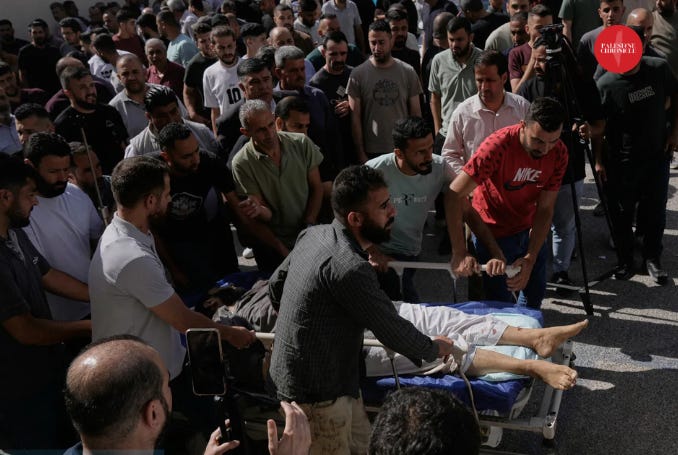
If international governments continue to protect Israel from accountability, the question will no longer be whether the West Bank will rise.
The events in Tell, southwest of Nablus, were not an isolated act of violence. They were a warning.
For years, Israel has treated Palestinian villages in the occupied West Bank as open spaces for military raids, settler invasions, land theft and collective punishment. The expectation was that Palestinians would endure the violence, bury their dead and return to the same unbearable routine.
In Tell, however, that carefully maintained equation was briefly disrupted.
The confrontation began when armed Israeli settlers entered the area near the village, attempting to attack Palestinian homes. Villagers confronted them. Israeli soldiers and armed settlement personnel then intervened, transforming the settler attack into a broader military assault.
During the confrontation, a Palestinian man seized an Israeli weapon and opened fire. Two Israelis were killed, while four Palestinians from the Ramadan family were also killed. What followed was a sweeping campaign of punishment against the entire village.
Israeli forces sealed Tell, stormed many homes and interrogated scores of residents. More than 70 Palestinians were detained in the initial crackdown. The Israeli violence soon spread to surrounding communities, where armed settlers attacked homes, vehicles and set mosques on fire.
Comments
Nothing yet. Say the first thing.
Sign in to join the conversation.